
How to Promote Job Posts: 15 Ways to Reach More Candidates
Wondering how to promote job post content? Explore 15 ways to reach qualified candidates and learn how TextUs supports SMS outreach.

Written by
Adam Hamdan
Published
November 9, 2026

Years ago, openings were commonly placed in the classifieds section of newspapers. Employers had far fewer ways to put those opportunities in front of people.
Job ads now appear on job boards, career pages, social media, and SMS. This creates more ways to reach candidates, but it also means every opening has to compete for attention.
A well-planned channel strategy helps your listing reach the right audience, stand out in a busy hiring market, and generate stronger interest from suitable candidates.
In this article, you'll learn what to prepare before sharing open roles and how to promote job post content that attracts candidate interest.
You'll also see how text recruiting software helps you share opportunities and keep candidate conversations going.
TL;DR
- Well-prepared job postings use search-friendly titles, key role details, focused requirements, clear application steps, and a smooth candidate experience.
- Promote job openings through SMS alerts, career pages, text-enabled job posts, candidate follow-up, job boards, LinkedIn, social media, email outreach, employee sharing, and paid campaigns.
- TextUs turns job promotion into a two-way SMS workflow through segmented job alerts, text-enabled job posts, personalized templates, keywords, and scheduled outreach.
How to Prepare Job Postings Before Promoting
Promotion brings more attention to a listing, but the listing itself needs to be ready first. Here are a few areas to review so the listing is ready to attract the right candidates.
Choose Search-Friendly Job Titles
A job title needs to match the terms candidates use when they search for work. Internal titles, abbreviations, or creative names may confuse potential candidates who don’t know your terminology.
Your hiring manager might use a different title within the company. The public version should state what the role involves in familiar language.
Highlight Key Job Information
Candidates shouldn't have to search through several paragraphs for basic job information. The location, schedule, employment type, compensation, responsibilities, and main qualifications have to appear early.
The job description should describe what the person will do in the role. If the position involves direct contact with customers, mention that responsibility early in the job description. A short section about company culture can also show what candidates can expect from the workplace.
Set Role-Relevant Requirements
Long qualification lists may discourage candidates who meet the main requirements but lack one preferred skill. Essential qualifications should stay separate from experience that would only be an added benefit.
This approach can help you reach qualified candidates without narrowing the applicant pool too much. Each requirement should connect to the actual responsibilities of the position.
Provide Clear Application Steps
Every job post needs a clear next step for interested candidates. The CTA might lead to your company website, a job board, or a text-enabled recruiting number.
Candidates who apply directly from the listing should face a short and mobile-friendly process. Unnecessary fields can cause interested applicants to leave before submission.
Review the Candidate Experience
A final review can catch problems before more people see the job post. Desktop and mobile views should both display the listing and application form without issues.
A smooth application experience supports better results once promotion starts. More visibility has little value when interested candidates leave before completing the process.
15 Ways to Promote Job Posts and Reach More Candidates
A wider reach puts your openings in front of more people who fit the role. Here are 15 ways to share your listings:
1. Send Job Alerts Through SMS
Crowded inboxes and infrequent job board visits reduce the chance that a candidate sees the opening in time. A job alert has more value when candidates see it while the opportunity is still fresh.
Text marketing places the opportunity in a channel people check throughout the day.
The recruiting text message can lead with the details that shape interest first, such as the job title, location, pay, shift, or application deadline, followed by a link to the full posting.
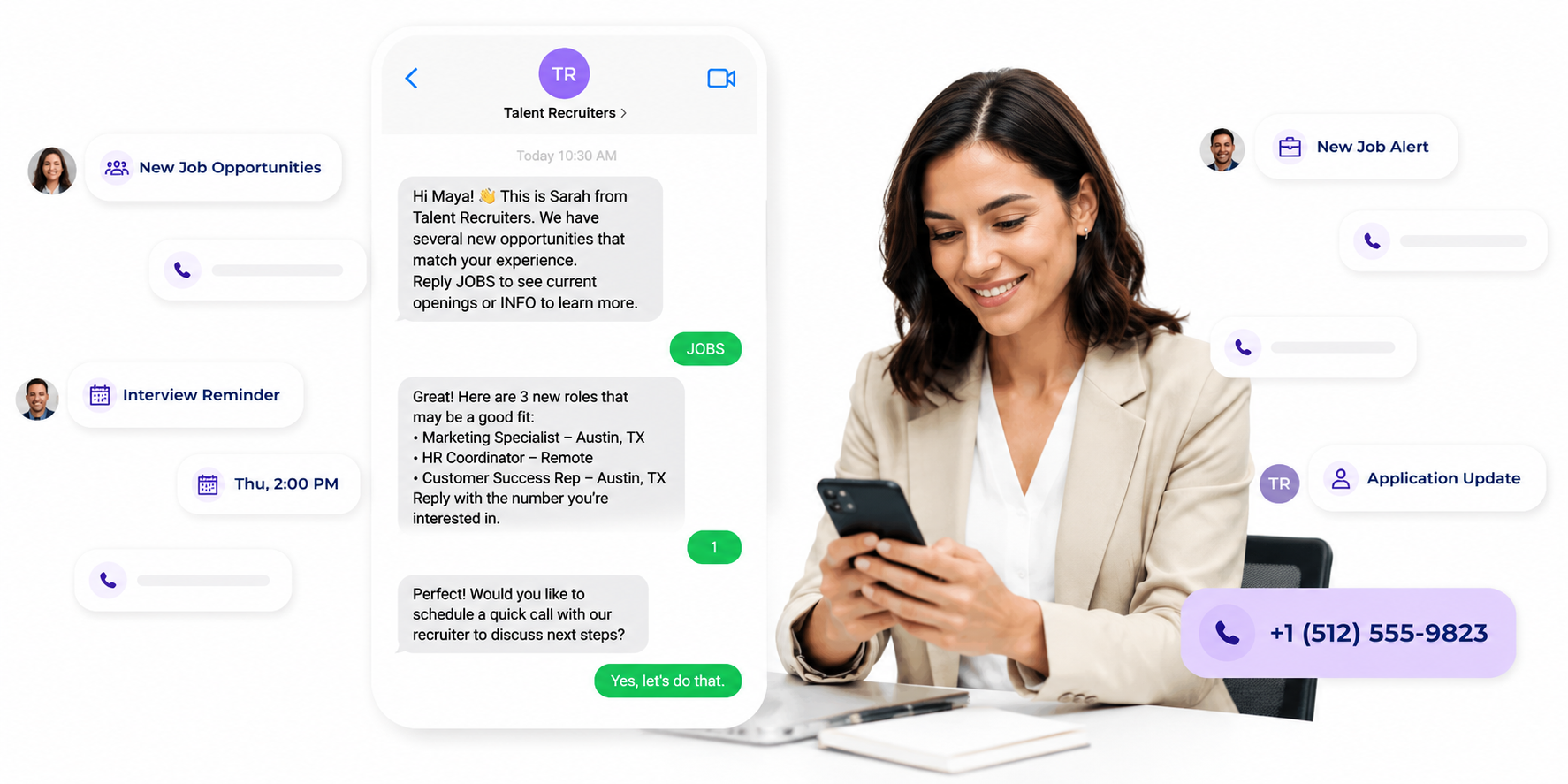
Job alerts by text also fit several hiring situations, such as urgent vacancies, newly opened shifts, seasonal demand, hiring events, or a new role that matches someone’s background.
Candidate segments make those alerts more focused. Location, skills, previous applications, job preferences, or past interest determine who receives each message.
TextUs brings these workflows together with segmented campaigns, personalized messages, campaign scheduling, SMS keywords, and two-way texting. You can send focused job alerts to the right candidate groups and continue the conversation once interest comes in.
Book a demo with TextUs today to learn how SMS job alerts improve candidate outreach from first contact through follow-up!
2. Feature Job Openings on Your Careers Page
The careers page is one of the first places candidates check when they want to learn more about your openings.
Each listing should make the essentials easy to find, including the job title, location, schedule, compensation, key qualifications, and application steps.
Your company website can also guide visitors to current vacancies from relevant service pages, blog posts, or the main site menu. A mobile-friendly layout is important since many candidates browse and apply from their phones.
Fresh listings also show where your organization is hiring and what types of opportunities are currently available. Regular updates keep the page useful for both active candidates and people who may return later to explore new openings.
3. Add Texting to Your Job Posts
Some candidates may be interested in a position but not ready to complete an application right away.
An SMS-enabled number creates another way for them to ask a question, request details, or show interest directly from the job post.
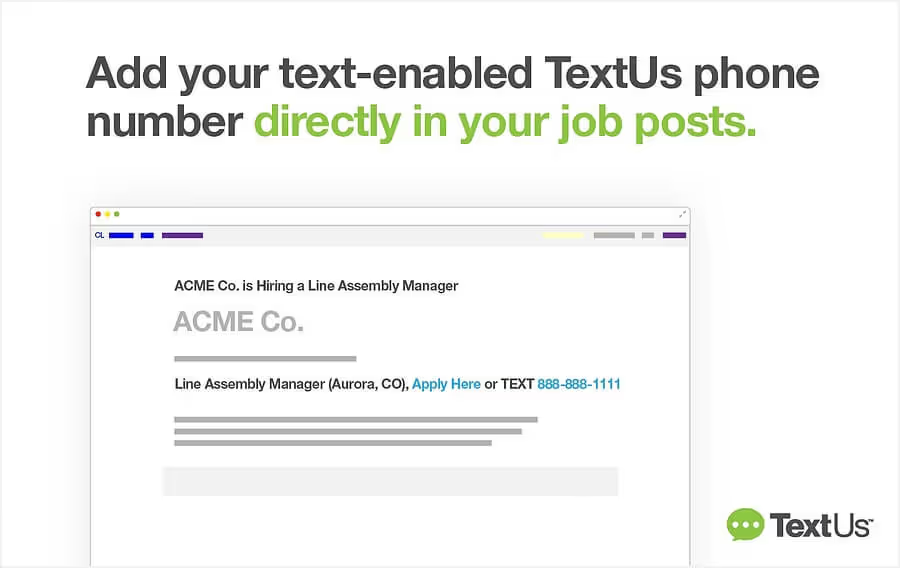
The number can appear beside the application link with a short instruction on what to send. Role-specific keywords also make it easier to identify which opening a candidate is asking about, especially when hiring for several positions at once.
For example, a warehouse listing might ask job candidates to text “WAREHOUSE” with their name.
TextUs lets you receive those messages, respond to questions, and move interested candidates toward the next step through the same text conversation.
4. Prepare Templates for Candidate Follow-Up
Interest from a job post fades if candidates wait too long for a response. Message templates help you reply faster while keeping common questions and next steps consistent.
Different templates can cover application links, screening questions, role details, interview scheduling, and hiring events.
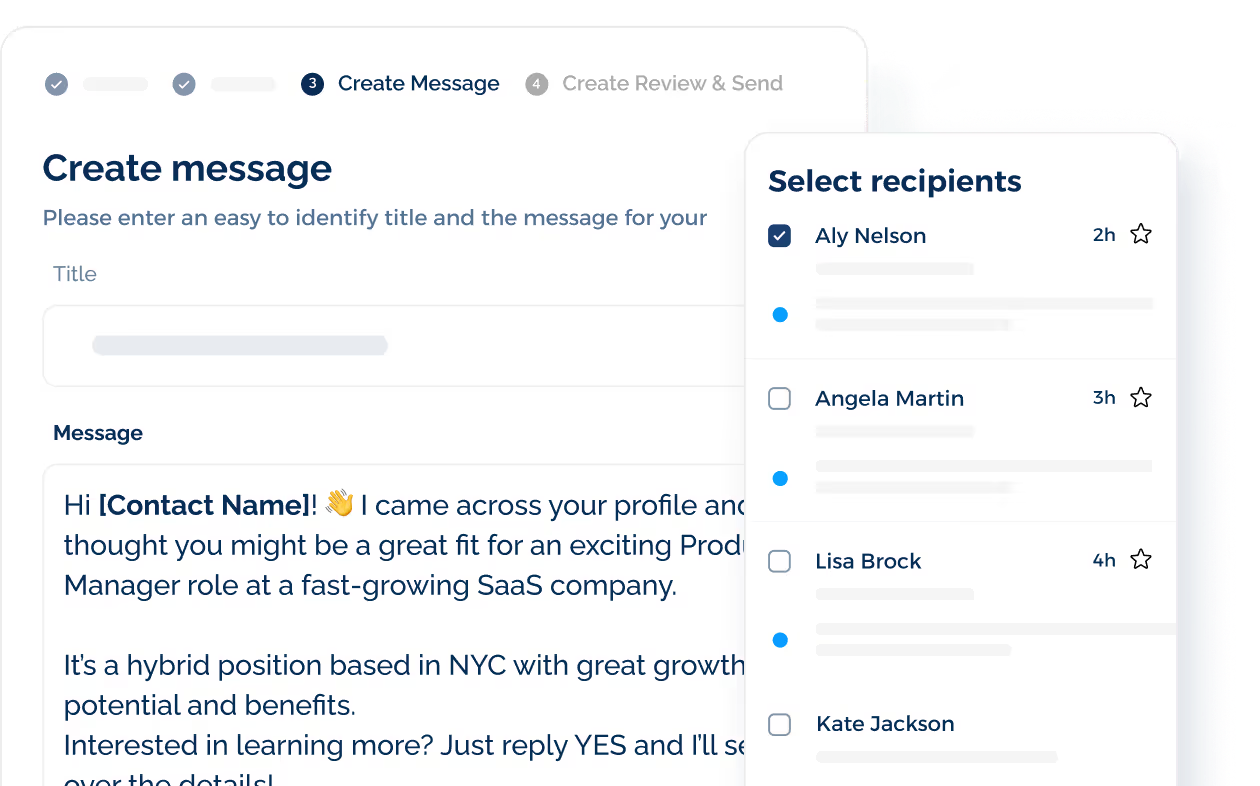
TextUs also includes personalization fields, so each person receives a response that reflects the role or question they contacted you about.
A shared set of templates also keeps candidate communication consistent when several recruiters work on the same campaign. You spend less time rewriting routine replies and more time continuing conversations with interested candidates.
5. Group Similar Roles in One Campaign
Several related vacancies can share one recruitment campaign when they serve the same location or candidate audience.
This approach suits seasonal hiring, warehouse recruitment, healthcare staffing, and big companies with high-volume needs.
One campaign might feature several available positions, followed by a keyword for each job. Candidates could text “DRIVER,” “WAREHOUSE,” or “SUPERVISOR” based on the position they want.
A grouped campaign also reduces the need to create separate promotions for roles that share the same audience. You organize outreach around one hiring push while still tracking interest by position.
6. Re-engage Previous Applicants and Talent Pools
Previous applicants, past finalists, former contractors, and hiring event attendees may be worth revisiting when a matching vacancy opens.
With SMS segmentation, you can group candidates by role type, location, skill set, or previous interest, then send job alerts only to the people who match the opening. This prevents you from sending unrelated opportunities to your wider database.
TextUs allows you to build targeted SMS segments around candidate data and use those groups for focused job outreach. That way, each re-engagement campaign starts with a better match between the vacancy and the people receiving the alert.
7. Optimize Job Posts for Search Engines
Search visibility puts your vacancies in front of people who start their job search on Google or other search engines.
A well-optimized listing has a better chance of appearing when someone searches for a role, location, or skill that matches your opening.
Search-friendly titles are a good starting point. Familiar job names, location details, and natural role-related terms help search engines understand the page.
The page itself also needs to be easy for search engines to crawl and index. Individual URLs, accurate job details, mobile-friendly formatting, and JobPosting structured data help search engines interpret your open positions and may make them eligible for job-related search features.
8. List Vacancies on Major Job Boards
Major job boards remain one of the most common places candidates look for new opportunities.
Sites such as Indeed, LinkedIn Jobs, and ZipRecruiter bring listings together in one searchable space, which makes them a practical part of broader job advertising.
Visibility depends on more than simply publishing the role. Specific titles, accurate locations, salary details, and complete descriptions allow your listing to stand out among thousands of competing job ads.
Many popular websites offer free job options with basic features and sponsored placements, so the right choice depends on your hiring goals and budget. Paid placement boosts exposure for urgent roles, while organic listings suit positions with steady search demand.
9. Promote Job Postings on LinkedIn
A posting can appear in LinkedIn Jobs, your company feed, recruiter profiles, hiring leader posts, and employee shares, which extends its reach beyond people searching the Jobs tab.
A promotional post should pull out the details that make someone stop and read. The role title, location, pay range, work setup, and one or two standout points are enough to introduce the opportunity before directing job seekers to the full listing.
Your company page introduces the opening to your company's followers, while recruiter and employee posts extend it into their own professional networks. Different captions also help the same vacancy feel fresh when you share it more than once.
For harder-to-fill roles, LinkedIn Groups and industry-focused communities can place the posting in front of prospective employees with more specific backgrounds.
10. Target Candidates Through Niche Job Boards
Some vacancies need a narrower audience than the major job boards provide. Niche platforms focus on a particular industry, profession, skill set, or type of work.
Healthcare, technology, skilled trades, remote work, and creative fields all have dedicated job sites. Posting external job postings on these platforms reduces the amount of unrelated traffic that comes from broader recruiting sites.
The smaller audience can also be an advantage when you're hiring for specialized positions. Instead of chasing the largest number of applications, you focus on candidates whose background aligns more closely with what the role requires.
11. Reach Candidates Through Social Media
Not every candidate starts a job search on a job board. Social platforms put your openings in front of people as they browse industry updates, local groups, and posts from people they know.
A Facebook post might focus on location and hiring details. Instagram Reels or TikTok videos can show the workplace, highlight the day-to-day role, or feature employees who already do the job.
Social sharing also expands how far a vacancy travels. Recruiters, hiring leaders, and employees circulate job postings through their own networks, which brings the opportunity to people outside your usual recruiting audience.
12. Send Job Openings Through Email
Email allows you to share more detail about a vacancy when candidates need more than a short alert. A message can summarize the role, location, pay, and schedule.
Previous applicants, talent network members, and newsletter subscribers may receive job advertisements that match their background or past interest instead of every opening you publish.
The email itself should be easy to scan. A precise subject line, short role summary, two or three standout details, and one application link are enough to move interested candidates toward the next step.
A second email can follow a few days later with a different angle, such as pay, schedule, benefits, or start date.
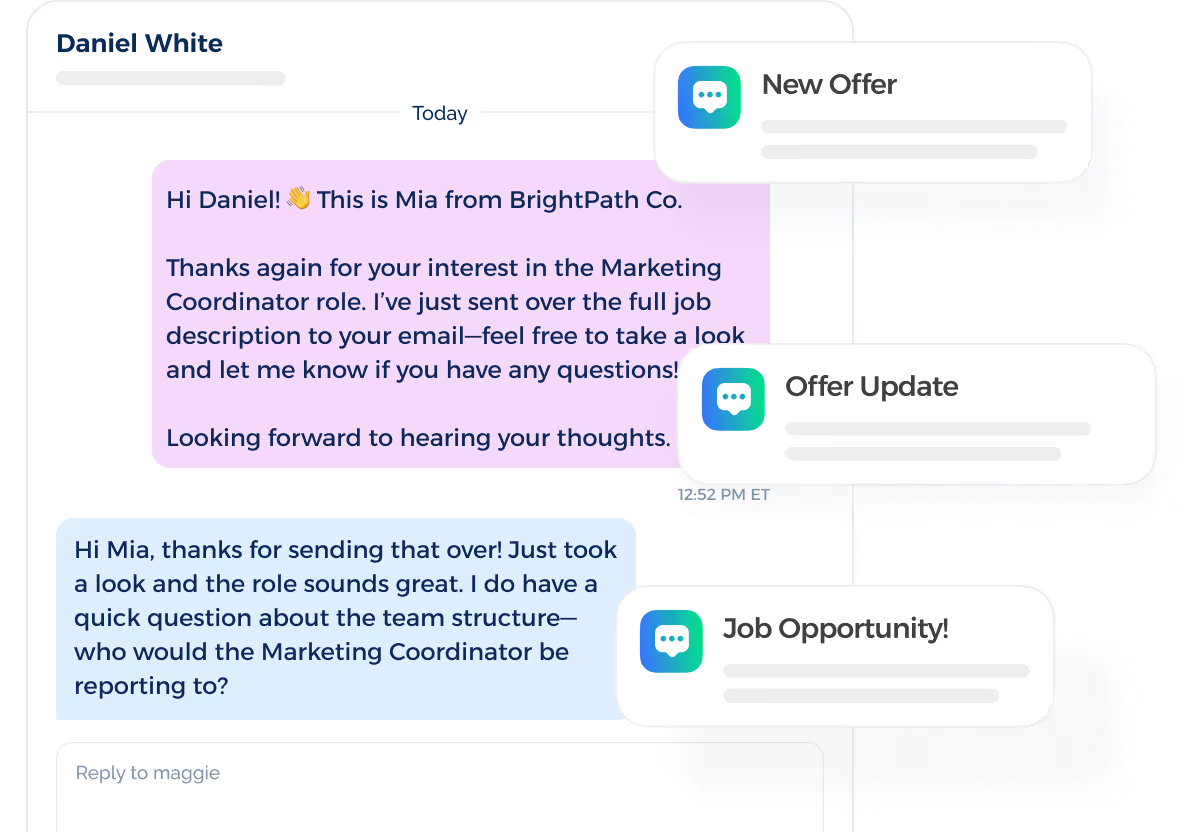
Email and SMS can work together as a coordinated sequence. After the email goes out, a short text can remind candidates about the opening, resend the application link, or ask whether they want more details.
This pairing keeps the opportunity visible without repeating the same message in two places.
13. Encourage Employees to Share Open Roles
Existing employees already know people outside your usual recruiting audience. Former colleagues, industry contacts, and friends may be a good match for roles you are trying to fill.
A few ready-to-share materials make participation simpler. Short captions, direct job links, referral details, and graphics allow existing employees to share vacancies without having to write the message from scratch.
Internal job postings let members of your existing team explore new opportunities, while employee sharing introduces those same vacancies to people in their personal and professional networks.
Employee referrals and internal postings work side by side, so current staff see opportunities while your recruiters also reach trusted outside connections.
14. Connect With Candidates in Professional Groups
Industry associations, alumni networks, Slack communities, LinkedIn Groups, and local professional forums all offer access to more focused audiences.
Groups tied to a specific industry are ideal for specialized hiring. Members already understand the field, which lessens the number of unrelated responses and brings your vacancy closer to top talent with the background you need.
The way you share the opening affects how people respond. A short post with the role, location, main requirements, and application link fits better than dropping a full job description into the discussion.
Some communities limit promotional posts or require approval from moderators or administrators, so review the guidelines before sharing a vacancy.
15. Boost Priority Roles With Paid Campaigns
Sponsored job board listings, paid social ads, search campaigns, and programmatic recruitment ads offer ways to reach a larger or more targeted audience.
Priority roles should come first when you decide where to spend money. Urgent openings, hard-to-fill positions, competitive locations, and high-volume hiring usually have a stronger case for paid exposure.
A larger budget doesn't fix a weak posting. Before increasing spend, you should review the job title, pay, requirements, location, and application process to make sure the listing itself isn't holding candidates back.
Campaigns with the highest volume of views, clicks, or applications are not necessarily the most successful. Cost per application, qualified applicants, interviews, and hires show whether paid promotion is bringing the right people to your business.
Promote Job Roles and Engage More Qualified Candidates With TextUs
Finding the best candidates for each position your organization requires takes time, planning, and the right approach.
TextUs helps you bring job opportunities closer to candidates through SMS. They have a direct way to ask questions, request details, or respond without waiting on email.
Text-enabled job listings add another response path to your recruiting strategy. You can place an SMS option alongside listings on sites such as Indeed, CareerBuilder, Craigslist, and other job boards.
Targeted SMS campaigns and segmentation also help you find candidates based on role, location, experience, or previous interest, while two-way texting keeps the conversation active.
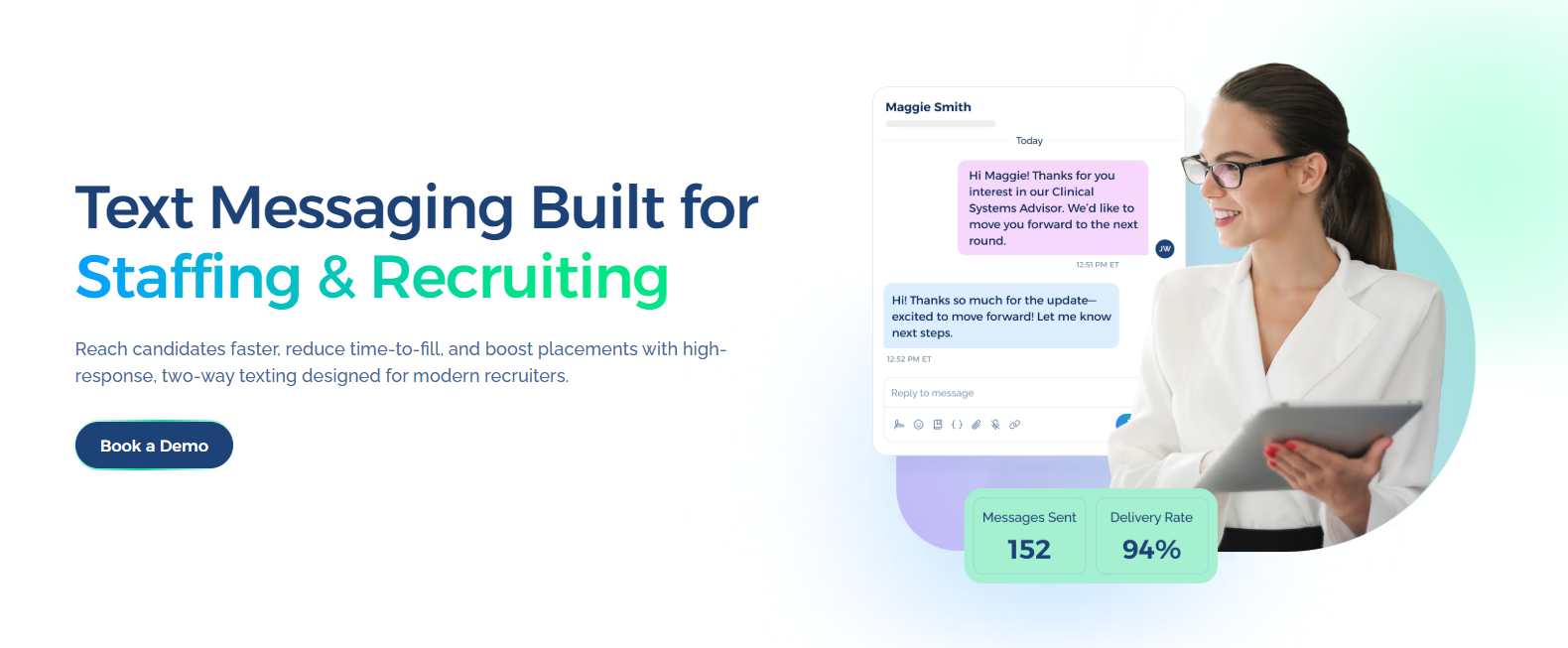
Book a demo with TextUs today to see how timely outreach generates warmer recruiting conversations and stronger candidate interest!
FAQs About How to Promote Job Posts
How to make a job posting stand out?
A standout posting uses familiar job titles, specific pay and location details, and simple words that explain the role. Details about responsibilities, expectations, benefits, and work culture also help candidates decide whether to apply.
What is the 70/30 rule in hiring?
The 70/30 rule generally refers to hiring someone who meets about 70% of the main requirements and can learn the remaining 30%. Some employers use this approach to avoid overlooking capable candidates who don't match every qualification.
What are 12 signs that I might be about to be promoted at work?
Possible signals include more responsibility, leadership assignments, involvement in important meetings, increased decision authority, positive feedback, and discussions about future goals.
Other signs include mentoring coworkers, greater visibility with leadership, new training opportunities, succession planning, expanded duties, and conversations about compensation.
Can you give me an example of a job promotion?
A job promotion might move an employee from recruiter to senior recruiter, with greater responsibility, higher pay, and more involvement in hiring decisions.
This type of internal mobility allows medium and large companies to fill higher-level positions with people who already understand their processes and goals.
Continue Reading



Frequently Asked Questions
Business Texting
Built for Results
Create and convert pipeline at scale through industry leading SMS software