
Lead Management: Stages and Strategies to Get It Right
Explore our handy guide to lead management and learn all you need to know about the stages, why it matters, and how to get it right.

Written by
Adam Hamdan
Published
January 21, 2026

Leads are what drive growth. But turning them into real opportunities takes more than just getting someone’s contact information.
Many businesses do a great job attracting interest but struggle to follow through. Slow responses and unclear next steps cause promising leads to fade out before anyone takes action.
Lead management gives your team a structure to capture leads, qualify them, follow up at the right time, and guide them toward a decision.
In this article, we’ll break down what lead management is and how to build a lead management system that supports your pipeline at every stage.
TL;DR
- Lead management is the process of guiding prospects from first interest to becoming customers by capturing, qualifying, nurturing, and converting them.
- It includes key stages like capture, tracking, qualification, nurturing, distribution, and conversion.
- A strong lead management system improves response time, team alignment, lead quality, forecasting, and reduces missed opportunities.
- To build a reliable system, you should define your ideal lead, centralize data, create a capture process, automate assignments, tailor follow-up by lead type, and keep lead statuses updated.
- TextUs helps you stay responsive with features like CRM-integrated texting, campaigns, keyword-triggered sequences, and shared inboxes for real-time engagement.
What Is Lead Management?
Lead management is the structured process of handling leads from the moment they show interest until the point they become customers. Without this process, it becomes easy to contact the wrong people or lose leads that were ready to move forward.
The lead management process is built on four main goals: capture, qualify, nurture, and convert. These steps help you move leads from early interest to final decision, and they support each team’s role along the way.
Lead management also plays an important part in the overall customer journey. After someone becomes aware of your business, there's often a gap between that first touchpoint and the moment they are ready to buy.
That point in the process is where strong lead handling keeps things on track. It keeps your business connected to the lead, helps you understand their needs, and guides them toward the right next step.
Stages of the Lead Management Process
Each stage builds on the last, giving your team the right time, tools, and context to make the next move within your lead management strategy. If any of these stages are missing or weak, leads can stall or drop out of your pipeline completely.
Here are the key stages that make up a strong lead management process and support effective lead management across teams.
Lead Capture
Lead capture is the first step in lead acquisition. This is when a person shares their contact information with your business and becomes part of your lead generation efforts.
This could happen when someone fills out a form on your website, clicks a call-to-action in an email, signs up for a webinar, or replies to a message from your sales team.
If the lead has to fill out a long form or wait too long for a reply, they may lose interest. You want to make it easy for them to get in, while giving your team what they need to prioritize quality leads.
Lead Tracking
Once the lead is in your system, you need to track what they do next and collect accurate lead data. This includes which pages they view, what emails they open, what links they click, and how often they engage with your brand.
These actions help your team understand the lead’s level of interest and monitor and track lead activities tied to real intent.
When you collect this kind of activity data alongside customer data, your team gains valuable insights into how leads move through the buying process. This makes it easier to see who is ready for a call and who might still be researching within a longer or shorter sales cycle.
Lead Qualification
Not every lead is ready to buy or even a good fit for what you offer. This is where inbound lead qualification helps with filtering potential leads.
Lead qualification lets you decide which leads to pass to the sales team and which ones should stay in a holding stage. You can score leads based on behavior or qualify leads based on fit using filters, automation, or manual review.
The most common qualification methods look at the lead’s company size, industry, job title, and behavior.
Some businesses use models like BANT (Budget, Authority, Need, and Timing). A qualified lead may become a marketing qualified lead, a sales qualified lead, or eventually a sales-ready lead, depending on intent and timing.
Lead Nurturing
Nurturing happens when a lead is interested but not ready to buy. The goal here is to stay in touch and add value until the lead is ready for a sales conversation.
If your team disappears after one message, the lead will forget about you. But if your messages continue to offer value, the lead is more likely to take the next step when the time is right.
With SMS marketing campaigns, your team can send targeted messages to specific groups from your Customer Relationship Management (CRM) or marketing tool.
Each message can focus on one clear goal, like inviting leads to a webinar or sharing a product one-pager. You can also include PDFs or images to give value directly in the conversation.
Lead Distribution
Once a lead is qualified, it needs to be handed off to the right person on your team.
You can assign leads based on geography, product interest, or sales team workload. You may also use round-robin systems or rules in your CRM to distribute leads to sales reps or a specific sales representative.
Timing matters here. The faster the handoff, the better the chance of closing the deal.
Quick distribution combined with fast outreach helps convert leads and move them closer to becoming existing customers.
TextUs integrates with CRMs like Salesforce and HubSpot to automatically assign leads based on rules. The moment a lead is assigned, reps can send a pre-built or personalized SMS from within the CRM or SMS platform.
Want to reduce lead response times and improve engagement right after handoff? Book a demo with TextUs and see how faster follow-ups lead to faster results!
Lead Conversion
Lead conversion is the stage where interest becomes action. The lead might schedule a meeting, sign a contract, start a free trial, or make a purchase.
This is the final step of the lead management process, but it depends on everything that came before it. Strong qualifications, consistent communication, and accurate customer interactions help move potential buyers forward.
Adding SMS to your marketing strategy supports an effective lead management system by giving teams a direct way to guide all the leads toward a decision.
When used with purpose, SMS helps you maximize marketing impact while turning lead conversion into a natural next step instead of a hard sell.
Why Is Lead Management Important for Business Growth?
Lead management affects how well your business attracts, responds to, and converts potential customers. Here are the main ways lead management supports your business growth:
Faster Response Time Leads to More Sales
Speed matters in the sales process. According to research from Harvard Business Review, companies that reach out within the first hour are far more likely to qualify a lead compared to those who wait.
The longer you delay, the more likely interest fades, and hot leads cool off fast.
Lead management software helps your team respond quickly by assigning leads fast, providing real-time data, and tracking engagement history. When you reach out at the right moment, your chances of starting a real sales conversation increase.
Improved Alignment Between Marketing and Sales
One of the biggest breakdowns in growth comes from misalignment between teams. Marketing brings in leads, but sales do not always see the value. Sales reach out too soon, or not at all.
A lead management process defines when leads should be passed and how to track results. With shared rules, marketing and sales teams work toward the same goals. It creates a more reliable pipeline with fewer weak spots in your sales strategies.
Stronger Lead Quality Brings Higher Conversions
Lead management includes qualification. That means your team knows which leads are worth pursuing and which ones are not.
When sales focus on real opportunities instead of chasing every name on a list, close rates improve, and time is used better.
Qualified leads are also easier to move forward with. They already match your ideal customer profile, so conversations are more focused and deals are more likely to close.
More Accurate Forecasting and Reporting
Every lead your team handles becomes part of your data. If that data is incomplete, outdated, or scattered, that makes it harder to measure results and plan for the future.
A good lead system gives you visibility into how many leads entered the pipeline, how many converted, and what patterns led to the best results.
With that information, you can spot what works and fix what doesn’t, especially across complex funnels with a longer sales cycle.
Reduced Lead Loss and Wasted Effort
When leads go untracked or unassigned, they go cold. Sales teams sometimes chase unqualified leads, which is a waste of time that could be spent on real buyers.
Lead management reduces both problems by giving every lead a status, an owner, and a plan. Instead of wondering what happened to that contact from last week, your team knows where they are in the process.
How to Build a Lead Management System
An effective lead management strategy helps your business capture leads, track interactions, qualify interest, and guide each contact toward a decision. Here’s how to build a reliable structure for follow-up:
Step 1. Define Your Ideal Lead Profile
Start by looking at your best customers. What do they have in common? You might focus on firmographics like industry, company size, location, or job title.
You can also include behavioral signals, such as opening a pricing page, replying to a campaign, or engaging with a text message.
Once you identify the traits of your target audience, you can use them to build your lead profile. This profile should guide how your team scores leads, routes them, and decides when to follow up.
For example, if your strongest deals come from companies with over 100 employees in the healthcare space, leads outside that range may need a different follow-up track. It also helps you acquire leads who are more likely to convert based on your target market.
Also, consider the signals that suggest timing is right. A lead who opens multiple emails, replies to a text, and downloads a product guide shows more intent than someone who just signed up for your newsletter.
Step 2. Set Up a Central Database for All Leads
Once a lead enters your system, it needs to be stored in one organized database built inside a CRM platform.
It should hold everything your team needs to manage leads, including contact information, company details, lead source, and interaction history.
If your team uses SMS to engage leads, those messages need to be stored alongside emails, call notes, and meeting records. When a rep can see that a lead replied to a text three days ago asking for more info, that context shapes the next step and avoids repetition.
TextUs connects with the tools your business already uses, from CRMs to lead management tools. Messages stay in sync, contacts stay current, and every conversation has full context.
Step 3. Create a Process for Capturing New Leads
A good lead capture process makes it easy for leads to connect and for your team to follow through.
Start by listing every entry point where leads come in. This includes website forms, demo requests, phone calls, chat tools, ad clicks, event registrations, referrals, and direct outreach.
For each source, define what information is collected, how it's stored, and who gets notified. The faster and cleaner this flow is, the easier it becomes for your team to respond and keep momentum.
Texting can also support lead generation campaigns. You can offer a fast entry point by letting prospects respond with an SMS keyword to start the process.
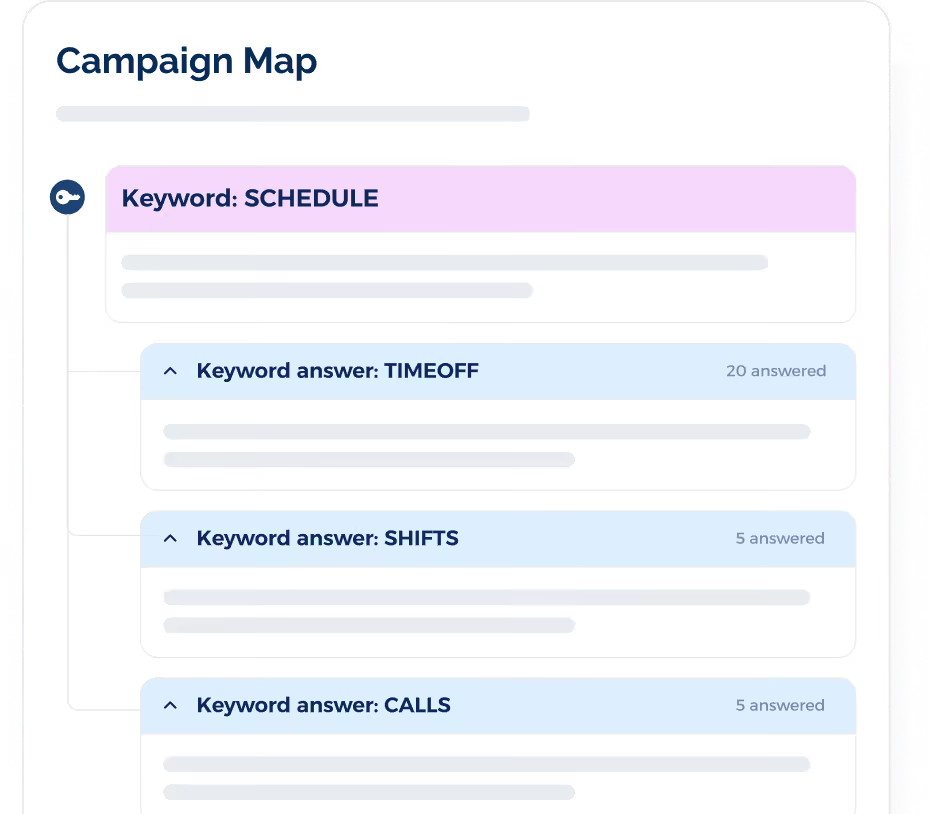
TextUs Sequences also let your team automate personalized text follow-ups on a set schedule. For example, a lead who texts a specific keyword like “DEMO” can be automatically enrolled into a nurture sequence.
They'll receive a series of scheduled texts that share product tips, check availability, or offer to answer questions. Each message is customized, but the process runs automatically to save your team's time.
Step 4. Assign Leads Automatically or With Rules
Once a lead is captured, it should be routed to the right person. There are two ways to handle lead assignment: automatically through your CRM or marketing platform, or manually using defined rules.
Automated assignment works best when lead volume is high or when speed is a priority. You can set up routing rules based on region, company size, product interest, lead score, or any custom field.
If you manage a smaller pipeline, manual assignment can still work, but it should follow specific rules. Your team should know who handles what types of leads and when to pass a lead to someone else.
Consistency matters more than speed in manual setups. But both approaches benefit from having a shared system that tracks ownership and next steps.
Step 5. Build a Follow-Up Schedule Based on Lead Type
Not all leads should be treated the same. Someone who downloads a pricing guide should receive a different follow-up than someone who registers for a newsletter.
Start by grouping leads based on how they entered your system and what actions they took.
High-intent leads, such as demo requests or pricing inquiries, usually need fast and direct outreach from sales. Early-stage leads may need more time and education before they are ready for a conversation.
SMS marketing can play a helpful role in these follow-up tracks, especially for higher-intent leads. A text message sent shortly after a form submission or event registration gets seen faster than email and feels more personal.
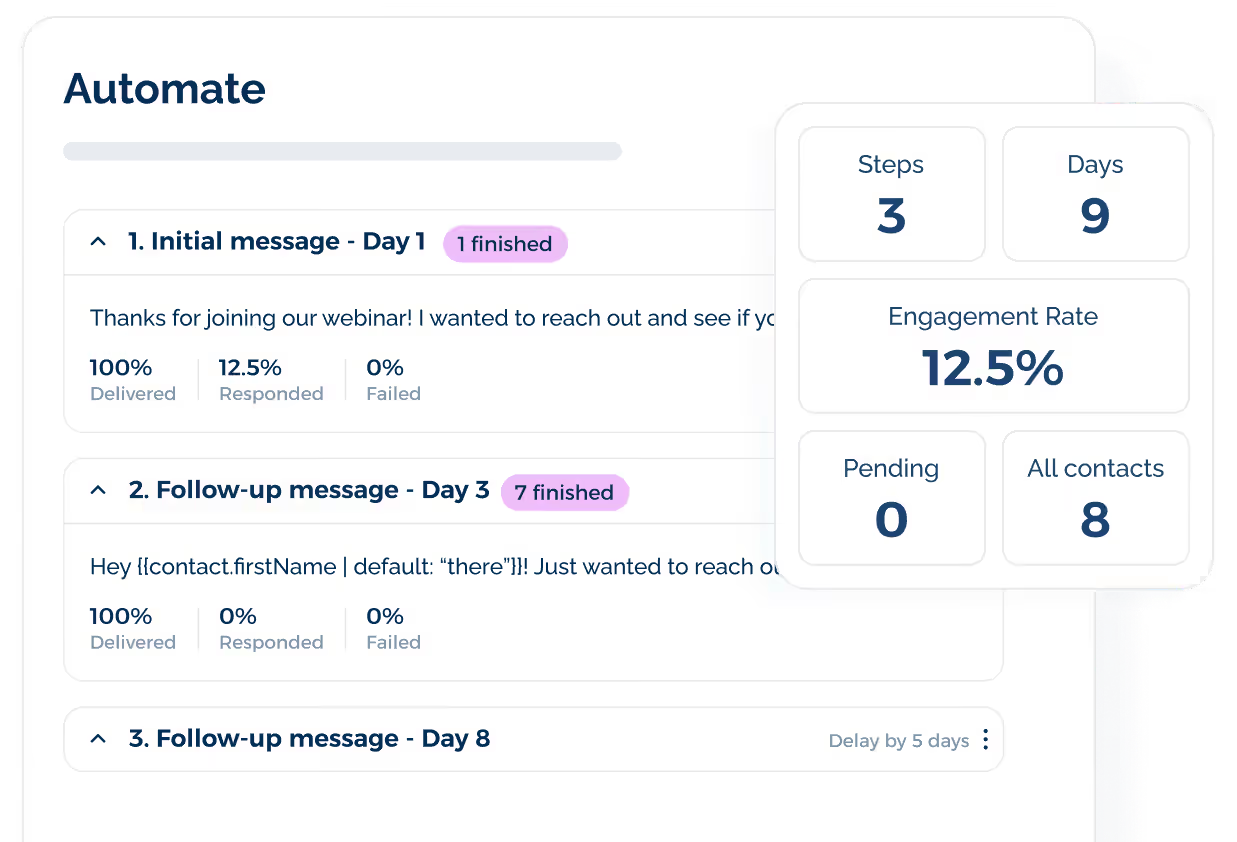
Text messaging also works well in between other touchpoints, such as confirming a call, sending a quick reminder, or asking a simple yes/no question that encourages a reply.
Also, make sure your team documents the full follow-up path for each lead type, including the timing, channel, and content for each step. It keeps messaging consistent and helps your pipeline stay organized.
Step 6. Track Interactions and Update Status Regularly
Once a lead enters your system, every interaction matters. That’s why tracking every conversation, action, and response is a core part of any working lead management system.
Each lead should also have a status, such as new, contacted, qualified, or nurturing, that reflects their stage in the process. These status updates allow you to track movement through the pipeline and run accurate reports.
You also need to make it a habit to update records as soon as key actions happen. A quick note after a call, a status change after a reply, or a log of outreach attempts helps build a full picture of the lead’s journey.
Let Your Leads Text Their Way Into Your Sales Pipeline—Try TextUs!
Delayed follow-up, missed handoffs, and slow responses make it hard to keep leads engaged. TextUs helps your team take action faster by bringing real-time texting into your lead management process.
With TextUs, your reps can reach out the moment a sales lead enters your CRM. Keyword-based automation makes it easy to trigger follow-ups, enroll contacts into sequences that nurture leads, or send targeted campaigns that match each lead's stage.
All replies flow into a shared inbox, and every message is logged automatically, giving your team full visibility across marketing automation tools without chasing updates.
If you're looking to respond faster and move prospective customers forward without adding more tools to your stack, TextUs gives you the structure and speed to do it.

Book a demo today to see how it fits into your lead management process!
FAQs About Lead Management
What is meant by lead management?
Lead management is the process of capturing, organizing, tracking, and guiding new potential business clientele through your sales funnel.
It helps your team follow up with the right people at the right time, based on their level of interest and readiness to buy. The goal is to turn early interest into qualified opportunities, and eventually into closed deals.
What are the five major stages of lead management?
The five key stages are:
- Lead capture — Collecting contact information from forms, campaigns, or outreach
- Lead tracking — Monitoring interactions such as email opens or website visits
- Lead qualification — Deciding which leads are worth pursuing based on fit and behavior
- Lead nurturing — Staying in touch with leads who aren’t ready to buy yet
- Lead conversion — Turning a lead into a paying customer through a clear next step
These stages help structure your process and guide marketing efforts toward results.
Is lead management part of a CRM?
Yes, lead management is handled through a CRM platform. A CRM lets you store contact data, track communication, update lead status, and assign ownership across your team.
While CRM tools manage the tech side, lead management also involves strategy and workflow, allowing sales teams to focus on initial contact, follow-up, and conversion.
What are the four stages of the lead management process?
Some sales and marketing teams prefer a simplified version with four stages:
- Capture — Collect and store lead information
- Qualify — Evaluate if the lead matches your ideal customer profile
- Nurture — Stay in contact and build interest over time
- Convert — Close the deal when the lead is ready
Both four- and five-stage models are valid. The difference depends on how detailed you want your process to be. What's important is that every lead is tracked and moved forward with purpose.
Continue Reading



Frequently Asked Questions
What are the main stages of lead management?
Lead management typically follows five stages: lead capture, lead qualification, lead assignment, lead nurturing, and conversion. Each stage ensures leads are handled consistently and moved through the pipeline without falling through the cracks.
Why do businesses lose leads before converting them?
Most leads are lost due to slow response times, inconsistent follow-up, and unclear handoff processes between marketing and sales. Without a structured system, promising leads simply fade away.
How does SMS improve lead management and response rates?
SMS reaches leads instantly on the channel they're already using, with open rates above 95%. Texting new leads immediately — especially those who fill out forms — significantly increases the chance of starting a conversation and moving them through the pipeline.
Business Texting
Built for Results
Create and convert pipeline at scale through industry leading SMS software