
10 Best Texting Software for Business Messaging: 2026 Picks
Explore the ten best texting software for business messaging. Learn how to choose the best software and discover what makes TextUs stand out.

Written by
Adam Hamdan
Published
March 13, 2026

Customers no longer wait on hold or return missed phone calls. They expect direct communication and texting become the preferred channel for real-time engagement.
The best texting software for business supports two-way conversations, structured automation, customer relationship management (CRM) and applicant tracking system (ATS) integrations, compliance controls, and team collaboration.
In this article, we'll compare the ten best texting software and help you determine which solution aligns with your operational goals and long-term growth strategy.
TL;DR
Here are the ten best texting software that you should consider for efficient business conversations:
- TextUs
- Telnyx
- Bandwidth
- TrueDialog
- Bird
- Plivo
- MessageMedia
- Twilio
- Sinch Engage
- Infobip
Texting Software for Business: Key Features
The right texting platform can affect how you communicate with customers and how your team performs. Here are the main features that separate basic messaging tools from true business-grade SMS marketing software.
Automation and Workflow Capabilities
Strong automated workflows turn texting into a dependable form of communication. You can trigger messages based on form submissions, appointment bookings, pipeline stage changes, or keyword replies.
SMS automation features also support processes such as follow-ups and list growth tied to email capture strategies. This keeps outreach organized and scalable.
Ease of Use and User Interface
The best texting software for business should feel natural from the moment you log in. It allows you to operate from a centralized dashboard while maintaining multiple conversations from the same number.
CRM and Integration Options
Texting solutions should connect with your CRM, ATS, marketing automation platform, and support systems. Integration keeps contact records aligned and eliminates duplicate data entry.
Two-Way Messaging
Texting should create dialogue, not just push notifications. Two-way SMS allows prospects, customers, and candidates to respond and continue the conversation naturally.
Bulk Messaging and Campaign Management
Bulk text messaging enables you to send automated reminders and marketing promotions to large audiences at once. SMS campaign management tools should include scheduling, segmentation, preview options, and performance tracking.
Contact Management and Segmentation
Effective contact management allows you to tag, filter, and group contacts based on meaningful attributes. SMS segmentation ensures each audience receives communication that matches their needs or stage.
Reporting and Analytics Dashboard
A reporting dashboard shows delivery rates, response rates, and SMS marketing campaign outcomes. SMS performance data guides adjustments in timing, messaging, and audience targeting.
Team Collaboration Tools
Texting involves multiple team members managing conversations at the same time. Shared inboxes, user roles, and conversation assignments keep communication structured and trackable.
Compliance and Security Features
Business texting must align with regulations such as the Telephone Consumer Protection Act (TCPA) and carrier requirements. Built-in consent tracking and automated opt-out handling protect your organization from SMS compliance violations.
These texting solutions should also offer role-based permissions, audit logs, and data protection safeguards.
AI Features and Smart Replies
Smart reply tools suggest pre-written responses and templates to accelerate communication. These tools promote consistency while saving time for high-volume teams.
Modern texting platforms now incorporate AI in texting to improve speed and consistency. AI-powered smart replies can suggest responses based on conversation context and common customer questions.
10 Best Texting Software for Business in 2026
These 10 best texting software for business offer scalable messaging, automation, integrations, and compliance features designed to support complex operational needs.
1. TextUs
TextUs is an enterprise-grade business texting and SMS engagement platform designed to help you communicate with leads, candidates, customers, and internal teams.
It combines real-time SMS and MMS messaging, campaign automation, deep integrations, and built-in compliance controls that fit into existing workflows rather than forcing teams to work around it.
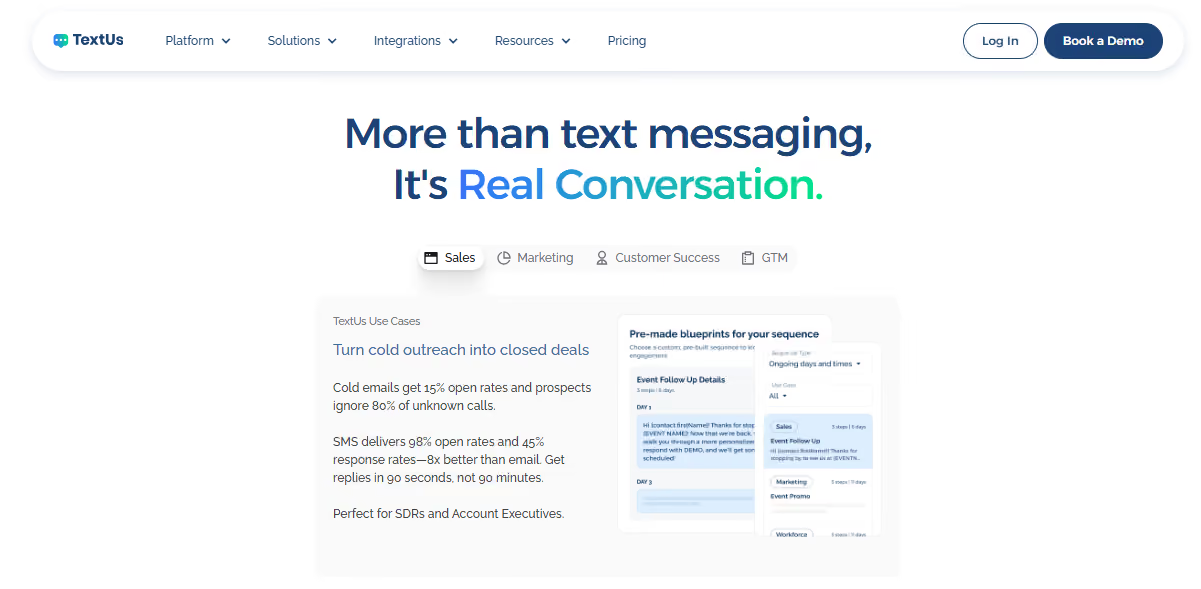
Unlike platforms built mostly for one-way blasts, TextUs lets you send texts and receive replies from a centralized shared inbox that can be accessed from desktop, browser, and mobile apps.
Contacts and message threads stay organized, so teams don’t lose context when they hand off conversations or manage high volumes of replies.
This SMS marketing platform also provides campaign automation and sequence workflows that support broadcast messaging and targeted multi-step outreach.
You can create SMS drip campaigns, keyword triggers, and scheduled messages, and personalize messages with merge fields. You can also build subscriber lists using SMS keywords or QR codes.
TextUs has deep integrations with CRM, ATS, and business systems. These integrations automatically sync contacts, communication history, and messaging data.
TextUs also delivers analytics and performance reporting that help you measure engagement and optimize outreach efforts. Dashboards show metrics such as delivery rates, response times, and campaign results so you can understand what works and where improvement is needed.
See how TextUs fits into your sales, recruiting, or customer engagement process. Book a demo today!
2. Telnyx
Telnyx is a programmable SMS API provider that businesses use to embed SMS/MMS into internal systems, customer portals, and large-scale outreach workflows.
With Telnyx, you can build messaging flows by integrating with its REST API, so message generation becomes part of your internal systems, customer portals, or support tools.
This SMS marketing service supports standard messaging types like long codes, short codes, toll-free numbers, and alphanumeric sender IDs for certain regions.
Telnyx’s messaging system acts as a configuration container for all your outbound and inbound messaging settings. Through a messaging profile, you group phone numbers, define webhook URLs for real-time webhook events, and manage features.
Number pooling lets you assign multiple long codes or toll-free numbers to a profile and distribute outbound messages across them automatically. It manages throughput and sender reputation for high-volume enterprise campaigns.
Its API includes message queuing aligned with account limits and regulatory standards, so texts are sent even under heavy load. Deliverability data and debugging tools help technical teams trace message status from the API through to carrier handoff.
Receiving messages is also part of the platform’s feature set. When someone replies to a Telnyx-managed number, the API can send the inbound message details to a configured webhook URL.
3. Bandwidth
Bandwidth offers a communications platform with APIs for SMS, MMS, voice, and emergency services. Its messaging products are designed for companies that need high-throughput text messaging integrated into their systems.
This business texting service has a Messaging API that lets you text customers programmatically using HTTP requests. Through this API, you can build seamless workflows for notifications, alerts, reminders, and interactive messaging.
The service supports global SMS and MMS delivery, including two-way A2P messaging that allows enterprises to both send reminders and receive replies.
Alphanumeric messaging lets you send notifications using a brand name instead of a phone number in regions where it is supported.
Bandwidth’s messaging stack also includes traffic health monitoring and alerting tools. Teams see when message delivery quality changes so they can act before performance dips.
Beyond simple send-and-receive features, the platform supports webhooks for delivery status updates, metadata queries for tracking historical message data, and simplified management of high-volume messaging.
The platform also ties into a broader communications ecosystem that includes voice and emergency services. You can consolidate multiple communication channels using Bandwidth’s network and APIs.
4. TrueDialog
TrueDialog is an enterprise-grade SMS and messaging platform that combines high-volume text campaigns with personalization tools and modern communication workflows.
The platform supports bulk SMS messaging and lets you segment audiences with dynamic lists and personalize messages with message templates.
TrueDialog also includes its own proprietary delivery optimization called TrueDelivery, which is designed to improve throughput and reliability when sending large campaigns.
It supports one-on-one conversations from a centralized communications hub. Customer replies can be received and tracked, and responses can be personalized or automated.
TrueDialog supports single and double opt-in for contact consent, keyword-based opt-out tracking, and centralized contact management to help organizations comply with texting regulations.
The system includes role-based permissions, drag-and-drop account structures, and audit trails so you can manage user access and monitor activity across departments or regional units.
It offers native connections with major CRM and marketing platforms, such as Salesforce, HubSpot, Microsoft Dynamics, and Marketo. It allows messaging activity sync with sales and customer data.
5. Bird
Bird is a global communications platform built to support enterprise-level text messaging alongside other channels such as voice, WhatsApp, and live chat.
It operates on a licensed carrier-grade network with direct connections in 150+ countries, which helps you deliver SMS and MMS messages with high reliability and delivery performance.
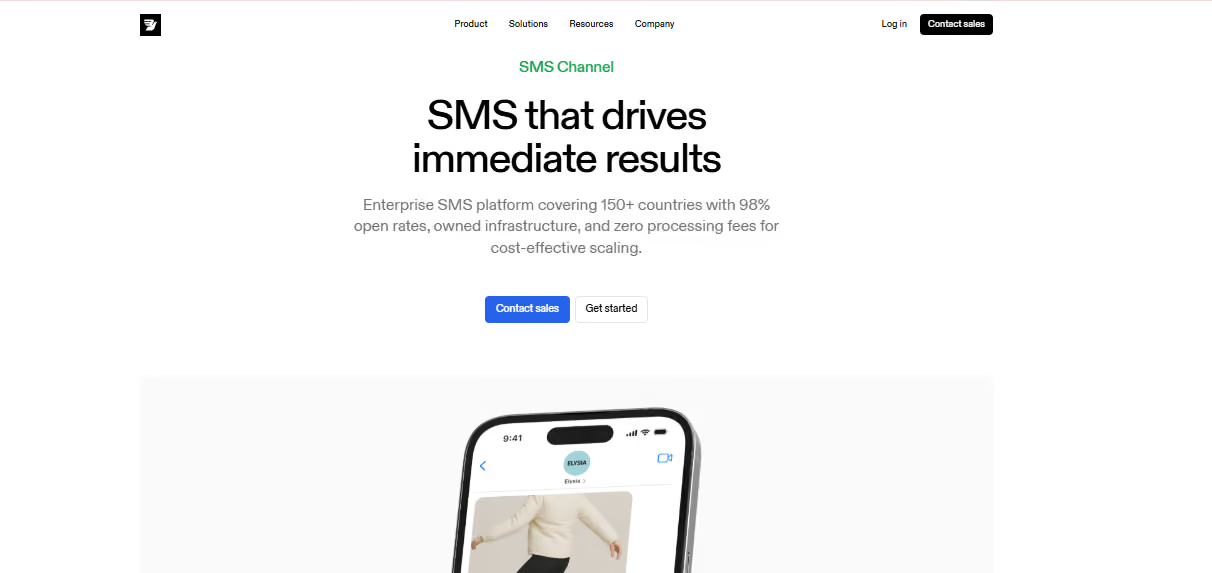
The platform offers local, national, and toll-free numbers in major markets, giving businesses a consistent sender presence worldwide. Intelligent routing technology lets you tailor message delivery goals and access real-time feedback through developer-friendly APIs.
Bird’s enterprise messaging features include an SMS API that allows you to send and receive text messages programmatically. The unified API supports global SMS delivery through more than 240 direct-to-carrier connections.
With Bird’s SDKs and documentation, you can integrate messaging into existing internal systems, automate triggers, manage contacts, and handle verification flows or customer alerts.
For marketing and engagement use cases, Bird provides other tools for campaign creation, personalization, and automation.
Bird’s AI-powered SMS chatbots can handle customer interactions, support requests, and conversational messaging that blend automated responses with opportunities for human follow-up when needed.
6. Plivo
Plivo’s messaging platform is built around a programmable SMS, MMS, and WhatsApp API that businesses can integrate into their applications, systems, and customer engagement workflows.
Through its RESTful APIs, you can send SMS and receive replies programmatically. Messaging becomes part of your customer-facing systems.
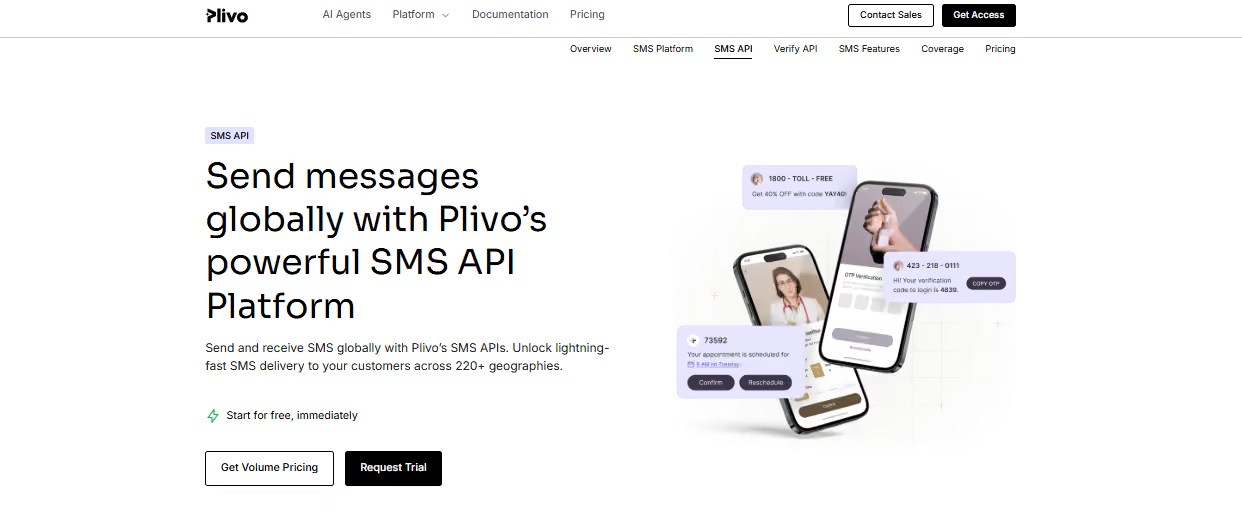
The API supports standard HTTP requests with JSON responses and has official SDKs and code samples in languages like Python, Java, Ruby, PHP, and Node.js for ease of integration.
Plivo’s global messaging infrastructure spans over 220 geographies, with direct carrier connections in many regions that help ensure wide reach and reliable delivery.
The messaging API itself supports more advanced features such as message queuing, delivery receipts, and callbacks.
It supports MMS for picture messaging in regions like the US and Canada. You can send pictures, videos, audio files, and emojis to engage customers with richer content beyond plain text.
It also has fraud-prevention tools such as AI-driven detection of SMS pumping attacks, which can protect budgets and messaging quality. You can also set geo-permissions to control where messages are sent and apply spend thresholds to avoid unplanned costs.
7. MessageMedia
MessageMedia (now part of Sinch Engage) is an enterprise-oriented business messaging platform that supports large-scale SMS, MMS, and multichannel communication needs.
The platform lets you manage messaging from a user-friendly interface without installing additional software. It offers bulk SMS, two-way messaging, automation, and analytics to support complex enterprise workflows.
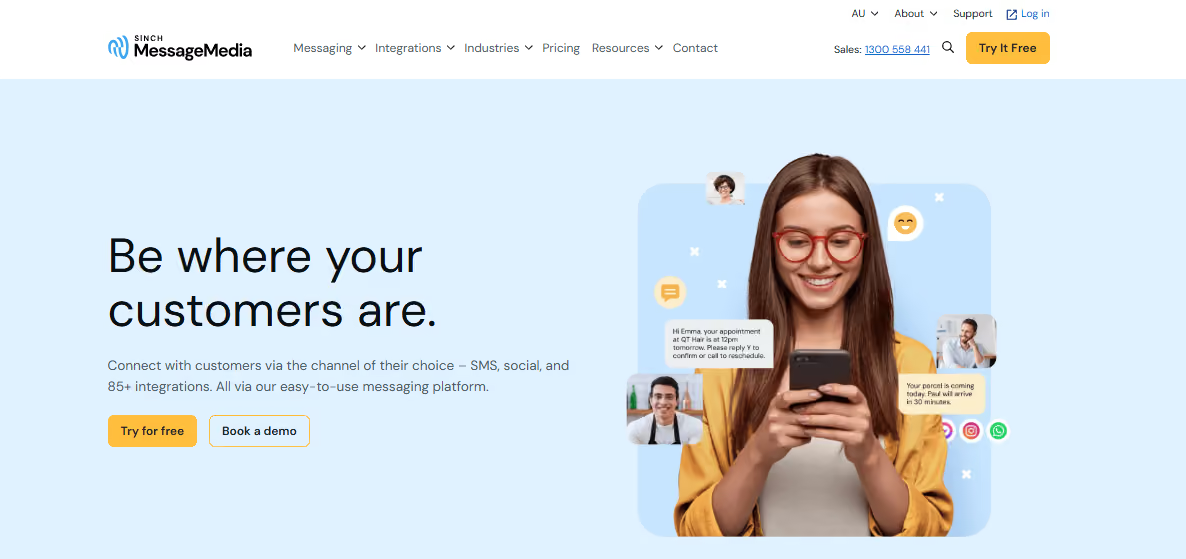
MessageMedia includes a shared inbox where team members can track, assign, and respond to incoming messages. The shared inbox also supports linking SMS with common channels such as email and social messaging.
With MessageMedia, you can insert custom fields into SMS templates, segment contact lists for targeted messaging, and build mobile landing pages that extend engagement beyond a simple text.
Advanced features such as trackable short links, MMS support, and email-to-SMS functionality allow teams to create richer communication experiences that align with broader marketing and operational strategies.
MessageMedia also provides integration options and developer tools that help you connect messaging with existing systems such as CRM, enterprise resource planning (ERP), scheduling, billing, and e-commerce platforms.
8. Twilio
Twilio is an API-driven cloud communications platform that allows you to send and receive SMS, MMS, RCS, and WhatsApp messages through code rather than a traditional user interface.
With this API, you can send delivery notifications, transactional messages, and promotional texts with a few lines of code. The API manages message submission, delivery tracking, media handling, and reply handling so your systems can interact with users programmatically.
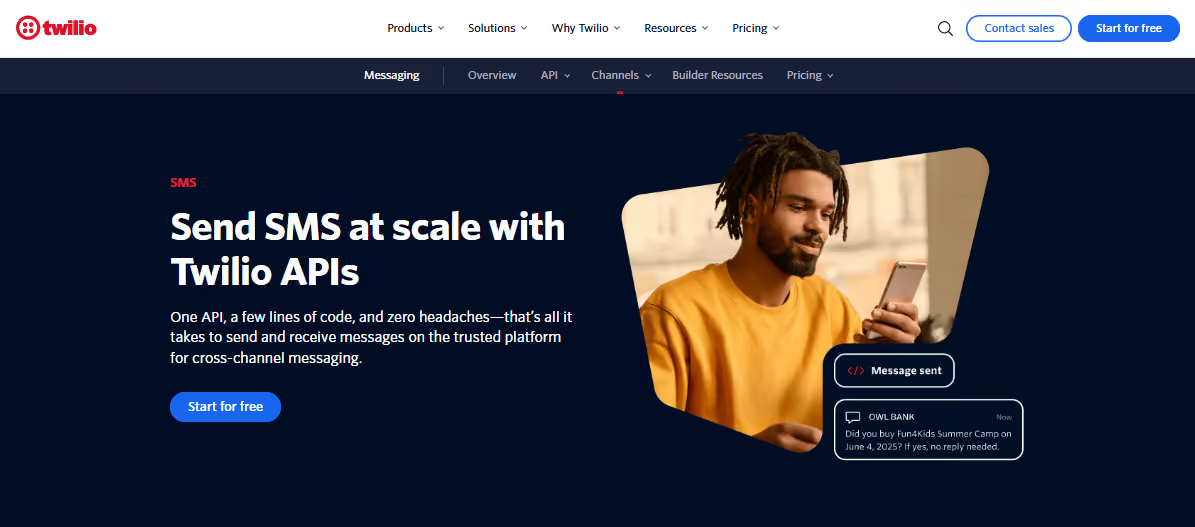
Twilio supports global reach and scalability, letting you deliver messages to recipients in 180+ countries with localized sender options. It also includes built-in compliance tools for opt-out management and provides delivery logs and real-time analytics.
Its Messaging Services lets you group multiple phone numbers and channel types into a single service configuration. You can manage high volumes of outbound and inbound messages by handling sender selection, routing, fallback logic, and delivery behavior.
Twilio also provides developer-friendly tools and SDKs with sample code, quick starts, and tutorials that support multiple languages such as Python, JavaScript, and Ruby. It extends messaging through its Conversations API to support two-way and cross-channel engagement.
9. Sinch Engage
Sinch Engage is an all-in-one messaging platform that helps you send and manage SMS, MMS, RCS, and WhatsApp messaging. It now operates under the Sinch brand, part of a larger cloud communications provider that serves global enterprise messaging needs.
Sinch Engage is built so you can coordinate mobile messaging campaigns, automate communication flows, and connect with audiences on multiple messaging channels without switching between tools.
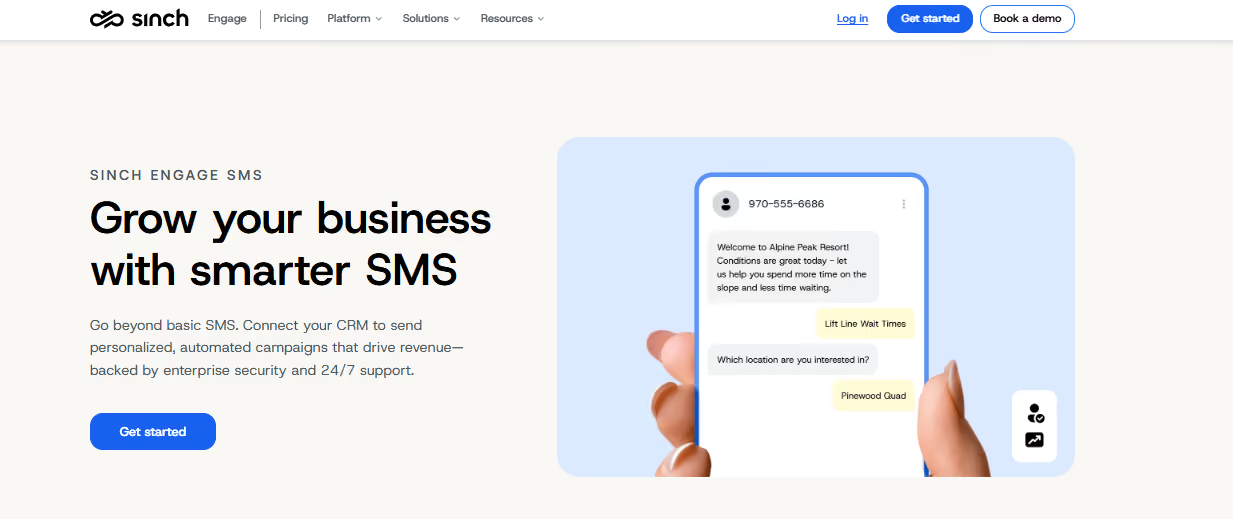
The platform lets you organize contacts into groups, segment lists based on criteria you define, and craft messages using reusable templates. Two-way messaging is supported, so teams can engage in conversations with recipients when replies are enabled.
Real-time analytics dashboards track delivery, open, click-through, and engagement metrics, which help you understand campaign performance and refine outreach over time.
Beyond traditional SMS, Sinch Engage is designed for multichannel engagement. It includes support for MMS for richer media content and RCS for native smartphone experience enhancements.
The platform also integrates with key systems, such as HubSpot, Salesforce, NetSuite, Zoho CRM, Shopify, BigCommerce, Zapier, and more. It can trigger messages based on workflows and consolidate messaging activity with CRM records.
10. Infobip
Infobip is a global cloud communications and CPaaS platform for managing high-volume SMS and omni-channel messaging. It connects you with customers through SMS, MMS, RCS, WhatsApp, email, and other channels from a single platform.
Infobip’s messaging stack is its enterprise SMS service, which lets you send, receive, and automate text messaging with high delivery rates and global reach.
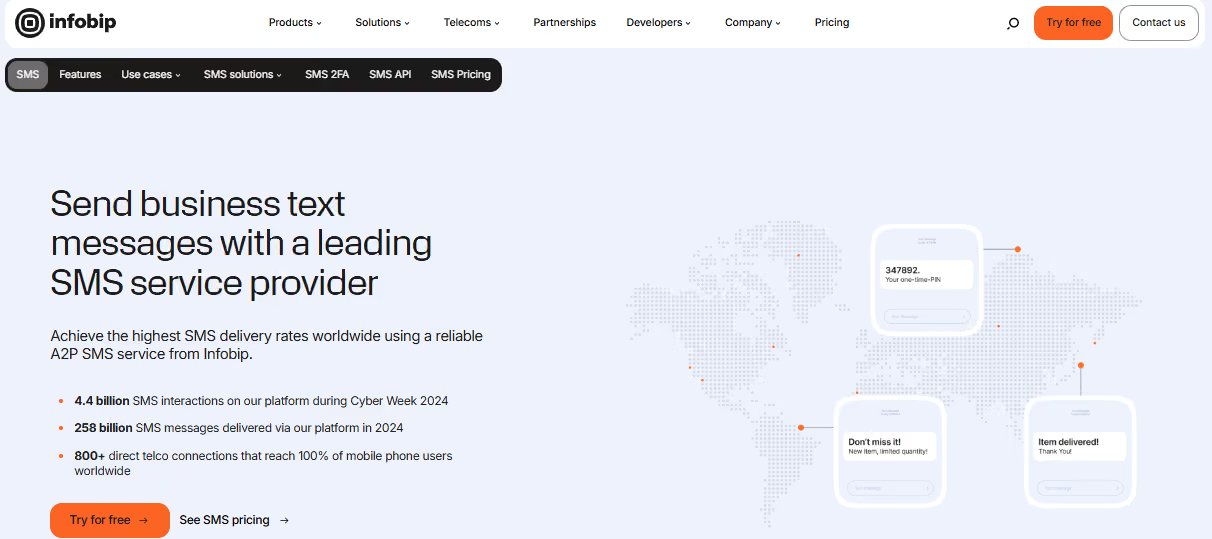
You can also obtain and manage local, long code, short code, and 10DLC numbers in many markets, so messages appear consistent and compliant with regional regulations.
Infobip also provides programmable messaging APIs that developers can embed in enterprise systems, CRM platforms, customer portals, and operational workflows.
These APIs let you connect SMS capabilities with internal business systems and automate message triggers based on real-time events.
It includes intelligent messaging features and omnichannel options. For example, its Smart Messaging solution can route messages on channels like SMS, WhatsApp, and RCS for optimized cost and deliverability.
You also gain access to tools for authentication workflows, global number management, scheduling, and send-time optimization to align messages with customer engagement patterns.
How to Choose the Best Business Text Messaging Software
Choosing the best business text messaging software requires a close look at how the platform supports your goals, team structure, and existing systems. Here’s how to approach your decision strategically.
Define Your Primary Goal
Start by identifying what you want business text messaging to accomplish. Your focus may be sales follow-up, recruitment engagement, customer support, appointment reminders, or marketing outreach.
TextUs supports these goals with real-time two-way SMS and MMS conversations. Your team can engage leads, candidates, and customers in direct message threads instead of relying on one-way alerts.
This business texting platform also supports structured outreach through automation workflows and scheduled texts. This allows teams to follow up consistently while maintaining personalized communication and growing a compliant marketing list.
Consider Team Size and Growth
As your organization grows, your texting platform should support multiple users, departments, and oversight controls. Shared visibility prevents confusion and duplicate replies.
TextUs includes shared inboxes, role-based permissions, and conversation assignment tools. Managers can control access levels and monitor activity across teams.
Teams can also manage inbound texts efficiently through centralized routing. Supervisors can review threads and leave notes internally for coordination.
Multiple user seats can operate within the same account structure. Conversations remain organized even as usage expands across departments.
Evaluate Integration Needs
Texting software should connect directly with your CRM, ATS, and operational systems. Integration keeps contact records aligned and ensures message history remains attached to profiles.
TextUs provides native integrations with Salesforce, HubSpot, Microsoft Dynamics, Greenhouse, Bullhorn, Workday, and other enterprise systems. Messaging activity syncs automatically into those platforms.
This reduces manual logging and keeps communication tied to sales pipelines or recruiting workflows.
Understand Pricing Models
Vendors may charge per user, per message, or through structured enterprise plans. It’s important to understand what features are included and how costs scale with usage.
Some SMS providers offer billing models that include rollover credits or track unused credits across billing cycles. You need to review these terms to prevent budget surprises.
TextUs delivers two-way messaging, automation workflows, shared inbox collaboration, compliance controls, and integrations within its pricing plans. This provides a predictable structure for teams managing high-volume communication.
Request a Demo or Free Trial
A live demo allows you to evaluate usability, workflow alignment, and system performance before committing.
During evaluation, you have to compare how different vendors support campaigns, retention messaging, or engagement models such as loyalty programs.
TextUs offers tailored demonstrations focused on enterprise sales, recruiting, and customer engagement use cases. You can explore automation, integrations, shared inbox features, and reporting tools in real business scenarios.
Turn Conversations Into Conversions With TextUs
If your goal is to reach customers across sales or recruiting pipelines consistently, conversational texting drives faster responses.
TextUs is built for organizations that depend on timely communication to move deals forward and keep candidates engaged.
This SMS platform combines real-time two-way SMS and MMS with structured automation, shared inbox collaboration, and deep CRM and ATS integrations.
Your team can manage conversations within existing systems, maintain full context on every interaction, and keep outreach organized at scale. Instead of juggling tools, you operate from one centralized platform designed for performance.
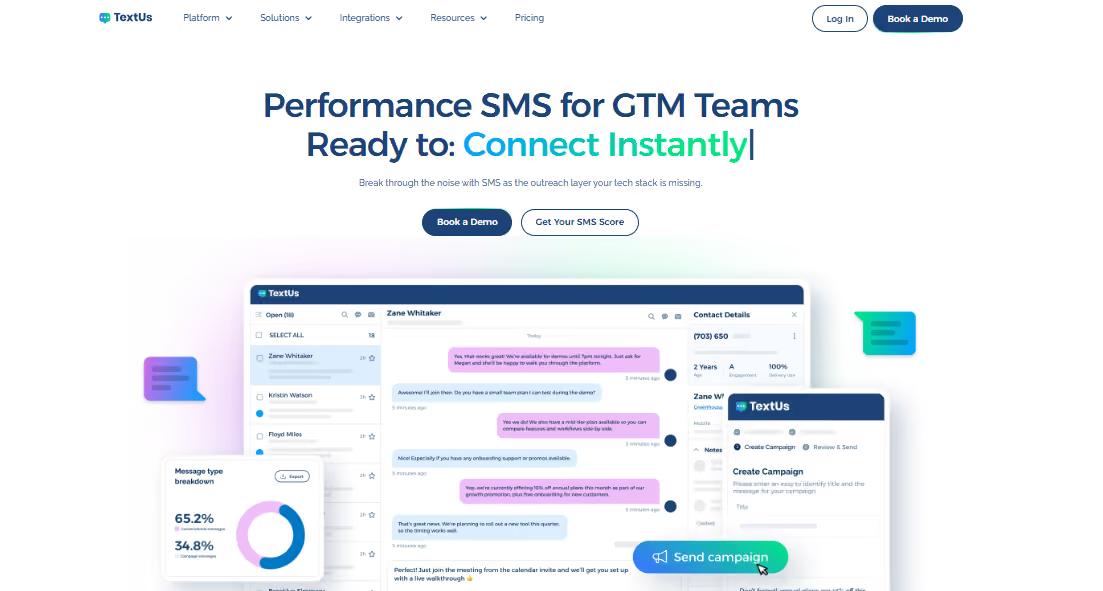
Book a demo with TextUs and see how the right texting solution can drive consistent business impact!
FAQs About the Best Texting Software for Business
What is the best text app for business?
The best text app for business depends on your goals and systems. Some small businesses focus on texting customers, while medium-sized to large enterprises compare features like text-to-pay, voice services, or SMS surveys.
TextUs stands out for real-time conversations and deep integrations, all managed through a centralized web app.
How to set up automated text messages for business?
Choose a platform that supports workflow triggers and automation. You can connect triggers from web forms, build sequences, and launch campaigns in just a few clicks.
Some providers offer tools like a QR code generator or unlimited keywords to grow opt-ins. SMS platforms like TextUs make this process simple with built-in automation tools and scheduling features.
Is there a free mass texting app for nonprofits?
Completely free mass text apps are rare because carrier delivery costs apply. Some vendors offer nonprofit discounts or special pricing, so it’s worth asking about reduced rates if you represent a nonprofit.
For enterprise-level features with structured pricing options, tools like TextUs can be considered alongside these nonprofit plans.
Continue Reading



Frequently Asked Questions
What is the best texting software for business in 2026?
The best business texting software supports two-way conversations, CRM and ATS integrations, automation, compliance tools, and team-based workflows. Top picks vary by industry and use case.
How is business texting software different from consumer texting apps?
Business texting software is purpose-built for professional outreach with compliance controls, CRM integrations, campaign tools, and team collaboration features that consumer apps do not provide.
What should you look for when comparing business texting software?
Compare platforms on deliverability, two-way messaging, integration compatibility with your CRM or ATS, ease of use, compliance features, pricing, and customer support quality.
Business Texting
Built for Results
Create and convert pipeline at scale through industry leading SMS software