
SMS Recruiting: A Complete Guide to Texting Candidates
Discover what SMS recruiting is, why it works, how to use it at each stage of the hiring process, and how to find the right software.

Written by
Adam Hamdan
Published
July 23, 2026

Good candidates do not wait around. They apply to several jobs at once, take the first solid offer, and move on. Recruiters who rely only on email and phone calls often reach them too late.
Inboxes are crowded, and plenty of emails never get opened. Missed phone calls go to voicemail.
Text messages, by contrast, tend to get read quickly. That gap is why more hiring teams now use SMS recruiting to reach candidates where they actually respond.
This guide covers what SMS recruiting is, why it works, and how to use it at each stage of the hiring process. You will also find best practices for consent and timing, plus what to look for in SMS recruiting software.
TL;DR
- SMS recruiting is the use of text messages to reach, screen, and update job candidates during hiring.
- Texts get opened and answered more often than emails, which helps recruiters move faster.
- Common uses include initial outreach, interview scheduling, reminders, text-to-apply, re-engagement, and job alerts.
- Consent matters. Get permission before texting, and give every candidate a clear way to opt out.
- A platform like TextUs connects to your applicant tracking system, keeps a full message history, and lets your team text candidates from a shared inbox.
What Is SMS Recruiting?
SMS recruiting is the practice of using text messages to communicate with job candidates during the recruiting process. Recruiters use it to send outreach, answer questions, schedule interviews, and share updates.
It works alongside your existing recruiting tools rather than replacing them. A recruiter might find a candidate on a job board, log them in an applicant tracking system (ATS), and then send a short text to open the conversation.
The candidate replies from their mobile device, and the full exchange stays in one place.
The appeal is simple: text messages are direct and hard to ignore. A candidate does not need to open an app, log in, or dig through a crowded inbox. They see the message, read it, and reply in a few taps.
SMS recruiting is not only for cold outreach. Teams also use it to re-engage past candidates, send job alerts, confirm interviews, and answer quick questions. Used well, it shortens the time between first contact and a hire.
Why SMS Recruiting Works
Recruiting is a race. In a highly competitive job market, the team that reaches a candidate first often wins the hire. SMS helps you get there faster.
The main reason is attention. People keep their phones close and check texts within minutes. Emails sit unread, and phone calls go to voicemail. A text lands in front of the candidate and gets a reply, often the same day.
Speed also improves the candidate experience. When a job seeker asks a question or waits for interview details, a quick text keeps them engaged. Slow replies push good candidates toward other offers.
SMS fits how people already communicate. Most candidates prefer a short message over a long email or an unexpected call during work hours. Meeting them on that channel raises response rates and cuts down on missed connections.
There is a limit worth noting. Texting works best for short, clear messages. Detailed offers and formal documents still belong in email. Used together, the two channels cover the full candidate journey.
How to Use SMS for Recruiting
SMS fits into nearly every stage of hiring. Below are the most common ways recruiters put it to work, from first contact to final reminder.
1. Initial Outreach
The first message sets the tone. Keep it short, name the role, and give the candidate a reason to reply. A good outreach text identifies you, the company, and the job title in a sentence or two.
Personalization helps. A message that references the candidate's background reads as human, not automated.
Avoid long pitches. The goal is a reply, not a full sell.
Timing matters too. Send during business hours, when candidates are more likely to be near their phones and open to a work conversation. A well-timed text opens the door for a quick back-and-forth that email rarely matches.
2. Interview Scheduling
Scheduling is where texting saves the most time. Instead of trading emails or leaving voicemails, a recruiter sends a text with a few time slots, and the candidate replies with a pick.
A candidate can confirm a time in one message, on their phone, without opening a laptop. That speed cuts the days-long delays that stall interviews and cause candidates to lose out to other offers.
Texting also handles changes well. If a slot falls through, a quick message can reschedule it within minutes. There is no long email thread to track, and both sides can look back at the message history to confirm the details.
For teams juggling multiple candidates at once, this keeps the pipeline moving. Every candidate gets a prompt reply, and no one waits days to hear back.
3. Interview Reminders
No-shows waste everyone's time. A short reminder text cuts them down by putting the interview details right where the candidate will see them.
Send a reminder a day before, then a shorter one on the morning of the interview. Include the time, the format, and a link or location. Keep it brief. The candidate already agreed to the slot, so this is a nudge, not a pitch.
Reminders also give candidates an easy way to flag a conflict. If something comes up, they can reply and reschedule instead of simply not showing up. That saves the recruiter from wasting a block of time and keeps the candidate in the pipeline.
Automated reminders make this effortless. The system sends them on a set schedule, so recruiters do not have to remember each one.
4. Text-to-Apply
Text-to-apply lowers the barrier to entry. Instead of filling out a long online form, a candidate texts a keyword to a number and starts the process from their phone.
This works well for high-volume and hourly roles, where a clunky application drives people away. A job seeker sees the posting, texts a word like "APPLY," and gets a reply that collects their details or points them to a short form.
Not only is the effort minimal, but it also widens your reach. Many candidates browse job postings on a mobile device and never sit down at a computer to apply. Text-to-apply meets them there and captures their interest before it fades.
Once a candidate texts in, their contact details land in your system, and the conversation can continue by text.
5. Re-Engaging Past Candidates
Your best future hire may already be in your system. Past candidates who were strong but not the right fit at the time are worth another text when a new role opens.
A short message revives the connection. Reference the previous conversation, name the new job opening, and ask if they are interested. Because you have talked before, the outreach feels warm rather than cold.
This saves time on sourcing. Instead of starting from scratch, you reach people who already know your company and have made it deep into a past hiring pipeline. Many of them will reply simply because the timing is finally right.
A full message history helps here. When you can see the earlier exchange, you pick up where you left off instead of repeating questions.
6. Job Alerts
Job alerts keep interested candidates warm until the right role appears. When someone opts in, you can text them as soon as a matching job opening goes live.
This works well for candidates who are not ready to apply today but want to hear about future openings. Instead of hoping they check your careers page, you reach them directly when a relevant role opens. The message should be short: name the job title and point them to the next step.
Alerts also build a pool of engaged candidates you can tap fast. When a role opens, you already have a list of people who have asked to be notified. That cuts sourcing time and fills the top of your hiring pipeline quickly.
Remember: Only send alerts to candidates who opted in, and give them a clear way to stop. That keeps the channel useful and keeps you compliant.
SMS Recruiting Best Practices
Texting candidates works best with a few rules in place. These keep your messages effective and compliant:
- Get consent first: Only text candidates who agreed to hear from you. Collect permission when they apply or opt in, and note it in their record. This protects your team and respects the candidate.
- Provide an easy opt-out: Every candidate needs a clear way to stop. Include a simple opt-out line and honor it right away. A candidate who can leave freely is more likely to engage in the first place.
- Keep messages short and clear: Texts are for quick, direct communication. Name the role, state the point, and give one next step. Save long details and formal documents for email.
- Personalize where you can: Use the candidate's name and reference their background. A personalized message reads as human and earns more replies than a generic blast.
- Text during business hours: Send during the workday, when candidates expect work messages. A text at odd hours feels intrusive and can hurt your response rates.
What to Look For in SMS Recruiting Software
Not every texting tool fits recruiting. The right software matches how hiring teams actually work. To find the right one, you should focus on a few crucial features.
Start with your applicant tracking system. The tool should connect to it, so texts and candidate records stay in sync. Without that link, your team ends up copying details by hand.
A shared inbox is next. Recruiters work in teams, and a shared inbox lets several people manage conversations without double-texting a candidate. Everyone sees the full message history in one place.
Then, recruautomation. Templates, scheduled sends, and job alerts save time on repetitive outreach. Compliance features like opt-out handling keep you on the right side of texting rules.
TextUs brings these pieces together in one platform.
It offers native two-way integrations with major applicant tracking systems, a shared team inbox, reusable templates, and automatic opt-out compliance. Recruiters can run bulk campaigns or one-to-one conversations, and every exchange stays searchable by contact.
For hiring teams that want to text at scale without losing the personal touch, it is a strong fit.
See how TextUs fits into your hiring process and start texting candidates where they actually reply.
Text Candidates Where They Reply With TextUs
Email and phone calls leave too many candidates unreached. TextUs gives your hiring team a faster way to connect, right where candidates already pay attention.
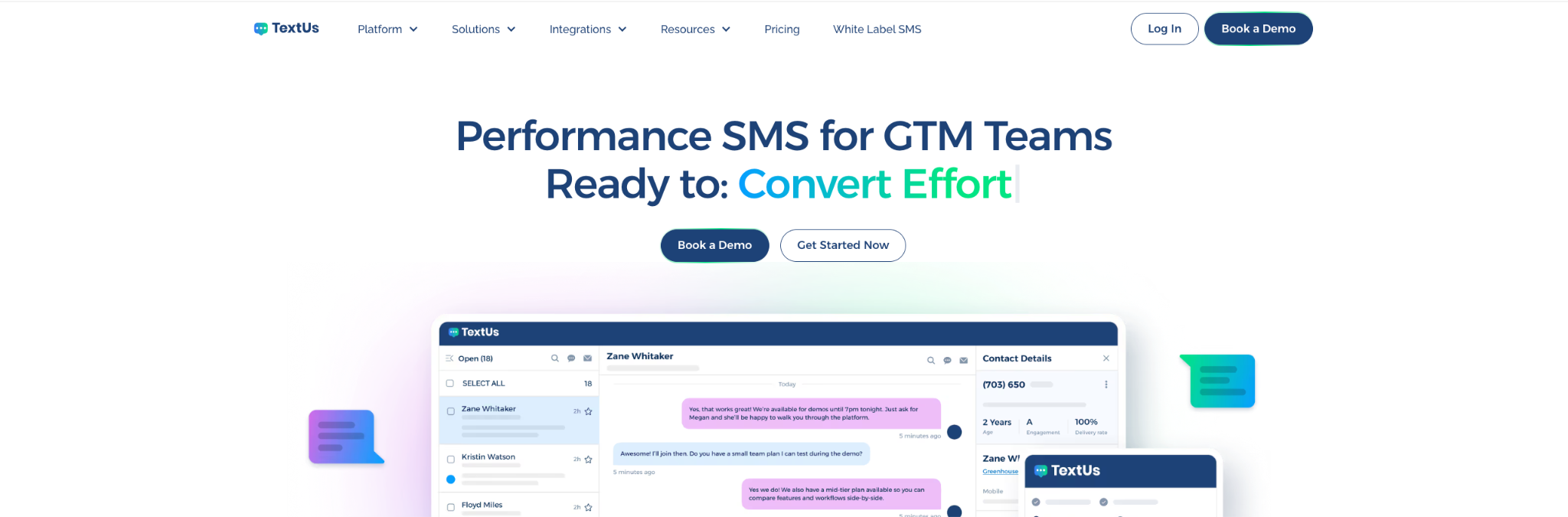
Built for revenue and hiring teams, TextUs turns texting into a real recruiting channel. Your team can send outreach, schedule interviews, and share job alerts from one shared inbox, with every conversation searchable by contact.
Native integrations with major applicant tracking systems keep candidate records in sync, so nothing gets lost between tools.
Automation handles the repetitive work. Reusable templates speed up outreach, scheduled sends land at the right time, and automatic opt-out handling keeps you compliant. Recruiters spend less time on manual follow-up and more time talking to candidates.
The result is a hiring process that moves at the speed of a text. Candidates get quick replies, interviews get booked faster, and the right applicants stop slipping away to other offers.
Book a demo of TextUs and see it in action!
Continue Reading



Frequently Asked Questions
What is SMS for hiring?
SMS for hiring is the use of text messages to reach and manage job candidates during the recruitment process.
Recruiters use it to send outreach, schedule interviews, and share updates. Because texts get read quickly, it helps hiring teams engage candidates and hire faster than email or phone calls alone.
Why am I suddenly getting recruiter texts?
You are likely getting recruiter text messages because you applied for a role, joined a job alert list, or opted in through a job board. Many recruiters now use text recruiting software to reach potential candidates directly.
If you would rather not receive them, every message should include a simple way to opt out.
What does an SMS company do?
An SMS company provides the platform that lets businesses send text messages at scale. For hiring, that means tools for outreach, screening questions, interview reminders, and job alerts.
Good SMS recruiting software connects to an HR system or applicant tracking system, so candidate communication stays organized in one place.
Business Texting
Built for Results
Create and convert pipeline at scale through industry leading SMS software