
15 Best Candidate Rediscovery Tools in 2026
Compare 15 candidate rediscovery tools and learn why TextUs is the top pick for re-engaging past applicants through personalized SMS.

Written by
Published
November 18, 2026

You spend hours reviewing resumes, screening applicants, and conducting interviews. But once a role is filled, much of that work goes unused as candidate records pile up in your ATS or recruiting CRM.
Past applicants, silver medalists, and former contractors may have the qualifications needed for future openings.
Candidate rediscovery tools allow you to search previous applications, review candidate histories, and identify suitable matches without repeating the entire sourcing process.
In this article, we'll explore the best candidate rediscovery tools and how to choose the right one for your recruitment needs. You'll also learn how to rediscover and re-engage past candidates for new job opportunities.
TL;DR
Here are 15 platforms categorized by how they support candidate rediscovery and re-engagement:
- Candidate re-engagement and communication: TextUs, Sense, Emissary
- AI-powered candidate rediscovery: hireEZ, SeekOut, Eightfold AI
- ATS-based candidate rediscovery: Ashby, Greenhouse, Workday HiredScore
- Candidate rediscovery and talent CRM: Gem, Beamery, Phenom
- Candidate data enrichment tools: People Data Labs, ContactOut, SignalHire
What Makes Candidate Rediscovery Valuable for Recruitment?
According to Gem's 2026 Recruiting Benchmarks Report, candidates rediscovered from existing talent databases accounted for 46% of sourced hires in 2026.
This shows how previous applicants and contacts contribute to talent discovery without requiring a new search every time.
Here are the main benefits of using candidate rediscovery tools:
- Reduce recruitment costs: Reuse existing candidate databases and reduce expenses on paid job advertisements and external sourcing.
- Shorten time to hire: Revisit applicants who have already completed screening or interviews for previous positions.
- Improve candidate matching: Identify previous candidates whose updated skills and experience match current job requirements.
- Maximize existing ATS data: Use historical applications, interview feedback, and candidate records to identify potential hires.
- Support high-volume recruitment: Revisit qualified candidate pools when you need to fill multiple positions with similar requirements.
- Improve candidate engagement: Reconnect with previous applicants through personalized messages about new opportunities.
- Support repeat placements: Identify former contractors and temporary workers whose qualifications match upcoming assignments.
With the right software, you can identify qualified applicants, reconnect with those interested in new opportunities, and make better use of your existing talent pool.
15 Best Candidate Rediscovery Tools (By Use Case)
Candidate rediscovery tools support different stages of finding and re-engaging past applicants. This list groups platforms by candidate matching, communication, talent CRM, and data enrichment.
Some identify potential matches; others help you update records or contact candidates selected through your ATS. Here are 15 platforms organized by use case to help you compare their features and capabilities.
Candidate Re-engagement and Communication
These platforms let you follow up with qualified candidates through personalized SMS, targeted campaigns, and automated follow-ups.
1. TextUs
TextUs is text recruiting software that lets you reconnect with qualified people through two-way SMS. It integrates with recruitment systems to connect candidate conversations with your ATS records.
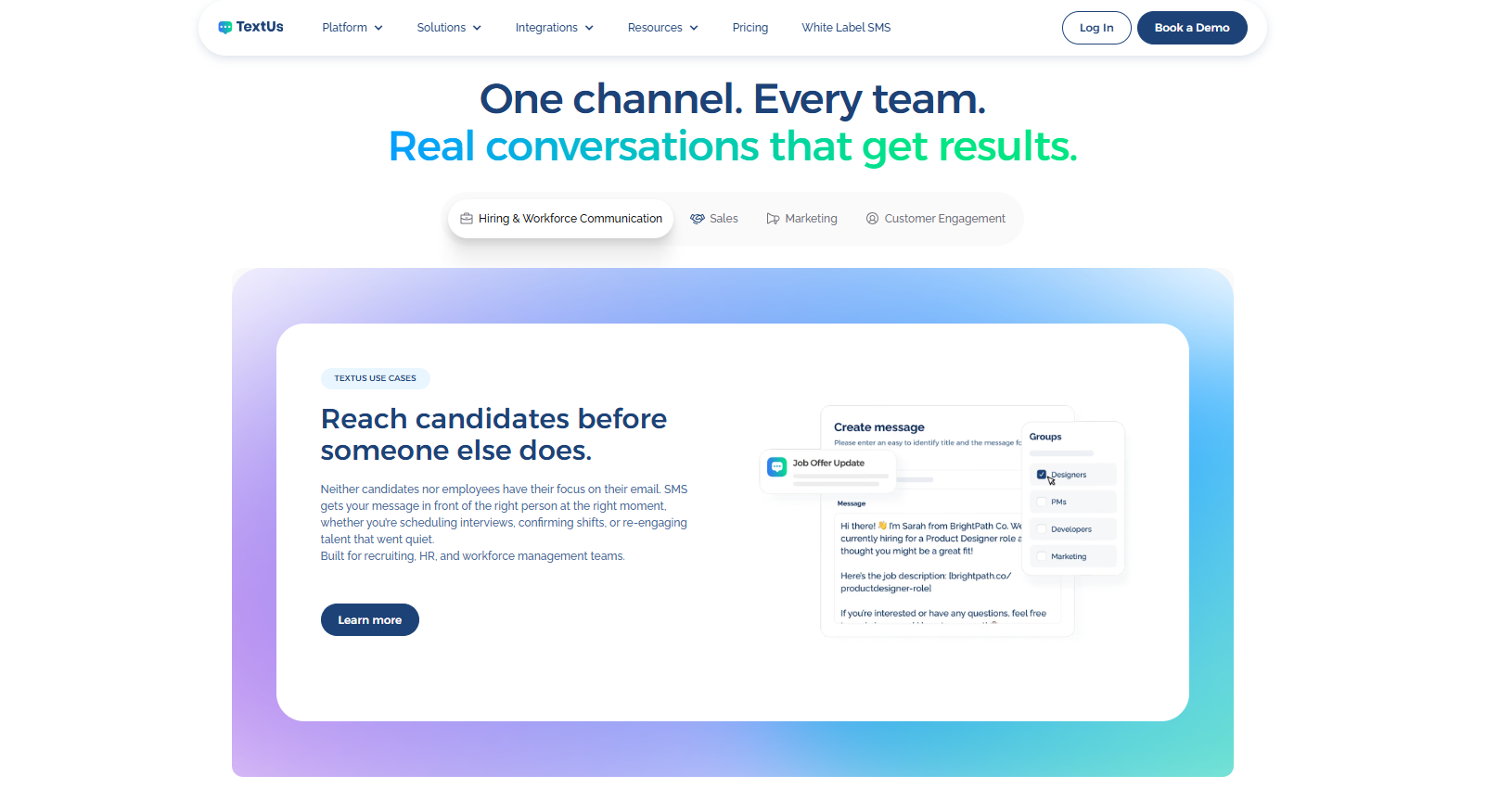
TextUs allows you to contact large candidate pools through personalized bulk SMS and MMS messages. Texts can include candidate names, job details, images, PDFs, and branded links.
Campaigns Pro also offers A/B testing, while delivery, response, and link-click reports show how candidates interact with your recruiting text messages.
Automated sequences bring automated outreach into your hiring workflow through scheduled follow-ups for job opportunities and interview reminders. Sequences stop when candidates reply, so you avoid unnecessary follow-ups.
TextUs also offers unlimited custom SMS keywords and QR codes that allow candidates to express interest, receive automated responses, and join targeted contact lists.
A shared inbox reduces recruiter effort by keeping candidate replies, conversation histories, and recruiter assignments accessible from your existing hiring stack.
Contact Intelligence provides AI-powered engagement scores that classify contacts as Cold, Warm, or Hot based on their interactions.
Your next hire could already be in your candidate database. Why spend more time searching for new applicants when past candidates are worth another conversation?
Book a demo with TextUs today to see how personalized texting turns previous candidate interest into new hiring opportunities!
2. Sense
Sense is a talent engagement platform that supports candidate re-engagement through SMS, email, WhatsApp, and automation throughout the hiring process.
Its two-way texting feature allows recruiters to reconnect with previous applicants, share job opportunities, and manage responses through a shared inbox.
Mass texting supports personalized messages to selected candidate groups. You can import contacts, schedule broadcasts, and use variables such as names and job roles.
Sense’s automation feature supports personalized communication based on candidate information and recruitment activities. Its workflows trigger messages, reminders, and follow-ups at different recruitment stages.
It includes an AI chatbot that answers candidate questions, shares job recommendations, and supports screening and interview scheduling.
Sense AI Copilot also generates and revises text messages, while its candidate engagement agent supports outreach automation through multiple communication channels.
3. Emissary
Emissary provides text recruiting software for one-to-one SMS, group messaging campaigns, and automated communication through existing recruitment systems.
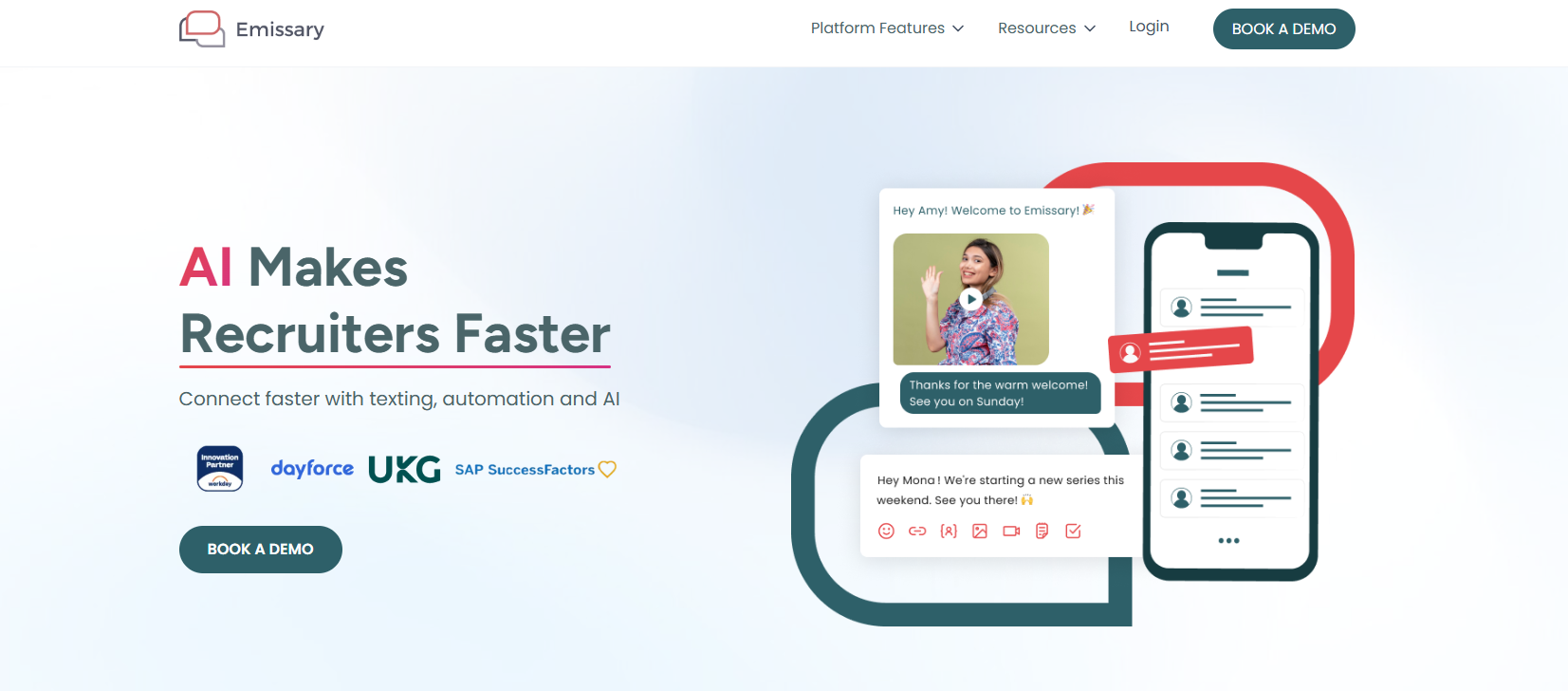
It allows you to contact past applicants, new hires, and existing employees. Contact lists can be imported from an ATS, HRIS, or spreadsheet, while message templates and dynamic fields support customized communication.
The texting inbox organizes conversations from individual messages, campaigns, and short codes. It also offers recruiting chatbots that automate candidate screening, interview scheduling, and responses to common questions.
Chatbots operate through SMS and web-based channels, with options to transfer conversations to recruiters when direct assistance is needed. Supported integrations include triggered messages based on recruitment stages and synchronization of conversation transcripts.
AI-Powered Candidate Rediscovery
These platforms use AI search features to identify qualified candidates from existing databases and match their skills and experience to current job requirements.
4. hireEZ
hireEZ is an AI recruiting platform that offers Rediscovery to find candidates already stored in your ATS. It connects with systems such as Workday, Greenhouse, and Lever, allowing recruiters to search previous candidate records for new job openings.
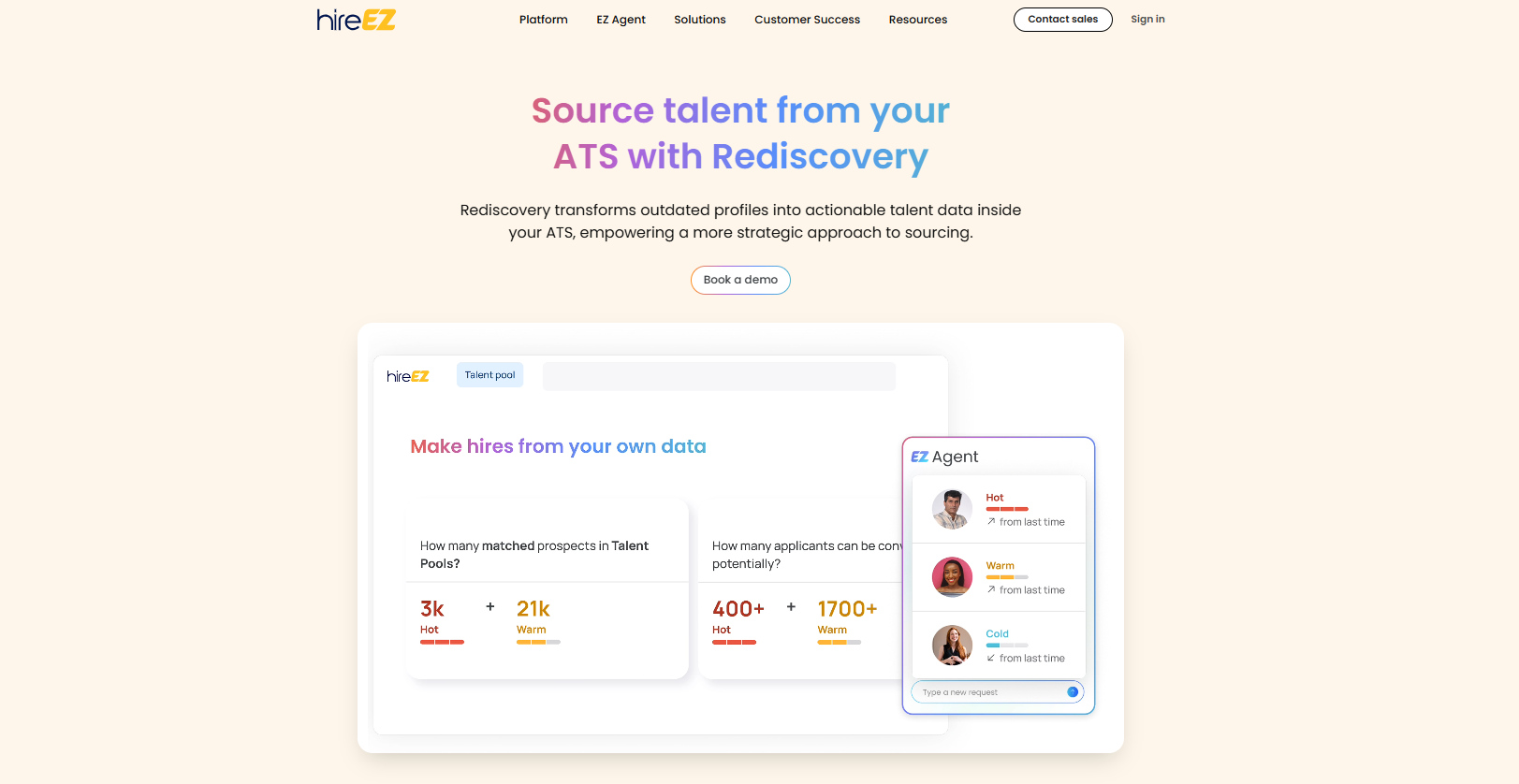
Its Rediscovery feature removes duplicate records and updates outdated candidate information through profile enrichment. These enriched candidate profiles provide current employment details and qualifications that recruiters can compare against new hiring requirements.
AI in recruitment matches previous applicants with open positions. Its Applicant Review feature also evaluates candidates against a job description and highlights qualifications that align with the role.
hireEZ Talent Pools brings historical applicants into searchable candidate groups. You can revisit silver medalists and other past applicants, organize their profiles, and identify people worth contacting.
5. SeekOut
SeekOut offers Talent Rediscovery, which connects with existing ATS and CRM systems to identify previous applicants for new vacancies.
It matches historical candidate records with updated professional profiles using information such as names, employers, job titles, resumes, and LinkedIn URLs.
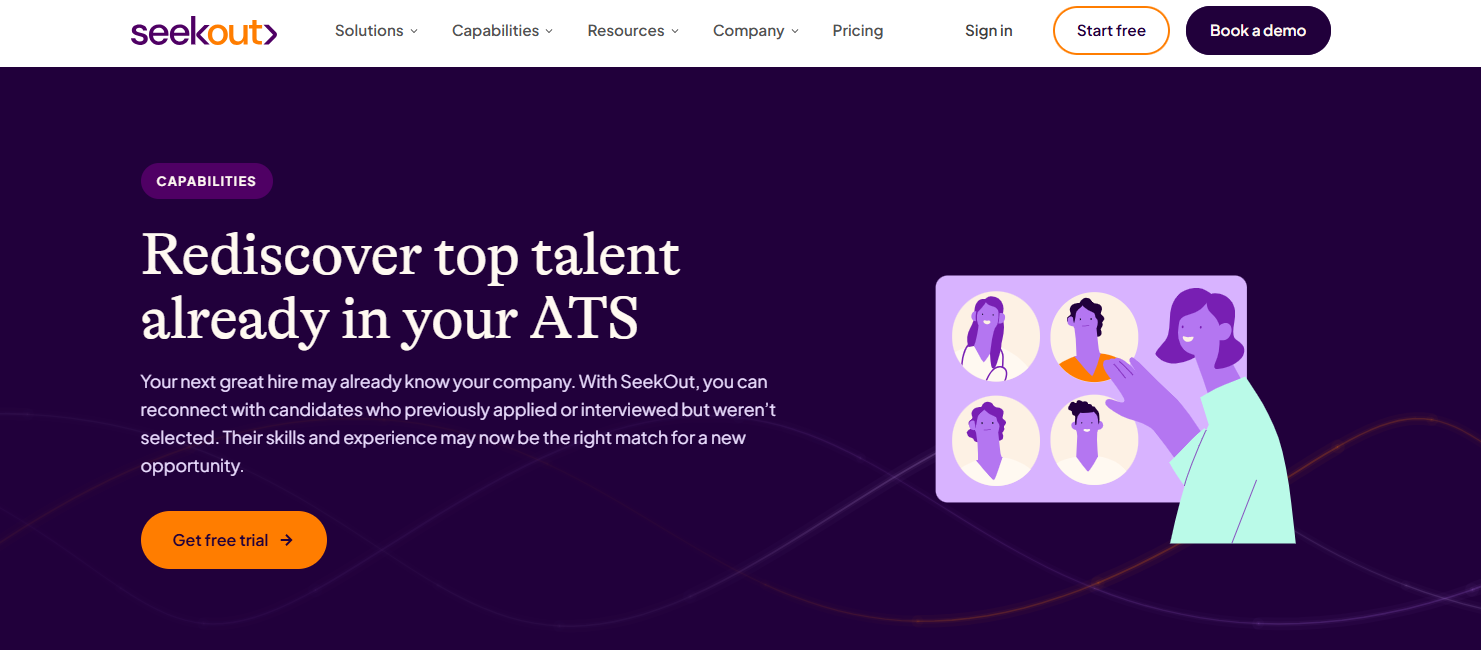
The platform refreshes candidate matches at set intervals and offers advanced search filters for skills and employment history. It also imports selected ATS fields, including application status, rejection reasons, recruiter ownership, and previous contact dates.
SeekOut Workspaces evaluates candidates from ATS Rediscovery, alumni records, and public profiles. Its AI scoring compares previous applicants against current job requirements, while recruiters retain control over candidate selection.
The platform also supports personalized re-engagement campaigns for candidates identified through rediscovery. Its external sourcing capabilities allow you to compare existing applicants with other potential candidates when additional searches are needed.
6. Eightfold AI
Eightfold AI provides talent intelligence through its talent acquisition platform. It refreshes historical candidate profiles with updated skills and professional experience.
Its AI-powered sourcing capabilities use deep learning to match candidates with job requirements based on skills, experience, and career potential.
Searches begin with your existing talent network, which includes previous applicants and other candidates who have interacted with your organization.
For talent sourcing, Eightfold supports AI-matched talent pools and communities. You can organize previous applicants into candidate groups and use personalized nurturing campaigns to reconnect with them about future opportunities.
It also provides candidate recommendations through explainable AI matching. Eightfold's Match Score provides a skills-based assessment of how candidates align with job requirements.
ATS-Based Candidate Rediscovery
These platforms let you revisit previous applicants within your existing hiring systems without adopting a separate candidate sourcing tool.
7. Ashby
Ashby offers AI Talent Rediscovery within its ATS and recruiting CRM. It evaluates previous candidates against job-specific criteria.
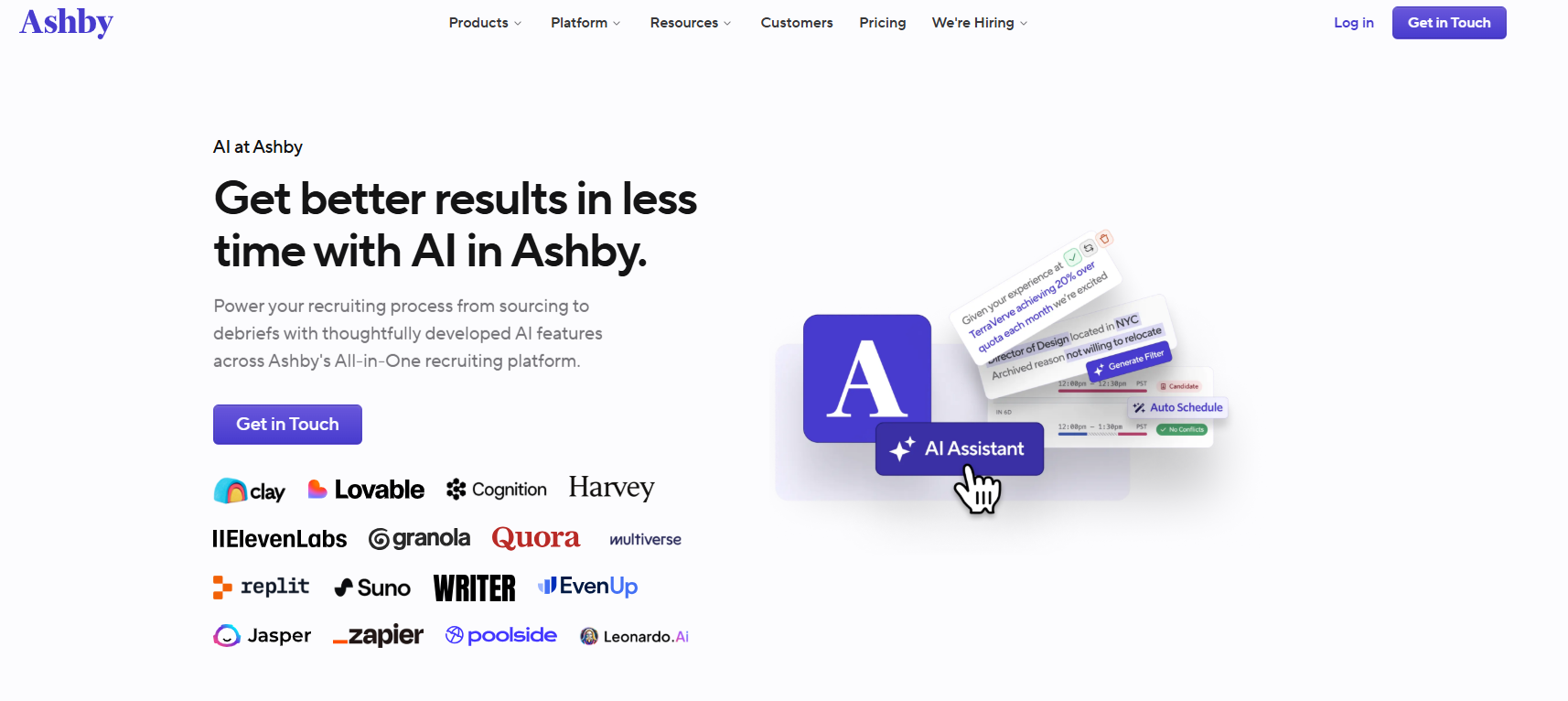
This AI tool analyzes application history, interview ratings, and previous email interactions to identify potential matches.
It organizes results into categories such as warm leads, silver medalists, high-fit candidates, and overlooked candidates who didn't progress beyond initial screening.
Ashby also refreshes candidate profiles with updated employment history, location, and education information when available. You may review resumes, previous interview feedback, and a breakdown of how each applicant meets the role's criteria.
This AI candidate rediscovery software also supports personalized email sequences based on previous applications and conversations, with recruiter approval required before sending.
8. Greenhouse
Greenhouse offers Talent Rediscovery features within its ATS. It supports searches through previous applications, interview evaluations, and recruitment history to identify candidates for current vacancies.
The software's original Talent Rediscovery feature allows you to filter applicants and prospects by recruitment stage, rejection reason, interview scorecards, and job details.
Greenhouse also offers a past candidates tab within Talent Matching. It provides suggested filters that TA teams can adjust based on previous interview milestones, scorecard ratings, application dates, and related positions.
Search results include historical applications, interview feedback, rejection reasons, and previous recruiter notes.
The candidate panel also displays AI-generated scorecard summaries when available, while tags identify duplicate records or applicants active in other vacancies.
9. Workday HiredScore
Workday HiredScore provides ATS-based candidate rediscovery through its Fetch capabilities. It searches previous applicants stored in Workday Recruiting and identifies potential matches when new job requisitions are opened or posted.
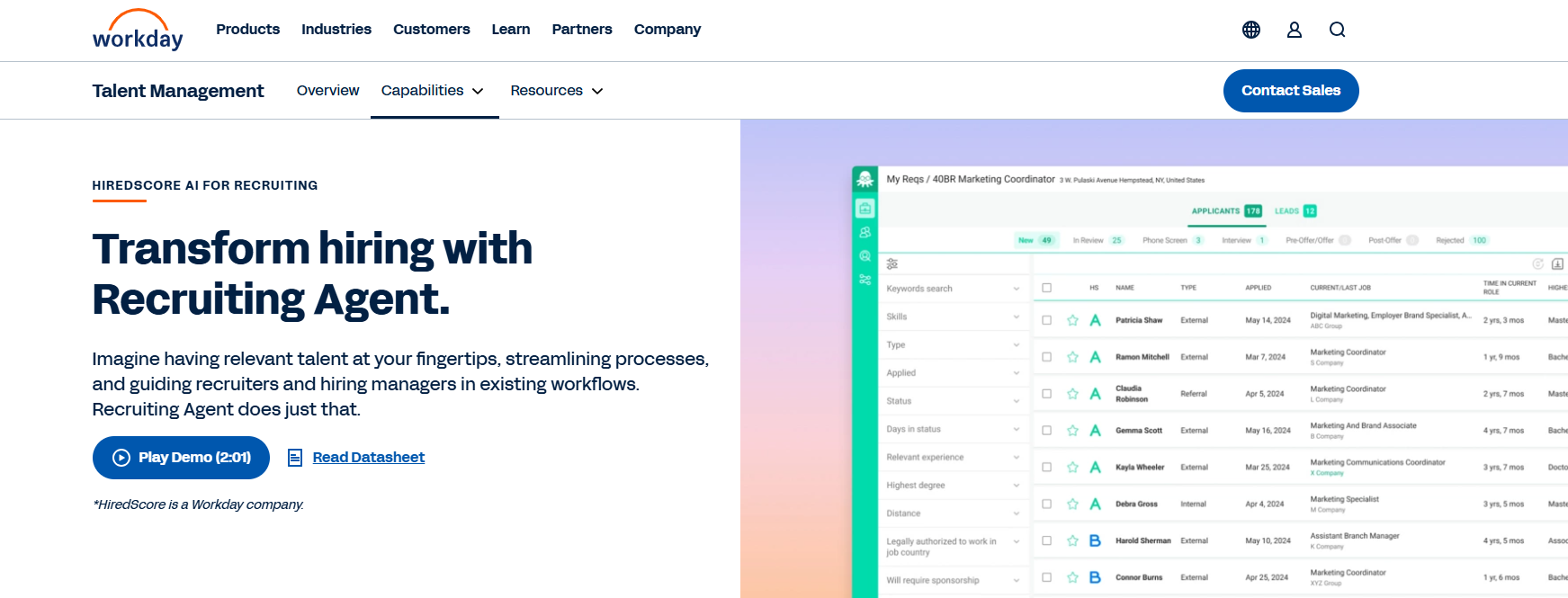
Its Fetch feature compares previous applications, resumes, and candidate profiles against current job requirements. It displays up to eight recommended leads per requisition, while administrators can configure how far back the system searches historical applications.
Dynamic Fetch allows recruiters to adjust searches based on required skills, professional experience, education, and location. It also supports searches within Workday candidate pools and updates lead recommendations as new matches become available.
The Embedded Fetch feature displays new candidates within the Workday job requisition interface. It lets you invite previous applicants to apply, send messages, add them to candidate pools, or share profiles with a hiring manager.
Candidate Rediscovery and Talent CRM
These sourcing platforms focus on organizing existing candidate relationships, maintaining talent pools, and reconnecting with applicants when suitable opportunities arise.
10. Gem
Gem combines AI sourcing and talent rediscovery to identify past applicants and prospects for job openings. It searches existing ATS and CRM records and ranks candidates based on their qualifications and fit for the position.
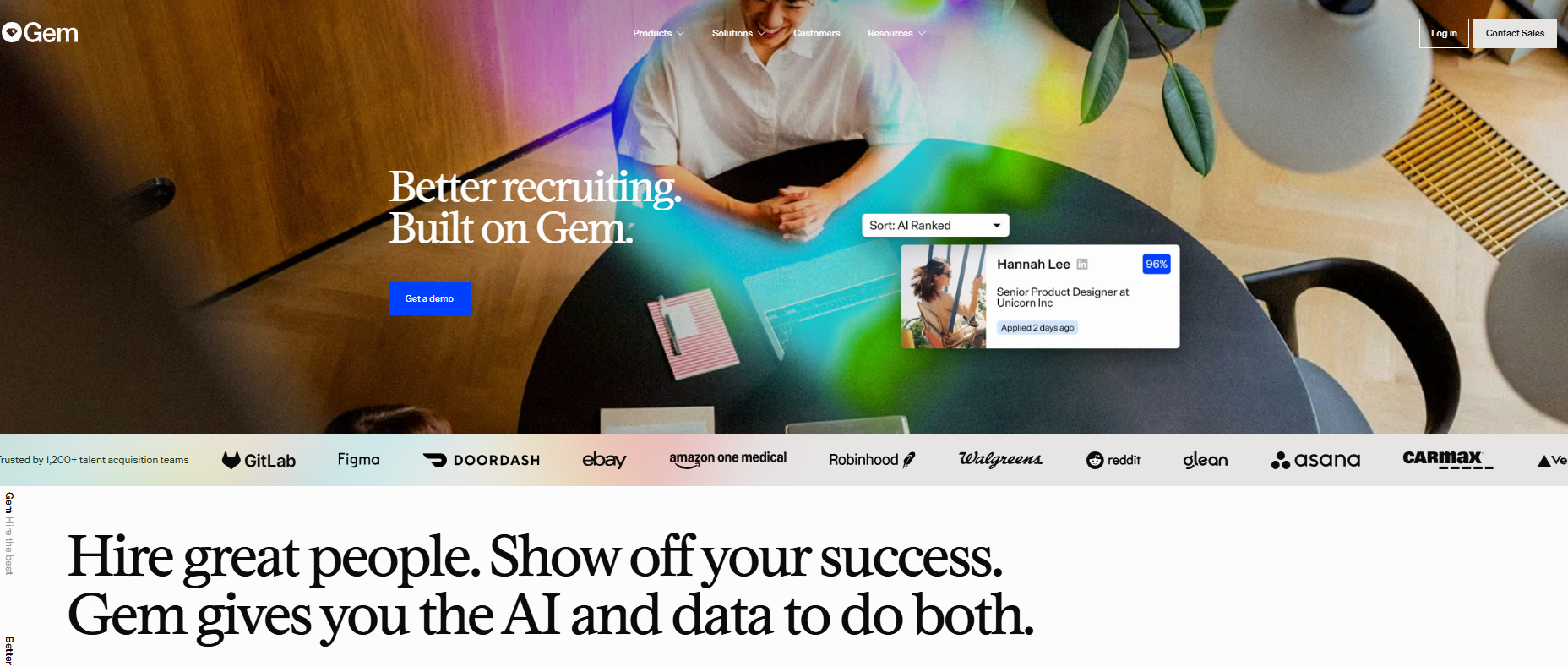
This AI recruiting software uses natural language search to describe candidate requirements without writing Boolean queries. Search results also consider past applications, sourcing activities, and engagement history to identify potential matches.
ATS integrations support two-way data synchronization. Candidate stages, interview notes, rejection reasons, and other recruitment records remain accessible during future searches.
Dynamic talent pools organize previous applicants by skills, experience, and location. Personalized messaging sequences and talent nurturing campaigns support follow-ups through email, InMail, and SMS.
11. Beamery
Beamery provides a talent CRM that connects with an existing ATS to manage previous applicants and recruitment relationships. Candidate profiles include skills, qualifications, and recruitment history for reconsidering silver medalists and other past applicants.
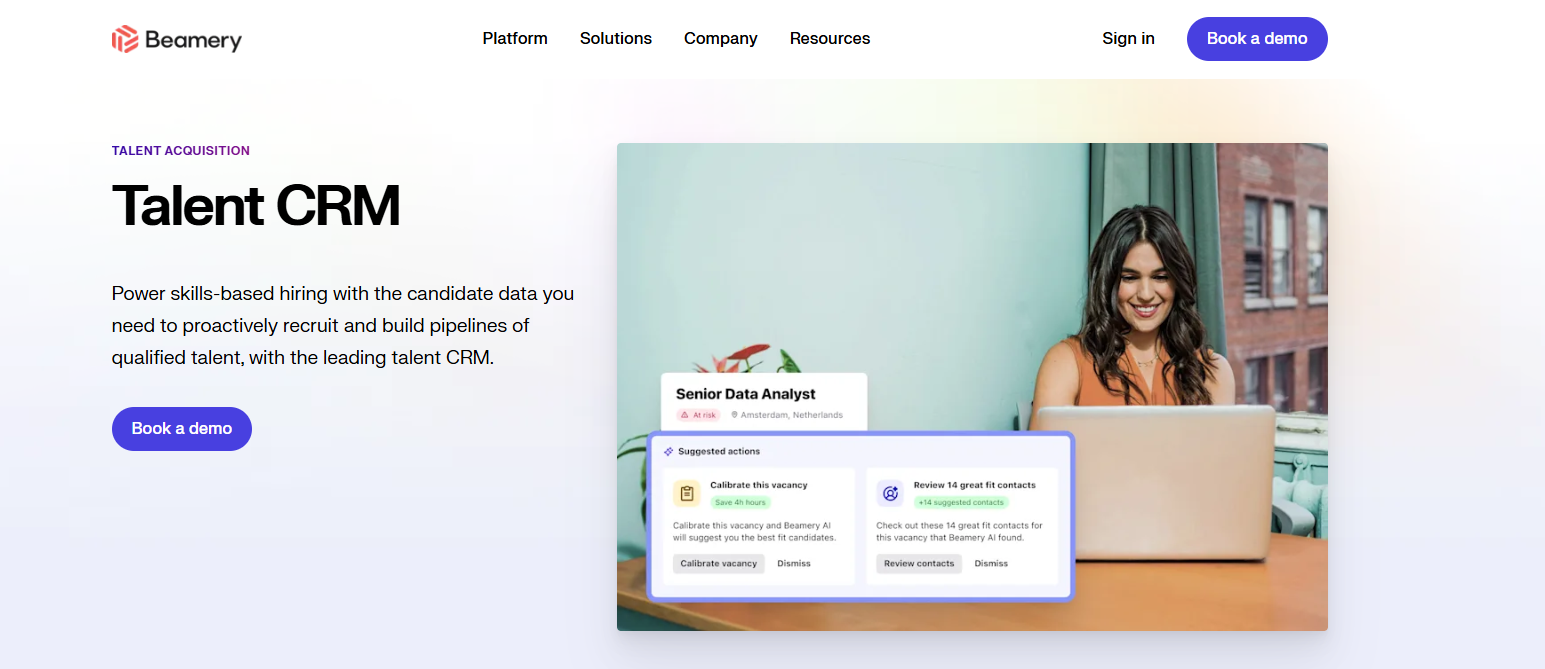
Skills-based matching allows you to assess candidates beyond their previous job titles. Searches consider professional experience and qualifications to identify relevant candidates for current vacancies.
The CRM also organizes passive candidates and previous applicants into targeted talent pools. Professional information and candidate preferences from connected sources and candidate submissions provide updated details for future recruitment.
Beamery's Talent Marketing features support segmented email campaigns based on skills, experience, and candidate engagement. Connections with human capital management systems also support internal mobility by identifying existing employees for new positions.
12. Phenom
Phenom offers an AI-powered talent CRM for managing previous applicants, candidate relationships, and recruitment pipelines.
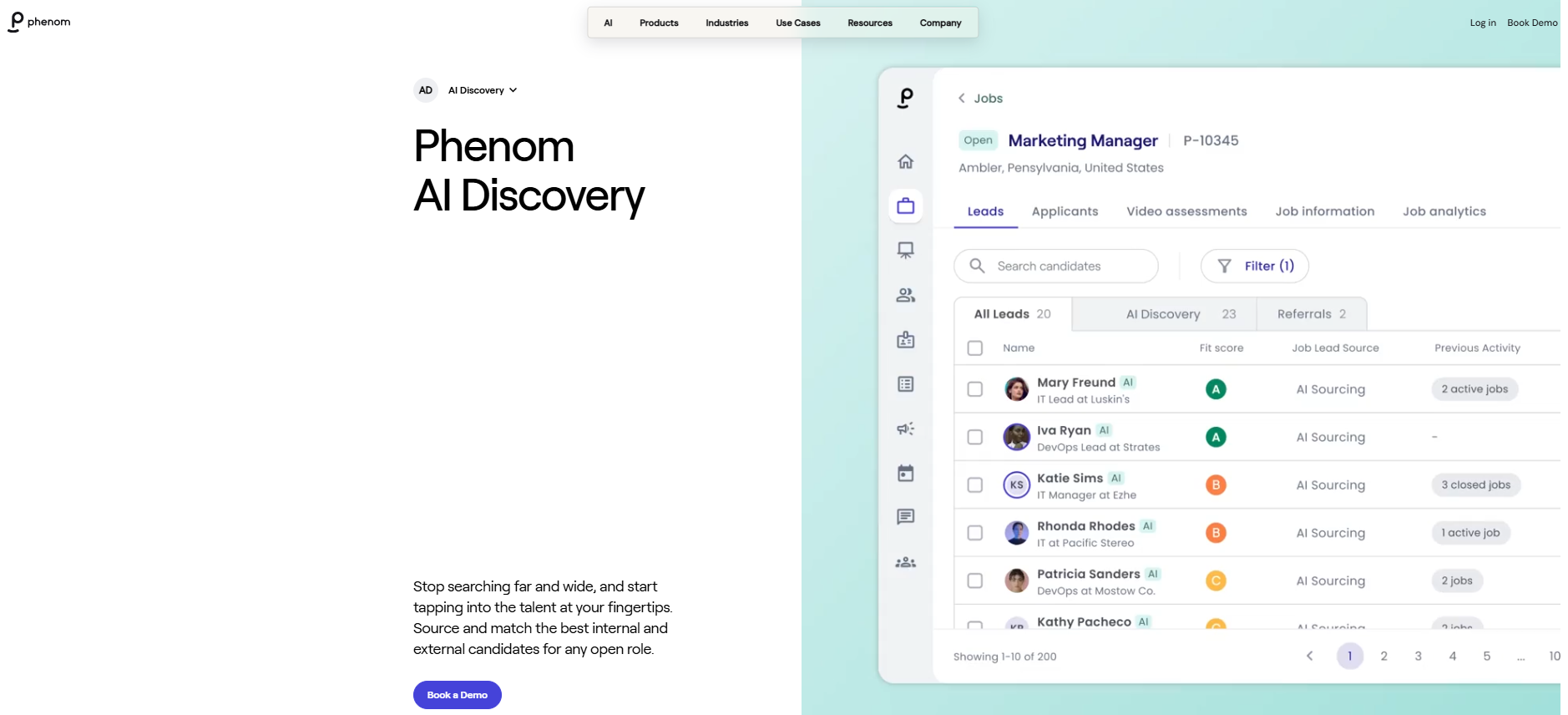
The Rediscover Top Talent feature identifies past applicants and silver medalists whose qualifications match new job openings. Its AI-powered search looks for information from connected ATS, CRM, and human capital management systems.
Fit Scores rank candidates against position requirements. These scores compare applicants based on their qualifications and determine which profiles warrant further review.
Dynamic Lists organize candidates into groups based on skills, job titles, location, and recruitment status. Phenom's recruiting analytics track campaign engagement, candidate conversions, and hiring outcomes to measure results from existing talent pools.
Candidate Data Enrichment Tools
These platforms refresh outdated candidate records with updated contact information, employment history, skills, or other professional details.
13. People Data Labs
People Data Labs provides a Person Enrichment API that updates existing candidate records with professional information. It fills in missing details and refreshes outdated profiles in your own database.
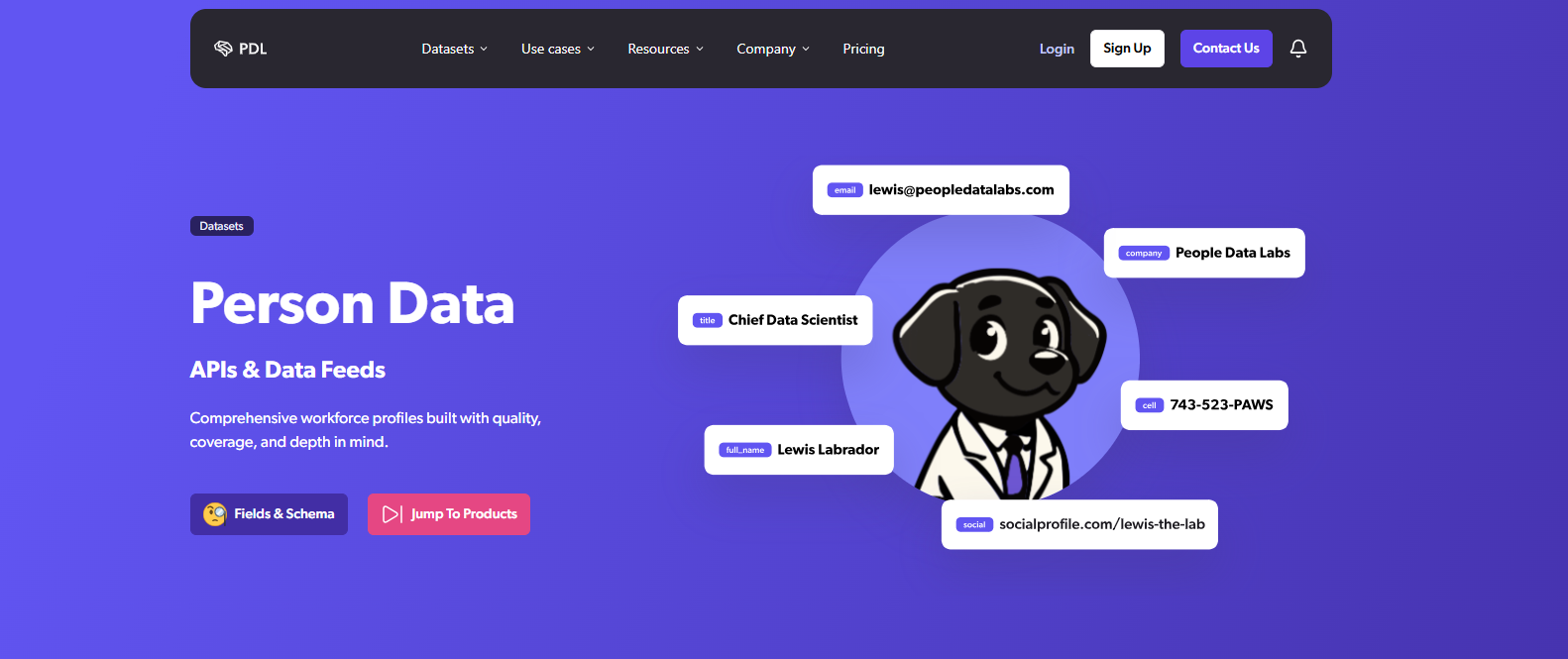
The API matches existing records against its Person Dataset using identifiers such as names, email addresses, phone numbers, and social profiles. Once a match is found, it returns professional information associated with that individual.
Available fields include employment history, job titles, skills, certifications, education, and location. These details let you reassess previous applicants whose experience or qualifications may have changed since their last application.
People Data Labs also offers a Batch Enrich tool for uploading CSV files containing candidate records. The tool matches submitted entries against its dataset and returns additional information without requiring a direct API integration.
14. ContactOut
ContactOut offers data enrichment features for updating candidate records with contact and professional information. It identifies available work emails, personal email addresses, phone numbers, and profile details associated with existing contacts.
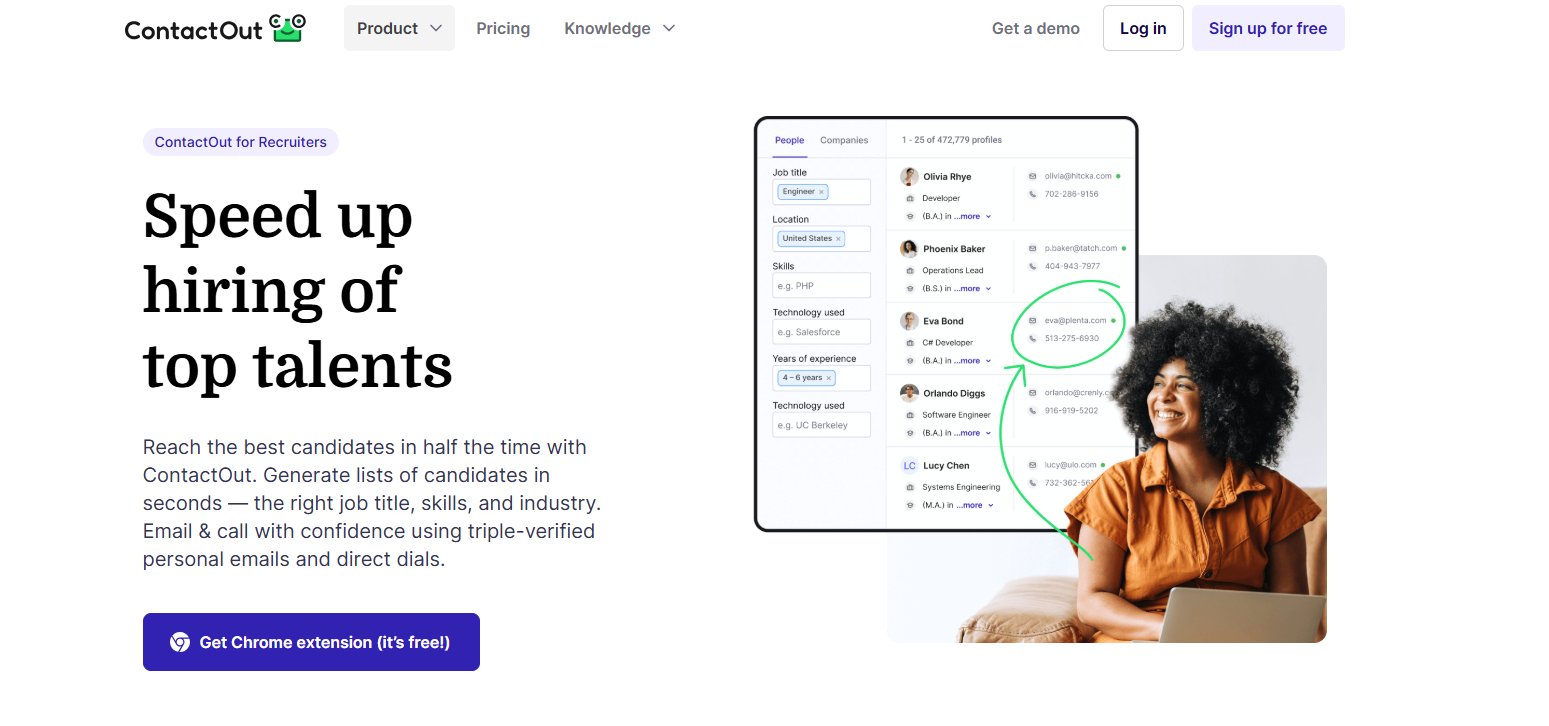
The platform helps enrich lists of LinkedIn profile URLs in bulk to retrieve employment details and contact information. This supports database updates when historical candidate records contain missing or outdated contact fields.
The Chrome extension retrieves available contact details from LinkedIn and GitHub profiles. Recruiters can also save candidate profiles to ContactOut, organize them into folders, and export records to spreadsheets or ATS.
ContactOut supports CRM and ATS enrichment through its integrations and API. The People Enrichment API also accepts identifiers such as email addresses, phone numbers, and LinkedIn URLs.
15. SignalHire
SignalHire provides candidate contact enrichment through its professional database, browser extension, and API. It can retrieve available email addresses, phone numbers, employment details, and social profiles to supplement existing recruitment records.
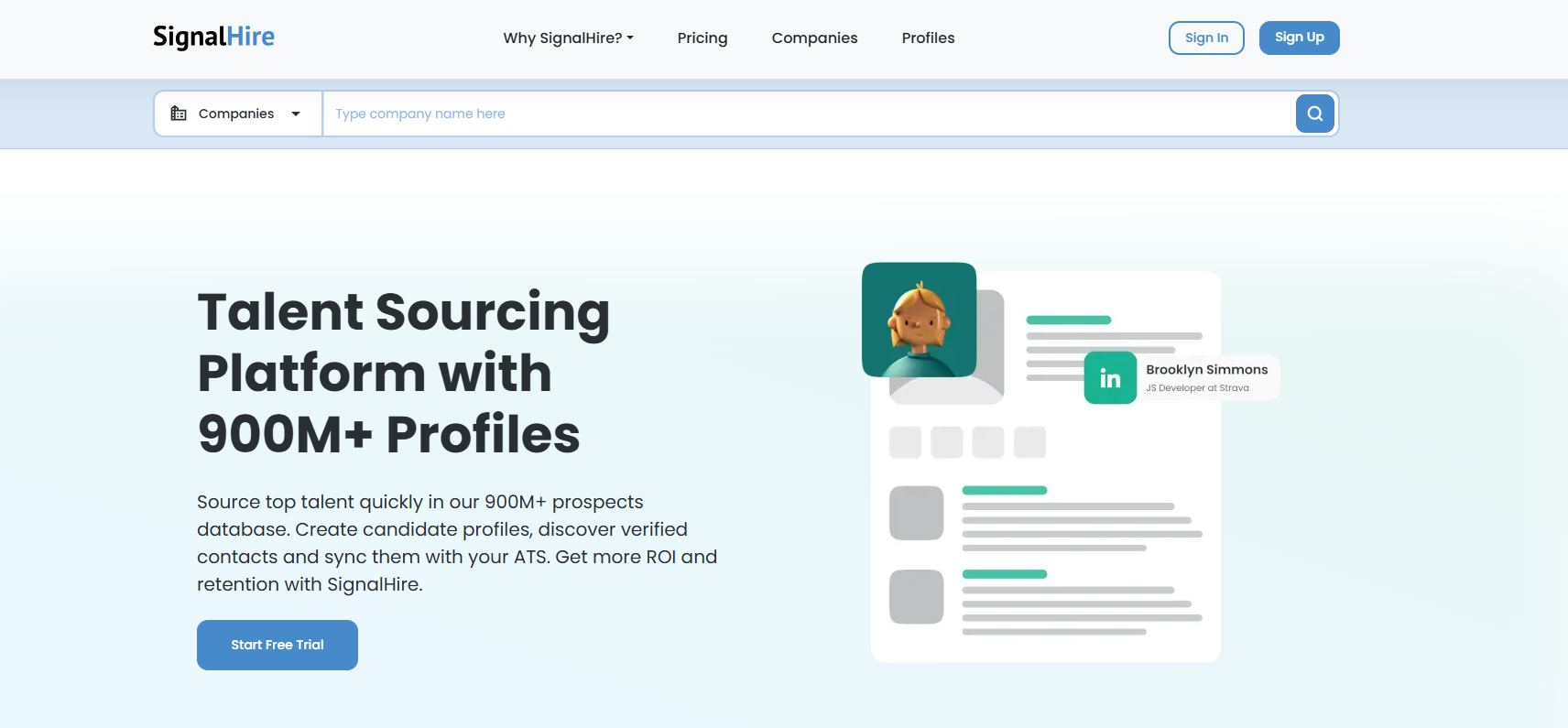
The Contact Finder searches for professional and personal email addresses and phone numbers associated with candidate profiles. For technical recruiting, the browser extension also retrieves available contact information from GitHub and other supported websites.
Bulk enrichment supports searches for multiple candidates without requiring individual profile lookups. It also offers CRM and ATS synchronization for transferring candidate information into recruitment systems.
The Person API retrieves professional profiles and contact information using identifiers such as social profile URLs, email addresses, and phone numbers. You can integrate these endpoints into your systems for candidate enrichment and contact searches.
How to Choose the Right Candidate Rediscovery Tool
The right candidate rediscovery tool depends on your recruitment needs, existing systems, and how you plan to reconnect with past applicants.
Here are the key factors to consider before choosing a platform.
Identify Your Recruitment Requirements
Start by assessing your hiring volume, the positions you fill, and whether you need candidates for recurring vacancies or hard-to-fill roles.
Some recruiting teams search dormant records before posting job ads. Others prioritize candidate matching, re-engagement, or contractor redeployment.
Consider whether technical recruiters need skills-based searches or high-volume recruiters need faster candidate follow-ups. Your database size and hiring frequency will determine which capabilities deserve priority.
Check Your Existing ATS Compatibility
Compatibility with your current ATS or recruiting CRM determines how candidate information moves between systems. Previous applications, interview notes, and candidate statuses need to remain accessible after integration.
Data synchronization, duplicate detection, and setup requirements also vary between platforms. A standalone AI sourcing tool may require additional integrations or changes to your existing recruitment processes.
Compare Rediscovery and Communication Features
Some platforms focus on identifying previous applicants, while others offer contextual AI features, profile enrichment, and candidate communication.
Your choice depends on whether you need to rediscover candidates or reconnect with people already shortlisted.
SMS campaigns, two-way messaging, and automated follow-ups are worth considering if candidate re-engagement is a priority. These features allow you to contact past applicants and manage responses without relying on separate communication processes.
Evaluate Software Pricing and Additional Costs
Software pricing depends on subscription plans, user licenses, implementation fees, and the features included. Some recruiting software providers also charge separately for candidate rediscovery, integrations, or additional search usage.
Your budget needs to account for the total cost rather than the advertised subscription price alone. A comparison of available plans and additional fees will show which option fits your recruitment requirements.
How to Rediscover and Re-engage Past Candidates
Your candidate database may contain qualified applicants who are still interested in new roles. Here's how you can rediscover past candidates and reconnect with them about current openings.
Review Your Existing Candidate Database
Your ATS or recruiting CRM contains past applicants, former contractors, and silver medalists worth reconsidering.
Previous applications and interview records may reveal strong candidates who were not selected or available during earlier recruitment efforts.
Candidate records also need to be reviewed for missing information, duplicate profiles, and outdated details. Database review should account for data retention requirements and records that are no longer appropriate to keep.
Segment Applicants Based on Previous Interactions
Past candidates have different recruitment histories, so the same approach may not suit everyone. Groups may include previous interviewees, former contractors, past referrals, and applicants who expressed interest in future opportunities.
Segments can also reflect qualifications, location, job preferences, and previous conversations. Candidates who completed several interviews may need a different message from those who never advanced beyond their initial application.
Define Your Current Hiring Requirements
Each vacancy has specific qualifications, experience, certifications, location, and compensation requirements. These criteria provide a basis for identifying matched candidates from previous applications.
Your search results also depend on how well candidate profiles reflect those requirements. A review of skills and previous evaluations will narrow the list to applicants worth reconsidering.
Verify Candidate Information and Availability
Candidate information may have changed since the last application, particularly employment history, qualifications, and contact details.
Previous conversations and updated candidate profiles provide a starting point for verifying their qualifications. Current availability and interest still need confirmation before you advance someone to the next recruitment stage.
Reconnect With Candidates Through SMS and Email
SMS and email complement each other when you reconnect with past applicants about new job opportunities.
Here are three sample messages for different candidate groups:
- Silver medalist follow-up (email): "Hi Sarah, this is Michelle from BrightPath Solutions. Thank you again for interviewing with us last month! We have a new Marketing Manager opening that matches your experience. I'd love to share more details and see if you're interested in the role."
- Former contractor follow-up (SMS): "Hi James, it's Rachel from Summit Staffing. We have a new warehouse associate assignment in Dallas starting November 2. Are you available and interested in the details?"
- Previous applicant follow-up (SMS after email): "Hi Daniel, this is Amanda from Northstar Health. I sent you an email about our new Patient Coordinator opening. Your previous experience seems like a good match. Would you be interested in discussing the position?"
Your choice of channel depends on the information you need to share and each candidate's communication preferences.
Email supports detailed job discussions, while SMS allows you to check availability, answer questions, and follow up with interested applicants.
Follow Up With Interested Candidates
A positive response provides an opportunity to discuss current job requirements, qualifications, compensation, and availability. Your next conversation can address candidate questions and confirm whether an interview is appropriate.
Each candidate also needs an assigned recruiter who manages responses, provides updates, and arranges the next steps.
Track Candidate Rediscovery Results
These metrics provide insight into candidate engagement, hiring costs, and the value of your existing talent database.
- Candidate re-engagement rate: Percentage of contacted past candidates who show renewed interest.
- SMS and email response rates: Percentage of candidates who respond to your messages.
- Rediscovery-to-interview conversion rate: Percentage of rediscovered candidates who reach the interview stage.
- Rediscovery-to-hire conversion rate: Percentage of rediscovered candidates who receive and accept an offer.
- Time to fill: Number of days needed to fill a vacancy.
- Cost per hire: Recruitment expenses associated with each successful hire.
- Percentage of hires from existing databases: Share of hires sourced from previous candidate records.
- Candidate database utilization: Percentage of eligible historical records reviewed or contacted during the recruitment period.
These results show which candidate groups, communication channels, and follow-up approaches lead to interviews and placements.
Turn Past Applicants Into New Hiring Opportunities With TextUs
Your next hire could already be in your candidate database, but when was the last time you reached out?
Candidates who paused their job hunting or missed out on previous opportunities may now be ready for a new role. A simple follow-up reconnects you with someone qualified before you start another search.
TextUs makes it simple to re-engage with past candidates through text marketing.
You can share new job openings, schedule follow-ups, and respond to questions through two-way SMS. Contact Intelligence also shows which candidates are more engaged, so you know who to contact first.
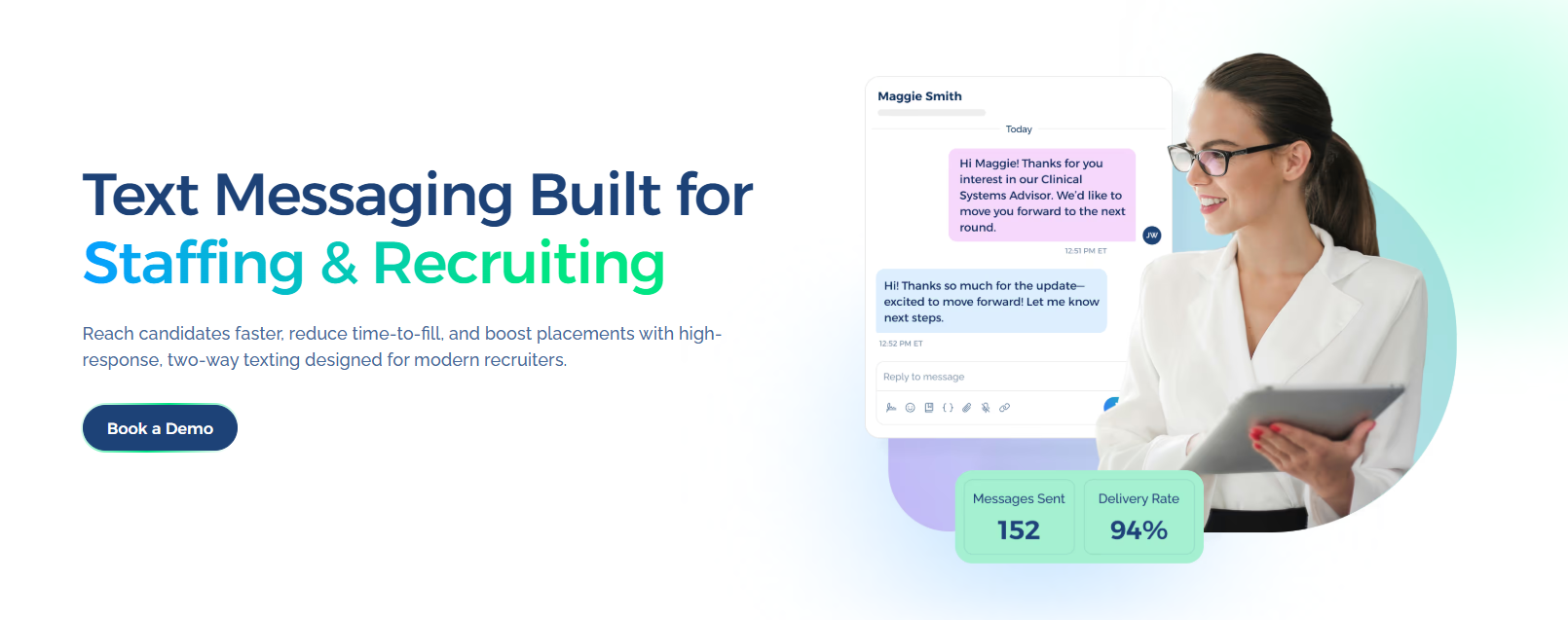
Don't let qualified past applicants go unnoticed in your database. Book a demo with TextUs today to see how you can get more responses from past applicants and fill open positions!
FAQs About Candidate Rediscovery Tools
What are the best tools for candidate sourcing?
LinkedIn Recruiter, hireEZ, SeekOut, and Gem are popular options for finding candidates beyond a job board or existing applicant database.
The best choice depends on your search depth, ATS integrations, and whether you need to rediscover previous applicants or reach passive candidates.
What are the 5 C's of recruitment?
One version of the 5 C's includes competence, character, culture fit, chemistry, and career direction.
These factors assess candidate skills, work ethic, values, interpersonal fit, and career goals. Although definitions vary between recruitment models.
What is the 70/30 rule in hiring?
The 70/30 rule commonly refers to an interview approach where candidates speak for 70% of the conversation while recruiters speak for 30%.
It encourages candidates to share more about their experience, qualifications, and suitability for the position.
What are the top 5 ATS?
Five widely used ATS include Greenhouse, Workday, Lever, iCIMS, and Ashby.
Each offers recruitment management features. But the right choice depends on your hiring volume, existing software, and recruitment requirements.
Continue Reading



Frequently Asked Questions
Business Texting
Built for Results
Create and convert pipeline at scale through industry leading SMS software