
How to Become a White-Label Telecom Reseller in 10 Easy Steps
Learn how to become a white-label telecom reseller, select services, set pricing, and launch branded business messaging with TextUs.

Written by
Adam Hamdan
Published
October 23, 2026

Launching telecom services under your brand doesn’t require building every system from the ground up.
A white-label telecom reseller sells communication services under its own name while another provider supplies the technology, infrastructure, or service operations.
The setup depends on the provider, with some partnerships focused on infrastructure while others include billing, customer portals, compliance support, and technical assistance.
In this article, you’ll learn the benefits of becoming a white-label telecom reseller, which services you can resell under your company, and the steps involved in building a reseller offer.
TL;DR
- White-label telecom lets you add branded services, earn recurring revenue, avoid heavy infrastructure costs, retain customer ownership, enter new markets, and fit telecom into your existing model.
- White-label telecom services span SMS and MMS, VoIP and UCaaS, SIP trunking, business numbers, broadband, mobile and IoT connectivity, plus other communication tools.
- To become a white-label telecom reseller, you need to choose your target customers, services, reseller model, provider, branding, pricing, responsibility split, compliance process, provisioning and number setup, and business system integrations before launch.
- TextUs lets you launch branded business texting with white-label options, built-in integrations, carrier management, compliance support, smart automation, and flexible pricing control.
Why Become a White-Label Telecom Reseller?
A white-label telecom model can expand what you offer customers while keeping the experience connected to your business. Here are the main reasons you should choose this approach.
Add Communication Services Under Your Brand
A white-label communications partner lets you sell telecom or business messaging services under your brand while another provider supports the underlying technology.
This model suits managed service providers, SaaS companies, IT firms, and other service providers that already serve an established customer base.
Create a Recurring Revenue Stream
Telecom services use monthly subscriptions, usage charges, or packaged plans. This structure creates a recurring revenue stream alongside your existing products and services.
Voice, messaging, connectivity, and other communication tools also increase the value of each account. That added service range supports business growth without shifting attention away from your core business.
Expand Without Building Telecom Infrastructure
Telecom requires carrier connections, software, provisioning, maintenance, and technical support. Building those systems internally requires substantial investment and specialized resources.
A white-label solution lets you use infrastructure that already exists while you focus on sales, packaging, account management, and customer relationships.
Keep Control Over the Customer Experience
A white-label setup keeps your branding consistent in customer portals, communication tools, onboarding materials, and other customer touchpoints.
It also protects customer ownership and strengthens brand equity when the reseller agreement keeps the relationship under your company name.
Consistent branding, responsive support, and clear account ownership can also improve customer satisfaction.
Enter New Markets With Lower Upfront Requirements
A white-label provider may already have carrier relationships, telecom software, operational processes, and support systems in place.
Your business can enter a new communication category without creating every technical component itself. The exact setup still depends on the service, provider, integrations, and regulatory compliance requirements.
Build Around Your Existing Business Model
Telecom can complement services that customers already purchase from you.
An MSP (Managed Service Provider) might add voice or messaging services, while a SaaS company could embed communication features into its existing software.
The strongest model fits your current customers, internal resources, and service strategy rather than forcing your business into a completely new operating structure.
What Telecom Services Can You Resell Under Your Brand?
A white-label telecom offer covers far more than traditional business phone service.
Below are the main service categories you can consider based on your market, customers, and provider capabilities.
SMS and MMS Messaging
Text communication expands a telecom portfolio beyond voice. SMS and MMS services support conversational texting, transactional updates, customer notifications, messaging APIs, and automated outreach.
TextUs supports three white-label deployment options if you want messaging within your product or service: a full white-label platform, Embedded Messenger, and a RESTful SMS API.
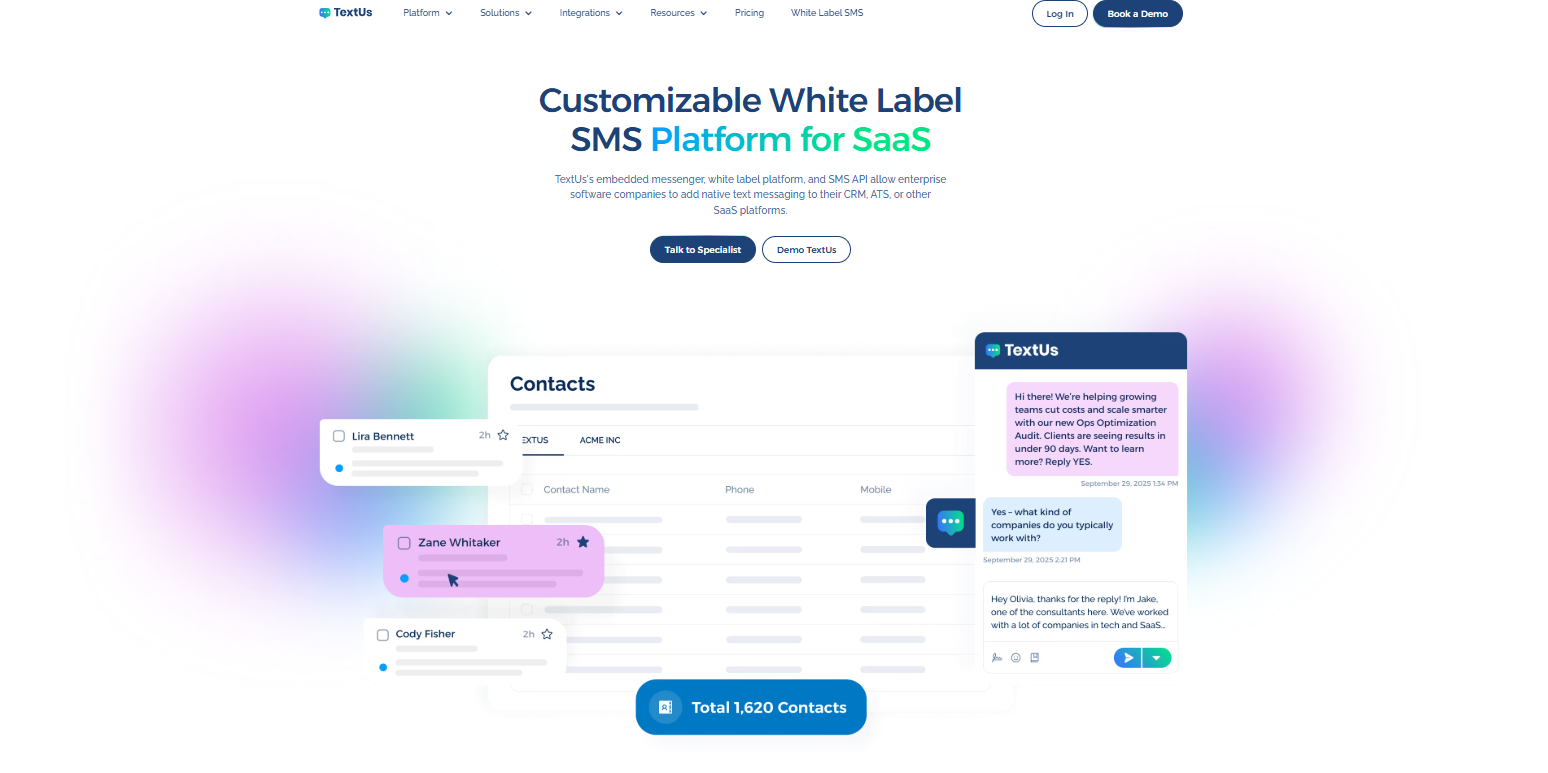
You can use the platform's own name, logo, and domain while customers access messaging without a separate TextUs-branded environment.
The platform extends far beyond basic message delivery. You may offer shared inboxes, conversation assignments, templates, scheduled messages, personalized bulk campaigns, A/B testing, MMS, short links, and click tracking as part of the branded experience.
Book a demo with TextUs today to see how it can support your white-label messaging offer!
White-Label VoIP and UCaaS
Voice remains a common entry point for telecom resellers. But the VoIP market now extends far beyond standalone phone service.
A UCaaS offer can combine calling, messaging, meetings, mobility, contact center tools, and AI features in a single platform.
Reselling VoIP services includes hosted phone systems, extensions, auto attendants, voicemail, call recording, contact center tools, and call routing for different users, departments, or locations.
Many white-label VoIP platforms also support cloud PBX, desktop apps, unified communications, and mobile apps.
This broader setup lets you shape branded voice services around how customers communicate day-to-day.
SIP Trunking and Business Phone Numbers
SIP trunking connects a compatible PBX or existing phone system to a cloud voice provider. It allows customers to modernize voice service without replacing their entire communications setup.
Wholesale SIP trunking can support inbound and outbound calling for businesses that want to retain their current PBX infrastructure.
A reseller may also provide local numbers, toll-free numbers, DIDs, number porting, call origination, and call termination. The exact number inventory and porting coverage depend on the carrier network and geographic availability.
Broadband and Business Connectivity
Connectivity can sit alongside voice and messaging for customers that prefer fewer technology vendors.
Depending on relationships with carriers and broadband providers, a reseller may offer fiber, Ethernet, leased lines, dedicated internet access, standard broadband, or backup connections.
These services can appeal to multi-location companies and customers that rely on stable connectivity for phone systems, cloud applications, and other daily operations.
Mobile, SIM, eSIM, and IoT Connectivity
Some reseller arrangements extend into mobile connectivity through voice plans, data plans, physical SIM cards, eSIMs, and IoT connections.
These services support employee devices, remote teams, connected equipment, and other mobile use cases.
Availability depends on the wholesale partner, carrier agreements, supported countries, and network coverage. Mobile resale also involves separate activation, identity, billing, and compliance requirements.
Additional Telecom Services
A broader portfolio includes virtual fax, POTS replacement, call center software, predictive dialers, phone hardware, managed telecom support, call analytics, and AI-based voice tools.
Some providers also add advanced features that complement core voice, messaging, or connectivity products.
Your first launch doesn't need to include every service available through the provider. You may start with the communication services that match existing demand, then expand as customer needs become more defined.
How to Become a White-Label Telecom Reseller in 10 Steps
Starting a reseller business is easier when the offer reflects a targeted market need and a practical operating model. Here's how you can build a white-label telecom service:
Step #1: Choose the Customers You Want to Serve
A focused target market makes your telecom offer easier to shape. Start with the industries, company sizes, and locations where you already understand the customer needs.
Current communication habits also reveal where demand exists. Phone systems, messaging tools, internet setup, and existing providers may expose service gaps worth addressing.
The software customers already use matters too. CRM, ATS, help desk, scheduling, and other business systems may need to connect with the telecom service.
Staffing, healthcare, hospitality, retail, property management, professional services, and multi-location businesses are all potential markets.
The strongest starting point is the audience where you already understand the workflow and communication challenges.
Step #2: Decide Which Telecom Services You Want to Offer
Voice, SMS, SIP trunking, internet connectivity, mobile services, and related tools each support different needs.
If you plan to offer VoIP services, start with hosted phone systems, business numbers, voicemail, and call management.
You may also focus on messaging alone or bundle voice and SMS into a broader communications package.
Too many services at once add complexity before you know which products customers value most. Your initial offer should reflect demand, provider capabilities, and the level of support your business wants to manage.
Step #3: Pick Your White-Label Reseller Model
Not every telecom partnership gives the same level of control.
Some models put you in charge of branding, pricing, billing, and support. Others leave most of those responsibilities with the provider.
A white-label program usually suits businesses that want a stronger customer-facing role. An agent program is lighter, with more focus on referrals or commissions and less day-to-day service management.
Other reseller programs fall somewhere in between. The best fit depends on the margin you want, the workload you are prepared to handle, and how much control you want over the customer relationship.
Compare each option based on revenue structure, support duties, billing ownership, contract terms, and branding rights before making a decision.
Step #4: Choose a White-Label Telecom Provider
You have to look beyond the feature list and evaluate whether the partnership fits your own services and markets you plan to serve.
A white-label VoIP provider needs dependable infrastructure, automated provisioning tools, reporting, and enough technical expertise to handle issues beyond your internal resources.
If you're a messaging-focused reseller, you need strong integrations, compliance support, account controls, and carrier management.
Also, review minimum commitments, usage charges, support costs, service-level agreements, cancellation terms, and possible hidden fees before signing. These details affect margins and day-to-day operations once customers start using the service.
TextUs is a white-label SMS solution that lets you add branded texting without developing a proprietary messaging product.
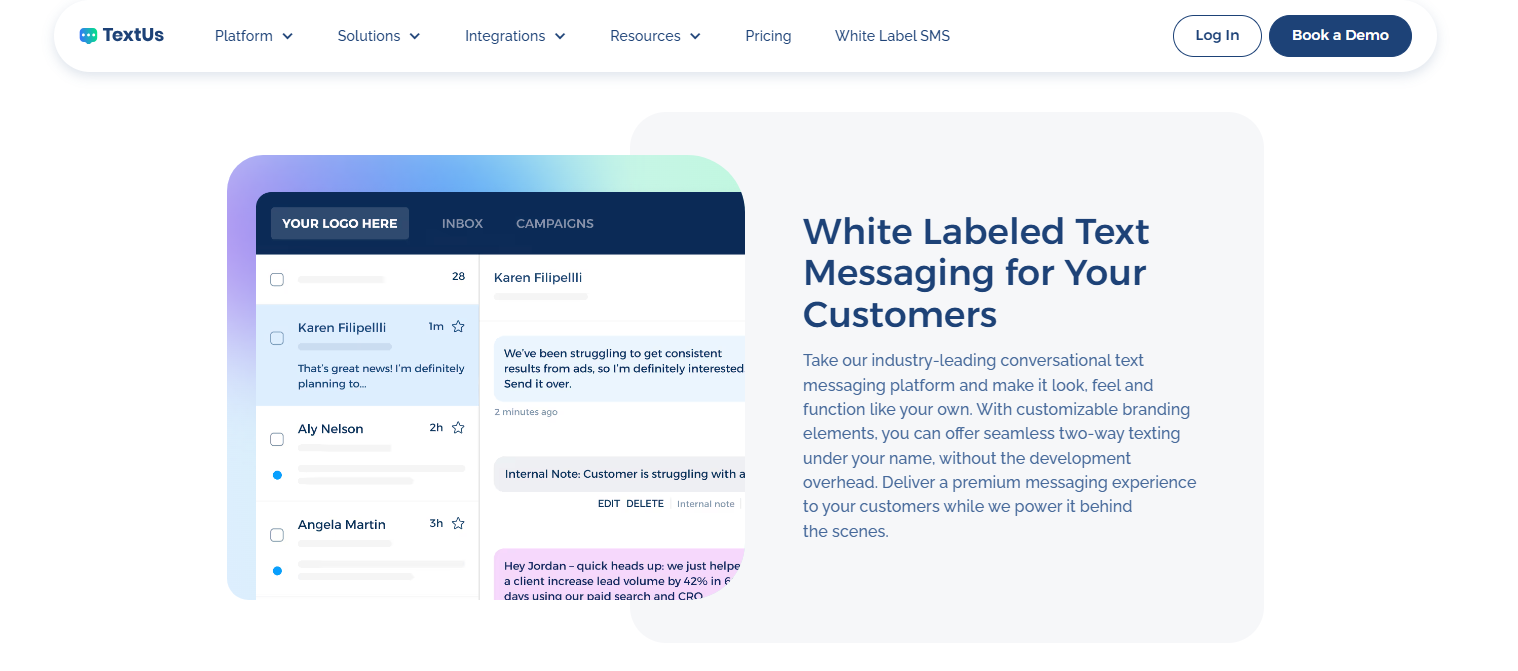
Its Embedded Messenger places two-way texting inside CRM, ATS, or SaaS software, while its full white-label option lets you apply your branding to the platform's messaging experience.
Book a demo with TextUs today to see how its cost-effective solutions for white-label could fit your product or reseller model!
Step #5: Define Your Brand and Customer Experience
A white-label telecom offer needs to be consistent with the rest of your business.
So, you have to decide which parts of the customer experience will carry your branding, from the login page and portal to invoices, emails, support materials, and onboarding.
Some private label arrangements let you customize logos, colors, domains, and other customer-facing elements. Strong brand ownership keeps the service connected to your company instead of making it like a separate third-party product.
The experience also depends on how the service is delivered. A full white-label setup may place the entire platform under your branding, while an embedded model puts communication features inside your own platform.
Consistency is important if you want to build a branded communications business rather than simply resell another provider’s product.
Step #6: Build Your Pricing Model
You need to account for platform fees, usage charges, phone numbers, messaging, support, payment processing, taxes, hardware, and other operating costs before setting customer rates.
Common models include monthly subscriptions, per-user pricing, per-line fees, usage charges, setup fees, or bundled plans. The right structure depends on how customers use the service and which costs change as usage grows.
Contract terms also affect pricing control. In some white-label agreements, the reseller controls pricing and decides how much margin to add, while other programs place limits on rates or package structures.
TextUs lets you set your own pricing for end customers and keep the margin, while it charges for platform access and usage with no revenue share. This lets you package SMS around your wider telecom offer instead of following a fixed retail structure.
Step #7: Define Responsibilities Between You and Your Provider
A clear division of responsibilities prevents gaps once customers start using the service.
Your business may manage customer relationships, first-line support, pricing, and routine account questions. The provider can take responsibility for carrier connections, infrastructure, platform maintenance, service monitoring, and complex technical issues.
Also, review what the platform supplies before launch, including provisioning tools, reporting, compliance support, and escalation resources. Your support team also needs a defined process for passing carrier or infrastructure problems to the provider.
When you choose a white-label marketing tool like TextUs, it manages the SMS infrastructure, carrier operations, platform maintenance, deliverability, and related messaging support.
You keep control of your brand identity and customer-facing experience, so customers continue to interact with the reseller rather than a separate messaging vendor.
Step #8: Address Telecom Compliance Before Launch
Telecom requirements depend on the services you sell, where customers operate, and how responsibilities are divided with the provider.
Voice, messaging, mobile, and connectivity products may each involve different registration, privacy, tax, and carrier obligations.
For U.S. interconnected VoIP, areas to review include E911, CPNI protection, applicable FCC registration and reporting, and robocall mitigation requirements such as STIR/SHAKEN.
Business text messaging involves 10DLC registration, documented opt-in methods, clear brand identification, STOP and HELP handling, privacy disclosures, and messaging that matches the registered use case.
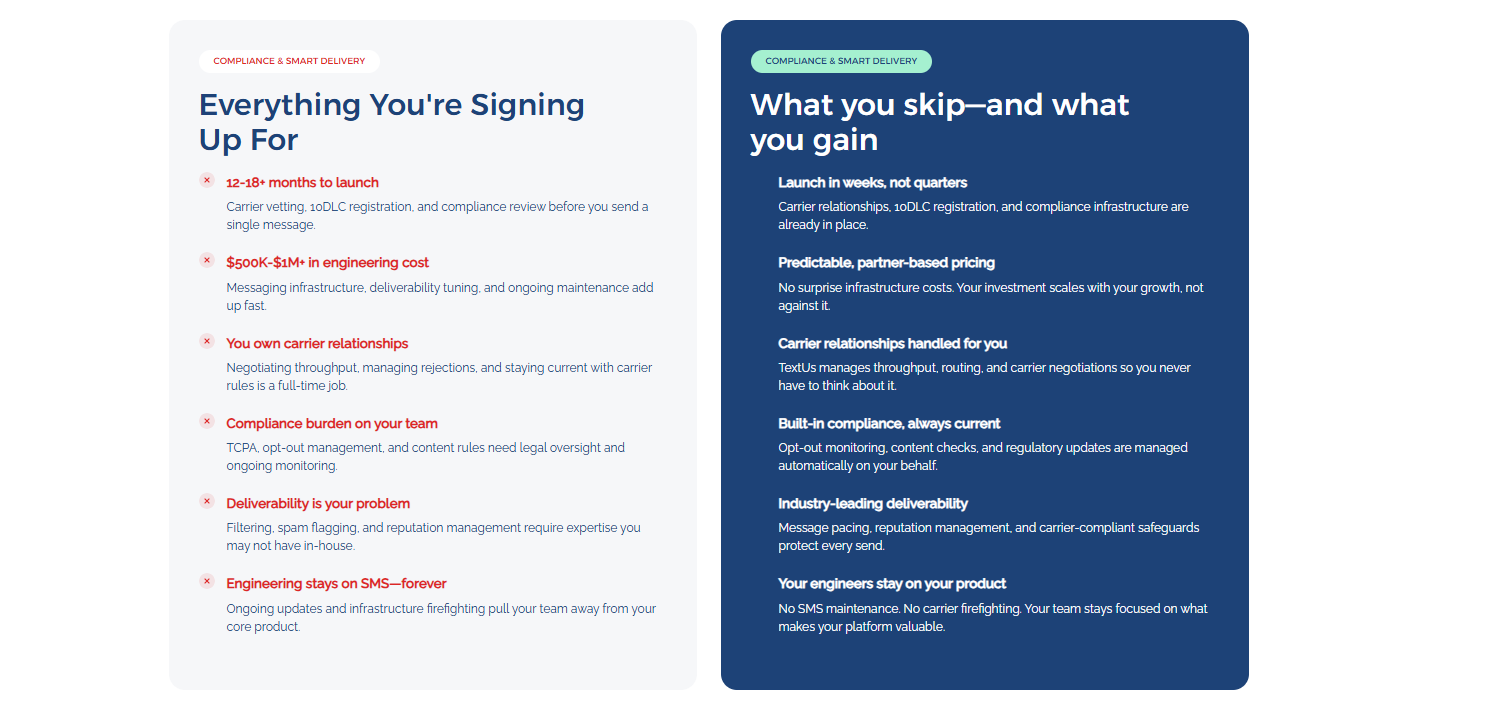
TextUs reduces much of the carrier-side work for white-label messaging partners. It handles 10DLC registration, carrier management, compliance infrastructure, deliverability safeguards, platform maintenance, and tier-three support.
You'll still need valid consent and responsible customer messaging practices, but you don't have to manage the carrier submission process alone.
Step #9: Set Up Provisioning and Number Management
Provisioning defines how new customers, users, services, and phone numbers enter the system.
A structured process should cover account creation, service activation, user permissions, device setup, and number assignment.
Number management also needs a process for local numbers, toll-free numbers, porting requests, inventory, and service changes. Clear ownership of each task reduces delays when customers add locations, transfer existing numbers, or change their setup.
Provisioning tools, APIs, and connected back-office systems lessen the manual account updates and keep customer records aligned across billing, support, and service administration.
Document each step before launch, including who approves requests, who completes changes, and where escalations go. This creates a repeatable process as more customers and numbers are added.
Step #10: Connect Telecom With Existing Business Systems
Your cloud communications system needs to connect with the tools customers already use for sales, recruiting, support, billing, and account management.
Common integration points include CRM, ATS, PSA, help desk, accounting, and payment platforms.
APIs, webhooks, and native integrations connect customer records with messaging, provisioning, usage data, and service activity. This reduces duplicate data entry and keeps communication history tied to the right account or contact.
TextUs supports integrations with platforms such as Salesforce, HubSpot, Bullhorn, Greenhouse, Workday, and Microsoft Dynamics.
It lets you send and receive texts, manage conversations, update contact details, log notes, and add contacts to campaigns or sequences from connected systems.
These connections bring messaging closer to existing CRM, ATS, and business workflows instead of separating communication from customer or candidate records.
Launch Business Texting Without Building the Infrastructure With TextUs
You don't have to build an SMS product from zero to add texting to your telecom offer.
TextUs gives you the infrastructure and messaging technology needed to bring an intuitive SMS service to market under your brand.
Among the key benefits is complete control over how texting fits into your offer.
TextUs supports carrier operations, deliverability, automation, integrations, and platform maintenance, while you shape your messaging packages and maintain competitive pricing.
This setup also gives you room to build packages around your market and maintain competitive pricing.

Book a demo with TextUs today and expand your white-label telecom offer with business texting built for real customer conversations!
FAQs About White-Label Telecom Reseller
What is a white-label reseller?
A white-label reseller sells another provider’s product or service under its own brand. The model lets you control the customer relationship and focus on better customer service without developing the technology yourself.
What is a white-label VoIP reseller?
A white-label VoIP reseller sells cloud-based phone and communication services under its own brand.
Modern platforms go beyond rebranded dial tone, with features such as call routing, unified communications, account management, and automated billing.
What is a white-label hosting reseller?
A white-label hosting reseller purchases hosting infrastructure from another provider and sells it under its own branding and pricing.
The reseller manages the customer-facing relationship, while the provider maintains the hosting infrastructure and service quality.
Is white-labeling illegal?
No, white-labeling itself isn't illegal when you have the appropriate rights to resell and brand the service. Your agreement and applicable laws matter for trademarks, telecom regulations, privacy, and consumer protection.
Continue Reading



Frequently Asked Questions
Business Texting
Built for Results
Create and convert pipeline at scale through industry leading SMS software