
10 Best Practices for Writing Personalized Recruiting Messages
Discover top texting tips for recruiters: segment audiences, use names, optimal timing, and emojis for better candidate engagement.

Written by
Adam Hamdan
Published
October 28, 2026

Generic messages often get overlooked because candidates receive plenty of recruiting texts that sound almost the same.
When the wording, structure, and pitch all follow a familiar pattern, the message gives them little reason to stop and respond.
Using a candidate’s name is a good start, but strong personalization goes further. The message should explain why that person received the opportunity and connect the role to their current stage in the recruitment process.
In this article, you’ll learn the best practices for writing personalized recruiting messages, so you create stronger candidate relationships throughout the hiring journey.
TL;DR
- Personalized recruiting messages connect each opportunity to the candidate’s background, which supports better response rates and more meaningful conversations.
- Effective recruiting messages combine thoughtful segmentation, candidate-specific details, stage-aware timing, channel-appropriate tone, concise copy, selective emoji use, personalized automation, simple next steps, and follow-ups that add new value.
- TextUs brings targeted texting, automation, ATS and CRM integrations, and analytics together to support more connected candidate conversations.
Why Personalized Messages Boost Candidate Outreach
Most people carry their phones throughout the day. Therefore, SMS already creates strong opportunities for recruiter-candidate interaction.
The average SMS response rate in recruitment services is around 20-30%. However, candidate attention is limited, especially when several employers are reaching out about similar roles.
Personalized recruiting messages create a stronger connection by showing how an opportunity relates to a job seeker’s experience, interests, location, or past interaction with your business.
Personalization also creates better opportunities to engage candidates as they move through different stages of hiring.
References to experience, location preferences, previous conversations, or role fit make candidate communication feel more connected to the person behind the application.
You spend more time with people who understand the opportunity, while candidates receive a more thoughtful experience from the first interaction. Reaching top talent then becomes less about sending more messages and more about making each message relevant.
10 Best Practices for Writing Personalized Recruiting Messages
Strong personalization depends on more than adding a candidate’s name to a template.
Here are 10 best practices that help each outreach message feel more intentional and connected to the person receiving it.
1. Segment Candidates Before Personalizing
Personalization starts with knowing which candidates belong in the same audience.
With SMS segmentation, your hiring team can group people by role, location, experience, skills, availability, application status, or past interactions before deciding what each message needs to say.
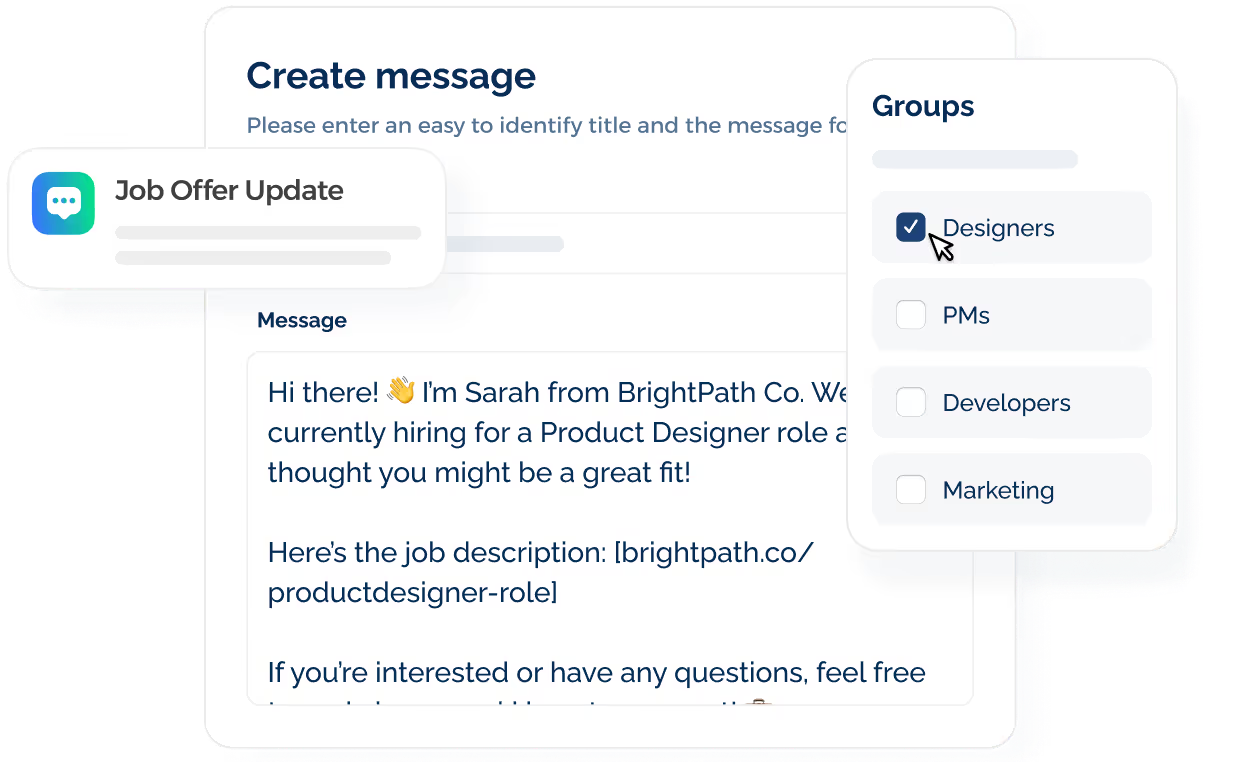
A potential candidate for a remote engineering role will need different information from passive candidates interested in an onsite healthcare position.
Smaller, more defined groups also reduce the risk of sending broad messages that have little connection to a new candidate.
2. Go Beyond the Candidate’s Name
A candidate’s first name adds a personal touch, but it's only the starting point. Even adding your company name does little if the rest of the message could have been sent to anyone.
Personalization works in layers: name + job title, name + skill, name + location, or name + previous conversation.
A deeper approach may connect the candidate’s experience directly with the opportunity, such as name + relevant experience + job description. That extra context shows there is a specific reason behind the campaign.
For example:
- Broad: “Hi Maya, I thought you might be interested in our marketing position.”
- More specific: "Hi Maya, I was impressed by your B2B content experience, and we’re hiring a content strategist for a similar audience.”
3. Explain Why You Reached Out
Candidates need a reason for receiving your text message before they decide whether to respond.
That reason might come from a particular skill, experience in a similar position, an industry certification, a previous application, a shared connection, or work completed at a previous company.
Your outreach has to connect that background directly to the opportunity. Mention the experience that caught their attention, such as a recent project or detail from their LinkedIn profile. Then, invite the candidate to a quick chat.
Personalized recruiting messages should answer “Why me?” before asking candidates to take action.
4. Match the Message to the Hiring Stage
The candidate’s position in the hiring process also determines what the message needs to say.
Outreach after an application calls for a different message than a follow-up after an interview or a new hire opportunity update.
Two types of timing shape personalized outreach:
- Clock timing: Focuses on when the message reaches the candidate, including time zones and appropriate contact hours
- Journey timing: Focuses on why the message fits that point in the candidate relationship, whether it comes after sourcing, before an interview, after an assignment ends, or during re-engagement
As candidates move through the interview stage, their questions and expectations change.
Early messages may introduce the role, while later texts confirm schedules, share next steps, or support a post-interview follow-up.
5. Keep Messages Short and Focused
If a message runs too long or includes information that doesn't support the purpose of the outreach, the candidate may stop reading and ignore it. That reduces response rates and weakens the chance of starting a conversation.
The first text only needs enough information to earn attention and prompt a response. Additional details such as compensation, benefits, team structure, or broader company information can follow once the candidate responds.
Message length should also support quick reading on mobile rather than force every detail about the opening into one message. This keeps the key point easy to spot and prevents important details from getting buried.
6. Match the Tone to the Communication Channel
The way you communicate should shift with the platform you use.
When texting candidates, shorter and more casual wording usually fits the format, while email allows more space for explanation, detail, and a more formal introduction.
Each channel also changes how the message is presented. Email relies on the subject line to earn attention before the message is opened, while SMS needs to communicate its purpose within the first few lines.
LinkedIn outreach calls for a professional tone with enough warmth to avoid sounding like a copied pitch.
Across every channel, your voice should stay consistent enough for candidates to recognize a real person behind the conversation.
7. Use Emojis When They Fit the Message
Emojis have become a familiar part of digital communication. They add warmth to your texts and reinforce tone or emotion in a short message.
They may work well for outreach tied to a career fair, campus hiring, retail roles, hospitality openings, or casual follow-ups where a lighter style fits the audience.
You still need to judge whether they suit the situation. Executive searches, formal offers, sensitive updates, and highly regulated positions call for plain language and a more restrained tone.
Personalization still comes from the wording, context, and reason for contact, while the emoji simply adds a small visual cue that supports the tone you want to set.
8. Personalize Automated Follow-Ups
SMS automation saves recruiters' time across application confirmations, screening, interview reminders, job alerts, follow-ups, re-engagement, candidate nurture, and keyword responses.
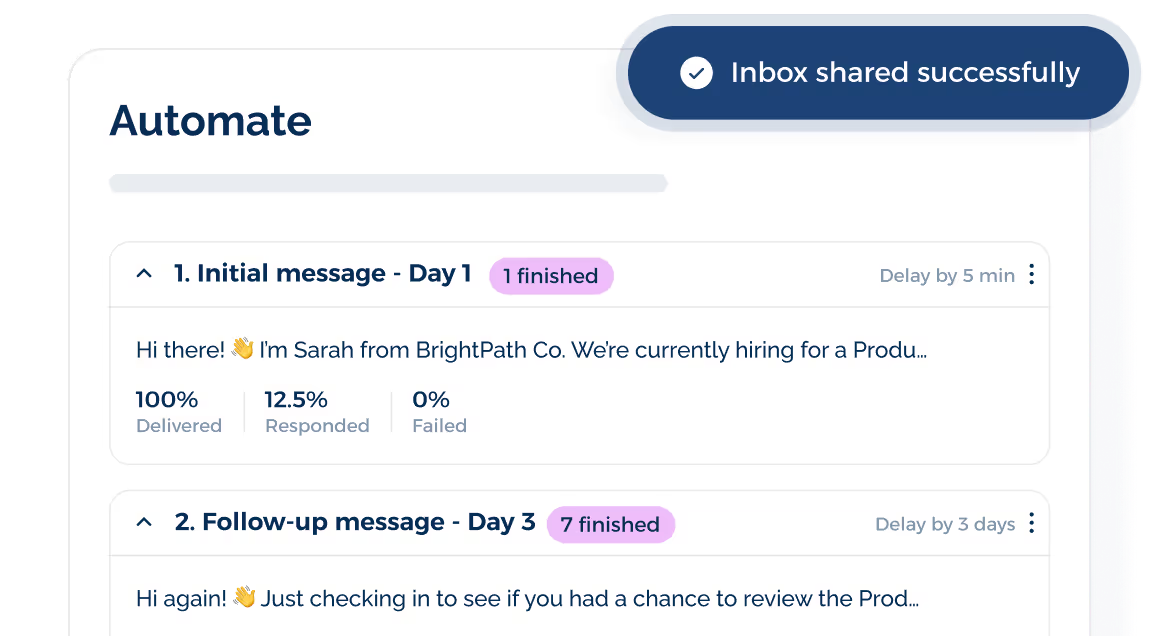
But the message still needs to reflect where each person stands and what has already happened in the conversation.
Merge fields and message templates let you insert details such as the candidate’s name, role, skill set, location, or hiring stage.
Candidate segments and trigger-based messages add another level of context, so an applicant confirmation doesn't sound the same as a reminder sent to your entire talent pool.
ATS data also gives you more information for automated outreach, including application history, recruiter notes, past conversations, and job preferences.
Automation handles delivery, while candidate information shapes the message itself. Recruiter review remains important so each automated response sounds accurate, natural, and appropriate for the situation.
9. Give Candidates One Simple Next Step
Instead of asking candidates to decide between several actions, you have to guide them toward a single reply that matches the current stage of the conversation.
SMS keywords make that process more structured. Candidates respond in seconds and may trigger the next step, such as receiving role details, starting a screening sequence, or connecting with a hiring manager.
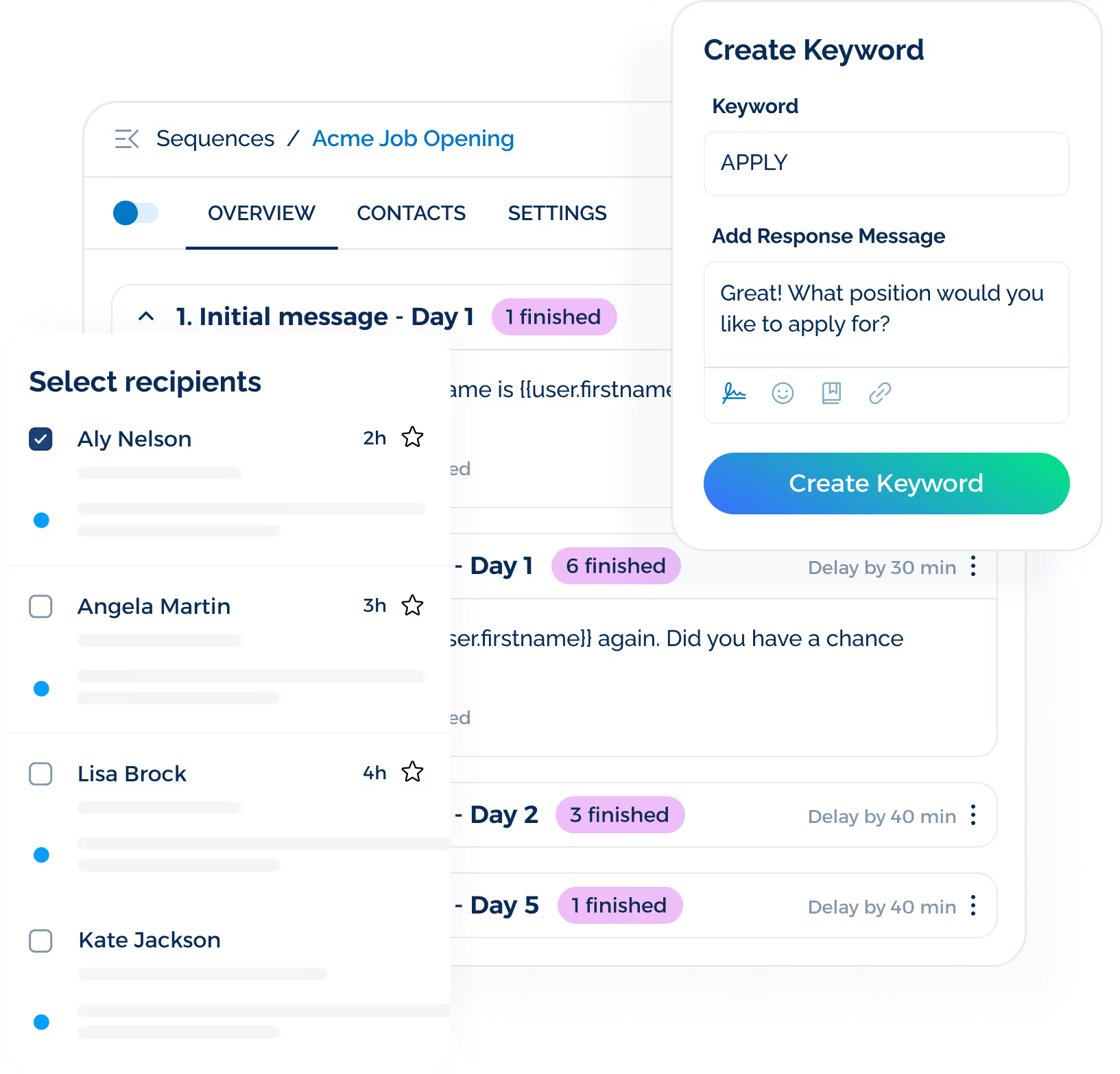
For example, an initial sourcing message may ask someone to reply INTERESTED to learn more about the opening. An interview reminder can also ask for YES to confirm attendance.
This approach keeps the response simple for the candidate while giving your recruiting teams an easier way to continue the conversation.
10. Add New Context to Every Follow-Up
Repeating “just checking in” or resending the same pitch adds little value, especially when the first message already went unanswered.
New context might include the salary range, schedule, team structure, hiring timeline, location, or an update tied to the specific role.
If several days or a week have passed, the follow-up may also mention new availability, an upcoming interview window, or another detail that was not part of the first message.
A friendly reminder works better when it brings something useful into the conversation. Each follow-up should move the discussion forward rather than repeat what the candidate has already seen.
Put Personalized Texting at the Center of Candidate Engagement With TextUs
As you contact more candidates, SMS recruiting communication requires more structure and coordination.
TextUs is a text recruiting software that keeps personalized communication practical with two-way texting, smart automation, and templates built around real recruiting conversations.
Deep ATS and CRM integrations also keep candidate context connected across the recruiting process, while analytics show which messages drive engagement.
TextUs supports outreach across the hiring workflow, from first contact to screening, reminders, and follow-ups after the interview process. You can start a brief conversation with an interested candidate while keeping the exchange connected to the role and hiring stage.
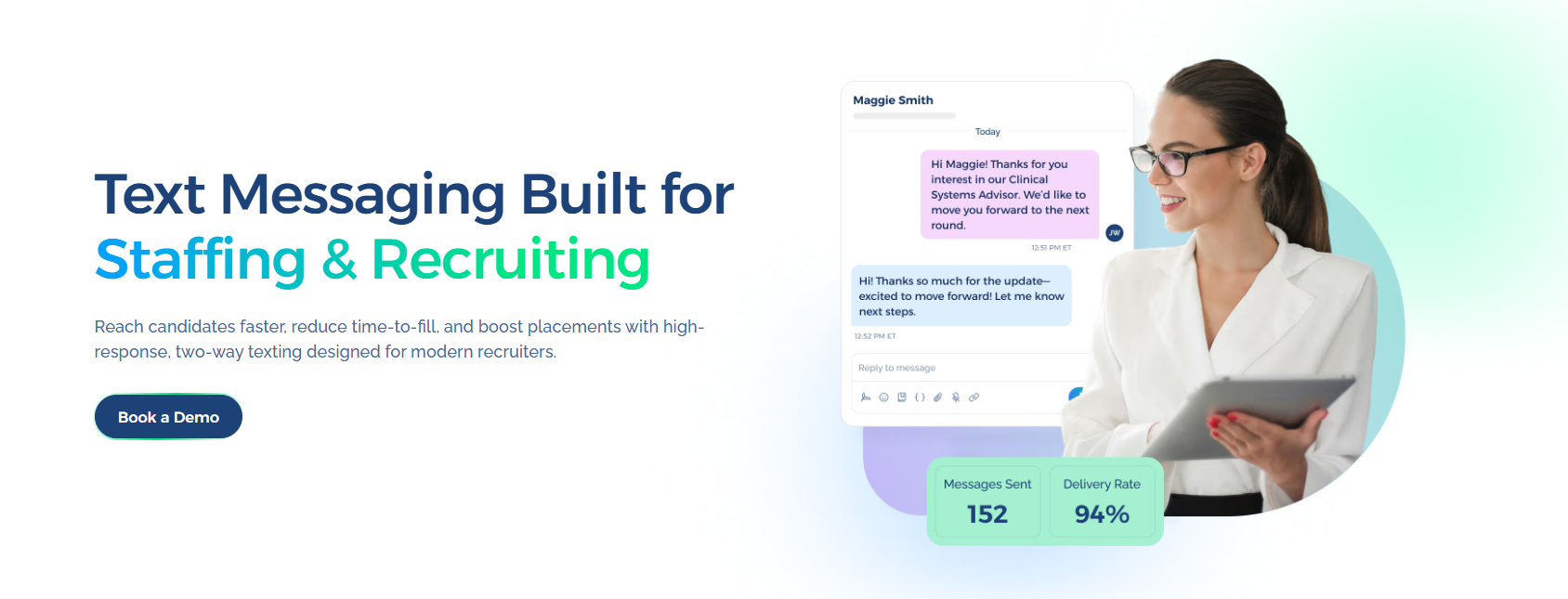
Book a demo with TextUs to see how it supports candidate engagement through business texting!
FAQs About Personalized Recruiting Messages
What is a good message for recruiting?
A good recruiting message introduces the opportunity, explains why you contacted the candidate, and ends with one simple next step, such as a quick chat.
The wording should sound personal enough to start a conversation without overwhelming someone who has not expressed interest yet.
What are some catchy lines for recruitment messages?
Strong recruitment lines are specific, personal, and easy to respond to. Examples include:
- “Your experience caught my attention,”
- “I came across your background and thought this role might interest you,”
- “We’re hiring for a position that matches your experience,”
- “Would you be open to hearing more about this opportunity?”
What is a good message to send to a recruitment agency?
A good message to a recruitment agency states the type of role you want, your experience, availability, and preferred contact method.
You can mention whether you're open to phone calls or a quick call, then provide enough context to get your initial questions answered without a lengthy exchange.
What are the 5 C's of recruitment?
One common version of the 5 C’s of recruitment is competency, character, communication, culture fit, and consistency.
They cover whether a candidate has the right skills, demonstrates strong professional qualities, communicates well, aligns with the workplace, and receives the same evaluation standards as other candidates.
Continue Reading



Frequently Asked Questions
Business Texting
Built for Results
Create and convert pipeline at scale through industry leading SMS software