
10 SMS Marketing Rules to Stay Compliant and Avoid Risk
Explore ten SMS marketing rules that will help you stay compliant. Discover how TextUs can help your SMS campaigns avoid risks.

Written by
Adam Hamdan
Published
February 25, 2026

SMS marketing can drive fast engagement and real revenue. But it also comes with strict rules that many businesses overlook.
Texting reaches people on their personal devices within seconds. That level of access is powerful, and it's regulated for a reason.
Text message marketing operates under its own set of legal standards and carrier policies that control how you collect phone numbers, what you send, and when you send it.
Compliance also affects deliverability. If carriers flag your program, your messages may never reach the people who asked to hear from you.
In this article, we will break down the SMS compliance basics before launching campaigns. You will learn what proper opt-in and opt-out processes look like and how to structure your SMS program without creating compliance problems.
TL;DR
- SMS marketing rules exist to protect consumers, prevent spam, and set standards for consent, timing, content, and transparency in business texting.
- SMS marketing rules require you to get explicit consent, provide full opt-in details, honor opt-outs immediately, follow quiet hours, and identify your brand.
- You also need to follow content restrictions, avoid buying lists, register for A2P 10DLC, keep proof of consent, and match message frequency to what subscribers agreed to receive.
- TextUs supports compliant SMS marketing with built-in opt-out handling, automated brand identification, consent tracking, and structured controls designed for business messaging.
Why SMS Compliance Rules Exist
SMS compliance laws exist to protect consumers from unwanted text messages and to stop businesses from abusing SMS as a sales channel.
Many rules focus on stopping unsolicited text messages and fraud. Scammers send fake alerts, delivery notices, and prize claims. These messages can trick people into clicking links or sharing personal info.
Even legitimate brands can cause problems when they send marketing texts without permission. A customer cannot tell the difference between a real promo and a scam if the message shows up without warning.
Rules also exist to make consent provable. Businesses need proof that a person agreed to receive SMS messages. That is why opt-in and opt-out steps must be easy to find and properly documented.
10 SMS Marketing Rules You Must Follow
If you want to run SMS marketing the compliant way, you need to follow SMS regulations and basic consent rules.
Below are the ten SMS marketing rules every business must follow before sending promotional texts.
Rule #1: Get Written Consent Before Sending Marketing Texts
Express written consent is the starting point for SMS compliance. Before sending marketing messages to customers' mobile devices, you need permission from the person receiving them.
Consent is not something a business can assume just because someone shared a phone number.
The legal standard comes from the Telephone Consumer Protection Act (TCPA), which is one of the main SMS marketing laws in the United States.
The TCPA also covers robocalls, in which an automatic telephone dialing system calls consumers without proper permission. It applies to marketing texts and certain automated systems used for outreach.
In addition to federal law, industry standards from the Cellular Telecommunications Industry Association (CTIA) guide how carriers expect businesses to manage messaging programs.
You can collect prior express written consent using opt-in keywords promoted in ads, websites, or printed materials. Non-marketing updates like receipts or delivery alerts can fall under prior consent in many cases.
You may also use a double opt-in process to confirm recipients' subscriptions before launching full marketing efforts.
Rule #2: Include Proper Disclosure at Opt-In
If you run a text messaging program, the person signing up needs to know they are agreeing to receive text messages, not just account alerts or updates.
Your SMS opt-in form must explain that subscribers will receive commercial messages. It should also describe message frequency and note that message and data rates may apply.
If you collect consent through an online form, the disclosure must appear near the signup button.
The person should also express permission and take an action, such as checking a box or entering their number, after seeing the disclosure.
Silence or a pre-checked box does not count as valid permission. Compliance expectations differ from rules under the CAN-SPAM Act, which governs commercial email.
Your disclosure must also include opt-out instructions, where people must know how to stop messages at any time. Opt-out methods protect subscribers and protect your business from complaints.
Rule #3: Honor Opt-Out Requests Right Away
When someone replies STOP or sends another supported opt-out word, you must stop sending SMS messages to that number right away.
If you fail to process SMS opt-outs, it can damage customers' trust and increase the risk of being flagged by mobile carriers.
Most SMS marketing software solutions block future outgoing marketing text messages once a person unsubscribes. A short confirmation message is allowed, but it must only confirm the unsubscribe and not include new offers or promotions.
Strong text messaging compliance includes tracking opt-out activity and keeping records. That way, if someone claims they never opted out or keeps receiving messages, you can review the history and respond with proof.
Rule #4: Follow Quiet Hour Time Restrictions
Federal law limits the hours during which businesses can send marketing texts.
Under rules tied to the TCPA, promotional outreach cannot be sent before 8 a.m. or after 9 p.m. local time of the person receiving the message.
The Federal Communications Commission (FCC) enforces these standards. They treat certain marketing texts similarly to telemarketing phone calls.
Time zone control is important. Messages should respect the subscriber’s local time.
If you're running a national SMS campaign, your platform should adjust delivery based on the recipient’s time zone to avoid violations.
Rule #5: Identify Your Business in Messages
Identification builds trust and supports compliance under applicable regulations enforced by SMS carriers and federal agencies.
Your first message in any SMS program should include your business name. If someone signs up through an opt-in request, your first reply should confirm the subscription and state your brand name.
Brand identification is important in automated flows. If you send outgoing text messages, each message should make it easy for subscribers to recognize your company.
A message that lacks identification increases the risk of being flagged as a spam text message or reported as suspicious.
Rule #6: Follow Content Restrictions
Carriers watch for content linked to scams, misleading claims, and high-risk industries. Messages that look deceptive can be filtered or blocked.
Content rules also exist to protect consumers from harmful or illegal offers, including messages tied to illegal drugs, counterfeit products, or deceptive financial claims.
Content restrictions also apply to how you write automated text messages. Overly aggressive language, misleading pricing, or unclear terms can trigger complaints.
Some carriers also flag messages that contain suspicious links, heavy use of symbols, or content that looks like spam.
The safest approach is to keep promotional content readable and aligned with your opt-in disclosure.
If your business operates in a regulated category, you can consult legal counsel before launching SMS marketing campaigns so your content aligns with all applicable rules.
Rule #7: Do Not Buy or Rent SMS Lists
Buying or renting SMS lists is not allowed under SMS marketing laws.
The people on those lists did not sign up to hear from your business. Even if a vendor claims the contacts agreed to receive promotions, that agreement does not transfer to you.
Another problem is a lack of proof. SMS compliance depends on documented opt-in records. You must be able to show where the subscriber signed up, what disclosure they saw, and when they gave proper consent.
Purchased lists also increase the risk of sending unwanted messages to people who never agreed to hear from you. That leads to unsolicited messages and possible carrier filtering.
You can build your own subscriber base instead. Use SMS keyword opt-ins, website forms, checkout pages, or in-person signups.
An opt-in list built through your own channels protects your business and improves long-term deliverability.
Rule #8: Register Your Brand for A2P 10DLC
A2P 10DLC is a US carrier system for business texting. It applies when a business uses a standard ten-digit phone number to send application-to-person (A2P) messages.
Registration has two parts. Your business registers as a “brand,” then registers a messaging “campaign” that describes what type of texts you plan to send.
Carriers use this information to reduce spam and confirm that your messaging matches your approved use case.
When you skip registration, it can lead to message blocking, heavy filtering, or reduced delivery rates. Even if messages are still sent for a short time, carriers can later restrict traffic from unregistered numbers.
A2P 10DLC registration also supports better long-term performance. Approved brands usually get higher sending limits and stronger deliverability. This is important for any business running ongoing SMS marketing campaigns.
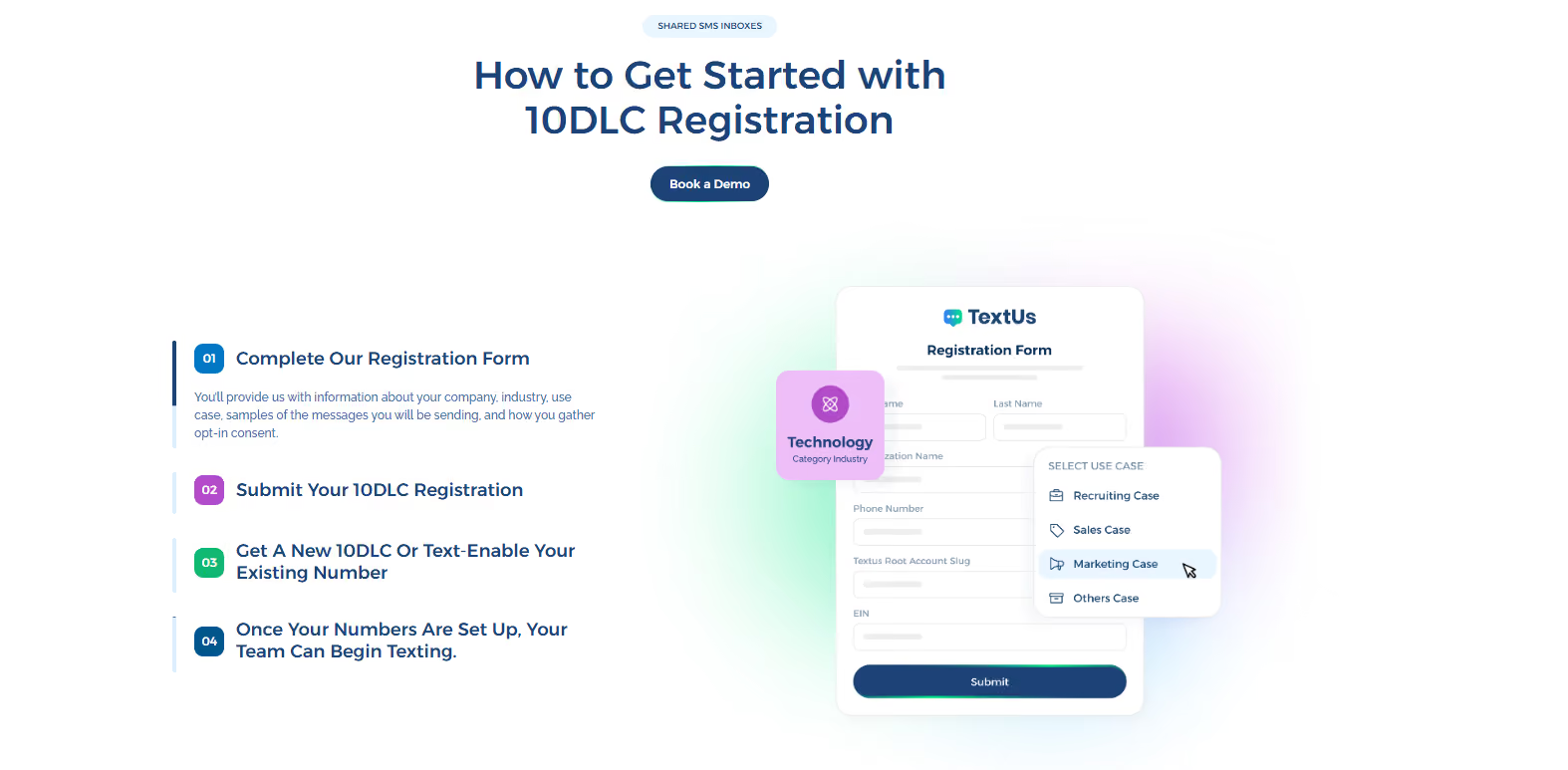
TextUs helps you manage 10DLC registration and ongoing compliance. You get guidance through the approval process, better visibility into your messaging setup, and tools built specifically for business texting. Book a demo today!
Rule #9: Keep Records of Consent
It's not enough to say someone signed up. You must be able to prove it with documentation tied to each phone number.
Your records should include where the person opted in, the date and time of signup, the exact disclosure shown, and the method used, such as a web form, keyword, or checkout box.
You should also log opt-outs and any changes in consent status. This history helps make sure your lists stay accurate and shows regulators or carriers that you honored opt-out requests.
Many legal experts recommend retaining consent documentation for at least that long after the last message sent, so you can defend your practices if needed.
Rule #10: Set Honest Message Frequency
Your opt-in disclosure should describe how often subscribers can expect to receive messages.
Federal law under the TCPA does not set a fixed number of texts you must send or limit you to a specific monthly count. However, your description needs to be truthful and not misleading.
If your signup page says subscribers will receive “weekly offers,” your messaging pattern should match that description. Large changes in volume without notice can lead to complaints and carrier filtering, even if you collected consent.
Carriers monitor traffic patterns. Sudden spikes in sending messages or heavy daily promotions can raise red flags. Consistent sending behavior that matches your disclosure supports better deliverability.
You need to review your SMS program on a regular basis. If you plan to increase volume or change the type of content, update your opt-in language so subscribers understand what they agreed to receive.
How TextUs Keeps Your SMS Campaigns Within the Rules
Once your contact list grows and multiple reps are sending messages, manual tracking is not enough. A business texting platform with built-in safeguards makes compliance easier to manage.
TextUs is a business texting solution that includes built-in functions designed to help you run campaigns that match legal standards and carrier policies.
It helps you handle opt-outs automatically. Every message you send can include opt-out language, and if someone sends a stop keyword, the platform updates their status so they stop receiving future texts.
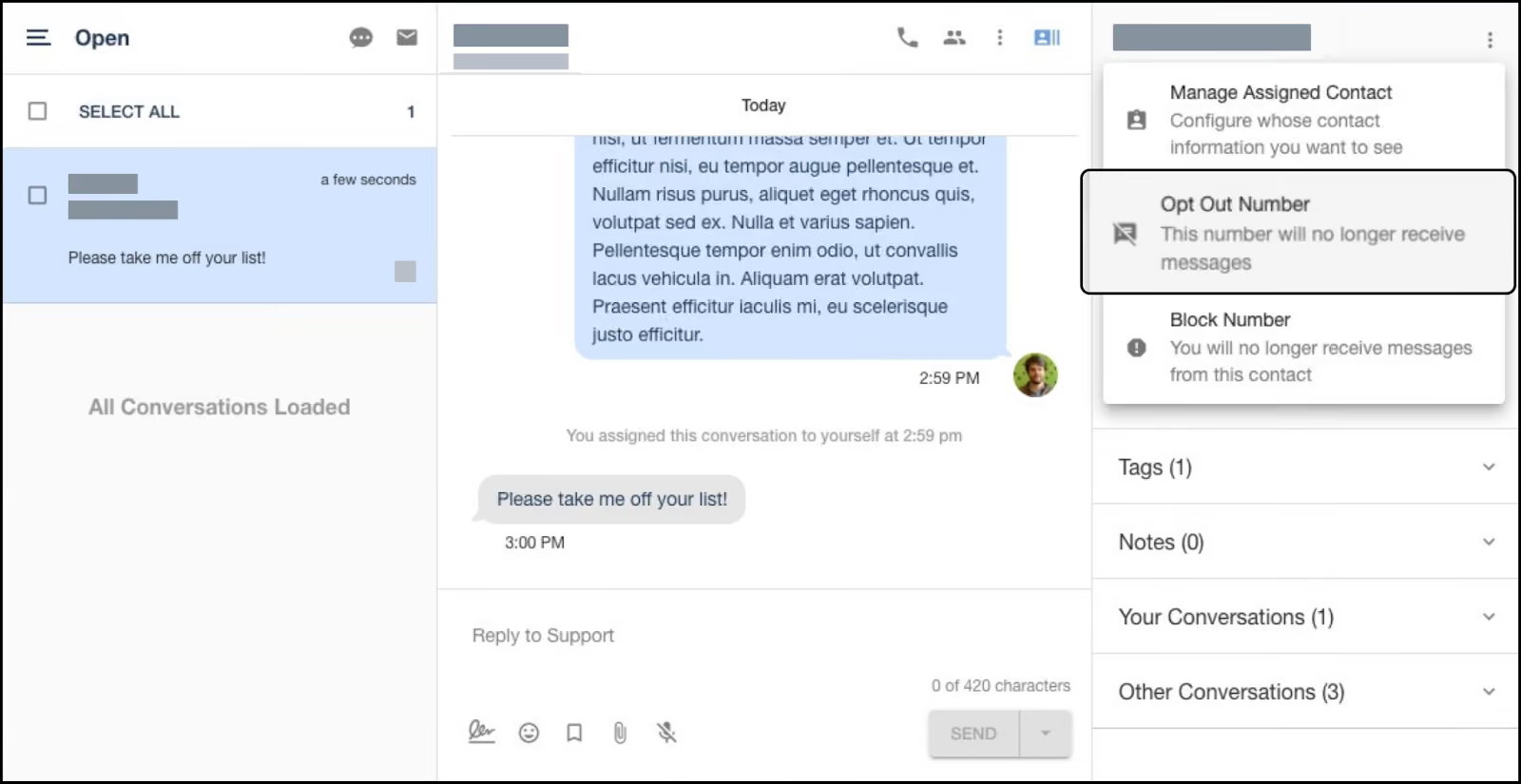
TextUs logs opt-ins and syncs with your contact records so you have a history of when and how someone subscribed. This data supports your consent records and ties into your CRM or contact system, which gives you validation you can reference later.
It also offers tools to add intro and appended messages that include required identification and unsubscribe language in every SMS.
Admins can configure these settings across their organization so every message reflects your policy and the rules that apply to SMS marketing programs.
Beyond clear opt-out methods and consent logging, TextUs lets you export opt-out lists for audit or recordkeeping.
You can set notifications if opt-out activity reaches certain thresholds. These controls help you monitor campaign health and keep messaging within acceptable limits.
Having a platform with compliance features does not replace understanding the rules. But it makes day-to-day SMS management more reliable and less risky for your business.
Stay Compliant While Scaling SMS Marketing With TextUs
SMS marketing rules are not something you can afford to guess on. One mistake with consent, opt-outs, or timing can lead to blocked messages or legal trouble.
If you want to run high-performing SMS campaigns without risking compliance issues, you need a platform built for business texting.
TextUs helps you manage SMS marketing rules in real time. From automated opt-out handling to built-in brand identification and consent tracking, TextUs supports the structure your business needs to send promotional messages the right way.
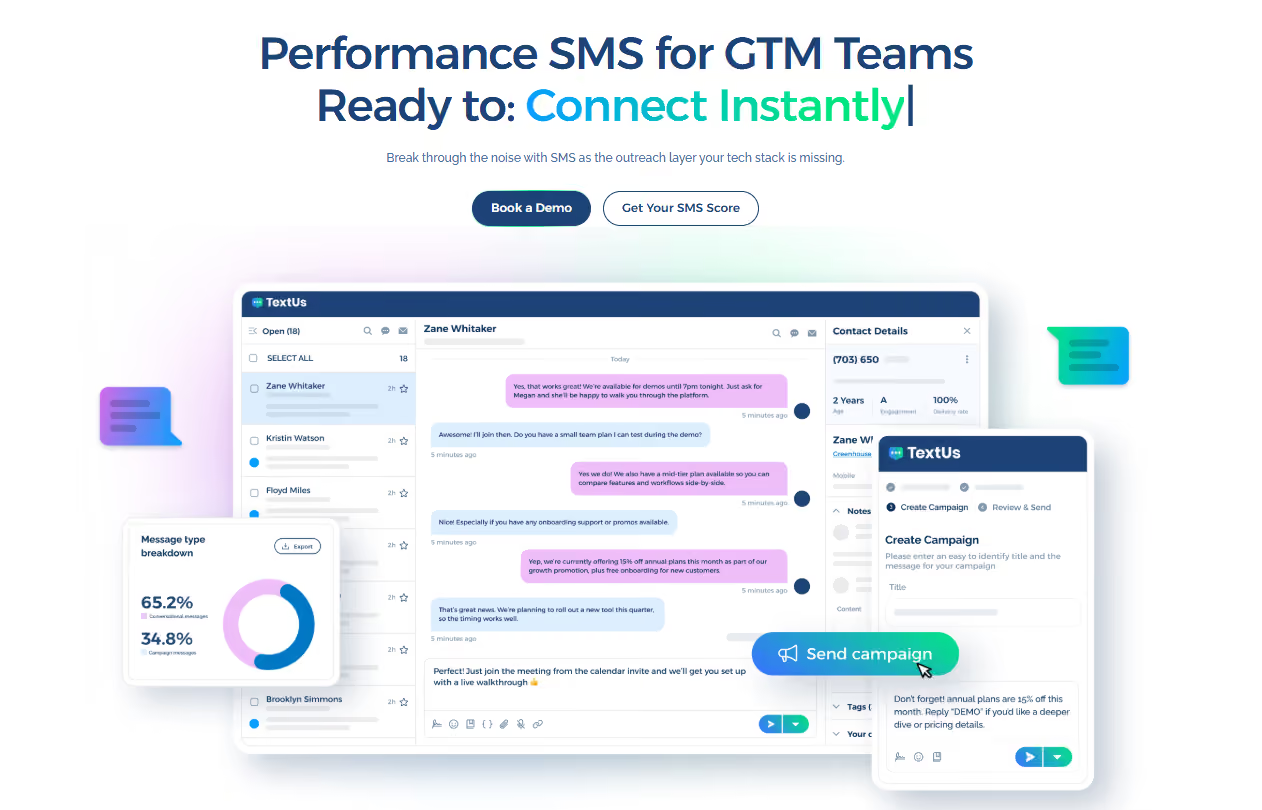
If you're ready to run SMS marketing with stronger oversight and fewer mistakes, book a demo with TextUs today!
FAQs About SMS Marketing Rules
What are the most important SMS marketing rules?
The most important rules are:
- Get explicit permission before sending marketing texts
- Show full opt-in disclosure at signup
- Honor opt-outs right away
- Follow quiet hours
- Identify your business
- Avoid restricted or misleading content
These rules support a compliant marketing strategy and protect your business as you expand into new marketing channels.
You also need to keep proof of consent and register your brand for A2P 10DLC if you send business texts from a ten-digit number.
Can you text customers who gave you their phone number?
A phone number alone is not permission for commercial text messages. A customer can share a number for receipts or appointment reminders, even if the phone number provided was collected through a form.
If you want to send promotions, your signup process must show the disclosure and collect consent specifically for marketing.
Can you send SMS marketing without a keyword opt-in?
Yes. Keyword opt-ins consent are common, but they are not the only allowed method.
You can collect opt-ins through a website form, checkout page, QR code, or in-person signup, including signups driven from direct mail.
What matters is that the person takes an action after seeing the disclosure, and you store proof of that express consent.
Can you send SMS marketing messages from a personal phone?
You can text customers from a personal phone for 1:1 conversations, but it’s risky for marketing. Personal phones do not support proper opt-out handling, recordkeeping, or compliance controls.
An SMS marketing platform is the safer option for marketing texts because it supports consent tracking, opt-out automation, and audit history.
Continue Reading



Frequently Asked Questions
What are the key rules for SMS marketing compliance?
The key SMS marketing compliance rules are: get express written consent before texting, include clear opt-out instructions in every campaign, honor opt-out requests within 24 hours, send only between 8am-9pm local time, and maintain records of all consent.
What is required in an SMS marketing opt-in disclosure?
A proper opt-in disclosure must state: what type of messages the subscriber will receive, how often they can expect messages, that message and data rates may apply, and how to opt out. This information must be visible at the point of consent collection.
What are the consequences of violating SMS marketing rules?
TCPA violations carry statutory damages of $500 per message, up to $1,500 for willful violations. Class action lawsuits for non-compliant mass texting campaigns have resulted in settlements of millions of dollars. Carriers can also blacklist senders for policy violations.
Business Texting
Built for Results
Create and convert pipeline at scale through industry leading SMS software