
5 Revenue Leakage Prevention Strategies to Improve Cash Flow
Learn how to spot revenue leakage and explore top revenue leakage prevention strategies for improving cash flow. Discover how TextUs can help.

Written by
Adam Hamdan
Published
October 5, 2026

Missed invoices, incorrect pricing, delayed follow-ups, and manual errors create a drain on income that affects financial accuracy.
Revenue leakage prevention starts with better control over billing, pricing, contracts, and payment follow-ups. Consistent tracking and timely communication keep transactions accounted for and reduce the risk of missed revenue.
In this article, you'll have a comprehensive understanding of how revenue leakage happens and which industries face the highest risk.
You'll also see effective tips to identify, control, and stop revenue leakage so every transaction is properly recorded.
TL;DR
- Revenue leakage occurs from breakdowns in billing, contracts, pricing, and communication that lead to missed or uncollected income.
- Common signs of revenue leakage include mismatched sales and billing data, frequent invoice errors, payment delays, subscription and customer billing issues, pricing mistakes, and contract tracking problems.
- You can calculate revenue leakage by comparing potential revenue with actual revenue, then use the percentage to track losses.
- Businesses in SaaS, telecom, finance, healthcare, ecommerce, and subscription services face higher exposure to these issues.
- Addressing revenue leakage starts with improving billing systems, contract management, financial checks, revenue recognition, and monitoring of financial activity.
- TextUs helps reduce missed follow-ups and disconnected communication by keeping sales, finance, and customer teams aligned through real-time text messaging.
Signs Your Business Has Revenue Leakage
Revenue leakage shows up in different operational inefficiencies. This could appear in financial data, customer records, and internal reports throughout the revenue lifecycle.
Here are a few causes of revenue leakage you should look out for:
Revenue Does Not Match Sales Activity
Your sales data may show completed deals, but recorded revenue appears lower than expected.
Strong sales efforts don't translate into full value when transactions in the sales pipeline fail to reach billing or revenue records.
These discrepancies between systems make it harder to identify revenue leakage and maintain a complete view of overall financial health.
Frequent Invoice Errors
Invoices may contain incorrect pricing, missing items, or wrong totals. These issues come from manual data entry, which increases the risk of errors.
Repeated invoice issues signal weak revenue management and poor control over billing operations. Over time, these errors lead to revenue loss and missed opportunities to capture revenue in full.
Missed or Late Payments
A growing number of unpaid or overdue invoices signals weak payment tracking. Payment failures and delayed collections reduce visibility into actual income and may create cash flow shortages.
Late payments also create gaps between expected and received revenue. These patterns point to missed revenue opportunities and weaken your revenue streams.
Subscription Billing Gaps
Recurring billing may fail to charge customers during renewal cycles. Some accounts may stay active even though they were never properly billed.
These issues can continue without detection for long periods, which affects the collection of all the money tied to active accounts.
Customer Billing Complaints
Customers may report incorrect charges or unclear invoices. These complaints highlight breakdowns in data management and inconsistencies in billing systems.
Frequent complaints affect both customer satisfaction and customer relationships. They also signal deeper issues in how revenue is calculated and recorded.
Discounts and Pricing Errors
Pricing may vary from agreed rates or contract terms. Weak pricing strategy and uncontrolled discounts reduce the total value of each transaction.
Inconsistent pricing leads to lower revenue per transaction. Small differences can also reduce total revenue over time and impact service delivery expectations.
Poor Contract Tracking
Contract terms may not be followed during billing. Price updates or renewals may be missed, which affects contract performance.
Lack of contract tracking leads to incorrect billing amounts. These misalignments prevent you from capturing full revenue.
How to Calculate Your Revenue Leakage
Revenue leakage can be difficult to spot because individual errors may appear small. A better approach is to compare expected financial activity with what was billed, recorded, and collected.
Start with sales records, contracts, invoices, payment records, discounts, renewals, and revenue reports. Look for differences between completed transactions and the money that reached your accounts.
You can calculate revenue leakage with a simple formula:
Potential revenue - actual revenue = revenue leakage
For example, if your business expected to collect $100,000 but received $95,000, the $5,000 difference represents potential revenue leakage that requires investigation.
You can also calculate revenue leakage as a percentage:
Revenue leakage % = (potential revenue - actual collected revenue) ÷ potential revenue × 100
The percentage makes comparisons easier across months, locations, products, or customer groups.
Industries With High Revenue Leakage Risk
Revenue leakage extends to many industries. But some face a higher risk due to complex billing, large transaction volume, and recurring payment models.
Here are the industries with significant revenue leakage risk:
SaaS Companies
SaaS companies depend on subscription billing, upgrades, and usage-based pricing tied to recurring revenue streams.
High customer volume means small errors from manual processes can repeat over thousands of accounts.
Weak revenue workflows between subscription systems, customer records, and billing platforms can make these errors harder to detect.
SaaS SMS software tools support billing and customer communication by sending payment reminders, renewal alerts, and account updates. These real-time messages keep customers informed and reduce missed charges for subscription accounts.
Telecom Providers
Telecom providers handle large amounts of usage-based billing, such as calls, data, and messaging. Complex pricing structures increase the risk of incorrect or missing charges.
Irregularities between these systems lead to inconsistencies in financial reporting and recorded revenue.
Subscription Services
Subscription businesses rely on recurring payments tied to billing cycles. Missed renewals or failed charges create ongoing revenue gaps.
Customers may continue using services without being billed. These discrepancies affect both income tracking and long-term customer success.
Financial Services
Financial operations manage transaction fees, service charges, and account activity as part of the broader sales process. Errors in fee calculation or missed charges may result in lost revenue.
Strict compliance requirements and sensitive customer data add complexity to billing and communication. Any breakdown in processes can affect accuracy, reporting, and overall financial control.
TextUs supports financial service teams with secure and compliant SMS communication. It enables messaging campaigns that safeguard personal data while aligning with texting regulations.
Healthcare Providers
Healthcare providers handle billing through insurance claims and patient payments. Incorrect coding or missing claims lead to uncollected revenue.
Long billing cycles and complex payment structures increase the risk of shortfalls. Delays in claim processing affect revenue records.
Ecommerce Companies
Ecommerce companies process large numbers of transactions, refunds, and discounts. Pricing errors or incorrect order handling create revenue gaps.
Issues in payment processing or returns lead to mismatched revenue records. High order volume makes these issues harder to detect.
Revenue Leakage Prevention Strategies You Should Implement
Gaps appear when manual processes break down or when financial data is not reviewed in a consistent way. Below are the main strategies you can use to prevent revenue leaks:
1. Automate Billing and Invoicing Systems
Automated billing systems record every transaction based on set rules within your financial processes. It reduces the risk of skipped or incomplete charges.
Automation also connects billing with usage data, contracts, and pricing models. When these inputs are not linked, billing errors appear, and inaccurate billing prevents full capture.
Invoice generation based on real-time data reduces the chance of outdated or incorrect charges. It also reduces dependence on outdated systems that require staff to transfer billing information by hand.
SMS marketing strengthens automated billing by keeping customers informed at key moments. Payment reminders, invoice notifications, and failed payment alerts support revenue assurance and reduce missed payments.
When revenue data stays siloed, billing details and follow-ups can fall out of sync, where revenue slips through unnoticed.
Proactive communication through SMS improves alignment between sales, customer-facing, and finance teams.
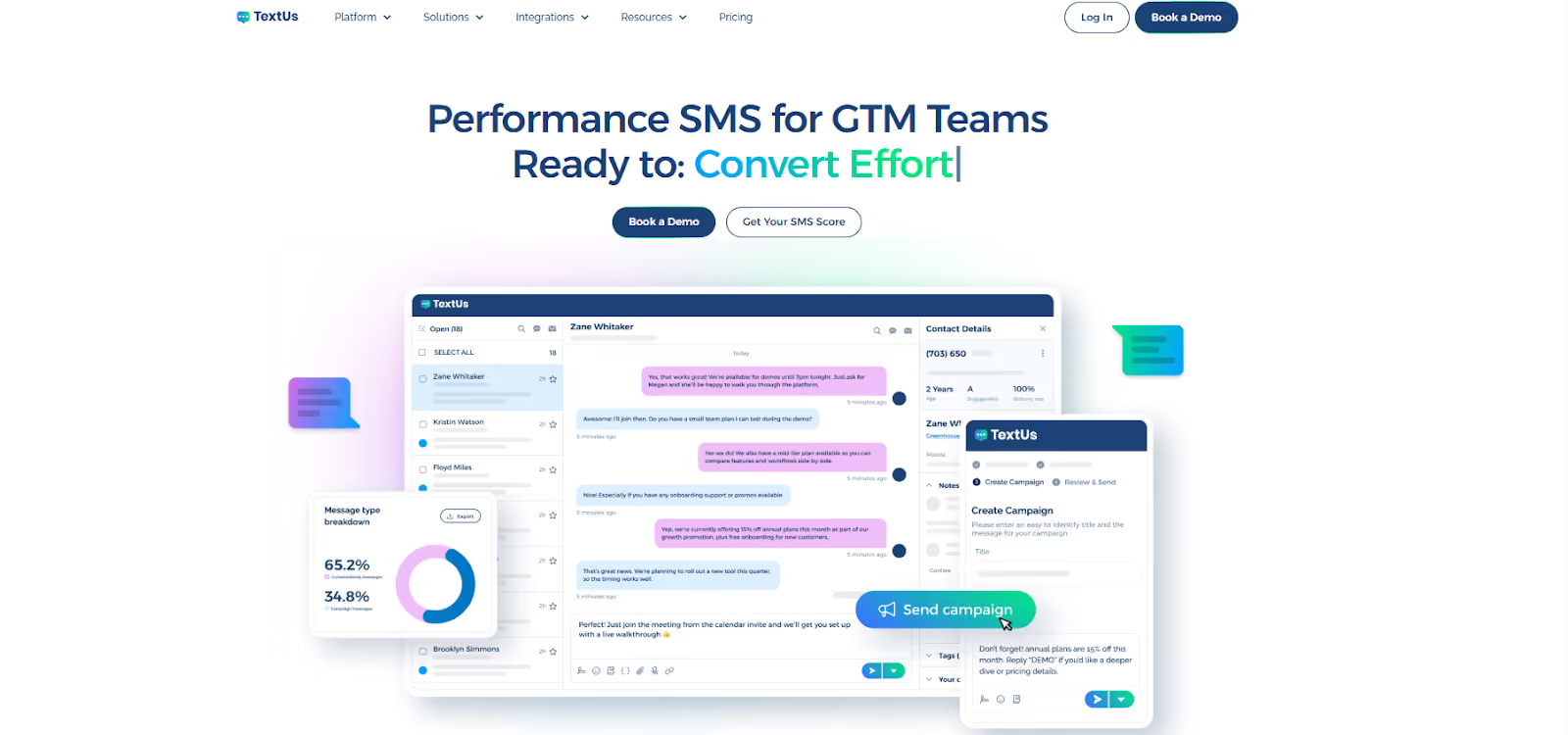
TextUs connects communication with your billing and invoicing processes. With shared visibility between sales, marketing, and customer teams, updates and reminders stay consistent.
If you want tighter control from first touch to long-term engagement, book a demo with TextUs today!
2. Implement Strong Contract Management
Contracts define pricing, billing terms, renewal dates, and service scope within revenue operations. But problems start when these details are not reflected in actual billing.
Start with a structured contract lifecycle process that tracks creation, approval, updates, and renewals. This approach supports better project management and visibility into contract changes.
Every change in pricing, scope, or duration should trigger a review in billing systems to prevent outdated terms from being used. This helps you identify discrepancies before they affect billing.
Pricing and discount approvals should follow the same process. Unauthorized discounts, expired promotional rates, and missed price increases may reduce the average revenue earned from each customer.
You can set a simple process for reviewing contracts on a regular basis. A quick check between contract terms and invoices helps address issues promptly and prevent underbilling.
3. Strengthen Internal Financial Controls
Inconsistent checks create process gaps that can lead to incorrect invoices, missing charges, and unreliable records with serious financial implications.
You have to set simple checkpoints in the billing process, such as reviewing invoices before they are sent. These checks reduce human error and improve accuracy.
You also need to review financial reports regularly to confirm that the numbers match what was billed and collected. Differences in reports are often the first sign that something is off.
Give specific responsibility for reviewing financial data. Defined ownership strengthens internal controls and protects revenue integrity during billing and collection processes.
4. Standardize Revenue Recognition Processes
Revenue recognition should follow consistent rules. Income has to be recorded at the right time and in the correct amount within the revenue cycle.
You need to set guidelines for when revenue should be recognized based on your business model. Whether it is tied to delivery, milestones, or subscription periods, the same rules should apply to every transaction.
Alignment also plays a big role. Differences between what is billed and recorded may affect your revenue optimization.
Regular review of revenue entries helps confirm that records reflect actual business activity. Small inconsistencies in timing or amounts can signal deeper issues in how revenue is tracked.
5. Establish Revenue Monitoring Systems
A structured monitoring setup brings together data from sales, billing, and finance into one view. This makes potential revenue leakage easier to detect before small discrepancies become larger losses.
Dashboards allow you to track key metrics tied to revenue collection and billing accuracy.
Useful key performance indicators (KPIs) include:
- Expected versus collected revenue
- Overdue invoice value
- Failed payment rates
- Billing accuracy
- Renewal rates
- Discounts
- Unbilled services
These metrics also make it easier to track revenue leakage over time instead of treating every billing problem as an isolated incident.
Regular reports provide another layer of visibility. You may compare periods, customer groups, products, and revenue sources to determine where unusual changes occur.
Alerts can flag unpaid invoices, failed transactions, missing renewals, unusual discounts, or unexpected drops in revenue for review.
Keep Your Revenue Lifecycle in Motion With TextUs
Revenue gaps don't happen in just one stage. Missed follow-ups during sales, slow updates in onboarding, or a lack of communication after purchase all add up over time.
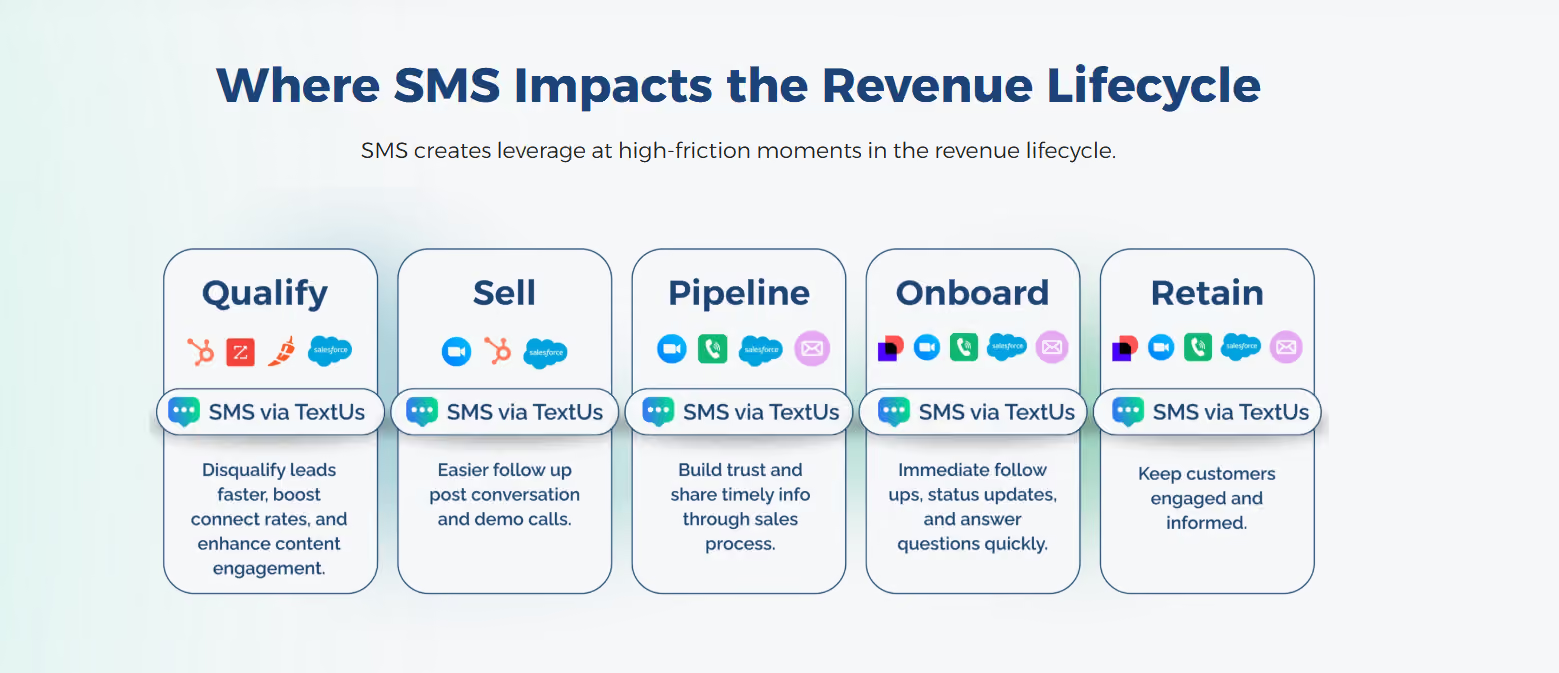
TextUs supports every step of the revenue lifecycle, from qualifying leads to retaining customers.
With SMS built into your process, your sales teams can follow up faster, share updates in real time, and keep conversations active from first touch to long-term engagement.
Turn every interaction into an opportunity to capture more value and keep all the revenue flowing consistently. Book a demo with TextUs today!
FAQs About Revenue Leakage Prevention
How to prevent revenue leakage?
You can prevent revenue leakage by tightening billing controls, reviewing contracts and pricing, automating payment follow-ups, and checking financial records for discrepancies.
These controls protect revenue generation by reducing missed or uncollected income.
What does revenue leakage mean?
Revenue leakage refers to the income a business earns but does not capture, record, or collect. It usually happens through issues like incorrect invoices, missed charges, or failed payments.
What is a revenue leakage audit?
A revenue leakage audit compares contracts, invoices, payments, pricing, and financial records to find where expected income was lost.
What does "income leakage" mean?
Income leakage refers to money your business should receive but loses because of billing errors, missed payments, pricing mistakes, or weak financial controls. Over time, these losses can reduce profit margins even when sales remain strong.
Continue Reading



Frequently Asked Questions
Business Texting
Built for Results
Create and convert pipeline at scale through industry leading SMS software