
5 Enterprise Marketing Examples for Stronger Business Strategy
Explore five enterprise marketing examples that can help you strengthen your business strategy and see how TextUs can help.

Written by
Adam Hamdan
Published
April 24, 2026

Large enterprises become successful by building marketing systems that do more than attract attention.
They shape connected customer experiences, support extended buying cycles, and maintain visibility from start to finish.
That kind of success does not come from one campaign alone. It comes from a strategic plan and strong execution.
In this article, we will explore enterprise marketing examples that show how successful companies build awareness, engagement, and long-term customer value. You will also see what makes each example effective and how those ideas can inspire your own marketing strategy.
TL;DR
- We have listed five enterprise marketing examples, showing how brands such as Target, McDonald’s, Starbucks, Salesforce, and Spotify use enterprise marketing through connected experiences, loyalty, events, and personalization.
- To use these marketing tactics in your own business, you have to choose examples based on your goals, matching them to the customer journey, starting with one tactic, using customer data, keeping the experience consistent, and tracking results over time.
- SMS strengthens enterprise marketing by adding a fast, direct way to handle reminders, follow-up, loyalty messaging, and other high-intent moments.
- TextUs brings that SMS strategy into one platform with shared inboxes, two-way texting, campaign tools, reporting, integrations, and workflow features built for enterprise-scale.
Why Enterprises Need a Strategic Marketing Approach
Enterprise businesses face a different kind of challenge, unlike smaller-scale marketing.
They need to win over buying groups, support longer sales cycles, and keep existing accounts engaged after the first deal.
Enterprise buyers need more proof and brand consistency before they move forward.
That is where enterprise marketing can work in a more strategic way. Instead of focusing only on lead volume, it supports the full revenue picture.
It helps attract high-value accounts, keeps the brand visible during long decision processes, and provides sales teams with stronger support that speaks to different stakeholders.
Enterprise messaging also works because it supports trust at scale. Large deals involve executives, department heads, finance teams, and end users, all with different concerns.
A strong enterprise strategy gives each of them the information they need through case studies and account-specific messaging.
5 Best Enterprise Marketing Examples
Enterprise marketing stands out when you connect a large-scale strategy with customer experience cohesively and recognizably.
The examples below can help you identify marketing approaches that align with your current priorities:
1. Target’s Omnichannel Retail Experience
Target's loyalty program, digital tools, fulfillment network, and in-store experience all work as one connected system.
Instead of treating e-commerce, stores, and delivery as separate functions, Target builds one customer journey that moves from discovery to purchase to fulfillment to repeat buying.
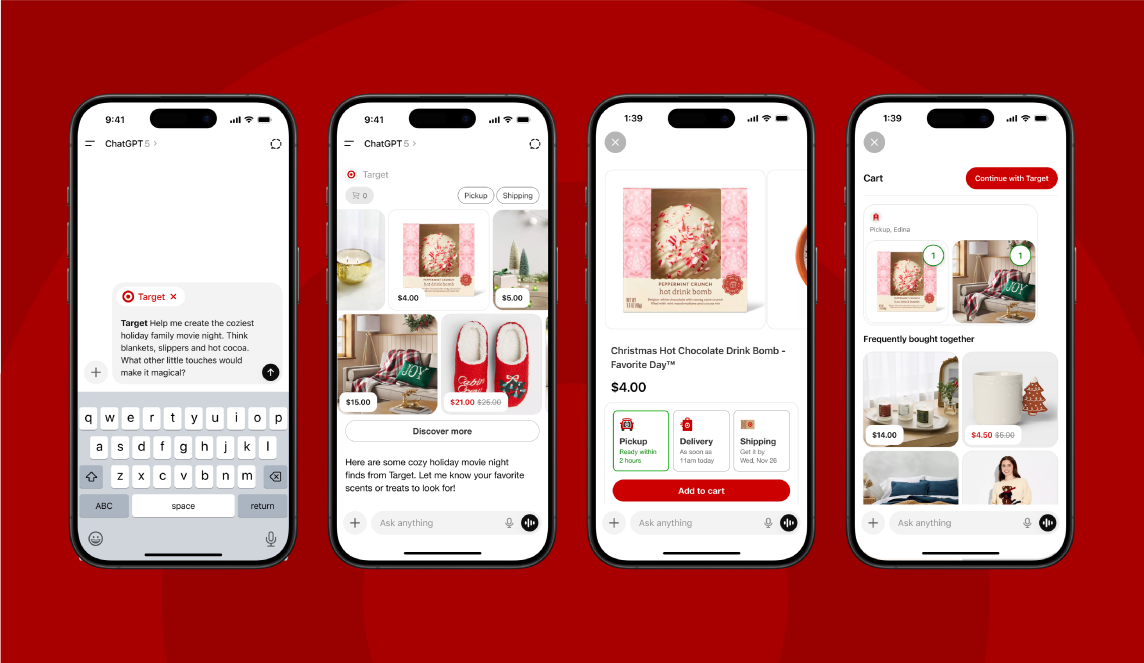
Target's annual report says the vast majority of digitally originated sales are fulfilled by stores, which shows how deeply its physical footprint supports digital demand.
Target does more than promote products. It markets convenience, speed, flexibility, and membership value at every stage of the customer journey with strong brand messaging.
A shopper can browse online, check local inventory, place an order in the app, choose Order Pickup or Drive Up, or use same-day delivery.
That creates a smoother experience while also reinforcing Target’s promise that shopping can fit into everyday life while maintaining brand consistency.
Target Circle 360 makes them even stronger because it turns operational convenience into a marketing asset. The paid membership adds benefits such as unlimited same-day delivery on qualifying orders, fast shipping, and broader Shipt marketplace access.
This shows how a large brand can use loyalty and service perks not just to drive one sale, but to increase repeat purchases and long-term customer value for its wider customer base.
2. McDonald’s Digital Loyalty Marketing
McDonald’s uses digital loyalty as a core part of how it attracts new customers, drives repeat purchases, and builds long-term brand engagement.
In McDonald’s 2025 results, the company said systemwide sales to loyalty members reached nearly $37 billion for the full year, with almost 210 million 90-day active loyalty users across 70 markets by year-end.
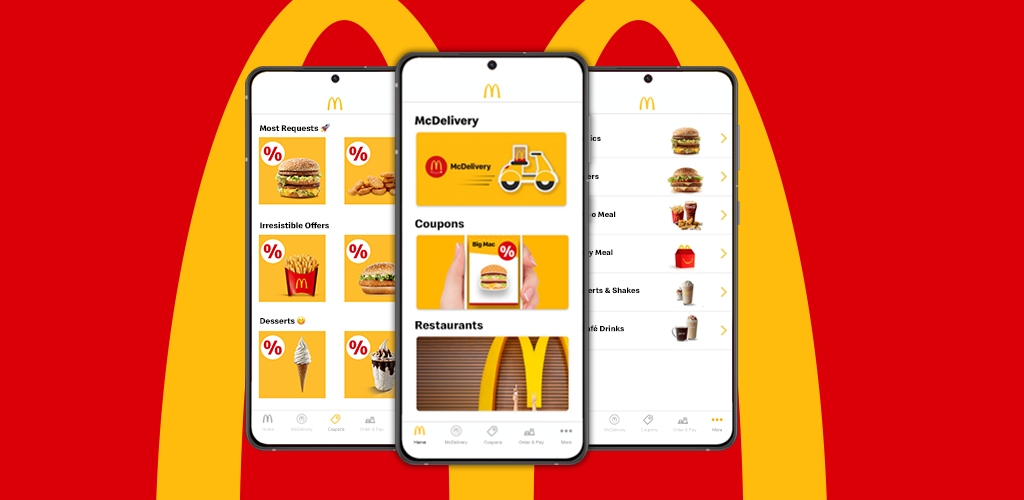
The company's loyalty marketing becomes a way to keep the brand present in the customer’s routine and turn one purchase into the next one.
The app gives McDonald’s a direct channel for personalized offers, repeat visit incentives, and promotion of menu launches or limited-time campaigns.
McDonald’s has said it continues to expand loyalty to power more personalized experiences as part of its broader growth plan around digital, delivery, drive-thru, and development.
The company has also tied its broader digital transformation to a shared software and platform approach that connects customer-facing tools such as the mobile app, loyalty, and kiosks.
3. Starbucks Rewards Lifecycle Marketing
Starbucks uses rewards and digital touchpoints to guide potential customers through the full lifecycle, from first purchase to repeat visits to higher-value engagement.
In January 2026, Starbucks said its reimagined Starbucks Rewards program was built for 35.5 million active U.S. members, with new tiers and added personalization designed to deepen engagement.
Lifecycle marketing works best when brands do more than send generic offers. Starbucks introduced a tiered Rewards structure with Green, Gold, and Reserve levels, plus new benefits focused on value, personalization, and engagement.
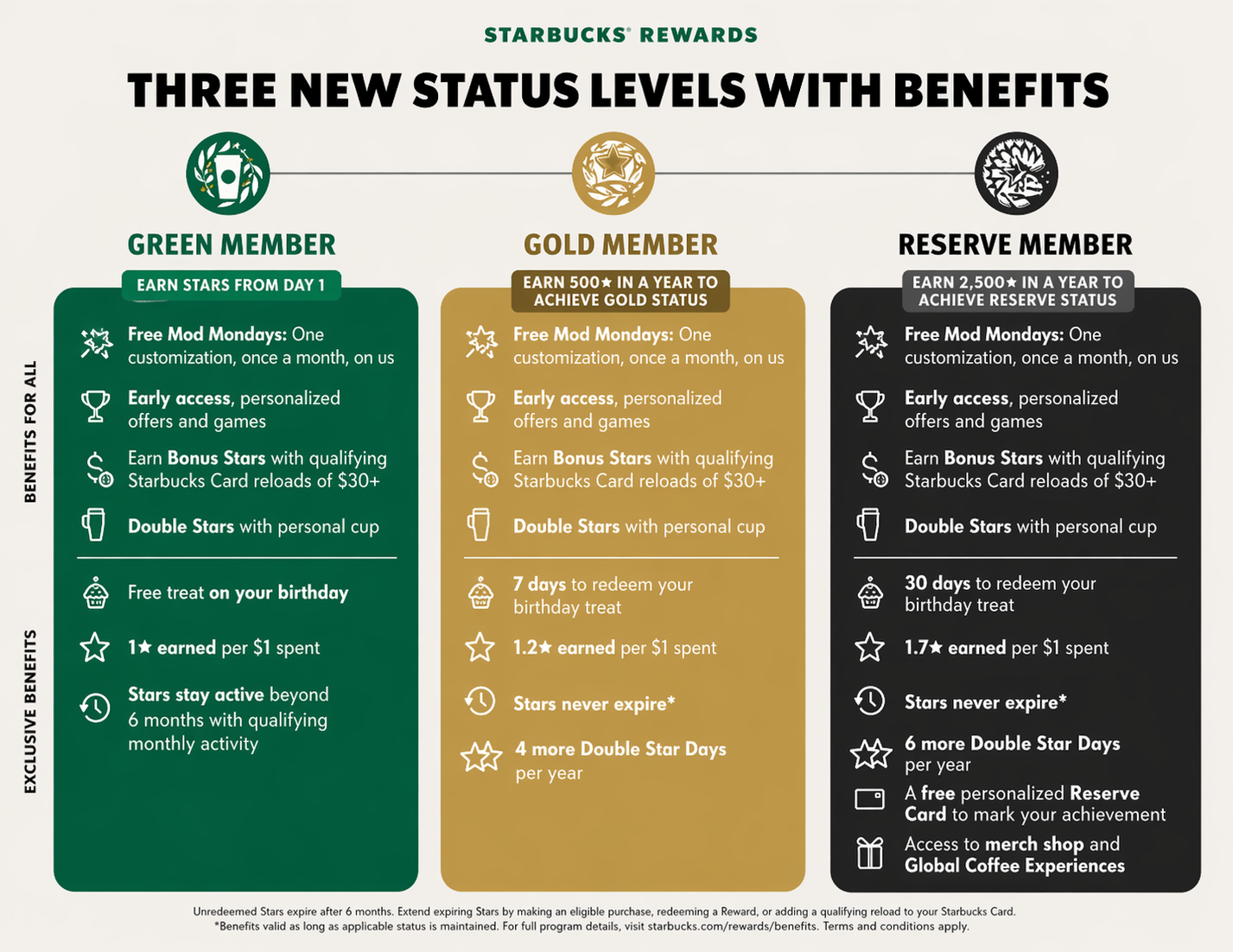
This program uses status, benefits, and tailored customer interactions to keep different groups active over time.
Starbucks also stays connected to customers after the first transaction. A customer joins Rewards, uses the app, loads funds, earns Stars, receives tailored offers, redeems rewards, and keeps returning through habit and incentive.
This sequence is classic lifecycle marketing because each stage is designed to move the customer forward. The app has been a part of the purchase flow through mobile ordering, stored payment, and rewards tracking.
4. Salesforce’s Dreamforce Event Strategy
Salesforce’s Dreamforce event strategy turns one brand event into a full-scale demand generation, product education, customer retention, partner engagement, and thought leadership engine.
Dreamforce is a major brand platform where Salesforce launches product narratives, showcases customer proof, deepens relationships with existing accounts, and attracts new prospects through both in-person and digital experiences.
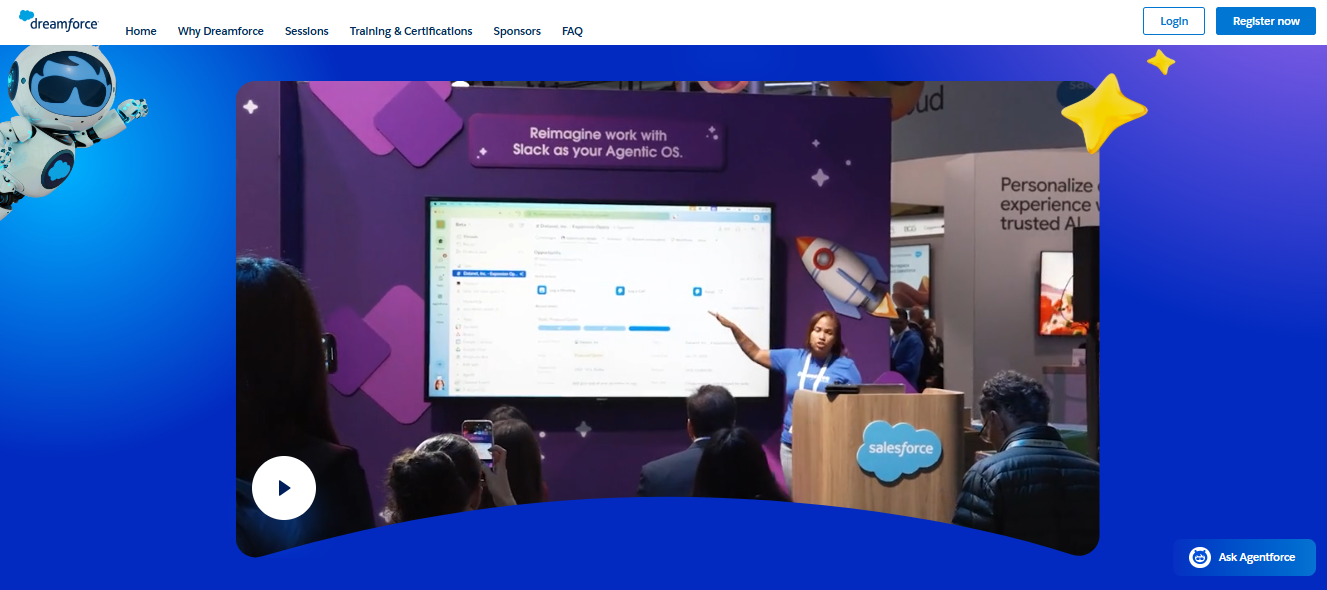
Dreamforce 2025 centered on the “Agentic Enterprise” theme, with Salesforce presenting Agentforce, real-time data, and AI-driven workflow transformation as a unified business story.
The main keynote focused on how humans and AI agents can work together to drive customer success, while supporting sessions tied to Data Cloud and Customer 360 into that same message.
This kind of message discipline is a hallmark of enterprise marketing as it keeps the brand, product, and growth narrative aligned.
Salesforce is a global company, and Dreamforce is designed to support that scale through hybrid distribution. The in-person event creates exclusivity, community, and live momentum, while Salesforce+ makes keynotes and sessions available to a much broader audience.
5. Spotify Wrapped Personalization Campaign
Spotify Wrapped is Spotify’s annual year-end global campaign that turns each user’s listening data into a personalized recap. The experience highlights top songs, artists, genres, podcasts, and other listening patterns in a visual, story-driven format inside the app.
A big part of the campaign’s appeal comes from how personal it feels. Each user gets a version built from their own activity, which makes the campaign more engaging than a standard branded recap.
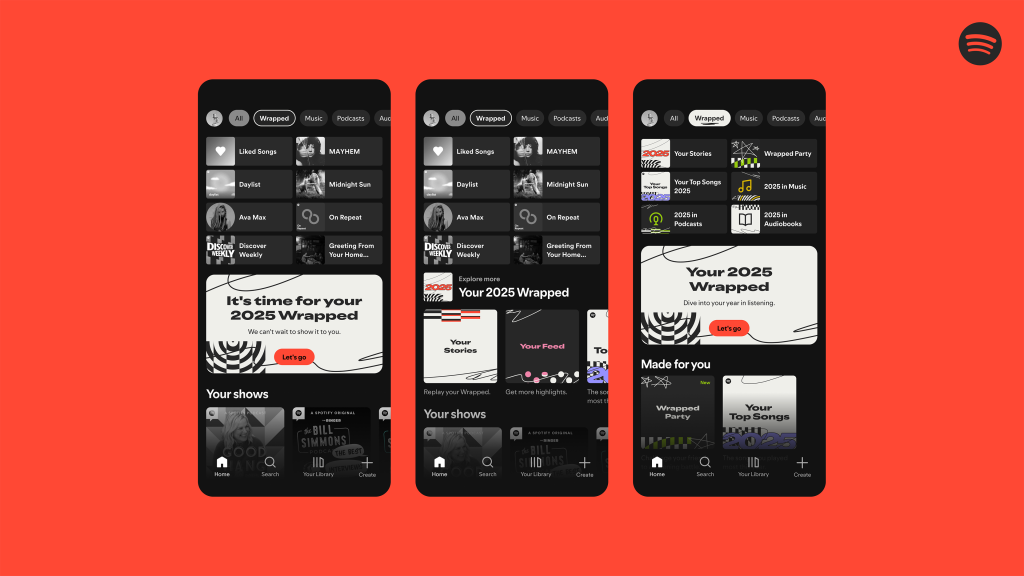
Spotify also said its 2025 Wrapped was “more captivating, personal, and bolder than ever before,” which shows that personalization remains central to how the company develops the campaign year after year.
The campaign also benefits from Spotify’s scale. In its investor materials for the fourth quarter of 2025, Spotify reported 675 million monthly active users and 263 million subscribers.
This global audience helps explain why Wrapped generates attention each year among listeners, artists, creators, advertisers, and the media.
Spotify Wrapped also blends product experience with social media interactions. Spotify’s 2025 Wrapped materials highlight features such as Wrapped Party, Clubs, and Fan Leaderboard, all of which were designed to make the experience more personal and more shareable.
How to Use These Marketing Examples in Your Business
Enterprise companies succeed because each one builds marketing around its own customer behavior, sales model, and brand strengths.
Your goal is to study what makes those examples work, then apply the same thinking to your own business in a way that fits your size, audience, and resources.
Choose Goal-Based Examples
Start with examples that match your business goal and wider business objectives. A campaign can look impressive and still have little value for your business if it solves a different problem.
Some examples are built for awareness. Others focus on retention, repeat purchases, customer engagement, or trust.
If you're looking to gain repeat sales, look at loyalty-driven brands like Starbucks or McDonald’s. If you need more lead nurturing in B2B, event-led examples like Salesforce or Adobe make more sense.
Match the Customer Journey
Each marketing example usually fits a specific stage of the customer journey and supports different marketing efforts.
Some are built to attract attention, while others are better for nurturing interest, driving conversions, or keeping customers engaged after the sale.
Spotify Wrapped shows how personalization can strengthen engagement and sharing. Starbucks Rewards shows how post-purchase engagement can strengthen customer loyalty.
Start With One Tactic
It's smarter to begin with one tactic you can manage well to give you room to test what works before expanding.
You can test a more personalized campaign, launch a simple loyalty offer, improve event follow-up, or add SMS for post-purchase messages, reminders, or limited-time offers.
Use Customer Data
You have to look at what your customers already do before deciding which strategy to borrow. Review signals such as repeat purchases, site visits, email clicks, SMS replies, support questions, or customer feedback.
That information shows which ideas make sense for your business. If customers buy once and disappear, it's best to focus on customer satisfaction and retention.
If they engage with offers but do not convert, aim for faster follow-up and trust-building with a more strategic approach.
Keep Experience Consistent
Strong marketing does not stop at one ad, one email, or one campaign. It connects messaging, timing, offers, and follow-up in a way that makes the customer experience smoother.
For your business, that can mean matching ad copy with landing pages, keeping tone consistent in email and SMS, and following up after a purchase with useful and relevant communication.
A connected experience makes your marketing feel more intentional. It can boost brand awareness and protect brand reputation.
Track and Improve Results
You have to test small changes, measure performance, and improve based on what your audience responds to. That process will show whether the strategy fits your business.
Also, pay attention to key performance indicators such as click-through rate, conversion rate, repeat purchase rate, retention, average order value, or event sign-ups.
Those numbers will show what deserves more investment and what needs adjustment.
Where SMS Fits Into Your Own Enterprise Marketing Strategy
Traditional marketing, like email, paid media, and sales outreach, each strengthens your digital marketing strategy. But SMS marketing adds speed to the mix.
Texting allows you to send reminders, follow-ups, updates, and promotions that your target audience can read and act on without much effort.
Its value becomes even stronger when you use it for high-intent moments in the customer journey.
Enterprise SMS can support lead follow-up after a form submission, event reminders before a webinar, or loyalty messages that encourage repeat business.
SMS is valuable if you want a more connected customer experience. A well-timed text can keep prospects engaged, bring customers back, and reduce the drop-off that often happens after someone shows interest.
When messages are tied to customer actions and sent with a specific purpose, SMS serves as a practical way to support responsiveness, convenience, and ongoing engagement.
Timing, personalization, and coordination with your multiple channels all shape how well SMS performs.
With the right enterprise texting solution, you can turn text messaging into a reliable part of your broader marketing strategy.
Why Is TextUs Built for Enterprise Marketing
Enterprise SMS marketing only works when your platform can support speed, coordination, visibility, and control at scale.
TextUs is an enterprise marketing software built for more than sending SMS messages. It provides you with the tools to manage two-way conversations, run campaigns, track performance, and connect SMS with the systems they already use.
Shared Inbox Management
TextUs includes shared inbox functionality that keeps conversations organized and visible for your company's internal marketing team.
Instead of leaving messages tied to one person, enterprise marketers can assign conversations, review message history, add tags, and manage replies in a more structured way.
Two-Way Texting and Campaign Support
TextUs supports one-to-one texting and larger outbound campaigns. It gives you more flexibility in how you communicate and improves campaign management.
Enterprise teams can use it for direct conversations with leads or customers. They can also use it for broader outreach tied to promotions or follow-up for different customer segments and a wider target market.
Real-Time Reporting and Analytics Tool
Enterprise marketing teams need valuable insight into reply trends, team responsiveness, campaign performance, and how texting supports larger business goals. This is why leveraging analytics is important.
This enterprise marketing tool also includes reporting features that offer teams visibility into message activity and conversation performance. It's easier to support marketing operations, reduce data silos, and protect brand value.
Integrations That Support Existing Workflows
TextUs can fit into a wider communication and marketing ecosystem, which is important in modern marketing.
SMS integrations with customer relationship management (CRM) systems make it easier to connect texting with contact records, campaign activity, marketing automation, and performance data.
Enterprise-Ready Workflow Features
TextUs is built with workflow needs that matter to larger organizations and marketing leaders. Features such as conversation logging, automation, contact syncing, templates, and cross-team visibility support texting at a higher volume.
Bring SMS Into Your Enterprise Strategy With TextUs
Enterprise growth comes from connected communication, strong follow-up, and customer experiences that stay consistent from first interaction to long-term retention.
TextUs helps turn interest into action with two-way texting, shared inboxes, campaign support, analytics, and integrations that fit into existing workflows.
Whether your goal is faster lead response or stronger customer engagement, TextUs provides the structure and visibility needed to manage SMS at scale.
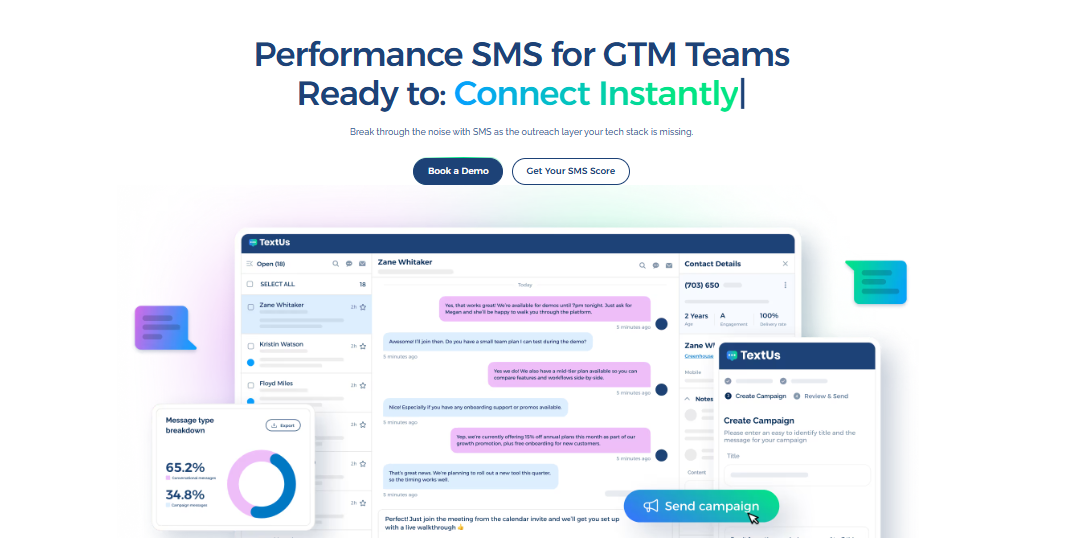
Book a demo with TextUs today and see how an enterprise texting solution can support your next stage of growth!
Continue Reading



Frequently Asked Questions
What is the difference between enterprise marketing and B2B marketing?
B2B marketing includes small businesses, mid-sized companies, and enterprise-level companies. Enterprise marketing is a part of B2B marketing, but it focuses on much larger companies.
The main difference is complexity. Enterprise marketing involves longer sales cycles, larger budgets, more decision-makers, and more steps before a deal moves forward.
What channels work best for enterprise marketing campaigns?
The best marketing channels depend on your audience, your offer, and where buyers spend time.
Many enterprise brands use email, LinkedIn, webinars, events, SEO, paid search, and content marketing because those channels support awareness, education, and follow-up. Social media marketing can also support visibility and help increase brand awareness.
What content works best for enterprise buyers?
Enterprise buyers want content that answers questions, shows proof, and makes the decision process easier. Case studies, product demos, webinars, comparison pages, and implementation guides tend to work well.
Strong content creation also helps support different people involved in the buying decision, and organized content management systems can make that content easier to manage.
Business Texting
Built for Results
Create and convert pipeline at scale through industry leading SMS software