
SMS Campaign Management Guide: Run Better Text Campaigns
Learn how to create a better SMS campaign management system and see how TextUs can help you improve your entire process!

Written by
Published
July 10, 2026

Most business messages never get read. Emails pile up unopened, and cold calls go to voicemail.
Text messages are different. People keep their phones close and tend to open what lands in their inbox within minutes. That is why more sales, marketing, and recruiting teams now run SMS campaigns to reach customers directly.
But sending a few texts is not the same as managing a campaign. SMS campaign management is the work of planning, sending, tracking, and improving text campaigns so every message has a purpose and a result.
TL;DR
- SMS campaign management is the process of planning, sending, organizing, and optimizing text message campaigns from one platform.
- Common campaign types include promotional offers, transactional updates, appointment reminders, and two-way conversations.
- A strong campaign starts with a clean opt-in list, then adds segmentation, personalization, and clear timing.
- Best practices center on consent, relevance, and frequency, so subscribers stay engaged instead of opting out.
- TextUs brings campaigns, a shared inbox, automation, and analytics together in one place.
What Is SMS Campaign Management?
SMS campaign management brings order to your text marketing. Instead of firing off texts one at a time, you run them as organized campaigns: build the list, write the message, schedule the send, and review the results, all in one workflow.
A single text is easy. Managing hundreds or thousands of them is not. A business running SMS marketing needs to reach the right people, keep messages relevant, follow consent rules, and track what works.
That is the job of campaign management. It turns one-off texts into an organized, repeatable program.
Most teams handle this through SMS marketing software rather than a personal phone. A dedicated platform lets you send bulk messages, sort subscribers into groups, automate replies, and view delivery and response data in one place.
Business texting tools also keep conversations in a shared view, so a lead never gets the same message twice from two team members.
In short, SMS campaign management connects the moving parts of text marketing. It brings the list, the message, the timing, and the reporting together so each campaign runs on purpose instead of by guesswork.
Why SMS Campaign Management Matters
SMS reaches people where they already are. Most consumers keep their phones within reach throughout the day and check them often, so a text tends to get opened long before a marketing email does.
For a business, that means a message stands a real chance of being seen.
Good campaign management turns that attention into results. When texts are relevant and well timed, they can drive sales, confirm appointments, and keep customers coming back. When they are random or too frequent, subscribers opt out fast. The difference is management.
A managed approach also protects the business. SMS marketing is bound by consent rules, and a platform that tracks opt-ins and opt-outs keeps campaigns compliant. That lowers legal risk and keeps the subscriber list healthy.
Finally, campaign management gives teams a way to improve. Tracking how each message performs shows what works and what to change next time. Without that data, every send is a guess. With it, each campaign builds on the last.
SMS Campaign Types
Not every text campaign has the same goal. Most fall into a handful of types, and knowing them helps you plan the right message for the right moment.
Promotional Campaigns
Promotional texts drive sales. They share discount codes, exclusive deals, and product launches with subscribers who have opted in. Because these messages ask for action, they work best when the offer is clear and the link goes straight to the store or landing page.
Transactional and Informational Messages
Transactional messages confirm something the customer already expects, such as an order update, a shipping notice, or an account alert.
Informational texts share news or reminders without a sales pitch. Both build trust because they arrive when the customer wants them.
Appointment Reminders
Appointment reminders cut down on no-shows. A short text a day or two ahead confirms the time and gives the customer a way to reschedule. Service businesses, clinics, and salons rely on these to protect their schedules.
Loyalty and Re-Engagement Campaigns
Loyalty campaigns reward repeat customers with early access, member-only offers, or points updates.
Re-engagement texts reach subscribers who have gone quiet, often with a reason to come back. Both aim to improve customer retention.
Welcome Messages
A welcome message greets new subscribers right after they opt in. It sets expectations for what they will receive and how often. A clear welcome text starts the relationship well and lowers early opt-outs.
Two-Way Conversational Messages
Conversational campaigns invite a reply. Instead of a one-way blast, the customer can text back to ask a question, book a slot, or get help. This turns SMS into a direct line between the business and the customer.
SMS Marketing Examples
Seeing real SMS marketing examples makes the campaign types easier to picture. Here are a few messages businesses send every day.
A promotional text might read:
- "Flash sale! Get 20% off your order today with code SAVE20. Shop now: [link]."
Promotional SMS campaigns like this work because the offer and the next step are clear.
A retailer rewarding loyal customers could send:
- "Thanks for being a member, Sarah. Here is early access to our new collection before anyone else."
This kind of message builds customer loyalty and encourages repeat purchases.
An appointment reminder often looks like:
- "Hi Alex, this is a reminder of your appointment tomorrow at 2 PM. Reply C to confirm or R to reschedule."
Sending appointment reminders this way keeps customers informed and cuts no-shows.
A re-engagement text might say:
- "We miss you. Here is 15% off your next visit to welcome you back."
These engaging campaigns bring quiet subscribers back to your online store.
Each example is short, useful, and gives the reader a reason to act. That mix is what makes text message marketing worth the effort.
5 Steps to Manage an SMS Campaign
A clear process keeps every campaign on track. These five steps take you from an empty list to a program you can measure and improve.
1. Build an Opt-In Subscriber List
Every campaign starts with permission. Grow your SMS subscriber list by inviting people to opt in through a keyword, a signup form, or a checkout box. Consent keeps you compliant and gives you an audience that wants to hear from you.
Avoid buying a list, because those contacts never agreed to receive messages.
2. Segment Your Audience
Once you have subscribers, segment your audience into groups. You might sort by location, interests, or purchase history.
Segmentation lets you send relevant messages instead of one blast to everyone, which keeps opt-out rates low and engagement high.
3. Personalize Your Messages
Personalized messages perform better than generic ones. Use the subscriber's name, reference a past order, or match the offer to where they are in the customer journey.
When you send personalized messages that fit the moment, customers are more likely to act.
4. Schedule and Send
Timing matters. Schedule SMS messages for hours when people check their phones, and avoid sending too many messages in a short window.
Many teams set up automated campaigns so texts go out at the right point without manual work.
5. Track and Optimize
After the send, review delivery, replies, and clicks. This data shows what worked and where to adjust.
Use it to optimize SMS campaigns over time, so each round builds on the last and future campaigns perform better.
SMS Campaign Management Best Practices
A few habits separate an effective SMS marketing campaign from one that drives opt-outs. These best practices keep subscribers engaged and your list healthy.
- Get clear consent: Only message customers who have opted in. Consent is required for short message service marketing, and it also builds trust. Make opting out easy in every message.
- Keep messages relevant: Send marketing messages that match the subscriber's interests. Relevant texts engage customers, while generic blasts push them away.
- Respect frequency: Do not send too many messages. A steady, predictable schedule keeps your SMS marketing strategy effective and protects your list.
- Time it right: People check their mobile phones throughout the day, but not every hour works. Send during business hours when a reply is welcome.
- Invite two-way communication: Let customers reply. Two-way communication turns a broadcast into a conversation, and answering incoming messages quickly keeps the exchange going.
- Add a clear call to action: Tell the reader what to do next. A direct link to your online store or booking page makes the next step obvious.
How SMS Fits With Your Other Marketing Channels
SMS works best as part of a wider plan, not on its own. When you use SMS marketing alongside email, social media, and other digital channels, each one supports the others and reaches customers in a different way.
Email is a strong channel for long content, while text message marketing is better for short, urgent notes that need fast attention. A common approach is to send a detailed email and follow up with a quick text for the people who did not open it.
This pairing makes both marketing channels stronger.
A connected platform keeps this simple. TextUs integrates with CRM tools like Salesforce and HubSpot, as well as Zapier, so your text campaigns align with the rest of your outreach rather than sitting in a silo.
You can remind existing customers about a sale you announced on social media or confirm an order from your online store, all from one system.
Used this way, SMS becomes a valuable marketing channel that ties the rest of your mobile marketing together. When your messages line up, customers get a clear, consistent story from your brand.
What to Look for in SMS Campaign Management Software
The right SMS marketing platform makes every step easier, but not every tool fits every team. A few questions help you compare your options.
First of all, how well does it handle compliance? Consent rules are strict, so look for a messaging provider with automatic opt-out handling and consent tracking that keeps your SMS marketing services within the rules.
Secondly, does it fit your existing stack? A platform that integrates SMS with your CRM and the other tools you already use keeps customer communication in one place, rather than adding a silo.
Then, how much does it help you improve? Reporting that shows how your SMS marketing messages perform matters more than a long feature list, along with automation that can pause a risky send or flag your warmest contacts.
Finally, is it built for teams or one user? Shared access is what separates business texting software from a personal phone, and it is worth checking before you commit.
Answer these four questions, and the right fit usually becomes clear.
Winning SMS Campaigns Start With TextUs
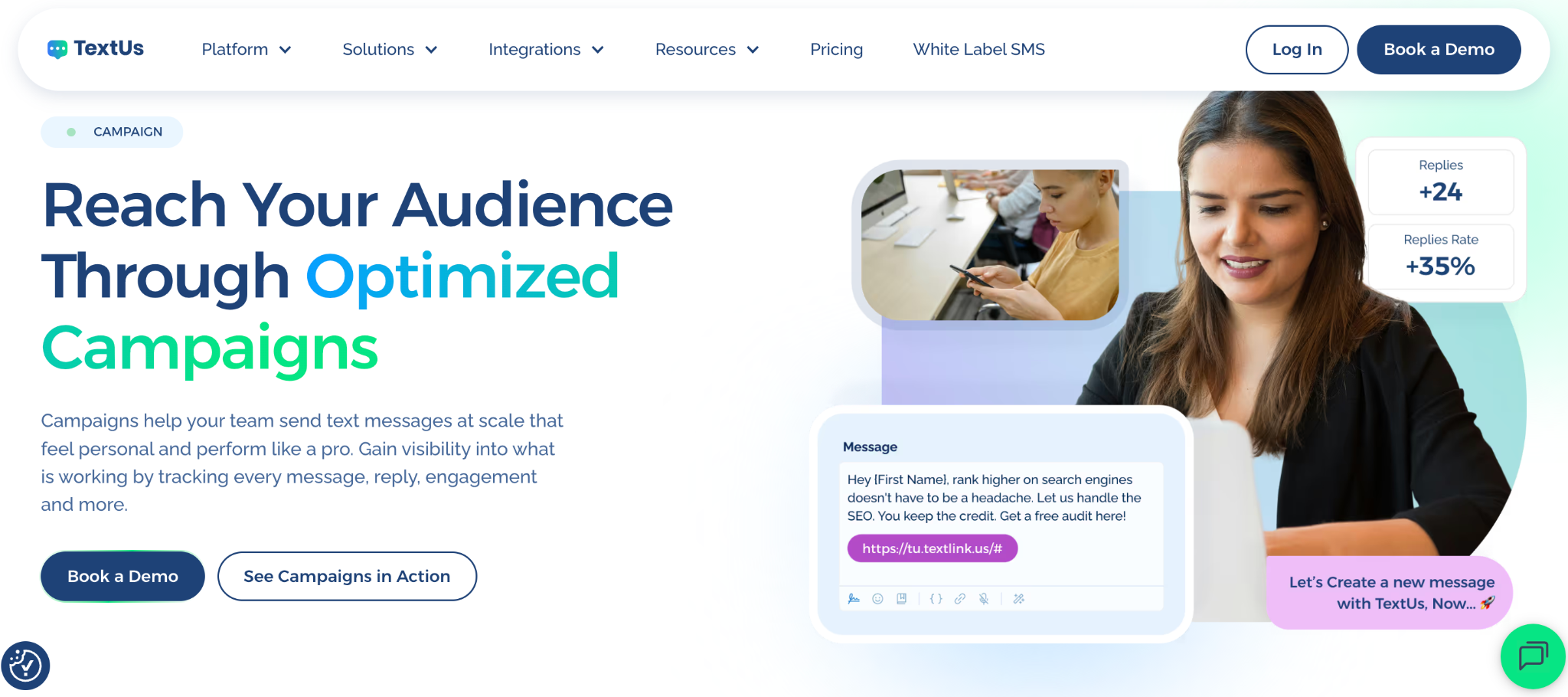
TextUs brings every part of SMS campaign management into one platform. Its Campaigns feature sends bulk and segmented messages with built-in A/B testing, so you can see which version works best.
When customers reply, the shared inbox keeps every conversation in one view, assigns owners, and makes sure no lead gets texted twice.
Automation handles the repetitive work. TextUs schedules sends, runs drip sequences, and uses a Message Quality Indicator to flag spam-risk wording before you hit send.
Contact Intelligence scores each contact by engagement, so you know who to reach next. For list growth, text-to-join keywords and QR codes turn interested people into subscribers.
Reporting closes the loop. The analytics dashboard tracks delivery, replies, opt-outs, and clicks, giving you the data to optimize campaigns over time.
Native integrations connect TextUs to CRM tools like Salesforce and HubSpot, plus recruiting systems, so your customer communication stays in sync. Built-in opt-out and consent tracking keep every campaign compliant.
Want to see it in action? Book a demo to watch how TextUs helps your team run better SMS campaigns.
Continue Reading



Frequently Asked Questions
How is SMS campaign management different from email marketing?
Both reach customers directly, but they work differently.
Email gives you room for long content and images, while SMS is short and lands on the phone almost right away. Texts tend to get opened faster, so SMS suits time-sensitive offers and reminders. Many teams run both and use SMS for the messages that need quick attention.
Do I need customer consent to send marketing texts?
Yes. Sending marketing messages without permission breaks consent rules and can lead to penalties.
Customers must opt in before you text them, and every message should give them a simple way to opt out. A good SMS platform tracks consent and handles opt-outs for you, which keeps your campaigns compliant.
How often should I send SMS marketing messages?
There is no single number, but sending too many SMS messages is the fastest way to lose subscribers. Most brands text a few times a month and adjust based on opt-out and reply rates.
Watch how your audience responds and scale frequency to match their interest rather than a fixed schedule.
Business Texting
Built for Results
Create and convert pipeline at scale through industry leading SMS software