
Staffing Text Messaging: A Guide to Efficient Hiring Workflows
Learn how staffing messaging helps agencies reach candidates, schedule interviews, cover shifts, reduce manual work, and address job scam concerns.

Written by
Adam Hamdan
Published
July 31, 2026

Open roles, candidate replies, client requests, and shift changes rarely arrive one at a time. They pile up at once, which leaves your recruiters trying to keep every conversation moving.
Text messaging creates a direct path to reach candidates, placed workers, and clients through a channel they already check throughout the day.
In this article, we will explain the benefits of staffing text messaging, where it fits into each stage of the hiring process, and how to build a campaign strategy that supports faster placements.
TL;DR
- Staffing agencies use text messaging to reach candidates faster, shorten response gaps, improve interview attendance and shift coverage, re-engage past applicants, and reduce repetitive recruiter work.
- Text messaging supports candidate sourcing, follow-up, screening, interview scheduling and reminders, document collection, offer communication, onboarding, shift coordination, assignment updates, attendance, payroll reminders, assignment completion, redeployment, post-placement check-ins, referrals, and candidate feedback.
- To build a staffing text messaging strategy, you need to set goals, map communication gaps, segment contacts, record consent, choose a text recruiting platform, create templates and automated workflows, route replies, define human handoffs, and improve campaign results.
- You can reduce job scam concerns by using sender details, secure communication practices, and a compliant SMS platform that keeps outreach organized.
- TextUs strengthens staffing outreach with registered 10DLC numbers, high-volume campaigns, automated follow-ups, and recruiting conversations connected throughout the full hiring workflow.
Why Do Staffing Firms Use Text Messaging?
Slow communication may cost you strong candidates, open shifts, and client trust. Here are the main reasons you should use SMS to keep conversations active:
Faster Candidate Outreach
By the time you make phone calls and leave a voicemail, send an email, and wait for a reply, candidates may already be speaking with another agency.
A targeted text tells candidates the job title, pay rate, location, shift, and next step in one message, which creates a faster path from first contact to interview.
Once the candidate replies, an SMS platform like TextUs displays the conversation in a shared inbox where recruiters can respond, assign ownership, and add internal notes.
Faster follow-up keeps conversations active and moves more candidates toward screening and interviews.
Book a demo with TextUs today to see how one shared inbox keeps replies visible, organized, and ready for action!
More Two-Way Candidate Conversations
Recruiting works better as a conversation than a stream of updates. Texting gives candidates a simple place to ask about the schedule, commute, pay range, requirements, or hiring process.
Those replies also tell recruiters more than a silent email inbox ever could. A quick “interested,” “not available,” or “can we talk tomorrow?” makes the next move much easier to plan.
Shorter Response Gaps
Staffing delays happen in the spaces between each hiring stage. The application sits unread, the screening call gets missed, or an offer waits in an inbox while another employer follows up first.
Text messaging closes many of those gaps between job application, screening, interview, offer, and placement. A focused question such as “Are you free for a call at 2 p.m.?” gives the candidate a simple action to take.
Better Interview Attendance
A calendar invite may not be enough to get someone through the door. Candidates forget dates, overlook email confirmations, mix up time zones, or lose the office address inside a long thread.
A text reminder brings the key details back at the moment they matter, such as time, location, recruiter name, interview link, and a way to reschedule. When plans change, recruiters find out before an empty interview slot appears.
Faster Shift Coverage
A callout at 6 AM does not leave much time for back-and-forth phone tag. Staffing text alerts reach several qualified workers at once and make it easy for someone to claim the opening.
Once coverage is secured, the worker receives the reporting details, and the recruiter moves on to the next priority.
Stronger Candidate Engagement
Even when no final decision exists, a brief update shows that the process is still active and their application has not disappeared.
Application confirmations, document requests, interview updates, and offer notices all keep the relationship moving. Candidates don't expect constant contact, but they do appreciate knowing what comes next.
Easier Talent Pool Re-Engagement
Past applicants hold more value than a brand-new list of names. They already know the agency, may have completed screening, and could be open to another role when the timing fits.
You can easily match the message to their skills, location, shift preference, pay expectations, or assignment history instead of sending the same opening to everyone in the database.
Less Repetitive Recruiter Work
You should not spend half the day rewriting “Your interview is tomorrow” or “Please submit your timecard.” Those messages matter, but they do not need to be created from scratch every time.
Templates handle the repeat wording, scheduled texts send reminders on time, and automated sequences cover routine follow-ups.
You can still step in when the candidate asks a question, raises a concern, or needs a real conversation.
Where Text Messaging Fits in Your Staffing Process
SMS marketing fits into more than one moment of the staffing process. Below are the key stages where it keeps communication moving from first contact through placement and beyond.
Candidate Sourcing
Text-to-apply campaigns, QR codes, and custom SMS keywords allow people to express interest from a phone and simplify their job search.
These entry points work across hiring flyers, job ads, social media posts, LinkedIn, career fairs, referral campaigns, and local recruiting events.
Past applicants also receive targeted job alerts when a new role matches their skills, location, schedule, or assignment history.
Application Follow-Up
A follow-up text from a recognizable phone number removes uncertainty for candidates and sets clear expectations for what happens next.
You may request a resume, missing information, schedule availability, preferred location, travel limits, or basic qualifications. You can also ask when the candidate hopes to start and whether the listed shift fits their schedule.
Candidate Screening
Text works well for questions that need a short answer. Staffing screening questions let you confirm basic fit without turning the text thread into a full application.
A phone call offers more space for detailed work history, career goals, job expectations, and concerns about the role.
Interview Scheduling
Phone tag has a way of turning one interview into a full afternoon of missed calls. A text invitation keeps the process simple by offering time options or linking to a self-scheduling page.
The message needs enough detail to prevent another round of questions. Include the role, interview format, available dates, recruiter name, and expected length of the conversation.
Interview Reminders
Interview reminders do more than repeat the date. They bring the most useful details back to the candidate before those details matter.
A one-day reminder may include the time, format, location, documents to bring, and a request to confirm attendance.
A one-hour reminder works well for a meeting link, parking instructions, building access, or the name of the person the candidate needs to ask for.
Document Collection
Recruiters need resumes, certifications, licenses, references, tax forms, policy acknowledgments, and onboarding documents before a placement moves forward.
Text messages keep candidates aware of what is missing and when it is due. You can name the document, explain why it is needed, state the deadline, and include a secure upload link.
Offer Communication
An offer deserves more than a vague message that says, “Good news, call me.”
A staffing offer text needs to include the role, pay rate, schedule, start date, assignment length, and acceptance deadline. The complete offer letter may sit behind a secure, clickable URL or arrive through email.
Text also creates space for immediate questions about the assignment, worksite, supervisor, dress code, or schedule. You then move detailed negotiations or sensitive concerns to a call.
Candidate Onboarding
The time between offer acceptance and the first day can shape whether a candidate stays committed to the placement.
Text messaging keeps important details visible without overwhelming the new employee with one long email or a heavy onboarding packet.
Staffing agencies may use texts to share orientation times, dress expectations, reporting details, required forms, supervisor information, safety notes, and first-day instructions.
Shift Scheduling
Staffing schedules change with little notice, especially when a client adds coverage, a worker calls out, or an urgent shift opens.
Text messaging lets you reach qualified workers and collect responses without a long chain of calls. Once a worker accepts, you can follow with confirmation details and remove the shift from further outreach.
Assignment Reminders
An accepted shift does not always mean the worker remembers every detail. Assignment reminders bring the most important information back before the start time.
You can send the website address, supervisor name, dress requirements, parking instructions, check-in process, or required equipment. These reminders reduce repeated questions and give workers time to raise concerns before they arrive.
Attendance Communication
Attendance problems become harder to manage when no communication channel exists. Text messaging gives workers a convenient way to report a delay, absence, transportation issue, or schedule conflict.
You may also use texts to follow up on missed shifts, confirm a return date, or clarify attendance expectations. But more serious concerns may still require a call, written notice, or formal review.
Timecard and Payroll Reminders
Late or incomplete timecards create problems for workers, staffing agencies, and clients.
A brief text reminder prevents payroll delays and reduces the number of follow-up calls recruiters or payroll staff need to make.
Messages remind workers about submission deadlines, missing hours, approval steps, holiday payroll schedules, or where to view pay information.
Assignment Completion
The end of an assignment creates several loose ends that need attention. Workers may need to submit a final timecard, return equipment, complete exit steps, or confirm their last scheduled day.
Text messaging keeps those tasks visible and gives the worker a direct place to ask questions. It also opens the conversation about future availability before the relationship goes quiet.
Candidate Redeployment
A completed assignment does not have to end the relationship with a strong worker.
You can reach out before the final shift to discuss another role that matches the person’s skills, schedule, location, or experience.
This type of message works best when it feels relevant. A worker who receives a role that matches past preferences is more likely to respond than someone who receives a generic job alert.
Post-Placement Check-Ins
A placement may look successful, while the worker deals with problems that no one has heard about.
Short check-in texts allow you to ask about the first day, schedule, workload, site conditions, or support needs. These messages may go out after the first shift, after the first week, during the assignment, or before the end date.
Referral Requests
Candidates and placed workers know other people with similar skills or work interests. A referral text may invite them to share a job opening with someone who fits the role.
The message needs to explain the opportunity, location, schedule, and referral process in a clear way. Any bonus or reward also has to be explained in simple terms so no one misunderstands the offer.
Candidate Feedback Surveys
Feedback helps you understand where the recruiting and placement process needs attention.
Short SMS surveys may ask about recruiter communication, interview scheduling, onboarding, assignment quality, or interest in future roles.
A simple rating question works for a fast check, while a survey link allows more detailed responses. You also need a process for reviewing low scores, complaints, and safety concerns.
How to Build a Staffing Text Messaging Strategy
A strong text messaging strategy starts with specific goals, organized contact data, and a plan for how each message supports the staffing process.
Here are the key steps for building a strategy that keeps outreach focused and compliant.
Step #1: Define Your Messaging Goals
You need a specific purpose before the first campaign goes out.
Start with the points in the recruitment process that lose the most time or candidates, and watch for stages where faster outreach becomes critical. Your goals may include the following:
- Increase candidate response
- Fill roles faster
- Reduce interview no-shows
- Improve shift attendance
- Re-engage past candidates
- Reduce recruiter admin work
- Improve client updates
- Increase placement volume
A clear goal also keeps your SMS marketing campaigns focused. You'll know who needs the message, what action to request, and what needs to happen after the person replies.
Step #2: Map Your Staffing Communication Workflow
Every staffing process has points where communication slows down. A candidate waits for an application update or a placed worker misses a schedule change hidden inside an email thread.
You have to map the full process from candidate sourcing through assignment completion. Note every stage where candidates, workers, recruiters, hiring managers, and clients need information from someone else.
Some messages need a human conversation, such as pay negotiations, candidate concerns, or client disputes.
Others follow a repeat pattern, such as application confirmations, interview reminders, shift details, and timecard notices.
Step #3: Identify Your Audience
One templated message sent to an entire database rarely produces strong results. You need to separate contacts into groups before outreach begins.
Job category, skills, certifications, location, shift preference, availability, candidate stage, assignment history, and employment status all offer valuable ways to narrow an audience.
Client account and recruiter ownership also matter. Those fields prevent you from contacting the same person about the same opportunity and keep replies connected to the staff member who owns the relationship.
Language preference deserves attention as well. Candidates need messages they understand, especially when the text includes reporting instructions, safety information, or time-sensitive schedule changes.
Good SMS segmentation makes each text intentional. It also protects candidates from too many unrelated alerts, which may lead to lower engagement or more opt-outs.
Step #4: Establish Candidate Consent
Candidates need to know which company will contact them, what types of messages they may receive, and how they may stop future texts.
You may collect permission through application forms, career pages, candidate portals, text-to-apply campaigns, job fairs, paper forms, or direct recruiter conversations.
Records matter as much as the opt-in itself. You need to store the source of consent, the language shown to the candidate, and the date and time it was provided.
Consent also has to remain connected to your correct company and use case. Permission to receive an interview update does not always cover broad promotional job campaigns.
Legal counsel needs to review the process based on the agency’s message types, technology, and operating locations.
Step #5: Choose the Best Text Recruiting Platform
Personal phones and basic bulk messaging apps may work for a few campaigns. But they create problems once recruiting volume grows.
The best text recruiting software needs to support the full staffing workflow, not just outbound message blasts.
TextUs brings one-to-one conversations, campaigns, templates, scheduling, shared inboxes, automation, SMS keywords, QR codes, and contact groups into one platform.
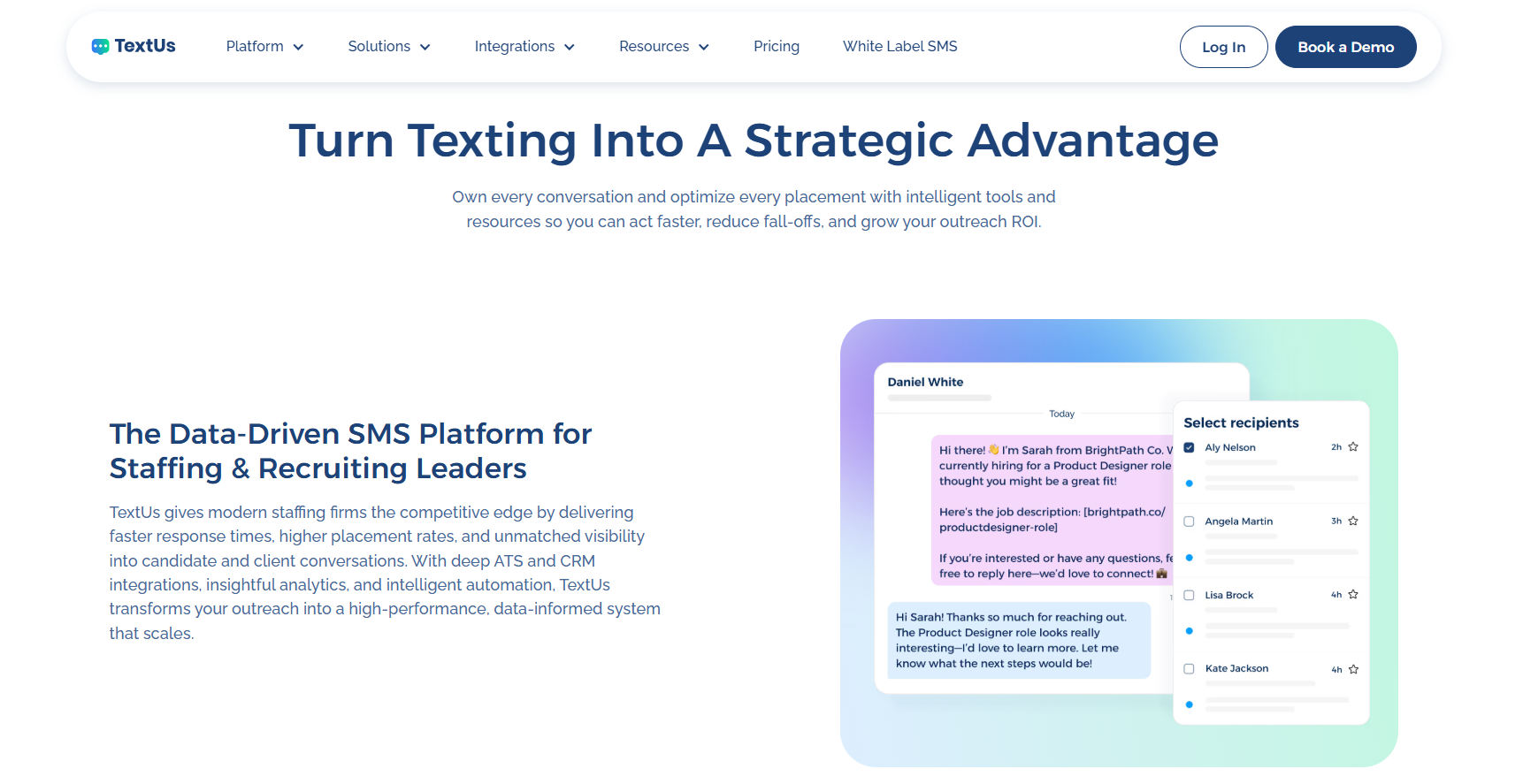
Its integrations connect texting with CRM, ATS, and HRIS systems, including Bullhorn, Workday, Greenhouse, Salesforce, and HubSpot.
TextUs also supports unlimited campaign sizes, so you can reach larger candidate pools without splitting one audience into several smaller sends.
Merge fields add candidate-specific details, while higher throughput supports time-sensitive outreach to larger contact groups.
Finally, TextUs also brings replies, conversation assignments, internal notes, contact history, and recruiter access into a shared messaging workspace.
Book a demo with TextUs today and launch targeted job campaigns and keep message records within your existing hiring systems!
Step #6: Create Staffing Text Message Templates
Recruiters send many of the same messages each week. But candidates still need communication that's connected to their situation.
Message templates create a starting point and allow staff to double-check important details without copying and pasting stiff wording.
You can prepare templates for job alerts, application confirmations, screening questions, interview invitations, reminders, offer follow-ups, onboarding notices, and assignment check-ins.
Also, leave room for details that make the message personalized. Candidate name, recruiter name, company name, job title, pay range, location, shift, interview time, and start date all provide context.
Step #7: Set Up Automated Workflows
SMS automation has the most value when it removes repeat work without blocking real conversation.
The goal is not to replace recruiters, but rather to prevent them from relying on manual reminders that follow the same pattern each day.
TextUs supports automated messages and lets you segment contacts by role, location, skills, availability, or candidate stage. Each campaign reaches a more relevant audience and makes it clear why contacts receive messages in the first place.

Other useful workflows include no-show follow-ups, onboarding reminders, missing timecard alerts, assignment-end check-ins, and messages to past candidates about new roles.
Every sequence also needs a stopping point. TextUs will pause messages after a candidate replies, books an interview, accepts a role, or opts out and prevent outdated follow-ups from reaching the wrong person.
Step #8: Create Reply Routing Rules
A fast candidate response loses value when it lands in an inbox no one checks. Reply routing determines who receives the conversation and what happens next.
TextUs lets you assign incoming conversations to a specific recruiter, coordinator, branch, or account owner. Each message reaches the person responsible for the next step, which keeps roles accurate and prevents crossed wires.
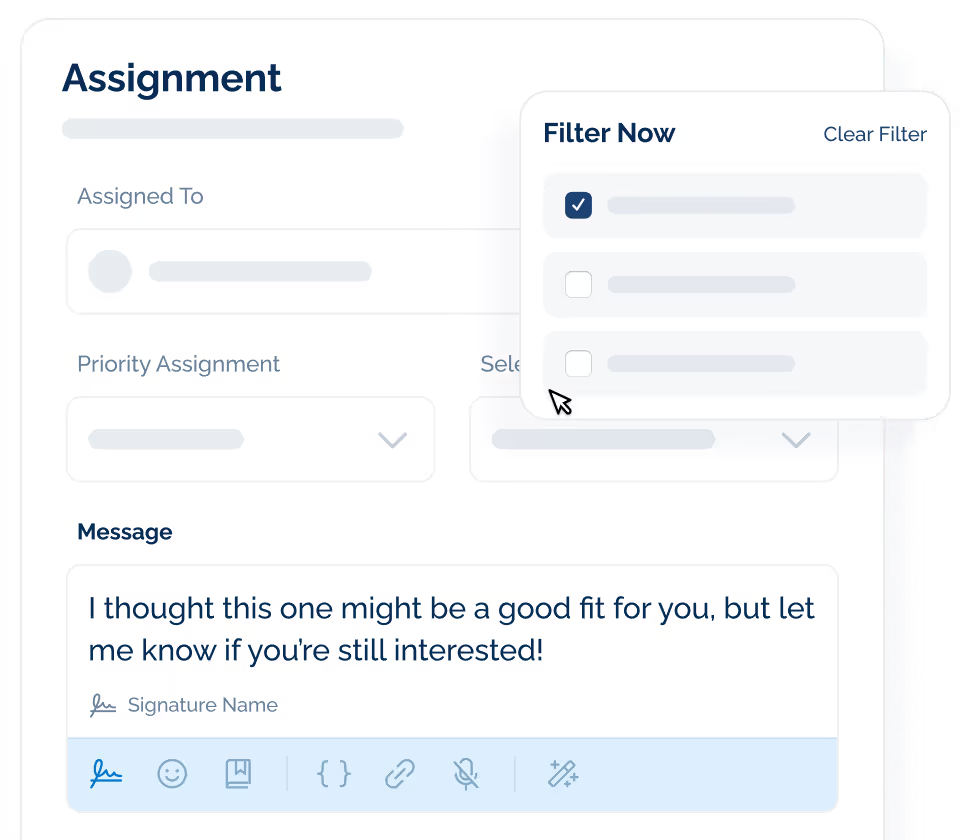
Routing rules follow the client account, job category, candidate stage, keyword, or campaign source. An “APPLY” response may move into a sourcing queue, while a shift callout goes straight to the coordinator managing that assignment.
Ownership also prevents duplicate replies and long delays. It makes coverage easier when a recruiter is out of the office or working a different schedule.
Step #9: Define Human Handoff Points
Not every message belongs in an automated sequence. Some situations need judgment, empathy, investigation, or a conversation with more room than SMS provides.
Automation needs to pause when a candidate raises a complaint, asks for an accommodation, reports a safety concern, disputes an assignment, or shares sensitive personal information.
Pay negotiations, client escalations, and complex scheduling conflicts also need recruiter involvement.
The handoff process needs a specific owner and expected response window. Recruiters also need guidance on when to move the conversation to a call, secure portal, email, or formal support process.
Step #10: Review and Improve Your Workflow
A staffing text messaging strategy needs regular review once real candidates and workers begin responding.
You have to look at response rates, delivery failures, interview bookings, no-shows, shift confirmations, recruiter response times, and opt-out activity. Compare results across message types, audiences, branches, job categories, and send times.
The wording may not always be the issue. A weak campaign may point to outdated contact data, poor audience selection, missing pay information, slow recruiter follow-up, or too many unsolicited text messages.
Candidate replies also provide useful direction. Questions that appear again and again show which details are missing from job alerts, reminders, or assignment instructions.
How to Address Job Scams in Text Messaging
Fraudulent job postings create a trust problem for legitimate staffing agencies. Candidates may ignore a real opportunity when the message comes from an unfamiliar number.
This concern grows when the offer promotes a vague remote position, promises unusually high pay, or asks for sensitive information before an interview.
Requests for financial information or payment for training and background checks are also major red flags. They may expose candidates to identity theft and steal their information.
Your text messaging strategy needs to show that your outreach comes from a real company. Include your agency name, recruiter name, reason for contact, job title, location, and a next step.
Trust also depends on the number behind the message. A professional business number makes outreach look more familiar and gives candidates a reason to recognize your agency.
As a leading long code provider, TextUs supports fast 10DLC setup for staffing agencies that need reliable SMS and MMS outreach at scale.
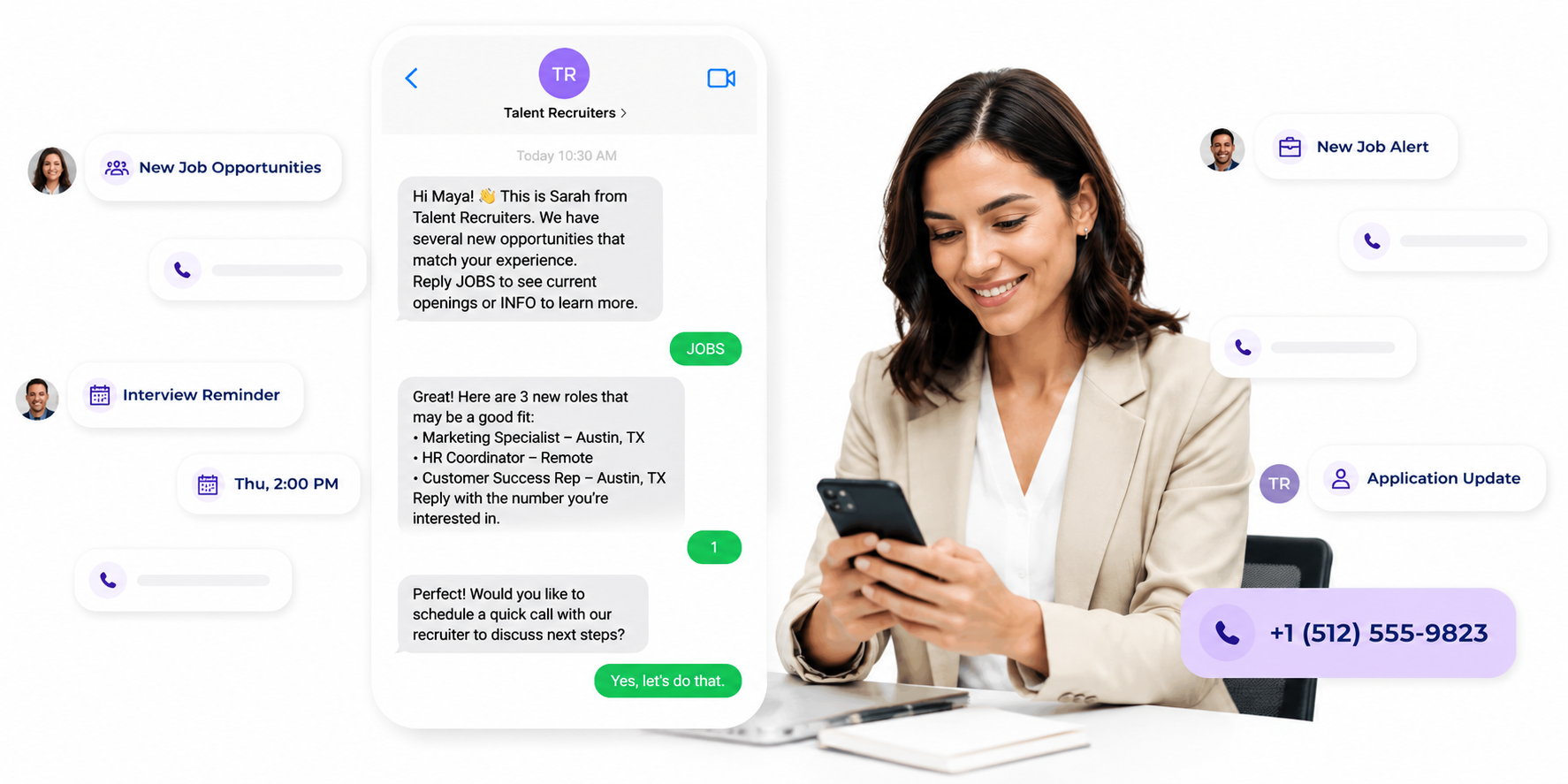
A 10DLC number lets you text candidates through familiar area codes while supporting carrier registration and SMS compliance requirements.
With TextUs, your agency gets more than the number itself. This SMS service connects 10DLC messaging with campaigns, shared inboxes, automation, contact records, and recruiter workflows.
Engage Job Seekers and Reduce Time-to-Fill With TextUs
Every slow response gives another staffing agency more time to reach the candidate first.
TextUs helps you engage them sooner through high-response, two-way texting. It reduces communication gaps between first contact and placement.
Personalized campaigns reach large candidate pools with active job applications, while segmentation narrows each message by role, location, skills, or availability.
Automated follow-ups, shared inboxes, and CRM or ATS connections also keep every reply visible, organized, and tied to the candidate record.
Cut time-to-fill, reduce dependence on cold calls and email, and turn more responses into placements.
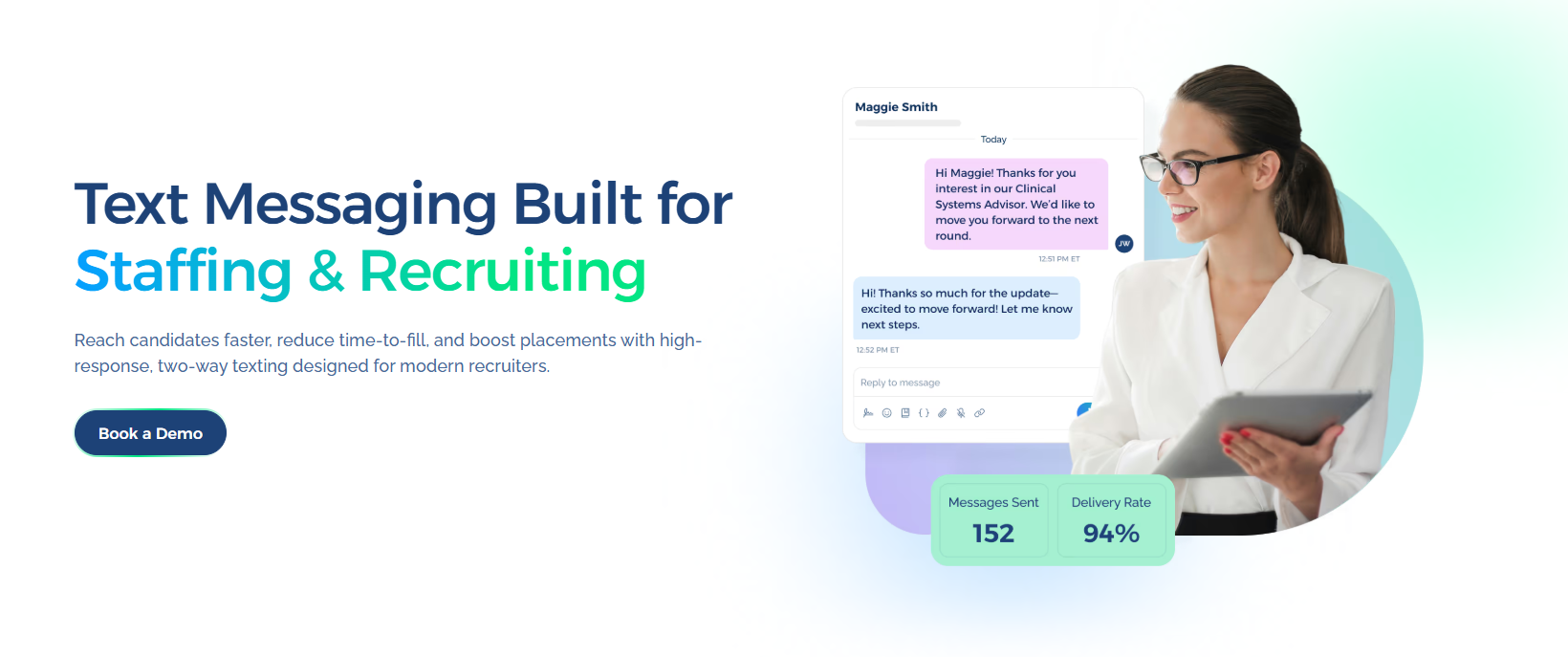
Book a demo with TextUs today to see how faster staffing text messaging supports stronger recruiting results!
Continue Reading



Frequently Asked Questions
Why am I getting recruitment text messages?
You may have applied for a job, joined a staffing database, signed up for job alerts, or permitted recruiters to contact you through a career page, application form, or Indeed account.
When you don't recognize the sender, double-check the agency through independent research, including reviews and candidate comments, before clicking links or sharing information.
Do staffing agencies text you?
Yes, staffing agencies use text messages for job opportunities, screening questions, interview reminders, onboarding updates, and open shifts.
A legit business text message needs to identify their agency and explain why they're contacting you.
Does Accurate Staffing send text messages?
Yes. Accurate Staffing’s official application form offers an optional sign-up for SMS and MMS alerts about opportunities and career news, along with instructions for replying STOP or HELP.
TextUs is a text recruiting platform that allows you to send targeted job alerts, manage candidate replies, and keep conversations connected to existing recruiting systems.
Business Texting
Built for Results
Create and convert pipeline at scale through industry leading SMS software