
12 Strategies to Boost Frontline Employee Engagement
See 12 frontline employee engagement strategies for communication, feedback, scheduling, and retention, and how TextUs supports connected teams.

Written by
Adam Hamdan
Published
October 14, 2026

Frontline employees are the people closest to your customers, operations, and day-to-day service delivery. Yet many of them receive less communication and recognition than office-based employees.
They also face challenges tied to schedules and limited visibility into workplace updates. Over time, those issues weaken their connection and commitment to your organization.
Frontline employee engagement focuses on how connected, informed, supported, and involved employees feel in their roles.
In this article, we'll explore the value of frontline engagement, practical strategies to strengthen employee connection, and how SMS supports efficient communication within your organization.
TL;DR
- Frontline employee engagement reflects how connected, supported, informed, and committed employees feel in their roles and organization.
- Employee engagement shapes retention, productivity, workplace connection, customer experience, and safety throughout the organization.
- Frontline engagement improves through clear communication, two-way feedback, scheduling, accessible channels, manager support, recognition, onboarding, career growth, employee well-being, and stronger connections between shifts and locations.
- TextUs strengthens employee engagement by keeping workplace updates, employee responses, and follow-ups organized in one texting platform.
What Is Frontline Employee Engagement?
Frontline employee engagement refers to how connected, informed, supported, valued, and committed frontline employees feel at work.
Engagement goes beyond job satisfaction. Frontline employees also need clear communication, support from managers, and opportunities to contribute.
When employees feel valued and understand how their work fits into broader goals, they're more likely to stay engaged over time.
How Frontline Engagement Shapes Employee Experience
Engagement affects far more than how employees feel about their jobs. Here are the areas where stronger engagement has the biggest impact on your workforce and business performance.
Employee Retention
Frontline turnover creates more than an open position. You also lose experience, spend more on recruiting and training, and place added pressure on the employees who remain.
Employees have more reason to stay when they trust their managers, understand expectations, and see a future with the organization. A stable workforce also retains operational knowledge for long-term success.
Productivity and Organizational Performance
Daily performance depends on employees knowing what needs to happen and having enough support to follow through. Confusing instructions, missed updates, or low involvement lead to delays and inconsistent work.
A productive workforce comes from employees who understand their responsibilities and take ownership of the quality of their work.
Employee Morale and Workplace Connection
Frontline workers may spend most of their day away from corporate offices and senior leadership.
Their everyday experience is often shaped by supervisors, coworkers, schedules, recognition, and communication.
Those interactions influence company culture at the ground level. Employees who trust the people around them are more likely to participate and build better relationships.
Customer Experience
Retail associates, healthcare staff, hospitality workers, drivers, and service employees shape how people experience your organization.
When employees care about the work they do, that shows through better service, more thoughtful problem-solving, and more consistent customer interactions.
Safety and Workplace Reliability
Safety depends on employees paying attention, following procedures, and speaking up when something doesn't look right.
That becomes important in healthcare, manufacturing, logistics, construction, and other high-risk environments.
A positive work environment makes it more comfortable for employees to report hazards, ask questions, and flag problems before they escalate.
12 Frontline Employee Engagement Strategies
Below are 12 strategies you can use to strengthen connection, participation, and retention throughout your frontline workforce.
1. Create Two-Way Employee Communication
One-way announcements deliver information. But they don't tell you whether employees understood the message or have concerns that need attention.
Your internal communication tools should allow employees to voice concerns, ask questions, and share what they experience at work.
Employee text messaging is ideal for two-way communication because the same channel supports both company updates and employee replies.
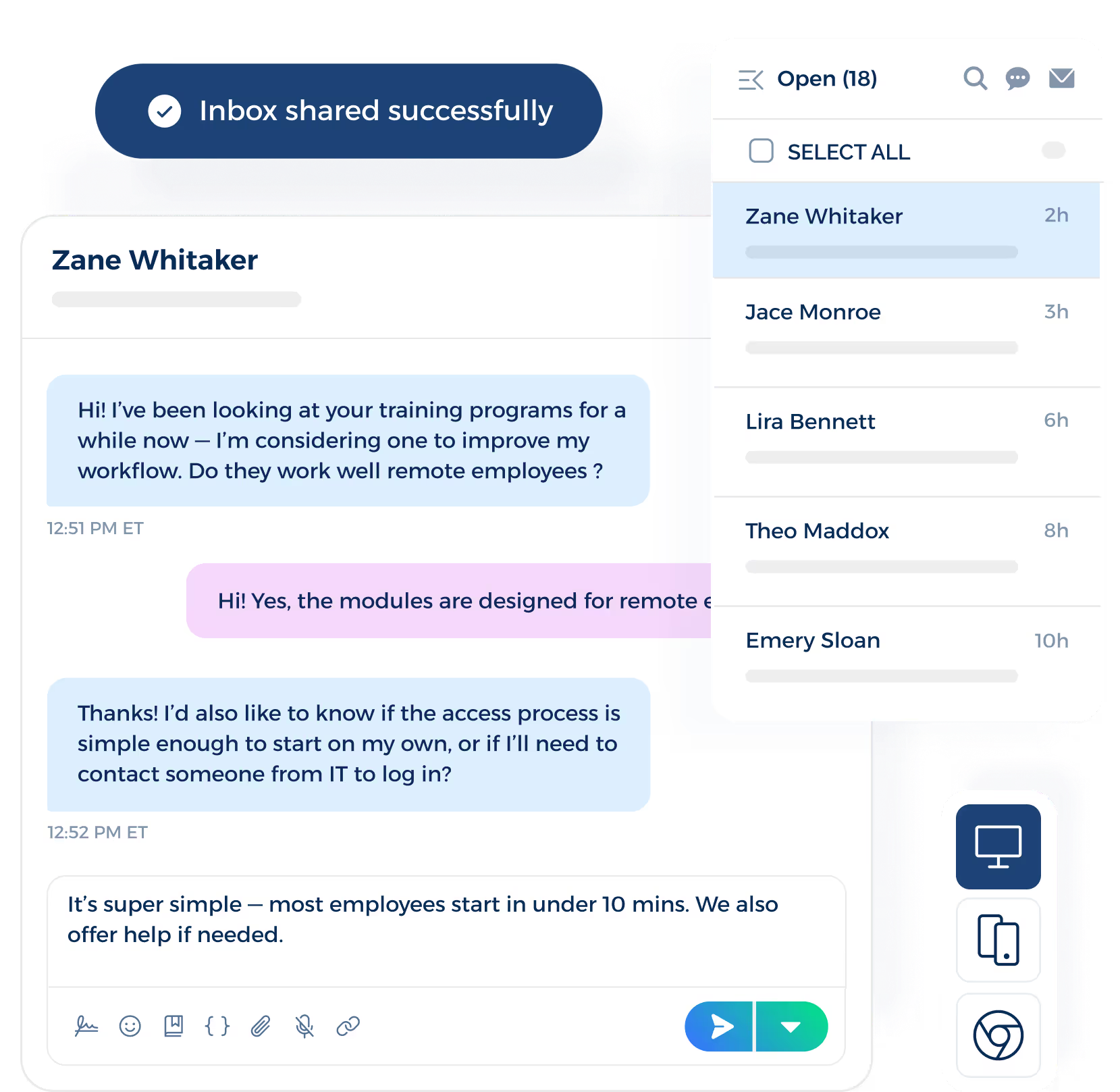
A text thread may cover a schedule change, an HR question, a safety concern, or feedback about a recent workplace update.
Employee SMS communication also keeps interaction from becoming another one-way broadcast. Employees stay informed while managers receive responses, answer questions, and address issues before they sit unresolved.
TextUs is an SMS platform that provides shared inboxes, SMS campaigns, and automated workflows to keep broader outreach and individual responses connected.
Book a demo with TextUs today and bring frontline updates and employee replies into one conversation!
2. Improve Shift Scheduling Communication
Shift changes become harder to manage when employees receive updates too late.
A flexible scheduling process gives employees enough notice about open shifts, coverage needs, overtime opportunities, and schedule changes. It also supports work-life balance and helps employees stay connected when schedules or locations differ.
Consistent scheduling messages also reduce confusion around who is expected to work and when.
Employees have more time to respond, arrange transportation, manage family responsibilities, and plan around commitments outside work.
3. Use Accessible Communication Channels
Deskless workers depend more on mobile devices, shared systems, and supervisor updates to receive workplace information.
You need to choose communication channels based on how employees work, where they spend their shifts, and how urgent the message is.
The goal is easy access to important information without asking employees to check digital platforms that don't fit naturally into their workday.
SMS gives a direct line for messages that require quick attention. This could be open shift alerts, training deadlines, emergency notices, pulse surveys, and schedule changes.
A mix of channels also prevents important information from getting lost. Routine updates fit an app or intranet, while urgent notices may need SMS or manager outreach.
4. Train Frontline Managers to Support Engagement
Frontline managers shape much of the employee experience because they handle daily questions, feedback, recognition, and workplace concerns.
Their approach can build trust when employees know what to expect and feel comfortable raising issues.
Manager training should cover regular check-ins, constructive feedback, conflict management, recognition, and career conversations.
Stronger manager support also improves team engagement because employees receive more consistent guidance from the people they work with most.
The right training also prepares managers to engage employees without relying on formal HR programs for every interaction.
5. Improve Your Workplace Efficiency
Frontline employees lose time when daily tasks depend on scattered updates or manual follow-ups.
Better coordination reduces delays and gives employees a more consistent way to handle schedules, reminders, and workplace requests.
Workflows also improve when routine communication follows a defined process. Confirmations, requests, and notices don't need to depend on repeated manual outreach.
Text automation software lets you send recurring or time-sensitive messages based on a set schedule or workflow.
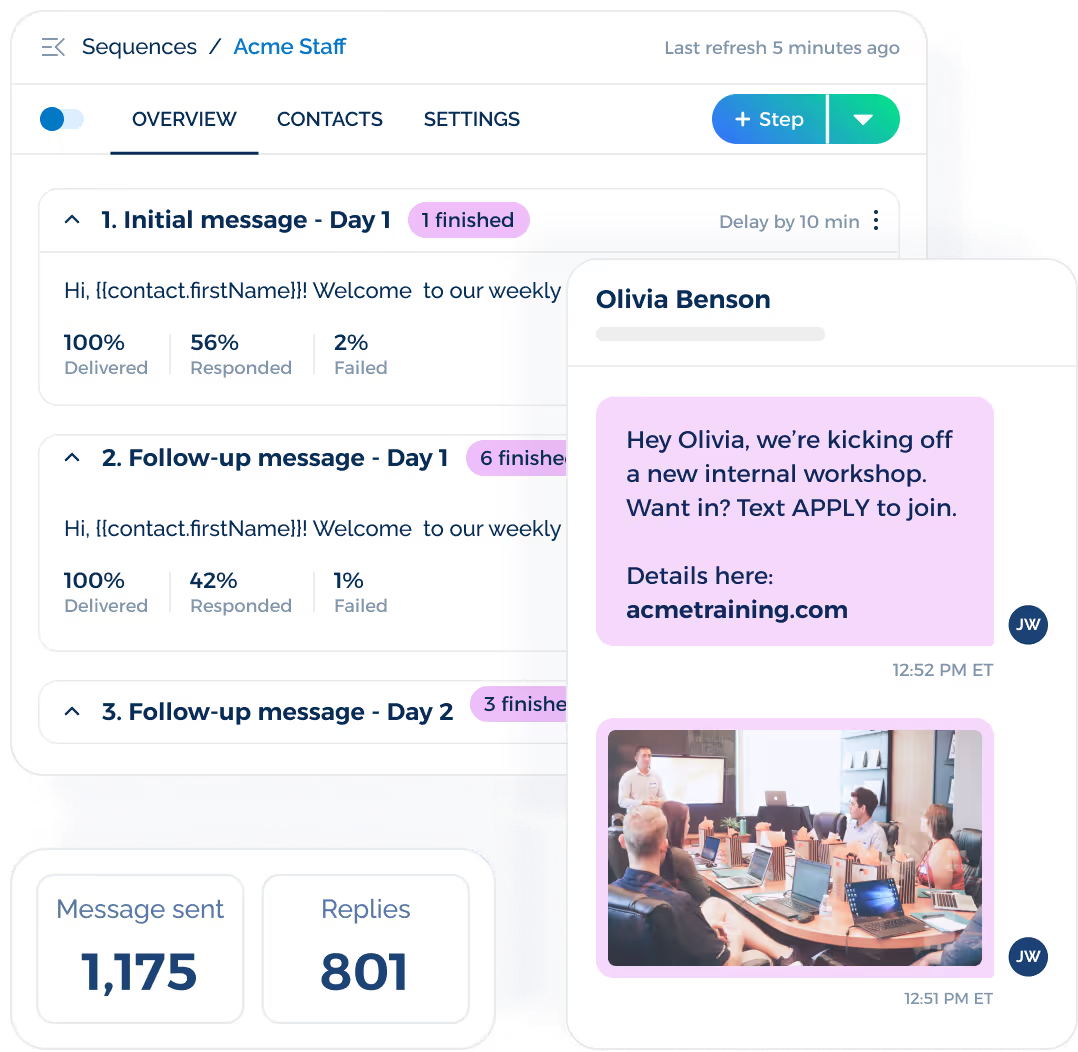
Automated sequences can cover onboarding, compliance reminders, shift updates, training deadlines, and employee check-ins without requiring someone to send each message individually.
6. Recognize Frontline Employees More Often
Recognition has more impact when it is timely and tied to real contributions.
Customer compliments, safety milestones, attendance, teamwork, and exceptional performance all give managers opportunities to acknowledge employees in a meaningful way.
Frequent recognition also encourages employees to stay invested and contributes to a positive company culture since they know their work doesn't go unnoticed.
7. Ask Frontline Employees for Feedback
Many frontline workers see problems before leadership does, from scheduling issues to process gaps and customer concerns.
Regular employee listening provides you with a better view of the unique challenges they experience during their shifts.
Short check-ins, review requests, stay interviews, manager conversations, and small focus groups all give employees space to share what is working and what needs attention.
These touchpoints also make it easier to track changes in engagement levels over time instead of relying on one large annual survey.
8. Close the Employee Feedback Loop
Collecting employee feedback without responding creates another communication problem. Your feedback process can look like this:
- Ask: Collect feedback through check-ins, conversations, surveys, or other employee channels.
- Review: Look for recurring themes, urgent concerns, and issues that affect multiple employees.
- Act: Decide which changes are realistic, assign ownership, and set a timeline where needed.
- Share: Keep frontline employees informed about what changed, what is still under review, and which requests cannot be implemented.
The last step matters as much as the first. Employee input carries more weight when it contributes to workplace decision-making.
9. Improve Frontline Employee Onboarding
New hires need more than paperwork on their first day. They need to know where to go, who to contact, what their schedule looks like, what training comes next, and what the organization expects from them.
SMS keeps important onboarding details within easy reach. Welcome messages, document reminders, training notices, and first-week check-ins arrive directly on an employee’s phone instead of getting buried in email.
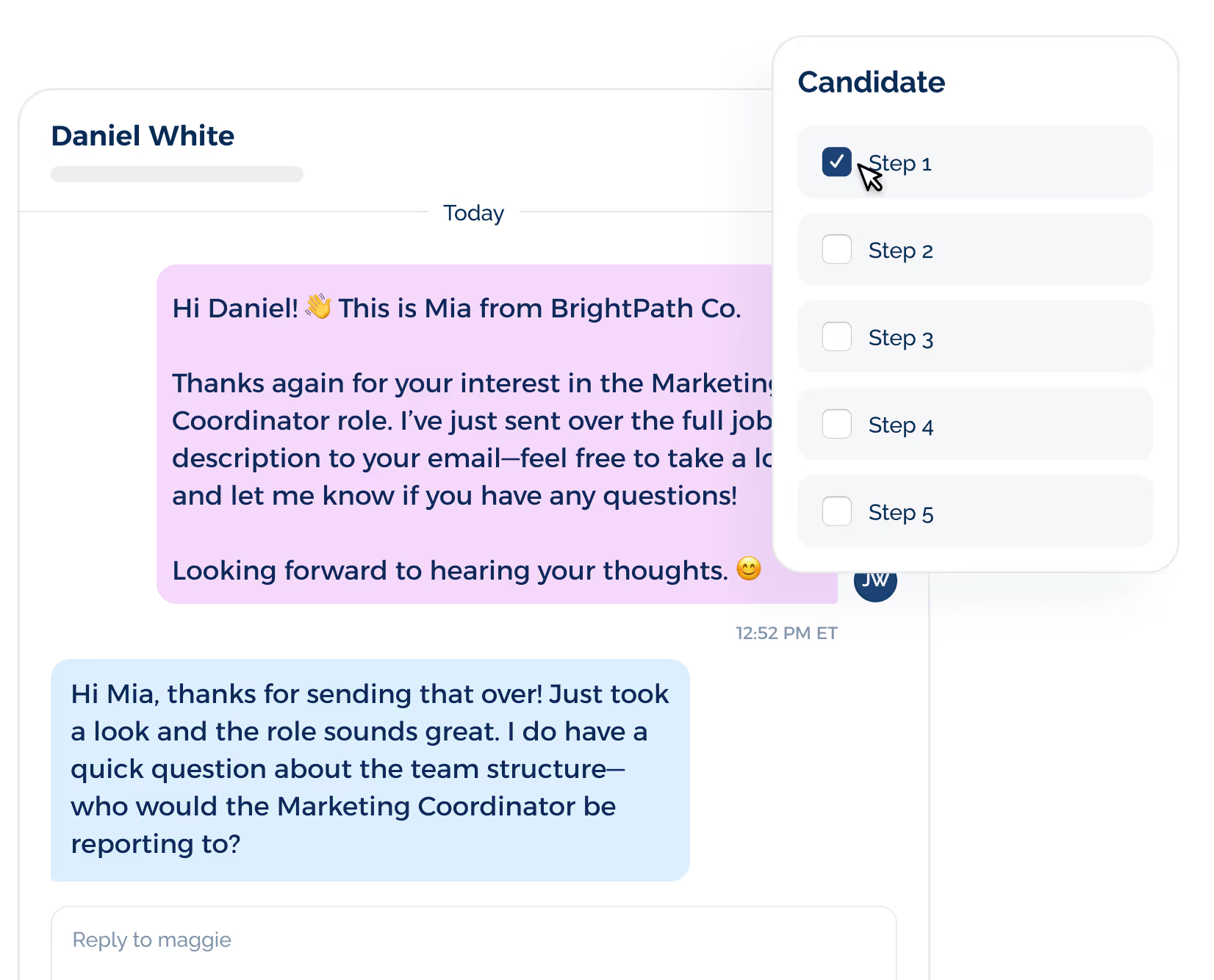
Scheduled text sequences also support follow-ups at 30, 60, and 90 days. New hires receive another opportunity to ask questions, confirm next steps, or raise concerns after they have spent time in the role.
Confusion during onboarding may affect retention, so early support matters in frontline industries with high turnover.
10. Create Better Career Advancement Opportunities
Frontline staff may lose interest when they cannot see what comes after their current role.
Internal openings, training programs, certifications, mentoring, and cross-training should be visible to the entire frontline workforce.
Access to professional development and visible growth opportunities shows employees what skills they need for the next step.
Defined career paths also give them more reason to stay motivated as they build new skills and prepare for advancement.
11. Support Frontline Employee Safety and Well-Being
Frontline roles may involve physical demands, difficult customer interactions, staffing shortages, or long hours during peak periods. Those pressures influence how employees experience the job.
Safety information, reasonable breaks, workload support, and mental health support address different parts of employee well-being.
Relevant wellness programs may also provide mental health resources for employees dealing with physical or emotional demands.
Urgent communication deserves its own process. Safety alerts, weather closures, and emergency instructions need to reach employees without unnecessary delays.
12. Build Connection Across Shifts and Locations
Employees on different schedules may rarely see each other, even when they work for the same organization.
Separation weakens relationships between frontline teams and leaves some groups out of broader workplace conversations.
Shift huddles, town halls, peer recognition, employee stories, leadership Q&As, and team-building activities create more opportunities for interaction.
The format should fit how employees work so people in each location have a practical way to participate and stay connected.
How TextUs Supports Day-to-Day Frontline Engagement
Frontline communication gets complicated when employees work different shifts, move between locations, or spend little time at a desk.
TextUs is an employee text messaging software that brings workplace texting, replies, and follow-up into one platform.
This communication tool supports targeted outreach with segmented groups, scheduled sends, recurring campaigns, rich media, and branded links.
Employee responses may also get lost when conversations are divided between disconnected channels. TextUs has a shared inbox that brings those replies into one view with assignments, templates, and shared access.
Since routine HR communication includes reminders that repeat throughout the employee lifecycle, TextUs supports sequences for onboarding, compliance deadlines, training, benefits enrollment, and employee check-ins.
Custom SMS keywords also let employees request information through text and continue the conversation when more context is needed.
Finally, TextUs is available through its web app, mobile app, Chrome extension, and supported integrations, which brings texting closer to the systems teams already use.
Keep Your Frontline Workforce Connected With TextUs
Frontline engagement depends on timely communication that employees can access throughout the workday.
TextUs gives HR and managers the right tools to replace scattered emails and phone calls with direct SMS conversations.
The combination of campaigns, automation, shared inboxes, and one-to-one messaging lets you engage frontline employees without making communication feel impersonal.
Managers also spend less time on repetitive outreach, which leaves more room to maintain productivity and respond to employee needs.
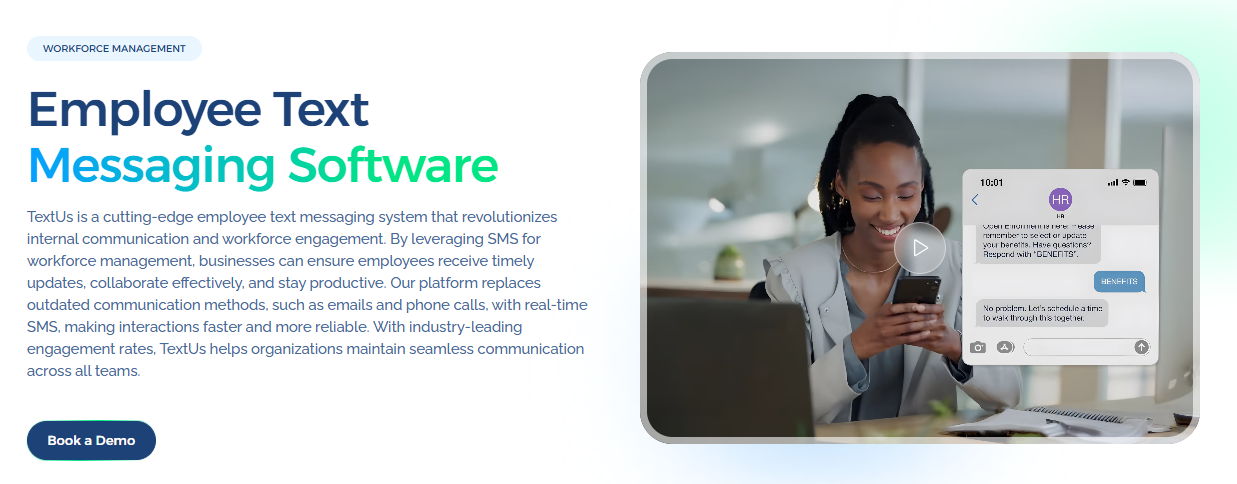
Book a demo with TextUs today to see how texting supports your daily operations and contributes to your company's success!
FAQs About Frontline Employee Engagement
What are the 5 C's of employee engagement?
One recognized framework uses Care, Connect, Coach, Contribute, and Congratulate.
Care means supporting employees, Connect builds relationships, Coach supports career development, Contribute gives meaningful involvement, and Congratulate recognizes good work through praise, awards, or financial bonuses.
Can you give me some examples of frontline employees?
Frontline employees include retail associates, nurses, manufacturing workers, delivery drivers, hospitality staff, and field service workers.
These roles usually involve direct contact with customers, patients, products, equipment, or day-to-day operations.
How do you measure frontline employee engagement?
Employee engagement is commonly measured through surveys, pulse check-ins, turnover, absenteeism, and other workforce indicators.
Participation in development opportunities also provides additional context. Review these results by deskless team, location, and shift to identify differences in engagement
What is the difference between employee engagement and employee satisfaction?
Employee satisfaction focuses on how employees feel about factors such as pay, conditions, benefits, and management. Employee engagement reflects their commitment, connection, motivation, and involvement at work.
Continue Reading



Frequently Asked Questions
Business Texting
Built for Results
Create and convert pipeline at scale through industry leading SMS software