
SaaS Marketing: A Guide to Building a Scalable Growth Engine
Learn how SaaS marketing works and explore the steps to developing an effective SaaS marketing strategy. Discover how TextUs can help.

Written by
Adam Hamdan
Published
February 11, 2026

What works for ecommerce or services may drive traffic, but traffic alone does not lead to software adoption.
In the software-as-a-service (SaaS) industry, growth depends on how you connect the software you offer to the problem it solves. That connection has to come through in every channel you use, from the landing page to the onboarding sequence.
In this article, you’ll learn how to build a marketing system that supports each part of the customer experience and discover the best strategies to help your SaaS grow in a repeatable way.
TL;DR
- SaaS marketing is about getting users to sign up, use the software, and stay over time.
- SaaS works differently from traditional models, so your strategy needs to support longer decision cycles and ongoing usage.
- Building an effective strategy starts with defining your ideal customer, mapping their journey, setting up your sales team, establishing a messaging framework, choosing the right channel for each stage, and tracking KPIs.
- SaaS marketing success comes from consistency, so you have to apply strategies like using SMS for engagement, creating quality content, search engine optimization (SEO), personalizing emails, running targeted campaigns, leaning into software-led growth, and automating key processes.
- TextUs supports your SaaS growth with two-way texting that helps you re-engage users, speed up sales, and improve retention.
What Makes SaaS Marketing Different?
SaaS marketing focuses on attracting the right users, getting them to try your software, and keeping them around. These tools are hosted in the cloud and delivered to customers over the internet through a subscription model.
Instead of selling a one-time license or physical product, SaaS brands offer access to software that users pay for monthly or annually.
Because of this structure, marketing focuses not just on getting signups, but also on helping prospective clients activate, adopt the platform, and stay long-term.
In traditional marketing models, success comes from volume. Success in SaaS comes from continued use. This makes long-term customer engagement a key part of your growth.
Signing up a new user is only the start. Your marketing also needs to support how people learn about the software, start using it, and stick with it over the months that follow. Retention becomes just as important as acquisition.
SaaS buyers also tend to take more time before making a decision. They want to try the platform first, compare it with alternatives, and see how well it fits their needs. That’s why free trials, walkthroughs, and case studies are so common in this space.
Your sales message needs to focus on helping them understand what the software does and how it solves a problem. Instead of pushing features, you have to help people see how the platform fits into their workflow.
How to Develop an Effective SaaS Marketing Strategy
A strong SaaS marketing tactic connects your software’s value to the target audience and turns that connection into measurable growth. Here’s how to build a SaaS marketing plan that aligns with your business goals:
1. Define Your Ideal Customer Profile (ICP)
Before you invest in paid ads, build landing pages, or write campaigns, you need to know who you’re trying to reach. Your ICP is a detailed outline of the type of customer who is most likely to use your software and stick around.
Strong ICPs are built from patterns in your existing customer base. The best place to start is with your most engaged and profitable users.
These users share common traits and may come from the same industry. They also tend to follow a similar activation path, adopt core features faster, and remain customers longer.
The profile itself includes firmographic and behavioral details. Industry, company size, team structure, department ownership, budget comfort, and key pain points help narrow the field.
Behavior patterns like software usage, time-to-value, and renewal history provide another layer of insight. These inputs form the foundation of your targeting and messaging decisions. Every campaign becomes more focused when the audience is defined.
Once the ICP is in place, messaging becomes more consistent. The words used on landing pages, in emails, on ads, and within the platform reflect the goals and language of the buyer.
2. Map the Customer Journey
Once you know who your ideal customer is, you need to understand how that customer interacts with your software from first contact to long-term use.
Mapping the customer journey helps you see what happens before someone signs up, what actions they take once they do, and where they may drop off. You can create campaigns that match what users need at each stage rather than repeating the same message to everyone.
In business-to-business (B2B) SaaS, most users begin with awareness through a blog post, a search ad, or referral-marketing efforts. They enter a consideration phase where they look at your features, compare alternatives, and weigh the cost.
You need to match the right message to each stage. You can send emails that explain what to do next, in-platform messages that point to the right features, and reminders that move people from one step to another.
SMS marketing is fast and highly visible. During a trial, a short text that reminds someone to complete a key setup task can help bring them back. Later on, you can use SMS to send a software update, a renewal notice, or a quick survey link.
3. Build Your Sales Team
Even the best systems will reach a point where personal outreach becomes necessary.
As your SaaS business grows, having a sales team provides you with the support needed to close larger deals, manage complex conversations, and move leads through longer decision cycles.
The type of sales team you need depends on your target customers. If you focus on small businesses with quick buying cycles, a small team focused on inbound leads may be enough.
If you’re selling into mid-market or enterprise accounts, you will need more structure. This includes lead qualification, software demos, technical walkthroughs, and support from account executives.
Your marketing strategy should leave room for sales input. Sales conversations may uncover objections, platform gaps, and missed opportunities that can shape future SaaS marketing campaigns.
4. Establish a Messaging Framework
A strong messaging framework helps you stay consistent on your website, emails, SMS, ads, and software interface.
Start by writing a simple, outcome-focused message for each customer segment. A revenue team may want to reply to leads faster. A support team may want to spot risks before customers cancel.
Your job is to connect the use of the platform to the result they care about. The shorter the line between problem and solution, the stronger the message.
Every part of your communication should repeat this message. A landing page should show what problem your software solves. An SMS can also give a small push with a simple line that speaks to the result.
When your message is built around real-world goals, loyal customers recognize the value faster. That leads to more conversions, fewer support gaps, and better software adoption.
5. Choose the Right Channels for Each Stage
At the awareness stage, most people are not ready to buy. They are learning, comparing, and gathering ideas. This is where search plays a large role in your marketing approach.
Paid search and a focused SEO strategy meet users while they search for a solution. Blog posts, comparison pages, and how-to guides help introduce your software in a way that aligns with search intent.
Social media marketing also plays a part in this early phase. Your social media presence increases brand visibility through shared posts and real-time engagement. For some brands, influencer marketing adds extra visibility and trust at this point.
As people move into the trial or signup stage, the focus shifts toward action. They have shown interest. Now they need help completing the first few steps.
You can explain key features, offer tips, and follow up on what the person has already done through texting. SMS for SaaS is ideal when email is missed or when the person needs one small prompt to continue.
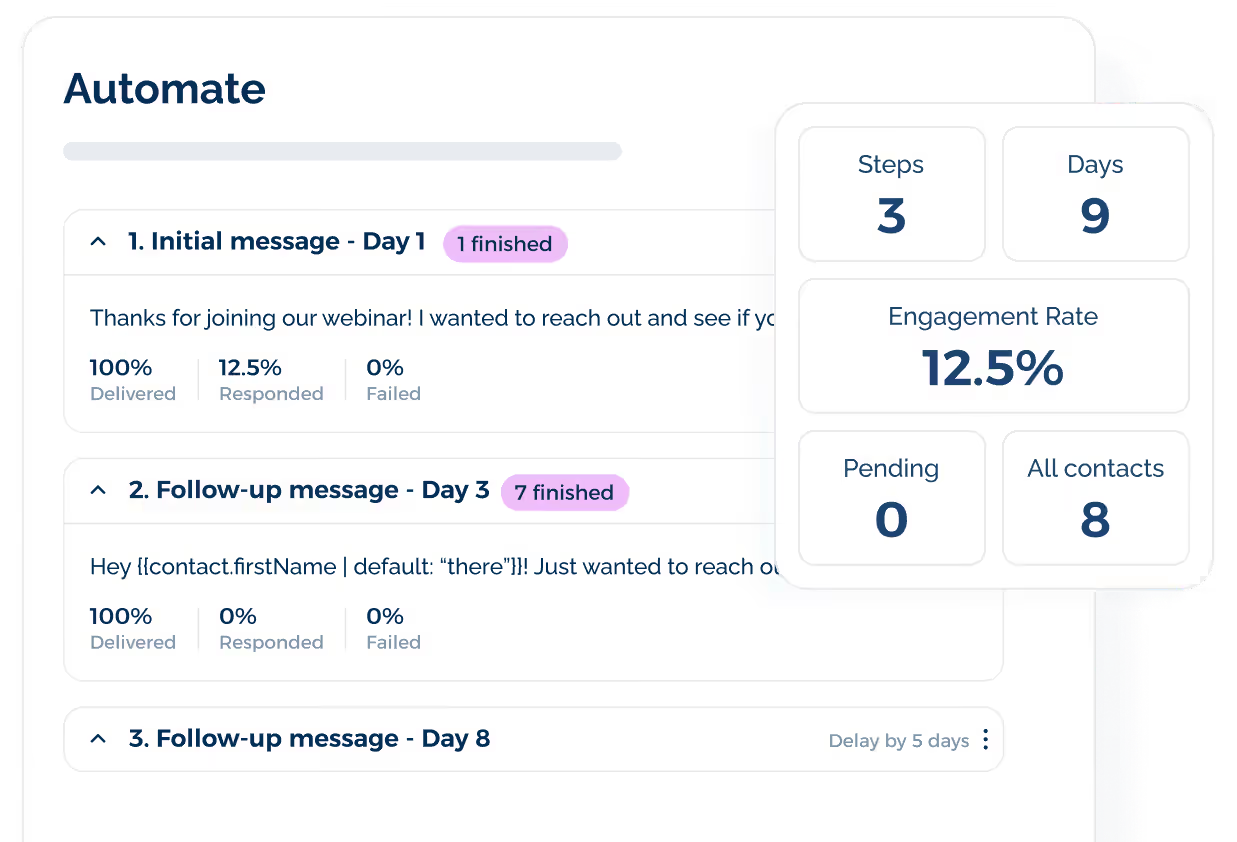
After signing up, your goal shifts again. Now it’s about retaining customers and keeping them connected to your software. Texting fits naturally here.
A text message can confirm renewal, prompt feedback, or offer a link to new features. It helps users stay in the loop without needing to read a full article or check their email inbox.
Book a demo today and see how TextUs makes your SaaS follow-up faster and easier!
6. Set Measurable KPIs and Track Progress
Choosing a few key metrics and watching them over time helps you adjust your strategy and stay focused on what supports real growth.
You need to track the key performance indicators (KPIs) tied to how your business earns and keeps revenue, such as:
- Customer acquisition cost (CAC) – How much you spend to gain a new user
- Customer lifetime value (CLV) – How much each user contributes while they stay
- Trial-to-paid conversion rate – How many prospective customers move from trial to paying
- Activation rate – How many users reach a key early milestone
- Customer churn rate – How many users stop paying
- Software usage patterns – Reveals drop-off points and feature engagement
These metrics let you focus on outcomes instead of surface numbers. For example, if activation is low, onboarding may need to change.
If trial users are dropping off early, it may help to add an SMS reminder tied to usage. If churn is rising, your support and follow-up timing may be off. Each data point helps you make small, steady changes that support stronger software use.
SaaS Marketing Strategies to Convert and Retain Users
The real progress in SaaS comes from more than acquiring customers and getting them to sign up. Below are the SaaS marketing strategies that can help with your marketing efforts:
Use SMS to Improve Engagement
While email and in-platform messaging support education and updates, SMS marketing works best when the message is time-sensitive. It fits into the gaps between steps, helping users complete tasks, stay active, and remain aware of key updates.
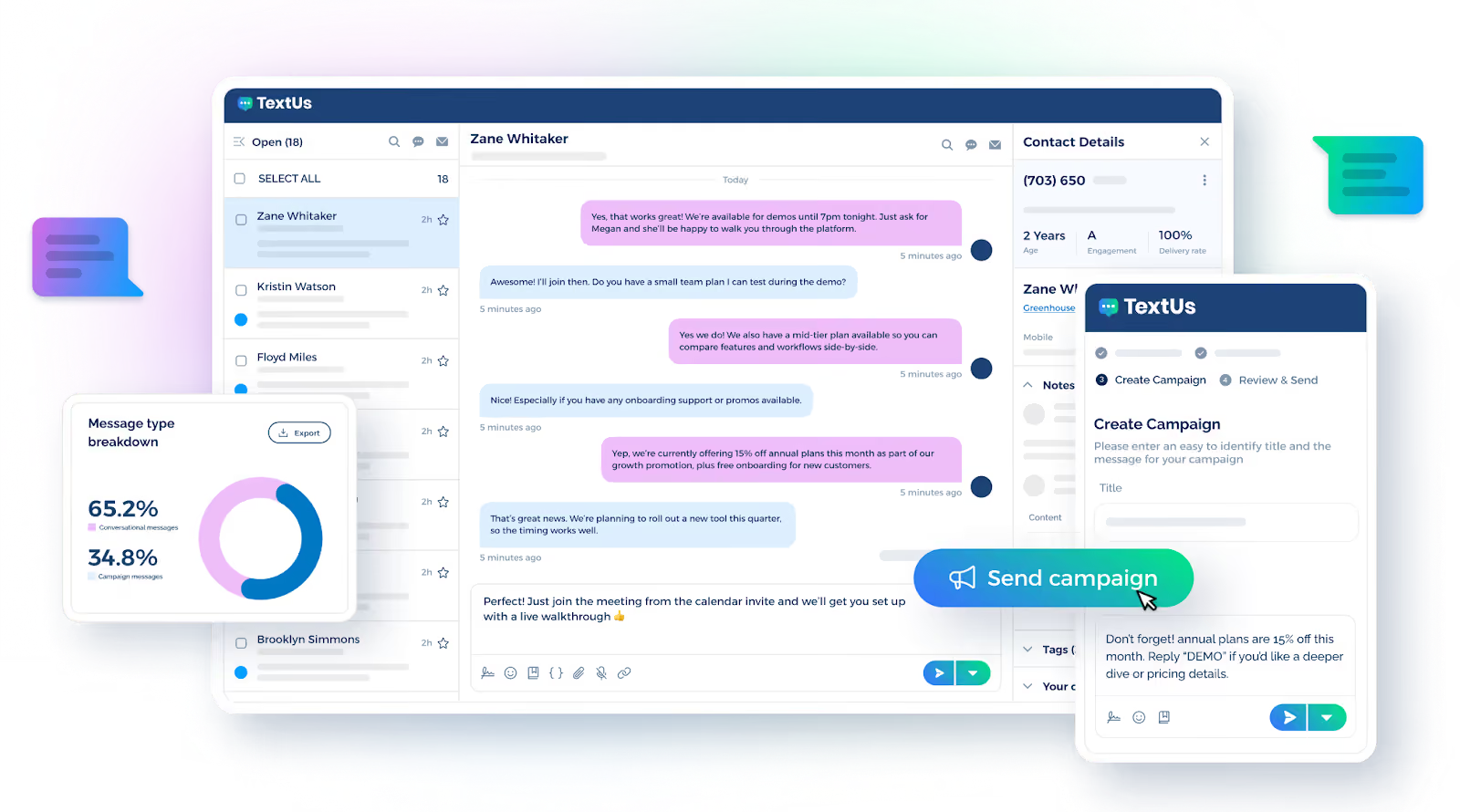
In your nurture workflows, texting can serve as a direct line during trial and onboarding. A user who signed up but has not finished setup may not respond to a long email or return to the dashboard on their own.
A text message reminding them to complete a task, check a feature, or log in again helps bring them back. You can use this during the first few days after signing up. These messages can be personalized based on activity, keeping the tone helpful and focused.
Retention also benefits from well-placed text communication. As a user approaches the end of a trial or a subscription period, a text can remind them of what they’ve unlocked or what they risk losing.
Text messages should follow the same logic as your other workflows, so you have to connect SMS to your existing marketing channels. When texting is tied to software behavior or known points in the journey, it supports your overall system.
Use two-way texting to reach leads, support trial users, and keep customers engaged without relying on email alone.
Book a demo today and see how TextUs helps your team connect in real time!
Create High-Value Content
Someone searching for a way to reduce manual outreach, track client conversations, or speed up their sales cycle is more likely to connect with content that shows how to fix those problems.
That’s why strong content starts with problems, and then introduces the product as part of the solution.
You can build this type of content in many formats:
- Blog posts support early research and introduce key problems
- How-to guides explain specific use cases in step-by-step detail
- Case studies show real outcomes from actual customer stories
- Software comparison pages help readers evaluate their options
- Tutorials, videos, and templates assist with onboarding and in-platform learning
Each piece of content supports a specific topic or search intent. The more consistent and focused your content marketing strategy is, the easier it becomes to attract website traffic that turns into paying customers.
Optimize for Search Engines
Search engines are a major driver of SaaS visibility. When you build SaaS content marketing around what people are already looking for, you bring in traffic that matches real intent.
These users are asking questions, comparing tools, or looking for solutions. If your software fits the problem, ranking for those searches can lead to steady growth without paid promotion.
Start with topics that reflect how your software is used. You have to focus on real problems and use language that your target customers would type into Google when they are stuck or trying to learn.
These topics become the basis for blog posts, landing pages, and help center content. Try to answer one question or explain one outcome.
To improve your SEO efforts, you need to create content that search engines can easily read. Use compelling headlines and a layout that helps people scan. Make sure to add internal links and include your keyword early in the page title, headline, and body.
Personalize Your Email Campaigns
Email marketing helps you guide SaaS customers from signup through activation, engagement, and renewal.
Generic messages rarely get real results when marketing SaaS solutions. Your emails need to speak to the user’s stage, behavior, and goals.
Start by segmenting your list based on software activity, signup source, company size, or plan type. This also helps avoid confusion and reduces the chance of users ignoring your emails over time.
You can use platform data to trigger messages automatically. If a user completes their first task, send an email that points to the next one. You can also highlight unused features, share recent updates, or ask for feedback at key moments.
Make sure your emails are easy to read and take action on. You have to use short subject lines and keep your body copy simple.
Run Targeted Paid Campaigns
Paid channels like Google Ads and LinkedIn allow you to reach people who are actively looking for a solution or fit your buyer personas.
You have to narrow your audience by using firmographic filters like company size, industry, and job title. On search platforms, target keywords that match use cases, not just broad category terms.
Someone looking for the “best CRM for real estate teams” has a much stronger signal than someone searching for “CRM software.” That level of focus leads to stronger engagement and better use of your marketing budget.
Your ad copy should reflect one problem and one outcome. Avoid feature-heavy language and match your offer to the user’s situation.
You can use headlines that speak directly to the result your software delivers, and keep descriptions short and goal-focused.
Once the campaign is live, you have to track what happens after the click. You can use this data to refine your targeting, test new copy, and adjust offers based on performance.
Automate Your Onboarding and Follow-Up
Your onboarding experience shapes how users see your software. If the early steps are unclear or delayed, the chance of long-term use drops quickly.
Manual outreach in B2B SaaS marketing can help, but it does not work for high-volume messaging. That’s where marketing automation supports growth.
The best place to begin is with the key steps that lead to software adoption. These include setup tasks like connecting integrations, sending a first message, importing contacts, or adding team members.
You can also use SMS automation tools to create sequences that walk users through those steps. When a user skips a step or pauses during onboarding, a drip campaign can bring their attention back.
During follow-up, texting also works for renewal reminders, check-ins, and upgrade offers. SMS marketing platforms like TextUs make it easy to manage these flows as they integrate with the rest of your system.
Cut the Wait, Text Your Leads, and Get Real Replies With TextUs
If your SaaS marketing strategy ends at email, you're leaving conversations on the table. Slow or one-sided marketing communication can stall even the most well-planned sales funnel.
TextUs helps your SaaS marketers move faster, respond sooner, and stay connected with leads and potential customers in real time.
TextUs supports two-way messaging that fits naturally into your workflows, whether you're following up after a demo, guiding trial users through setup, or checking in before renewal.
Unlike email, texts get read right away. You can also automate key messages based on user behavior while keeping your outreach personalized.
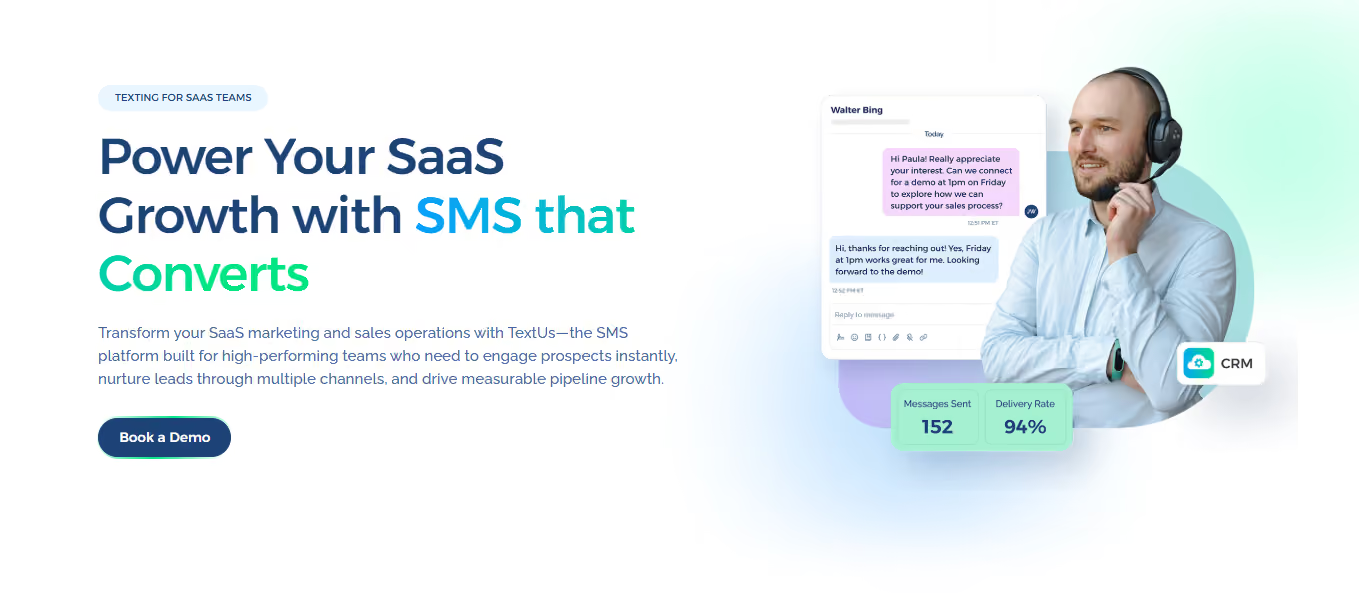
Book a demo with TextUs to see how your customer success team can use SMS to convert more trials and improve retention with less back-and-forth!
FAQs About SaaS Marketing
What does SaaS marketing mean?
SaaS marketing is the process of promoting and selling subscription-based software that is delivered online. It includes everything from lead generation, inbound marketing, and digital marketing to onboarding, platform education, and customer retention.
Since SaaS businesses depend on recurring payments, marketing also focuses on helping users stay active and continue using the software over time. This full system supports the entire user experience, from first click to ongoing monthly recurring revenue.
SaaS companies also use account-based marketing when selling to specific business segments. They also build long-term plans that include partner marketing, event marketing, and tactics for attracting new customers to the software.
Is Canva a SaaS product?
Yes, Canva is a SaaS product. It offers online design tools accessible via a browser or app. Users can create visual content without downloading software, and the platform updates automatically as new features are released.
Canva runs on a freemium model, with paid plans that unlock more tools, templates, and team features. Its structure and pricing follow the same model that many other SaaS solution providers use.
What is the Rule of 40 in SaaS?
The Rule of 40 is a way to evaluate how a SaaS company balances growth and profitability. To apply it, you add your annual revenue growth rate and your profit margin. If the total is 40 or higher, the business is considered to be in a healthy range.
For example, if you grow at 25% and have a 15% profit margin, your total is 40. This rule helps guide decisions on scaling, refining the sales process, and long-term financial planning.
Many SaaS businesses also use tools like Google Analytics to track conversion trends and behavior patterns tied to this performance.
Is Netflix a SaaS?
Netflix shares some traits with SaaS, but it is not part of the business software category. While it runs on a subscription model and delivers content online, it does not provide tools for productivity, collaboration, or business use.
SaaS platforms are designed to help users complete tasks, solve problems, or manage operations. Netflix is a subscription-based entertainment service, not a software solution used for business purposes.
Continue Reading



Frequently Asked Questions
What is SaaS marketing and how is it different from other types of marketing?
SaaS marketing focuses on driving software sign-ups, trial activations, and user retention rather than one-time purchases. It requires a continuous engagement strategy that connects product value to the specific pain it solves throughout the entire customer lifecycle.
What are the most effective SaaS marketing strategies?
The most effective SaaS marketing strategies combine content marketing for organic acquisition, product-led growth to reduce sales friction, email and SMS nurture sequences for trial conversion, and customer success programs to drive retention and expansion revenue.
How does SMS fit into a SaaS marketing strategy?
SMS is highly effective for SaaS trial follow-up, onboarding reminders, feature announcements, and re-engagement of inactive users. Its immediacy makes it ideal for time-sensitive moments in the user journey where a quick nudge can prevent churn.
Business Texting
Built for Results
Create and convert pipeline at scale through industry leading SMS software