
8-Step SMS Compliance Checklist: Build Trust With Every Text
Explore our 8-step SMS compliance checklist and learn how to build trust with every text. See how TextUs can help.

Written by
Adam Hamdan
Published
January 23, 2026

Texting your customers is one of the fastest ways to engage. But it also comes with rules your business can’t ignore.
Many teams face challenges when it comes to managing consent, handling opt-outs, or knowing what disclosures are required at opt-in. It’s easy to miss a step if you don’t have a process in place.
An SMS compliance checklist gives you the structure to stay organized and make sure every message aligns with legal and carrier expectations.
In this article, we’ll walk through the key components of a reliable SMS compliance checklist and how an SMS marketing platform with built-in compliance can help you demonstrate responsible communication.
TL;DR
- SMS compliance matters because it helps protect your brand, stay legally sound, and ensure your marketing messages reach customers without being blocked or flagged.
- Several organizations oversee SMS messaging, including the FCC, TCPA, CTIA, and mobile carriers. Each plays a part in how consent, message content, and delivery are handled.
- The 8-step SMS compliance checklist covers consent collection, disclosure requirements, opt-out handling, message content, timing rules, audit trails, message categorization, and choosing the right platform.
- TextUs is an SMS platform designed with built-in features for consent management, opt-out automation, CRM integration, and 10DLC support.
What Is SMS Compliance?
The rise in business texting over the past decade created a need for stricter oversight. Just as email marketing faced regulation under CAN-SPAM, text messaging needed a framework to prevent abuse.
Text message compliance refers to the set of legal, carrier, and industry regulations that you must follow when sending text messages to consumers or contacts.
These rules are designed to protect individuals from spam, fraud, and unwanted communications while ensuring businesses maintain responsible SMS marketing practices.
Violating SMS regulations can lead to serious fines, lawsuits, and carrier blocklisting. More importantly, it can damage your brand’s credibility.
So, it's important to stay compliant to build trust with your audience and keep your messaging deliverable across all networks.
Who Regulates SMS Compliance?
Several entities are responsible for setting and enforcing SMS compliance rules in the United States. Each plays a different role in protecting consumers and maintaining trust in mobile communication.
- Federal Communications Commission (FCC): Oversees SMS under federal law and enforces the TCPA, requiring businesses to get consent, honor opt-outs, and follow time-of-day restrictions
- Telephone Consumer Protection Act (TCPA): Establishes the legal framework for when and how businesses can contact individuals by text with documented consent
- Cellular Telecommunications Industry Association (CTIA): Publishes industry guidelines on message content, opt-in practices, and sending behavior
- Mobile Carriers (e.g., AT&T, Verizon, T-Mobile): Control message delivery and can block texts that violate industry rules, especially if campaigns are unregistered or trigger spam filters
A proactive approach to SMS compliance guidelines doesn’t just protect your business from penalties. It also keeps your messages delivered and welcomed by your audience.
8-Step SMS Compliance Checklist
You can use this comprehensive SMS compliance checklist to confirm your text messaging practices follow current legal, carrier, and industry standards.
1. Choose a Compliant SMS Platform
A platform built with compliance features helps you follow rules like the TCPA’s consent and opt‑out requirements, while making administration simpler and safer for your business.
TextUs is a business texting solution built for customer communication. It supports real‑time, two‑way SMS conversations, bulk messaging, SMS automation, and shared inboxes.
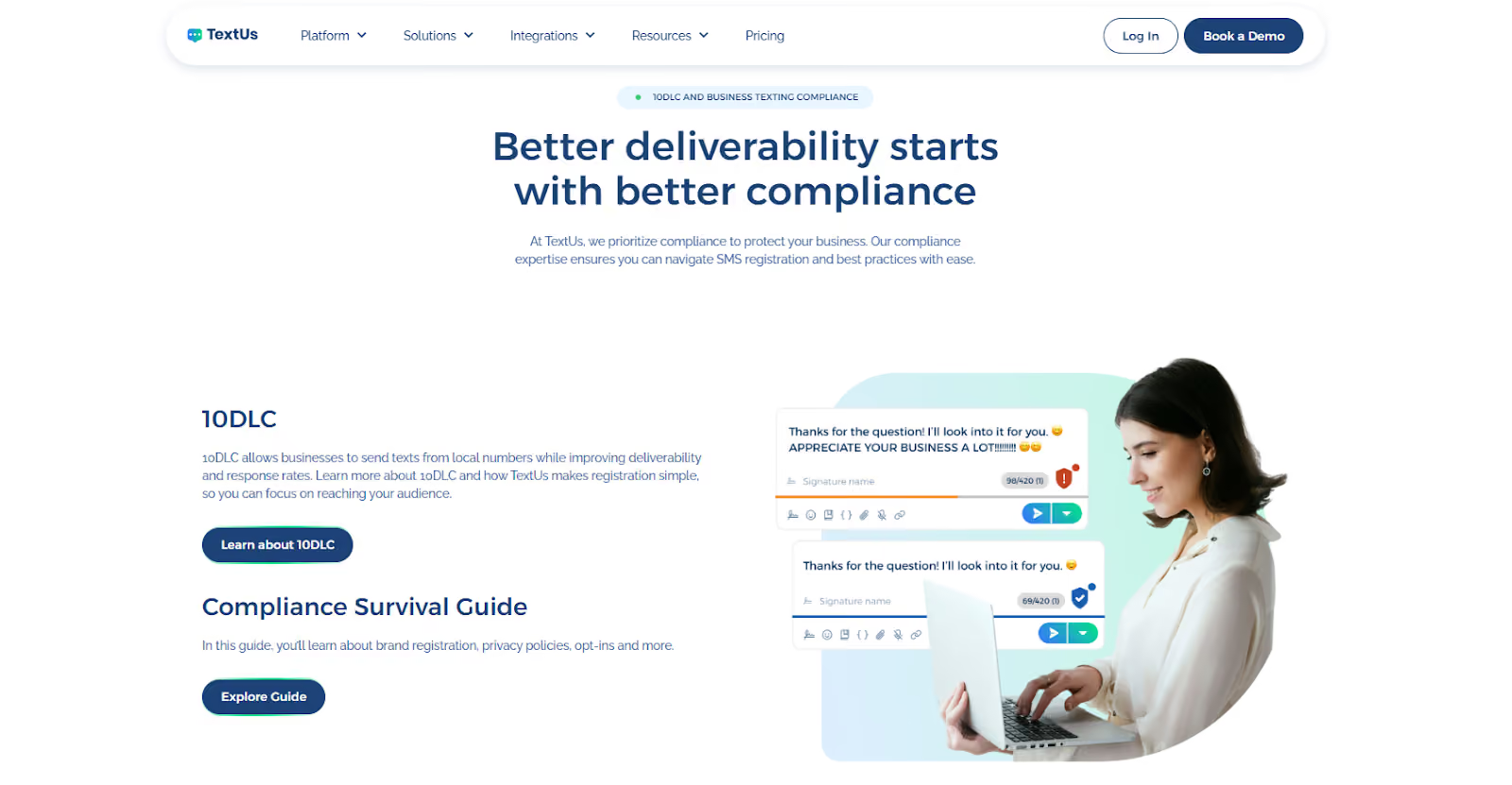
The platform gives you the tools to launch fast, targeted 10DLC campaigns that align with industry regulations and SMS subscribers' expectations.
You can configure custom introduction messages and opt-out instructions to ensure each conversation starts with proper disclosure and a way to unsubscribe.
TextUs also supports features like automated SMS integrations and messaging templates. It helps maintain consistency in your consent messaging, keep track of subscriber status, and reduce mistakes when sending large volumes of texts.
2. Obtain Proper Consent
Before you send any business text messages, the recipient should knowingly agree to receive text messages from your business. The person must understand what they are signing up for and who will be contacting them.
For promotional text messages, the law requires prior express written consent. This type of consent confirms that the recipient agreed to receive marketing texts using an automated system.
The agreement should be voluntary and documented. Leaving a pre‑checked box or assuming implied consent from a purchase does not satisfy this requirement.
Transactional or informational messages, like order confirmations or appointment reminders, may not require the same level of written consent.
Even then, you still need to have permission to contact the recipient via text. Best practice is to collect explicit opt-in for all message types to avoid confusion and respect consumer privacy.
Consent can be collected through online forms, SMS keyword, QR codes, or in-person signups. No matter the method, the language must be easy to understand and presented before the person agrees.
3. Disclose Message Details at Opt-In
When someone agrees to receive text messages from your business, the SMS opt-in process should do more than just ask for a phone number. It needs to explain what the recipient is signing up for.
At the moment of opt-in, you need to communicate three main things:
- Who is sending the messages — The name of your business or brand
- What kind of messages will be sent — Whether they are promotional, alerts, reminders, or informational
- How often messages will be sent — Daily, weekly, or any recurring message frequency you plan to follow
Also, it’s best practice to disclose that message and data rates may apply. Even though many customers have unlimited texting, this notice is still required to comply with industry guidelines and protect your business from disputes.
Here’s an example of a compliant opt-in disclosure:
“By submitting this form, you agree to receive recurring marketing text messages from [Your Business] at the number provided. Message and data rates may apply. Reply STOP to unsubscribe.”
If your opt-in happens through a form, landing page, or keyword-based text, the disclosure should appear before or at the same time the user gives consent. It should not be buried in terms and conditions or hidden behind a link.
4. Honor Opt-Out Requests Immediately
Once a recipient chooses to stop receiving your text messages, your business is required to honor that request. A smooth SMS opt-out process shows your commitment to responsible communication.
Under the TCPA regulations, individuals have the legal right to withdraw consent at any time. The CTIA Messaging Principles also emphasize that opt-outs must be processed promptly.
Recipients should be able to reply with simple keywords like STOP, UNSUBSCRIBE, or CANCEL to opt out. These keywords should be supported across all campaigns and message types, whether promotional or informational.
As soon as someone replies with an opt-out keyword, your system must prevent any further messages from being sent to that number. There should be no delay, no confirmation message required, and no manual step that slows the process down.
Most texting software automatically blocks future texts once an opt-out is received. However, your team should routinely monitor the system to confirm it’s working correctly and to flag any numbers if needed manually.
5. Keep Message Content Compliant
Even if you collect consent properly and provide opt-out instructions, your message content must still meet legal and industry standards. Sending the wrong type of content or writing it the wrong way can lead to your messages being flagged, blocked, or result in fines.
Messaging platforms and carriers flag categories of content that are sensitive or prohibited without special controls.
One common framework is the SHAFT categories, which stand for sex, hate, alcohol, firearms, and tobacco. Content in these categories may be prohibited or require extra controls like age verification.
Your SMS communications should match what subscribers were told they would receive when they opted in. Misleading claims, unclear promotions, or unexpected content increase the chance of complaints or filtering.
6. Time Restrictions for Sending Marketing Messages
Texting your customers at the wrong time can be more than just annoying. U.S. law and industry rules set limits on when you can send marketing text messages to protect consumer privacy and reduce intrusion.
According to TCPA compliance, marketing texts can only be sent between 8:00 AM and 9:00 PM in the recipient’s local time zone. This time window is designed to protect consumer privacy and prevent intrusive messaging during early mornings or late nights.
This rule applies primarily to promotional messages that encourage a purchase or advertise a product or service. For purely transactional texts, such as appointment reminders or delivery notifications, the law is more flexible.
However, it's best to follow the same time window to avoid customer frustration. To maintain compliance, your system should detect the recipient’s time zone and ensure messages are scheduled appropriately.
If you’re managing send times manually, it’s important to group your contact lists by region or use a platform that automates time zone detection.
7. Maintain a Consent Audit Trail
One of the most overlooked parts of text message marketing compliance is keeping a detailed, accessible record of how and when each recipient gave consent.
This is referred to as a consent audit trail. It serves as your business’s legal proof that every person on your list willingly opted in to receive messages.
Your consent audit trail should include specific details that show consent was clearly and willingly given. The elements typically stored in a consent record include:
- The exact date and time the recipient opted in
- The method used to collect customer consent (for example, web form, mobile keyword, or in‑store signup)
- The exact language shown to the user at the time of opt‑in
- The customer phone numbers and any associated contact details provided by the individual
If a person files a complaint or files a TCPA claim, your documentation may be the deciding factor in whether your business is found compliant.
Regulators and courts often require businesses to maintain detailed records because the TCPA places the burden of proof on the sender. Without this documentation, your business may face serious legal penalties.
Most modern SMS platforms offer built‑in tracking features that automatically log consent data the moment it happens. Using these tools makes audit trails easier to maintain and reduces manual work.
8. Use Proper Message Categorization
When you misclassify your messages, it can lead to poor deliverability or compliance risks. You need to categorize them correctly to ensure you apply the right type of consent, opt-out language, and timing.
Promotional messages include any content intended to market, sell, upsell, or advertise products, services, discounts, or events. These types of SMS marketing campaigns require permission before deployment.
Examples include limited-time offers, product launches, flash sales, or loyalty rewards. You need to obtain express written consent before delivery.
Transactional messages are informational and tied to an existing relationship or process. These include order confirmations, appointment reminders, shipping updates, or service alerts.
While consent is still necessary, the legal threshold is lower than for promotional content. Customers provide this type of consent as part of a broader business relationship.
Also, campaigns sent over 10DLC numbers should be registered with the correct use case. Carriers review these use cases closely, and mislabeling can result in registration denial or message delivery problems.
Protect Your Brand While Texting Smarter—Try TextUs!
With SMS compliance laws tightening and carriers enforcing stricter rules, the way you manage consent and campaign transparency impacts your message deliverability and brand credibility.
TextUs equips your team with a platform that makes text messaging compliance second nature.
From customizable opt-in and opt-out flows to automated consent tracking, every feature is designed to help you meet TCPA and CTIA requirements. Your team stays efficient, your records stay clean, and your messages stay trusted.

Let your SMS campaigns work harder with compliance built into the foundation. Book a demo with TextUs and see how easy it is to keep your messaging compliant and connected!
FAQs About SMS Compliance Checklist
What is SMS compliance?
SMS compliance refers to following all legal, regulatory, and carrier guidelines when you send messages to consumers. It involves obtaining consent, offering opt-out options, identifying your business, and respecting timing and content limits.
Compliance ensures you're not only reducing legal risk but also protecting customer data during every step of your SMS program.
What is the compliance checklist?
An SMS compliance checklist is a structured process that helps you stay aligned with federal and carrier requirements.
It includes steps like confirming opt-ins, disclosing message purpose, and managing opt-outs. Proper execution of these compliance measures helps maintain transparency, reduce risk, and safeguard customer data.
What are the FCC regulations for SMS?
The FCC enforces the TCPA, which regulates SMS marketing and telemarketing calls. FCC rules require written consent before sending texts using automatic telephone dialing systems, honoring opt-out requests, and observing time-of-day restrictions.
If you send messages across interstate and international communications, you have to consider broader data protection obligations or compliance advice tailored to your industry.
What steps should I take to ensure my SMS marketing stays compliant?
Start by building your internal process around a structured TCPA SMS compliance checklist. This should include proper consent collection, opt-out handling, send-time restrictions, and use of approved messaging systems.
To avoid gaps in your compliance program, review your TCPA compliance checklist regularly and consult legal counsel for guidance tailored to your business and industry.
If you're operating across borders or handling customer data from EU residents, it's also important to align with the General Data Protection Regulation (GDPR).
Continue Reading



Frequently Asked Questions
What is an SMS compliance checklist?
An SMS compliance checklist is a structured guide that helps businesses verify they're following TCPA, CTIA, and carrier rules before, during, and after SMS campaigns. It covers consent collection, message disclosures, opt-out handling, and record-keeping.
What are the most important SMS compliance rules businesses must follow?
The most critical rules include obtaining express written consent before sending marketing texts, providing clear opt-out instructions in every campaign, honoring opt-out requests immediately, sending only during appropriate hours, and maintaining records of all consent.
What happens if a business violates TCPA SMS regulations?
TCPA violations can result in statutory damages of $500-$1,500 per message sent without proper consent. Class action lawsuits have resulted in multi-million dollar settlements for companies with non-compliant texting practices.
Business Texting
Built for Results
Create and convert pipeline at scale through industry leading SMS software