
How to Build a Sustainable B2B Marketing and Sales Strategy
Learn how to build a sustainable B2B marketing and sales strategy in seven easy steps. Discover how TextUs can help you with B2B SMS campaigns.

Written by
Published
March 3, 2026
.jpeg)
Many companies invest in marketing efforts but struggle to convert attention into real sales opportunities.
Problems arise when marketing and sales teams operate in isolation. Marketing may focus on lead volume, while sales focuses on closing high-value accounts.
Without coordination, your pipeline performance suffers, and overall marketing efficiency declines. Leads may enter the system, but they do not consistently progress toward closed deals.
In this article, we'll explain how business-to-business (B2B) marketing and sales should align around structured processes and find out the right channels to drive long-term revenue growth.
TL;DR
- B2B marketing and sales alignment drives predictable revenue, especially as buyers now engage in multiple touchpoints before making a decision.
- The right mix of channels, such as content, SEO, email, LinkedIn, social selling, paid ads, account-based marketing, and SMS, supports stronger pipeline growth and better conversion rates.
- A structured strategy that includes ICP definition, leadership alignment, buyer journey mapping, stage-based content, CRM integration, campaigns with fast follow-up systems, and performance tracking turns marketing activity into revenue growth.
- TextUs helps marketing and sales follow up instantly through business SMS, which improves response speed, meeting bookings, and overall pipeline performance.
The Importance of B2B Marketing and Sales Alignment
B2B marketing and sales alignment is a major driver of revenue growth.
Marketing drives awareness through digital marketing efforts. Sales converts qualified prospects into customers through structured sales processes.
According to Dreamdata, the average B2B buyer has more than 62 interactions or touchpoints before a purchase is complete. This shows how complex communication can be without close coordination between marketing and sales.
When both sides operate with a shared view of the ideal buyer, the pipeline becomes stronger, and teams have a shared understanding of what's driving revenue.
Poor alignment also leads to wasted marketing investment. Leads sit untouched in a customer relationship management (CRM) system, follow-ups happen too late, and prospects lose interest during long buying cycles.
In B2B sales, where multiple decision-makers are involved, and timelines stretch over weeks or months, slow or inconsistent communication can weaken deal momentum.
B2B SMS marketing offers a practical way to strengthen that connection. SMS has much higher open rates than email. When marketing generates a qualified lead, sales can follow up quickly.
When marketing and sales move in the same direction, revenue growth becomes far more predictable.
B2B Marketing Channels That Support Sales
Strong B2B marketing and sales performance depends on choosing the right channels to attract, engage, and convert prospects. Here are the main B2B marketing channels that support your sales success.
SMS Marketing
Unlike awareness channels like search engine optimization (SEO) or paid ads, B2B SMS marketing supports direct communication once a prospect has shown interest.
It strengthens response time and improves deeper engagement. The sales team moves opportunities forward while improving lead quality.
When a prospect submits a demo request or fills out a contact form, a sales text message can reach them within minutes.
That quick response keeps attention high, improves account engagement, and increases the chances of booking a meeting with a potential customer.
SMS also improves meeting attendance and deal momentum. Reminder texts reduce no-shows for demos and sales calls while supporting ongoing lead nurturing.
During longer B2B sales cycles, short check-in messages can maintain engagement without overwhelming the buyer. It keeps communication active between formal email exchanges or scheduled calls.
When integrated with CRM platforms and marketing automation software, SMS marketing becomes part of a structured sales and marketing process. Book a demo with TextUs today!
Content Marketing
Content marketing builds trust before a sales conversation begins. Blog posts, case studies, reports, and webinars answer questions and address common challenges faced by your target audience.
Since many business buyers research vendors on their own, strong content positions your company as a credible option early in the decision process.
Sales teams rely on content during live discussions as well. Case studies provide proof, comparison guides support sales pitches, and product materials reinforce value.
SEO and Organic Search
When your website ranks for the right keywords, prospects find your company while comparing vendors, exploring options, or looking for answers.
Unlike paid ads, SEO continues to generate traffic without paying for each click and supports ongoing digital transformation efforts. With advanced analytics, you can extract critical insights about how leads interact with your content.
A strong SEO strategy begins with keyword research tied to your ideal customer profile (ICP). You need to target terms related to your services, industry pain points, and common buyer questions.
Optimized landing pages, in-depth blog content, and solution pages improve visibility and attract qualified prospects. Organic search also supports long-term pipeline growth and provides valuable customer data that can be used to refine targeting.
Email Marketing
After a prospect downloads a resource, attends a webinar, or signs up for updates, email marketing keeps your brand in front of them while they evaluate options.
Using an email marketing platform allows you to educate and guide prospective buyers toward the next step in the sales funnel.
Automated email sequences help move prospects through the marketing funnel. Early emails can focus on education and industry insight. Later messages can introduce case studies, product details, and meeting invitations.
Sales teams also rely on email for direct outreach and follow-up. Personalized sales messages support proposal discussions, answer objections, and recap meetings.
LinkedIn and Social Selling
LinkedIn is built for professional networking, which makes it a natural space for industry conversations and business outreach. Potential buyers review company pages and employee profiles before agreeing to a meeting.
Marketing teams can use LinkedIn to publish thought leadership content, promote webinars, and share case studies. Paid campaigns on LinkedIn also allow precise targeting based on job title, industry, company size, and seniority.
Sales teams use LinkedIn for direct prospecting and relationship building. Connecting with key stakeholders and sending personalized messages creates warm introductions before a formal sales call.
Paid Advertising
Paid advertising allows you to reach specific industries, job roles, and companies based on defined criteria. Compared to organic channels that take time to build momentum, paid campaigns can generate leads as soon as they go live.
Search ads capture prospects who are actively looking for solutions. When someone searches for a product category or service you offer, your ad can appear at the top of the results.
Social advertising platforms such as LinkedIn allow detailed audience targeting. You can narrow campaigns by company size, job title, industry, or seniority level.
Retargeting is another strong paid strategy. Visitors who view your website or download a resource can see follow-up ads that reinforce your message.
Account-Based Marketing
Account-based marketing (ABM) allows you to concentrate resources on accounts that have the strongest revenue potential. Marketing and sales work together to identify priority accounts and build outreach strategies around them.
You begin by selecting target companies that match your ideal customer profile. Once identified, both marketing and sales coordinate messaging and engagement plans.
ABM campaigns use personalized content, targeted ads, direct outreach, and executive-level engagement. Messaging speaks to the needs and challenges of each account rather than a general audience.
How to Build a B2B and Sales Marketing Strategy
A targeted framework creates focus and improves long-term results. Here are the key steps to building a successful B2B marketing and sales strategy.
Step #1: Define Your Ideal Customer Profile
A well-defined ICP makes sure your marketing activities focus on the accounts most likely to convert.
Start by focusing on the accounts that bring strong deal value, long-term retention, and repeat revenue from existing customers.
You can use past wins to spot patterns like industry, company size, yearly revenue, region, tech stack, and budget range. Review account data and insights from your CRM to understand what type of new clients convert at higher rates.
Put problem themes into the ICP, not just firm data. You can list the main pain points, common triggers, and the events that push buyers to search for a new tool or service.
You should also add buying limits too, like long legal review, strict security rules, or no budget owner. Marketing uses the ICP to target the right accounts, while sales uses the same ICP to qualify fast and avoid dead-end deals.
Step #2: Align Marketing and Sales Leadership
Marketing goals should support pipeline contribution and long-term new business growth. At the same time, sales targets should reflect the same revenue objectives.
You also need agreement on qualification standards. Both teams should work from the same data, so lead status, scoring, and handoff rules are consistent.
Regular communication keeps the strategy connected to results. Sales should share insights from real sales activities. Marketing leaders should present campaign data that supports a stronger go-to-market approach.
Step #3: Map the Buyer Journey
You need to understand how buyers move from first awareness to final decision. Most B2B purchases involve research, comparison, internal discussions, and budget approval before a deal closes.
Early stages focus on problem awareness, mid-stages focus on solution evaluation, and late stages focus on risk and approval. Mapping these steps improves the overall customer experience and strengthens team alignment.
You should also identify the decision makers involved at each stage. Many B2B deals involve multiple stakeholders, including department heads, finance leaders, and technical reviewers.
Step #4: Build Content for Each Stage
You need content that matches every stage of the buyer process. Early-stage buyers look for education and problem insight, while later-stage buyers look for proof and validation.
You can create blog articles, guides, and industry insights for awareness. Develop case studies, product comparisons, and ROI data for the final decision to strengthen your lead generation pipeline.
Sales should also have access to materials that support real conversations. Proposal decks and objection-handling documents allow reps to engage customers better and move deals forward.
You can also support high-intent leads with short follow-up messages. SMS reminders for demos or quick answers to pricing questions can keep late-stage deals active.
Step #5: Implement CRM and Automation
You need a CRM that tracks every lead, account, and deal in one centralized system. Marketing and sales need to have visibility into contact history, engagement data, and pipeline stages.
You can also leverage technology and automation to route leads to the right sales rep based on territory, segment, or product line. Lead scoring models should reflect real buying signals, such as demo requests or pricing page visits.
Your systems should also connect marketing campaigns to revenue outcomes. That connection allows you to see which channels and messages drive qualified opportunities.
SMS integration can support fast follow-up for deal-ready actions. Real-time alerts for demo requests or event signups can improve response time and increase meeting attendance.
AI in texting also improves speed and personalization. When connected to your CRM, AI can analyze conversation history, suggest context-aware replies, and summarize interactions automatically.
Step #6: Launch Campaigns With Fast Follow-Up
You need to launch campaigns that target your ideal customer profile and match buyer intent. You can use multiple channels, such as SEO, paid ads, email, and LinkedIn, to attract qualified prospects into your pipeline.
A fast follow-up should be planned before campaigns go live. Sales should know who responds first, how quickly outreach happens, and what message goes out after a form submission or demo request.
Response speed has a strong impact on conversion rates. Leads that receive outreach within minutes are more likely to book meetings and continue the conversation.
SMS marketing is a critical tool for fast follow-up. A short text message sent right after a high-intent action can confirm interest, offer scheduling options, and start a real conversation while attention is still close.
Email can sit unopened in a crowded inbox, but text messages are read quickly. When you add SMS to your follow-up process, you reduce response gaps and keep qualified opportunities moving forward.
Step #7: Measure Performance and Optimize
You need to track your campaign performance using metrics tied to the pipeline and revenue. Focus on lead-to-SQL rate, close rate, deal size, and sales cycle length to see how well your marketing and sales strategy performs.
You have to review campaign data on a regular schedule and compare results on different channels. Look at which campaigns generate qualified opportunities and which ones stall before reaching sales.
You should also pay close attention to response time and engagement rates. If leads that receive SMS follow-up book more meetings or close faster, that signal should guide future outreach decisions.
Optimization should be ongoing. Small adjustments to targeting, messaging, or follow-up timing can improve conversion rates and strengthen long-term revenue growth.
Speed Up Your B2B Sales Pipeline With TextUs
If your leads wait hours for a follow-up, you risk losing deals before they even begin. B2B marketing and sales move fast, and the companies that respond first win more conversations.
TextUs helps you connect marketing and sales with instant, two-way business texting built for revenue and customer service teams.
You can follow up on demo requests within minutes, confirm meetings, re-engage stalled opportunities, and keep prospects active during long buying cycles.
With CRM integration and shared visibility, your marketing and sales efforts stay connected from first touch to closed deal.
If you want stronger response rates and faster deal movement, TextUs gives you the tools to make it happen.
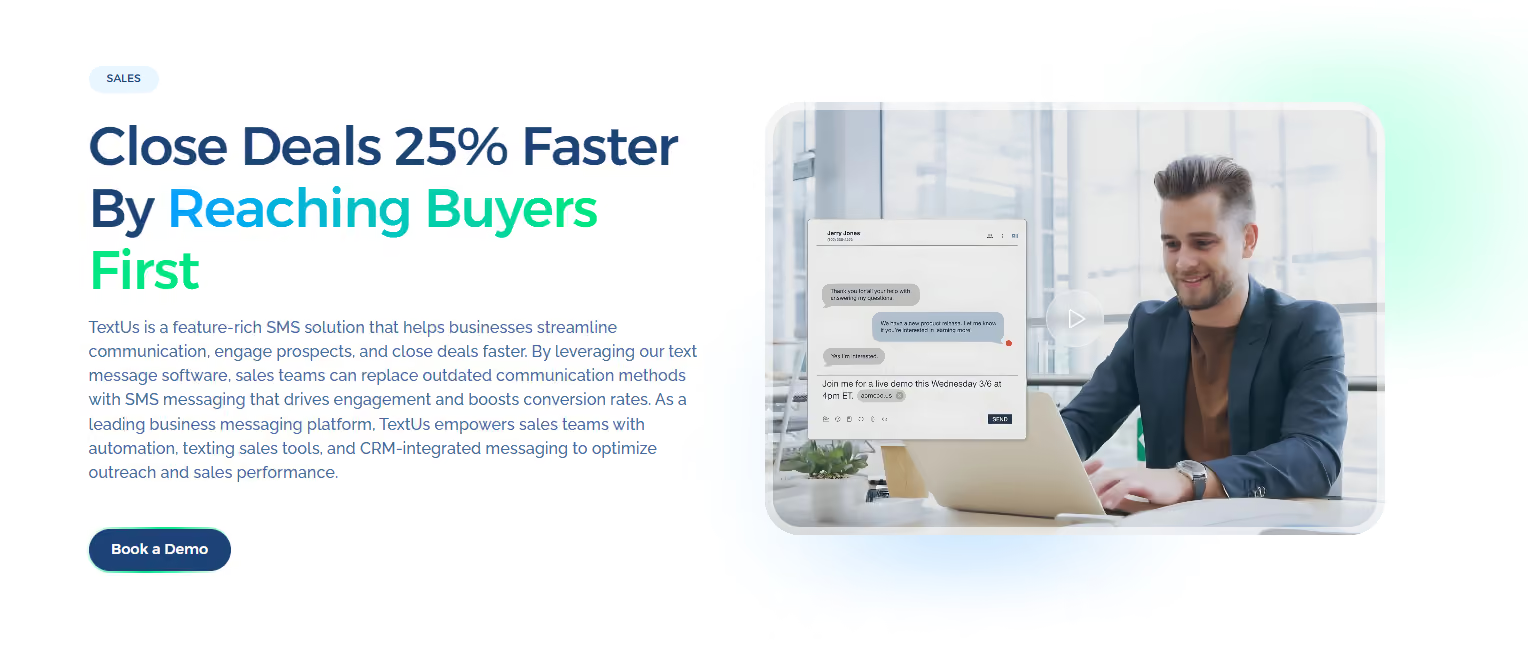
Book a demo today and see how texting can strengthen your B2B marketing and sales strategy!
FAQs About B2B Marketing and Sales
What is B2B marketing and sales?
B2B marketing and sales refer to how businesses promote and sell products or services to other businesses.
Marketing focuses on awareness, education, and demand generation programs that feed the pipeline, while sales builds relationships and closes revenue.
Modern B2B strategies rely on marketing technology to track engagement and performance. These tools connect data to pipeline results, so sales and marketing work on the same page.
What are the four types of B2B marketing?
The four common types of B2B marketing include the following:
- Content marketing educates buyers through blogs, case studies, and reports
- Account-based marketing focuses on targeting specific high-value companies with personalized outreach
- Inbound marketing draws prospects in through SEO, educational resources, and lead capture forms
- Outbound marketing involves proactive outreach such as cold email, LinkedIn messaging, paid ads, and direct contact from sales representatives
What is an example of B2B marketing?
An example of B2B marketing is a software company promoting its platform to mid-size companies through blog content, LinkedIn ads, and email campaigns.
The marketing team generates leads through educational resources and demo offers. The sales team then follows up with decision makers, conducts product demos, and negotiates contracts to close deals.
Continue Reading



Frequently Asked Questions
How do you build a sustainable B2B marketing and sales strategy?
A sustainable B2B strategy aligns marketing and sales around shared pipeline goals, uses data to prioritize high-value accounts, and combines multiple channels including SMS to stay in front of decision-makers.
What causes B2B marketing and sales misalignment?
Misalignment happens when marketing focuses on lead volume while sales focuses on deal quality. Without shared definitions and metrics, both teams optimize for different outcomes.
How does SMS support B2B sales and marketing alignment?
SMS bridges the gap between marketing-generated leads and sales follow-up by enabling real-time outreach the moment a prospect engages. Faster response times improve conversion rates across the entire pipeline.
Business Texting
Built for Results
Create and convert pipeline at scale through industry leading SMS software