
Business Texting Etiquette: Dos and Don’ts to Stay Compliant
Explore the Dos and Don'ts of business texting etiquette and learn how to stay compliant. Discover how TextUs can help you engage with your customers.

Written by
Adam Hamdan
Published
February 12, 2026
Texting is now part of daily business. You use it to send meeting reminders, reach job candidates, confirm meetings, and support customers.
But that speed also leaves room for mistakes. One poorly written message, bad send time, or casual tone can leave a lasting impression.
Business texting etiquette is what separates a productive exchange from a forgettable one. When you have the right structure in place, your team can keep outreach respectful and easier to manage.
In this article, you’ll find the dos and don’ts in business texting you can follow to maintain professionalism. With the right habits in place, texting promotes effective communication and shows your contacts that you value their time.
TL;DR
- Business text messaging requires strategic timing, tone, and grammar, all of which influence how messages are received and remembered.
- To improve response rates, you'll need to follow business text messaging etiquette, such as getting permission, respecting timing, keeping messages short, using proper tone and grammar, responding to customers, personalizing texts, and including opt-out instructions.
- You have to avoid poor texting etiquette, such as texting outside business hours, double-texting too soon, relying on slang or emojis, sending messy images or files, skipping proofreading, sending sensitive data, or using every digital channel at once.
- TextUs helps you apply these habits with tools for SMS scheduling, drip campaigns, opt-out management, and compliance.
How Proper Texting Etiquette Affects Your Business Results
SMS is easy to read and more likely to get a reply than email or voicemail. But with that convenience comes higher and more realistic expectations.
Every message you send speaks for your brand. A message sent at the wrong time or written without thought can give the wrong impression.
Most business text messages are opened in under 3 minutes, and people respond within 90 seconds of receiving them. That short window means people notice tone, word choice, and structure right away.
Strong texting etiquette supports better outcomes, such as higher reply rates, smoother follow-ups, and a consistent brand voice.
If SMS plays a role in how your business communicates, TextUs helps you keep standards high while moving work forward.
Book a demo with TextUs today to see how professional texting should work!
The Essential Dos for Professional Text Messaging
Successful business texting helps your messages stand out and makes it easier to hold productive text conversations. Here are texting etiquette rules your team should follow.
Ask for Permission Before Texting
Every business text should begin with a permission. Text messages enter a personal space, and sending unsolicited text messages can harm customer trust and impact your professional image.
SMS compliance rules also require consent. The method depends on the type of SMS number used. Short codes, toll-free numbers, and local numbers follow different rules for collecting and storing permission.
Consent can be collected through several accepted methods. A short code with a keyword response is one of the most common. A form on your website can include a checkbox for text updates.
Some companies include written consent during checkout or onboarding. Verbal permission may also apply when followed by a confirmation text that explains the agreement and offers an opt-out.
Here is an example of how a proper SMS opt-in flow looks:
- Opt-in request: Want updates about offers and events? Text JOIN to 85558
- User reply: JOIN
- Confirmation: You are subscribed to messages from BrightLights Inc. Reply STOP to opt out.
This confirmation serves two purposes: it proves consent and reminds the person how to stop messages. That protects your customer data and aligns with their communication preferences.
Respect Time and Attention
Text messages arrive fast. But it also means the message interrupts whatever the person is doing.
In a business setting, timing affects how the recipient perceives your message. Your business message should contain one specific point and one next step.
This example shows how to keep things focused and respectful without sounding casual:
- Hi Natalie. We have an opening for a travel nurse in the Midwest. Are you interested? Angie from StaffPlus. bitly.com/travelmid
The message includes a greeting, a purpose, a question, and a shortened link. When you text customers during appropriate hours and with useful content, you're more likely to get a quick response.
Keep Messages Short
People scan texts. If your message is too long, it may get skipped or saved for later, which leads to delays in response time.
The best practice is to stay under 150 characters when possible. That leaves room for a greeting, a purpose, and a call to action (CTA).
This example shows how to keep a message simple while still sounding professional:
- Hi Mariah. Can you send your bank statement so we can complete the paperwork? Thank you, Casey, at LendRight.
Short messages also lower the chance of back-and-forth and help the conversation stay on track. If more context is needed, a brief follow-up works better than cramming everything into one message.
SMS marketing is best for reminders or quick updates that need urgent attention. But complex discussions may be better handled over other forms of communication, like email or video calls.
Be Mindful of Tone
Business texts lack voice, face, or gestures. Without the extra context of phone calls or face-to-face meetings, your tone can be misunderstood.
You can use complete sentences and full words to make sure your message looks professional.
Personal details, like a first name, can add personality to the text. Signing off with your name or business reminds the person who you are and why you’re texting.
Here is an example with poor tone that may come across as cold or impatient:
- Need your signature. Send today.
Now see how a better tone improves the same request:
- Hi James. Do you have a moment to sign the contract today? Let me know if you have any questions. Thank you.
Megan from ServiceOne
Tone sets the stage for stronger replies and stronger relationships. It's important when dealing with external partners, internal communications, or follow-ups that involve critical information.
Use Proper Grammar and Punctuation
Text messages are short, but they still reflect your business. Grammatical errors and missing punctuation can make your message hard to read or easy to ignore.
Grammatically correct messages demonstrate that you respect the person receiving the message. It also makes your writing easier to understand. Punctuation marks also guide the reader through the message.
Here is an example that shows the difference:
- Passive: An error has occurred with your account, but every attempt was made to fix it.
- Active: We made an error with your account and have taken steps to fix it.
The active voice feels more like something a person would say in a real conversation. The passive version sounds distant and unclear.
Respond to Incoming Texts
If you expect people to reply to your messages, they also expect you to respond promptly. An unanswered message may lead the person to stop responding in the future.
Every reply is a chance to build trust. When someone asks a question, requests help, or shows interest, they are giving you an opportunity to keep the connection active.
Response time helps set the tone for future replies. If your response comes much later or not at all, the contact may lose interest or move forward with someone else.
Here is an example of a good back-and-forth:
- Recruiter: Gabby, I saw your update on LinkedIn. Are you open to a new travel role with L&D experience?
- Gabby: Yes. Can you send the application link?
- Recruiter: Absolutely. Here it is: bitly.com/ldjob
- Gabby: Just applied. Thanks!
Quick response also shows that you're paying careful attention. Even if you cannot answer right away, a text message that confirms receipt helps keep the contact engaged.
Personalize Messages When Appropriate
In business texting, small personal touches show that you care about who you are speaking to, not just what you are trying to say.
Using a first name is the simplest way to personalize a message. It signals that the message is meant for the correct person reading it.
You may include details about a past conversation, recent activity, or location, which can also help make the message more thoughtful.
Here is an example of proper personalization:
- Hi Natalie. We just received a new travel nurse opening in the Midwest. Would you like to hear more about it?
Angie from StaffPlus
bitly.com/travelmid
This message works because it includes the recipient’s name, mentions a role based on likely interest, and ends with a question.
Provide Clear Opt-Out Instructions
Every business text should include a way for people to stop receiving future messages. This is a respectful practice and a legal requirement under SMS compliance standards.
The best approach is to add a brief line at the end of the message that explains how to stop messages. Most businesses use simple instructions such as “Reply STOP to unsubscribe.” This phrasing is easy to understand and does not take up much space.
When your contacts have an opt-out option, it builds trust with those who choose to remain. You can send messages to people who want them and reduce the risk tied to unwanted communication.
The Common Don'ts in Business Texting
Certain habits, even when unintentional, can cause people to block your number or stop trusting your messages altogether. Below are common mistakes that should be avoided in all business communication situations.
Don't Text Outside of Regular Business Hours
Every communication channel has unspoken boundaries. With texting, that boundary is the reader’s personal time.
There’s no set-in-stone rule for how often to text. You need to focus on sending messages when the timing and purpose are appropriate.
The best time to send marketing messages depends on your audience. In most cases, weekday mornings (9 AM–12 PM) and early evenings (5 PM–9 PM) offer strong opportunities for customer engagement.
Here is an example of good timing:
- Black Friday starts soon. Are you ready? Use code BLACKFRIDAY for 15% off.
These time windows match typical business activity and personal routines. Messages sent too early in the morning or very late at night risk interrupting someone’s rest or personal time.
With SMS automation tools, you can schedule texts to arrive during ideal hours based on each contact’s time zone and respond in a timely manner.
Don’t Double-Text
Business texting should allow space for the other person to respond. If you send a message and follow it too quickly with another, it may feel pushy.
After sending a request or question, you need to give the person time to read and reply. Following up too soon shows a lack of proper etiquette.
Here is an example of poor texting behavior:
- 10:01 AM: Hi James. Can you confirm your interview time today?
- 10:04 AM: Just checking in again—can you respond?
That kind of back-to-back messaging puts pressure on the contact and may cause them to disengage.
Now compare with a better approach:
- 10:01 AM: Hi James. Can you confirm your interview time today? Let me know if you have any questions. Thanks!
You can manage follow-ups easily with the use of SMS drip campaigns. It sends SMS messages at scheduled intervals, based on actions taken or not taken.
If no reply comes, wait at least a few hours before sending a second message. In some cases, one follow-up on the next business day is more appropriate. It helps you set realistic expectations without overwhelming the contact.
Don't Use Inappropriate Abbreviations or Emojis
Some texting abbreviations are acceptable when they are widely understood and polite, such as “thx” for “thanks.” But others carry meanings that may be offensive.
Abbreviations like “LOL,” “WTF,” or “LMAO” should never appear in a professional message, no matter how casual the relationship may seem.
Emojis in business texting also require good judgment. A simple emoji used to support a professional tone may be fine in some industries. But too many can distract from the message or send the wrong signal.
Here is a proper example of limited, appropriate use:
- Happy birthday, Bethany. Stop in for a free scoop anytime this month. Just show this message to redeem 🎉
This message works because the emoji supports the tone but does not replace the words. Still, avoid using emojis when texting about sensitive discussions or more formal updates.
Don't Send Inappropriate Images or Files
Business texting now supports MMS. You can include PDFs, images, videos, and links to support your message. These tools improve business communication when used correctly, but they also bring risks when used without care.
Images or files should match the topic and tone of the conversation. A short video that explains a product or a PDF that outlines pricing details can be helpful.
A blurry photo, a casual selfie, or a file with private data in the background can raise questions about professionalism. These are not appropriate in employee communications or client-facing interactions.
Here is an example of proper media use:
- Shawn, please watch this short training video before your first day. Thank you.
[video link]
Before sending a file or image, you need to check the contents and make sure no sensitive or confidential information appears in the frame. That includes whiteboards, computer screens, or printed materials in the background.
The image or file should support the message, not distract from it. Sending memes, jokes, or unrelated media reduces the value of the conversation.
Don't Skip Proofreading
A good rule of thumb in texting is scanning them before you hit send. Texts may be short, but every word counts. If your message has spelling errors, the wrong name, or awkward phrasing, it reflects poorly on your business.
Proofreading doesn’t take long. You can look at the name, read the message once from top to bottom, and fix anything that sounds off or might confuse the person receiving it.
Here’s a message that wasn’t checked:
- Haley: You're doing a Great job, keep itup!
Now compare that with the corrected version:
- Hailey: You’re doing a great job. Keep it up!
Voice-to-text and autocorrect are helpful features, but you need to make sure they are functioning properly.
Don't Stack Calls, Emails, and Texts at Once
Since text messages have a better response rate than phone and email, it is common to include text follow-ups when the other platforms are ignored.
But if a person receives too many messages within minutes, they may feel overwhelmed or cornered. That kind of experience leads to silence rather than a response.
Start with one method. If you send an email, give it time before sending a text. If you leave a voicemail, allow space for the person to reply before switching to another channel.
Here is a better example of message timing for improved customer experience:
- Mary, just following up on the email I sent yesterday. Are you still interested in scheduling a demo this week?
Olivia from Acme
[scheduling link]
People notice when they’re being contacted too aggressively, and most do not respond well to that. This example gives context without pressure and refers to a previous interaction.
Handle Business Texting the Right Way With TextUs!
Professional texting etiquette is part of what improves your business communication efficiency.
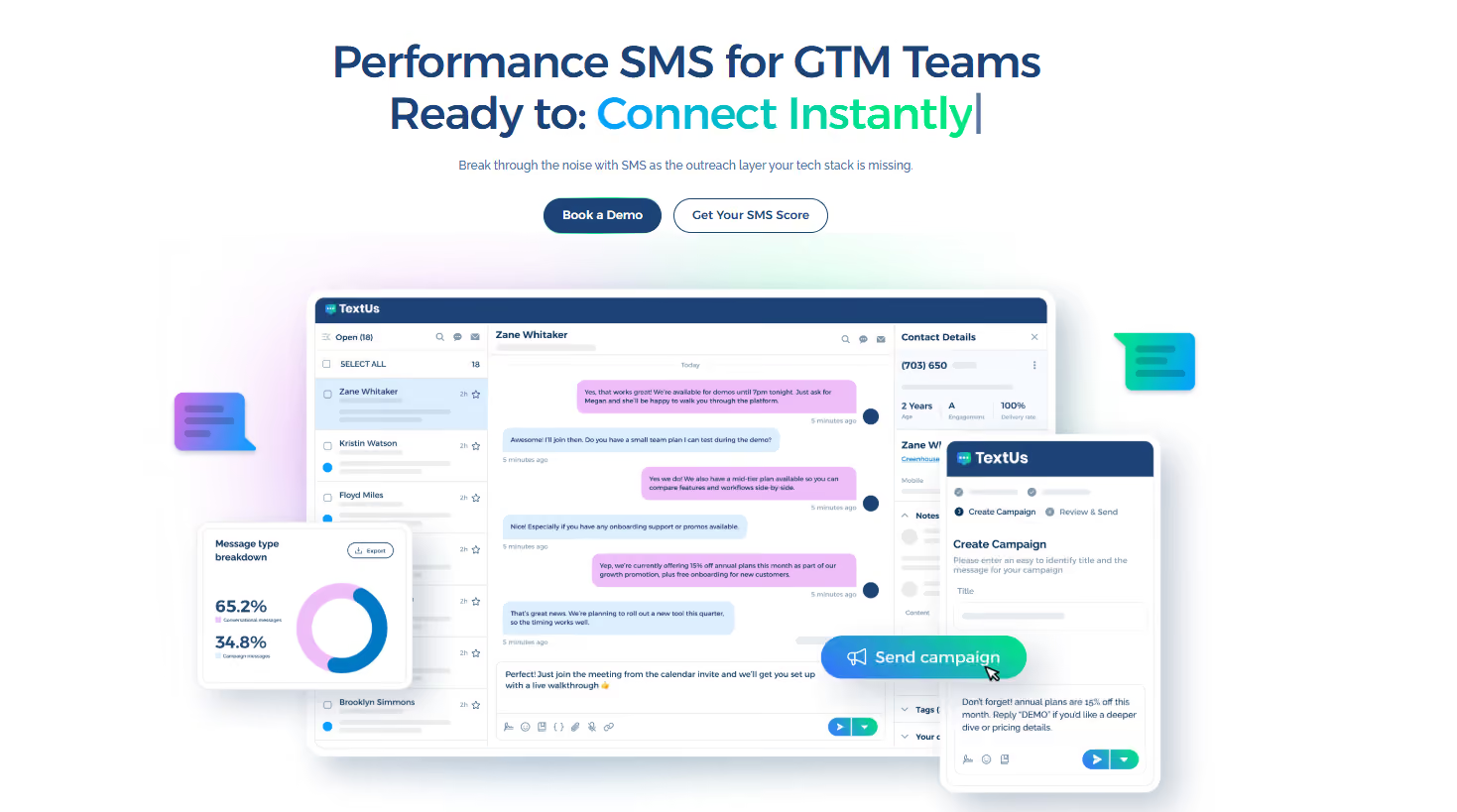
TextUs helps you adhere to business texting standards without needing to manage every detail manually. With SMS tools that let you schedule group texts, send campaign sequences, and manage opt-ins and opt-outs automatically, your team stays organized.
You don't have to worry about messages going out too early, being sent without consent, or missing key details. The platform helps you stay consistent, even when sending high-volume messages.
Book a demo today to see how TextUs helps you do texting the right way!
FAQs About Business Texting Etiquette
What is business etiquette for texting?
SMS texting etiquette refers to the standards professionals follow when sending text messages in a work setting.
These standards include asking for permission before texting, writing messages with clear guidelines, sending texts during business hours, keeping messages short, and always including a respectful tone.
What is the three-day rule in texting?
The idea of a “three‑day rule” comes mainly from personal texting and dating advice, where waiting a few days to reply may be seen as polite or strategic. But in a professional setting, a delayed reply for days can be interpreted as a lack of interest or urgency.
Business texting is effective when messages are answered within hours, especially when handling urgent messages. If no reply comes, one follow-up the next business day is more appropriate than waiting multiple days without contact.
What are red flags in texting?
Red flags in text communications include anything that shows carelessness or poor intent. In business texting, this may include:
- Poor grammar or spelling
- Messages sent late at night or early in the morning
- No opt-out instructions in promotional texts
- Double-texting before a reply
- Use of slang, sarcasm, or inappropriate abbreviations
- Messages that feel too casual or aggressive
These red flags can put sensitive information or timing at risk when communicating in regulated industries.
What is the first recommended rule of professional texting?
You always have to ask for permission before sending the first text. Consent shows respect and protects your company's reputation.
It also makes the message more welcome. When someone agrees to receive messages, they are more likely to read and respond with interest.
Continue Reading



Frequently Asked Questions
What are the dos and don'ts of business texting etiquette?
Do identify yourself, keep messages professional and concise, send during business hours, and include opt-out options. Do not use slang, send too frequently, or text sensitive information through standard SMS.
When is it appropriate to text a customer or prospect in a business context?
Text for appointment reminders, follow-ups, brief updates, and time-sensitive information. Avoid texting for complex discussions, formal negotiations, or sensitive information that requires documentation.
What compliance rules govern business texting etiquette?
TCPA requires written consent before commercial texts, 10DLC registration for business messaging, opt-out language in every commercial text, and immediate honoring of unsubscribe requests.
Business Texting
Built for Results
Create and convert pipeline at scale through industry leading SMS software