
How SMS Recruiting Builds a Stronger Talent Pipeline
Learn how SMS recruiting works and how it can help you find better candidates faster. Discover how TextUs set up SMS recruiting with ease.

Written by
Adam Hamdan
Published
December 10, 2025

Candidates keep their mobile devices close, yet long emails slip past them with no reply. Missed phone calls stack up, and talent slips away before the first meeting even takes place.
SMS marketing can shift that pattern. It can spark quick replies and create a direct path between recruiters and candidates.
In this article, we will explain how SMS recruiting works and how a text recruiting platform strengthens each stage of your hiring flow. You will also find practical tips and text message ideas you can use right away.
TL;DR
- SMS recruiting uses text messages to reach job seekers, start conversations, run screenings, book interviews, and guide people through the hiring path.
- SMS outperforms slow channels like email and phone calls by delivering quick touchpoints that fit each stage of the candidate journey.
- Top use cases include first contact, quick screening checks, interview booking, reminders, next-step updates, and re-engaging past candidates.
- Strong SMS hiring flows rely on short messages, simple CTAs, smart timing, clean opt-in steps, visuals, and tools that support your candidate pool.
- TextUs is the leading text recruiting platform that offers shared inboxes, automated sequences, MMS support, compliance tools, and coordinated team conversations.
Does SMS Work in the Modern Hiring Process?
Not every candidate checks email often. SMS fits the pace of hiring as it turns slow steps into quick, simple actions.
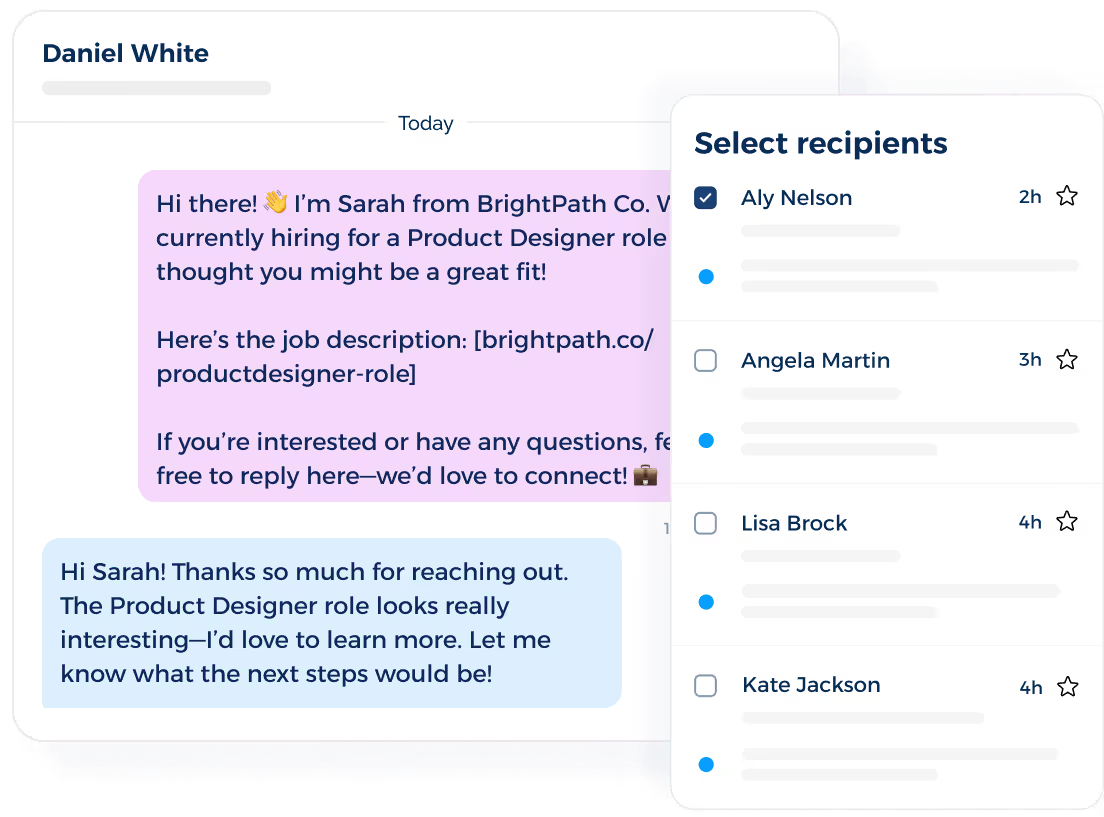
Every text campaign acts like a small nudge that keeps the person moving forward. You no longer depend on long back-and-forth calls or endless inbox checking that happen with traditional methods.
Here's how SMS works for your recruitment process and helps you reach top talent:
- Start the conversation with a short message that introduces the open position and invites the candidate to reply
- Follow up with a few short questions that help you see if the person meets the basic needs of the job
- Share a link that lets the candidate pick a time or fill out a small form at their own pace
- Keep the candidate on track with SMS that confirms next steps and reduces no-shows
- Outline the remaining steps so the person moves from the interview to the start date
SMS recruitment helps you stay ahead of delays, keep candidates warm, and fill roles before other companies do. You get stronger response times and better show-up rates.
If you want consistent replies and a smoother candidate communication from first contact to start date, TextUs is an SMS platform built for that. Book a demo today!
Why Use SMS Marketing for Recruitment
The recruitment landscape has become slower and more complex lately. According to The Interview Guys’ 2025 industry report, the average hiring journey now spans 68.5 days, from application to offer.
That kind of delay often means you lose good candidates before you get them on the phone, which hurts your chances of building a strong team.
The same report shows that 60% of applicants drop off because of long, drawn-out processes. SMS helps you address common recruitment challenges early.
When you use SMS for recruiting, you get around that slow pace. A quick text reaches candidates instantly, invites immediate replies, and shortens that long hiring timeline.
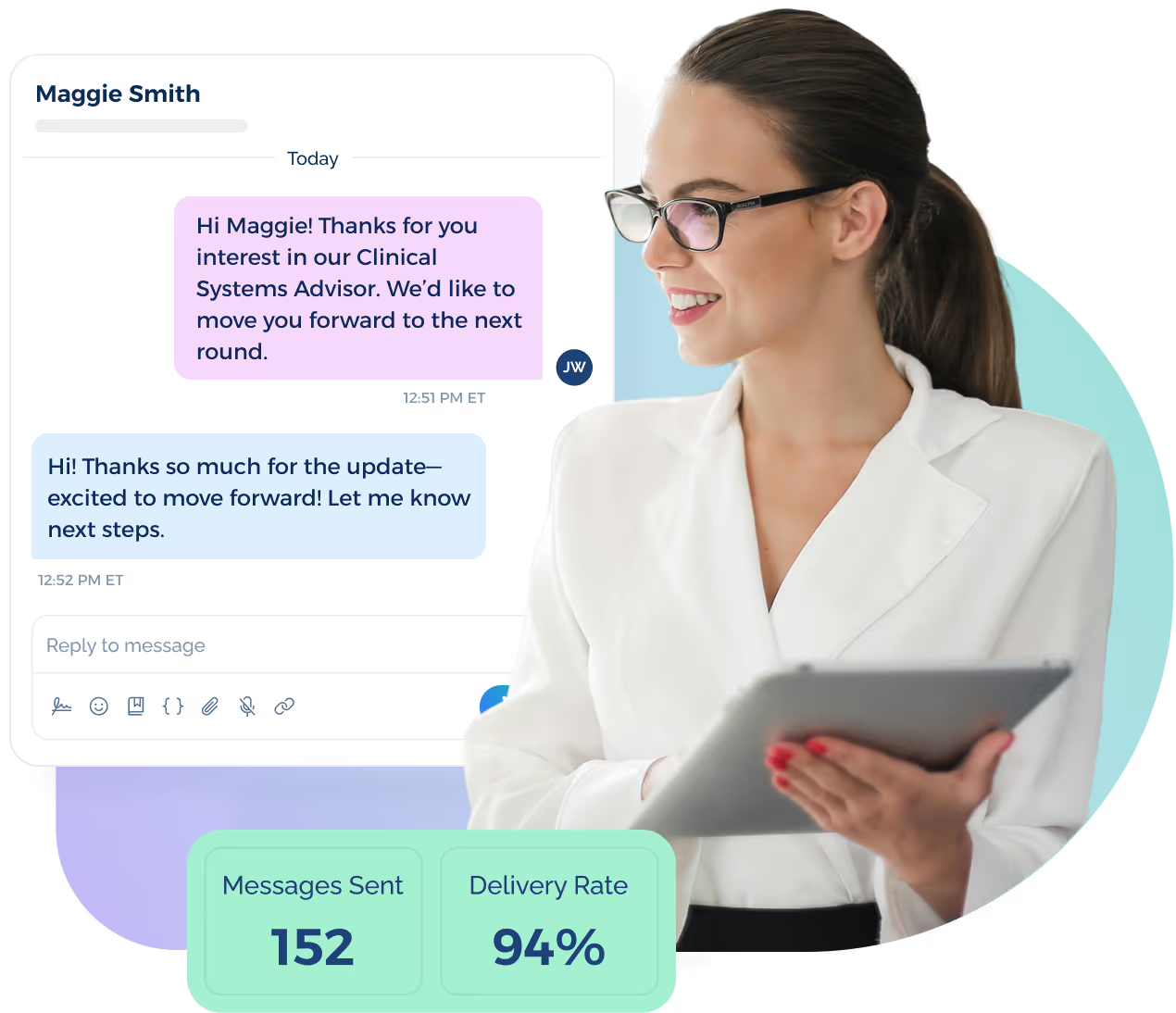
Texting improves staffing by matching what many job seekers expect. Phones stay close to them during business hours and beyond. You can inform candidates about updates and guide talent through your onboarding process.
Finally, in a highly competitive job market and with workloads rising, business SMS helps you do more with less. Your team spends fewer hours on administrative tasks, chasing emails, or missed calls.
How to Get Started With SMS Recruiting
Once you see how SMS helps you stay connected, it's time to learn how to set it up the right way. Below are the essential steps that help you build a smooth path from first outreach to final hire.
1. Pick Texting Software That Fits Your Hiring Team
If texting is just one of many other channels you have for hiring, you need to pick a platform that supports texting inside a broader applicant-tracking or recruiting system.
Here's why you should choose TextUs:
- Shared inboxes for recruiters can hold potential candidate chats, avoid duplication, and keep a message history
- Allows broadcast messages to many candidates, yet still keeps each chat trackable
- Integration with ATS, HR system, or existing recruiting tools to sync candidate records, communication logs, and follow-ups
- Offers message templates for automated drip campaigns and smoother interview scheduling
- SMS compliance with legal or data-storage rules (opt-in/opt-out, proper consent)
If you’re serious about using text message recruiting at scale, TextUs stands out as the best text recruiting software. It’s built for recruiters and staffing teams, not just bulk marketing blasts.
Book a demo with TextUs today!
2. Create Templates for Common Hiring Messages
SMS templates save you time and help your recruiters move fast when many roles open at once. Direct messages work best because candidates read them fast and reply just as fast.
You want templates for each main stage of your hiring path. This includes first contact, early screening, interview reminders, and follow-ups.
Below are recruitment text examples you can shape to match your brand style.
First Contact Template
Hi [Name], I’m reaching out about the [Job Title] role at [Company]. Are you open to a quick text chat about the job?
Screening Template
Thanks for your reply. Quick question: Are you open to the posted schedule for this role?
Scheduling Template
Great. Here is a link to pick a time for a short call: [Link]. Choose any time that works for you.
Reminder Template
Hi [Name], this is a reminder for your meeting at [Time]. Let me know if you need to adjust.
Follow-Up Template
Thanks again for the meeting. I’ll share your next steps shortly. If you have questions, send me a quick note here.
When these scheduled messages are ready to send with one click, your team cuts down on typing and supports a strong candidate experience.
3. Collect Numbers and Give an Opt-Out Path
Before you start sending messages, make sure you gather numbers in a lawful way. The best time to send an SMS request is during the job search or when someone shows interest in a role on job boards.
The Telephone Consumer Protection Act (TCPA) requires you to gain permission and state how texts will be used. These steps protect your team and help candidates feel safe sharing their number.
To collect numbers, you can ask candidates for their contact details during the job search or once they show interest through job boards. You may also use an online form so candidates can share their number and note how they prefer to communicate.
Recruiting text messages, such as “Share your phone number if you want to get text updates about your application,” set the right tone and avoid confusion later.
You also want to be open about how you plan to use texting. Job seekers should know they may get short messages about next steps, time slots, or quick questions.
When people understand the purpose of your messages, they feel more at ease and more willing to reply. Just as important, you must also give them a simple SMS opt-out path to stop messages at any time. It ensures candidates won't receive unwanted messages.
4. Test Your Setup With a Small Candidate Batch
Before you roll SMS recruiting out to your full hiring group, it helps to start with a small batch of candidates. It provides you with a safe space to see how your messages reach, how fast replies come in, and where small gaps may slow your flow.
During your test, you need to pay close attention to reply times. Fast replies show that your templates and timing work well. Slow replies may mean your first message is not clear enough, or your prompts ask for too much at once.
You also want to check the path from first contact to interview. Look at how many people move forward, how many drop off, and at what point the talk slows down.
It shows you whether your screening questions hit the mark, your links work well, or your reminders are strong enough to keep people on track.
SMS Recruiting Tips to Help You Hire Faster
Job seekers prefer personalization in texting. They also respond best when the conversation is easy to follow. These best practices help you reach people faster and guide them through each step of your recruiting process.
Share Pay, Shift, and Location
Many candidates stop replying when important details are missing. A short text with pay, shift times, and location draws in people who match your needs and informs candidates early.
Example: “Hi, [Name]! Pay is $18–$20 per hour. Shift runs 7 am–3 pm near Oak Grove. Want to talk about next steps?”
You create a smoother candidate engagement because each reply comes from someone who already understands the basics of the role.
Use Knockout Checks Before Moving Forward
Knockout checks sent right after first contact can show if a person can meet the needs of the role and help you screen candidates faster.
Example: “Hi, [Name]! Can you work morning hours for the posted role?”
Every candidate gets the same early question, and everyone learns the core job needs upfront.
Offer Two Interview Time Slots
Large booking pages can confuse people or lead to dropped interest. Two simple choices create a quick path forward and help you schedule interviews without extra back-and-forth.
A recruitment SMS text, such as “I have 10:00 am or 2:30 pm open. Which works for you?” brings faster replies than a long scheduling link.
Two slots also help your team stay organized. You keep control of your calendar, and candidates feel guided instead of lost in a long list of openings.
Using two slots also shows respect for a candidate’s time. They see a short set of options, choose one quickly, and feel confident about the next step.
Incorporate Visuals to Show Company Culture
Many job seekers want to know more than job duties. They want a sense of the people, the space, and the day-to-day energy.
MMS helps you engage candidates and stand out. You can send images that show your office, team moments, project wins, or small details that reflect your group’s style.
MMS messages also help you bring attention to values that matter to your team. For example, you might share photos from volunteer days or staff awards that show real people doing real work.
Include Videos for Job Previews
A simple clip can show tasks, tools, work areas, and people they may meet once hired. Many job seekers feel more confident when they can see the environment instead of guessing what the job feels like.
Videos also help your team stand out. You can share a short walkthrough of the workspace, a short message from a team member, or a clip showing common tasks. It also helps you draw interest in job openings.
Add Audio Notes for a Personal Touch
Many job seekers appreciate hearing a real voice because it signals genuine interest and lowers the stress that often comes with early hiring steps.
Audio notes can also help guide people through the candidate journey with more comfort than text alone.
A greeting works well, such as a short welcome, a quick thank-you, or a simple outline of what comes next. Voice messages can also help candidates understand expectations faster.
Share PDFs for Deeper Info
PDF files provide candidates a smooth way to review job details without long blocks of text on a phone screen. It also supports updates on application status or helps introduce new job openings to your growing talent pool.
You can include charts, short notes, or highlights that matter most for the role. Many job seekers appreciate having structured information they can read at their own pace.
When new hires receive one document with pay ranges, shift notes, perks, and basic role tasks, they feel more prepared once they enter screening or interviews.
Give Next Steps Right After the Interview
Many drop-offs happen after the interview because candidates do not know what comes next. Texting candidates helps boost response rates and keeps them from drifting toward other job fair offers.
A fast follow-up also shows that your team stays organized and values open talk, which helps build trust early in the hiring process. Next-step messages can cover simple items like document needs, a short task, or the target day for a final decision.
Re-Engage Past Applicants
Candidates apply, but may disappear due to work changes, timing shifts, or schedule conflicts. Past candidates also tend to appreciate it when a company remembers them.
Texts give them a fresh chance to reconnect with you without pressure. A one-line prompt can engage applicants and pull them back into your pipeline faster than sourcing new applicants.
Send Prep Notes Before the Interview
Candidates are unsure what will happen in the meeting, who they will meet, or what they should bring. You might remind the person about any items they should bring, such as ID or samples of past work.
When people know these details early, they feel calmer and show up in a more confident state of mind. Your team also spends less effort calming nerves and can move faster through each interview slot.
Gain Faster Hiring Results Through Smart Text Outreach—Try TextUs!
Text-based recruitment gives you speed, but TextUs turns that speed into real hiring power.
With seamless links to major applicant tracking systems, your team can reach multiple candidates faster and stay fully organized.
You can send reminders that keep momentum high and guide each person through your process. It reduces gaps caused by poor communication or slow follow-ups through email or messaging apps.
TextUs also helps you build a stronger hiring pipeline through SMS automation. You can run large outreach campaigns with unlimited sizes and send rich media messages. These features help you catch attention, nurture interest, and stay in front of job seekers.
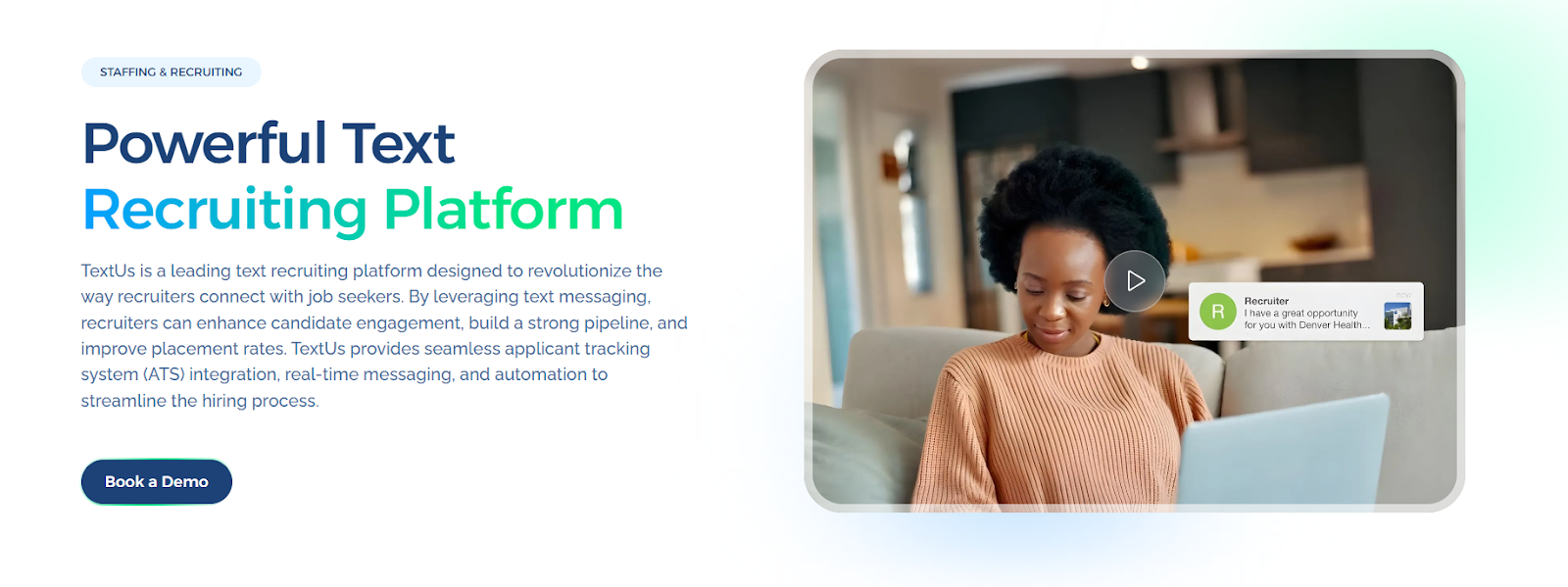
If you want faster replies and an exceptional hiring experience with minimal effort, book a demo with TextUs and start texting today!
FAQs About SMS Recruiting
What is SMS for hiring?
SMS for hiring is a method where your team uses text messages to reach job seekers, ask short questions through your screening tools, set interview times, and share quick updates.
Texting also helps guide people toward targeted job opportunities that match their background, and helps candidates receive targeted job opportunities.
Does SMS have a 98% open rate?
Yes, SMS has an open rate of 98%, but it may shift across studies. Text messages reach phones quickly and get opened far more often than email.
That reach makes it useful for filling your candidate pool, sending job alerts, and improving your overall hiring outcomes.
Do recruiters contact you by text?
Yes. Many recruiters now use text messages to reach job seekers. Texting helps them speak with people faster, confirm interest, set meeting times, or ask short screening questions.
Text outreach also helps during busy periods, such as career fairs or times when SMS staffing teams must move quickly.
You can include your name, company, role, and purpose in the first message. Then, follow up with simple referral requests when more talent is needed.
Continue Reading



Frequently Asked Questions
How does SMS recruiting build a stronger talent pipeline?
SMS recruiting builds pipeline by enabling faster outreach, higher response rates, and more consistent follow-up than email or phone. Candidates stay engaged through timely personal communication on their phones.
What SMS messages work best for recruiting candidates?
Effective recruiting texts include initial outreach, interview confirmations, status updates, re-engagement messages, and offer follow-ups. Keep them short, personalized, and easy to reply to.
What is the response rate for recruiting text messages?
Recruiting text messages typically see response rates of 35-45%, compared to less than 10% for email. This makes SMS one of the highest-performing channels for candidate engagement.
Business Texting
Built for Results
Create and convert pipeline at scale through industry leading SMS software