
Business SMS: A Guide to High-Performance Text Messaging
Learn how business SMS works and explore common use cases of SMS for businesses. Discover how TextUs can help you set up business SMS.

Written by
Adam Hamdan
Published
June 9, 2026

Many businesses rely on short message service (SMS) as a preferred communication channel, especially when they need to reach contacts quickly.
One of the biggest benefits of text message marketing is how easy it is to implement. There’s no need for a complicated setup or a major system overhaul.
You can start texting from your existing phone numbers, which makes the transition effortless for your team and familiar for your customers.
In this article, we will walk through how business SMS works, how you can incorporate it to support your growth, and which SMS marketing platform delivers the most value for team productivity.
TL;DR
- Business text messaging works by sending fast, reliable, two-way text messages at scale for marketing, reminders, customer service, sales, and internal communications.
- It works through dedicated platforms that automate messages, manage conversations, integrate with CRMs, and ensure carrier/TCPA compliance.
- Businesses choose between 10DLC, toll-free numbers, or short codes based on volume, speed, and use case.
- Top features to look for include automation, segmentation, shared inboxes, templates, scheduling, analytics, and 10DLC support.
- TextUs is a leading business text messaging service built for real-time conversations, strong automation, CRM integrations, and scalable, compliant messaging.
What Is Business SMS and How Does It Work?
Business SMS refers to the use of text messaging by companies to communicate with prospective customers and internal teams through a dedicated SMS platform.
Instead of using a personal phone number and messaging app, teams get a centralized system for sending, receiving, organizing, and tracking text conversations.
Many organizations prefer SMS because it replaces lengthy phone calls and shifts communication to faster, more convenient channels.
While it feels similar to a regular text message for the recipient, the system is far more advanced and built for reliable business operations. Here's how it works:
- An automated workflow writes the message, and the platform prepares it for sending.
- The SMS provider connects to mobile carriers and routes the message while handling compliance and registration requirements.
- Carriers check for spam, restricted content, consent requirements, traffic volume, and sender reputation. Approved messages move forward, and rejected messages are blocked.
- The message appears on the customer’s cell phone like any regular SMS.
- Responses flow back into the platform where your team can manage one-on-one conversations, automate follow-ups, and log activity in your CRM.
Business text messaging is designed for high-volume communication, automated workflows, and consistent delivery across carrier networks.
Book a demo with TextUs today and see how stronger communication can transform your operations!
Types of Business SMS Numbers
You can use specific number types for higher message volume, better deliverability, and compliance with carrier rules.
Each option serves a different purpose depending on how a company plans to use SMS.
- 10DLC local numbers: These ten-digit local numbers look familiar to customers and work well for conversational messaging and everyday business communication.
- Toll-free numbers: These numbers start with prefixes like 800, 888, 877, or 844 and support higher-volume customer service or nationwide communication.
- Short codes: These five- or six-digit numbers support high-volume, time-sensitive messaging with strong deliverability, but they require approval and often cost more.
Common Use Cases of Business Texting
Here are SMS use cases where business texting can improve communication and response rates.
SMS Marketing Campaigns
Automated messages work exceptionally well for promotions, product drops, limited-time offers, and event announcements.
SMS marketing campaigns reach customers quicker than traditional marketing channels, especially when your goal is reaching loyal customers who want timely updates.
Appointment Reminders and Confirmations
Simple SMS reminders help customers stay on schedule and reduce no-show rates. A quick confirmation also offers an easy path for rescheduling.
It keeps your calendar running during busy business hours and reduces the need to forward calls to staff when schedules change.
Order Updates, Delivery Notifications, and Tracking
Instant notifications about shipping, delivery windows, or pickup details keep customers informed throughout the entire process.
It reduces uncertainty and cuts down on support requests related to order status.
Customer Support and Two-Way Messaging
Texting provides a more approachable way for customers to ask questions or request help. Customer service texting helps resolve issues faster and reduces missed calls from customers seeking support.
Your team also stays organized by managing everything in a single inbox aligned with customers' preferred channels.
Sales Outreach, Lead Nurturing, and Follow-Ups
Text marketing is an effective tool for texting clients and prospects while their interest is still fresh.
Leads respond faster through sales text, which allows your team to maintain momentum and move conversations forward for a better sales strategy.
Internal Team Communication and Alerts
Critical updates, shift changes, and security alerts reach staff instantly through SMS.
Employees see incoming messages sooner, which prevents miscommunication and supports smoother daily operations.
SMS for Billing, Payments, and Invoices
Short reminders about due dates, payment confirmations, or invoice availability improve cash flow and reduce the administrative load on your team.
Customers appreciate direct updates regarding their accounts.
SMS for Recruitment and HR Notifications
HR leaders use SMS to schedule interviews, request documents, and guide applicants through the process.
HR departments also rely on text messaging for quick internal notes such as policy changes, training reminders, and time-sensitive announcements.
What Is SMS Compliance and Why Does It Matter?
SMS compliance refers to the rules that govern how businesses are allowed to text customers. Carriers, industry groups, and federal regulations set these standards to protect consumers from unwanted messages.
No business wants communication cut off, especially when SMS plays a critical role in reminders, updates, sales conversations, and customer service.
When you send SMS text messages, the law expects permission from the recipient, honest message content, and easy opt-out management options.
Marketing messages that violate guidelines are blocked before they ever reach the customer’s phone, and repeated violations can lead to suspended numbers or permanent restrictions.
Compliance also protects your business legally. Regulations such as the Telephone Consumer Protection Act (TCPA) require proper consent and responsible messaging practices.
Ignoring these rules can result in financial penalties and damaged trust.
Why Use Dedicated Platforms for Business Texting
A dedicated business texting platform helps you avoid the communication chaos that creeps in as your business grows.
Customers expect quick updates, prospects want fast answers, and your team needs a reliable way to manage it all. A centralized SMS service keeps your messaging structured and simplifies how communication flows through your business.
SMS also makes it easier for teams to stay visible and respond quickly. Emails can sit unopened or blend into clutter, but text messages reach mobile phones immediately.
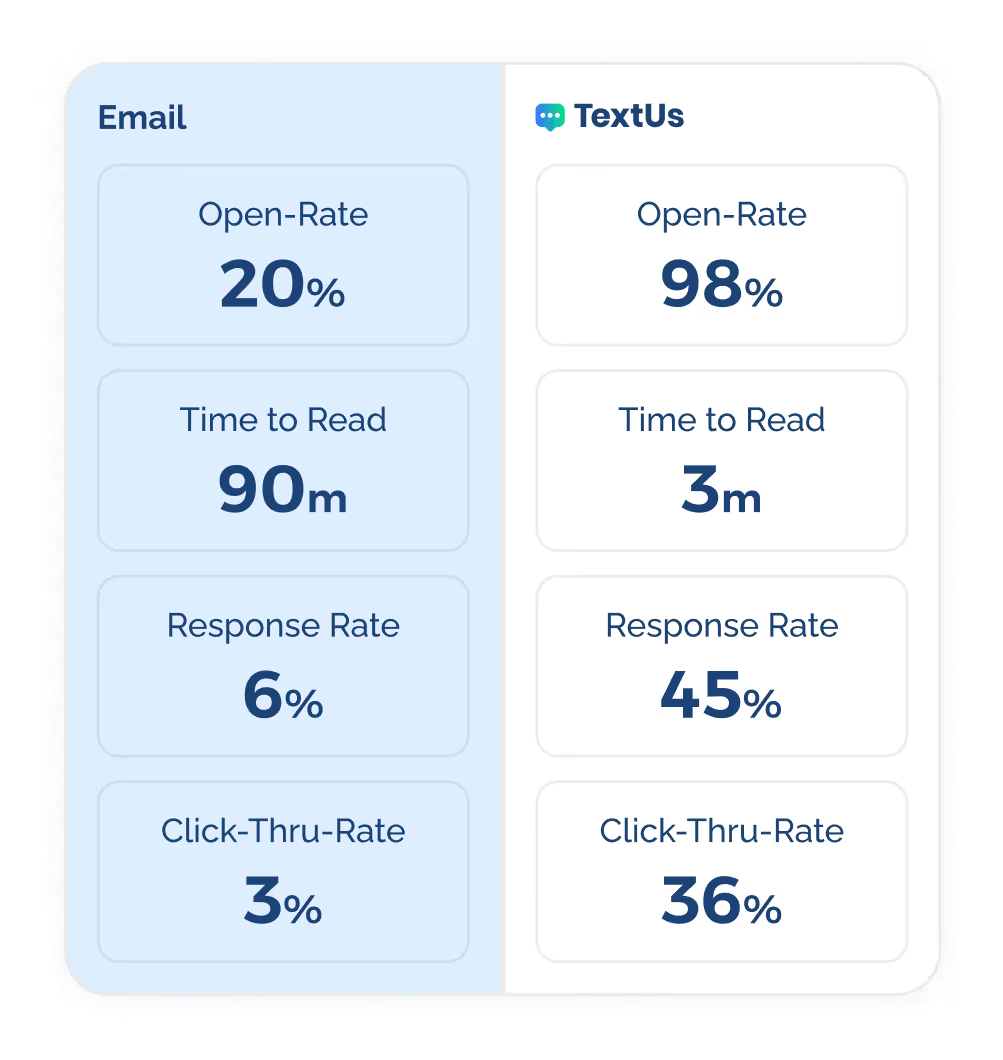
When customers notice your updates right away, they respond faster, and your entire communication flow moves at a smoother pace.
Texting software also supports your operations in managing missed appointments, slow follow-ups, and manual outreach that can drain time and revenue.
Overall, stronger customer satisfaction becomes the biggest long-term payoff. People appreciate communication that is respectful of their time.
Features to Look for in a Business Messaging Platform
The texting service you use affects everything from how quickly your team responds to how easily you automate routine communication.
Here are the key texting features worth focusing on when evaluating any SMS marketing service.
Two-Way Messaging Capabilities
Customers should be able to reply, ask questions, and continue the conversations.
You need a shared inbox that keeps messages organized, assigns conversations when needed, and prevents threads from getting lost across personal mobile devices.
It keeps everyone on the same page when multiple people handle customer conversations.
Automation, Triggers, and Drip SMS Campaigns
High-quality SMS marketing software handles repetitive manual tasks automatically.
Appointment reminders, onboarding flows, follow-ups, and order updates should run on predefined triggers.
SMS automation saves time, reduces human error, and keeps customers informed even when multiple team members are busy.
Contact Segmentation and Personalization Tools
Effective messaging relies on delivering targeted messages to your contacts instantly.
SMS segmentation tools help you group contacts by behavior, location, purchase history, interests, or lifecycle stage. Personalization improves client engagement and strengthens customer relationships.
Integrations With CRM and Marketing Platforms
Your messaging data becomes far more powerful when it connects to the other tools you already use. These may include your CRM, calendar, help desk, marketing software, or SMS gateway.
CRM integrations help your team track conversations, update customer profiles, and maintain accurate contact information.
Templates, Scheduling, and Mass Text Messaging
A strong business texting app makes repeat messages easier to send.
Message templates provide saved messages for common texts, such as appointment reminders, quote follow-ups, payment notices, event updates, review requests, and support replies.
Scheduling helps you plan messages ahead of time. You can send reminders before appointments, time promotions around business hours, and follow up when customers are more likely to respond.
Mass messaging allows you to reach large groups without sending each text one by one. It works well for announcements, offers, weather updates, hiring campaigns, service notices, and reactivation campaigns.
Analytics, Reporting, and Conversion Tracking
Data plays a major role in improving your communication strategy. A quality platform shows delivery rates, response rates, link clicks, and conversion outcomes.
These insights help you understand what works, what needs adjustment, and where opportunities exist to refine your messaging approach over time.
Scalability and 10DLC Support
The best SMS service should be equipped to grow with your business. Support for 10DLC requirements makes sure your messages are delivered reliably and stay compliant with carrier rules.
Scalability allows you to increase volume, expand teams, and build more advanced workflows without outgrowing your system.
How to Set Up Business SMS for Your Brand
An effective SMS messaging strategy starts with a solid foundation. To help you get started, here is a quick breakdown of how you can equip your business with a texting system:
1. Choose the Right SMS Provider
You need a text message marketing platform that supports reliable delivery, helps you stay compliant with carrier requirements, and makes everyday communication easy for your team to manage.
If you want a provider built for enterprise texting rather than a general-purpose messaging tool, TextUs is the best SMS marketing platform.
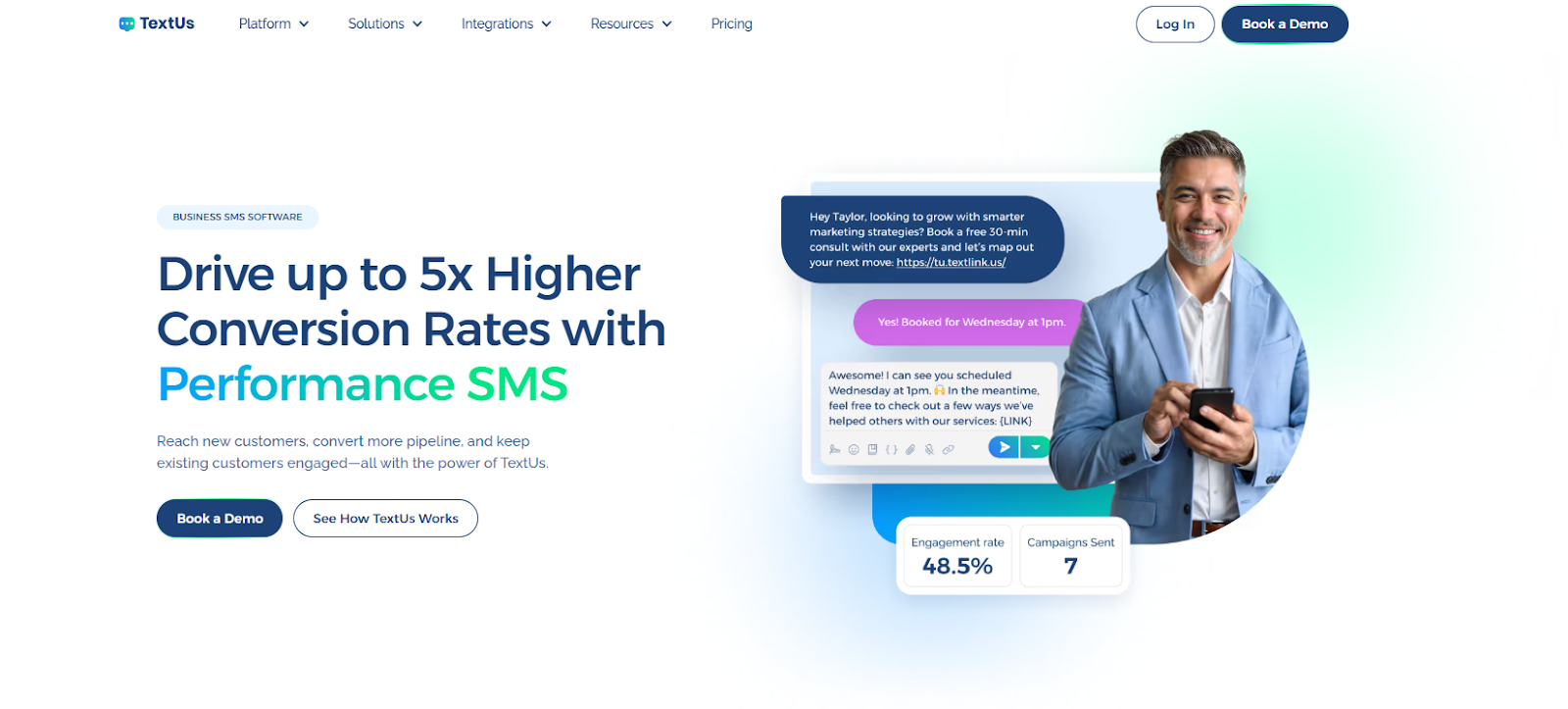
It's designed for fast-paced teams that rely on timely communication, and offers the tools you need to manage conversations at scale without losing the personal touch.
Below are the key features that make TextUs a strong choice for business SMS:
- Real-time two-way conversations: Enable conversational texting through a shared inbox
- Robust automation tools: Automated workflows, follow-ups, reminders, and scheduled messages help you stay consistent
- Group text messaging: Send updates, reminders, announcements, and campaign messages to selected contact groups without losing personalization.
- Click-to-text and Chrome extension: Text directly from where you already work, and no switching of platforms just to start a conversation
- Advanced segmentation and personalization: Messages can be tailored based on conversation history or customer behavior to keep outreach relevant
- Analytics and reporting: Access to delivery data, engagement metrics, and campaign performance insights
- CRM integrations: Native integrations with platforms allow you to sync contacts, track activity, and maintain communication records
- Scalability and 10DLC compliance: Supports compliant messaging routes and scales easily as your communication volume grows
As your business grows, your messaging needs will expand as well. A platform built for scalability makes sure you never outgrow your communication system.
Book a demo with TextUs today!
2. Select the Best Number Type
The business number you choose affects your message speed, compliance requirements, and the overall impression customers get when they receive your texts.
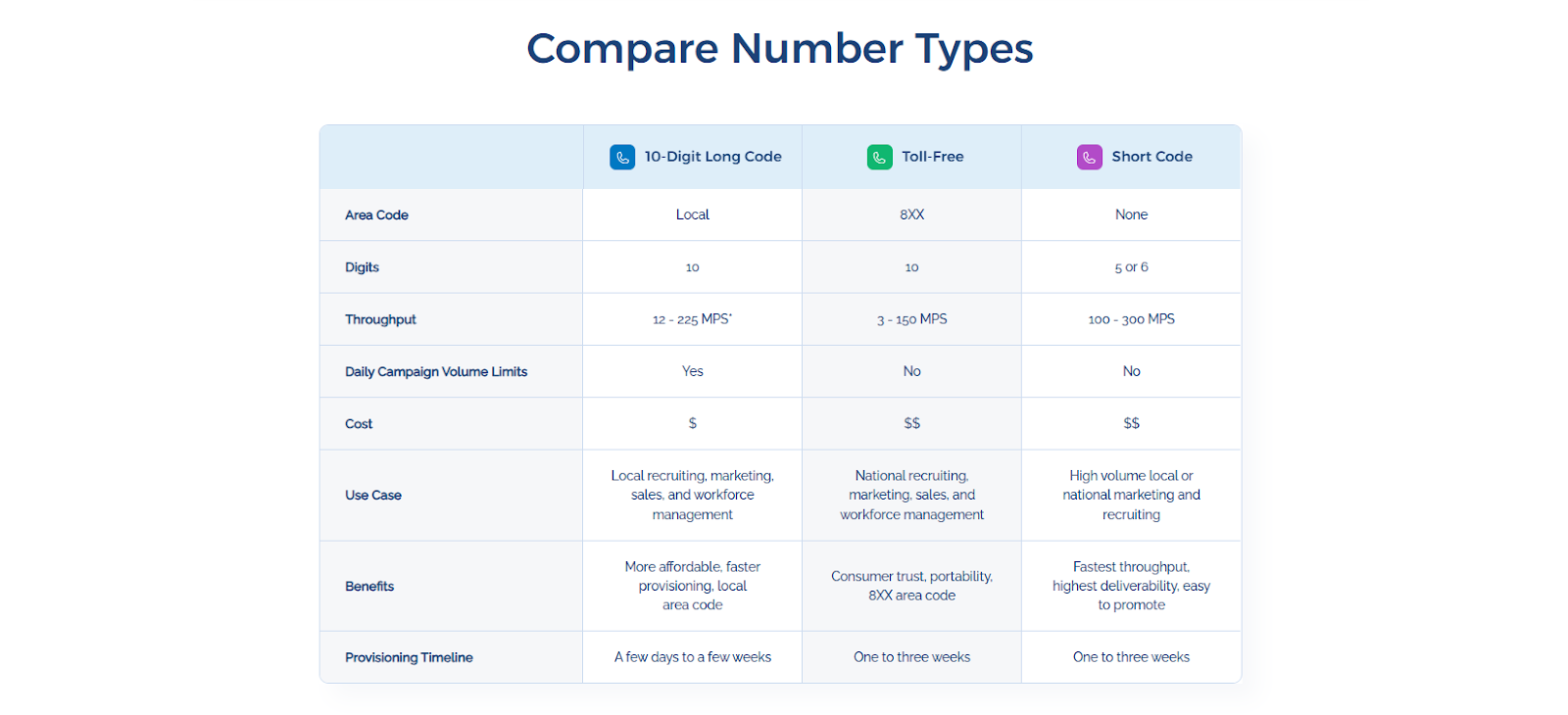
If your communication focuses on high-volume outreach or widespread service areas, a toll-free number is more universal. It handles larger traffic without the stricter filtering that local numbers sometimes face.
If your SMS strategy centers on mass texting, time-sensitive alerts, or security codes, a short code is a good choice. It delivers messages quickly and consistently, even when volume spikes.
If your main priority involves conversational messaging with customers, a 10DLC local number is the best fit.
10DLC messaging volume also depends on your organization’s TCR trust score and carrier approval level.
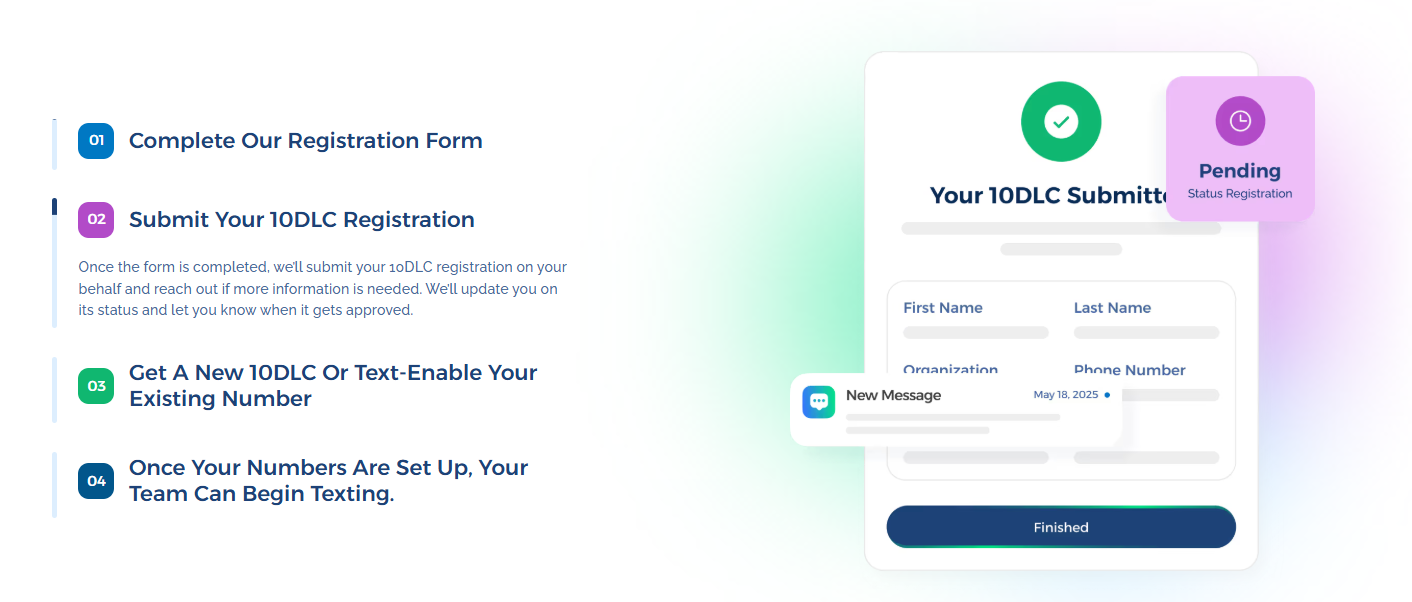
Ready to get your SMS number set up? TextUs handles the registration for you. Book a demo today!
3. Create SMS Contact List and Manage Opt-Ins
A successful SMS strategy starts with a permission-based contact list, especially when you start managing unlimited contacts across different segments.
Customers need to agree to receive your messages, and your business needs a reliable way to record that consent.
The easiest place to add contacts to your list begins with the touchpoints you already use. Website popups, checkout pages, scheduling systems, in-store prompts, and customer portals all present natural moments to request SMS permission.
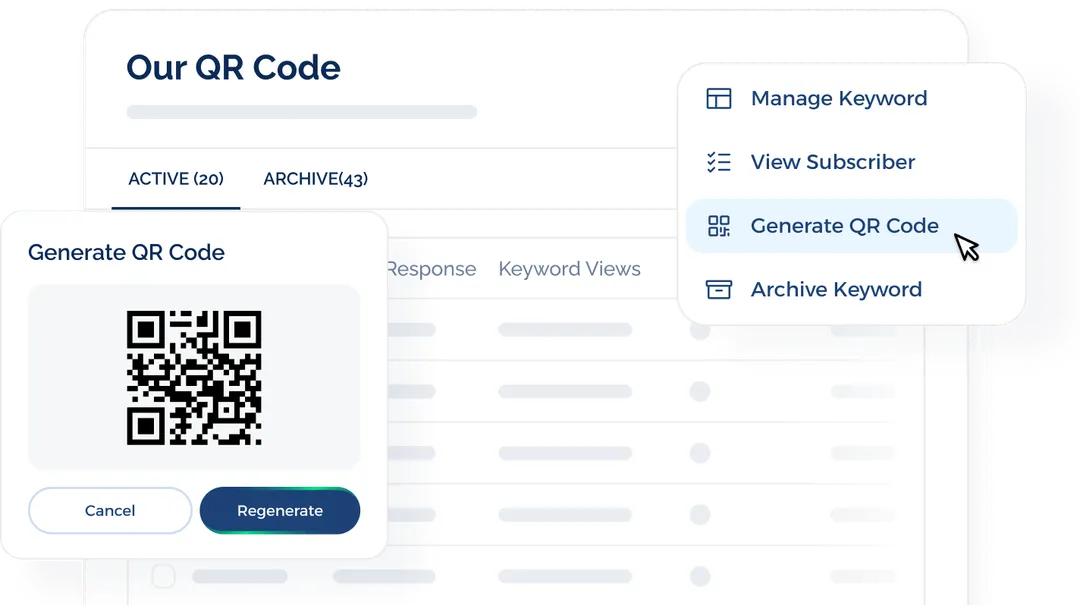
Strong SMS opt-in practices protect your brand and make sure you only send personalized messages to people who want to hear from you.
When customers see value in receiving messages about reminders or exclusive offers, they are more likely to opt in.
Maintaining your list matters just as much as building it. Numbers change, permissions expire, and people occasionally unsubscribe.
You need to keep your database clean to improve SMS deliverability and protect your reputation with carriers.
4. Set Up Automated Responses and Workflows
Canned responses and automated workflows handle the routine communication your team should not have to manage manually.
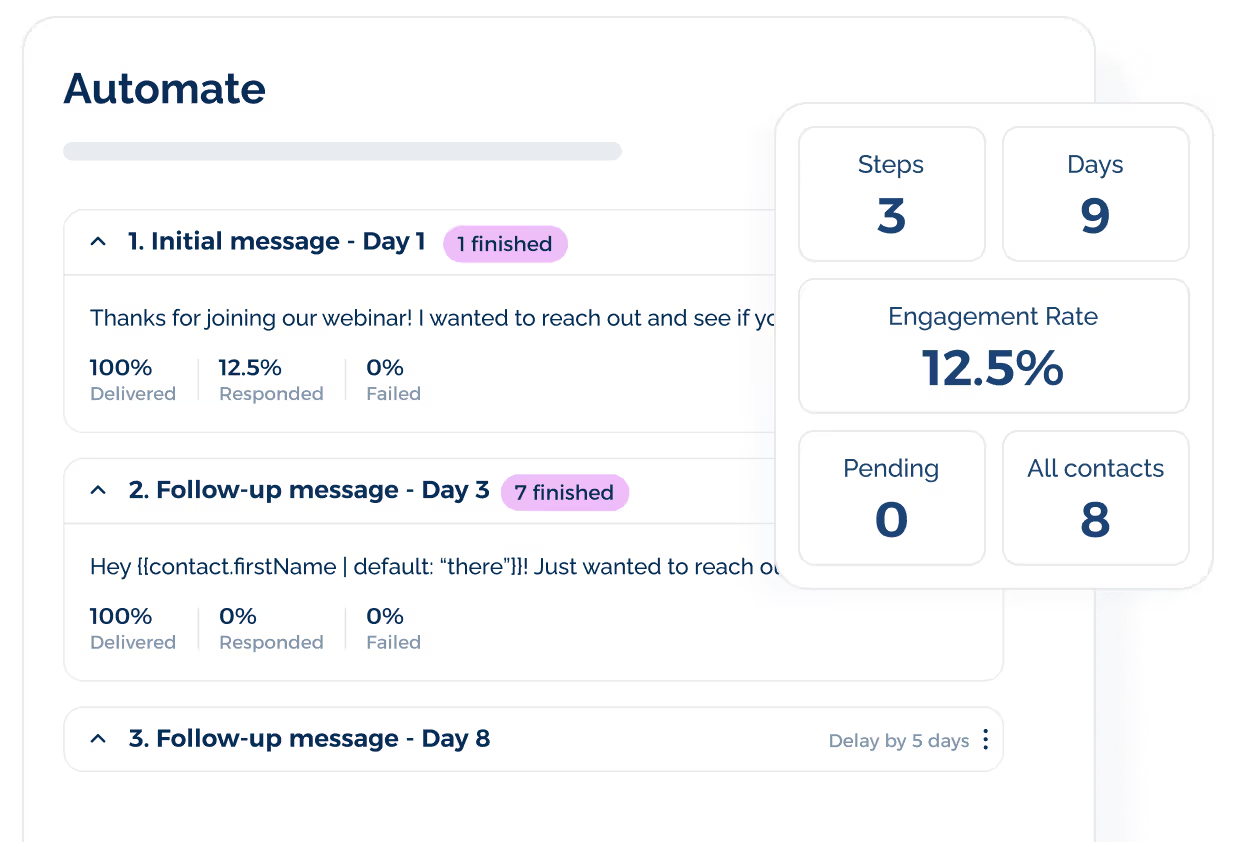
Customers still receive SMS messages customized to their preferences, while your sales team doesn't feel the constant pressure of keeping up with every single interaction.
The best place to start involves identifying the moments in your customer journey that repeat every day. Appointment reminders, follow-ups, onboarding sequences, delivery updates, and re-engagement messages all follow predictable patterns.
Once those touchpoints are mapped, SMS marketing automation keeps everything running on schedule without relying on your team to send each message.
Automation also helps create consistency. Every customer receives the same level of clarity and attention, even during your busiest hours.
5. Create Message Templates
Text messages leave you little space to work with, so every word needs purpose. Your goal is to sound conversational and helpful while giving customers what they need to take the next step.

Customers read texts quickly, often while multitasking. Short sentences, simple wording, and one call to action produce the strongest response.
Tone plays a major role as well. Templates should reflect your brand personality without slipping into scripted or robotic language. Friendly, direct phrasing builds trust and keeps real-time conversations approachable.
Personalization is the final piece. Names, appointment times, order details, or relevant context make your mass texting strategy feel tailored rather than looking like a generic broadcast text.
6. Integrate SMS With Existing Marketing Channels
SMS becomes even more powerful when it supports multiple communication channels you already use. Customers enjoy a smoother experience when every touchpoint is coordinated.
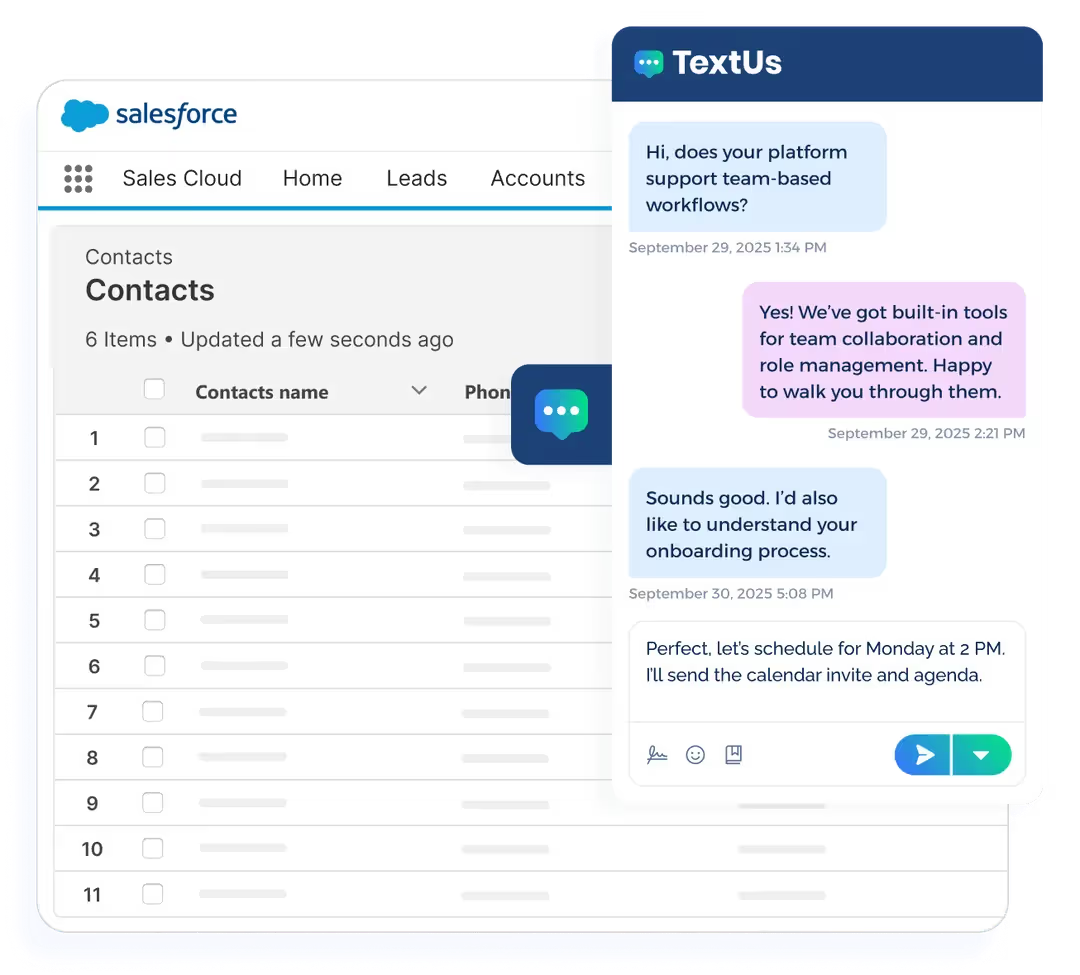
Email marketing, for example, handles long-form content well, while SMS sends reminders or time-sensitive nudges. A promotion introduced by email often sees higher conversions when SMS follows up with a short prompt.
Your website and paid ads also connect naturally with SMS. Lead capture forms, landing pages, and checkout flows turn into stronger conversion points when SMS opt-ins are included.
Customers stay informed throughout their journey, and your team gains more reliable contact methods for follow-ups or updates. This results in a more connected funnel from first touch to final purchase.
7. Incorporate Visuals on Your Campaigns
SMS is great for quick updates, but some campaigns need more than plain text.
MMS messages let you add images, audio files, GIFs, short videos, flyers, product photos, coupons, or event graphics.
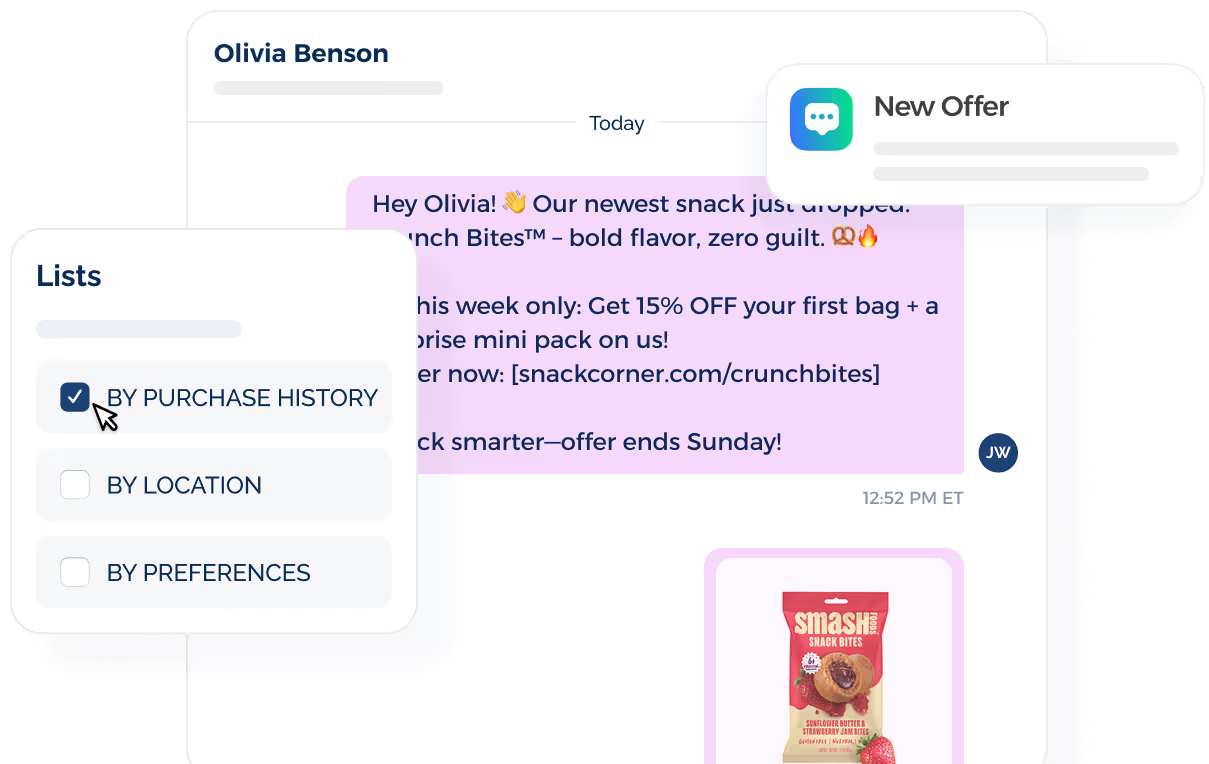
Multimedia messages work best when they add context that customers can understand at a glance. You can use them for limited-time offers, appointment instructions, product launches, hiring updates, service reminders, and event promotions.
Using SMS and MMS together gives you more flexibility. You can send simple text updates for reminders, then use visuals for campaigns that need stronger context or branding.
MMS can also support brand consistency. It allows you to use approved colors, logos, and design templates, so every campaign looks polished and recognizable.
8. Stay Compliant With SMS Rules and Carrier Requirements
Business SMS has rules around consent, opt-outs, number registration, and message content.
Before you send messages, you need a process for collecting permission, documenting consent, and honoring unsubscribe requests.
TextUs supports compliance with TCPA, CTIA guidelines, and other U.S. messaging regulations. The platform is built with safeguards such as automatic opt-out management, consent tracking, and message rate controls.
Every message includes clear opt-out language, so recipients know how to stop future texts. If someone replies “STOP,” TextUs automatically removes them from future messaging, which reduces manual cleanup for your team.
TextUs also helps protect your sender reputation as your texting program grows. With opt-out handling, consent records, and rate controls in place, your team can manage higher message volumes while staying aligned with carrier expectations.
Stop Missing Revenue-Driving Moments and Modernize Outreach With TextUs
The gaps in your communication can affect revenue, reputation, and the overall customer experience.
TextUs is a business texting service built for real conversation and real business needs. It supports fast two-way texting, smart automation, team coordination, and CRM integrations that keep everyone in sync.
You gain a unified space to manage communication, answer customer questions, collect customer feedback, and create personalized messages.
Instead of forcing teams to adapt to rigid systems, TextUs adapts to the pace of customers. With texting, conversations, and contact activity in the same app, teams can respond faster and stay aligned.
A stronger communication strategy paves the way for stronger growth. TextUs positions your brand to reach people faster and operate with confidence as your customer base expands.
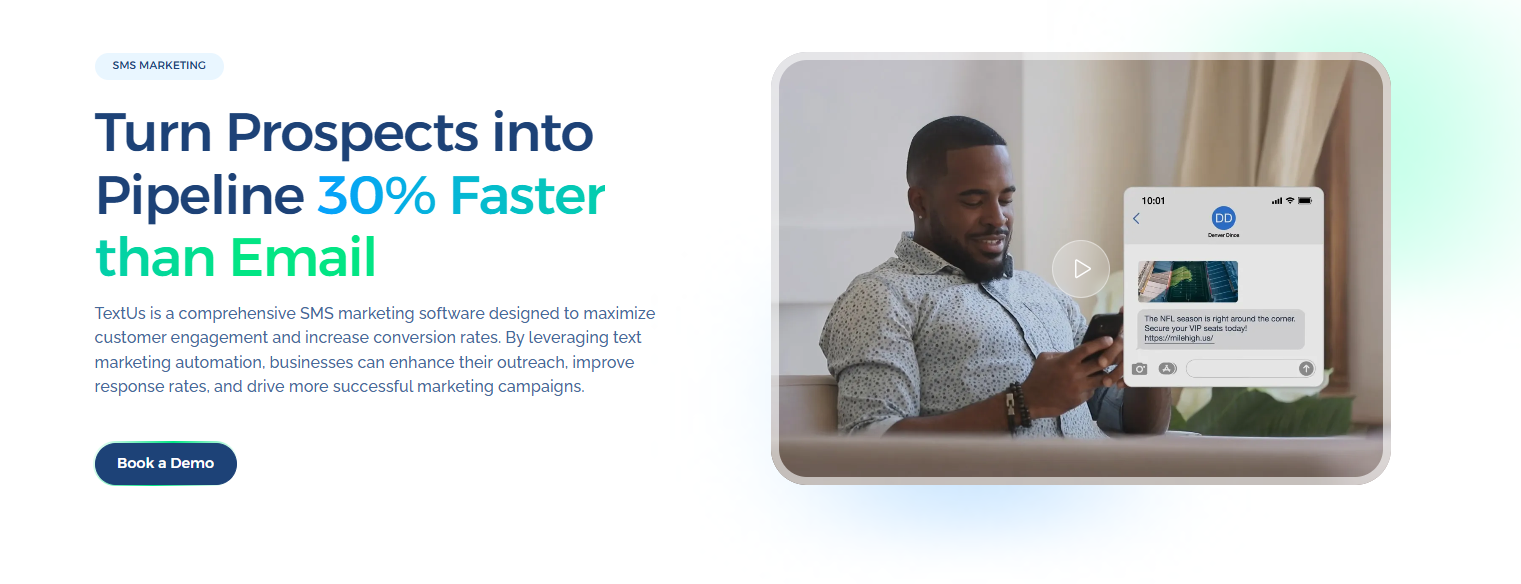
Book a demo with TextUs today and experience SMS built for high-impact business use!
Continue Reading



Frequently Asked Questions
What is a business SMS?
Business SMS is text messaging used by companies to communicate with prospects, customers, and internal teams through a texting platform.
Common business text messaging examples include appointment reminders, delivery updates, payment notices, quote follow-ups, review requests, hiring updates, and customer support messages.
Should I turn on RCS business messages?
RCS messaging is useful if you want richer mobile conversations with branded sender details, images, buttons, suggested replies, and interactive message options.
It can add more context than standard SMS, especially for product updates, appointment steps, promotions, or support flows.
Which age group texts the most?
Younger adults tend to text heavily, but SMS is not limited to one age group. Many working-age adults also rely on texting because it is quick and easy to check between tasks.
For business communication, the better question is not only who texts the most. It is whether customers prefer fast updates, short reminders, and simple replies from the teams they work with.
Business Texting
Built for Results
Create and convert pipeline at scale through industry leading SMS software