
6 Best GTM Automation Tools for Revenue Teams in 2026
6 Best GTM Automation Tools for Revenue Teams in 2026: 1. TextUs 2. Clay 3. Apollo.io 4. n8n 5. HubSpot 6. Outreach.

Written by
Adam Hamdan
Published
September 4, 2026

Go-to-market work breaks down when sales and marketing teams run on disconnected tools. Leads sit in one system, outreach happens in another, and reporting lives somewhere else entirely.
GTM automation tools fix this by connecting data, engagement, and workflows so revenue teams spend less time on manual handoffs and more time closing.
This guide covers six platforms worth evaluating in 2026, what each one does best, and how to choose the right fit for your team.
TL;DR
Here are the six best GTM automation tools in 2026:
- TextUs: Best for SMS-based sales engagement
- Clay: Best for data enrichment and custom data workflows
- Apollo.io: Best for prospecting and contact data
- n8n: Best for technical GTM teams building custom automation
- HubSpot: Best for CRM-native marketing and sales automation
- Outreach: Best for enterprise sales execution and forecasting
What Are GTM Automation Tools?
GTM automation tools are software platforms that handle the repetitive work involved in taking a product to market. They cover tasks like finding and enriching contact data, running outreach sequences, routing leads to the right sales reps, and syncing activity back to the CRM.
Instead of a person copying records between systems, automated workflows move data and trigger actions on their own.
Most GTM teams build a stack from a few categories. Data enrichment tools pull contact and company records from multiple data providers. Sales engagement platforms run email, SMS, and call outreach.
Workflow automation tools connect everything else, moving enriched data between the CRM and outreach tools based on triggers and routing rules. Marketing automation handles nurture campaigns and lead scoring on the inbound side.
The newest additions to the category are AI agents that monitor intent signals, score prospects, and draft outreach with less manual setup. Some platforms focus on one job and do it well, while others try to cover the full sales process in a single platform.
The right mix depends on your team size, technical resources, and where your current process leaks the most time. The six tools below cover the strongest option in each category.
6 Best GTM Automation Tools in 2026
Each of the six tools below covers a different layer of the GTM stack, from engagement and enrichment to workflow orchestration. Here is what each one does and who it fits best.
1. TextUs: Best for SMS-Based Sales Engagement
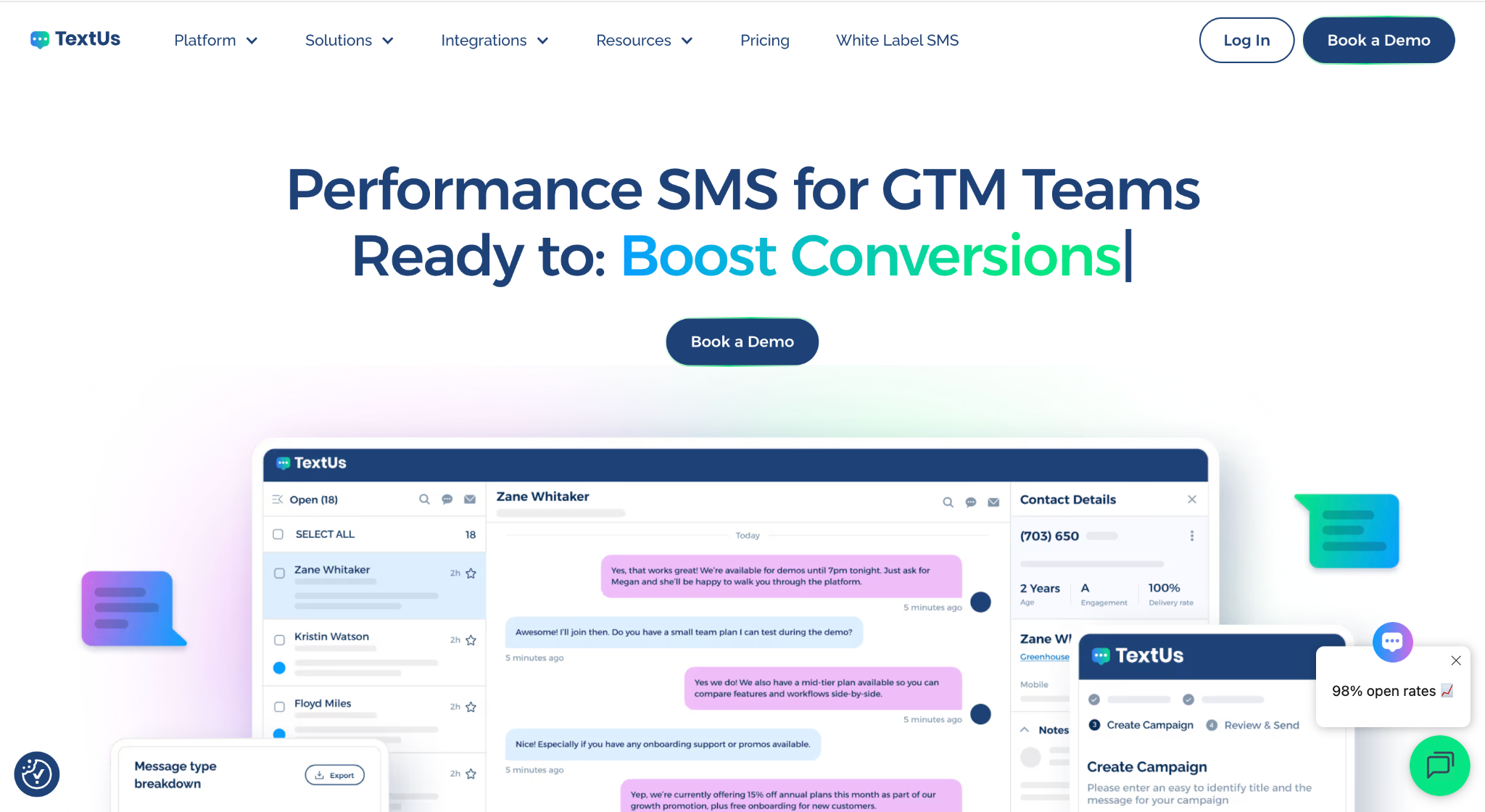
TextUs is a business texting platform built for revenue teams that need a faster channel than email.
Sales teams use it to reach prospects through two-way SMS, backed by a shared team inbox, bulk campaigns, and native integrations with Salesforce, HubSpot, Bullhorn, and other CRM and ATS systems.
The automation layer is where TextUs stands out for GTM work. The Message Quality Indicator scores every message in real time and flags spam-risk language before it goes out. Smart Delivery monitors opt-out rates and pauses campaigns that risk carrier blocking.
Contact Intelligence scores each contact as cold, warm, or hot based on engagement signals, so sales reps know who to prioritize without manual tagging.
Drip sequences, scheduled sends, and keyword-triggered auto-replies handle the routine outreach that would otherwise eat rep time.
For compliance-heavy teams, opt-out automation and consent tracking are built in, which matters for staying on the right side of the Telephone Consumer Protection Act (TCPA).
Analytics cover delivery, response rates, and click tracking, so revenue teams can measure texting performance alongside the rest of the GTM stack.
Want to see how TextUs fits your workflow? Book a demo and test it with your own use case.
2. Clay: Best for Data Enrichment and Custom Data Workflows
Clay is a data enrichment platform that connects more than 150 data providers into one workspace.
Instead of relying on a single database, GTM teams build enrichment pipelines in a spreadsheet-style interface, pulling contact and company records from multiple sources and pushing clean data into the CRM.
Its core method is waterfall enrichment. Clay queries data providers in sequence, and when one source misses, the next one fills the gap. This approach improves data accuracy and coverage compared to single-provider lookups.
Claygent, the built-in AI research agent, handles unstructured research tasks like scanning job listings, press releases, and company pages for details that standard databases miss.
Clay also tracks signals such as job changes and promotions, so teams can time outreach around real account activity. A native sequencer, ad audience syncing, and a Model Context Protocol (MCP) server that connects prospecting data to AI tools round out the platform.
Clay is a good fit for RevOps and technical GTM teams that want full control over their data workflows. It comes with a learning curve, and building effective pipelines takes some upfront investment.
3. Apollo.io: Best for Prospecting and Contact Data
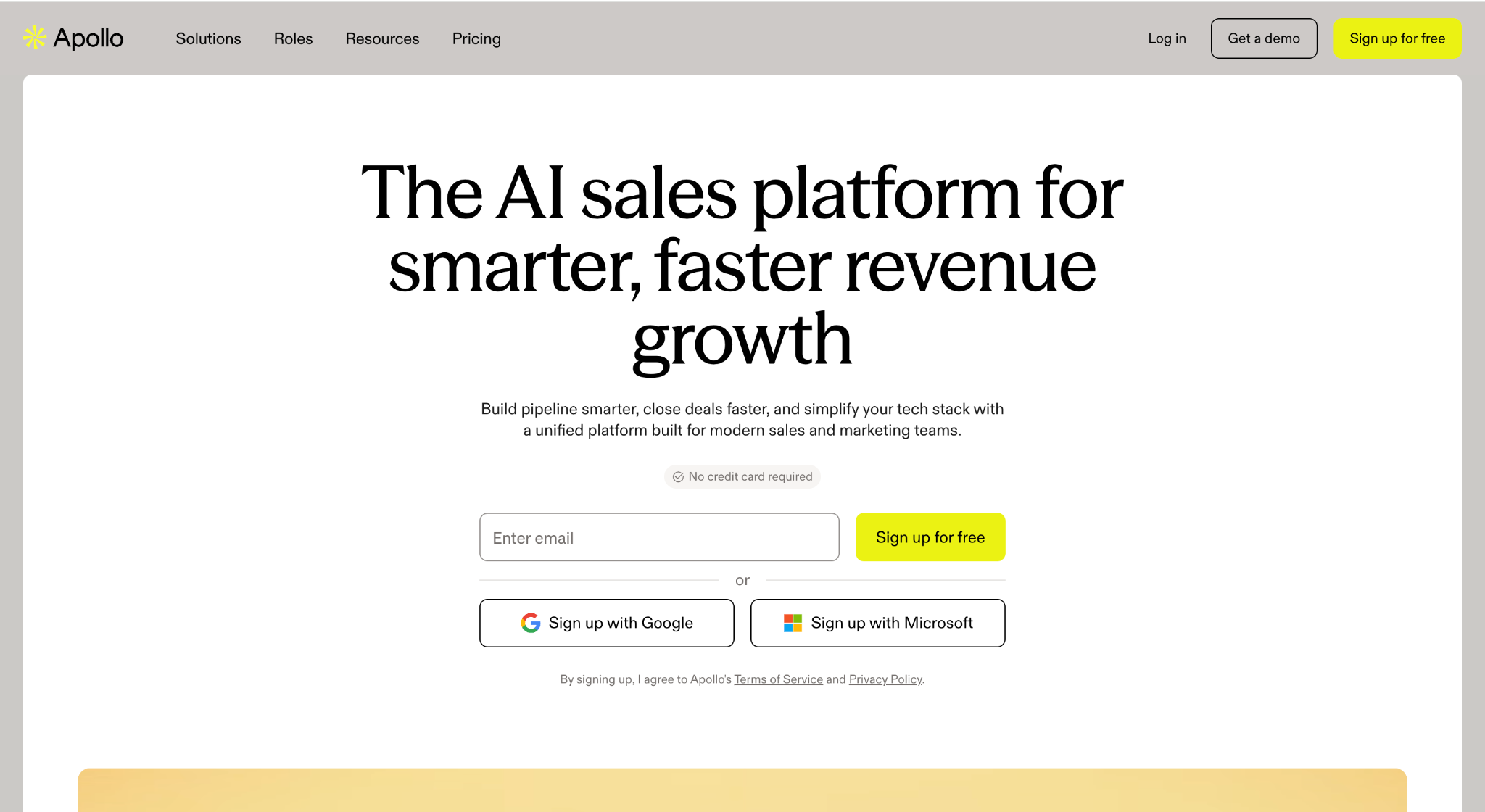
Apollo.io is a sales intelligence and engagement platform that combines a B2B contact database with built-in outreach tools.
The company reports a database of over 240 million contacts, searchable through more than 65 filters, including job title, industry, company size, and technologies used.
This makes it a practical starting point for sales teams identifying target accounts and building prospect lists.
Where Apollo differs from standalone data providers is the engagement layer. A sales rep can find a contact, verify their email, and enroll them in a multi-step sequence without leaving the platform.
Sequences run through email, phone, and LinkedIn tasks, with a built-in dialer and unified reporting. Intent data and job change alerts add timing context, flagging accounts that are researching relevant topics or contacts who moved into new roles.
Data enrichment keeps CRM records current, and native integrations with Salesforce and HubSpot sync activity automatically.
Apollo suits small and mid-sized sales and marketing teams that want prospecting, contact data, and outreach in a single platform rather than managing separate tools. New users may need time to become familiar with its broader feature set
4. n8n: Best for Technical GTM Teams Building Custom Automation
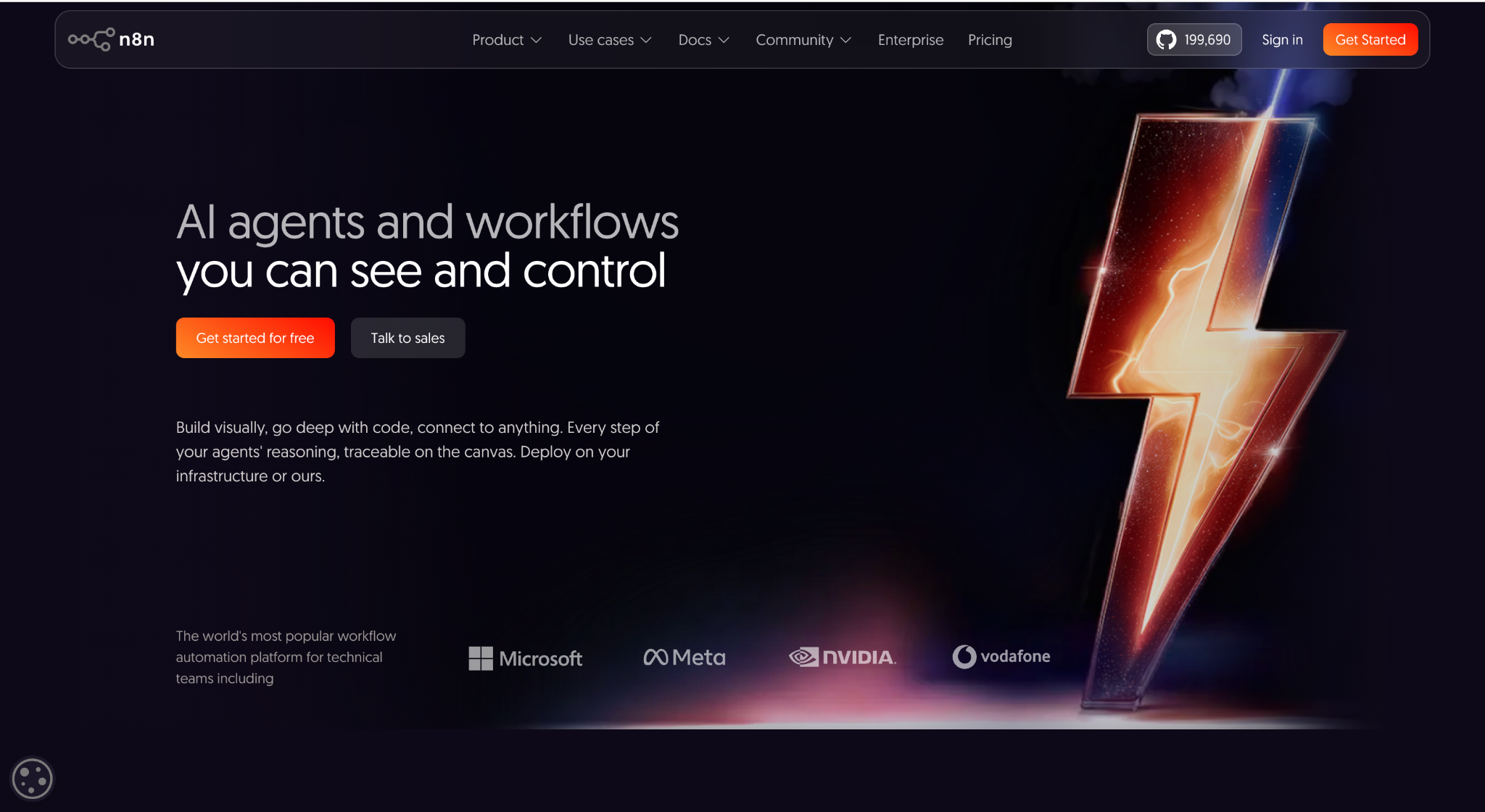
n8n is a workflow automation platform built around a visual node editor. Each node performs one task, such as enriching a lead, filtering records, or posting an alert to Slack, and nodes chain together into complex workflows with branching logic, loops, and error handling.
When a pre-built connector does not exist, teams can call any API directly or write custom JavaScript and Python inside the workflow.
The platform ships with more than 2,000 integrations and a native AI agent builder. Agents connect to models from OpenAI, Anthropic, Google, or self-hosted options, and n8n supports the Model Context Protocol for connecting workflows to external AI tools.
GTM teams use it for lead scoring, routing rules, CRM data sync, and enrichment pipelines that simpler no-code tools cannot handle.
The self-hosting option is the main draw for teams with strict data requirements.
n8n is not a beginner tool. It suits technical teams with engineering resources who want full control over their automation infrastructure and are comfortable maintaining their own workflows.
5. HubSpot: Best for CRM-Native Marketing and Sales Automation
HubSpot is a CRM platform that bundles marketing, sales, service, and operations tools into one ecosystem. For GTM work, its main advantage is that automation runs directly on the CRM data it manages.
A single workflow can score a lead, assign it to a rep, enroll it in an email sequence, and alert the team, all without moving records between separate tools.
The marketing automation side handles nurture campaigns, segmentation, and lifecycle stage changes through a no-code workflow builder with branching logic.
Sales Hub adds pipeline management, sequences, and meeting scheduling, while contact and company records update automatically as activity gets logged.
Breeze, HubSpot's built-in AI layer, covers three areas:
- Breeze Copilot assists with drafting and record summaries.
- Breeze Agents automate tasks like prospecting and content creation.
- Breeze Intelligence enriches contact and company records with firmographic data and buyer intent signals.
HubSpot suits sales and marketing teams that want their CRM, automation, and reporting in one ecosystem with a low learning curve. It works well for small and mid-sized revenue teams, and customer success teams can extend it with Service Hub.
6. Outreach: Best for Enterprise Sales Execution and Forecasting
Outreach is a sales engagement platform built for enterprise sales teams running high-volume, multi-stage deal cycles. Its core is sequences: structured, multi-step touchpoint series that combine automated emails, manual emails, phone calls, and LinkedIn tasks.
Once a prospect is enrolled, the platform handles scheduling and task queuing, pauses sequences when someone is out of office, and syncs all engagement activity back to Salesforce, HubSpot, or Microsoft Dynamics automatically.
Beyond sales outreach, the platform consolidates deal management, conversation intelligence, and forecasting into one system.
Its revenue intelligence features track how opportunities move through the funnel, flag stalled deals, and analyze buyer sentiment in replies so reps know which conversations need attention.
AI agents assist with account research, task prioritization, and drafting personalized messages based on engagement data.
Managers get visibility into which sequences, content, and rep behaviors drive meetings and pipeline generation, which helps standardize what works for large teams.
Note that Outreach does not include a contact database, so teams pair it with a separate data provider for prospecting.
Outreach suits mid-market and enterprise organizations with dedicated RevOps support. Setup and administration may require more internal support, and pricing is custom, quoted per seat based on the plan.
Benefits of GTM Workflow Automation
GTM workflow automation removes the manual handoffs that slow revenue teams down. When a lead comes in, automated GTM workflows can enrich the record, score it, route it to the right rep, and trigger sales outreach within minutes instead of days.
That speed matters, since response time is one of the strongest predictors of whether a prospect converts.
Beyond speed, automation improves data quality. Manual entry produces stale records, duplicate contacts, and missing fields, while automated syncing keeps company data current in every system at once.
Clean data then makes every downstream activity more effective, from targeting to reporting.
AI-powered features have expanded what these automation capabilities cover. Message scoring, contact prioritization, and research agents now handle judgment calls that used to require a person.
The result is more consistent pipeline generation with the same headcount, since reps spend their time on conversations rather than administration.
For outbound sales teams especially, automation turns a process that depends on individual discipline into one that runs the same way every time.
How to Choose the Right GTM Automation Tool
Start with the gap in your current process, not the longest feature list. A team losing deals to slow follow-up needs a sales engagement tool, while a team working from incomplete contact data needs enrichment first.
Matching the tool to the actual bottleneck matters more than buying the broadest platform.
Check the integration fit next. A GTM automation platform only delivers value if it connects cleanly with your existing tools.
Confirm native CRM integration, look at how data moves between systems, and be wary of platforms that require replacing tools your team already relies on.
Then weigh technical resources honestly. Powerful platforms with custom logic and advanced workflows need someone to build and maintain them. If your team has no engineering resources, a simpler tool that runs on day one will outperform a flexible one nobody configures.
Test data accuracy before committing. Run a sample of accounts you know well through any platform that provides contact data or intent signals, and check how accurate the output is for your specific market.
Lastly, look at the pricing structure, not just the starting price. Credit-based and per-seat models scale differently, so estimate costs at the volume you expect a year from now.
Matching GTM Tools to Your Team Size
Team size changes what tools make sense.
Small teams get the most from platforms that bundle several jobs into one product, since a two-person operation cannot maintain custom pipelines. An all-in-one prospecting tool or a CRM with built-in automation covers the basics without dedicated ops support.
Mid-sized GTM teams usually add specialization. A dedicated enrichment platform pulling from multiple data sources, a texting or email engagement layer, and a workflow tool connecting them gives more control than any single product.
Enterprise teams operate differently.
Enterprise sales teams often layer revenue intelligence or a revenue analytics platform on top of the execution stack to track deal health and forecast accurately, and account intelligence tools help coordinate outreach when buying committees span many stakeholders.
At this scale, expect custom pricing from most vendors, since costs depend on data volume, seats, and integration requirements.
The evaluation question shifts from features to governance: who maintains the workflows, who owns data quality, and how new tools fit security requirements.
Put Texting at the Center of Your GTM Stack with TextUs
The fastest channel in most GTM stacks is still the least automated one. While email sequences and enrichment pipelines get the engineering attention, texting often runs manually or not at all.
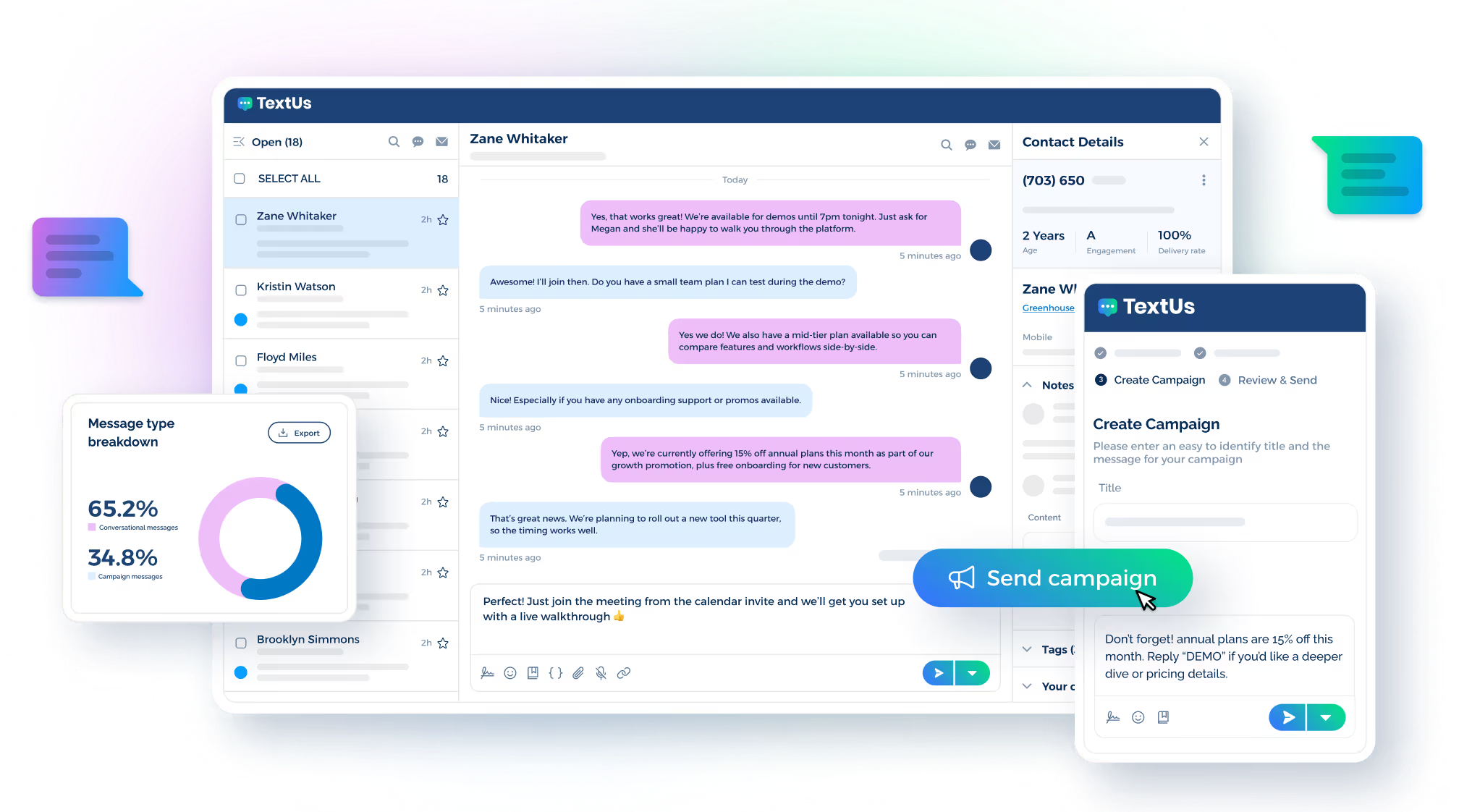
TextUs closes that gap with campaigns, drip sequences, and AI-backed message scoring built specifically for revenue teams.
With native integrations for Salesforce, HubSpot, Bullhorn, and other CRM and ATS platforms, TextUs fits into the stack you already run instead of adding another disconnected tool.
Conversations sync back to your records, opt-out compliance runs automatically, and analytics show exactly how texting performs against your other channels.
Book a TextUs demo to see the platform with your own use case and get your questions answered live.
Continue Reading



Frequently Asked Questions
What is a GTM tool?
A GTM tool is software that supports go-to-market execution, covering tasks like finding prospects, enriching contact data, running outreach, and reporting on the pipeline.
Most fall into a few categories: sales engagement platforms like TextUs, data enrichment tools, workflow automation platforms, and CRM systems. Teams typically combine two or three into a connected GTM stack.
What are examples of GTM tools?
Common examples include TextUs for SMS-based sales engagement, Clay for data enrichment, Apollo.io for prospecting and contact data, n8n for custom workflow automation, and HubSpot for CRM and marketing automation.
Each covers a different layer of the go-to-market process, from finding buyers to engaging and tracking them.
What are the top five automation tools?
The top five GTM automation tools in 2026 are TextUs, Clay, Apollo.io, n8n, and HubSpot.
TextUs leads for teams that want to add texting as an automated engagement channel, since SMS reaches prospects faster than email and integrates directly with existing CRM and ATS systems.
Business Texting
Built for Results
Create and convert pipeline at scale through industry leading SMS software