
How to Hire Remote Employees in 10 Simple Steps
Remote hiring delays? Learn how to hire remote employees, from sourcing to onboarding, and keep candidate communication moving with TextUs.

Written by
Adam Hamdan
Published
November 23, 2026

Remote hiring allows you to reach top talent beyond your local area. Recruiting someone who will work remotely requires adjustments to traditional hiring.
Without face-to-face interactions, you need to assess candidates' skills, coordinate interviews in different time zones, and determine whether they can meet your expectations.
You also have to consider employment arrangements, legal requirements, and how new employees will adjust to remote work.
In this guide, we'll walk you through the benefits and practical steps on how to hire remote employees, from finding qualified candidates to onboarding new hires.
TL;DR
- Remote hiring broadens the talent pool, supports specialized recruitment and wider business coverage, and may reduce office costs while attracting applicants seeking flexibility.
- Learn how to hire remote employees through communication, work policies, budgeting, sourcing, screening, interviews, assessments, offers, and onboarding.
- Employers hiring remote employees across states or countries must review local employment laws, payroll and tax obligations, worker classification, work authorization, and employment arrangements.
- TextUs is texting software that helps you handle multiple remote positions, organize candidate conversations, and reduce the time spent on repetitive outreach.
Benefits of Hiring Remote Employees
A limited number of qualified applicants in your area can slow down recruitment, especially for positions that require specific skills.
In fact, ManpowerGroup's 2026 Talent Shortage Survey found that 72% of employers worldwide struggle to fill open positions.
When recruitment is restricted to a specific physical location, you may miss out on skilled professionals who have the right qualifications but live elsewhere.
Here are some benefits of hiring remote workers that make it an attractive option for employers:
- Access to more qualified candidates: Reach professionals outside your local area without requiring them to relocate.
- Greater hiring flexibility: Recruit for specialized positions in regions where qualified candidates are more available.
- Potential cost savings: Reduce office-related expenses such as workspace, utilities, and equipment.
- Extended business coverage: Recruit employees in different time zones to support customers beyond regular business hours.
- More attractive job opportunities: Offer flexible work arrangements that appeal to candidates who prefer to work from home.
To make the most of these benefits, you need a recruitment approach that reaches the right candidates, keeps them informed, and evaluates their qualifications fairly.
How to Hire Remote Employees in 10 Steps
Remote recruitment requires a specific approach to finding qualified candidates and selecting the right people for your business. Here are 10 steps to guide you through the process.
Step #1. Prioritize Candidate Communication
Different time zones, missed calls, and unread emails lead to unanswered invitations, scheduling conflicts, and slow response times throughout the remote hiring process.
Text marketing is a direct and convenient way to communicate with potential candidates and start conversations.
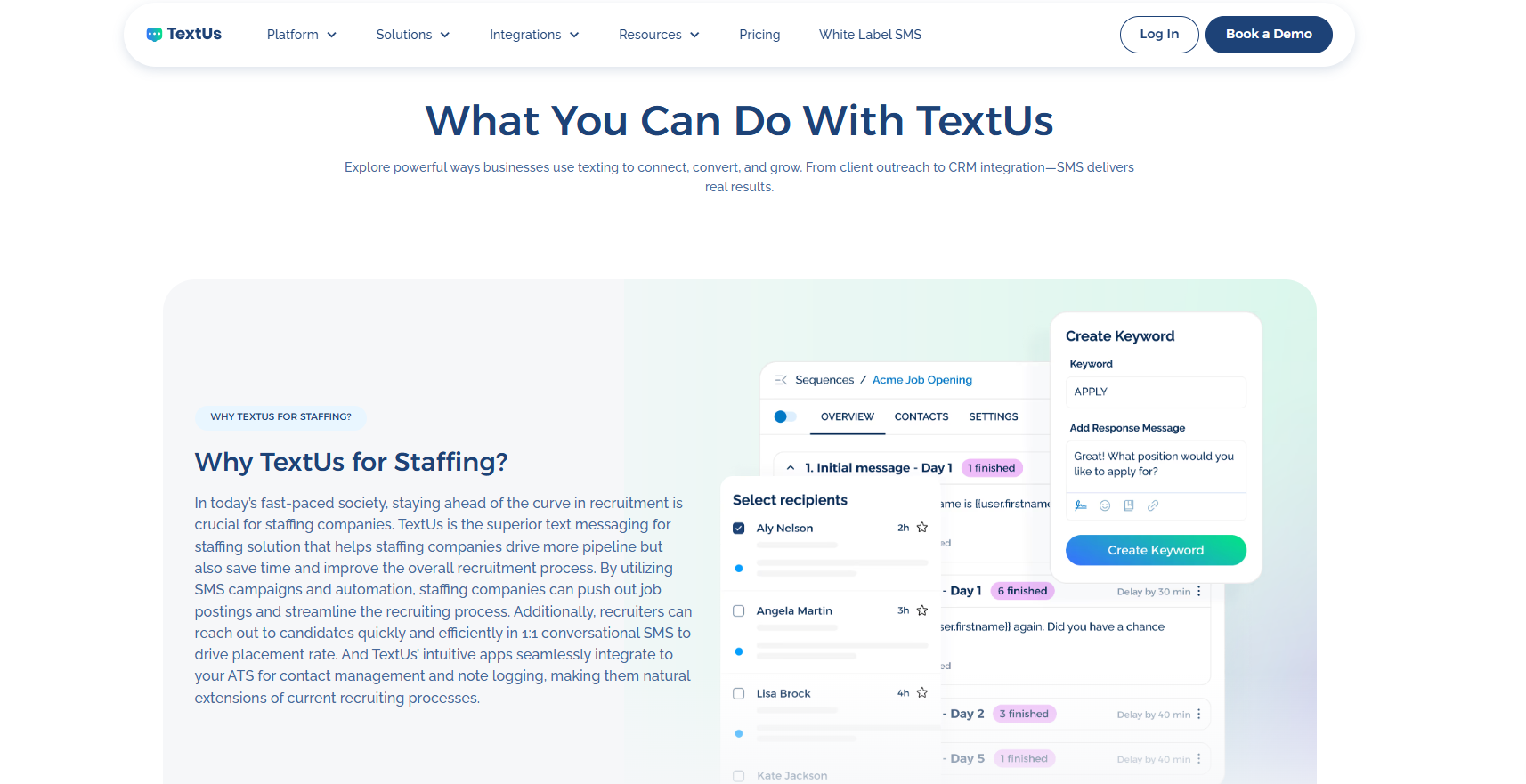
TextUs is text recruiting software designed to help you text candidates and maintain contact throughout recruitment.
It lets you automate initial outreach, segment contacts, and send targeted SMS campaigns that attract interest in your remote roles.
You can also personalize recruiting text messages with candidate details and schedule follow-ups for those who haven't responded. This allows you to reach more people without sending every message individually.
Instead of spending hours on cold calls and emails, you can focus on conversations with the best talent who are interested in your opportunities.
Book a demo with TextUs today to see how business texting can help you connect with remote talent and improve your recruitment efforts!
Step #2. Define Remote Work Policies and Expectations
A remote position may sound flexible, but candidates need to know what that means before they apply.
Some expect to work from anywhere and choose their own hours, while your business requires fixed schedules or a specific remote work environment.
Before recruitment begins, define whether the position is fully remote and which regions employees may work from. Set expectations for working hours, time zone availability, meeting attendance, and real-time collaboration with colleagues.
Remote work policy also needs to address equipment, internet requirements, data security, and how employees report their progress. These guidelines help establish accountability without constant supervision.
Step #3. Set a Competitive Remote Hiring Budget
Remote hiring reduces office expenses, but it doesn't mean recruitment will cost less. Salaries, employee benefits, equipment, and other expenses still need to fit your budget.
Start by researching salary ranges for similar positions based on experience, skills, and location. If you plan to recruit from different regions, decide whether to offer competitive salaries based on local market rates or a standard pay range.
Beyond compensation, consider the costs of job advertisements, recruitment tools, background checks, laptops, software subscriptions, and internet allowances.
If you recruit international employees, you may also need to account for local taxes, statutory benefits, and payroll services.
Step #4. Write an Effective Remote Job Description
A vague job description may attract applicants who lack the required qualifications or have different expectations about the role.
Start with a recognizable job title and explain the main responsibilities, expected results, and skills needed for the position.
Distinguish mandatory job requirements from preferred qualifications to avoid discouraging capable applicants.
The job posting should specify eligible work locations, required time zone overlap, salary range, and equipment arrangements. Explain whether employees need to work independently or coordinate with colleagues throughout the day.
You may include details about your company culture, career growth opportunities, and how remote colleagues stay connected.
Step #5. Find Candidates Through Remote Recruiting Channels
Posting on general job boards alone may not attract the right applicants. Platforms like LinkedIn and Indeed allow you to advertise your job opening to a wider audience.
Remote-specific job boards also help you find remote workers who are actively searching for flexible opportunities.
For specialized positions, you can explore industry communities, professional networks, and employee referrals. Freelance platforms like Upwork are worth considering for short-term projects or contract-based roles.
Your existing talent pool is another source worth exploring. Previous applicants and former employees may already have the qualifications you need.
Step #6. Screen Candidates for Remote Work Skills
Beyond technical qualifications, you need candidates who can manage responsibilities, meet deadlines, and stay productive without constant supervision.
You can start screening with questions about their experience working remotely, the tools used, how they organize their daily tasks, and examples of similar projects they've completed.
Assess their communication skills during initial conversations. Check if they're able to explain their experience, provide direct answers, and share updates without constant follow-ups.
Ask for examples of managing priorities, meeting deadlines, and requesting support while working independently.
Step #7. Conduct Structured Virtual Interviews
Virtual interviews allow you to evaluate candidates without arranging in-person meetings. But different time zones and limited face-to-face interaction affect how well you assess applicants.
You need to keep your interview process consistent by preparing a standard set of questions and using a scorecard to compare responses.
Before each remote interview, share the meeting link, schedule, and agenda to make sure candidates know what to expect. Ask them how they would handle missed deadlines, resolve disagreements with colleagues, or request support when their manager is unavailable.
These situations reveal their communication style, problem-solving approach, and ability to collaborate in a distributed work environment.
Leave time for candidates to ask questions about the role, work arrangements, and expectations. After each interview, compare their answers against the position's requirements rather than relying on first impressions.
Step #8. Evaluate Candidates With Skills Assessments
A candidate may perform well during an interview, yet can't deliver the same results on the job.
Practical skills assessments allow you to see how applicants approach tasks and solve problems before making a hiring decision.
You can choose assignments that reflect the actual responsibilities of the position. For example, customer service applicants could respond to a sample customer complaint, while marketing candidates could prepare a short campaign brief.
For positions that require collaboration with remote teams, consider exercises that involve written updates, task handoffs, or shared documents.
Keep assignments short and provide the same instructions, deadlines, and evaluation criteria to every applicant. You may consider paid assignments for more extensive assessments to show respect for the candidate's time.
Step #9. Extend Offers and Complete Hiring Requirements
Once you've identified the right candidate, the next step is to present an offer that explains the terms of remote employment.
Salary and benefits are important, yet candidates also need to understand their work arrangements before making a decision.
The offer letter needs to specify compensation, employment type, working hours, start date, and approved work locations. Include details about company-provided equipment, internet allowances, and any required office visits.
If you hire remotely across states or countries, review the applicable compliance requirements before finalizing the offer.
Once the candidate accepts the offer, complete the required employment documents and arrange payroll setup.
Step #10. Onboard New Remote Employees
Without in-person guidance, new team members may struggle to find resources, understand workflows, or know who to contact for support.
Before their first day, you need to arrange equipment delivery, software access, and login credentials. Provide an onboarding guide with company policies, important contacts, communication channels, and a schedule for their first week.
Introduce new hires to their colleagues through virtual meetings and assign an onboarding buddy who can answer questions. Explain how tasks are assigned, where documents are stored, and how progress is reported in a remote environment.
It's important to set clear goals for the first 30, 60, and 90 days. Regular check-ins allow you to review progress, address concerns, and provide feedback as employees adjust to their responsibilities.
Legal Requirements for Hiring Remote Employees
Employment laws can vary depending on where candidates live and work. Here are some key considerations when hiring remote staff in different states or countries:
- Local employment laws: Minimum wage, working hours, paid leave, and required employee benefits.
- Payroll and taxes: Employer registration, state tax requirements, income tax withholding, and Social Security contributions.
- Worker classification: Employee versus independent contractor status based on IRS classification guidelines and applicable local laws.
- Work authorization: Legal employment eligibility, identification documents, and Form I-9 verification for U.S. employees.
- Employment arrangements: Direct employment, local business entities, or Employer of Record (EOR) services for international hiring.
For example, if you're a U.S. business that hires an employee in another state, you need to register for payroll taxes and follow that state's employment laws, even without a physical office space there.
Before extending job offers, review the tax, payroll, and employment requirements that apply to each employee's work location. This helps you meet your legal obligations and avoid compliance issues during recruitment.
Close the Communication Gap in Remote Recruitment With TextUs
A successful remote hire takes more than finding someone with the right qualifications. You also need to maintain candidate interest and provide a positive experience from application to offer.
In a modern workforce, even a small communication issue leaves qualified applicants unsure about their next steps.
TextUs helps you maintain consistent communication from candidate screening to final hiring decisions. Its shared inbox allows you to assign conversations, review previous interactions, and coordinate responses without losing track of candidate questions.
Message templates support consistent updates, while integrations with supported applicant tracking systems (ATS) connect conversations with recruitment records.
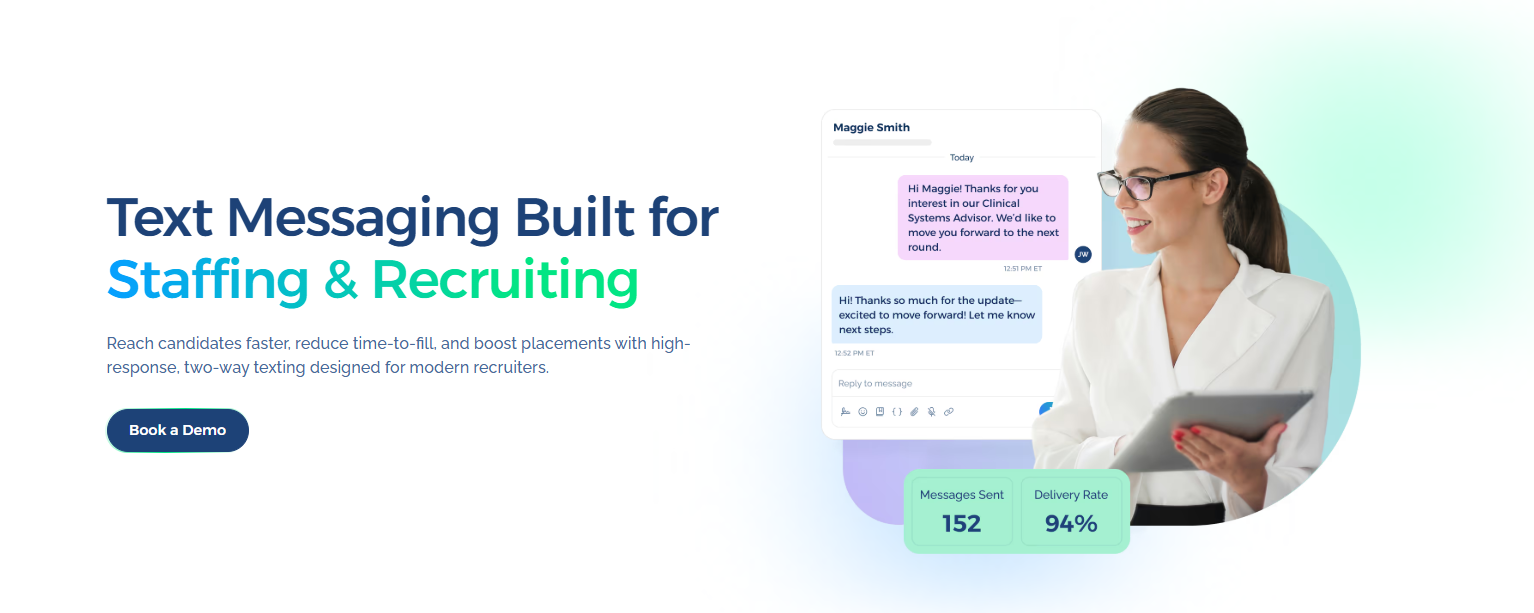
Make every candidate interaction count, regardless of where you're hiring. Book a demo with TextUs today to discover how texting can help you secure qualified remote employees!
FAQs About How to Hire Remote Employees
What is the 70/30 rule in hiring?
The 70/30 rule in hiring is a guideline that suggests considering candidates who meet around 70% of a role's qualifications and can learn the remaining 30% through training.
Essential qualifications, relevant experience, and a strong work ethic remain important factors when evaluating applicants.
What is the best way to hire remote employees?
A well-organized recruitment process starts with clear job requirements, targeted candidate sourcing, and structured interviews.
You also need to consider several important factors, such as candidate availability, work location, and communication needs.
What skills are important when hiring remote workers?
Remote employees have to possess good communication, time management, problem-solving skills, and the ability to work without constant supervision. They also need to manage deadlines, use collaboration tools, and stay accountable for their responsibilities.
What is the difference between hiring full-time employees and freelancers?
Hiring full-time employees offers many benefits for businesses that need long-term support, consistent schedules, and ongoing responsibilities.
Freelancers are often hired for specific projects or services, although their legal classification depends on the actual work relationship and applicable laws.
Continue Reading



Frequently Asked Questions
Business Texting
Built for Results
Create and convert pipeline at scale through industry leading SMS software