
How SMS Segmentation Can Personalize Your Campaigns
Learn how you can use SMS segmentation to personalize your campaigns. Discover how TextUs can help you simplify SMS marketing segmentation.

Written by
Adam Hamdan
Published
November 2, 2026

SMS segmentation is what separates good text marketing from great.
When you group your audience based on shared interests, behaviors, or demographics, you send relevant messages that feel more personal.
Segmented campaigns consistently outperform generic mass texts in open rates, click-throughs, and conversions because they speak to what each customer values.
In this article, we’ll break down the different types of SMS segmentation and how you can use it to strengthen customer relationships and improve campaign performance.
TL;DR
- SMS segmentation groups subscribers by shared data, behaviors, or preferences so you can send more personalized messages to each audience.
- Customer segmentation uses demographic, location, behavior, lifecycle, interest, and psychographic data to organize subscribers into groups.
- Strong SMS segmentation relies on accurate data, manageable groups, thoughtful automation, compliance, personalization, list maintenance, and regular testing to improve campaign performance.
- TextUs turns broad SMS outreach into focused conversations by grouping contacts and tailoring campaigns around how each audience engages.
How SMS Segmentation Works
SMS segmentation works by dividing your SMS subscriber list into smaller, more defined groups so you can send each one messages that match their needs or behaviors.
It starts with data. You can collect details like demographics, purchase history, engagement rates, or customer preferences through sign-up forms, surveys, or integrations with your CRM system.
This information helps you identify patterns and create segments for potential customers, repeat buyers, or inactive subscribers.
Once your segments are defined, your SMS marketing software uses tags or filters to organize your audience automatically. You can then send targeted messages that align with each group’s interests.
Types of Customer Segmentation
The best approach depends on your goals, the data you have, and how you plan to communicate with your customers.
Below are the most common types of SMS segmentation you can use to improve customer experience:
Demographic Segmentation
This is one of the simplest ways to segment your list. It involves dividing your SMS subscribers based on basic traits such as age group, gender, income, occupation, or language preferences.
These details give you a starting point for tailoring messages that match who your customers are.
If you're a retail brand, you might promote back-to-school sales to parents, send style updates to younger shoppers, or highlight premium products for higher-income groups. You can also use loyalty status or average order value as filters to identify your most valuable customers.
This highly targeted messaging works well because it relies on information you already collected during sign-up or through customer profiles within your SMS program.
Geographic Segmentation
Location-based segmentation focuses on where your customers are located. It allows you to tailor messages based on a subscriber’s geographic location, city, state, region, or zip code.
This approach is useful if you have physical locations, regional promotions, or location-specific services.
If you run a restaurant chain, you might text a lunch special only to customers near a certain branch.
If you’re in the retail industry, you could promote a seasonal sale in warmer climates while advertising winter gear to shoppers in colder areas.
Even service-based businesses can use location data to remind local clients about appointments or events happening nearby through this communication channel.
Behavioral Segmentation
This method focuses on how each subscriber interacts with your brand, such as their actions, habits, and engagement patterns.
When you understand what people do rather than just who they are, you can send messages that match their intent and timing.
You can group existing customers based on purchase history, website activity, or response to previous campaigns.
As a clothing store, one segment might receive a thank-you discount code, while a salon could remind clients when it’s time to book their next appointment.
This type of segmentation helps build brand loyalty and increase conversions since your messages feel timely. Instead of sending the same messages to everyone, each text reflects where the customer is in their buying journey and what they’re likely to do next.
Lifecycle Segmentation
Every customer goes through different lifecycle stages, from signing up to becoming a repeat buyer, to potentially going inactive.
This segmentation method lets you tailor messages to each stage and effectively segment your audience based on lifecycle activity.
You might send a warm welcome message to new subscribers, share product recommendations with recent buyers, or offer a special promotion to re-engage inactive customers.
You can even integrate segmentation with your loyalty program to reward loyal and VIP customers.
It also helps maintain consistent customer engagement over time, since your audience receives messages that fit where they are rather than months ago.
Using segment filters and segmentation rules can help automate this process to keep your lists organized.
Interest-Based Segmentation
This approach helps you connect with your audience on a more personal level by focusing on specific interests. It uses engagement data collected from surveys, purchase history, browsing activity, or interactions with past campaigns.
If you're a beauty brand, you can create campaigns that send skincare tips to customers who previously bought moisturizers.
At the same time, another group receives makeup-related offers through SMS and marketing channels like email or social media.
Psychographic Segmentation
Psychographics focus on what drives your customers, which is their values, beliefs, lifestyles, and motivations. It helps you understand why people buy, not just who they are.
This type of segmentation is used for building emotional connections in text message marketing.
If you're a fitness brand, you might send motivational messages to subscribers focused on wellness and discipline, while another group receives lifestyle content centered around balance and self-care.
Best SMS Segmentation Strategies to Maximize Reach
Successful SMS segmentation depends on how well you manage your data, craft your messages, and maintain consistency on all campaigns.
Here are some proven best practices to help you get the most out of your efforts.
Collect Quality Data
The quality of the information you collect affects how well you can group and target your audience.
Start by gathering details that help you understand who your SMS subscribers are, including new customers, and how they interact with your brand.
Sign-up forms, purchase histories, customer surveys, and website activity are all valuable sources.
It’s also important to keep your data up to date. People change phone numbers, move to new locations, or shift their interests over time.
Regularly reviewing and refreshing your subscriber information makes sure your SMS content stays accurate and effective.
Keep SMS Segments Manageable
While it’s tempting to create segments based on every possible customer trait, over-dividing your audience makes campaign management complicated.
The goal is to improve personalization, not overwhelm your process. Focus on a few criteria and create specific groups based on customer behavior, location, or purchase activity.
A few well-defined groups are far more effective than dozens of narrow ones that are hard to track and maintain. It also helps to regularly review your segment filters to see which ones deliver results and increase engagement.
Use Automation Wisely
SMS marketing automation can take your SMS marketing from manual and time-consuming to efficient.
With the right text automation software, you can automatically group contacts, trigger messages based on behavior, and update segments based on real-time actions.
For example, automation can identify when a customer makes a purchase and instantly move them into a recent buyer segment. It can also detect cart abandonment and trigger a re-engagement message after a set period.
These automated workflows save time while ensuring that each subscriber receives relevant content at the right moment.
However, automation should improve your SMS marketing strategy, not replace thoughtful communication. Always review your workflows and test your triggers to make sure messages sound personal rather than repetitive.
Stay Compliant With Regulations
SMS compliance isn’t the most exciting part of texting, but it’s one of the most important. You must follow regulations to protect your business and your customers while keeping your campaigns legitimate.
The Telephone Consumer Protection Act (TCPA) in the United States sets rules for how businesses can collect, store, and use customer data. These laws also require that subscribers give consent before receiving text messages and that they can easily opt out at any time.
When building your SMS contact list, always use opt-in forms and keep records of when and how each subscriber gave permission.
Avoid purchasing contact lists or sending unsolicited messages, as these practices can lead to fines and damage your brand reputation.
It’s also a good idea to review your messaging practices regularly to ensure ongoing compliance, especially if you operate in multiple marketing channels with different legal requirements.
Personalize Without Overdoing It
Personalization is what makes customer engagement through SMS so powerful. But there’s a fine line between being personal and being intrusive. Crossing that line can quickly push customers away.
A little personalization goes a long way. You can use first names in messages, reference product launches, or tailor special offers based on past interactions.
These small touches show that you understand your target subscribers without making your texts overly targeted or uncomfortable.
What you want to avoid is referencing details that customers didn’t intentionally share or sending irrelevant messages. This can come off as invasive and damage trust.
Keep Lists Clean and Updated
Over time, phone numbers change, customers lose interest, or contacts become inactive. If you don’t maintain your list, you risk sending messages to people who aren’t engaged or to numbers that no longer exist.
Regular list maintenance keeps your campaigns efficient and your costs under control. You need to remove duplicate entries, invalid numbers, and subscribers who haven’t interacted for a long time.
It’s also a good practice to monitor subscriber engagement and periodically invite subscribers to confirm their interest. A simple “Still want to hear from us?” message can help ensure your list stays current and compliant.
Test and Refine Your Segments
Even the best SMS marketing strategy needs regular testing and fine-tuning. Customer behavior changes and trends evolve, so what worked before might not perform as well today.
Start by running A/B testing on your other marketing channels and segmented campaigns. Try a few ways of testing message length, time zone delivery, or entry point offers to see which combinations perform best.
You can track metrics like open rates, click-through rates, average order value, and opt-out rates to identify what resonates with your audience.
You should also pay attention to feedback and patterns of customer segmentation. If a certain segment consistently underperforms, it might need different messaging or be combined with another group.
Likewise, if you notice new opportunities, don’t hesitate to create SMS campaigns that capture fresh interest or promote upcoming local events and loyalty programs.
Experience the Simplicity of SMS Marketing Segmentation With TextUs
Are you still sending the same text to everyone on your SMS list? Without smart segmentation, your SMS marketing efforts lose impact, and you miss the chance to start real conversations that lead to action.
TextUs makes it easy to segment your audience and send the right message at the best time.
With intuitive tools and built-in automation, you can group contacts by location, behavior, or where they are in the customer journey.
This SMS platform helps you personalize messages, whether you’re nurturing leads, following up with loyal customers, or coordinating with your team.
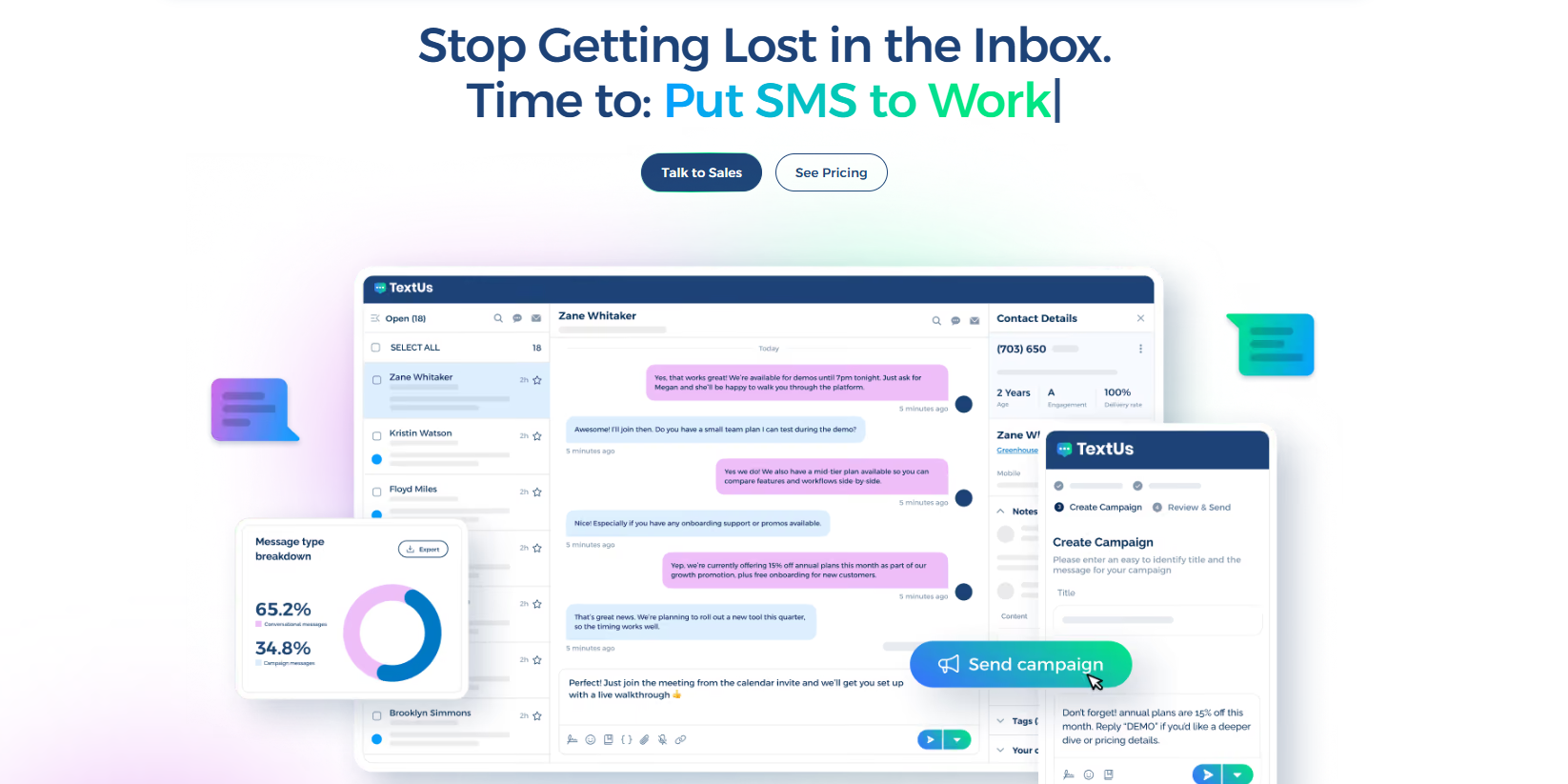
Start building stronger relationships and get more out of every message you send. Book a demo with TextUs and see how it can drive sales and turn simple texts into two-way conversations!
FAQs About SMS Segmentation
What is an SMS segment?
An SMS message segment refers to how text messages are counted and billed by mobile carriers. A single SMS typically includes up to 160 characters when using standard text encoding (GSM-7).
If your message exceeds that limit or includes special characters or emojis, it’s automatically split into multiple segments.
Each segment counts as a separate message for billing and delivery purposes, something to consider when offering early access promotions or limited-time deals.
What are the four types of segmentation?
The four primary types of segmentation used in marketing are:
- Demographic segmentation: Groups customers based on age, gender, income, or occupation
- Geographic segmentation: Targets people based on where they live or work
- Behavioral segmentation: Focuses on customer actions such as purchase history or engagement
- Psychographic segmentation: Groups people based on lifestyle, interests, values, or motivations
Each type gives you a unique way to understand your audience and tailor your text marketing strategy.
Is SMS marketing illegal?
No. SMS marketing is legal in the U.S., but businesses must follow federal rules such as the TCPA.
Certain automated marketing texts require prior express written consent, and you must honor valid requests from recipients who want to stop receiving messages.
What are the SMS benchmarks by industry?
SMS benchmarks vary by industry, audience, and message type.
TextUs reports a 34.7% overall text reply rate in its 2026 SMS Engagement Report, with industry and role benchmarks available to help you compare your SMS performance.
Continue Reading



Frequently Asked Questions
Business Texting
Built for Results
Create and convert pipeline at scale through industry leading SMS software