
Conversational Customer Engagement: Benefits and Strategies
Learn the benefits of conversational customer engagement and how TextUs supports two-way customer conversations through business texting.

Written by
Adam Hamdan
Published
August 6, 2026

Customer engagement is not measured only by whether a business sends a message. What matters is whether customers can respond, get the help they need, and continue the conversation easily.
Conversational customer engagement helps you create meaningful conversations through SMS marketing, live chat, email, social media, and other channels.
Each exchange gives customers a chance to ask questions, receive support, and move forward without starting over.
In this article, we’ll explain the importance of conversational customer engagement, which use cases provide the most value, and how the right approach can improve your service.
TL;DR
- Customer engagement helps you provide faster support, create convenient experiences, strengthen relationships, increase conversions, improve retention, and collect useful first-party data.
- Conversational customer engagement supports lead follow-up, scheduling, sales, onboarding, support, retention, feedback, and re-engagement.
- A conversational engagement strategy starts with having a goal, mapping customer needs, choosing the right channel, connecting data, balancing automation with human support, and improving through regular review.
- TextUs turns one-way SMS into real conversations, so you can respond faster, manage replies in one shared inbox, and keep customers moving toward the next step.
Why Is Conversational Customer Engagement Important?
Customers now expect business communication to be fast and easy to continue. Here are the key benefits of using two-way conversations to meet changing customer expectations:
Give Customers Answers Faster
Direct conversations remove several steps between a customer’s question and your response.
Instead of sending long email threads, waiting in phone queues, or completing another form, customers can ask for what they need through one accessible channel.
Two-way texting makes these exchanges even more convenient. Customers don't need to download an app, sign into a portal, or stay connected to a live chat window.
With an SMS marketing platform like TextUs, customers can reply directly from their phones.
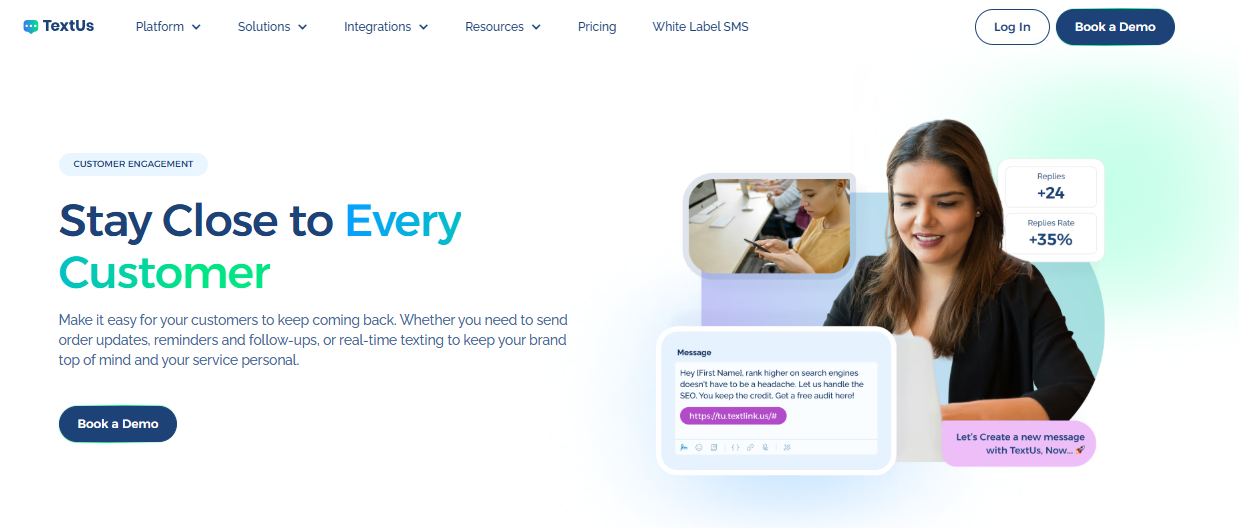
It brings inbound replies into a shared SMS inbox, where staff can view conversation history, assign messages, and respond from desktop or mobile.
This structure helps prevent unanswered texts and keeps ownership clear when several people manage customer communication.
Book a demo with TextUs today and start building meaningful interactions through texts!
Provide a Convenient Experience
Proactive engagement improves the customer experience as it lets people communicate in familiar language instead of working through complicated menus or support pages.
Customers can ask a direct question, explain what happened, and complete simple tasks within the same exchange.
A connected strategy also brings together multiple communication channels so customers can use the option that suits the situation.
Collect only the customer data needed for the stated purpose, document consent where required, and set limits or restrict access based on employee roles.
Build Stronger Customer Relationships
Customers are more likely to trust a business that listens, responds with care, and follows through on its promises.
Regular, human-like conversations show that you value the customer beyond the immediate sale. Over time, this will help you stay relevant without relying on constant promotions or generic outreach.
Increase Sales and Conversions
Customers often delay a purchase because they still have questions about price, availability, delivery, product fit, or booking options.
A direct conversation gives your sales team a chance to address those concerns before the customer leaves the website or abandons checkout.
Improve Customer Retention
Customer engagement should not stop after a purchase. Onboarding guidance, product education, usage check-ins, service reminders, and renewal notices allow customers to receive value throughout the relationship.
A strong post-purchase engagement strategy also gives you a chance to resolve early concerns before they lead to cancellation.
Provide Useful First-Party Data
Every exchange can reveal which products customers prefer, where they face problems, and why they may decide to leave.
You can collect data from direct customer responses instead of relying only on broad audience trends. Useful conversation data may include recurring customer inquiries, common objections, support issues, and product feedback.
Conversational Customer Engagement Use Cases
Conversational engagement can support customers at each stage. Below are common use cases that show how two-way communication can lead to measurable business outcomes.
Lead Follow-Up
A fast response after a form submission, missed call, or event sign-up keeps a prospect from losing interest.
Two-way messaging supports lead generation by giving your business a direct way to answer questions, qualify interest, and identify customer intent before the prospect moves to another option.
Appointment Scheduling
Customers can book, confirm, cancel, or reschedule appointments without waiting on hold.
Automated workflows provide immediate responses for basic scheduling requests, even outside normal business hours, while staff can step in when a customer needs another option.
Product Recommendations
A conversation helps your business learn what the customer needs before suggesting a product or service.
Details such as preferences, budget, and purchase history support more personalized interactions and help you deliver personalized recommendations that match the customer’s situation.
Abandoned Cart Recovery
A conversational message gives the customer a chance to raise customer queries, while human agents can address concerns that an automated reminder cannot resolve.
Texting can make cart recovery more conversational by allowing shoppers to explain what stopped the purchase directly.
You may answer questions about shipping, availability, payment, or product fit while the shopper is still considering the order.
Order Tracking
Customers often want to know when an order will ship, where it is, or what to do after a delay.
Messaging apps connected with order management platforms can provide status details and create seamless support when a delivery problem requires staff attention.
Customer Onboarding
Welcome conversations can guide new customers through account setup, product use, training, and the next required action.
Access to previous interactions helps your business send personalized messages based on the steps the customer has completed rather than repeating the same instructions.
Customer Support
Customers can use text, chat, or multiple channels to report an issue and receive an answer without a long phone call.
Automation can provide instant responses for routine tasks, such as password instructions or account updates, while support teams focus on cases that need investigation.
Support teams can sort customer queries by topic, urgency, or account type and assign them to the right staff member.
Complaint Resolution
A complaint requires more than a scripted apology. A direct conversation protects the human connection by giving the customer space to explain what went wrong.
Human support remains available for more complex scenarios that require judgment, compensation, or another form of resolution.
Payment Reminders
SMS payment reminders bring attention to failed payments, as well as upcoming or overdue balances without needing a phone call. Customers reply to request payment details, which makes the reminder more valuable than a one-way notice.
When messaging tools connect with existing systems, you're able to provide accurate account information and maintain consistent responses across payment conversations.
Subscription Renewals
Renewal conversations can remind customers of an upcoming date, explain plan options, and address concerns before a subscription ends.
Predictive analytics may help identify accounts at risk of cancellation. Personalized engagement allows each customer to receive information that reflects their usage or service needs.
Customer Feedback
Post-service and post-purchase conversations allow customers to share what worked and what caused frustration.
This conversational data can produce data-driven insights that support product changes, staff training, and continuous improvement across the customer journey.
These findings can also help teams identify recurring service issues that increase operational costs.
Review Requests
A review request works best when it sounds like a natural extension of the conversation.
The right communication style creates a genuine connection and makes the request feel more personal than a generic message sent to every customer.
Conversational texting can improve review campaigns by placing the request in a channel customers can access without searching through their inbox.
The message can include a clickable URL and invite the customer to reply first when something needs to be resolved.
Loyalty Program Communication
Two-way conversations can help customers check rewards, redeem points, learn about benefits, or receive offers based on their interests.
These interactions support stronger relationships because the loyalty program becomes a useful service rather than another source of promotional messages.
Re-engagement Campaigns
A customer who has stopped purchasing may respond better to a relevant question than a broad discount message.
Unlike traditional marketing, a conversational campaign can ask what changed, identify the needs of the target audience, and adjust future marketing efforts based on the reply.
How to Build a Conversational Customer Engagement Strategy
Below are the steps you can follow to turn everyday conversations into more meaningful customer interactions.
Step #1: Set a Specific Customer Engagement Goal
A narrow goal makes it easier to choose the right workflow, channel, technology, and success metric. This could be:
- Reduce response times
- Increase booked appointments
- Improve customer satisfaction
- Increase conversions
- Reduce missed appointments
- Improve customer retention
- Reduce unresolved conversations
- Increase first-contact resolution
- Reduce conversation handoffs
A defined goal gives you a reliable way to measure progress and decide which type of conversation deserves attention first.
Step #2: Review Existing Customer Conversations
Past conversations show where customers face delays, confusion, or repeated steps.
You need to review text threads, support tickets, sales calls, customer reviews, survey answers, FAQs, and web chat transcripts.
Also, pay attention to repeated questions, missed messages, long resolution times, and requests that move between several departments.
These patterns help you understand customer intent and identify which inquiries could follow a simpler process.
Step #3: Map the Customer Journey
A customer journey map should cover each stage, from the first inquiry to purchase, onboarding, support, renewal, and retention.
Each stage should show what customers want to accomplish, which information they need, and where delays occur.
The completed map should also show who owns each conversation and what counts as a successful outcome. This structure prevents requests from moving between departments without a resolution.
Step #4: Choose the First Use Case
The first rollout should focus on one use case rather than several workflows at once. A focused launch makes problems easier to identify and provides a more accurate view of customer response.
Several factors can guide the decision, including customer impact, message volume, revenue potential, risk, available data, and ease of automation.
Appointment reminders, order updates, lead follow-up, and basic support questions make practical starting points.
Step #5: Choose the Best Channel
The best channel depends on customer preference, urgency, and the complexity of the request.
Email works well for detailed explanations and documents. Phone support suits sensitive or complicated concerns, while live chat helps website visitors receive answers during product research.
Customer preference matters. But urgency, message length, privacy, and the action involved also affect the decision.
SMS marketing is the best approach when the conversation is short, time-sensitive, and tied to a specific action.
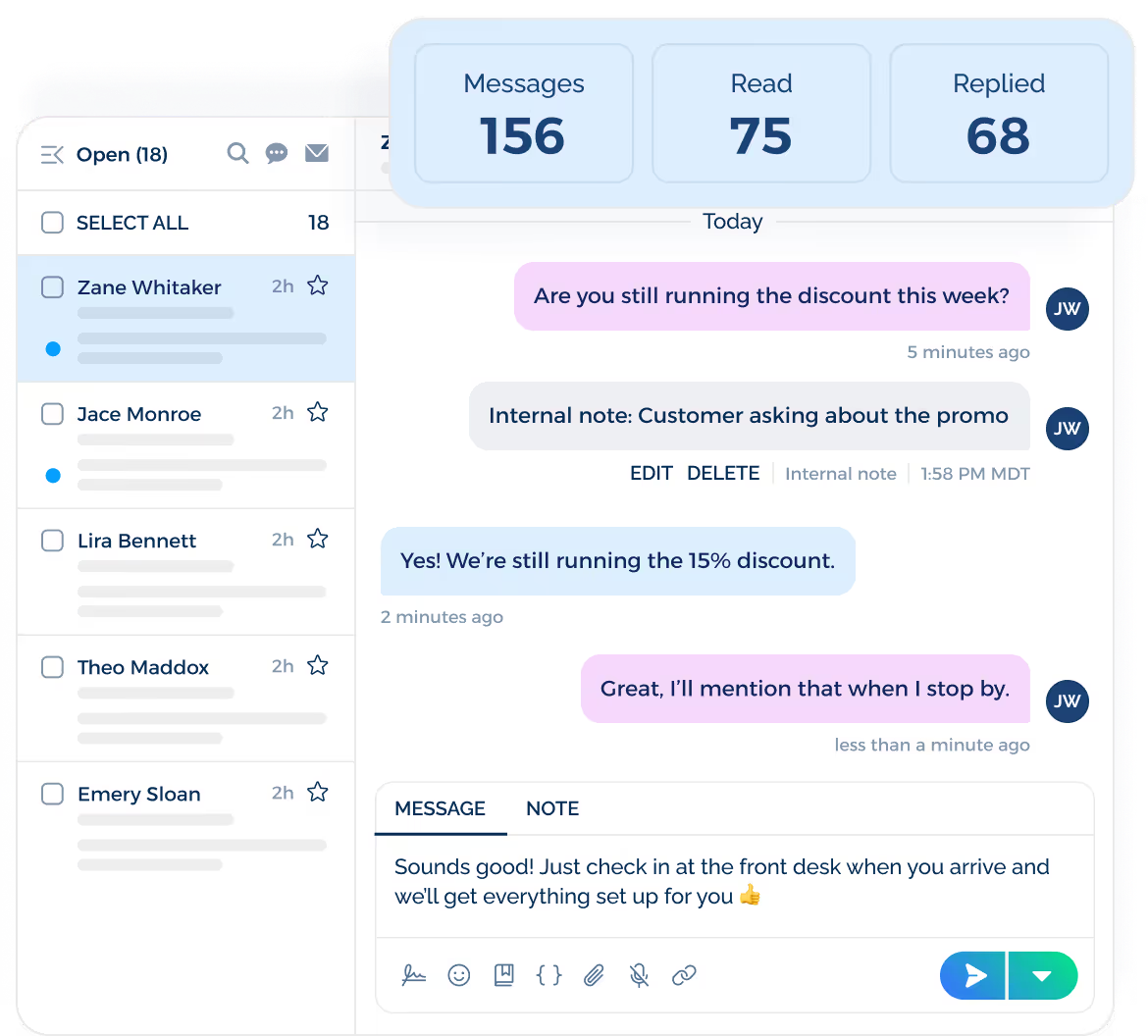
Appointment confirmations, lead follow-ups, order updates, payment reminders, and service notifications all fit this channel.
Customers can confirm a booking, request another time, ask about a delivery, or respond to a sales representative within the same message thread.
Book a demo with TextUs today!
Step #6: Connect Customer Data
Relevant customer data gives employees and automation the context needed to respond.
Connections with account, appointment, purchase, support, and service records also reduce the need for customers to repeat information.
Your CRM, customer support platform, ecommerce system, scheduling software, billing tools, and customer database may all contribute useful details.
The goal is to make the information needed for the conversation available within the communication platform.
Step #7: Define Automation and Human Responsibilities
Automation works best for confirmations, common questions, status checks, reminders, and basic routing. More sensitive requests still require judgment and personal attention.
Modern conversational AI uses natural language processing (NLP) to interpret what a customer is asking rather than depend only on fixed keywords.
Machine learning can also help the system recognize recurring request patterns and improve how messages are categorized or routed. Clear limits still matter, since automated tools or conversational AI systems may miss context, emotion, or unusual details.
Ownership rules should explain who receives new messages, when another department should take over, and how after-hours requests are handled. The same rules should also identify who follows up when a customer stops responding.
Step #8: Design the Conversation Flow
A complete conversation map should account for expected replies, unexpected questions, errors, silence, and requests for assistance.
Strong conversation logic guides customers without forcing them through a rigid script. Each conversation flow should include:
- The event that starts the conversation
- An opening message that explains its purpose
- A question that identifies the customer’s need
- Response options or space for an open reply
- The information required to complete the request
- A path for unexpected answers or errors
- A handoff to a person when needed
- A closing message that confirms the outcome
Each message should focus on one action. Customers should understand what to reply, what happens next, and how they can request more help.
Step #9: Set Response Time Standards
Response standards should cover the first acknowledgment, staff follow-up, and final resolution. Expectations may differ based on the digital channel and the type of request.
An automated text message creates an expectation of a faster response than email.
An acknowledgment message confirms receipt, but it should not suggest that the issue has been resolved when further action is still required.
Separate standards may be needed for regular service hours, after-hours requests, urgent issues, and cases that involve another department.
Staff should also know when a follow-up becomes overdue and who becomes responsible at that point.
Step #10: Review Conversations and Improve the Strategy
Both successful and unsuccessful conversations deserve review after the pilot.
Performance numbers show what happened, while message transcripts reveal why customers replied, stopped responding, or requested assistance.
Confusing questions, weak responses, repeated escalations, and missing information show where changes are needed. The findings can guide updates to message wording, routing, staff training, and response standards.
How TextUs Supports Conversational Customer Engagement
Every unanswered customer text is a missed chance to solve a problem, build trust, or move a buyer forward.
TextUs turns one-way outreach into two-way interactions that support lead generation, customer service, retention, and conversational marketing.
Customers can reply from their phones, while your staff builds strong client relationships through relevant exchanges instead of templated message blasts.
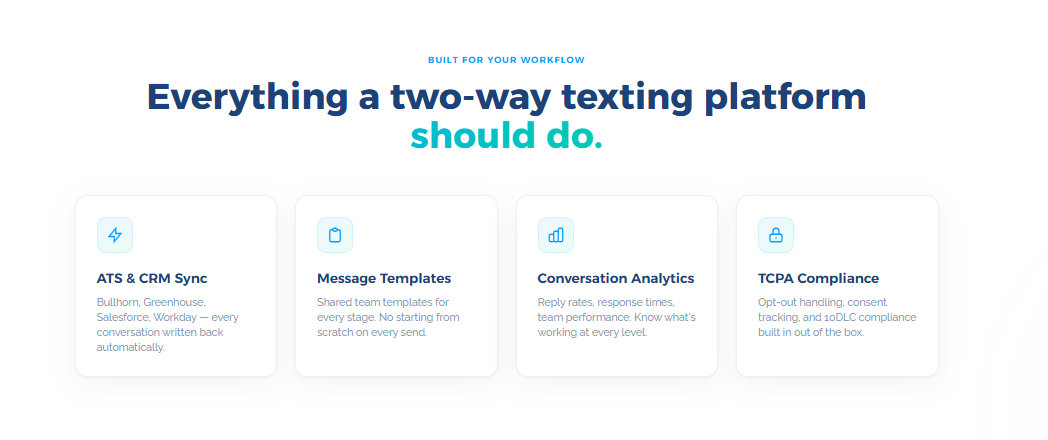
TextUs combines targeted SMS campaigns, automated follow-ups, and a shared inbox where staff can assign replies, use templates, and review conversation history.
This connected workflow supports operational efficiency by keeping ownership visible and reducing the need to switch between disconnected messaging platforms.
Performance insights also help you track replies, clicks, and opt-outs as each campaign develops.
Book a demo with TextUs and see how two-way texting can turn more customer messages into meaningful action!
Continue Reading



Frequently Asked Questions
What are the 5 C's of customer engagement?
There is no single standard framework, but one common model uses Connect, Communicate, Customize, Care, and Convert.
Together, these principles help you reach customers, understand their needs, provide relevant support, and turn engagement into action.
What is conversational engagement?
Conversational engagement is a two-way approach where your business and customers exchange messages across channels such as SMS, live chat, social media, or email.
Each response uses the customer’s question and available context to guide the conversation toward a useful outcome.
What is the difference between CRM and CEP?
A customer relationship management system (CRM) stores contact details, sales activity, service history, and other customer records.
A customer engagement platform (CEP) uses that information to coordinate active conversations and messages across channels, so the two systems work together.
Business Texting
Built for Results
Create and convert pipeline at scale through industry leading SMS software