
Enterprise Marketing: Use Cases and Strategies to Implement
Explore common enterprise marketing use cases and strategies. Discover how TextUs can help you out with enterprise SMS marketing automation.

Written by
Adam Hamdan
Published
February 18, 2026

Enterprise buyers follow a careful process. They research independently, compare vendors, and involve finance, IT, legal, and operations before any decision is approved.
Each group looks for different answers. Marketing that only speaks to one role leaves gaps, and those gaps slow deals down while internal reviews continue.
In the guide below, we'll cover the challenges large companies face and the most common enterprise marketing use cases.
You'll also get a step-by-step plan for building an enterprise marketing strategy, including where business text messaging fits, so that you can respond faster during key conversion moments.
TL;DR
- Enterprise marketing succeeds when you build systems that support every stage of the buyer process, from first touch to renewal.
- The most common enterprise marketing use cases include SMS marketing, lead routing, account-based marketing, lead nurturing, SEO and content marketing, partner programs, sales and internal enablement, marketing ops, data automation, event marketing, multi-region campaigns, renewal automation, and customer marketing.
- Enterprise marketing strategies start with proper ICPs and segmentation, strong messaging and proof, choosing channels by purpose, relying on repeatable campaigns, and measuring success through KPIs and attribution.
- TextUs strengthens enterprise marketing with compliant business texting that supports fast follow-up, meeting confirmations, event reminders, onboarding steps, and renewal outreach.
Common Enterprise Marketing Challenges
Enterprise marketing requires precision, patience, and consistency. You sell into large organizations where decisions take time and every step carries risk.
The unique challenges in enterprise marketing include:
- Long sales cycles with many stakeholders involved
- Different priorities between finance, IT, security, legal, and operations
- Sales and marketing misalignment on lead quality and follow-up
- Disconnected enterprise marketing tools and poor data quality in the customer relationship management (CRM) system
- Messaging that becomes too broad and loses focus
- Slow campaign execution due to approvals and governance
- Difficulty connecting marketing activity to pipeline and revenue
Your marketing needs to support more roles, more review steps, and more internal alignment than standard marketing. When these foundations are set, you can scale marketing campaigns with confidence and achieve your enterprise marketing goals.
Enterprise Marketing Use Cases
Enterprise marketers run different marketing programs depending on the sales cycle, the buyer group, and the type of product or service they sell.
Here are common use cases of enterprise marketing that support real business goals inside large enterprises.
SMS Marketing Automation
SMS marketing automation supports fast enterprise communication during sales-ready moments.
Email marketing can get ignored or read too late, especially during events, scheduling, onboarding, or time-sensitive follow-ups. SMS reaches people in minutes, which makes it ideal for confirming meetings and getting quick replies from busy stakeholders.
Enterprise SMS marketing needs a platform built for real business conversations, fast response, and full visibility into message activity. TextUs stands out as the best enterprise automation tool as it's designed for high-urgency communication.
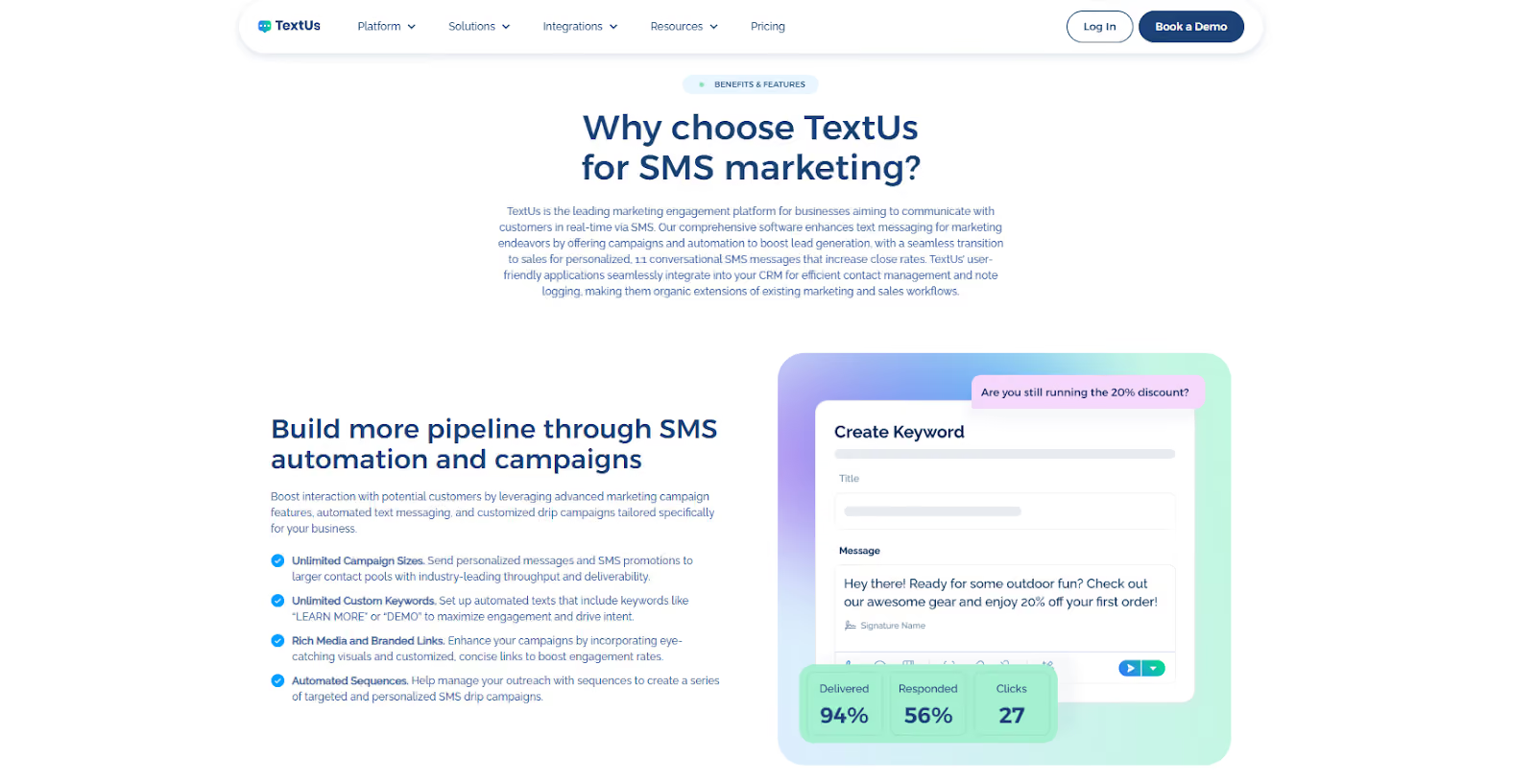
This enterprise marketing software first gained traction in staffing and recruiting. Then expanded into B2B sales teams that rely on rapid outreach, real-time engagement, and shared texting that managers can monitor.
TextUs also fits into enterprise workflows without forcing you to change your main systems. If your organization uses Salesforce or HubSpot, TextUs connects with those tools so inbound conversations, message history, tags, and engagement details sync automatically.
It also supports high-engagement enterprise messaging through features like bulk text messaging and multimedia messaging service (MMS). Teams can send PDFs, images, and GIFs when needed for events, product updates, and time-sensitive announcements.
Lead Routing and Sales Handoff Automation
Lead routing and sales handoff automation decides where new leads go, who owns them, and what happens next on multiple channels.
Enterprise companies generate leads from multiple sources, including demo requests, pricing forms, events, webinars, paid ads, partner referrals, and organic search. This volume is common for teams trying to increase brand awareness.
If a lead is not assigned promptly, it sits in the CRM with no owner, and sales follow-up is delayed. Routing automation solves that problem by assigning each lead to the right sales rep using set rules, such as region, industry, company size, product interest, or existing account ownership.
Sales handoff automation builds on routing by sending the lead to sales with the right details already attached.
This could include form answers, lead source, campaign name, and pages visited, which allows sales to focus on conversations with potential customers instead of searching for context.
Account-Based Marketing Automation
Most enterprise purchases involve a buying group rather than individual customers. Account-based marketing (ABM) automation places target accounts into campaigns to support customer lifetime value.
Most ABM automation starts with account lists and tiers (e.g., Tier 1, Tier 2, and Tier 3). Automation adds each account into the right campaign track based on fit, industry, and signals tied to the target market.
Marketing can then run account-based ads, email sequences, and landing page experiences tied to the same account list. It supports consistent brand messaging and reinforces a strong brand identity.
ABM automation also improves sales coordination. Sales reps can get alerts when people from a target account visit key pages like pricing, product, or security content.
Marketing can also create follow-up tasks and log engagement so marketing operations and sales stay connected.
Multi-Step Lead Nurture Campaigns
Nurture automation keeps leads engaged at each stage of the customer journey with a planned sequence of messages.
Enterprise nurture campaigns are built around personas, industries, and buying stages. Automation sends the right content based on form data, job title, company type, and actions like webinar attendance.
Multi-step nurture also supports better lead quality and sales timing. Leads can be scored based on engagement, moved into different lifecycle stages, and routed to sales once activity shows real intent.
If a lead stops engaging, automation can shift the lead into a slower track or a re-engagement sequence so the database stays clean and sales stay focused on the right conversations.
SEO and Content Marketing
If your brand is missing from search results, buyers form opinions without you in the conversation.
You influence deals when your content answers questions during that research phase and drives organic search growth.
Enterprise SEO focuses on depth. You need pages built for industries, use cases, integrations, and buyer roles. Solution pages, comparison pages, and educational articles guide buyers from problem awareness into evaluation.
You also need a site structure so buyers and search engines can understand how pages connect. Strong internal linking and topic grouping improve visibility and keep visitors engaged longer.
Partner and Channel Marketing
You may sell with technology partners, resellers, service firms, or agencies. Marketing helps those partners generate demand, explain value, and present a consistent message to buyers.
You can use partner marketing to run joint campaigns, shared events, co-branded content, and referral programs to your target audience. These efforts can include webinars, industry guides, case studies, landing pages, and account outreach tied to partner relationships.
Channel marketing also helps you extend reach without relying only on your internal sales group. Partners can introduce your solution into new markets, regions, or industries where they already have trust.
Sales Enablement Marketing
In enterprise sales, deals take time and involve many stakeholders. Sales need the right content at the specific stage so buyers can evaluate, share, and approve your solution inside their organization.
You can use sales enablement marketing to create assets that support real sales conversations. This includes pitch decks, one-pagers, competitive comparisons, ROI summaries, security documentation, implementation guides, and industry-specific proof.
Sales enablement marketing also supports deal progression through targeted sales messages. You can run opportunity-stage email sequences, send stakeholder-specific content based on role, and trigger follow-up based on account activity.
Texting can also fit into sales enablement for meeting confirmations, reschedule links, event reminders, and fast follow-up after a demo request.
When enablement becomes a true marketing program, sales cycles become smoother. Buyers receive valuable information that leads to successful campaigns and confident decisions.
Internal Enablement and Communication
Your organization has many groups touching the buyer experience, such as sales, customer success, recruiting, support, and partner managers. Without shared updates, messaging becomes inconsistent across the entire organization.
Internal enablement helps you roll out new messaging, product updates, pricing changes, and campaign launches. This can include internal playbooks, training sessions, short update emails, and internal resource hubs where teams can find the latest approved materials.
Sales and marketing teams can use SMS to alert sales about new campaign launches, notify reps of hot inbound leads, share event schedules, or flag urgent updates that cannot wait in email.
Enterprise messaging through texts works well for short, action-based messages that need quick attention, while longer details can still live in documents or internal portals.
Marketing Ops and Data Automation
Without strong ops, leads route wrong, follow-up slows, and reporting becomes unreliable.
You can use marketing ops to define how leads and accounts move through your CRM and automation platform. That includes lifecycle stages, lead status rules, routing logic, scoring models, and follow-up expectations.
Data automation is just as important for enterprise marketing management.
Enterprise databases grow fast and break fast. Automation can handle deduplication, enrichment, field standardization, and data cleanup so segmentation stays accurate.
Marketing ops and data automation also support reporting that leadership can trust. Shared definitions, standard dashboards, and consistent tracking make it easier to tie future campaigns to pipeline and revenue.
Event Marketing Automation
Enterprise events include trade shows, conferences, webinars, executive dinners, and partner events.
Without automation, registration, reminders, and post-event follow-up become manual and uneven. That leads to missed meetings, low attendance, and leads that never turn into pipeline.
Automation can send registration confirmations, calendar invites, reminder emails, and event-day messages. It can also segment contacts based on role, industry, account tier, or event type, so messaging stays focused.
After the event, automation can trigger follow-up sequences to multiple audiences based on attendance, booth visits, session engagement, or meeting requests. Attendees can get a different message than no-shows, and high-value accounts can trigger sales alerts and fast outreach.
Multi-Region Enterprise Campaign Management
Each region has different buyer expectations, language needs, compliance rules, and sales structures. You can use multi-region campaign management to run one core campaign strategy while adapting execution for each region.
The main message stays the same, but regional teams can adjust examples, proof, offers, and content based on what fits their market. This also includes timing differences, event schedules, regional sales ownership, and local market priorities.
Multi-region campaigns also require stronger governance and reporting. You need shared naming rules, tracking standards, and approval workflows so results can be compared across regions.
You also need segmentation, so contacts receive the correct version of the campaign.
Renewal and Expansion Automation
Many deals include multiple stakeholders, budget reviews, procurement steps, and legal approvals. If renewal planning starts too late, the account becomes harder to save, and expansion becomes less likely.
You can use renewal automation to start the renewal cycle early and keep it structured. Automation can trigger renewal sequences based on contract dates, such as 30, 60, 90, and 120 days before renewal.
Those sequences can include product more resources, new feature highlights, and customer success touchpoints. Automation can also alert customer success and account managers when usage drops, customer engagement slows, or key contacts go quiet.
Expansion automation supports growth inside existing accounts through targeted messaging based on product usage, role, or business needs.
A customer using one product module can receive education on add-ons, upgrades, or related features. Accounts can also be segmented by industry or company type, so expansion messaging stays aligned with real needs.
Customer Marketing for Onboarding, Retention, and Expansion
Enterprise accounts include many users, roles, and workflows, so value is not realized all at once. You need ongoing communication that guides customers from setup to daily use and long-term adoption.
Onboarding communication should focus on progress and clarity. New customers need clear next steps, role-based guidance, and timely reminders tied to key milestones like setup, training, and first use.
Different users need different messages, so customer marketing should adjust content based on role, product access, and usage activity. When engagement slows, customer success can step in early with context instead of reacting late.
Retention and expansion follow naturally when onboarding is handled well. You can communicate value through feature education, usage tips, renewal timelines, and product updates tied to real customer behavior.
Enterprise Marketing Strategies You Need to Know
In enterprise marketing, your campaigns need to support long decision cycles, multiple stakeholders, strict compliance rules, and complex handoffs. These challenges are common when managing a large existing customer base.
Here’s how to build your own enterprise marketing strategy that stays focused and tied to revenue outcomes.
Define Your ICP, Segments, and Account Tiers
Your ideal customer profile (ICP) is the type of customer (or company) that fits your product and your sales motion. It includes the industries you win in, the persona or company sizes you support, the regions you sell in, and the type of problems your solution solves.
Your ICP should also include exclusions, so your pipeline does not fill with poor-fit leads that waste sales time. You want your ICP to reflect real customer success, not just the type of account you want on paper.
Segmentation lets you create campaigns that speak to real needs instead of pushing one generic message to everyone. Market segments are the groups inside your ICP that need different messaging and content, which is important for inbound marketing programs.
Account tiers bring structure to your ABM program. Tiering is how you decide which accounts get high-touch attention and which accounts go into scalable campaigns. This structure also helps your enterprise marketing team plan realistic execution.
Tier 1 accounts usually get custom outreach, account-specific content, and close coordination with sales. Tier 2 accounts get industry-level personalization. Tier 3 accounts go into program-based campaigns that still stay account-focused but require less manual work.
Build Messaging, Proof, and Positioning
Enterprise businesses do not buy based on broad claims or vague benefits. They want differentiation and proof that your product is credible and built for enterprise needs.
Your positioning should match your ICP and your segments, so you are not trying to appeal to everyone. It should also reflect how enterprise buyers evaluate solutions, including risk, scale, security, and long-term fit.
Messaging turns positioning into buyer-ready language. You need one core message for your brand, plus variations for key roles in the buying committee.
Proof is what makes enterprise marketing believable. You need strong customer stories, measurable results, case studies, customer logos, and product proof that support your claims and help build brand awareness.
Select Channels Based on Use Cases
Enterprise marketing breaks down when every channel tries to do the same job. You need each channel tied to a clear use case, so your spend, effort, and reporting stay focused.
Start by mapping channels to stages in the buying process. SEO and long-form content strategy can support early research and problem awareness. Paid media supports account targeting, retargeting, and visibility with buying groups already in the market.
Email nurture supports long evaluation cycles by sharing education, proof, and updates over time. Events and webinars support conversion-stage engagement and relationship building with multiple stakeholders.
You should also plan for fast-response channels that support key moments. Texting fits use cases like demo scheduling, event reminders, inbound follow-up, onboarding steps, and renewal check-ins for existing customers.
Enterprise SMS marketing also supports other marketing channels.
You can use SMS for one or two high-impact steps inside a larger multichannel marketing program. Then rely on email, content, ads, and sales outreach for the rest of the cycle.
Your plan should define where SMS fits, what triggers it, how consent is tracked, how opt-outs are handled, and how replies route back to sales or customer success. This keeps texting compliant and tied to pipeline outcomes.
Build Content and Campaign Systems
You need a structure that supports consistency and speed without forcing your group to reinvent the process every quarter. You need to build a content system tied to the buyer process.
Early-stage content should focus on problems, use cases, and industry context to generate leads. Mid-stage content should support evaluation with product detail, comparisons, customer stories, and ROI logic.
Late-stage content should support internal approval with security docs, compliance pages, pricing details, and rollout guidance.
A campaign system defines the goal, target segment, channels, content types, timing, and follow-up rules before execution starts. These systems depend on customer data to stay accurate.
You can reuse the same structure for product launches, ABM plays, events, customer education, and expansion efforts. That keeps execution predictable between marketing, sales, ops, and legal while supporting a unified brand experience.
SMS mobile marketing should also be built into your campaign system. When content and campaigns are planned together, texting supports the right moment with short, action-based messages that push the campaign forward.
Set KPIs, Attribution, and Reporting
Enterprise marketing runs many campaigns over long sales cycles. Surface-level metrics like clicks and leads do not tell the full story of account conversions.
Common enterprise key performance indicators (KPIs) include pipeline sourced, pipeline influenced, meetings booked, opportunity conversion rate, deal size, and sales cycle length.
ABM programs also need account-level metrics such as account engagement, account progression, and meetings from target accounts. These metrics show how marketing activity supports real buying movement, not just volume.
Attribution gives context to those KPIs. Enterprise buyers interact with many touchpoints before a deal closes, including content, events, email, texting, and social media.
Multi-touch attribution models give a better view of how content, campaigns, events, email, and texting support deals over time. Attribution should stay consistent so that leadership can compare performance quarter over quarter.
Make Enterprise Marketing More Responsive With TextUs
You deal with high-value accounts, busy decision-makers, and long buying cycles where small delays cost real revenue.
If your marketing cannot support fast follow-up and real engagement, leads go cold and high-intent opportunities slip away, weakening your overall marketing efforts.
TextUs supports enterprise marketing through business texting inside the tools you already use. You can text from Salesforce, HubSpot, Salesloft, or Outreach while keeping message history, replies, and contact records together.
Marketing and sales can reach prospects faster, confirm meetings, reduce no-shows, and stay engaged during key moments like inbound requests, events, ABM outreach, and onboarding.
This enterprise texting solution also meets enterprise expectations for control, security, and compliance. You get consent tracking, opt-out handling, audit logs, encryption, and role-based access built into the platform.

Book a demo with TextUs to see how enterprise texting can strengthen your marketing and revenue programs!
FAQs About Enterprise Marketing
What is enterprise marketing?
Enterprise marketing is the way enterprise-level companies promote products or services to large organizations or wide customer bases through structured enterprise marketing campaigns.
You deal with long sales cycles, many decision-makers, and a higher risk for buyers. Your marketing needs to support research, review, approval, and long-term trust. This is different from traditional marketing used in faster sales cycles.
What are the four main types of marketing?
The four main types of marketing most businesses use are:.
- Product marketing: Explains what you sell and who it is for.
- Content marketing: Educates buyers and supports research
- Demand generation: Focuses on pipeline and sales conversations
- Brand marketing: Builds trust and recognition over time
You usually use all four together for successful enterprise marketing instead of running them in isolation or relying on one or two channels.
What does an enterprise marketing manager do?
An enterprise marketing manager plans and runs marketing programs for large, complex accounts and segments.
You manage campaigns, messaging, content, channels, and reporting while working closely with sales and customer success, while protecting a consistent brand voice.
The role also involves planning budgets, managing tools, setting priorities, and proving how marketing supports pipeline and revenue under real budget constraints. Enterprise marketing managers focus more on structure and coordination than on one-off campaigns.
What is the 3-3-3 rule in marketing?
The 3-3-3 rule is a simple way to guide messaging and outreach. You focus on three key messages, repeat them at least three times, and use three channels to deliver them through cross-channel campaigns.
Buyers in enterprise sales cycles need repeated exposure to the same ideas before taking action. The rule helps you stay focused and avoid changing your message too often.
Continue Reading



Frequently Asked Questions
What is enterprise marketing and what are its key challenges?
Enterprise marketing is the practice of managing marketing at large organizational scale across multiple products, geographies, and audiences. Key challenges include coordinating across teams, maintaining brand consistency, and measuring impact across long sales cycles.
What are the most effective enterprise marketing strategies?
Effective enterprise marketing strategies combine account-based marketing, multi-channel outreach including SMS and email, content that supports each stage of the buying committee's decision process, and rigorous attribution measurement.
How does SMS support enterprise marketing programs?
SMS supports enterprise marketing by enabling immediate follow-up on campaign responses, driving attendance for events and webinars, and accelerating the sales handoff process for marketing-qualified leads.
Business Texting
Built for Results
Create and convert pipeline at scale through industry leading SMS software