
SMS Lead Generation: How to Use Texting as a Sales Channel
Learn how SMS lead generation works and explore steps to set it up. Discover how TextUs can help you turn leads into booked conversations.

Written by
Adam Hamdan
Published
February 17, 2026

Selling in 2026 is not just competitive. Sales cycles move more slowly, deals stall more, and follow-up is harder to manage.
According to HubSpot, 28% of sales professionals say long sales cycles are the biggest reason prospects walk away. Most reps only spend a small part of the day in real selling conversations.
According to Udemy, 96% of buyers are researching on their own before speaking to sales reps. Text marketing creates real-time connections that keep leads warm and moving through the funnel.
In this article, we will break down how SMS lead generation works, the best ways to capture SMS leads, and the best practices you can use to turn texting into a repeatable lead pipeline.
TL;DR
- SMS lead generation starts with consent-based texting that turns new inquiries into two-way conversations that lead to quotes, demos, appointments, or sales.
- SMS performs better than traditional channels because it shortens the gap between lead interest and first contact.
- The best ways to capture SMS leads include website forms, click-to-text buttons, pop-ups, landing pages, QR codes, social media, Google Business Profile, paid ads, events, and missed call text-back.
- Setting up SMS lead generation starts with choosing a lead source, building an opt-in flow, creating templates, adding automation, assigning routing rules, tracking results, and improving performance.
- TextUs supports SMS lead generation with shared inbox texting, templates, automation, routing, and tracking so your business can convert more leads through strategic SMS.
SMS vs Traditional Lead Generation Channels
SMS marketing beats most traditional outreach channels in visibility and response when it comes to lead generation.
SMS messages grab attention fast and produce better results than other lead generation channels:
- SMS has a 98% open rate
- SMS has a 45% response rate
- Email response rates have an average rate of 35.63%
- According to NFON, only 2% of cold calls lead to a booked meeting.

SMS is now a main communication channel in modern lead generation. SMS marketing campaigns are also more timely and mobile-friendly.
Personalized messages reach prospects in seconds and are usually read within three minutes of receipt. Unlike emails that go unread or phone calls that hit voicemail, texts get noticed and responded to.
With bulk text messaging or one-to-one texting, sales teams can reach SMS leads faster without overwhelming them.
Book a demo with TextUs and start converting more leads through texting!
The Best Ways to Capture Leads With SMS
Here are the best ways to capture leads with SMS, based on what works for most industries:
Website Forms
Web forms are a simple way to start SMS lead gen because visitors are already looking for answers.
You can add a contact preference option so people can choose text as the reply method. A “Text Me” call to action (CTA) also sets the expectation that your business will follow up through SMS.
Click-to-Text Buttons
Click-to-text buttons let a lead start a text conversation without filling out a form. The lead taps the button, and their phone opens a new message with your number already filled in.
You can place these buttons on high-intent pages like pricing, service, and contact pages.
Pop-Ups and Slide-Ins
Pop-ups and slide-ins can capture SMS leads from visitors who are not ready to fill out a full form.
These can be added on pages where people are reading details, comparing options, or looking for pricing. Trigger them after scroll or time on page so the offer shows up at the right moment.
Landing Pages
Landing pages are great for SMS lead generation because they keep the offer focused and the opt-in simple.
A strong SMS landing page highlights the offer, explains what happens after opt-in, and keeps the form short. You can put the key message and opt-in form above the fold.
QR Codes
QR codes let people scan and opt in from a phone in seconds. They are a great fit for events, print ads, direct mail, flyers, signage, and business cards.
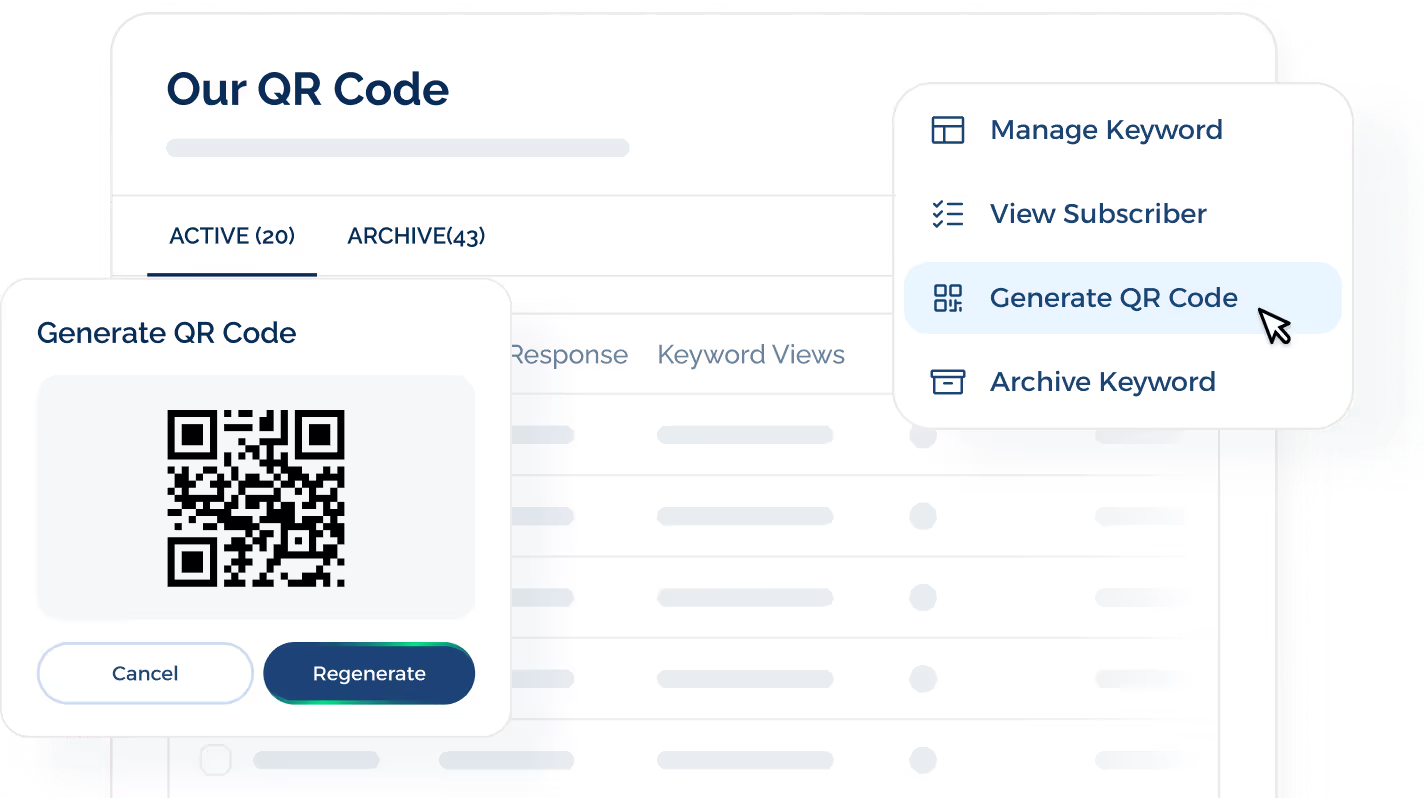
You can use a unique QR code link for each campaign so your business can track lead sources.
Social Media
Social media can generate SMS leads when your CTA moves people from scrolling to texting.
Leads can come from Instagram, Facebook, LinkedIn, and paid social campaigns. Many brands start with a DM and move the lead into SMS once the lead wants faster answers.
Google Business Profile
Google Business Profile is a good lead source because people searching on Google are ready to contact a business.
Adding a text option can turn searches into SMS conversations. Texting also gives leads a fast way to ask questions, request pricing, or book a time.
Paid Ads
Paid ads can drive SMS leads through click-to-text campaigns, SMS extensions, and SMS-first landing pages.
These campaigns work well when a fast follow-up is the main factor in winning the lead. Retargeting also works well here, since visitors who left your site can be pushed back into a text flow.
Events and Trade Shows
Events and trade shows create a lot of leads in a short time. With SMS for event marketers, people can opt in quickly without filling out paper forms or waiting for an email follow-up.
Booth signage and giveaway entry through text also make lead capture easier.
Missed Calls
Missed calls are one of the biggest sources of lost leads because many people do not leave voicemails. An automatic “Sorry we missed you” text can turn that missed call into a live conversation right away.
How to Set Up SMS for Lead Generation
Setting up successful SMS lead generation needs to be built in the right order. Check out the setup steps below so you can get more leads, more replies, and more conversions.
Step #1: Choose a Lead Source
Start with one lead source so your business can control the process and track results. Website leads are an excellent starting point for building your SMS list because they're already showing interest.
Ads, referrals, and upcoming events are also effective, but they require tighter tracking so you know what is driving replies. Each lead source creates a different type of lead, and picking one source first keeps your setup simple before expanding into other channels.
Step #2: Set Up Your SMS Opt-In Flow
Your SMS opt-in flow is what gives your business permission to text the lead. It should state what the lead is agreeing to, how many messages they can expect, and how they can opt out at any time.
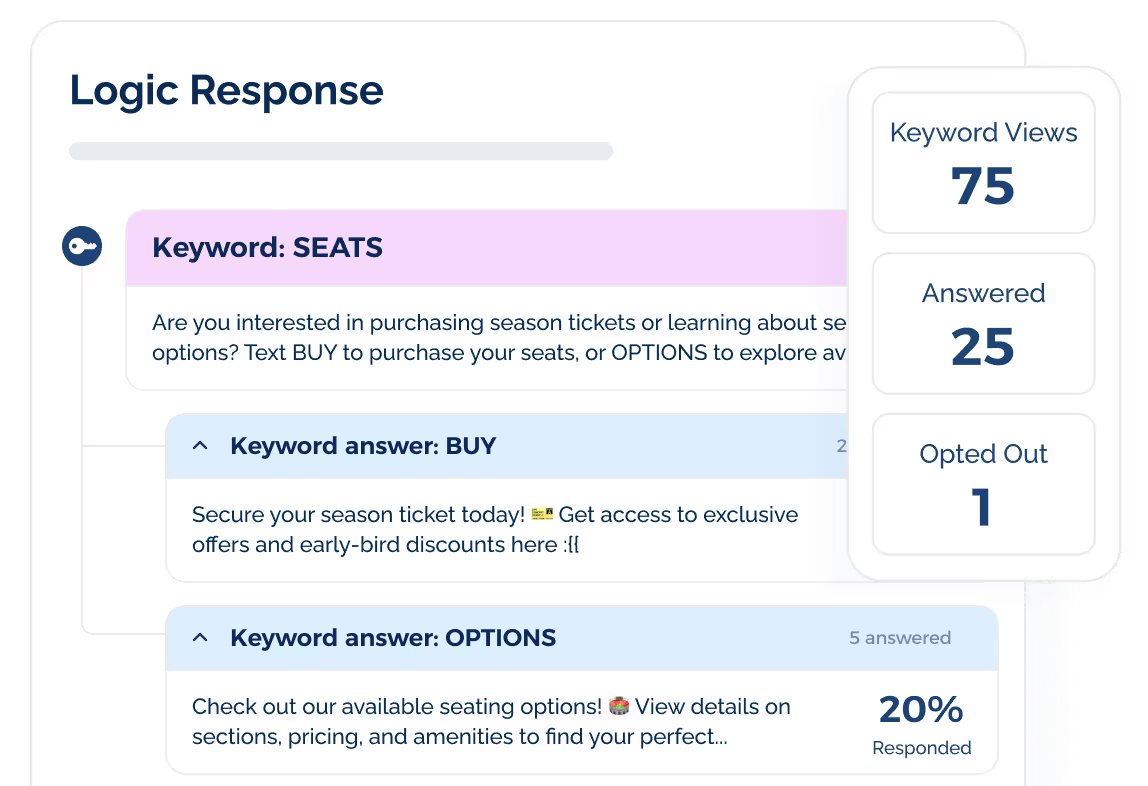
You can use a form checkbox for opt-in or a double opt-in, where the lead confirms through a reply like “YES” or “START.” Double opt-in is not required for every business, but it can be useful for cleaner lead lists and stronger proof of consent.
SMS also works better as part of your full lead funnel. SMS integrations with your customer relationship management (CRM) platform and marketing stack keep lead data, conversations, and follow-up tied together.
This makes it easier to track activity, qualify leads faster, and move more leads toward a booked next step.
Step #3: Create Your First SMS Lead Generation Templates
SMS templates keep your responses consistent. They also prevent your reps from wasting time typing the same messages all day.
A good template sounds human-written, uses the lead’s name, and moves the conversation forward with one question.
Your first set of templates should cover the full lead flow: a new lead response, a short message to qualify leads, a scheduling message, and a follow-up message. Once these are written, your business can reuse them to start conversations with potential customers faster.
Step #4: Build Your SMS Automation Workflow
SMS marketing automation makes sure leads get a fast reply even when reps are busy. It also keeps leads from going cold when someone submits a form after hours, which is where many interested buyers drop off.
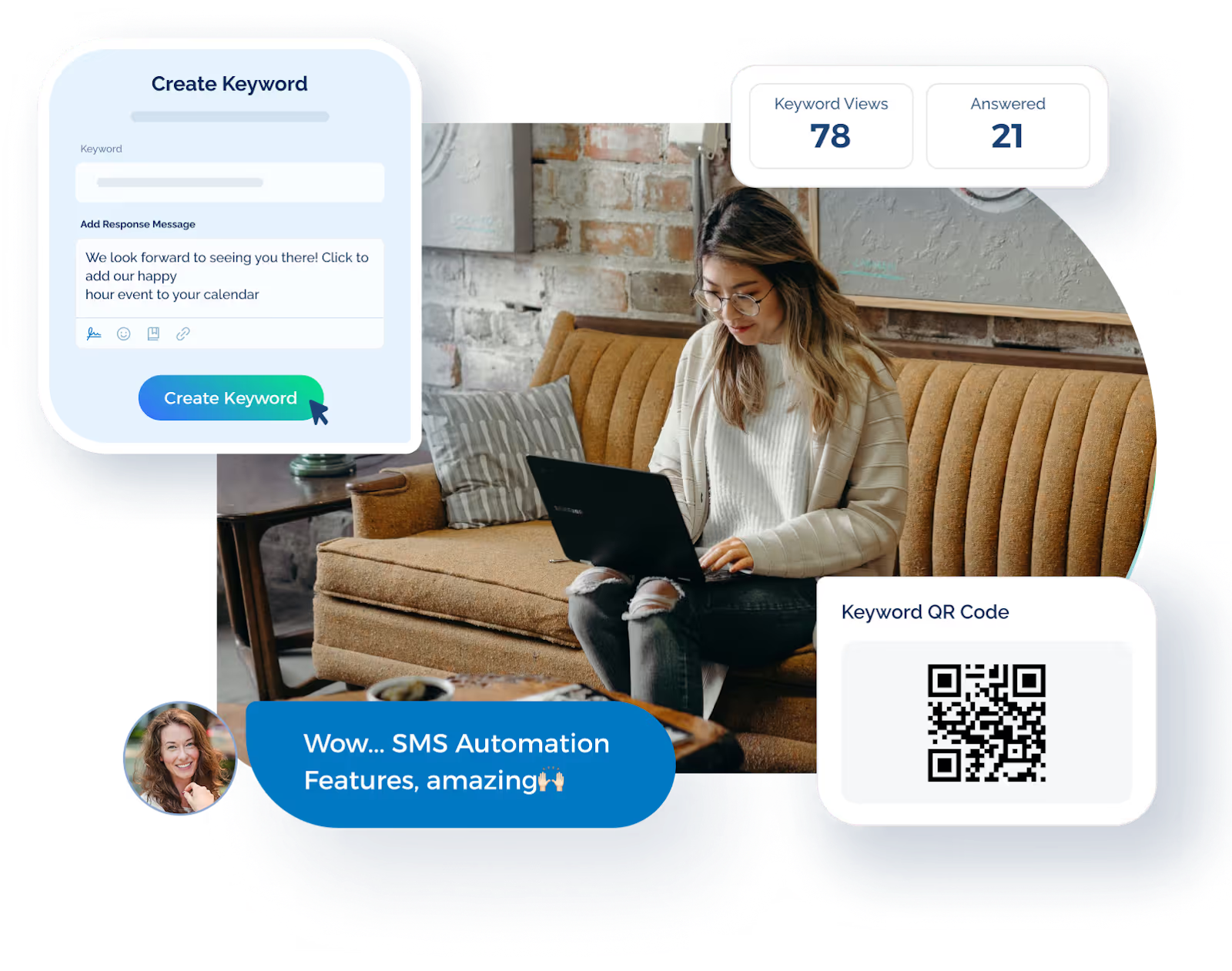
A trigger can be a form submit, a missed call, or a keyword QR code opt-in, and it can send SMS alerts so the right person follows up.
Timing rules control when follow-ups are sent if the lead does not reply, so your business stays consistent without sending too many messages.
Step #5: Assign Ownership and Routing Rules
SMS lead generation falls apart when no one owns the lead. Your business needs a clear system for who answers, how leads get assigned, and what happens if the lead replies when the assigned rep is not available.
Routing rules can be based on service type, territory, business hours, or round robin assignment.
A service-level agreement (SLA) is also important, since fast replies lead to more bookings and stronger trust among decision-makers. Escalation rules keep leads from being ignored, so a lead can be reassigned if no one responds within a set time.
Step #6: Track Results and Optimize
Once your SMS lead generation system is running, tracking is what turns it into a repeatable part of your SMS strategy.
Start with a few metrics so your business does not get overwhelmed. Focus on reply rate, booked rate, and lead-to-sale rate.
After you have a baseline, test small changes. A/B testing can include message wording, the first question you ask, or follow-up timing.
Small changes in your first text and follow-up sequence can improve SMS campaign performance and turn more leads into real outcomes.
SMS Lead Generation Tips for Better Lead Response
A lead should never feel confused about who is texting or what they should do next. Here are the best practices that improve reply rates and turn more leads into booked calls, demos, quotes, and sales.
Respond to Leads in Under 5 Minutes
Speed has a huge impact on conversion because leads usually contact more than one business.
Leads contacted within the first five minutes are 100 times more likely to engage. If your reply comes in hours later, the lead is already talking to someone else.
A fast response also keeps the lead in the same mindset they had when they submitted the form or clicked the CTA. It also sets your marketing team and sales process up to convert leads faster.
SMS supports faster response because it is built for quick back-and-forth. Your business can send an automatic confirmation message right away, then have a rep take over the conversation.
That first message keeps the lead engaged while your rep gets ready to reply, and SMS helps prevent leads from going cold.
Use One Clear Call to Action
Every text should tell the lead what to do next. A specific CTA also keeps your reps consistent, since each conversation follows the same path.
Examples of simple CTAs include a booking link, asking the lead to reply with a number, or confirming a detail. Your CTA should match the stage of the conversation.
Early texts should focus on getting a reply, not closing the sale, so your reps can guide leads into the next step. In many industries, the best first CTA is to book a free consultation.
Use Two-Way Messaging
Two-way texting builds trust faster because the lead feels like they are talking to a real person. It also improves lead quality.
You can ask a short question, confirm fit, and move the lead to the right next step without wasting time on leads that are not a match.
It also supports stronger relationships over time, since prospects can ask questions and get answers. This is also a strong way to boost engagement without pushing the lead too hard.
Always Identify Your Business
Leads forget fast. Even if they filled out your form five minutes ago, they may not recognize your number. If your first message does not say who you are, the lead can ignore it or think it is spam.
Your first text should include your business name and a short reminder of what the lead asked for. It also reduces SMS opt-outs and complaints.
Segment Leads Based on Intent
Not every lead is ready to book right away. Some leads are just comparing options. Others are ready to schedule the same day.
SMS segmentation helps your business respond in a way that matches the lead’s intent so that you can send relevant messaging instead of generic follow-ups.
A simple way to segment is hot, warm, and cold leads. Hot leads receive fast-scheduling texts and appointment reminders.
Warm leads get more info and a light follow-up. Cold leads go into a longer flow, so your reps can nurture leads better.
Follow Up More Than Once
Many leads do not reply to the first text, even if they are interested. They get busy, forget, or want to think about it. One follow-up is rarely enough to get the lead back into the conversation.
Follow-up is also one of the best ways to re-engage customers who went quiet, or leads who were interested but never booked. It can also support offers like early access or exclusive deals, as long as the lead has opted in.
Turn More Leads Into Booked Conversations With TextUs
If your first follow-up comes late, the prospect has already moved on, even if they were interested. SMS keeps the door open by capturing interest while the lead is still thinking about your offer.
SMS conversational messaging solves that gap. Texting is the one channel people check fast and respond to, which makes it easier to collect leads and move them into real conversations.
TextUs is SMS lead generation software built for lead generation, turning every new lead into a real two-way conversation in minutes. You can't text leads from one shared inbox, keep ownership clear, and follow up without dropping leads or relying on personal phones.
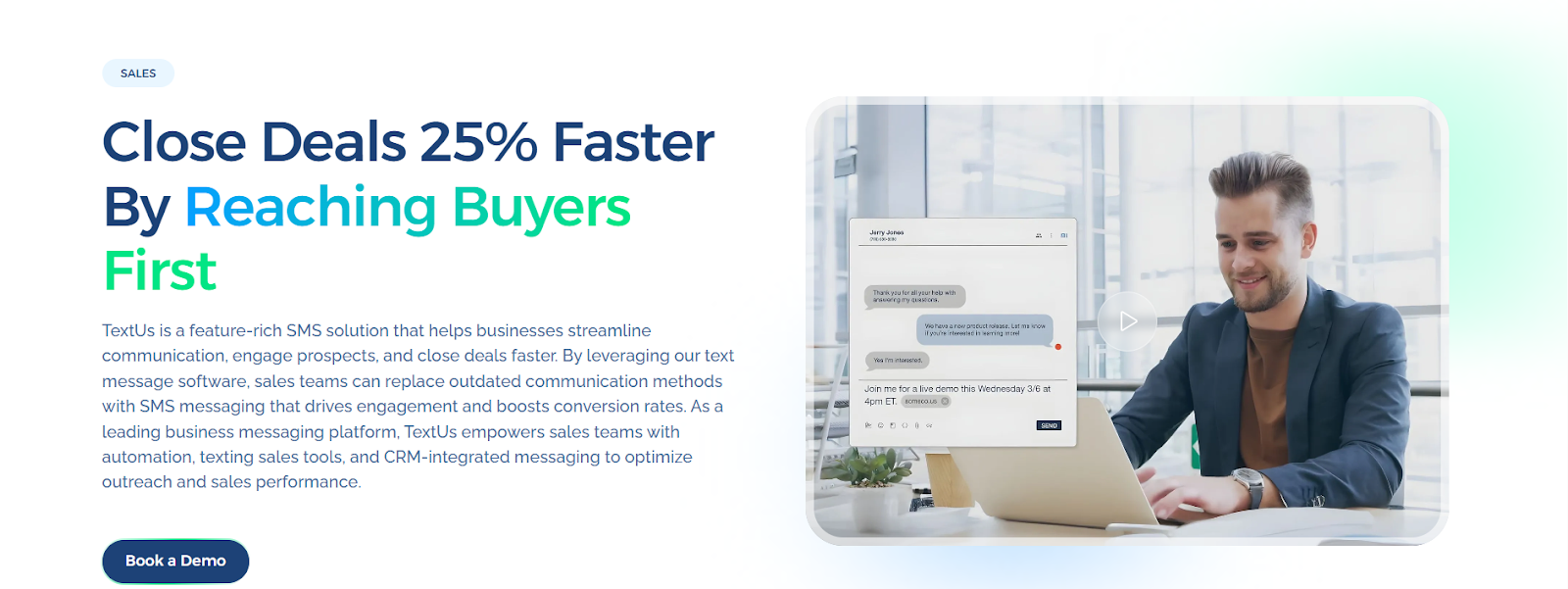
If your pipeline feels slow and lead response feels like a race you keep losing, texting is your advantage. Book a demo with TextUs today!
FAQs About SMS Lead Generation
What is SMS lead generation?
SMS lead generation is the process of generating leads through text messages.
A lead is a person who shares their phone number and agrees to receive texts from your business. This happens after requesting pricing, a quote, a demo, or an appointment.
If you're facing tighter budgets and independent buyers, SMS offers the speed and flexibility needed to compete. It also supports new customers and follows up with existing customers in the same channel.
Is SMS marketing illegal?
SMS marketing is not illegal, but you must get permission before sending messages to your SMS subscriber list.
A keyword opt-in like "Text JOIN" is a simple way to capture consent, especially for bulk SMS campaigns promoted online or in person.
Problems happen when you text people without consent, send too many messages, or fail to honor STOP requests. A compliant opt-in process and disclosures keep your SMS campaigns legal and safe.
How to get SMS leads?
You get SMS leads by providing people a simple way to opt in and start texting your business. The strongest lead sources include your website, landing pages, click-to-text buttons, QR codes, Google Business Profile, events, and paid ads.
Once the lead opts in, your first message should offer real value. Short questions, fast follow-up, and personalized offers increase replies and move leads toward booking.
How much do SMS blasts cost?
SMS marketing pricing depends on how many texts you send, what type of number you use, and what platform you use. Most SMS marketing platforms charge per message, per user, or per contact, so that pricing can vary a lot.
Tracking also plays a role in cost control. When you measure replies, bookings, and opt-outs, you gain valuable insights that show which messages convert and which campaigns waste spend.
Continue Reading

Frequently Asked Questions
How can businesses use SMS for lead generation?
SMS generates leads through keyword opt-in campaigns, QR code sign-ups, and two-way text conversations that qualify interest. Unlike email, texting engages prospects in a direct dialogue that quickly identifies buying intent and moves them toward a sales conversation.
Is SMS effective for B2B lead generation?
Yes — B2B sales teams increasingly use SMS for immediate follow-up on inbound leads, nurturing cold prospects, and reactivating stalled deals. Texting's higher response rates make it effective for connecting with B2B buyers who don't answer calls or respond to emails.
What's the best way to qualify leads through SMS?
Use a series of short, conversational questions via text to identify interest level, timeline, and fit. SMS qualification conversations can capture the same information as a phone screen in a format that's more accessible and less intrusive for busy prospects.
Business Texting
Built for Results
Create and convert pipeline at scale through industry leading SMS software