
AI SMS Marketing: How to Use AI for Text Campaigns
Explore our detailed guide to AI SMS marketing and see how it helps businesses create smarter, personalized text campaigns.

Written by
Adam Hamdan
Published
June 16, 2026

AI and SMS marketing are becoming important tools for businesses that want to send targeted text campaigns.
AI can write message drafts, segment contacts, personalize follow-ups, review copy for risk, and improve campaigns based on real performance data.
With the right strategy, you can leverage AI capabilities to build SMS campaigns in less time without losing the human tone customers expect.
In this article, we will cover how AI SMS marketing works, key benefits, and how to use AI's abilities to create text campaigns that improve customer satisfaction.
TL;DR
- AI SMS marketing uses artificial intelligence to turn text campaigns into more timely and behavior-based customer conversations.
- AI works in SMS marketing through core technologies like predictive analytics, natural language processing, machine learning algorithms, conversational AI, sentiment analysis, and AI-powered features.
- AI strengthens SMS strategy by helping you create campaigns faster, send relevant messages, segment audiences better, choose smarter send times, personalize texts, maintain follow-up, support two-way conversations, and improve campaign insights.
- To use AI for SMS marketing, you need a campaign goal, proper consent, useful customer data, AI-powered segments, strong SMS prompts, copy review, automation rules, human handoff, a small test launch, and ongoing performance analysis.
- TextUs is an SMS platform built with AI-powered message review, rewrite suggestions, deliverability safeguards, and automation tools that make campaigns safer and easier to manage.
What Is AI SMS Marketing?
AI SMS marketing works through a mix of technologies that help businesses send more relevant and timely messages.
Predictive analytics can spot patterns in customer behavior to recommend better send times, while natural language processing helps the system understand replies, questions, and customer intent more naturally.
Over time, machine learning improves campaign performance by learning from clicks, purchases, replies, and opt-outs.
More advanced platforms can also support conversational texting, smarter audience segmentation, sentiment detection, and automated follow-up flows that react to customer behavior in real time.
How AI Strengthens Your SMS Marketing Strategy
AI does not turn SMS into a fully hands-off channel. Successful SMS campaigns still require consent, oversight, and a clear messaging strategy.
Here are the main advantages of using AI to engage customers:
Faster Campaign Creation
AI-powered SMS marketing can speed up the way you plan and create personalized campaigns.
Rather than starting with a blank page, you can ask AI to create text message ideas based on your goal, target audience, offer, and tone.
For example, you may create several versions of a cart recovery message, event reminders, or a win-back campaign. This gives you more room to test different messaging strategies without creating every version from scratch.
More Relevant Text Messages
AI helps you avoid sending the same message to every subscriber.
It uses behavior, purchase history, lifecycle stage, and past engagement to shape marketing messages around real customer needs.
People treat texts as personal. Therefore, relevance is one of the biggest benefits of AI in texting.
Tailored messages have a better chance of earning a click, reply, or purchase because they match what the customer may need next.
Better Customer Segmentation
AI creates stronger SMS segments than basic filters alone. It can look at patterns in behavior and engagement.
For example, AI can identify customers who are likely to buy again, leads who show stronger intent, shoppers who need a cart reminder, or subscribers who may unsubscribe if they receive too many texts.
Better SMS segmentation also protects your list. Customers who get personalized text messages are less likely to ignore your texts or opt out.
Smarter Send-Time Decisions
A fixed send time can work for some contacts, but customer behavior is not always the same. Some subscribers may respond during lunch breaks, while others may click texts in the evening.
AI can use predictive analytics to recommend or automate send times based on when each contact is more likely to respond. This turns timing into a data-backed part of your SMS strategy.
Send-time optimization is useful for timely SMS reminders, lead follow-ups, and cart recovery campaigns.
You still need to follow quiet-hour rules and respect time zones, but AI can make timing decisions more data-informed.
Stronger Personalization
Personalization can improve customer experiences by using data to craft compelling messages and the next step of each message.
An AI-powered SMS campaign can mention a saved cart item, a recent purchase category, an upcoming appointment, a service reminder, or a product that fits past behavior. This makes the message feel more connected to the customer’s actual journey.
More Consistent Follow-Up
Many SMS opportunities are missed because follow-up depends on manual tracking. SMS AI can trigger follow-up messages based on customer actions, replies, or lack of response.
Consistent follow-up is valuable because many conversions do not happen after one message. AI can keep the conversation moving while still giving you control over timing, frequency, and message content.
Better Two-Way Customer Conversations
AI makes SMS more conversational by understanding replies, answering customer inquiries, and guiding prospects to the next step.
This benefit is useful for sales, service, recruiting, ecommerce, and appointment-based businesses. AI can manage common replies while your staff focuses on conversations that need more judgment or care.
Better Campaign Insights
AI can review SMS campaign data and turn it into practical recommendations.
Standard reports show metrics like clicks, replies, conversions, and opt-outs. AI can help explain what those numbers suggest.
It may also show that one message version had more replies but fewer conversions, which means the conversation flow may need work.
How to Use AI for SMS Marketing
Many SMS campaigns fail because they lack focus, clean data, consent checks, and clear follow-up rules.
Here are the steps to guide your SMS marketing process, from campaign setup to post-launch improvements.
Step #1: Define the Campaign Goal
The strongest SMS campaigns usually focus on one simple next step instead of trying to do everything at once. A business might use text messaging to recover abandoned carts, follow up with new leads, remind customers about appointments, re-engage inactive subscribers, or encourage repeat purchases after a recent order.
When the goal is clear, it becomes much easier to shape the timing, messaging, automation, and follow-up around what the customer actually needs at that moment.
Step #2: Review Your Audience and Consent
Before AI becomes part of your SMS marketing workflow, your audience list needs a consent check.
Your campaign should follow SMS marketing rules for unsubscribe requests, message transparency, consent records, and opt-out handling.
Text messages are treated as calls under FCC rules implementing the Telephone Consumer Protection Act (TCPA). This means marketing texts must follow consent, opt-out, and do-not-call requirements.
Contacts without proper permission should be removed before launch. This keeps your SMS list cleaner, protects customer trust, and supports business growth.
Step #3: Choose the Data AI Can Use
The data should match the campaign goal, so the AI can create personalized offers, segments, and follow-ups based on real customer behavior.
For a lead follow-up campaign, AI can use form details, lead source, company size, service interest, or past replies. This can support the sales process because the message can match the lead’s level of interest.
For retail businesses, this data helps AI suggest the next product, reminder, or discount code based on what the shopper did.
The data should also be safe and relevant to use in SMS. Sensitive details, outdated records, or information customers would not expect in a text can create trust issues.
Step #4: Build AI-Powered Segments
Segments help you group contacts based on customer preferences, behavior, and buying intent. AI-powered systems can separate customers into groups that need different messages.
For example, new leads may need a quick follow-up text, while inactive customers may need a re-engagement message.
Repeat buyers may respond better to product recommendations, and cart abandoners may need a reminder tied to the item they left behind.
These segments can also support customer retention because AI can identify customers who may need a reorder reminder, loyalty offer, or check-in.
Step #5: Create SMS Message Prompts
AI can write better SMS drafts when the prompt tells it exactly what the campaign needs to do.
A vague prompt like “write a text message for customers” will create generic copy. A specific prompt gives AI the context it needs to create text options that fit the campaign.
The prompt should name the campaign goal, audience segment, single customer action, offer, CTA, tone, character limit, and compliance needs.
For example, a better prompt would say:
“Write five SMS messages for new leads who requested a demo but have not booked a meeting. Keep each message under 160 characters, use a professional but friendly tone, include a booking CTA, and avoid pressure-heavy wording.”
Step #6: Review AI-Generated SMS Copy
Even with a detailed prompt, AI can still create messages that are too long, too vague, too promotional, or missing key compliance details.
A careful review helps you catch issues before customers receive the text. This is where an SMS marketing platform with AI-powered messaging can support the process.
TextUs uses AI to review, rewrite, and optimize messages before they are sent, so users can avoid spam filters and reduce compliance risk. You get immediate rewrite suggestions for high-risk messages while keeping your original brand voice and intent.
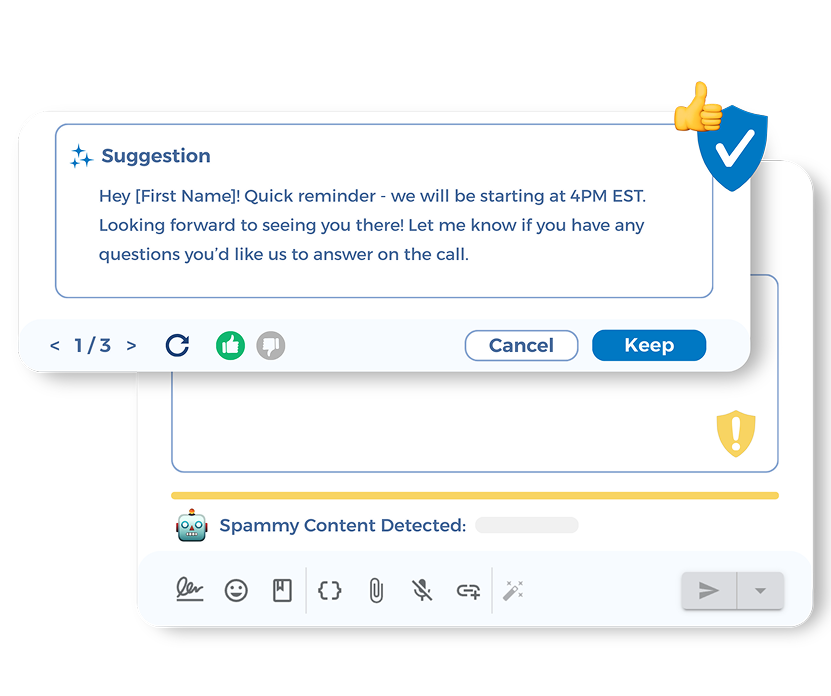
Smart Delivery adds another layer of protection by monitoring opt-out thresholds in real time. If a campaign starts showing high-risk signals, it automatically pauses it before carrier blocking becomes a problem.
With TextUs, you can turn AI-generated SMS copy into safer, stronger campaigns before they reach your audience. Book a demo today!
Step #7: Set Automation Rules
AI needs automation rules that define what happens after a customer takes an action. These rules tell the system when to send a message, when to stop a sequence, and when to move the conversation to another workflow.
For example, a new lead can receive a follow-up text after submitting a form. If they reply, the system can send a booking link or route the conversation to sales.
This keeps customer interactions moving without forcing every follow-up to happen manually.
Automation rules should also prevent unnecessary messages. If a customer books an appointment, completes a purchase, replies STOP, or no longer fits the segment, the workflow should pause or end.
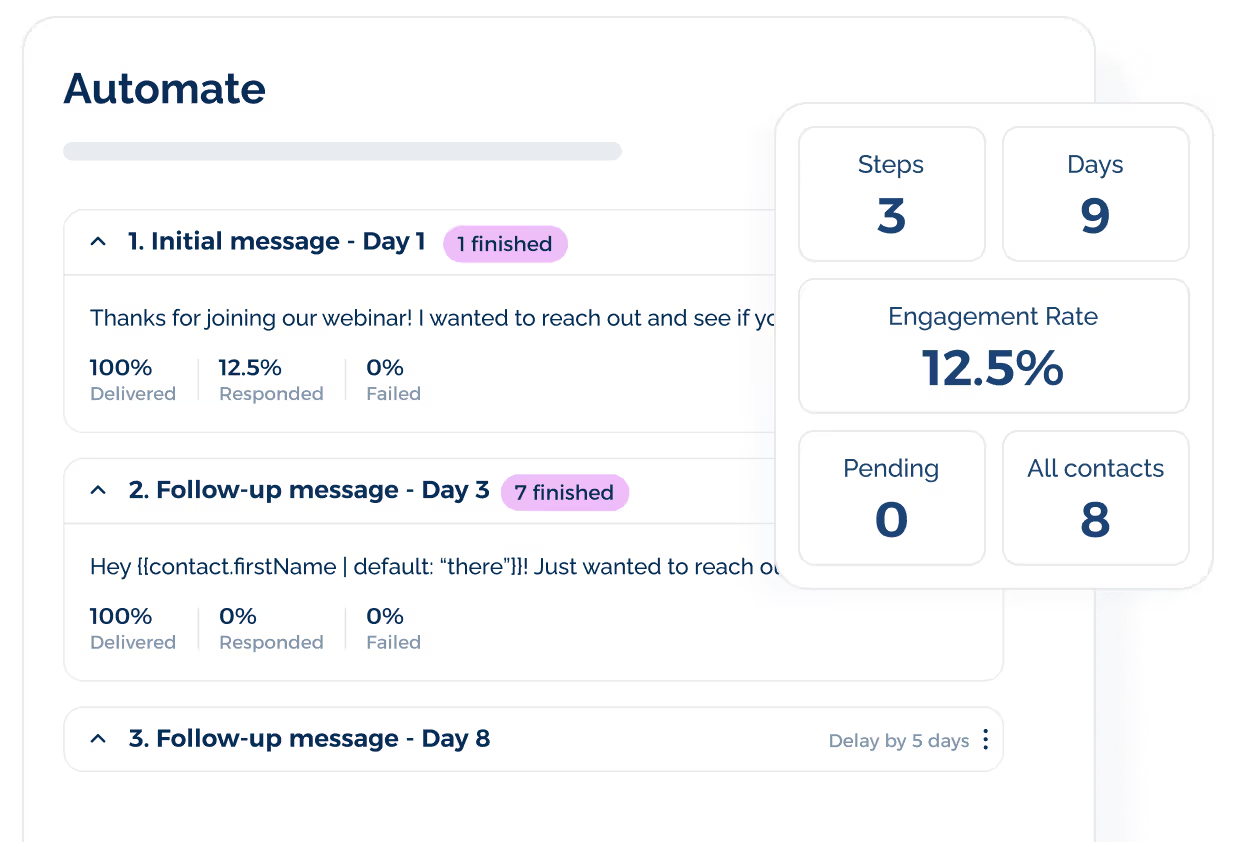
TextUs SMS automation tools support drip campaigns, scheduled messages, recurring texts, SMS keywords, and auto responses. It allows you to select contacts, write the text, define triggers or timing, and activate the workflow without coding.
Step #8: Add Human Handoff Rules
AI can handle many simple SMS replies and support personalized interactions, but some conversations need a person.
Human handoff rules tell the system when to stop the automated flow and route the conversation to sales, support, recruiting, or another marketing team member.
This helps AI deliver human-like text responses without forcing automation into moments that need real judgment.
A handoff should happen when a customer asks a complex question, shows strong buying intent, sends a complaint, requests pricing, or shares sensitive details.
For example, if a lead replies, “Can I talk to someone today?” the workflow should alert sales instead of sending another automated message.
Step #9: Launch With a Small Segment First
A small test segment gives your SMS marketing campaign a safer starting point.
You'll be able to catch issues with message wording, links, timing, personalization fields, and reply handling before the campaign reaches more people.
It also shows whether the audience understands the CTA and whether the message is driving the action you want. This early test can help you review response rates before expanding the campaign.
Once the test segment shows healthy customer engagement, low opt-outs, and no major delivery issues, the campaign can expand to a larger audience.
Step #10: Improve the Campaign With AI Insights
After the campaign runs, AI can review performance data and show where the SMS workflow needs improvement.
It can compare message versions, send times, audience segments, click rates, conversion rates, and SMS opt-outs to identify what worked and what needs adjustment.
Data-driven insights can shape the next version of your campaign and support stronger campaign success.
AI should also improve with each campaign. The more you learn from customer behavior, the better your future texts can become.
Launch Smarter SMS Campaigns and Drive Sales With TextUs
AI-driven SMS marketing should help you reach customers with smarter texts, less risk, less manual review, and more control.
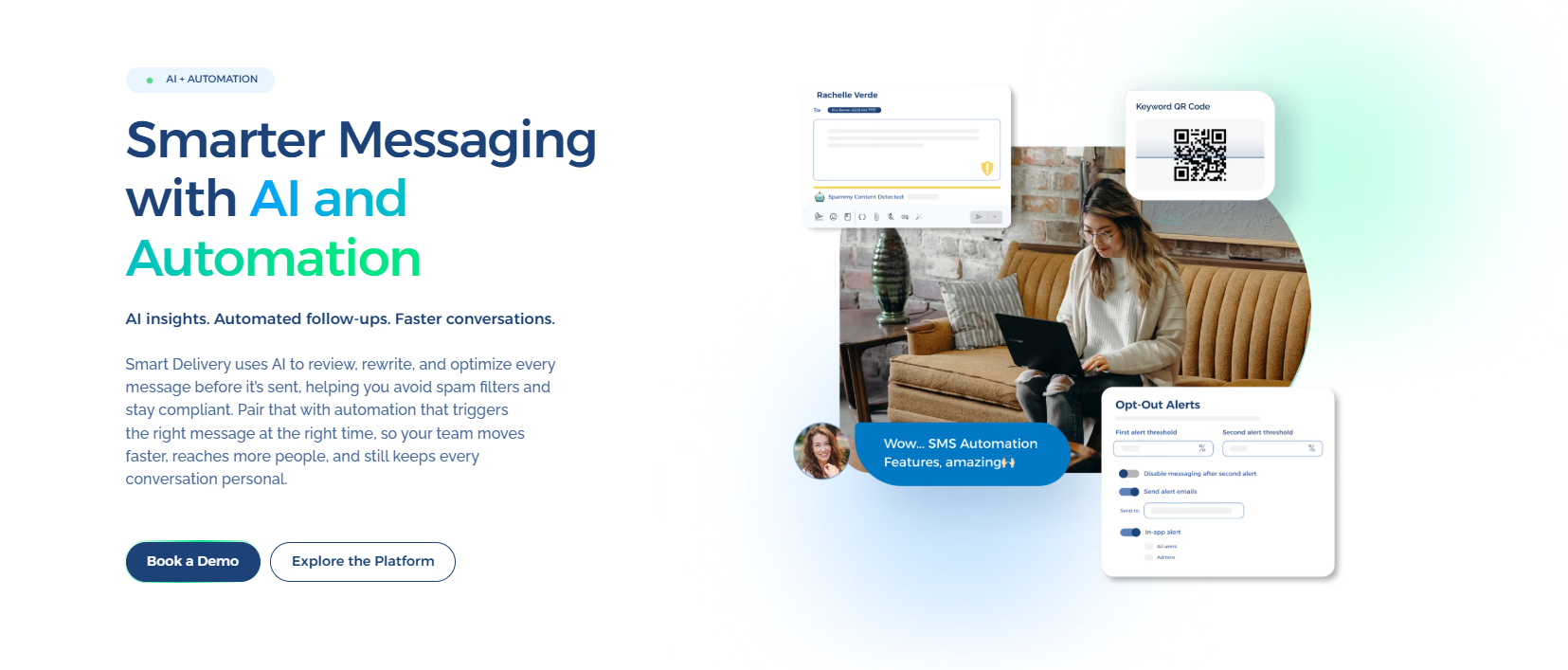
TextUs brings AI-powered message review, smarter delivery safeguards, and automation together so you can move faster while still keeping each customer conversation personal.
The platform's AI tools review, rewrite, and optimize messages before they go out. It helps you catch high-risk wording, avoid spam filters, reduce compliance concerns, and keep your brand voice intact.
Paired with automation, TextUs helps you trigger timely messages and automated responses based on customer behavior, timing, and campaign context.
Book a demo with TextUs today to see how AI can turn every text into a smarter, safer, and more personal customer touchpoint!
Continue Reading



Frequently Asked Questions
How to use AI for SMS marketing?
AI can write smarter messages, segment contacts, personalize messages, automate follow-ups, and review campaign results.
It works best when each campaign has one goal, such as lead follow-up, cart recovery, appointment reminders, SMS surveys, or win-back messages that nudge customers toward the next step.
Is SMS marketing illegal?
SMS marketing is not illegal when you follow SMS marketing rules. In the U.S., marketing texts require proper consent, a sender identity, and an easy opt-out option.
Text marketing becomes risky when businesses text people without permission, ignore STOP replies, or send misleading messages. A safer campaign only contacts people who have agreed to receive texts.
Does SMS marketing still work?
SMS marketing remains essential because people still rely on text messages for fast communication.
It also works alongside other marketing channels by supporting email, paid ads, events, and sales follow-up with quick reminders and next-step prompts.
Business Texting
Built for Results
Create and convert pipeline at scale through industry leading SMS software