
How to Improve Your SMS Marketing Conversion Rate in 2026
Explore the top ways to improve your SMS marketing conversion rate. Discover how TextUs can help make SMS your most reliable conversion channel.

Written by
Adam Hamdan
Published
April 6, 2026

Most businesses send text messages, but only a few turn them into consistent conversions. Messages get opened, but not every message leads to action.
Conversion rate is an important performance indicator in business SMS. Open rates are naturally high, so success depends on what happens after the message lands on the recipients' phones.
A strong conversion rate shows that your messaging connects with the audience and drives action.
In this article, you’ll learn what SMS marketing conversion rate means and how to measure it. You will also learn strategies to drive consistent engagement for long-term business growth.
TL;DR
- SMS conversion rate measures how many recipients take action after receiving your message.
- Conversion rate is calculated by dividing completed actions by delivered messages.
- Improving your SMS marketing conversion rate comes from using the right SMS platform, targeting specific audiences, writing targeted messages, optimizing timing, automating follow-ups, running high-intent campaigns, and continuously testing results.
- TextUs supports each step with AI-powered message optimization, automation, segmentation, and real-time conversations to increase engagement and conversions.
What Is an SMS Marketing Conversion Rate?
Conversion rate measures the percentage of recipients who take a specific action after receiving your SMS messages. It reflects how effectively your campaigns turn engagement into real outcomes, such as purchases, sign-ups, or replies.
A key benefit of SMS is that messages are seen almost instantly. Since text messages go directly to users’ mobile phones, they are more likely to be opened and acted on compared to email marketing.
A conversion can vary based on campaign goals. Common examples include:
- Completing a purchase
- Booking a service or demo
- Clicking a tracked link
- Replying to a message
- Signing up for an offer
Each SMS marketing campaign should define a goal before sending messages. A specific intent improves your message content and makes sure your campaigns align with customer expectations.
How Do You Calculate Conversion Rates for SMS Campaigns?
Every campaign starts with a number of messages sent and ends with a number of actions completed. The gap between those two points reveals the strength of your messaging and targeting.
To calculate the conversion rate, you can use the formula below:
Conversions ÷ Number of text messages successfully delivered × 100
For example, if 1,000 texts go out and 120 people complete a purchase or sign up, your conversion rate is 12%.
Accurate conversion data depends on tracking both message delivery and user actions. That includes monitoring clicks, replies, or completed transactions tied to each campaign.
As you analyze results, your SMS conversion rate shows what is working and where adjustments are needed for future marketing efforts.
8 Ways to Increase Your SMS Marketing Conversion Rate
Small changes in execution can lead to better SMS campaign performance. Below are practical ways to boost conversion rates and build a stronger SMS strategy:
1. Choose the Right SMS Platform
A reliable system does more than send messages. It supports your full SMS marketing strategy and gives you the tools to manage, track, and improve results.
TextUs offers more than basic messaging. It allows you to integrate SMS into your existing systems and align communication with your broader marketing strategy instead of running separately.
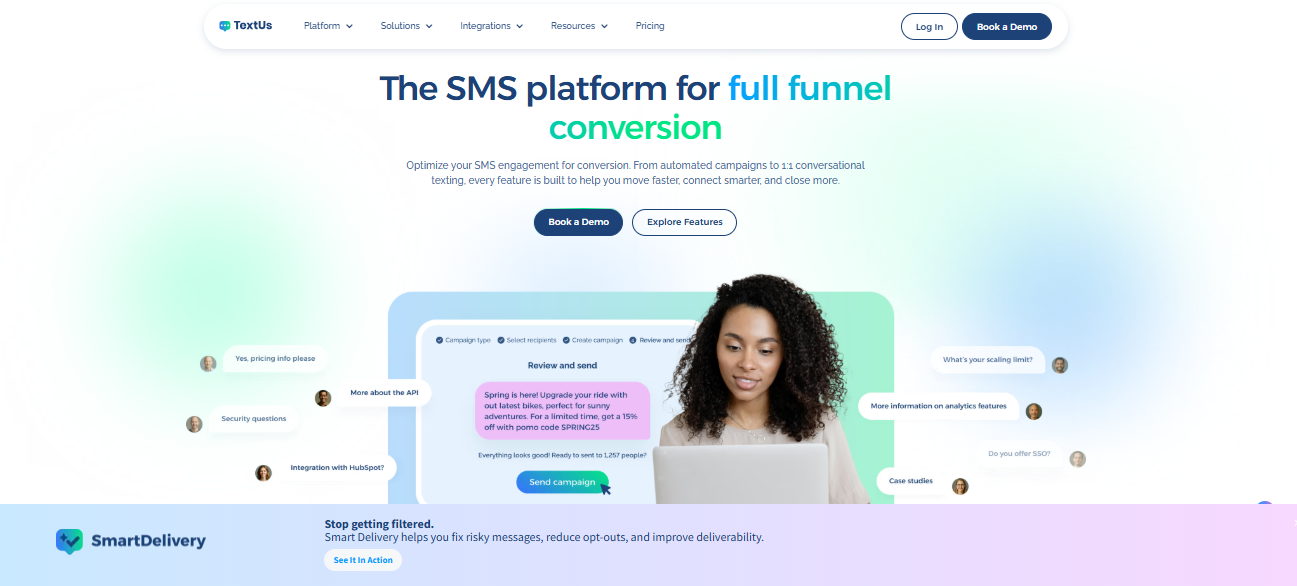
The platform supports real-time conversations to give your team a direct line to customers. That interaction allows faster responses, which can improve conversion outcomes.
Segmentation and personalization features also make it easier to avoid sending the same message and instead deliver communication based on user behavior and intent.
TextUs combines AI with compliance-focused automation to review, refine, and optimize each automated message before it’s sent.
With Smart Delivery, your team can move faster without second-guessing risk, since messages are reviewed and aligned with best practices before sending.
You can also monitor delivery, engagement, and response data in one system. Access to key metrics makes it easier to adjust your approach and improve results over time.
Ready to improve your SMS conversion rates with smarter messaging? Book a demo with TextUs today!
2. Use Segmentation to Send Targeted Campaigns
Instead of sending broad SMS marketing messages, you group contacts based on behavior, preferences, or past interactions to deliver more relevant communication.
Start by grouping contacts based on actions such as past purchases, engagement history, or lifecycle stage. Patterns in purchase behavior give you a view of what each group is likely to respond to.
SMS segmentation also improves your SMS marketing performance. Each group can receive messages that align with their needs instead of receiving the same message as everyone else.
As marketing campaigns run, segmentation also helps you collect data that can be used to improve your future outreach. Over time, these insights can lead to more consistent conversions.
3. Write Action-Focused Messages
Every message should guide the reader toward one specific outcome, whether that is clicking a link, replying, or completing a purchase.
A good business text message keeps your communication focused and easy to understand. The goal is to deliver the right message without forcing the reader to think too much about what to do next.
The first few words carry the most weight. That opening line decides whether someone keeps reading or ignores the message. Lead with value, urgency, or an enticing benefit right away.
Shorter messages perform better because they match how people read on mobile devices. Text abbreviations can improve readability when used correctly.
Simple abbreviations like “appt” for appointment or “msg” for message can save space and keep your message concise. But avoid overusing slang or unclear shortcuts, as that can reduce trust and make your message harder to understand.
Each message should focus on one goal and include a clear next step. If your message includes an SMS URL to a landing page, make sure the purpose is visible, and the next step feels easy.
4. Optimize Message Timing for Better Engagement
Timing has a strong influence on whether your message gets attention or is ignored. Even well-written messages can underperform if they reach users at the wrong moment.
The use of time-sensitive messages increases the chances of immediate action. Campaigns tied to urgency, such as reminders or limited offers, perform better when they align with real user behavior.
Audience activity patterns should guide when messages are sent. Consistent analysis helps identify the best time to send marketing messages.
A high message frequency can reduce engagement. Exposure to too many messages can increase SMS opt-outs, which impacts long-term performance.
5. Use Automation to Improve Follow-Up
Manual outreach can sometimes lead to missed opportunities. Consistency improves your overall SMS performance by making sure every interaction happens at the most effective moment.
A structured approach using automated flows allows you to send follow-ups based on user actions. These can include reminders, confirmations, or re-engagement messages triggered by behavior.
TextUs lets you build SMS drip campaigns with personalization, behavior-based triggers, MMS support, compliance tools, and real-time team responses.
This setup strengthens your SMS program by allowing your team to expand outreach while keeping communication consistent.
6. Run High-Intent Campaign Types
High-performing SMS campaigns focus on moments where the customer is already close to taking action.
Examples include flash sales and urgent updates that prompt quick decisions. These types of messages deliver genuine value, which increases message relevance and builds trust.
Promotional campaigns can also be high-intent when structured correctly. Limited-time offers, restock alerts, and exclusive deals encourage immediate action.
Appointment reminders also work well because they serve a purpose and require a response. These messages feel useful rather than promotional.
High-intent messaging supports stronger results because it reflects how consumers prefer to receive communication. Action-driven and timely messages are more likely to convert.
7. Optimize the Post-Click Experience
A click does not guarantee a conversion. What happens after the click determines whether the user completes the action or leaves.
The transition from message to destination should be consistent. The page has to reflect the same offer, tone, and intent introduced in the message so users immediately recognize they are in the expected place.
The page should guide users toward one action without distractions, competing links, or unnecessary steps. Too many options can slow decisions and reduce completion rates.
Slow load times or poorly optimized pages can cause users to exit before engaging. A fast, mobile-friendly experience keeps attention on the next step.
8. Test and Optimize Campaign Performance
Performance tracking begins with understanding how your messages perform after they are sent. SMS metrics such as click-through rate and engagement trends provide insight into what drives action and what needs adjustment.
Monitoring your delivery rate makes sure your delivered messages reach the intended audience. Without that visibility, accurate performance evaluation becomes difficult.
SMS compliance and user experience also influence long-term results. Ignoring regulatory constraints or sending unwanted messages can increase your unsubscribe rate.
Ongoing adjustments based on performance data support better results. Over time, refined timing can improve engagement and maintain a good SMS conversion rate.
Make SMS Your Most Reliable Conversion Channel With TextUs!
If your SMS marketing conversion rate is not where you want it to be, the issue is not the messaging channels you currently use. The gap comes from how messages are timed and personalized for action.
TextUs changes how your SMS communications perform. With AI-powered optimization, every message is reviewed and optimized before it is sent to improve clarity and reduce issues with spam filters.
Built-in segmentation and personalization also ensure each message stays relevant, while analytics track engagement so you can refine your approach using real data.
If your goal is to increase replies, speed up conversations, and drive more conversions, TextUs gives you the structure to make it happen. Book a demo today!
Continue Reading



Frequently Asked Questions
What is the average SMS marketing conversion rate?
According to the latest SMS marketing benchmark report, the average conversion rate for SMS marketing is around 15 to 25%. Many people who receive a message take the desired action, such as clicking a link, replying, or making a purchase.
Industry benchmarks give a reference point, but your SMS strategy determines your actual conversion results.
How do you increase the SMS conversion rate quickly?
Higher SMS conversion rates come from improving message clarity, relevance, and intent. Messages that focus on one clear action tend to drive more responses than those with multiple goals.
Timing has a strong impact on engagement. Messages tied to real user needs, such as transaction alerts or updates, often generate quicker responses because they align with expectations.
Is SMS marketing more effective than email?
Emails can sit unread or get filtered, while SMS makes sure your message reaches users directly on their phones.
Recent data shows that the average click-through rate (CTR) for text messages ranges from 20-35%, compared to only 2-3% for email. This difference shows how SMS captures attention and encourages faster action.
Business Texting
Built for Results
Create and convert pipeline at scale through industry leading SMS software