
How to Build Stronger Relationships With Candidate Nurturing
Learn how candidate nurturing builds stronger relationships, supports every hiring stage, and keeps qualified talent engaged with TextUs.

Written by
Adam Hamdan
Published
September 23, 2026

Great candidates don’t always become available when your company has an open role ready for them.
Candidate nurturing matters because staying connected keeps qualified candidates within reach as their timing, goals, and interests change.
A strong candidate nurturing strategy keeps those relationships active after someone declines an opportunity or leaves the hiring process.
In this article, we'll discuss the benefits of candidate nurturing, how to build a consistent approach, and how it supports each hiring stage.
You'll also see how text messaging supports ongoing communication and turns previous conversations into future hiring opportunities.
TL;DR
- Candidate nurturing keeps strong prospects connected, improves future outreach, reduces cold sourcing, and can shorten time to hire.
- A consistent candidate nurturing strategy combines smart segmentation, relevant content, personalized outreach, SMS, automation, accurate records, and respectful communication preferences.
- Candidate nurturing keeps people connected before they apply, after applications, between interviews, after rejection, through offers, and when future roles open.
- TextUs strengthens candidate nurturing with personalized SMS campaigns, two-way conversations, automated follow-ups, shared inboxes, ATS integrations, and synced message history.
How Candidate Nurturing Supports Better Hiring
Candidate nurturing is the ongoing process of building relationships with prospective candidates before, during, and after an active hiring cycle.
It helps you stay connected with strong prospects whose career timing may not match your current hiring needs.
A few benefits include less dependence on cold outreach, faster re-engagement, and stronger familiarity when new roles become available.
Ongoing relationship building also makes it easier to maintain interest among people who may be considering several employers in a competitive job market.
Relevant updates, responsive conversations, and respectful follow-ups create a more positive experience while keeping your company familiar to top talent over time.
Finally, candidate nurturing helps you learn more about each person. Changes in availability, location, skills, compensation expectations, or career goals can shape future outreach.
As a result, you spend less time contacting people about roles that no longer fit and have a better chance of shortening time to hire.
How to Build a Consistent Candidate Nurturing Strategy
A thoughtful approach keeps your talent pipeline active and gives each candidate a reason to stay connected over time.
Below are the key steps to build a nurturing process that supports stronger relationships:
Choose the Best Nurturing Channels
The channel you choose shapes whether candidate communication is convenient or easy to ignore.
Email has a place for longer updates, LinkedIn can support outreach to passive talent, and phone calls make sense for conversations that need more context.
But SMS marketing stands out when you want a fast, direct way to keep candidates connected.
For many candidate nurturing touchpoints, SMS is the strongest communication channel because it fits the way short recruiting conversations happen.
A text can ask about availability, confirm continued interest, or reconnect after months of silence without requiring the job seeker to log into a portal or schedule a call.
Candidates can respond in the same thread, which turns a simple update into a two-way conversation instead of another message competing for attention.
Book a demo with TextUs today and see how this platform helps move more conversations toward the next hiring step!
Decide Which Candidates You Want to Nurture
Not every person in your database needs the same level of attention. The first step is identifying the groups with the strongest potential for future hiring.
Passive candidates, past applicants, active job seekers, and people who reached later interview stages may all belong in different nurture paths based on their interest and fit.
Your priorities also reflect hiring demand, role type, previous engagement, and how soon new job openings may appear. This gives you more time to build relationships with the ideal candidates.
Segment Your Candidate Database
Candidate segmentation makes outreach more relevant, as people at different stages do not need the same message.
Your database can be organized by role, skills, location, availability, experience, previous application stage, interests, or whether someone is actively applying.
More detailed segments can also account for certifications, shift preference, seniority, or previous engagement with your company.
This structure helps you identify ideal people for each campaign without sending the same message to everyone in the candidate pipeline.
Map the Candidate Journey
A candidate journey shows where each person sits in relation to your hiring process and what type of communication is best used.
Someone who just joined a talent community needs a different message from an applicant waiting for an interview decision or someone who declined a job offer.
Each stage can connect to specific follow-ups, from first contact and application updates to interview communication, rejection, re-engagement, and future opportunities.
A defined communication plan also makes your recruitment process easier to manage because each step has a purpose instead of relying on random check-ins.
Create a Nurturing Cadence
Candidate outreach needs enough consistency to keep the relationship active without making every interaction feel like another sales message.
Regular communication may include occasional check-ins, career updates, role alerts, or invitations based on a person's stage and level of interest.
The frequency should also change with the relationship. Someone waiting on an interview update needs more contact than a person who may consider a move six months from now.
Active applicants may need updates every few days, while passive candidates may only need occasional company news, industry insights, or relevant job openings.
Candidates waiting for interview feedback should receive updates whenever the expected timeline changes.
Consistent candidate nurturing keeps your company familiar while still giving them enough space between messages.
Create Content Candidates Want to Receive
Your nurture content should offer more than repeated notices about open roles.
Relevant industry insights, hiring updates, career resources, interview tips, and information about your company culture can give people a reason to keep reading your messages.
Content can also include company news, employee stories, career paths, or examples of your core values in practice.
These topics allow potential candidates to understand what it may be like to work with your company.
Personalize Candidate Nurture Messages
Good personalization reflects what you already know about the person rather than adding a first name to a generic template.
Personalized communication can reference a previous application, preferred role, location, skills, career goals, availability, or an earlier conversation.
Messages become more relevant when they connect those details with a specific reason for reaching out.
These meaningful touchpoints can help candidates feel remembered instead of treated like another record in a database.
Combine Automation With Human Conversations
Automation can handle repetitive follow-ups, scheduling, reminders, campaign enrollment, and other routine communication across larger candidate groups.
SMS drip campaigns are useful for keeping outreach on track, especially when you manage several roles or candidate segments at once.
Human involvement still matters when someone asks a question, wants career advice, discusses compensation, or shows serious interest in a role.
The human touch keeps candidate nurturing from feeling mechanical and gives you room to respond to the context behind each conversation.
Keep Candidate Data and Conversation History Up to Date
Candidate information changes over time, so old records can make your future outreach less relevant.
Availability, location, skills, salary expectations, career interests, and previous conversations should stay connected to the candidate record in the systems your talent acquisition team uses.
A complete conversation history also helps another team member understand what has already been discussed before they make contact.
Better records reduce repeated questions and make maintaining relationships easier when candidate ownership changes.
Respect Consent and Communication Preferences
As you nurture candidates, trust plays a key role. So, communication preferences should guide how and when you reach out.
Consent records, preferred channels, opt-out requests, and reasonable message frequency all shape a better candidate experience.
SMS, email, and other outreach should reflect what each person agreed to receive instead of assuming continued interest forever.
Respect for those preferences helps candidates stay engaged without feeling pressured by communication they did not request.
Candidate Nurturing Across the Hiring Process Lifecycle
Nurturing changes as people move from first contact to interviews, offers, and future opportunities. Here are the key stages where your communication keeps candidates informed and interested:
Before Someone Applies
Some relationships begin before a person enters an active job search or discovers your company through social media.
Early communication can introduce your employer brand, share relevant career information, and keep your brand top of mind without pushing an application.
After an Application
Active applicants need more than an automatic confirmation after submitting an application.
Updates about next steps, timelines, interview expectations, and delays reduce uncertainty and show that their application is still moving through the process.
Between Interviews
Interest can fade when several days or weeks pass between interview stages without an update.
Status messages, preparation details, scheduling information, and honest communication about delays help keep top candidates connected throughout a longer hiring cycle.
Better communication during these gaps can prevent avoidable drop-off and support a shorter time to fill.
After a Rejection
A rejection doesn’t need to end the relationship with someone who showed promise during the hiring process.
Your candidate nurturing efforts can preserve that connection through respectful closure, occasional updates, and outreach when another position aligns with the person's background.
Future messages should acknowledge the previous interaction instead of treating the person like a new contact. That context makes it easier for your hiring managers to re-engage later.
For Silver Medalists
Silver medalists are a smaller group within rejected candidates because they reached the final stage and were considered strong enough for the role.
These candidates already understand the company and have invested significant time in the hiring process. That makes them valuable potential hires when another suitable opening appears.
A personal follow-up can recognize the previous experience and explain why you want to stay connected.
Future outreach should reference what you already know about the person so the conversation feels intentional rather than automated.
After an Offer
Communication remains important after an offer is sent because candidates may still have questions about compensation, schedules, start dates, paperwork, or workplace expectations.
Short updates during this period can keep the process moving while giving candidates an easy way to raise questions.
Once the offer is accepted, communication can shift toward onboarding reminders, first-day details, required documents, and preparation for new hires.
When Future Roles Open
Your existing database may already contain people who were not ready to move, declined an earlier opportunity, or reached a previous interview stage.
Those existing relationships are valuable when future roles match their experience.
TextUs Helps You Nurture Candidates Through SMS
Follow-ups can scatter across inboxes, ATS records, and personal phones, which makes it harder to keep interactions consistent as hiring moves forward.
TextUs brings SMS communication, automation, and two-way texting into a connected workflow. Here are the ways this text recruiting software supports candidate nurturing.
Keep More Candidates Engaged
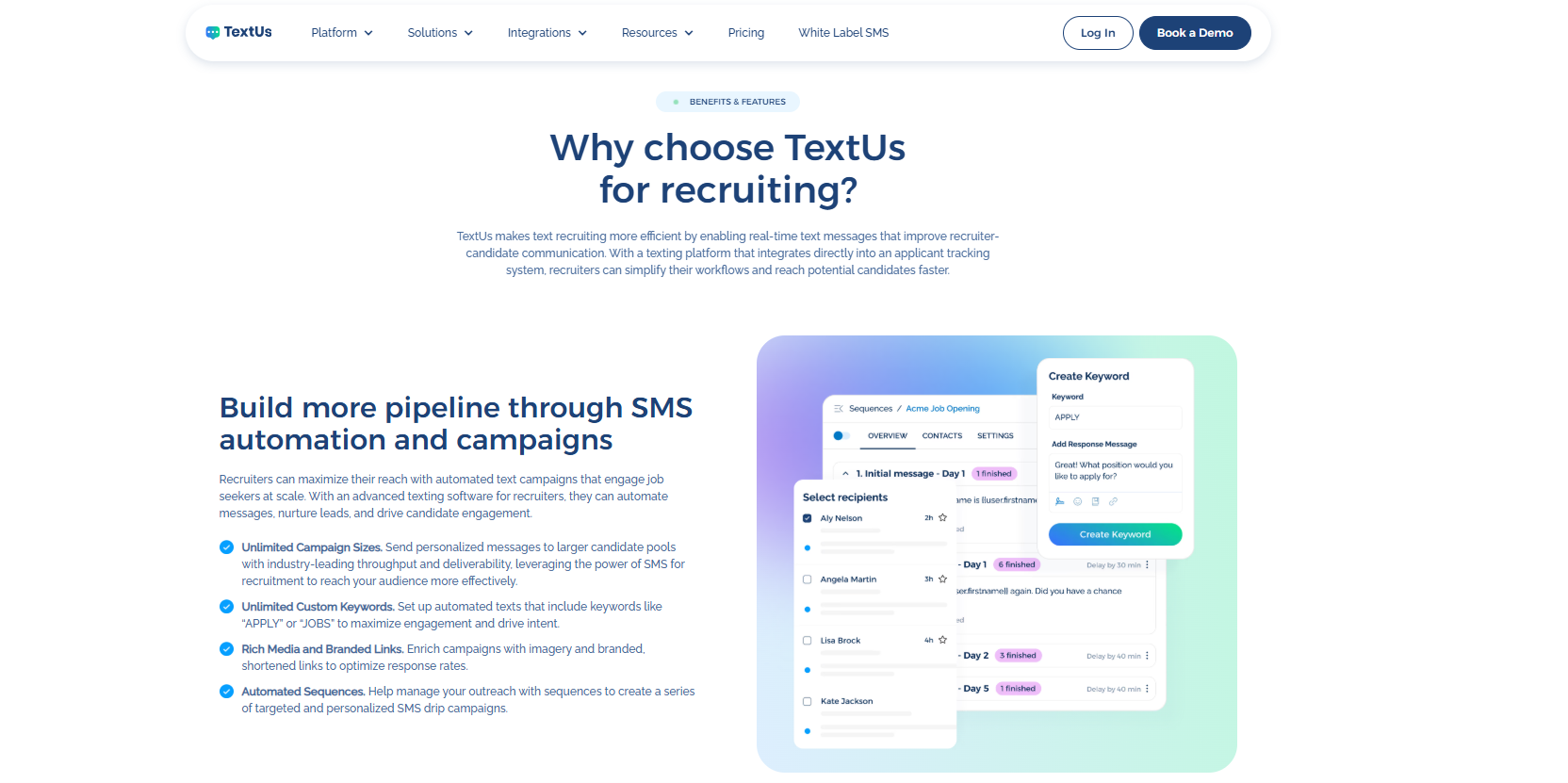
TextUs helps you reach larger candidate groups with personalized SMS marketing campaigns tied to relevant hiring opportunities.
This approach keeps candidates engaged through job alerts, hiring updates, event invitations, and re-engagement messages across different stages.
Unlimited campaign sizes also let you contact broader talent pools without sending every message from an individual account.
SMS keywords such as “APPLY” or “JOBS” give candidates a simple way to show interest and start conversations.
Turn Interest Into Two-Way Conversations
Candidate nurturing works best when people can respond instead of receiving another stream of one-way recruiting messages.
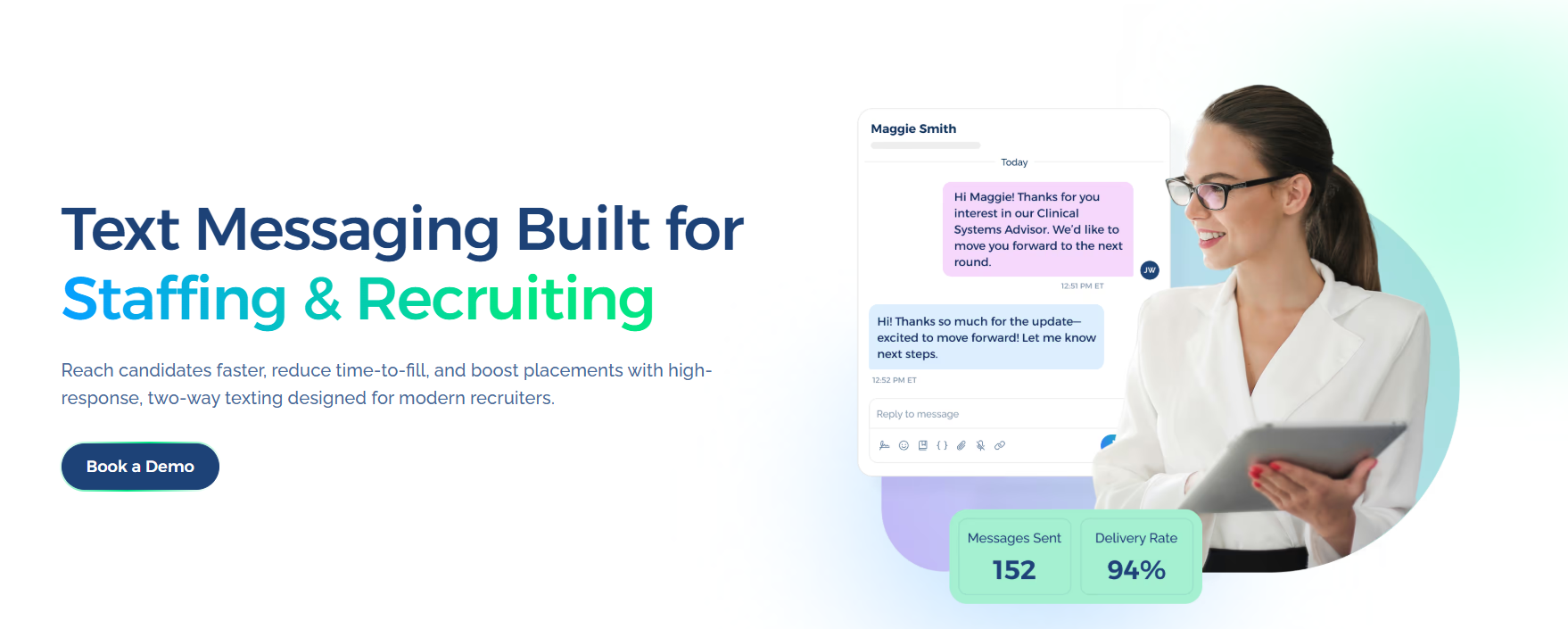
TextUs supports real-time conversational texting, so potential employees can ask questions, confirm interest, or share updated availability.
Mobile, web, and Chrome extension access also keep those conversations available wherever you manage candidate communication during the day.
A fast response can turn early interest into a meaningful conversation without requiring another email thread or scheduled call.
Personalize High-Volume Candidate Outreach
High-volume outreach doesn't need to sound generic when each message reflects relevant details about the candidate.
TextUs lets you personalize campaigns around role interest, location, hiring stage, previous contact, and other candidate information.
Texting templates also provide a consistent starting point while leaving enough flexibility for messages to feel more personal.
This balance helps your organization reach more people without making every interaction sound like the same mass campaign.
Keep Follow-Ups Consistent
Candidate relationships lose traction when follow-ups depend on someone remembering every message, date, and next step.
TextUs Sequences let you create targeted drip campaigns for check-ins, job alerts, interview follow-ups, and re-engagement outreach.
Each sequence follows a planned series of automated messages without requiring you to schedule every individual send by hand.
It gives HR teams more control over recurring outreach while preserving space for real conversations after responses.
Keep Candidate Conversations Connected
TextUs shared inboxes keep candidate replies visible to everyone responsible for moving each conversation toward the next step.
Multiple staff members can review message history, manage responses, and continue conversations without asking candidates to repeat themselves.
ATS integrations with Bullhorn, Greenhouse, Workday, and Oracle Taleo connect texting with the recruiting systems you already use.
Candidate messages stay linked to relevant records, which makes handoffs easier and reduces missing context between different systems.
Spend Less Time on Manual Updates
Manual record updates become harder to maintain when candidate volume grows across multiple roles, locations, and hiring stages.
TextUs syncs contact information and logs message activity within connected systems, reducing repetitive updates across candidate records.
Conversation history also shows what was discussed, who responded, and which action needs attention during the next interaction.
That visibility creates a more connected path from first contact through the conversations that lead to a great hire.
Turn Candidate Follow-Ups Into a Better Candidate Experience With TextUs
Candidate nurturing is easier when every follow-up, reply, and conversation stays connected across your hiring workflow.
TextUs brings two-way SMS, campaigns, automated sequences, and shared inboxes into a platform built for ongoing candidate communication.
ATS integrations keep message history tied to candidate records, while automated sequences handle recurring follow-ups without removing the option for a real conversation.
Shared inboxes also help multiple staff members manage replies, continue previous conversations, and avoid missed opportunities.
Finally, TextUs adds message quality and engagement tools that support better outreach as candidate volume grows.
Book a demo with TextUs today to see how these features can strengthen candidate nurturing from first contact through future hiring opportunities!
FAQs About Candidate Nurturing
Why am I getting calls from recruiters?
You may receive calls after applying through a job board, joining talent networks, or sharing professional information online.
Companies also discover candidates through social media platforms, talent databases, previous applications, or employee referrals from people they trust.
What are the 5 C's of recruitment?
The 5 C's refer to competency, character, communication, culture fit, and consistency when evaluating candidates during hiring.
Definitions vary across hiring frameworks. Each company may adapt these qualities around its job description and selection criteria.
What are red flags for recruiters?
Common red flags for recruiters include behaviors that may signal potential risk, such as chronic lateness, speaking poorly about past employers, lying on a resume, or showing no knowledge of the company.
What qualities make a good candidate?
A good candidate brings relevant skills, thoughtful communication, adaptability, accountability, and genuine interest in the position and company.
Strong candidates may also offer fresh perspectives that complement current employees and contribute something valuable to the workplace.
Continue Reading



Frequently Asked Questions
Business Texting
Built for Results
Create and convert pipeline at scale through industry leading SMS software