
Service Marketing: A Guide to Better Service Branding
Learn what service marketing is and how it works. Find out how to build a service marketing strategy and discover how TextUs can help you out.

Written by
Adam Hamdan
Published
February 13, 2026

Many service businesses run into the same problem: customers do not fully understand what they are buying until after they buy, so trust becomes the deciding factor.
Services tend to be harder to explain than products. Pricing can feel harder to justify, and competitors can look almost identical online.
Buyers also take longer to decide because they are comparing reviews, checking credentials, and paying attention to how fast your business responds.
In this article, we will break down what service marketing is and what makes it different. You'll also learn how to build a strategy that attracts leads and turns them into repeat customers.
TL;DR
- Service marketing differs from product marketing since customers cannot “see” what they are buying upfront, like they can with a product.
- Characteristics of service marketing include intangibility, inseparability, variability, perishability, and customer participation.
- The seven Ps of service marketing explain what drives results for service businesses: product, price, place, promotion, people, process, and physical evidence.
- A service marketing strategy works best when you focus on one offer, target the right customer, build a simple campaign, use clear CTA and testimonials, choose the right channels, follow up until the lead books, and track results.
- Long-term success comes from repeatable best practices like relationship-building, SEO content based on real customer questions, making reviews part of your delivery, building a repeatable system, and staying visible in slow seasons.
- TextUs supports service marketing with business SMS that improves lead response management, keeps conversations in one place, and drives more booked calls through reminders and follow-up sequences.
What Is Service Marketing?
Service marketing is the process of promoting and selling services, such as consulting, accounting, healthcare services, legal support, IT support, SaaS, or home repair.
This method focuses on trust, communication, and proof because services lack physical form. Marketing should also explain what you offer, how the service works, and what outcomes potential customers can expect.
Service marketing also depends on the customer experience. Your website, sales calls, follow-up messages, and customer support all shape how people judge your business.
Small details like response time, tone, and consistency can influence long-term customer satisfaction and loyalty.
Strong service marketing focuses on outcomes. Customers want to know what problem you solve, how you solve it, and why your business is a safe choice. Reviews, case studies, and personalized service packages make that choice easier.
Characteristics of Service Marketing
Service marketing offers intangible services that shape how you promote your offer, how customers judge value, and how people experience your business.
Intangibility
A service is not something an individual customer can hold, test, or see on a shelf.
A consultation, repair job, coaching session, or software setup is an experience. Service marketing should explain the value so customers understand what they are paying for before they buy.
Inseparability
Services are delivered and consumed simultaneously. The person providing the service is part of the service itself.
Positive customer experience depends on communication, professionalism, and how the service is handled from start to finish.
Variability
Service quality can change from one customer to the next because people are involved.
Even established businesses can deliver different results depending on staff, workload, or processes. Service marketing must show consistency through reviews, service standards, and clear steps.
Perishability
A service cannot be stored for later. An empty appointment slot, unused consulting hours, or a missed booking cannot be sold again once time passes. Service marketing should support steady demand and keep scheduling full.
Customer Participation
Many services require the customer to take part in the process. Customers may need to show up on time, provide details, follow steps, or approve work.
Service marketing should set customer expectations early so they know their role and what business success looks like.
The Seven Ps of Service Marketing
The service marketing mix is a framework that explains what drives growth for service businesses. The seven Ps of service marketing mix guide how you package your service, set pricing, promote your offer, deliver the service, and build trust before and after the sale.
1. Product
The product is the service you offer. It includes the work you deliver, the outcome the customer expects, and the service experience they have while working with your business.
A strong service is easy to understand and well-structured, with simple packages, a clear scope, and a strategic process.
2. Price
Price in service marketing is more than what you charge. It also shapes how customers judge your service, your expertise, and the value they expect to receive.
Many customers use price as a trust signal when they cannot see the service before purchase. Your marketing should explain what the price includes, what outcomes it supports, and what customers get at each level.
3. Place
Place in service marketing means where and how customers receive your service.
It includes your service location, delivery method, and the channels customers use to book and get support. For service-based businesses, a place can be a physical office, a customer site, an online platform, or a mix of all three.
4. Promotion
Promotion in service marketing is how you get attention, build trust, and turn interest into booked calls or service requests.
Since services are not physical products, promotions should deliver value and provide proof, such as reviews, case studies, and real customer results.
Service promotion uses the right mix of digital marketing channels based on how your customers search and decide. Common channels include SEO, content marketing, Google Ads, social media platforms, email marketing, word-of-mouth referrals, and partnerships.
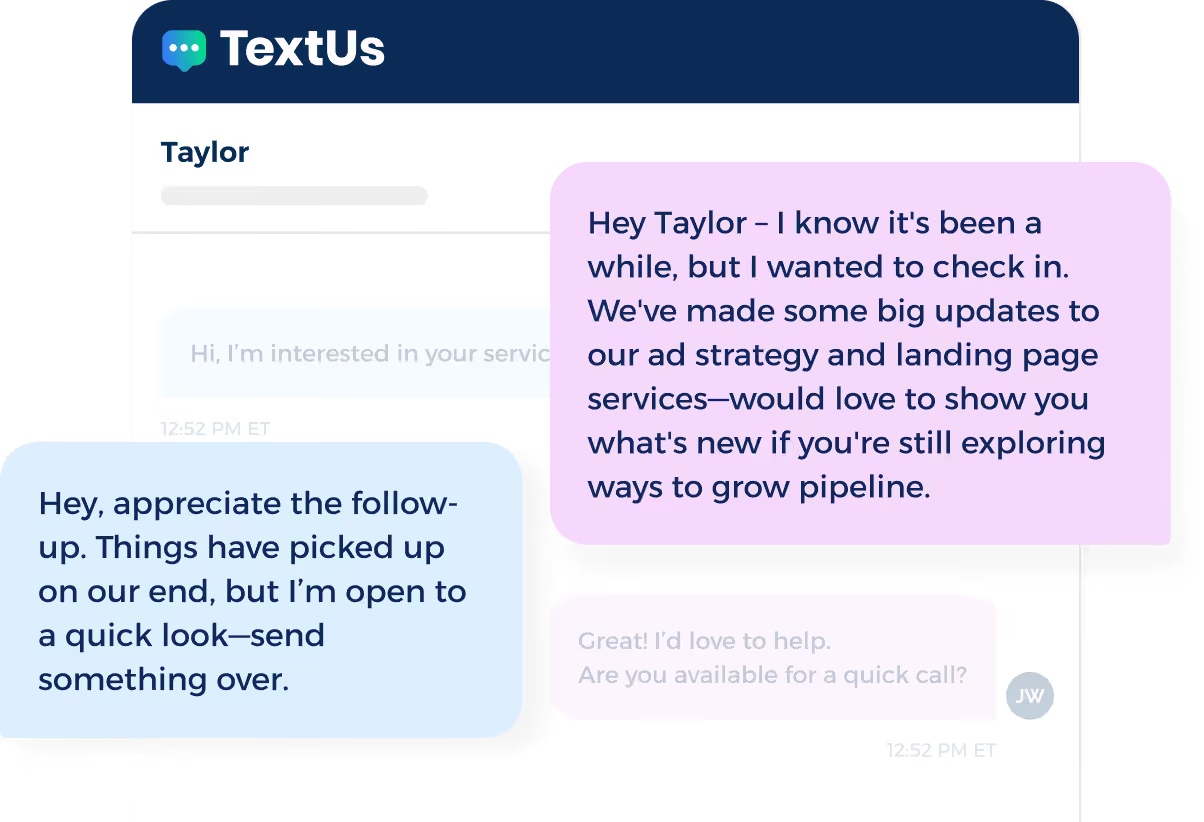
SMS marketing also supports exceptional customer service because it improves follow-up speed after a form fill, quote request, or consultation booking. It leads to more conversions and fewer lost leads.
Book a demo with TextUs and see how SMS can turn more interest into booked calls!
5. People
People in service marketing refer to everyone who interacts with the customer. It includes sales staff, service providers, customer support, and anyone involved in delivery.
Strong service marketing supports the people part by showing expertise and professionalism. Reviews, credentials, training, and communication standards all build confidence.
6. Process
Process in service marketing is the set of steps your business uses to deliver the service. It covers how customers book, what happens after they agree to move forward, how updates are shared, and how issues are handled.
High-quality service marketing makes the process easy to understand before the customer buys. Customers want timelines, next steps, and constant communication.
A simple process also supports consistent service quality, which leads to stronger reviews, repeat business, and long-term customer relationships.
7. Physical Evidence
Physical evidence in service marketing is the proof that shows your service is trustworthy and worth paying for. This can include reviews, customer success stories, case studies, certifications, awards, client logos, before-and-after photos, and service guarantees.
It also includes the small details that shape first impressions, such as your website quality, branding, proposals, invoices, and even how your staff presents the service.
How to Build a Service Marketing Strategy
A service marketing campaign is a planned set of messages and actions designed to attract leads, build trust, and turn interest into booked calls or signed clients. Here’s how to craft a service marketing campaign that drives real results:
Step #1: Start With a Single Service Offer
Most service businesses sell more than one service, so it feels natural to promote everything at once. The problem is that broad marketing creates weak marketing. Customers do not want a long list of options.
A single service offer makes your business look more specialized. Buyers assume specialists deliver better results than generalists.
Even if your company offers many services, your campaign can focus on one service at a time, then rotate to the next service later.
For example, if you're running a digital agency, you may offer SEO, paid ads, web design, and content. A single campaign could focus only on SEO audits for service businesses. Another campaign later could focus on lead follow-up systems.
Step #2: Define Your Target Customer
If you try to market your service to everyone, your message becomes generic. Templated messaging does not connect with real customer needs, and it leads to low-quality leads and wasted ad spend.
Start by focusing on the problem your customer wants solved. Most people do not search for “services.” They search for outcomes.
Your best target customer is the group that gets the strongest results from your service. These customers tend to stay longer, refer others, and require less convincing because your quality service fits their situation.
You can review past customers and look for patterns using customer data. Pay attention to who had the smoothest onboarding, who got the most value, and who was easiest to support.
You also need to understand how your target audience makes decisions. Service buyers ask the same questions before they commit. They want to know what the service includes, how long it takes, what results to expect, and what happens after they book.
Targeting also makes SMS marketing more powerful. Once you know who you are speaking to, you can use SMS segmentation to group leads based on the service they asked about or how close they are to booking.
Even if you send a bulk text, it still does not feel generic, because each message goes to a specific group with a specific need. That's how you get more replies, more booked calls, and fewer leads that disappear after the first inquiry.
Step #3: Build a Simple Campaign
Many service businesses lose leads because their campaign is too broad or too vague. A simple message starts with the customer problem rather than your business description.
Customers care about what changes for them after they buy. They want to know what goal you support and what outcome they can expect.
A simple service marketing message should include three parts: what you do, who you do it for, and what outcome the customer gets.
Here are examples of simple service marketing messages:
- “We help dental offices get more appointment requests through SEO and follow-up.”
- “We provide bookkeeping for contractors, so you always know where your money goes.”
- “We offer IT support for law firms with fast response and secure systems.”
- “We install and maintain HVAC systems for homeowners who want reliable comfort.”
Your message should also match the customer’s language. Avoid service-industry terms, internal process words, or phrases that sound like marketing. Service buyers trust direct wording more than fancy claims.
Step #4: Add Proof or Customer Testimonials
People want reassurance that your business is reliable and worth the cost. Proof reduces doubt and makes it easier for a buyer to move from interest to action.
A generic claim like “great service” does not carry much weight. Real proof shows who you did it for and what changed after the service was delivered.
It also supports trust during the sales process, especially for higher-priced professional services where buyers take more time to decide.
Strong proof also matches the service you are promoting. If your campaign is about SEO for service businesses, proof should focus on leads, traffic, booked calls, or rankings.
Here are examples of proof that bring results in service marketing:
- Customer reviews and star ratings
- Case studies with real results
- Before-and-after photos or examples
- Client logos or recognizable brands
- Certifications, licenses, and awards
- Video testimonials
- Service guarantees and policies
You can add proof in many places, such as landing pages, service pages, ads, emails, and sales decks. It also belongs in your follow-up, so prospects keep seeing confidence signals even after they leave your site.
Step #5: Choose the Right Channels
The best service in the world will not sell if it is promoted in the wrong places. A well-thought-out service marketing campaign meets customers where they already search, research, and make decisions.
Start by thinking about how people find your type of service. Some services are searched on Google, like “roof repair near me” or “bookkeeping for contractors.” Other services are found through referrals, social platforms, or partnerships.
Your goal is to match the channel to the customer’s intent. If someone is ready to buy, search ads and local SEO can perform well. If someone is still learning, content marketing and email can build trust over time.
High-ticket B2B services need more follow-up because buyers take longer to decide. Local services rely more on local SEO, Google Business Profile, and fast response to new leads.
SMS is a major advantage in service marketing because it supports speed and consistency. Many service firms lose leads because they respond too late or follow up stops after one email.
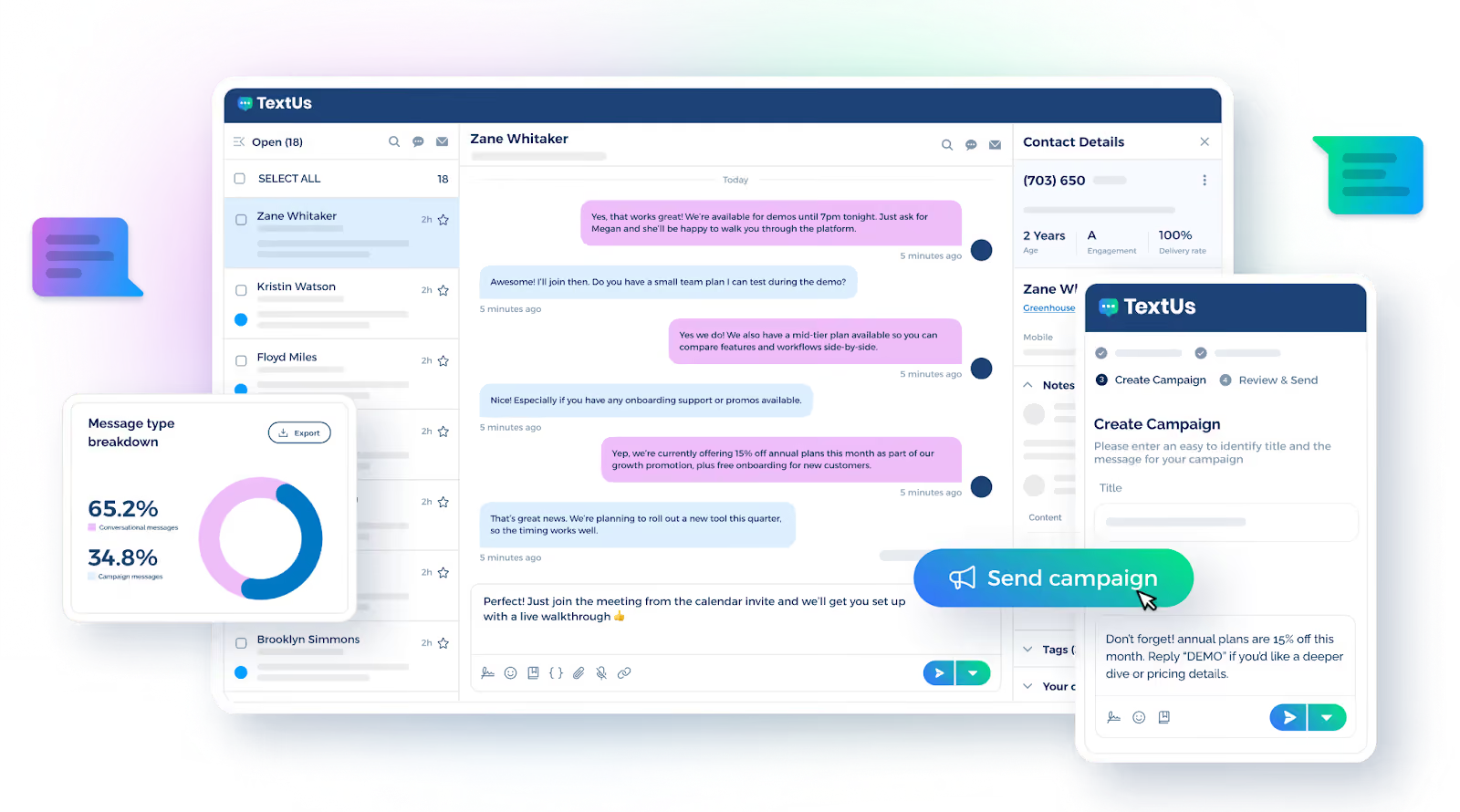
Business text messaging keeps customer interactions moving, makes scheduling easier, and reduces drop-off after a form fill or quote request. It also works for reminders, quick answers, and simple next steps, which leads to more booked calls.
Book a TextUs demo to see how it works for your sales and service workflow!
Step #6: Create a Strong Call to Action (CTA)
A CTA is the main action you want a reader or lead to take after seeing your service marketing campaign. They are more effective when they match the customer’s intent.
Some people are ready to book right away. Others want pricing, a quote, or a quick first conversation.
If your CTA asks for too much too soon, many prospects will leave. But if your CTA is too light, you can miss leads who are ready to move forward.
“Contact us” does not explain what happens next. A CTA like “Book a 15-minute consultation” is clearer because it sets expectations and defines the time commitment.
Your CTA should also match your service process. If you normally start with a discovery call, the CTA should lead to that. Your campaign will convert better when it fits how your business sells.
Step #7: Follow Up With Every Lead
Most service leads do not convert after one visit, one form fill, or one call. They need reminders, answers, and reassurance before they commit.
A follow-up plan keeps your business present during the decision stage. It also reduces the number of leads that go cold simply because they got busy.
Service buyers compare multiple providers, talk to a partner, wait for budget approval, or delay the decision for personal timing. Follow-up keeps the conversation open until they are ready to book.
SMS is one of the best follow-up channels for service marketing because it fits how people communicate. Text messages are read fast, and they make it easy for a lead to respond without logging into email or sitting on a long phone call.
SMS drip campaigns are a planned sequence of text messages sent over a set period of time. It keeps follow-up consistent without relying on someone to remember every lead. It also gives your business a simple way to stay in contact without sounding pushy or repetitive.
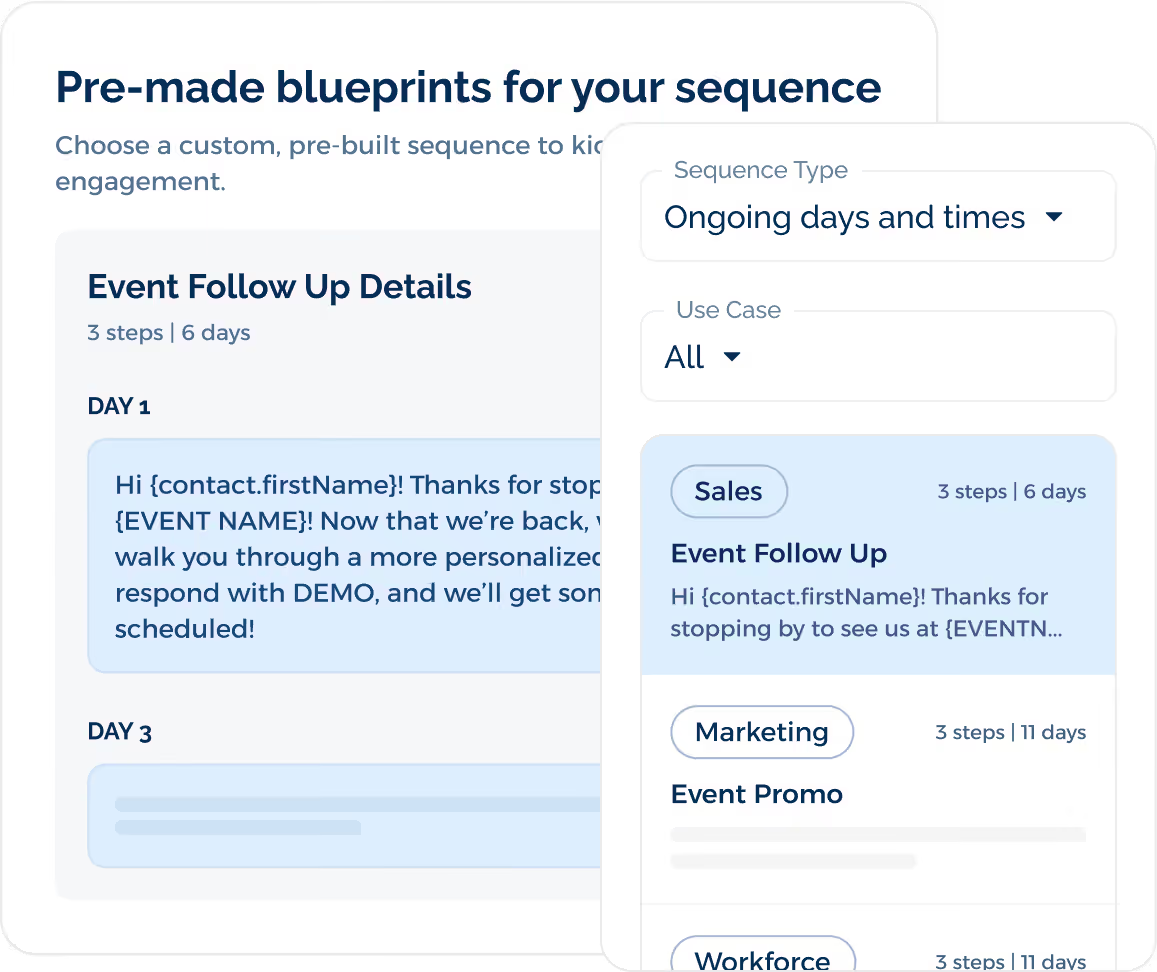
With TextUs, you can set up text sequences that can be used for several goals. It can remind a lead to book a consultation, confirm a quote request, or bring a cold lead back into the sales process.
It can also support retention after the sale, such as check-ins, renewal reminders, review requests, and repeat service offers.
A good follow-up plan turns more leads into satisfied customers and more customers into repeat buyers. It’s one of the highest-impact systems a service business can build.
Step #8: Track Results That Connect to Revenue
If you do not measure performance, you will not know which channel is bringing real leads, which message is converting, or where prospects drop off.
Service companies also have more moving parts than product businesses, so tracking helps you see what is working from first click to booked call to closed deal.
You need to track how many leads you generate, how many book a call, and how many become paying customers. Then track the cost tied to those results.
Here are examples of service marketing metrics worth tracking:
- Leads generated per channel
- Cost per lead
- Booking rate (lead to consultation)
- Close rate (consultation to customer)
- No-show rate
- Average sales cycle length
- Customer retention rate
- Review rate and referral rate
- SMS reply rate and link click rate
A campaign that brings 100 leads is not a win if none of those leads convert. A campaign that brings fewer leads can still be a better campaign if lead quality is higher.
Next, track how leads move through your service delivery process. You need to consider lead response time, follow-up activity, and no-show rates.
Many service marketers lose revenue at the follow-up stage, not at the lead generation stage. Tracking helps you spot where the breakdown happens and fix it.
Performance SMS platforms can turn basic texting into a trackable communication system. You can track delivery, replies, link clicks, and conversions tied to each follow-up sequence.
Service Marketing Best Practices for Long-Term Success
Service marketing success over the long term comes from repeatable habits rather than one-time campaigns. These best practices support your strategy by improving trust and customer experience:
Focus on Relationships Over Transactions
Relationship-based service marketing outperforms marketing that focuses solely on a quick sale.
Customers are looking for realistic expectations and easy ways to ask questions. They also want to feel like they are working with a real business that cares about quality, not a provider that disappears after payment.
Retention marketing is a major part of strong customer relationships. These touchpoints can include check-ins, service reminders, helpful tips, or follow-up, which help retain customers.
Conversational SMS marketing is one of the simplest ways to stay close to every customer. Regular communication makes it easier for customers to keep coming back because your business is easy to reach.
With SMS, you can send order updates, reminders, and follow-ups, or use real-time texting to answer questions and keep the service personal.
Turn Questions Into SEO Content
Most buyers do not search for a company name first. They want to understand pricing, timelines, what is included, and what results to expect.
If your website answers those questions, you attract higher intent traffic and build trust before the first call.
Question-based content can quickly grow your SEO traffic. Search engines rank pages that match what people ask.
A blog post titled “How much does roof repair cost?” or “What is included in monthly bookkeeping?” aligns with real search intent and attracts visitors already interested in the service.
Question content also supports sales. A prospect who reads one of your answers has fewer doubts. They understand the basics, and they are more prepared to book a call or request a quote.
Over time, these pages can reduce repetitive sales conversations because your site covers the common questions upfront. This also strengthens your marketing materials because they become more useful at every stage of the buying process.
Make Reviews Part of Delivery
Reviews can increase customer satisfaction because customers feel heard when you ask for their opinion.
Many service businesses treat reviews as an optional task, so they only ask once in a while. That leads to inconsistent review volume and long gaps in fresh customer feedback.
The best time to request a review is right after a positive service moment, when the customer is satisfied, and the experience is still fresh. If you wait too long, customers forget details or lose motivation.
Your review request should also be easy. If the process takes more than a minute, many will skip it. A text message with a shortened link is enough.
You can also include a quick thank-you message after the review is submitted to reinforce the relationship and support a future loyal customer base.
Build a Repeatable Referral System
Referral leads tend to convert faster and cost less than paid leads. The problem is that many service businesses depend on referrals without having a system for generating them.
A repeatable system means referrals become a planned part of your process. Customers are most willing to recommend you when satisfaction is high, and the service is still fresh in their minds.
You can use incentives, such as discounts or gift cards. You may also use non-cash rewards, such as a free add-on service or priority scheduling. Incentives are not required, but they can encourage repeat business if they match your brand and pricing model.
Referral programs also run more smoothly when your business is set up to service efficiently. Consistent delivery makes customers more confident recommending you to others.
Stay Visible Even in Slow Seasons
Some service businesses market during peak seasons, then slow down when demand drops. The problem is that marketing gaps create revenue gaps and weaken long-term marketing efforts.
If your business disappears for weeks or months, customers forget about you, and competitors take the attention you worked hard to earn.
Buyers still conduct market research during slow months. They compare providers, read reviews, and plan future projects. If your business stays present, you stay in the running even before the customer is ready to book.
Slow seasons are also the best time to strengthen your marketing foundation. You can publish new SEO content, update service pages, refresh case studies, and improve your follow-up systems.
These activities support long-term growth and improve service performance when demand rises again.
Stop Losing Leads to Competitors and Start Texting With TextUs!
Leads move quickly, and service buyers contact multiple providers at once. The business that replies first and stays in contact wins the booking.
TextUs gives your business a professional way to manage service quality by using SMS. You can keep conversations organized with faster replies, appointment scheduling, reminders, and follow-up sequences. It's easier to deliver excellent customer service at every step.
See how business texting can support stronger retention and better customer experience. Book a demo with TextUs today!
FAQs About Service Marketing
What is meant by service marketing?
Unlike physical products, service marketing means promoting and selling a service.
Traditional product marketing focuses on benefits and features. Service marketing focuses on explaining the value of the service, building trust, and showing proof.
Service marketing also includes the full customer experience, from first contact to follow-up after the service is delivered. Every service encounter shapes trust and long-term consumer satisfaction.
What is a typical example of service marketing?
A typical example of service marketing is a local dental office promoting teeth-whitening services through Google Search Ads, a dedicated service page on its website, and customer reviews.
Another example is a marketing agency using blog content, case studies, and consultation calls to sell monthly SEO services. Both examples show how strong service marketing efforts rely on trust, proof, and consistent follow-up.
What are the seven Cs of service marketing?
The seven Cs of service marketing is another framework used to improve service delivery and customer experience. Different sources use slightly different versions, but the most common seven Cs include:
- Customer
- Cost
- Convenience
- Communication
- Credibility
- Consistency
- Confirmation
This framework focuses more on how customers experience high-quality service and how you build trust through communication and delivery.
Continue Reading



Frequently Asked Questions
What is service marketing and how does it differ from product marketing?
Service marketing promotes intangible offerings where the customer's experience, trust, and perceived quality are the primary purchase factors. Unlike product marketing, service marketing must build credibility before a buyer commits, since they can't evaluate the service until after purchase.
Why is responsiveness critical in service marketing?
Slow response times signal poor service quality before a buyer has even become a customer. In service businesses, how quickly and professionally you respond to inquiries is often the first tangible demonstration of the service level you deliver.
What communication strategies work best for service-based businesses?
Multi-channel communication — combining email, SMS, and phone — ensures service businesses reach potential and current clients on their preferred channel. Personalized, timely outreach builds trust and differentiates service providers in competitive markets.
Business Texting
Built for Results
Create and convert pipeline at scale through industry leading SMS software