
The Value of SMS Integrations for Customer Communication
Explore common SMS integrations and find which tools can help you set it up with ease. Discover how TextUs can help you text your customers.

Written by
Adam Hamdan
Published
December 24, 2025

While business texting is one of the quickest ways to reach customers, it often operates in isolation. Teams juggle multiple tools, send one-off messages, and struggle to keep timing aligned with customer behavior.
When you integrate your SMS platform with the rest of your tech stack, it becomes a smart, automated part of your customer experience.
You can send reminders, order updates, and follow-ups without switching systems or guessing what should happen next.
In this article, we’ll break down where SMS integrations deliver the most value and how to connect them to tools you already use. We’ll also explore how combining SMS and email creates a more complete experience for your audience.
TL;DR
- SMS integrations transform texting from a manual task into a seamless, automated part of your communication stack.
- Syncing SMS with email marketing, loyalty systems, and billing tools helps you deliver more relevant messages across the entire customer journey.
- Real-time triggers, personalization, and smarter segmentation improve campaign performance while reducing manual work.
- Disconnected systems lead to poor timing, inconsistent messaging, and missed opportunities to build trust with your audience.
- TextUs helps you send customized messages from your existing tools so every interaction is connected and consistent.
What Are SMS Integrations?
SMS integrations connect your text messaging platform to the tools you already use.
Your ecommerce store, customer relationship management (CRM) system, help desk, billing system, and email platform share data with your SMS tool so you can send targeted messages instead of blasting one generic campaign.
Your SMS marketing platform becomes more powerful when paired with your email platform. You can map out full-funnel customer journeys where email handles long-form content. Meanwhile, SMS delivers short, time-sensitive prompts.
Actions like tagging a lead, processing a payment, or updating an order status can also automatically trigger SMS messages. It cuts out repetitive tasks and frees up your team to focus on strategy rather than chasing down reminders.
SMS performance metrics like click-through rates, opt-outs, and revenue are shared across your analytics tools. This helps you gain better visibility and use this data to segment your audience.
10 SMS Marketing Integrations to Boost Your Outreach
SMS integrations unlock real-time, personalized messaging that works alongside your other platforms. Below are the most valuable SMS integrations you can deploy:
1. Ecommerce Platform Integration
When someone places an order, they receive a confirmation by text. This creates a smooth and reliable touchpoint in the buying journey.
As the order ships, an SMS with tracking details follows. These updates reduce support questions and help set expectations, especially during high-volume periods.
Inventory events also trigger relevant messaging. When a product returns to stock or drops in price, customers who previously showed interest can be alerted automatically.
This type of SMS functionality keeps urgency high and drives faster conversions without additional campaign work.
For stores focused on first-time buyers, SMS incentives can be tied to page views or time spent on site. If a customer explores a product but doesn’t purchase, a welcome offer can be sent, triggered by their interaction with your storefront.
Tools like Shopify, BigCommerce, and WooCommerce support native or third-party SMS integrations through platforms such as Klaviyo SMS, Postscript, or Attentive. These integrations also sync opt-in preferences, customer profiles, and contact records.
2. Email Marketing Platforms
When SMS and email platforms work together, your messaging becomes more coordinated. Instead of running disconnected campaigns, you can design cross-channel flows that span multiple channels.
For example, a welcome email might go out first. If the recipient doesn’t open it within a day, your SMS platform can send a short follow-up with a direct offer or link.
SMS can be used to tease a product drop, flash sale, or product announcements, while email carries the full details.
Integration also means contact lists, consent status, and engagement data stay in sync. You avoid double-messaging or sending to opted-out users.
Customer tags, email open rates, or click behavior can trigger segmented SMS marketing campaigns that speak to a subscriber’s actual interest.
TextUs makes it easy to send and receive texts directly from your CRM, just like you would with email or phone calls. You can trigger follow-ups, automate campaigns, and keep a full conversation history.
Bring SMS into your workflow without disrupting how you work. Book a demo with TextUs today!
3. CRM and Customer Data Platforms
With a CRM integration, you can trigger messages based on actions. A lead who requests a demo can receive messages with next steps, while your team gets alerted.
With TextUs, you can trigger messages from form submissions, missed calls, or status changes, so leads receive next steps instantly, and your team stays informed.
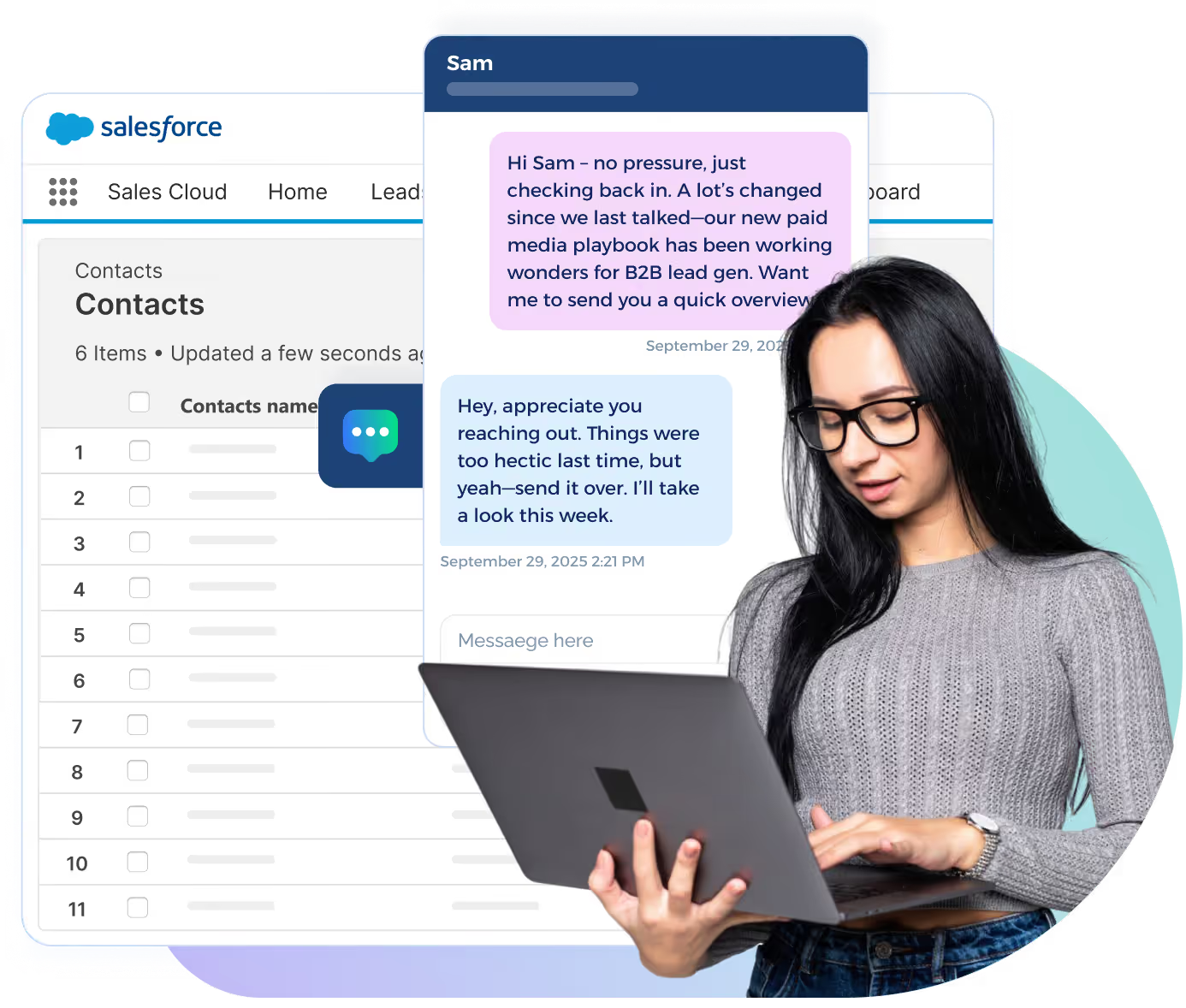
You can use that data to send messages like restock alerts, special offers, or subscription prompts tied to actual usage patterns. When this level of context is built into your strategy, messages move beyond basic automation and become a part of real customer experiences.
Rather than pushing generic updates, your SMS campaigns become focused and responsive. High-intent actions get matched with timely texts, while inactive users can be re-engaged with tailored incentives.
4. Cart Abandonment Recovery
Cart abandonment is one of the biggest leaks in the ecommerce funnel. Customers leave without completing a purchase, sometimes due to distraction, indecision, or lack of urgency.
When your SMS service tool is connected to your ecommerce system, it detects when a logged-in user adds items to their cart but doesn’t check out.
Based on your timing preferences, the system can send SMS messages within an hour, a few hours later, or the next day. The message includes a direct link to return to the cart, making it easy to complete the purchase with one tap.
The tone of these messages can vary based on behavior. A first-time visitor might receive a friendly nudge with a personalized offer, while a returning shopper could get a reminder focused on product availability.
Most platforms like Klaviyo, Postscript, and SMSBump offer built-in cart abandonment flows that integrate with Shopify, BigCommerce, or WooCommerce. You can customize the time you send marketing texts and incentives to match your brand and goals.
5. Helpdesk and Customer Support Systems
SMS bridges the gap between your team and your customers to provide real-time updates without relying on email or support portals.
With the right integration in place, your SMS marketing platform can trigger automatic messages when a ticket is opened, updated, or closed.
Customers get order confirmations that their request has been received, and they stay informed as your team works through a resolution using shared systems within your tech stack.
Some systems turn inbound SMS replies into support tickets. When a customer texts in a question or complaint, that message becomes a ticket in your helpdesk, complete with customer history and context.
Platforms like Zendesk, Gorgias, and Help Scout all support SMS integrations through third-party connectors. These tools sync ticket status with messaging workflows and allow teams to automate parts of the customer support experience.
6. Loyalty and Rewards Programs
SMS is a powerful driver of retention by keeping loyal customers engaged. You can send updates via mobile apps and messaging channels.
When someone earns points, unlocks a reward, or hits a new tier, an SMS can go out instantly. That moment of recognition encourages repeat purchases and reinforces value for most loyal customers.
If a reward is about to expire or a points balance is just short of a redemption threshold, a timely reminder can prompt action and unlock additional incremental revenue.
This type of messaging doesn’t need to be frequent to be effective. A few well-timed texts, triggered by activity in your loyalty system, can keep customers aware of the value they’re building with your brand.
Platforms like Smile.io, Yotpo Loyalty, and LoyaltyLion offer SMS integrations that sync customer loyalty data with your messaging tool. These connections make it easy to automate reward-related messages based on individual behavior.
7. Subscription Billing and Retention
Missed payments and silent cancellations are constant challenges. When integrated, your SMS tool can send alerts for upcoming renewals, failed transactions, or expiring payment methods.
Customers who receive early communication about their subscription are less likely to cancel out of frustration or confusion.
If your platform includes multiple plans or billing cycles, you can also trigger upgrade or downgrade prompts based on usage data to ensure the subscription still fits their needs.
Tools like Recharge, Stripe, and Chargebee support SMS integrations directly or through connectors like Zapier. These setups make it easy to tie billing events to personalized text messages without building a custom workflow.
8. Feedback and Surveys
After a purchase, support interaction, or event, an SMS can invite the customer to complete a short survey or leave a review. The message includes a direct link to a form created in tools such as Typeform, SurveyMonkey, or Delighted.
SMS works well in this context because of its speed and simplicity. A quick message delivered based on survey data increases the likelihood of a response.
The integration also gives your team a way to respond quickly to negative feedback. If a customer shares a low score or unsatisfactory response, the system can tag that submission and notify your support team to follow up right away.
9. Lead Capture and Qualification
Lead generation is only the first step. What matters next is how quickly your business follows up and how well you qualify that lead for the right action.
When someone fills out a form to request a demo, download a guide, or join your list, the integration allows you to send messages within seconds using advanced SMS capabilities.
That first message can include a thank-you note, a scheduling link to schedule appointments, or a simple question to keep the conversation moving.
If you rely on real-time qualification, SMS also serves as a fast filter. You can ask a quick follow-up question by text and use the reply to score or tag the lead in your CRM.
If the lead meets a certain threshold, your system can notify sales or assign them at the right moment.
Tools like HubSpot, Salesforce, and Intercom all support integrations that link lead capture events to SMS. With this setup in place, your sales funnel becomes more responsive, and your team stays focused.
10. Influencer and Affiliate Program Integration
When your program launches a new promotion, tracks a performance milestone, or finalizes a commission payout, an integrated SMS can notify partners immediately. These messages help affiliates stay aligned with your marketing calendar, especially during fast-moving campaigns.
Some enterprise messaging platforms integrate with tools like Refersion, UpPromote, or Aspire through native connectors or automation layers like Zapier.
These setups allow your program data, such as campaign assignments, payouts, or referral metrics, to trigger timely messages at scale.
Whether you're working with a network of micro-influencers or a few high-performing affiliates, this type of integration helps your brand stay present and organized.
SMS doesn’t replace email or dashboards, but it reinforces urgency and improves the chances that partners receive text messages and respond in time before the window closes.
Why You Should Not Run SMS Integrations in a Silo
According to Salesforce, 79% of customers expect consistent interactions across departments, but 55% say they often feel like they're communicating with separate teams rather than one brand.
While SMS is powerful on its own, running SMS without syncing it to the rest of your systems limits its impact and creates unnecessary delays. It’s easy to miss critical triggers like SMS notifications tied to customer behavior or lead activity.
According to Adobe, 71% of consumers say misleading claims and aggressive sales tactics are the top reasons they don’t buy. Other than ads, this also applies to how your brand comes across in messages.
An SMS campaign that ignores timing or intent can come off as pushy, even when that wasn’t the goal. When your SMS platform isn’t integrated with your CRM or ecommerce data, it’s easy to send the message at the wrong time.
What makes it all work is personalization. Not the kind that requires one-to-one manual effort, but the kind you can scale using dynamic content, real-time triggers, and meaningful SMS segmentation.
To do this well, your tools need to stay in sync. You need accurate customer data, a shared customer view, and clear rules for when and why messages go out.
The right SMS integrations are built to support the full customer lifecycle. These integrations allow you to create messaging that is rooted in real behavior.
Create Better Experiences at Every Touchpoint—Integrate SMS With TextUs!
TextUs makes it easy to send relevant messages without switching tabs or relying on disconnected workflows. Every customer interaction feels like part of the larger experience rather than just a one-off follow-up.
SMS integrations with TextUs bring your communication strategy into full alignment with the platforms your team already uses.
You can send one-to-one texts, launch broadcast messages, and manage full conversations from your CRM or applicant tracking system (ATS). Every contact is synced, and every conversation is part of a larger customer or candidate journey.
If you’re looking to improve response rates, speed up follow-ups, and keep messaging consistent across your systems, TextUs is the best SMS platform that makes it happen.

Start connecting your tools, teams, and conversations with SMS integrations built for business. Book a demo with TextUs today!
FAQs About SMS Integrations
Which metrics matter for SMS integrations?
Key metrics include message delivery rate, response rate, opt-out rate, and click-through rate.
When SMS is integrated with your CRM or marketing tools, you can also track performance. Then, tie the message activity to pipeline movement or customer engagement through your web app or reporting dashboard.
Tools that offer a powerful API let you push this data into platforms like Google Sheets for custom reporting.
How do SMS integrations support global audiences?
Most SMS platforms that offer integration support can scale across international markets with features like time zone-based sending, phone number formatting, and local compliance settings.
When connected to your systems, these tools help you personalize while respecting global regulations. Integrations also support scheduling through tools like Google Calendar, so that you can plan campaigns in local time zones and automate delivery windows.
Can you run SMS without a CRM?
Yes, but it restricts your capacity to customize, automate, and monitor outcomes.
A CRM connection gives your texts context and makes every message more targeted. For example, Zoho CRM or Hubspot Workflows allow you to schedule texts, trigger campaigns, and maintain conversation history.
Full CRM integration also opens the door to supporting internal systems like Microsoft Teams, syncing with task assignments, and using fallback options like voicemail when a message goes unanswered.
Can SMS replace phone calls?
SMS can’t fully replace phone calls. But it does offer a faster, more convenient way to reach customers for routine updates, reminders, and confirmations.
Many businesses also combine SMS with platforms like Facebook Messenger to meet customers where they’re already active. When integrated across one channel or more, SMS cuts down on call volume without sacrificing responsiveness.
Continue Reading



Frequently Asked Questions
Why are SMS integrations important for customer communication?
SMS integrations connect your texting capabilities to the rest of your tech stack — CRM, marketing automation, e-commerce, and support tools — so messages are automatically triggered at the right moments and all conversations are tracked without manual effort.
What platforms should a business SMS tool integrate with?
Key integrations for business SMS include Salesforce and HubSpot for CRM, ATS platforms for recruiting, marketing automation tools like Marketo, help desk platforms like Zendesk, and Zapier for connecting to any other tool in your stack.
How do SMS integrations improve the customer experience?
Integrated SMS creates a seamless customer experience by delivering messages that are triggered by real customer actions, personalized with CRM data, and logged alongside all other interactions. Customers receive relevant, timely texts that feel personal rather than mass-produced.
Business Texting
Built for Results
Create and convert pipeline at scale through industry leading SMS software