
Top 30 Enterprise Automation Tools in 2026 (By Type)
Explore our list of top 30 enterprise automation tools available in 2026, divided by category. Discover what makes TextUs the best SMS automation tool.

Written by
Adam Hamdan
Published
February 9, 2026

When your business grows, so do the moving parts. Teams run into delays, missed updates, and disconnected tools that make it challenging to keep work moving.
Without the right systems in place, small problems start to slow everything down.
Enterprise automation tools are designed to fix these problems. These tools move information between platforms, assign tasks based on rules, and help keep processes in order.
In this article, we’ll walk through the different types of enterprise automation tools and explain how they solve everyday operational challenges. We'll also present 30 platforms that stand out for their key factors, from integration capabilities to scalability.
TL;DR
These are the different types of enterprise automation tools and the best platforms for each category:
- SMS automation tools – TextUs, Twilio, TrueDialog
- Workflow automation tools – Zapier, Microsoft Power Automate, Workato
- Robotic process automation tools – UiPath, Automation Anywhere, Blue Prism
- Business process management tools – Camunda, Bizagi, Appian
- Marketing automation platforms – HubSpot, Marketo Engage, ActiveCampaign
- Sales and CRM automation tools – Salesforce, Zoho CRM, Microsoft Dynamics 365 Sales
- HR automation tools – SAP SuccessFactors, Rippling, Oracle HCM Cloud
- Communication and collaboration automation tools – Slack, Microsoft Teams, Zoom
- Analytics and reporting automation tools – Microsoft Power BI, Tableau, Qlik Sense
- Finance and accounting automation tools – NetSuite ERP, Oracle Fusion Cloud Financials, Tipalti
SMS Automation Tools
SMS automation tools make it easy to send text messages automatically to customers, leads, or staff, while reducing operational costs.
SMS marketing automation is used for appointment reminders, order updates, payment notices, and quick customer support messages. One standout solution in this space is TextUs.
1. TextUs
What sets TextUs apart from other SMS automation tools is its focus on true two-way conversations.
TextUs gives your business the power to have real conversations with customers or prospects, using a simple, web-based interface. The platform allows you to schedule texts, send group messages, automate follow-ups, and track replies in real time.
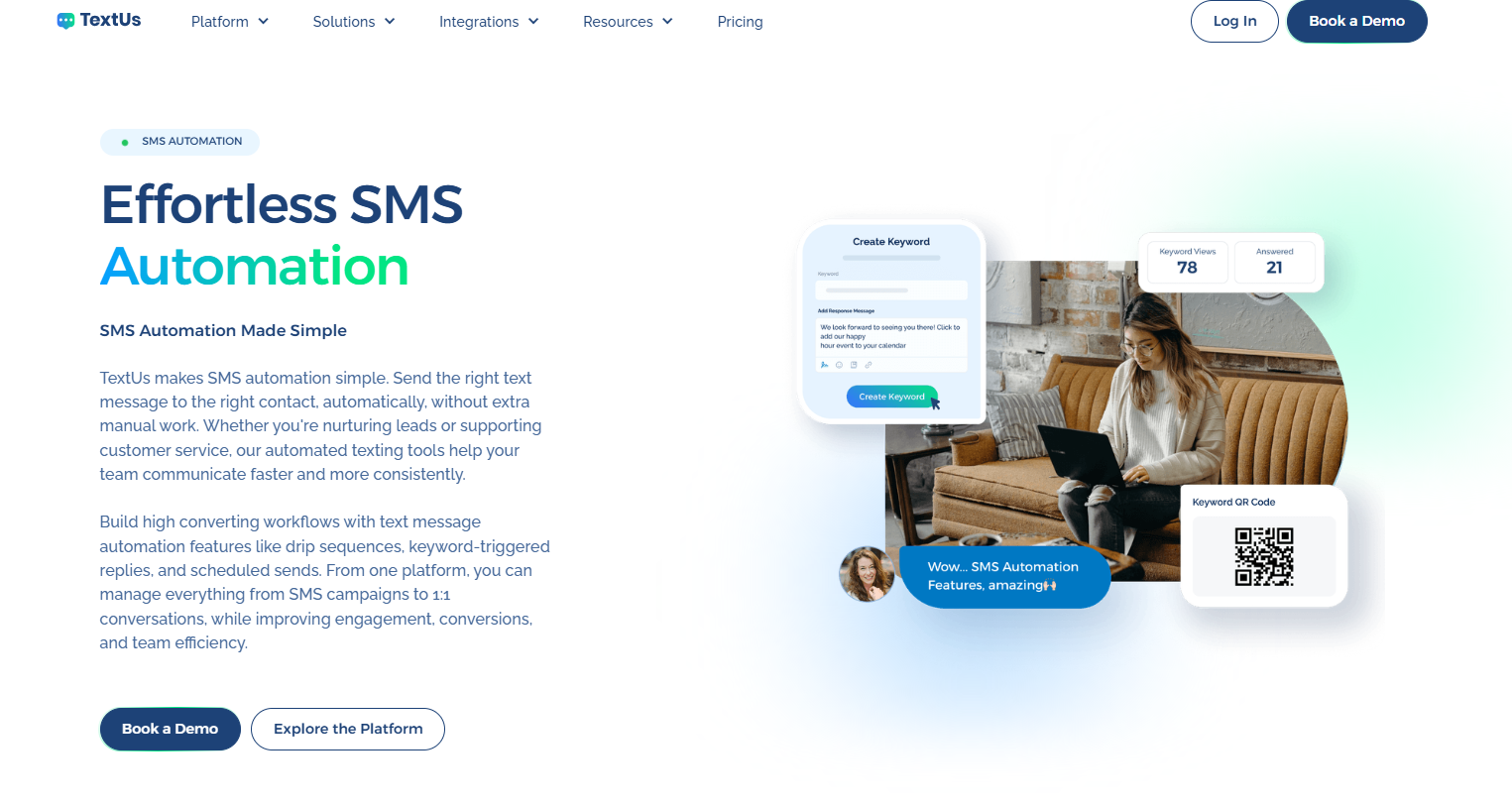
With shared inboxes and team collaboration features, your staff can assign, track, and prioritize conversations. This supports structured communication for sales, recruiting, service, and internal operations.
TextUs also connects with your existing business systems. It integrates with customer relationship management (CRM) platforms, applicant tracking systems (ATS), HR information systems (HRIS), and other core platforms such as Salesforce, HubSpot, Microsoft Dynamics, and Oracle.
It can trigger messages and log conversations based on actions or updates in those systems.
It also includes automation tools like SMS drip campaigns, keyword‑triggered replies, and scheduled sends that help you maintain consistent communication.
The platform provides analytics for delivery, engagement, and response metrics. It also has SMS segmentation and keyword opt‑in features that support enterprise‑grade campaigns and compliance workflows.
Book a demo with TextUs today to see how it can support your team’s communication goals!
2. Twilio
Twilio is a cloud communications platform that provides programmable APIs for sending and receiving SMS, MMS, and other message types. It supports transactional alerts, marketing messages, and two‑way conversations through its Programmable Messaging API.
The platform includes delivery tracking, compliance tools, and options for Rich Communication Services (RCS) and WhatsApp for building messaging into products and systems.
Developers can connect Twilio to business applications to trigger SMS from workflows and handle replies programmatically.
3. TrueDialog
TrueDialog is an enterprise SMS solution built for mass texting with direct carrier connections and core compliance features. It supports bulk campaigns, two‑way SMS/MMS, personalization, and real‑time analytics for managing outbound and inbound messaging.
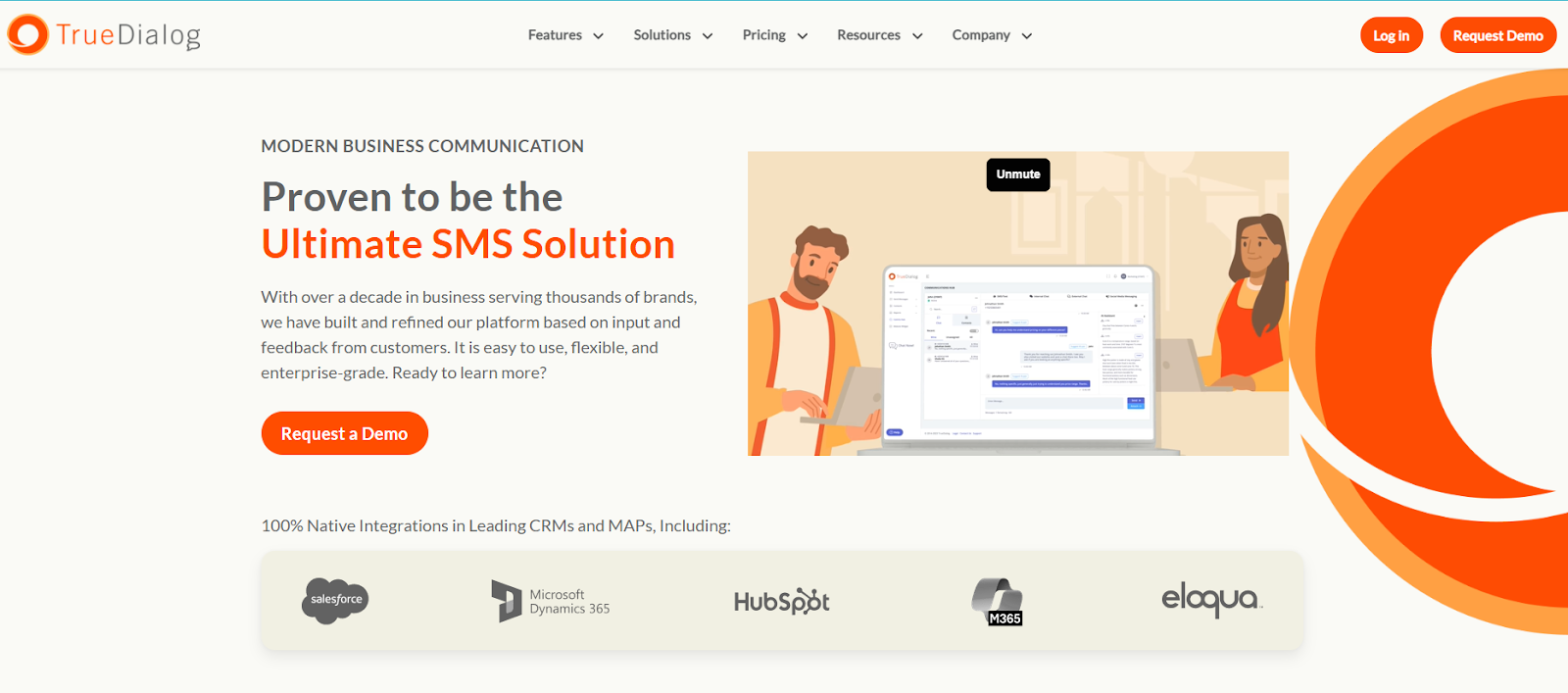
It integrates with major CRM and marketing tools like Salesforce, HubSpot, Microsoft Dynamics 365, and Marketo. The platform also offers a scalable API for enterprise applications that need to send high‑volume messages and automate text‑driven processes.
Workflow Automation Tools
Workflow automation tools allow you to create a structured sequence for your processes, such as document approvals or employee onboarding. These tools help streamline workflows by assigning tasks automatically and keeping processes in motion.
4. Zapier
Zapier connects thousands of web applications so you can automate everyday tasks and data movement without manual effort. It uses Zaps, which start with a trigger in one app and run one or more actions in another, such as syncing contacts or sending alerts.
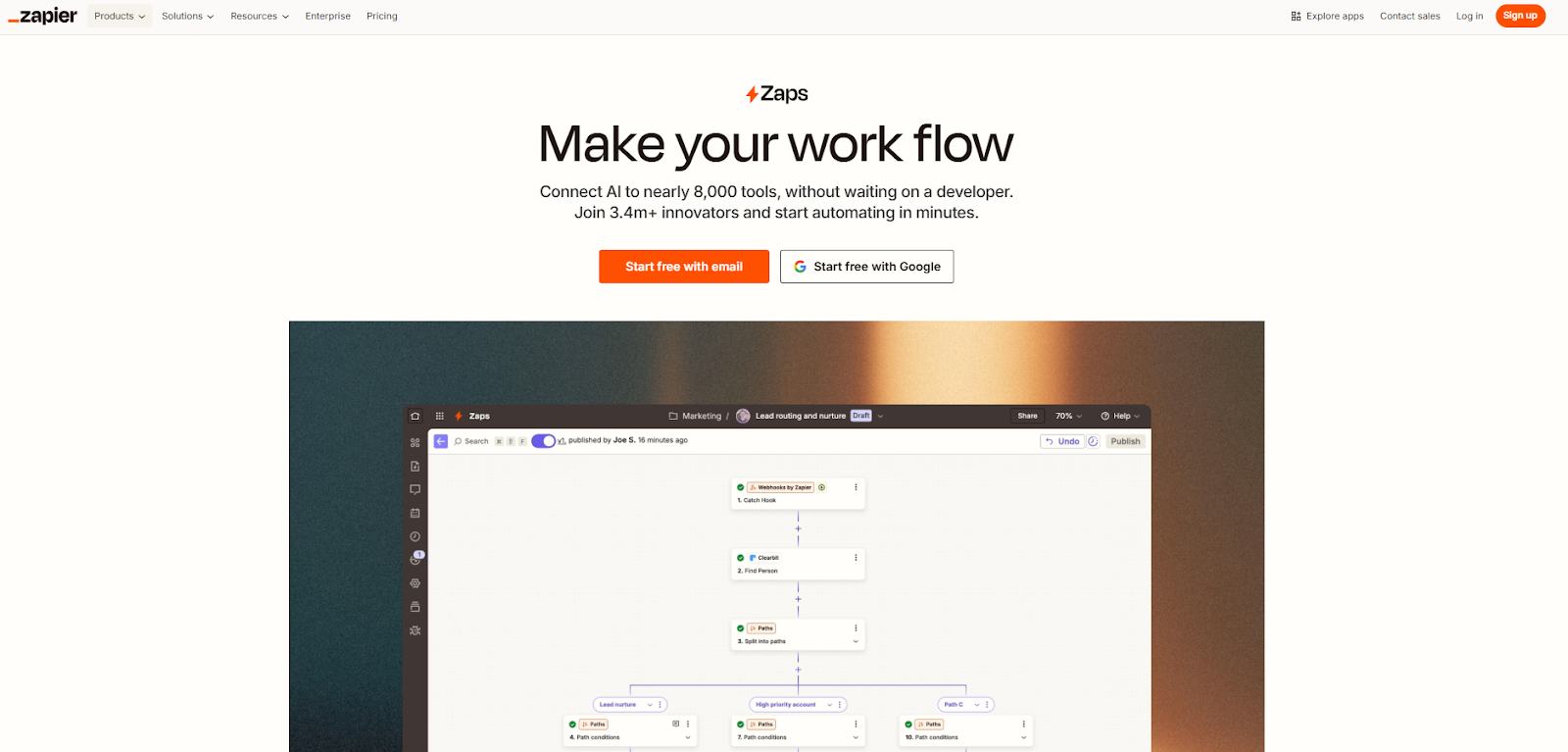
Zapier supports integration with over 8,000 apps. It offers prebuilt templates and AI agents to help users create workflows. While it serves a wide range of users, its enterprise plan adds governance, access controls, and observability for organizations managing multiple systems.
5. Microsoft Power Automate
Microsoft Power Automate is part of the Microsoft Power Platform and provides enterprise-grade workflow automation on cloud and desktop environments.
It integrates with Microsoft 365, Azure, Dynamics 365, and other services to optimize business processes and minimize human intervention.
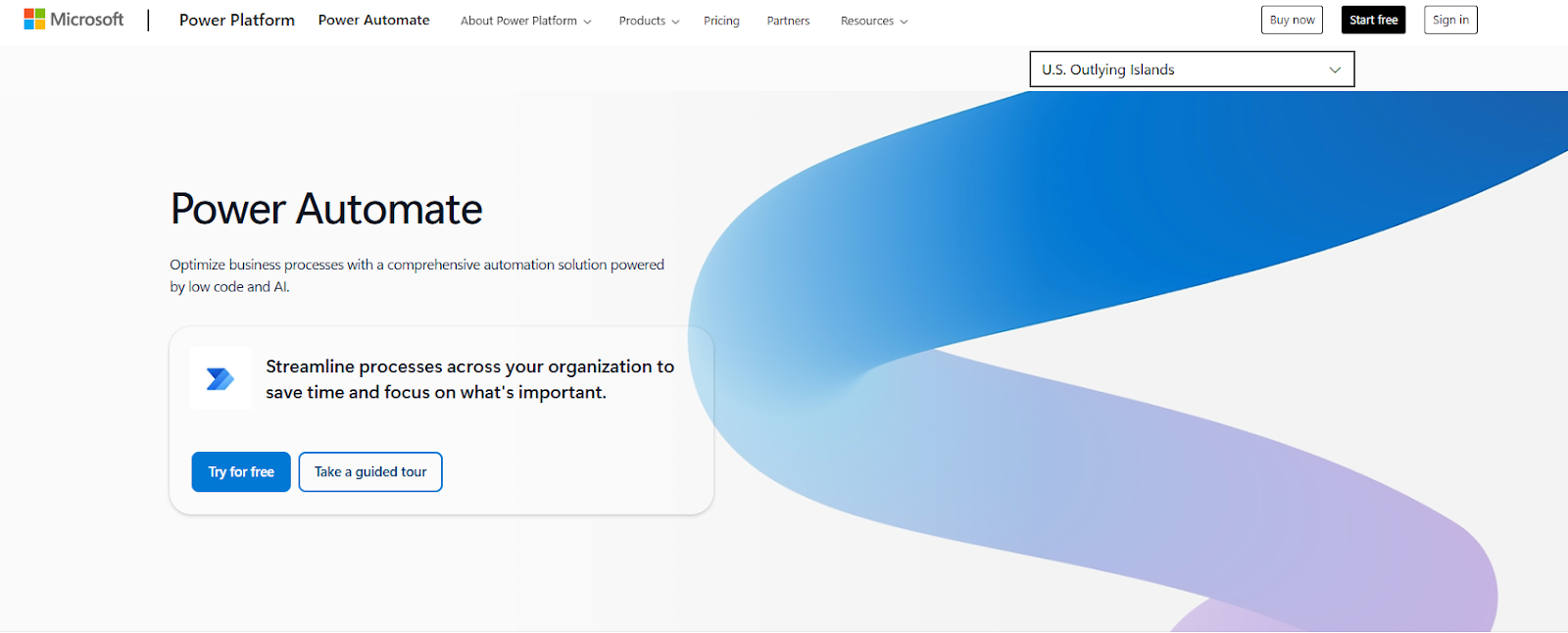
Power Automate supports cloud flows for SaaS tools and desktop flows that use robotic process automation (RPA) to automate legacy systems. Its security and compliance features, along with broad Microsoft ecosystem support, make it suitable for large organizations with complex processes.
6. Workato
Workato is an enterprise-level integration and automation platform that orchestrates advanced workflows across cloud and on-premise systems with a low-code or no-code interface. It uses Recipes to define event-driven triggers, conditional logic, and multi-step actions.
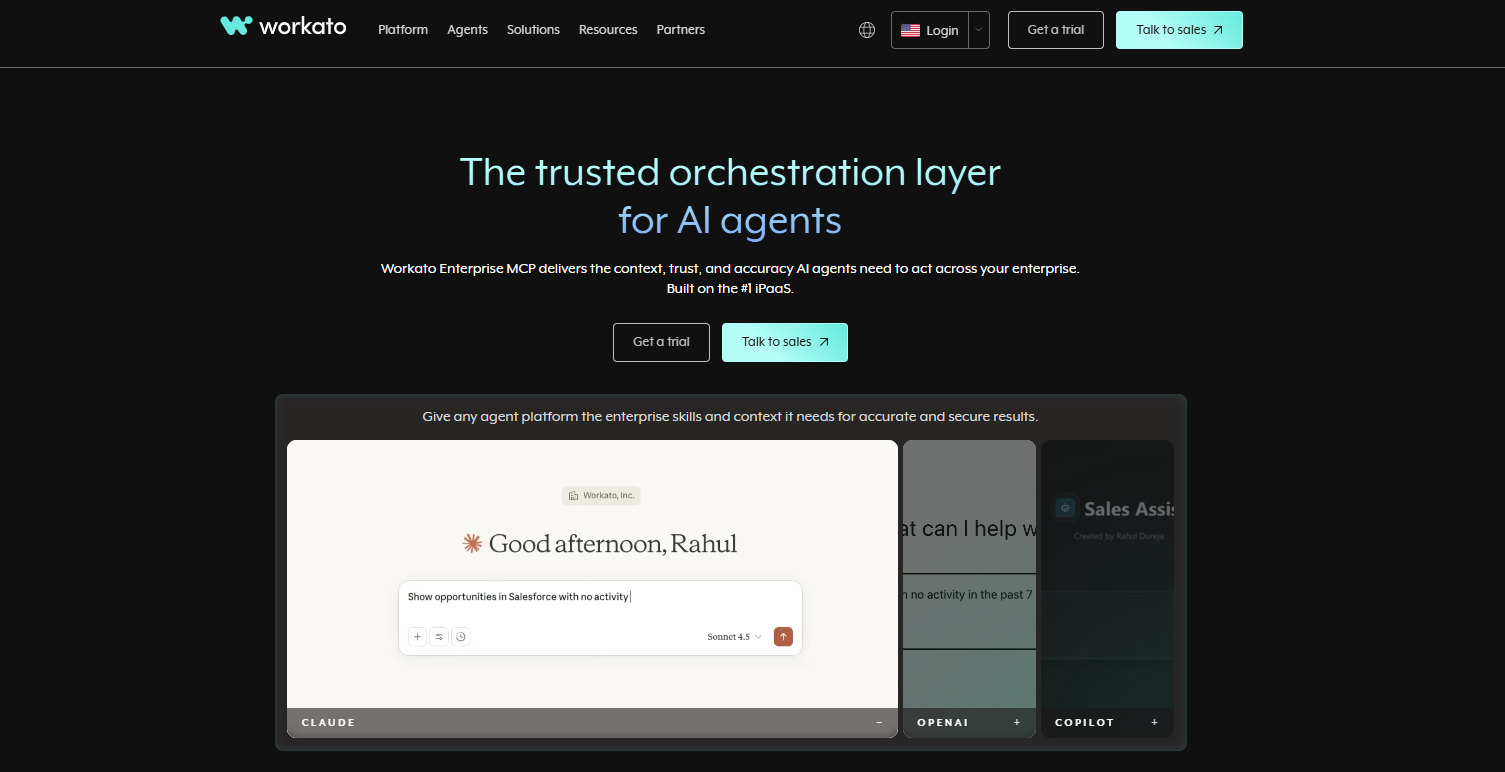
The platform offers broad connectivity with pre-built integrations, security and governance controls, and analytics to monitor workflow performance. Workato’s infrastructure is designed for enterprise needs, and it also includes tools for data orchestration and intelligent automation.
Robotic Process Automation Tools
RPA refers to the use of software robots to handle routine, rule-based tasks. RPA tools work by copying how people interact with digital systems, such as entering data, moving files, or checking information between platforms.
However, RPA workflows can be sensitive to interface changes. If a screen layout or button label shifts, the automation may stop working as expected. This requires ongoing maintenance over time.
7. UiPath
UiPath is an enterprise RPA platform that combines RPA with orchestration and agentic automation tools that support complex tasks. It uses a visual design environment called UiPath Studio to build workflows and an orchestration engine to manage, schedule, and monitor bots.
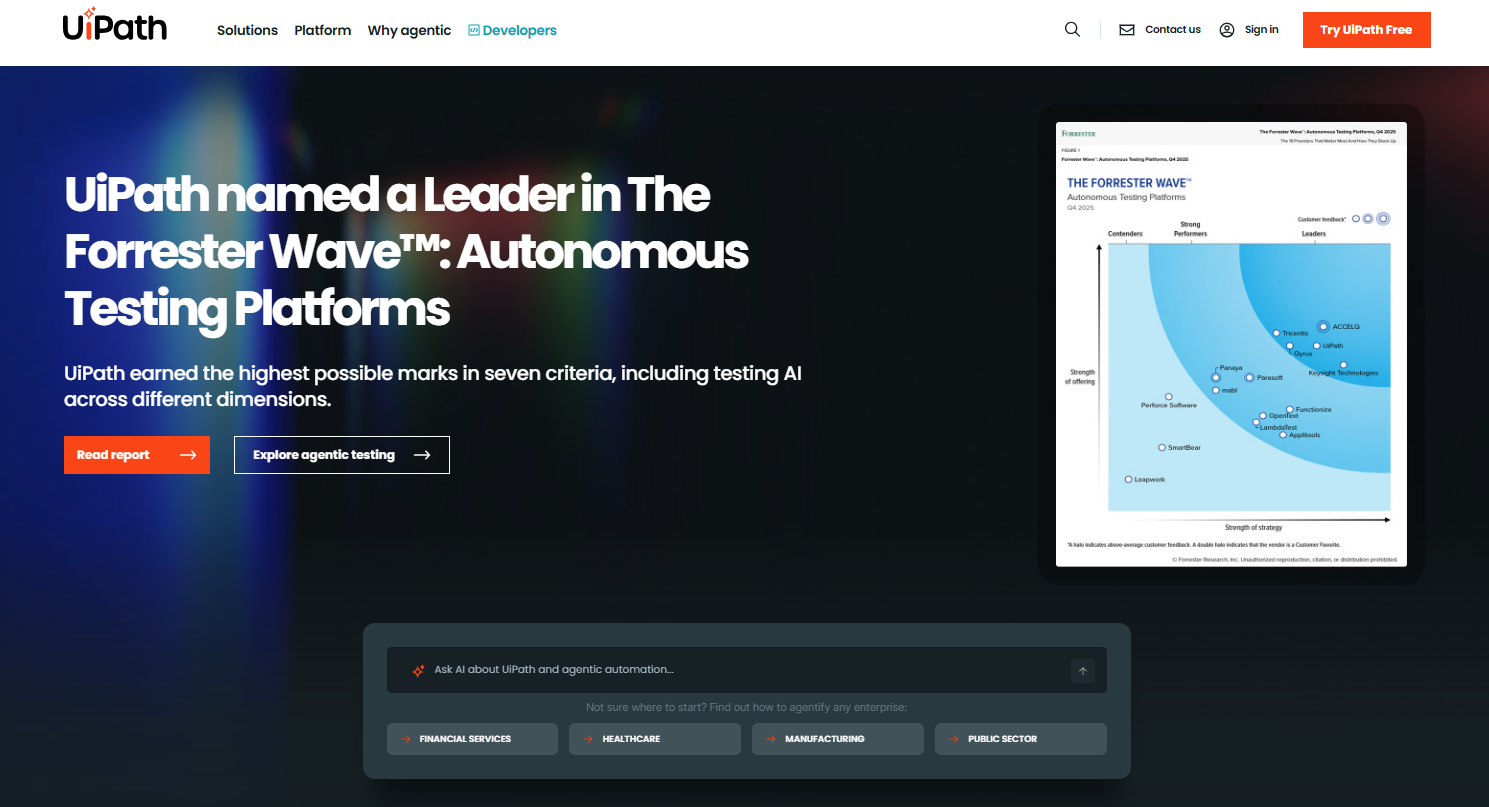
The platform includes options for low-code automation, AI-powered discovery and analytics, and governance features that help optimize resource utilization. It integrates with existing enterprise resource planning (ERP) and CRM systems and supports attended and unattended automation.
8. Automation Anywhere
Automation Anywhere offers cloud‑ready RPA with tools for building, deploying, and managing bots that handle repetitive tasks, including data capture, validation, and system updates. It includes key features for process discovery to boost productivity.
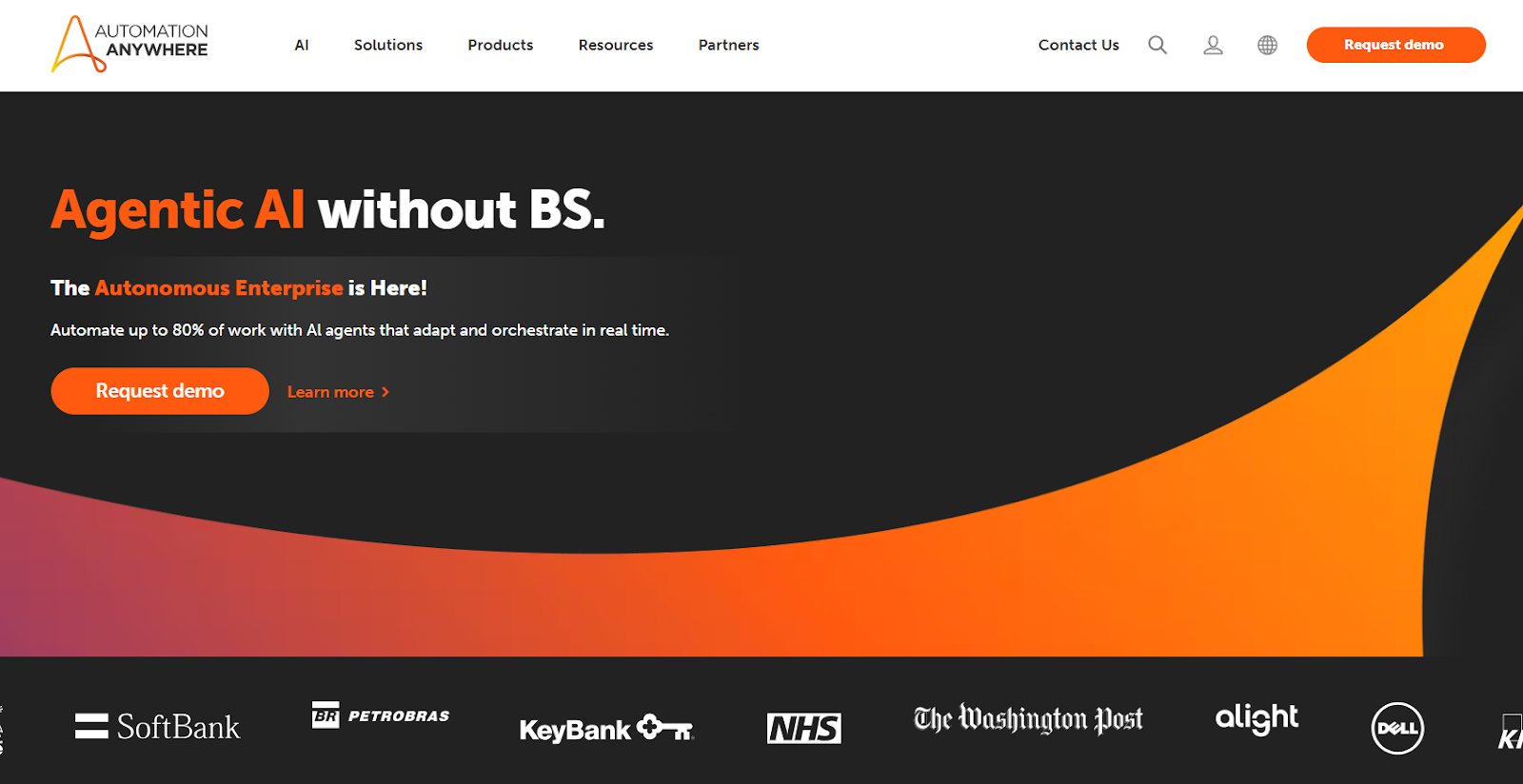
The platform uses a web‑based control room for centralized bot management and scales to support complex enterprise needs while connecting with enterprise systems via APIs and connectors.
9. Blue Prism
Blue Prism (now part of SS&C Technologies) provides enterprise‑grade RPA software with a focus on governance, security, and scalable automation.
Its digital workforce is designed to automate rule-based tasks and integrate with enterprise systems while supporting role-based access control and compliance needs.
Its architecture emphasizes centralized control and compliance, which aligns with the needs of regulated industries and large organizations. It fits workflows that require strong oversight and managed automation governance.
Business Process Management (BPM) Tools
BPM tools help you plan, organize, and improve the way your work gets done. These solutions are built to support digital process automation by letting you spot slow points. Therefore, teams can follow an agreed-upon method for every task.
10. Camunda
Camunda provides a BPM platform built around open standards, such as Business Process Model and Notation (BPMN) and Decision Model and Notation (DMN).
It's used in distributed systems to coordinate human tasks, automated steps, and decision rules in complex business processes.
It includes tools like a visual builder, workflow engine, task list, operating console, and analytics components that help manage and monitor processes and tasks in production. Camunda supports integration with enterprise systems through APIs and configurable connectors.
11. Bizagi
Bizagi offers a BPM suite that emphasizes process modeling, automation, and execution with support for BPMN standards in enterprise contexts. It provides a drag-and-drop interface where business analysts and developers can map processes, simulate workflows, and automate tasks.
Its business process automation capabilities include connectors to common systems, cloud and on‑premises deployment options, and features that help cross-functional teams work in sync. Bizagi also supports audit logs for better visibility and compliance in process execution.
12. Appian
Appian is a low-code BPM automation platform that helps enterprises automate and orchestrate complex workflows. It includes process modeling tools, integration support, and monitoring features that allow teams to design, run, and refine business processes.
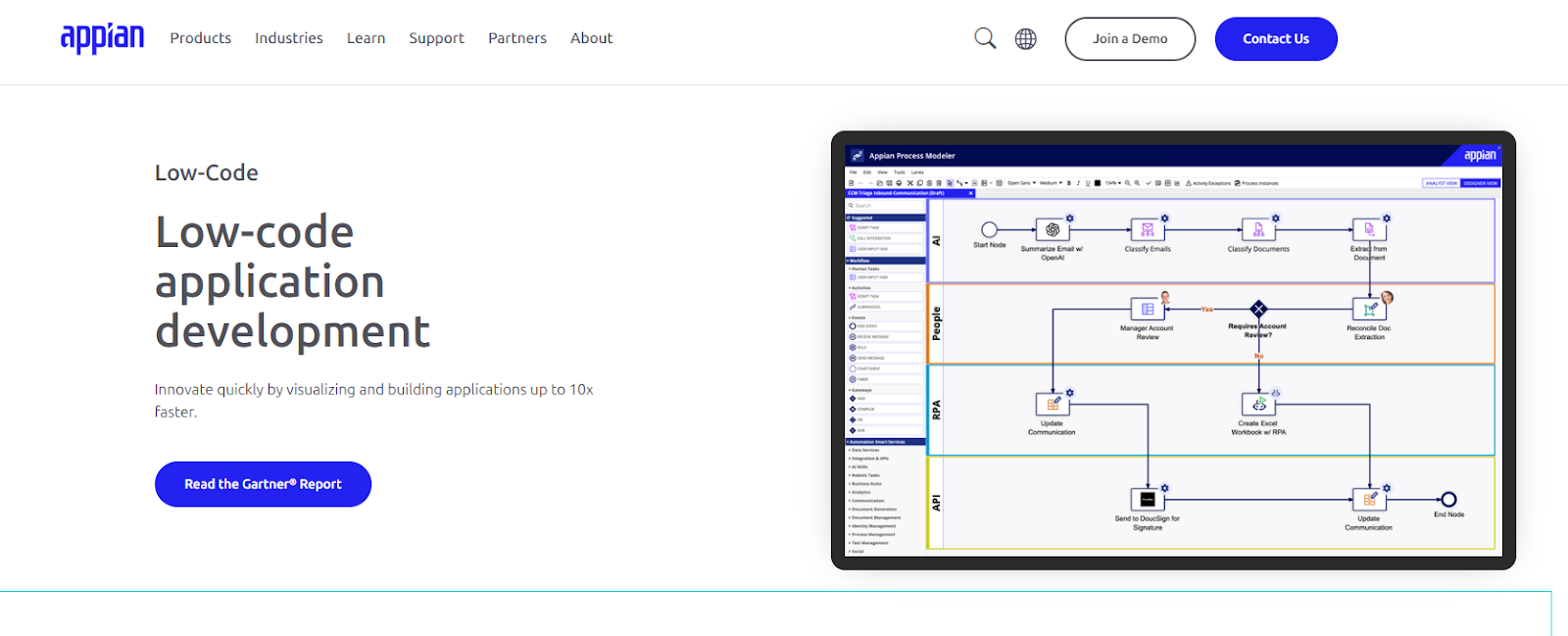
The platform supports connectivity with disparate systems through APIs, data fabric technology, and built‑in automation features, such as AI and RPA integration.
It has performance tracking and governance features to support compliance and operational oversight in enterprise environments.
Marketing Automation Platforms
Marketing automation platforms help you manage and run marketing activities. These tools handle tasks such as sending emails, scoring leads, scheduling social media posts, and tracking campaign results.
13. HubSpot
HubSpot provides a unified marketing automation platform that combines campaign automation with built‑in CRM, email marketing, landing pages, forms, and reporting.
Its drag-and-drop tools let you create automated sequences that react to actions like form submissions or contact property changes, and support branching logic and segmentation.
HubSpot also offers a free plan with core features suitable for small teams, starting with automation.
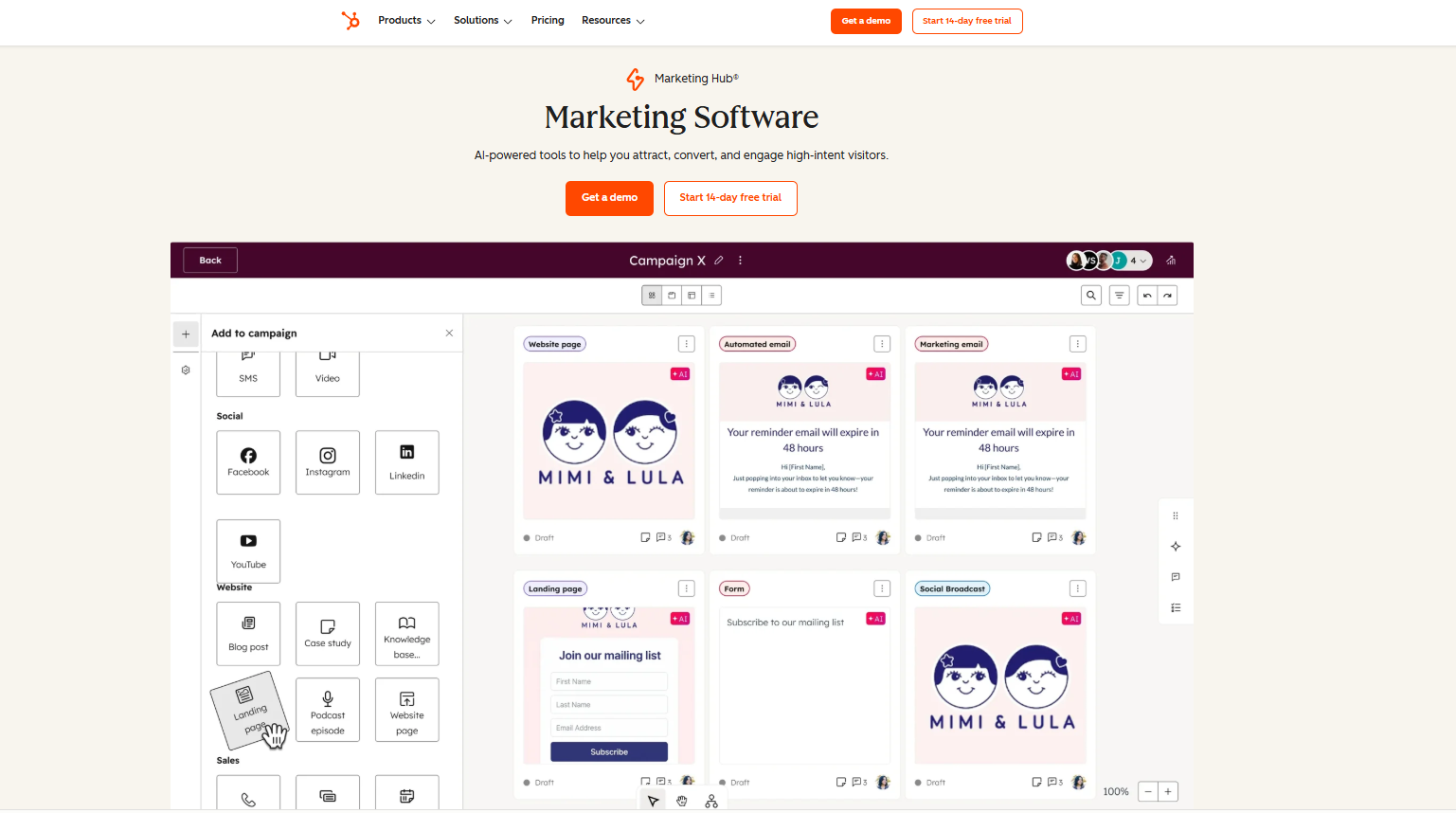
HubSpot’s tools include lead scoring, dynamic lists, and integration with other marketing systems to support personalized customer journeys. AI‑powered features and detailed analytics help teams refine campaigns and boost customer satisfaction.
14. Marketo Engage
Marketo Engage is an enterprise marketing automation solution within Adobe Experience Cloud that supports multi‑step campaigns, audience segmentation, and cross‑channel engagement.
It includes tools for managing profiles and audiences, automating email campaigns, and coordinating complex nurture workflows based on behavior and engagement data.
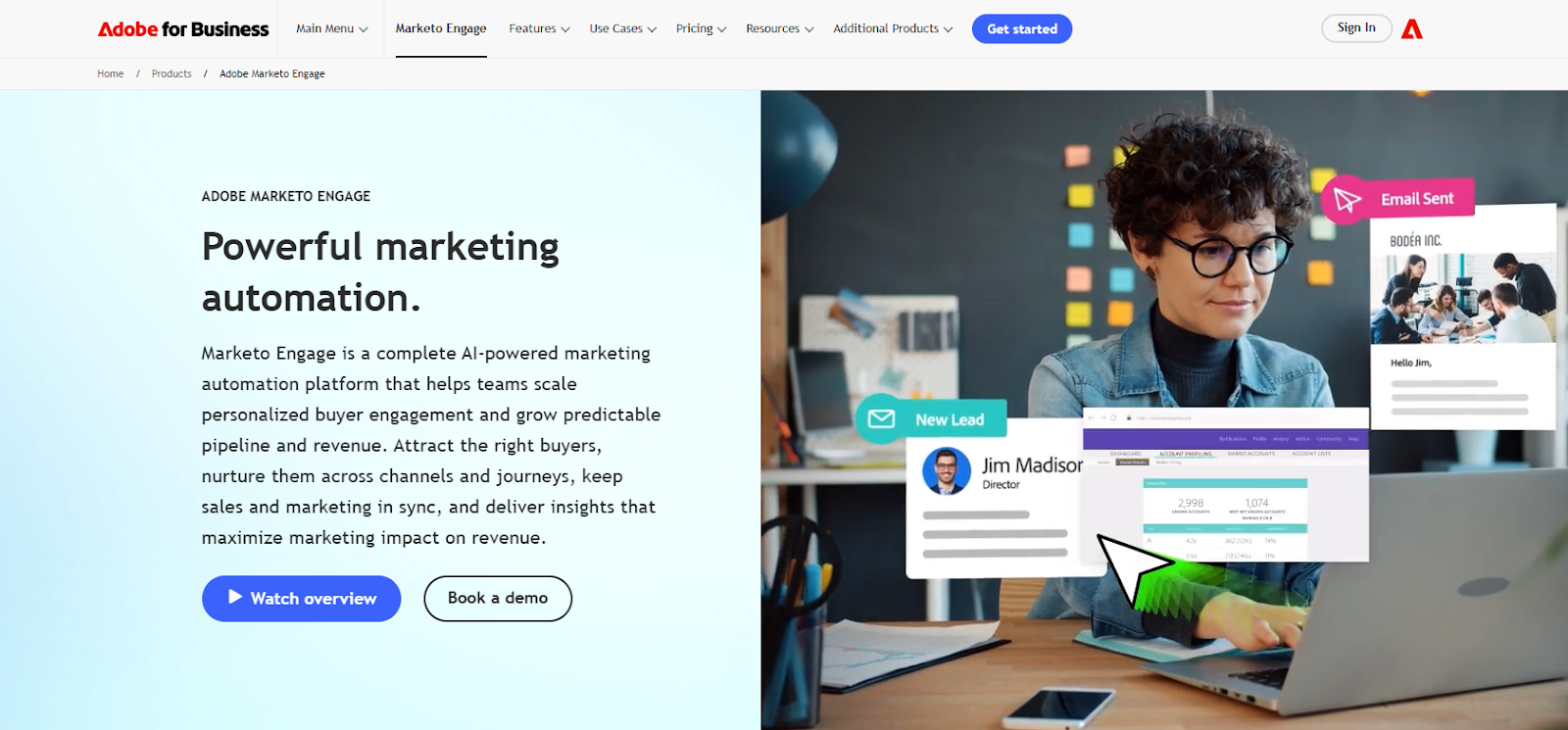
Native CRM integrations and real‑time lead scoring help align marketing and sales teams with shared data and insights, which also contributes to operational efficiency.
15. ActiveCampaign
ActiveCampaign combines marketing automation with CRM, email, and messaging features to support personalized campaigns and streamline processes across teams.
Its enterprise offering includes secure automation workflows, contact segmentation, and custom reporting, with connectors to many marketing and business systems.
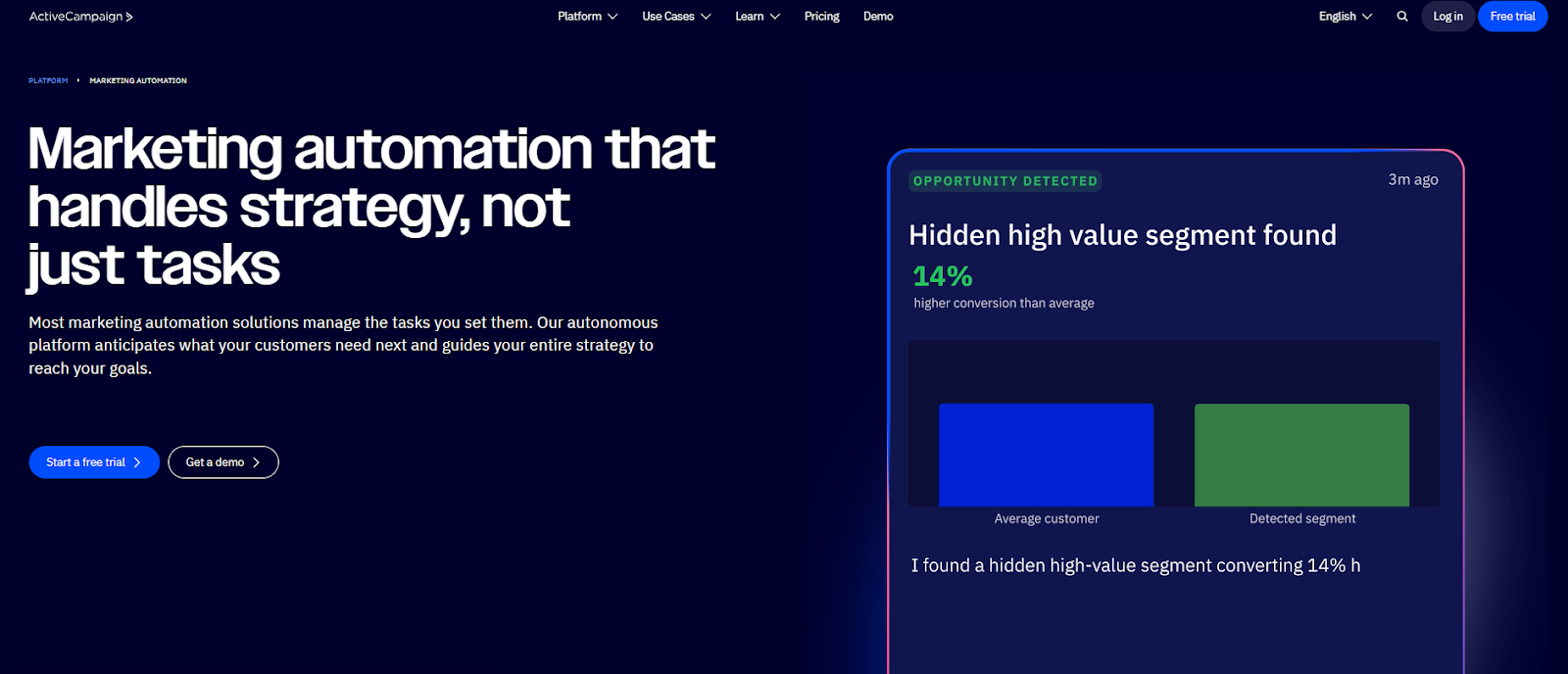
The platform's tools support email, SMS, WhatsApp, and automated follow‑ups, and provide dashboards to visualize trends and engagement metrics. It also has dedicated support and options for custom reporting to help teams understand campaign performance.
Sales and CRM Automation Tools
Sales and CRM automation tools track leads, schedule follow‑ups, update contact records, and support routine tasks. They link customer data, communication history, and task lists to create a unified view of your pipeline and business operations.
16. Salesforce
Salesforce is a CRM platform designed to centralize customer data, automate business processes, and support sales, service, and marketing teams.
Its automation features include lead and opportunity management, workflow rules, predefined rules for task triggers, automated approvals, and tools for tracking sales activities.
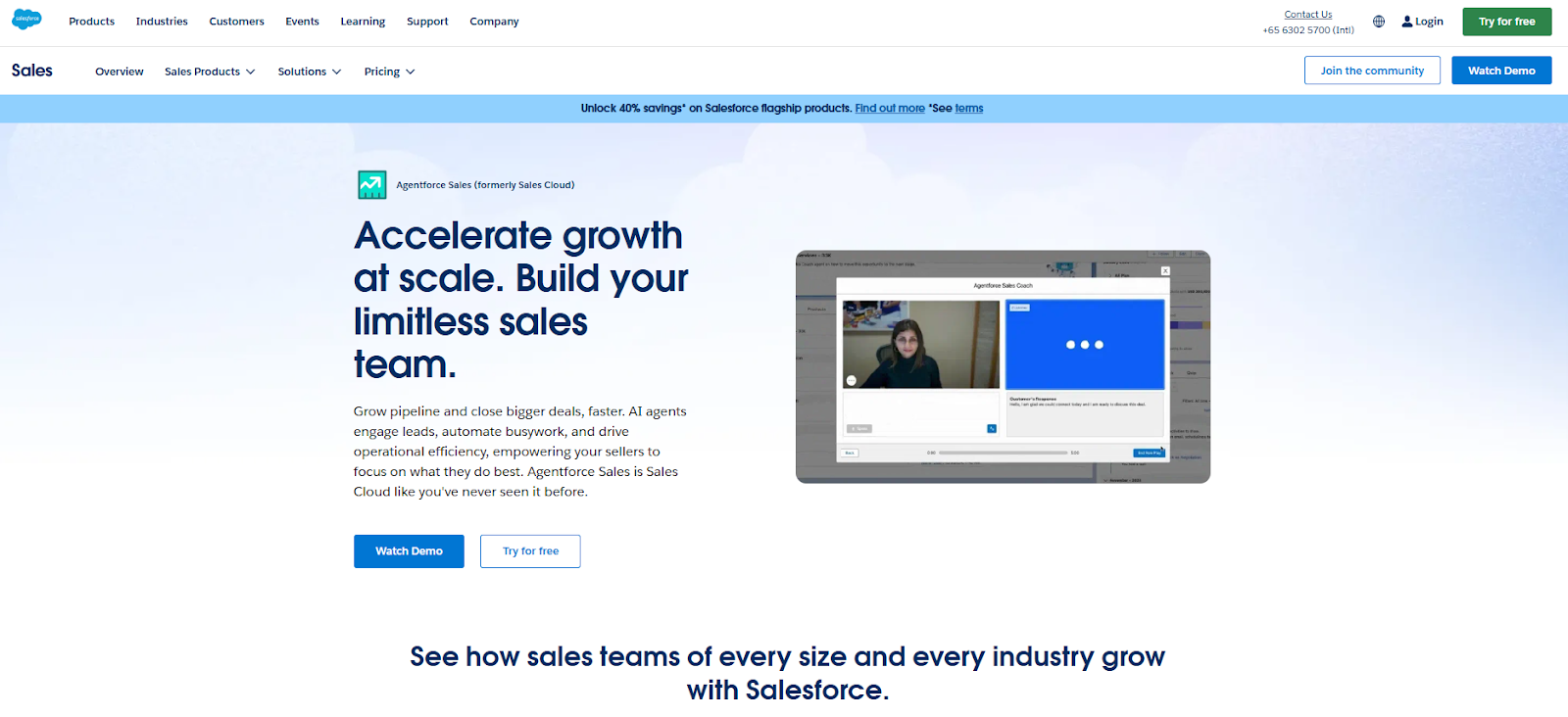
The platform also uses CRM automation to update records in real time and support forecasting and pipeline analytics.
It integrates with a wide range of third‑party apps through its AppExchange marketplace and provides tools like dashboards and reporting to support enterprise decision‑making.
17. Zoho CRM
Zoho CRM provides sales automation features such as workflow triggers, lead assignment rules, and automation flows that support internal coordination and automated operations.
The platform includes tools for contact and pipeline management, connecting apps, real‑time alerts, and customizable dashboards to monitor performance.
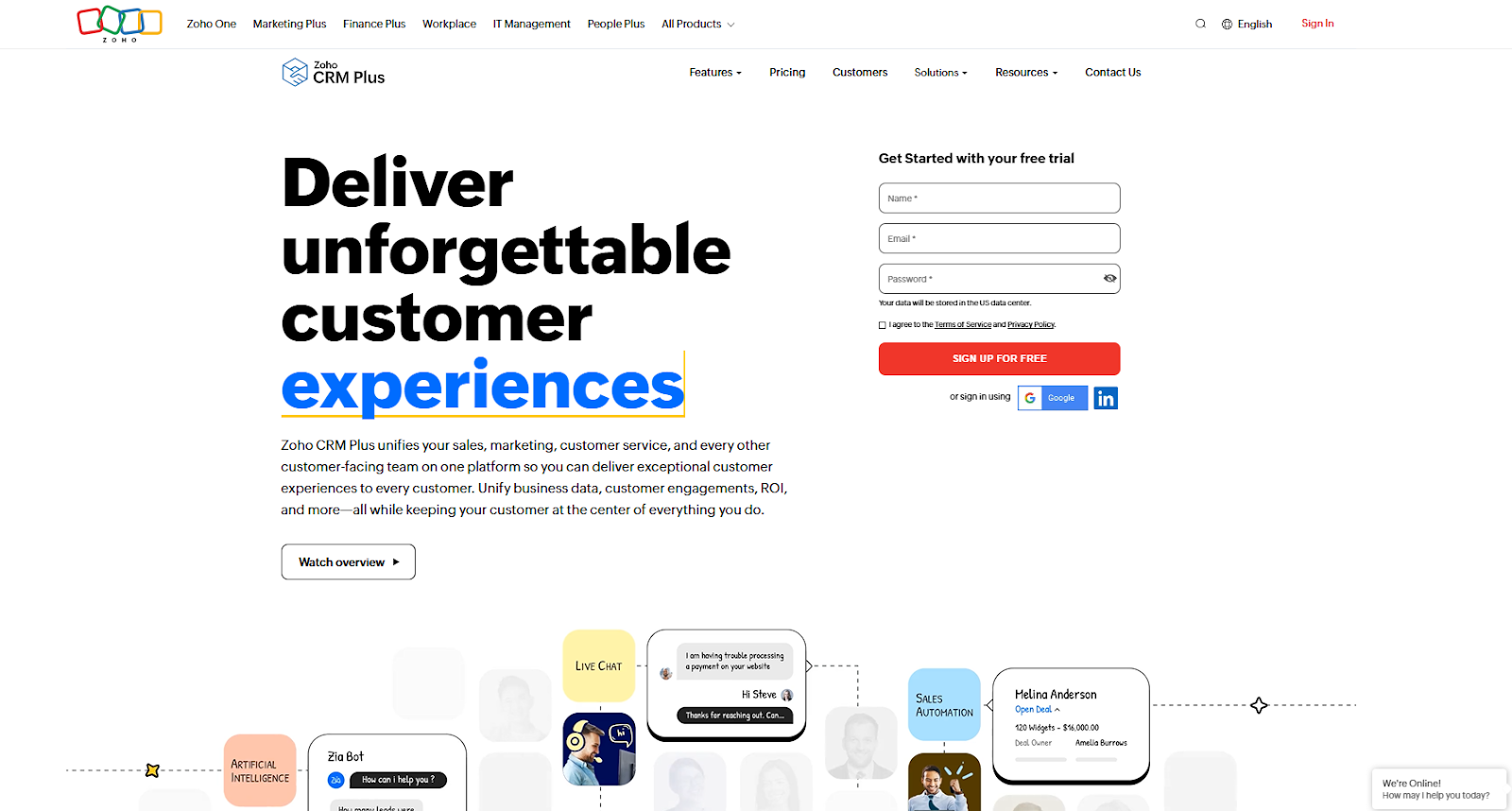
It also supports AI‑driven insights and predictive analytics through its Zia assistant, which can suggest next actions and help identify trends in sales data.
18. Microsoft Dynamics 365 Sales
Microsoft Dynamics 365 Sales combines CRM and sales automation with advanced features that help manage leads, contacts, and opportunities within the Microsoft ecosystem.
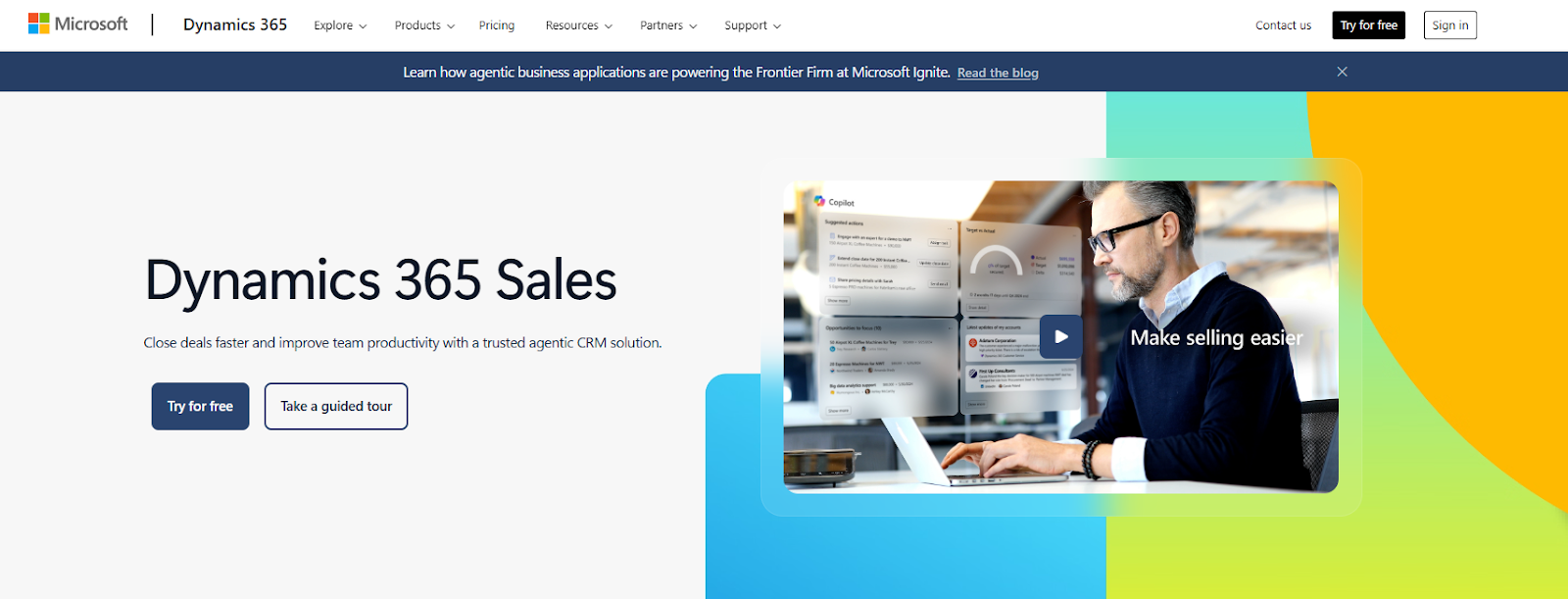
It includes automated workflows for repetitive tasks, lead scoring tools, and relationship insights that pull data from interactions and activities to support sales planning.
The platform integrates with Microsoft tools such as Teams, Outlook, and Azure for coordinating activities and accessing customer data.
HR Automation Tools
HR automation tools take work like collecting and storing employee information, processing onboarding steps, running payroll, and tracking performance, and automate them.
19. SAP SuccessFactors
SAP SuccessFactors is a cloud‑based human capital management (HCM) suite with modules for core HR, talent management, learning, performance, and workforce analytics.
It provides tools for recruiting, onboarding, compensation, and succession planning that help standardize HR processes.
The platform supports global HR needs with localization for many countries and centralized employee data for consistent reporting and compliance. SAP also includes guided workflows and analytics dashboards that help HR teams monitor results and improve productivity.
20. Rippling
Rippling is a unified workforce platform that centralizes HR data and automates tasks such as onboarding, benefits administration, payroll, and workforce management. It connects HR, IT, and finance tools so actions like hiring or role changes trigger related processes.
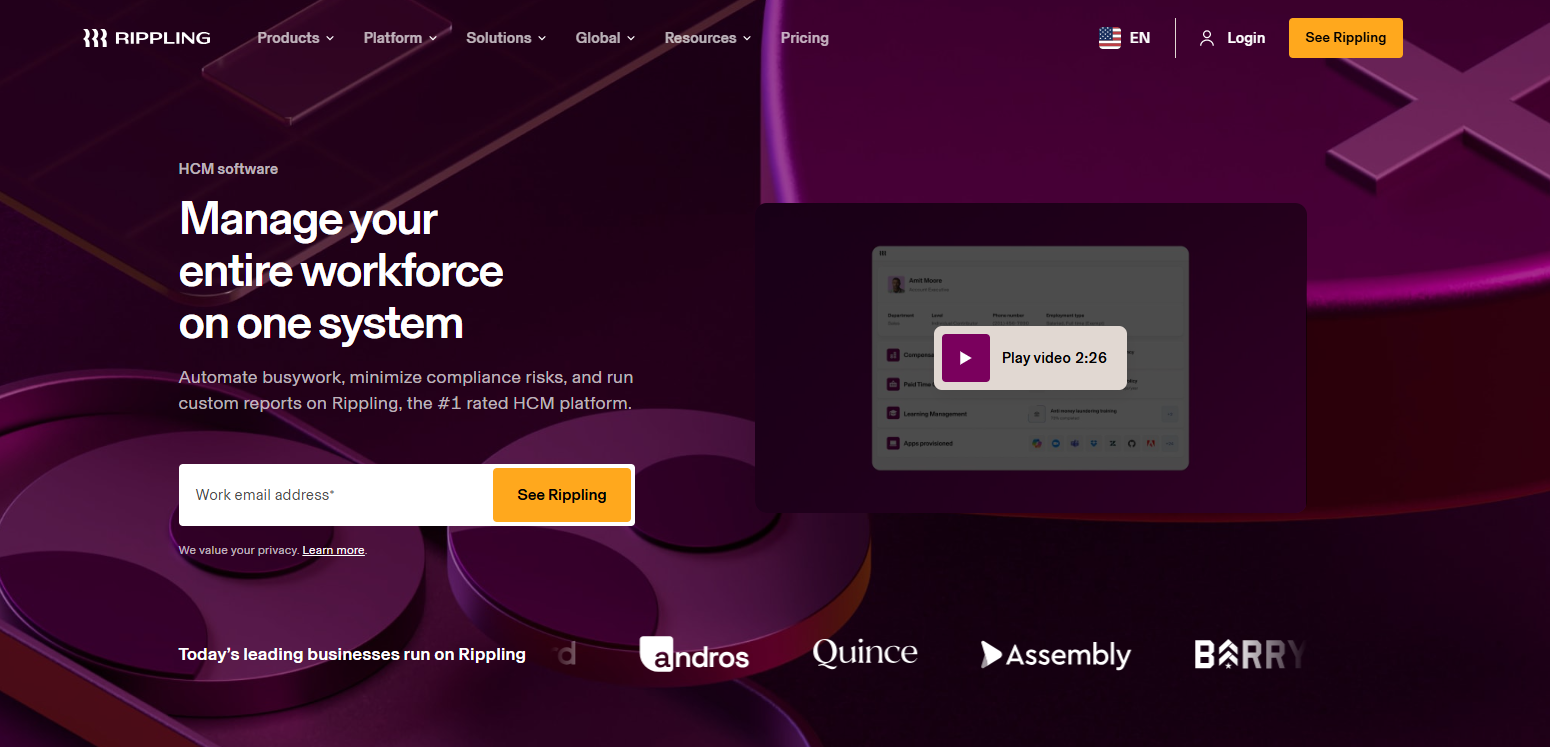
The platform also includes workflow studios and analytics tools to define rules and monitor performance, aiming to maintain a single source of employee data. Its modular design supports compliance and global workforce tasks within one platform.
21. Oracle HCM Cloud
Oracle HCM Cloud integrates HR, payroll, talent management, and workforce management with configurable, rule‑based workflows. It includes tools for workforce modeling, employee benefits, onboarding, and an AI‑powered assistant that supports tasks and helps guide HR decisions.
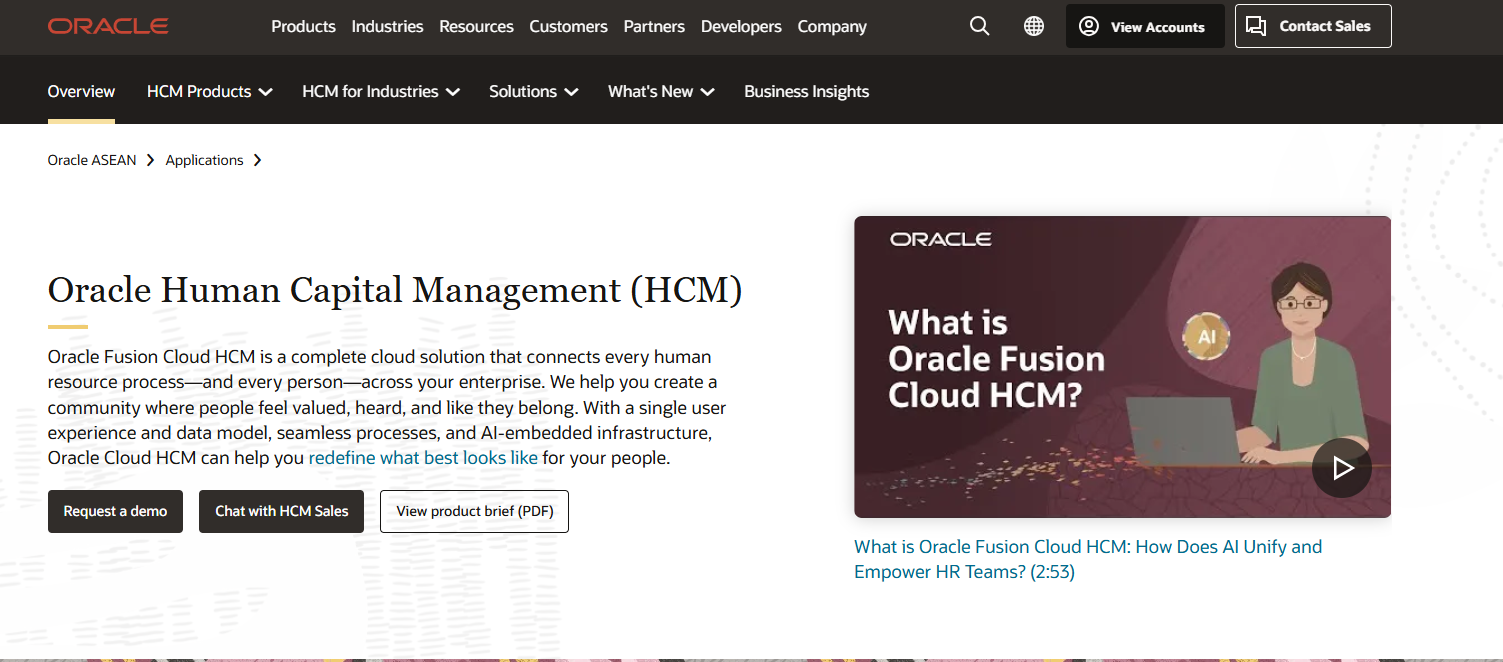
The platform can connect HR data with financial and operational systems, supporting reporting, analytics, and compliance for large organizations. Oracle’s automation features are designed to align HR functions with broader business goals and long‑term workforce planning.
Communication and Collaboration Automation Tools
Enterprise communication tools support real‑time messaging, scheduled alerts, video meetings, and integrations with business systems. These platforms reduce manual workflows and support better service delivery.
22. Slack
Slack Enterprise Grid provides a scalable messaging and collaboration platform that organizes communication into channels for teams, projects, and company‑wide discussions.
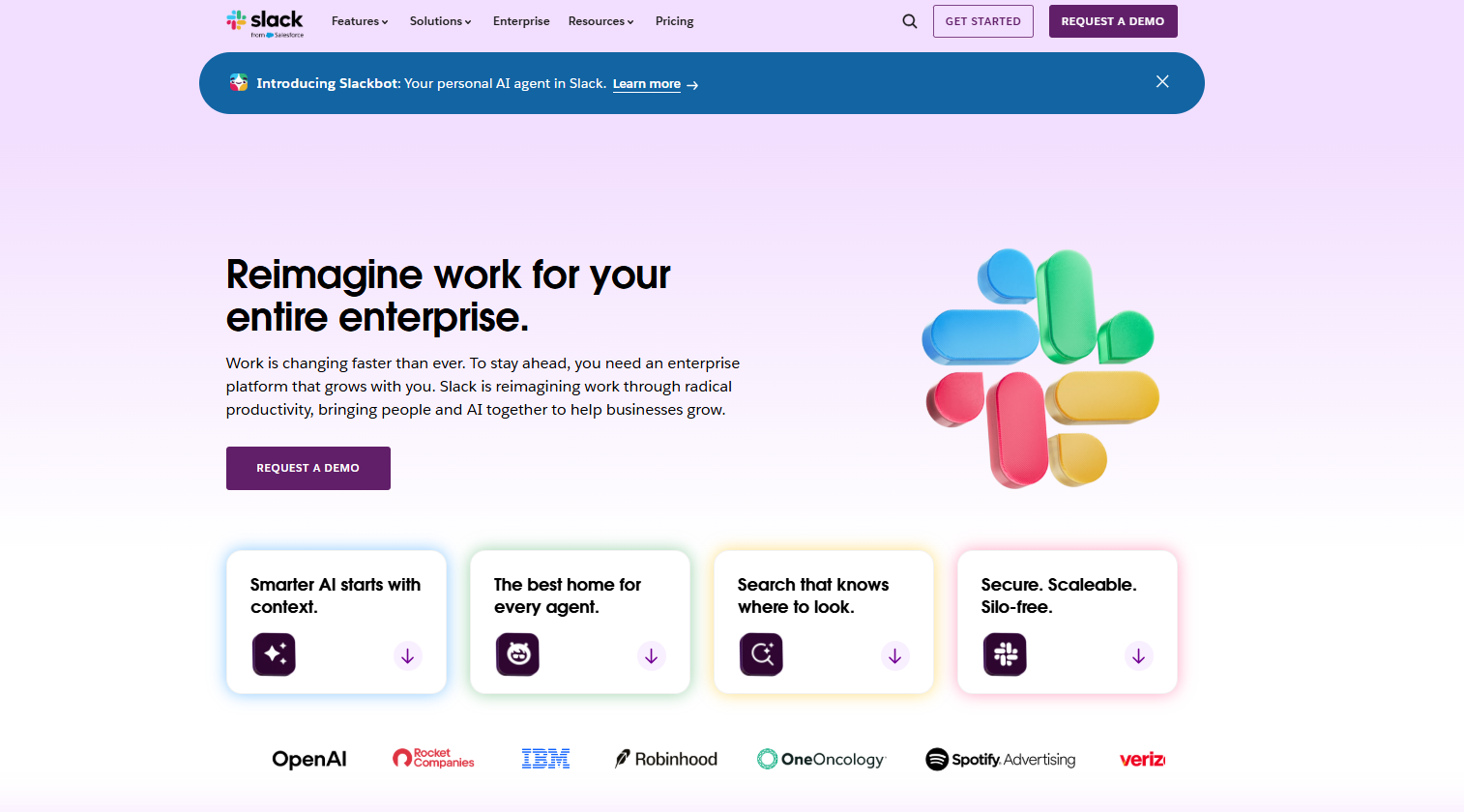
It supports automation through Workflow Builder, where teams can create rule‑based triggers for alerts, approvals, and reminders. Its app directory and integrations with tools like Asana, Jira, and Salesforce help unify workflows and eliminate context switching.
23. Microsoft Teams
Microsoft Teams combines persistent chat, voice and video meetings, file collaboration, and integration with Microsoft 365 apps such as Outlook, SharePoint, and OneDrive. It supports automated notifications and workflow triggers through built‑in tools and the Teams Workflows app.
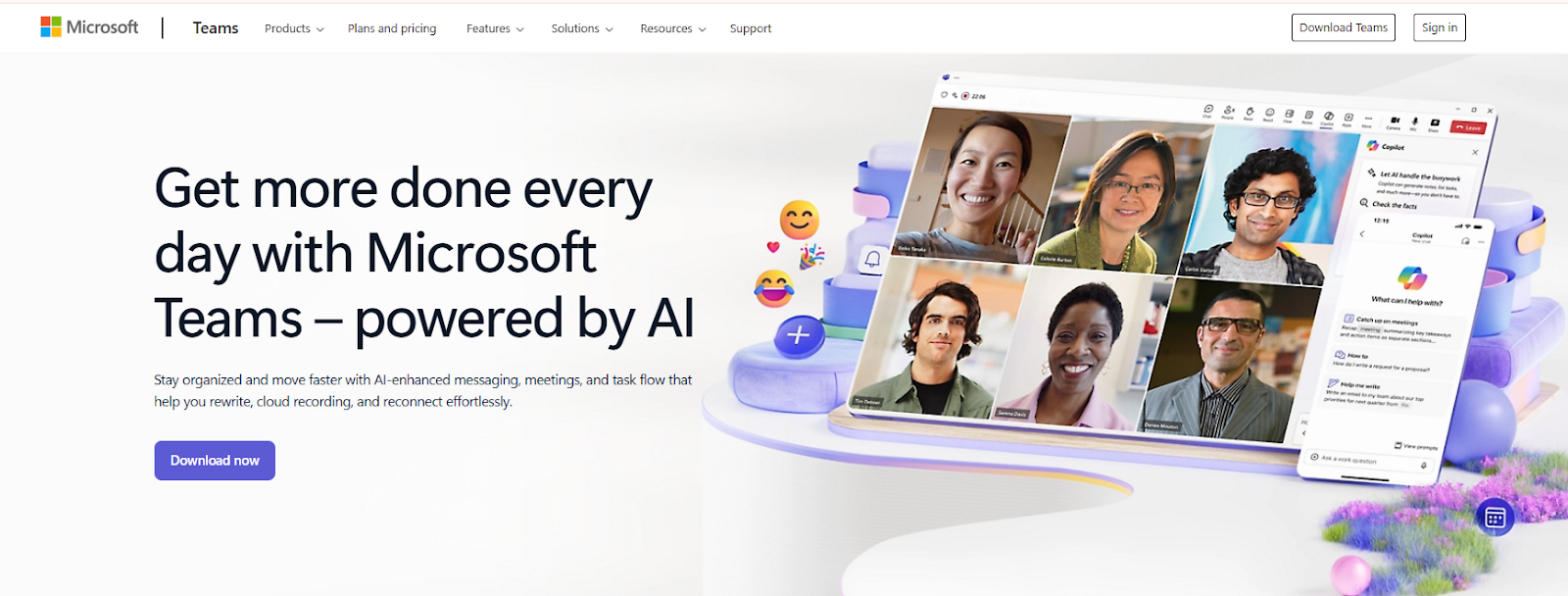
Teams also provides enterprise‑grade security controls, compliance features, and identity management through Microsoft’s ecosystem. Its integration with other Microsoft services allows teams to collaborate on documents and schedule meetings within the platform.
24. Zoom
Zoom is widely used for video conferencing and offers messaging and content sharing alongside meetings, with tools to schedule and manage large sessions and webinars.
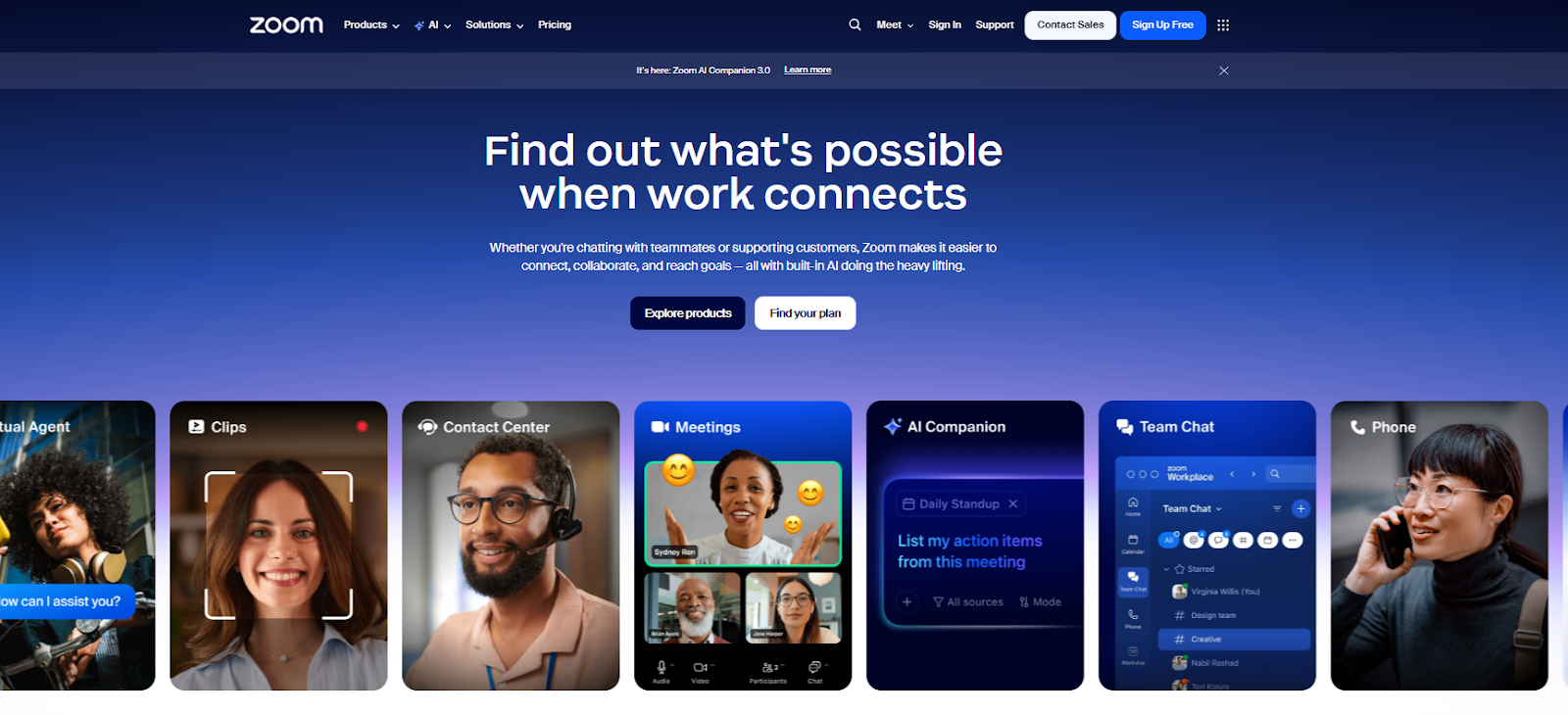
The platform centralizes communication and collaboration by connecting chat with meetings, phone, and shared work tools in one interface.
It also offers workflow automation features that help automate routine tasks and simplify collaboration for teams operating in hybrid or distributed environments.
Analytics and Reporting Automation Tools
Analytics and reporting automation tools support data integration, scheduled report updates, visualization, and delivery of insights. Business leaders can monitor performance, spot trends, and share results with stakeholders.
25. Microsoft Power BI
Microsoft Power BI is a business intelligence and reporting platform that connects to data from many sources and turns it into interactive dashboards and visuals.
It supports automated data refresh, scheduled report distribution, and collaboration within Microsoft 365 and Azure environments. It also includes tools for data modeling, semantic layers, and governance to help teams maintain secure and consistent analytics workflows.
26. Tableau
Tableau is an enterprise analytics platform that lets you build visualizations, dashboards, and reports from complex data with drag‑and‑drop ease. It supports rapid deployment options, including cloud and on‑premises platforms, and role‑based licensing for different user types.
The platform includes premium features for data preparation, governance, and automated insights that help teams explore trends and derive insights. Its analytics environment also offers integrations with broader data ecosystems and AI‑augmented tools for deeper analysis.
27. Qlik Sense
Qlik Sense is an enterprise analytics solution that uses an associative engine to let you explore data freely and discover relationships in multiple datasets. It supports interactive dashboards, AI‑powered insights, predictive analytics, and automated reporting to generate insights.
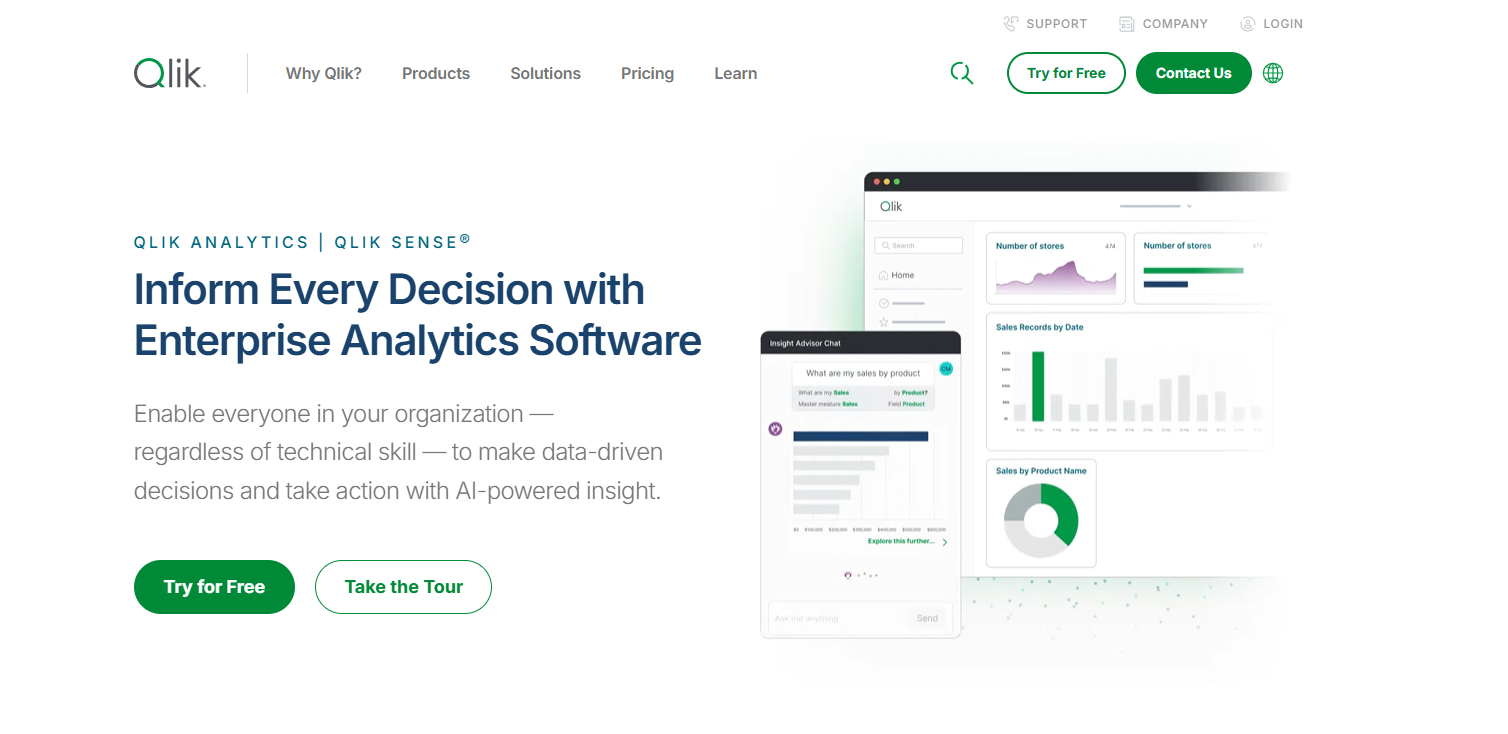
The platform can connect and combine data from many sources, automate report generation with templates, and distribute reports in formats like PDF, PowerPoint, and Excel.
It also provides mobile‑friendly access and in‑app reporting features for building standardized distribution workflows.
Finance and Accounting Automation Tools
Finance and accounting automation tools connect with bank systems, accounting software, and other business systems. Modern solutions may also automate approvals, reconcile accounts, and support compliance and reporting workflows.
28. NetSuite ERP
NetSuite ERP is an enterprise resource planning platform that unifies financial management, accounting, billing, and reporting in a single cloud system.
It automates core finance processes such as general ledger, accounts payable and receivable, revenue recognition, and currency management.
It also includes tools for monitoring performance metrics and consolidating financial data across subsidiaries and global entities. The platform’s cloud‑native design and unified data model help teams access consistent financial information and reduce errors in reporting.
29. Oracle Fusion Cloud Financials
Oracle Fusion Cloud Financials is part of Oracle’s ERP Cloud suite and automates key finance functions, including payables, receivables, fixed assets, and general ledger processes. It provides standardized workflows for tasks like reconciliation, billing, and compliance reporting.
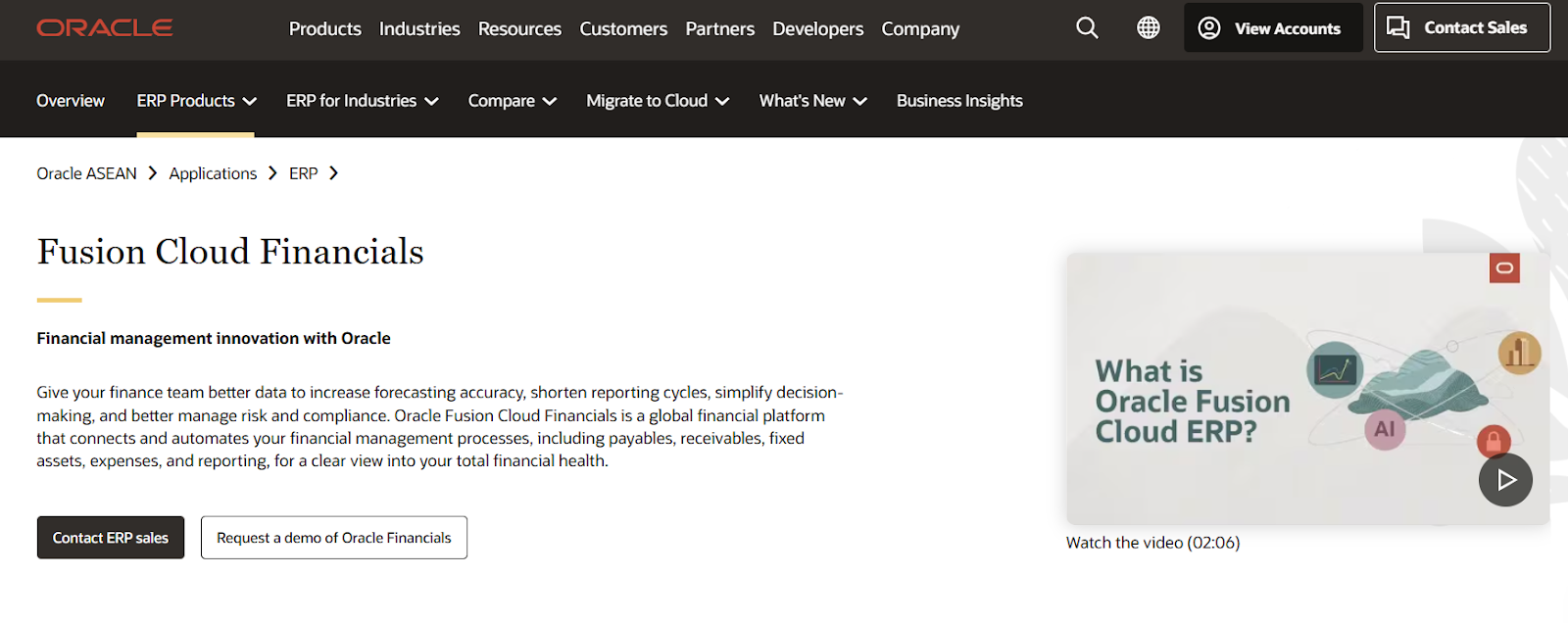
The platform supports data‑driven decisions with analytics tools that track financial performance and can shorten reporting cycles. Oracle’s cloud infrastructure also supports scalability and integration with broader enterprise applications.
30. Tipalti
Tipalti focuses on accounts payable automation and global payment orchestration for mid‑to‑large companies.
It includes compliance features, tax and risk controls, and machine-learning-assisted purchase order (PO) matching to reduce manual effort and improve payment accuracy.
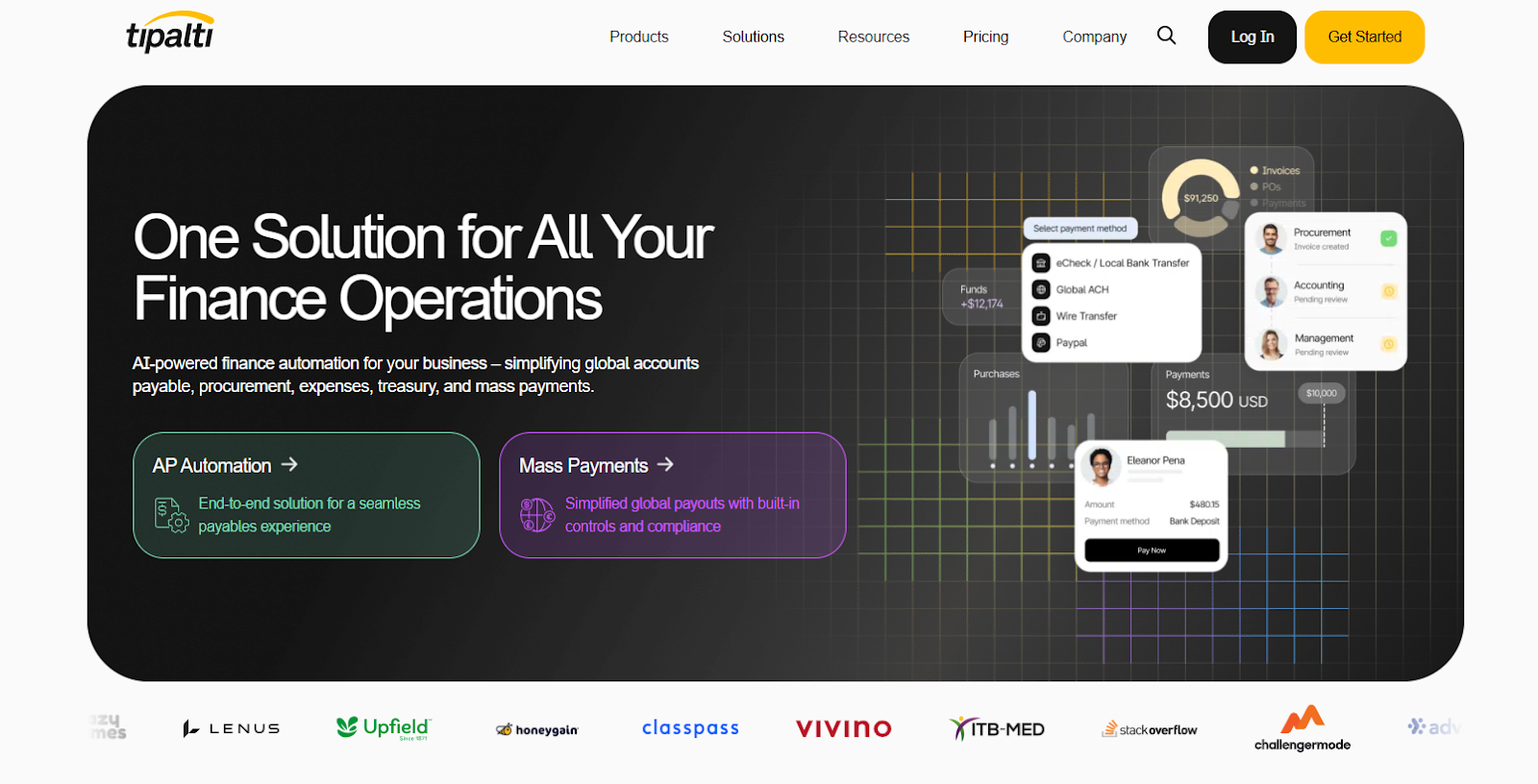
It integrates with ERP and accounting systems, enabling automated workflows for invoice processing, approval routing, and payment posting. Tipalti also offers tools for expense management and fraud detection to support financial operations and compliance.
Add Real-Time Messaging to Your Enterprise Workflow With TextUs
If fast, direct communication is a priority for your business, you need an SMS automation tool so you can connect instantly and keep your audience engaged.
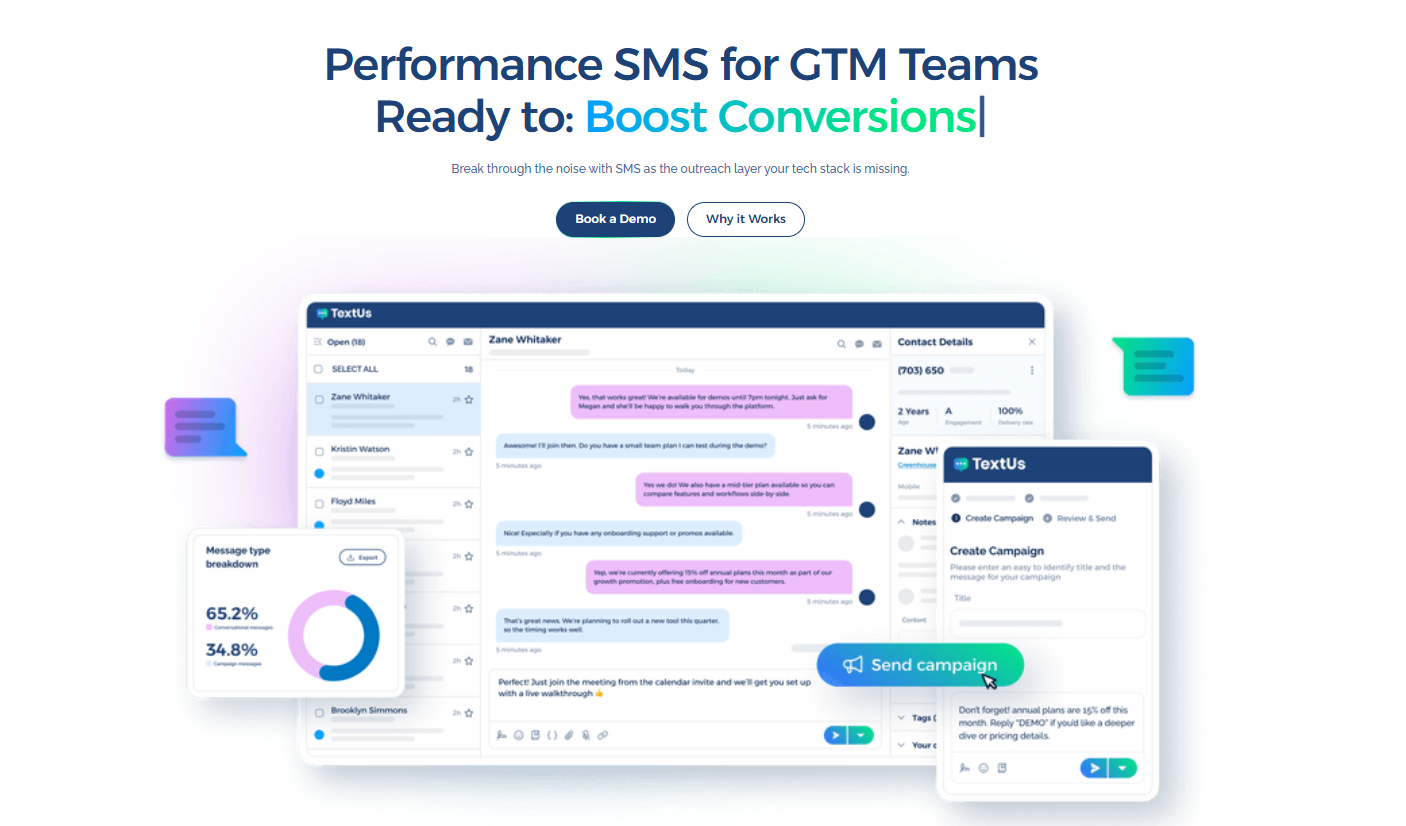
TextUs brings real-time texting into your business workflows. Your team can send one-on-one or group messages, automate follow-ups, and view every conversation from a shared inbox.
With built-in scheduling, contact syncing, and integrations with platforms like Salesforce and HubSpot, TextUs fits into your existing setup and gives teams a reliable way to stay in touch with contacts. It delivers real business value by helping you avoid delays and communication silos.
When enterprise communication gaps are slowing things down, it’s time to explore what SMS automation can do.
Book a demo with TextUs today to see how text messaging can support your automation efforts!
Continue Reading



Frequently Asked Questions
Which business processes can be automated?
Common examples include document approvals, data entry, customer notifications, onboarding, invoice processing, report generation, lead management, and real-time alerts.
Most enterprise messaging platforms are designed to scale automation that can span departments for broader impact.
Is data security covered with automation tools?
Some tools include core safeguards such as access controls, data encryption, audit trails, and compliance features. IT teams should assess each provider’s protocols and validate how security standards align with internal policies and risk thresholds.
Do enterprise automation tools require technical expertise?
It depends. Some platforms provide natural language inputs or simple interfaces to speed up the setup, while others require input from technical teams. You need to consider the learning curve and available support when comparing tools.
Business Texting
Built for Results
Create and convert pipeline at scale through industry leading SMS software