
HIPAA-Compliant Texting: A Guide to Safer Patient Outreach
Explore our HIPAA-compliant texting guide and learn all about what it means, find different examples, and see how you can securely text patients.

Written by
Adam Hamdan
Published
June 11, 2026

One text can confirm an appointment or move a patient to the next step. But it can also expose private health information in seconds if the wrong details are sent through the wrong channel.
HIPAA-compliant texting has become a serious priority for healthcare professionals who need faster communication without putting patient privacy at risk.
In this article, we will explain what HIPAA-compliant texting means, where standard SMS creates risk, and how you can securely text patients with the best healthcare texting platform.
TL;DR
- HIPAA’s role in healthcare communication is to set standards for protecting patient health information from improper access, exposure, or misuse.
- Standard SMS can support low-detail messages, but HIPAA-compliant texting needs stronger safeguards for message access, storage, consent, staff training, vendor review, and documentation.
- Texting PHI can expose patient information through unauthorized access, forwarded messages, wrong numbers, weak audit trails, lost devices, and possible breach notification issues.
- Secure patient texting starts with choosing a HIPAA-compliant texting platform, training staff, documenting consent, requiring user authentication, limiting PHI, and using approved templates.
- TextUs supports healthcare teams with shared inboxes, templates, opt-in and opt-out tracking, audit logs, role-based access, and automated reminders for improved care coordination.
What Is HIPAA’s Purpose in Healthcare Communication?
HIPAA stands for the Health Insurance Portability and Accountability Act of 1996.
It's a federal law that sets national standards for how certain healthcare organizations protect patient health information.
HIPAA regulations require healthcare organizations to protect patient information from improper access, exposure, or misuse.
HIPAA-covered entities include healthcare providers, plans, and clearinghouses that handle Protected Health Information (PHI) as part of their work.
The HIPAA Security Rule covers Electronic Protected Health Information (ePHI) handled by a covered entity or business associate.
Business associates are vendors that handle PHI for a covered entity, such as storing, sending, receiving, or managing patient information.
For example, a secure messaging platform, billing provider, cloud storage vendor, or software partner may fall under HIPAA if it handles patient information for a healthcare organization.
According to the Health and Human Services (HHS), a written business associate contract or another permitted arrangement is also required when a business associate helps carry out healthcare functions involving PHI.
Standard SMS vs HIPAA-Compliant Texting
Standard SMS and HIPAA-compliant texting may look the same to patients because both use short text messages. The real difference is how each message is protected, stored, accessed, and managed.
Traditional SMS is built for general communication. It can be part of a compliant workflow when the message does not include ePHI.
For example, a short message that asks a patient to call the office or check the patient portal can carry less exposure than a text with a diagnosis, lab result, medication name, or treatment detail.
HIPAA-compliant texting is broader than the texting tool itself. It includes the policies, staff training, user authentication, patient access controls, medical records, consent procedures, and vendor review processes used to protect ePHI in text-based communication.
Common Risks of Texting PHI
Texting PHI creates privacy and security risks when patient information is sent through channels that are not designed for clinical communication.
PHI can include details such as names, appointment information, diagnoses, medication names, lab results, billing details, insurance information, and treatment notes.
Here are the main concerns tied to texting PHI in healthcare:
Unauthorized Access to Patient Information
A text message can appear on a lock screen, stay visible in a message thread, or be seen by someone who has access to the phone.
If the message includes private health details, the patient’s information can be exposed without a planned disclosure.
This risk is higher when patients share phones with family members, use work devices, or leave message previews turned on without proper security measures.
Loss of Message Control
Text messages are easy to forward, screenshot, copy, or show to another person. Once PHI is sent, the healthcare organization may have little control over where the message goes next.
This creates a privacy concern because sensitive information can move beyond the original conversation.
Even if the first recipient is correct, the message can still spread in ways the sender cannot track.
Lack of User Authentication
Standard texting can make it difficult to know which staff member sent a message, who viewed patient information, or where the message was stored.
This lack of visibility creates problems during an internal review. If a privacy concern comes up, the organization may not have a complete record of what happened.
Stronger technical safeguards, such as user authentication and end-to-end encryption, reduce access risks because message data remains protected during communication.
Wrong Recipient Errors
A text sent to the wrong number can expose patient information to someone who has no connection to the patient’s care. This can happen because of a typo, an outdated phone number, or a shared family number.
The risk grows when the message includes sensitive details, such as a diagnosis, medication, lab result, or billing issue. Even a routine appointment message can reveal private information in certain care settings.
Weak Audit Trails and Recordkeeping
Standard SMS may not create a complete record for the healthcare facilities. Messages may stay on personal devices, get deleted, or sit outside your healthcare systems.
Without a reliable message history, it’s harder to review critical alerts, staff actions, investigate mistakes, or prove how patient communication was handled. This can create compliance challenges when the organization needs documentation.
TextUs helps medical providers move away from scattered texting by keeping patient outreach, staff communication, and message history inside a HIPAA-compliant texting app.
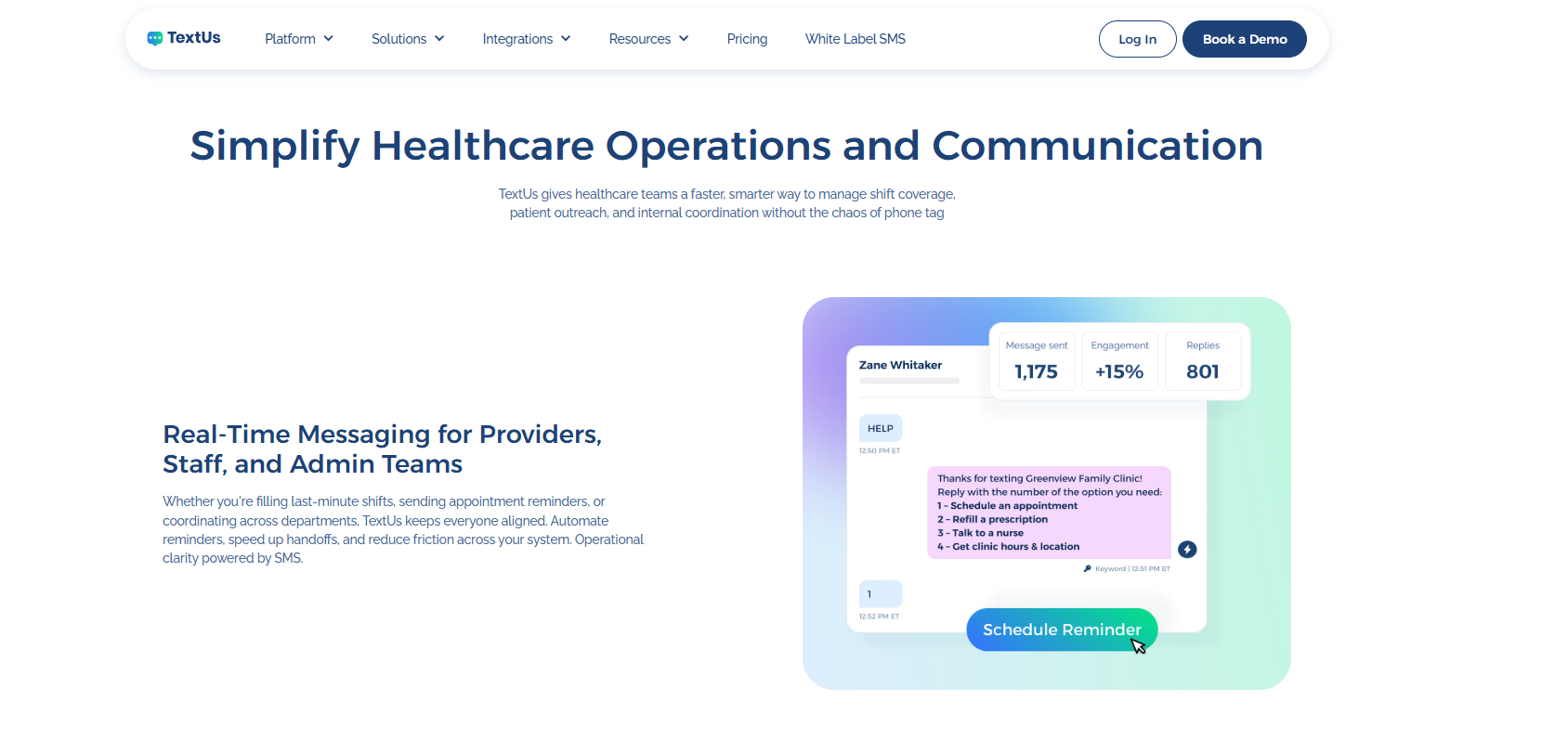
Teams can manage conversations, use approved templates, track opt-ins and opt-outs, and maintain better visibility over communication activity.
Book a demo with TextUs today to help streamline communication with patients and staff while maintaining compliance!
Breach Notification Concerns
Patients expect medical teams to protect their personal information. If PHI is exposed through text, the issue can damage trust and create concern about how the organization manages patient data.
A texting mistake can also lead to more work for staff, including internal reviews, legal questions, and possible data breach notification steps.
The risk can become more serious when patient messages are stored on lost or stolen devices.
Examples of HIPAA-Compliant Text Messaging
HIPAA-compliant messages should keep patient information limited and relevant to the purpose of the text.
Here are a few examples showing how to handle sensitive topics to keep your text messages HIPAA-compliant.
Incident-Based Messages
Compliant Message
“Please review the priority update in the secure system when available.”
The text alerts staff without naming the patient, condition, room, or incident. It keeps the actual care details inside a controlled system.
Non-compliant Message
“Michael Grant had a fall in Room 214 and needs a neurological check.”
The wording includes a patient name, room number, incident, and clinical next step. It directly connects a person to a health event and exposes sensitive data.
Consultation Messages
Compliant Message
“Can you review a consult request in the secure chart when you have a moment?”
The request stays general and avoids diagnosis details, symptoms, age, gender, or other identifiers. It moves the clinical discussion to a safer workflow.
Non-compliant Message
“Need input on a 42-year-old female with panic attacks, chest tightness, and possible anxiety disorder.”
The text does not include a name, but it shares age, gender, symptoms, and a possible diagnosis. In a small clinic or department, those details could identify the patient.
Appointment Reminder Messages
Compliant Message
“Reminder: You have a visit scheduled with [Clinic Name] on [Date] at [Time]. Reply YES to confirm.”
The reminder only includes basic scheduling details. It does not mention the reason for the visit, specialty, procedure, or health condition.
Non-compliant Message
“Reminder: Your fertility treatment follow-up is scheduled for Monday at 9 AM.”
The message reveals the type of care. If another person sees the text, they could learn private health information.
General Patient Update Messages
Compliant Message
“Please check the secure care system for the latest status update.”
The update avoids patient identity, location, treatment type, and care progress. It gives staff a next step without exposing health details in the text.
Non-compliant Message
“The patient in Bay 6 is responding well after dialysis today.”
The message includes a location and treatment type. Those details can identify the patient inside the facility and reveal care information.
Treatment Query Messages
Compliant Message
“Can we review the treatment question in the secure system?”
The text avoids patient identity, condition, medication, and treatment details. The data remains unreadable and limits access to only authorized personnel.
Non-compliant Message
“Should we adjust the blood pressure medication for the patient in Room 118?”
The wording includes a room number and medication-related details. In a care setting, this can link a patient to a condition or treatment plan.
Patient Discharge Messages
Compliant Message
“Please review the discharge note in the secure system.”
The discharge details stay in an approved system. Staff receive the alert without patient identity or care status placed in the text.
Non-compliant Message
“Eleanor Price was discharged in room 205 after her hip replacement and needs home care follow-up.”
The text includes the patient’s name, procedure, discharge status, and follow-up needs. A room number can also identify a patient inside a facility.
Family Communication Messages
Compliant Message
“Please call [Clinic Name] at [Number] about an update from the care team.”
The message gives the recipient a next step without sharing health status, treatment details, or the reason for the call.
Non-compliant Message
“Your mother’s breathing worsened overnight, and the doctor wants to discuss oxygen support.”
The text reveals a family member’s condition and possible care plan. If the message reaches the wrong number or appears on a shared phone, private information can be exposed.
Insurance Confirmation Messages
Compliant Message
“Please log in to the secure account to review the insurance update.”
The text avoids names, policy numbers, claim details, and payment information. Insurance details stay inside a secure account.
Non-compliant Message
“Lena’s claim was approved under policy number ZX90821.”
The message includes a patient name, claim status, and policy number. Insurance information tied to healthcare services is protected information.
Prescription Messages
Compliant Message
“Please review the secure system for the medication request.”
The text leaves out the medication name, dosage, condition, and patient identity. The details stay in a secure workflow.
Non-compliant Message
“Please prepare Daniel Kim’s Adderall 20mg refill today.”
The message includes the patient’s name, medication, and dosage, which reveal sensitive treatment information.
How Do You Text Patients Securely?
Secure patient texting is not only about convenience. One poorly written message can expose patient information and create problems for both the patient and the provider.
HIPAA Journal reports that civil monetary penalties for HIPAA violations can range from $145 to $2,190,294 per violation. The amount depends on the level of fault and the type of violation.
Criminal penalties can also apply when someone knowingly misuses or discloses patient information. These risks can lead to costly HIPAA violations, internal reviews, legal concerns, and loss of patient trust.
To ensure HIPAA compliance and improve patient engagement, here are text messaging practices you should follow for secure communication:
Choose a HIPAA-Compliant Texting Platform
A HIPAA-compliant messaging app should support secure workflows for patient communication.
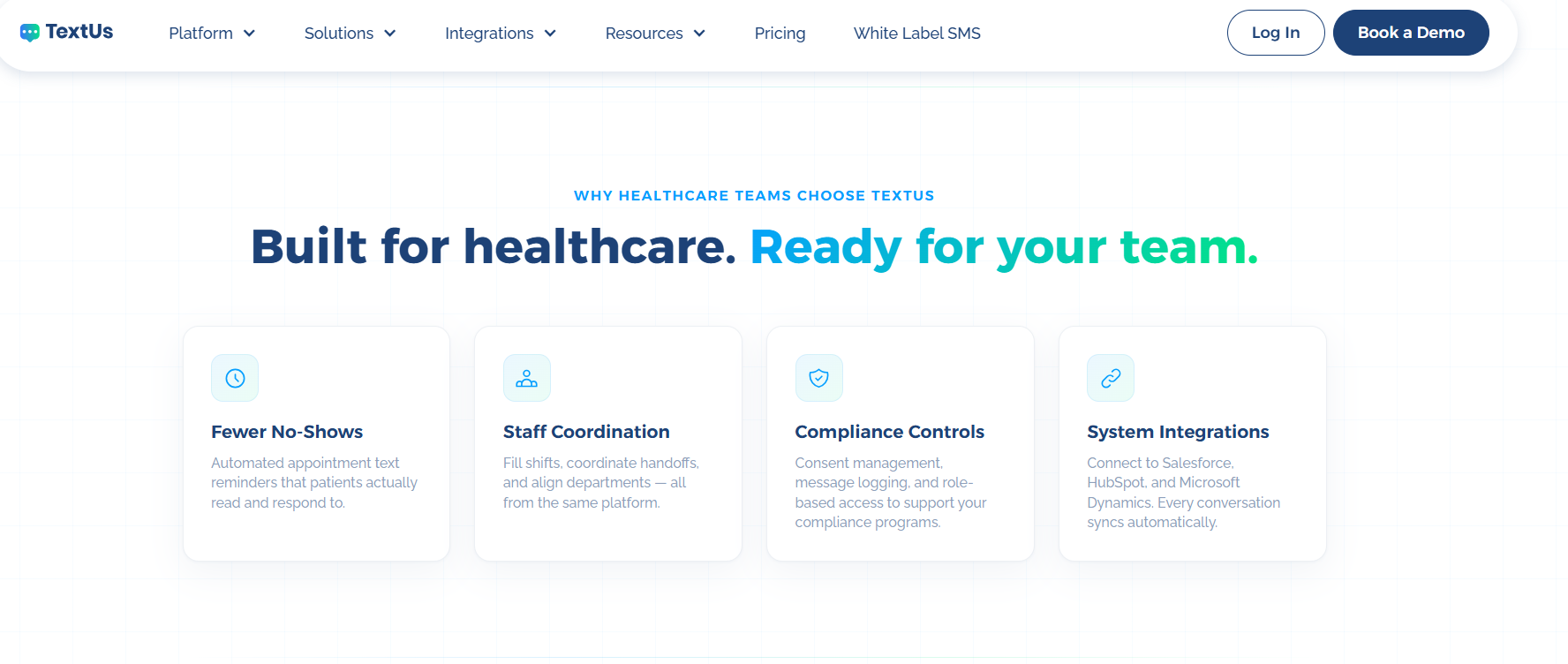
TextUs makes patient texting easier for medical professionals who want fewer no-shows and better care coordination.
This patient texting platform provides your healthcare teams a faster, smarter way to manage shift coverage, patient outreach, and internal coordination without the chaos of phone tag.
You can use TextUs to fill last-minute shifts, send appointment reminders, and coordinate between departments. Providers, staff, and admin teams stay aligned through real-time SMS workflows.
Healthcare texting also needs administrative controls that support your compliance program.
This secure messaging solution includes opt-in and opt-out consent management, complete message history logging, full audit logs, role-based access controls, and administrative oversight.
TextUs also lets you pull patient or staff lists from your electronic health record (EHR) systems or scheduling tools. Then, it sends messages that guide people to confirm or take the next step.
These features allow you to manage patient communication while supporting data security requirements and make texting easier to monitor.
TextUs can be part of a safer patient communication program when paired with the proper SMS compliance process.
Ready to bring more control to healthcare texting? Book a demo with TextUs today to see how you can simplify patient outreach and internal coordination through a secure platform!
Train Staff on Secure Texting Rules
Even the best SMS marketing platform can create risk if staff do not know how to use it.
To ensure compliance, staff should understand what counts as PHI. They should know messages not to be sent by text, how to verify recipients, and when to move a conversation to a portal or phone call.
Training should also explain how to report mistakes, such as a message sent to the wrong number. Secure texting depends on both technology and the people using it.
Verify Patient Consent and Preferences
Before texting patients, you should know whether the patient agreed to receive text messages.
The consent process should explain what types of messages the patient may receive and any privacy risks that can come with digital communication.
Patient preferences should also be documented. If a patient does not want texts or requests another communication method, your healthcare team should follow that preference when possible.
Use Secure User Authentication
Secure texting should require staff to sign in with their own user account through multi-factor authentication when available.
Shared logins can make it harder to know who sent a message, who viewed a conversation, or who accessed patient information.
User authentication is part of a robust access control process. It helps healthcare organizations limit patient information to only authorized users and support better oversight of message activity.
Limit PHI in Every Message
Many healthcare texts can stay general, such as asking the patient to call the office or log in to the patient portal.
Detailed information, such as test results, diagnoses, medication concerns, or treatment instructions, should be handled through a more secure channel.
A text can notify the patient that an update is available without including sensitive details.
Use Approved Message Templates
Approved templates make patient texting more consistent. They also reduce the chance that staff will add too much sensitive patient data to a message.
Templates are useful for appointment reminders, confirmation requests, billing notices, follow-up prompts, and portal notifications. They keep messages aligned with your organization’s texting policy.
Make Patient Texting More Secure and Manageable With TextUs
In the healthcare sector, communication slows down when every reminder and follow-up depends on another phone call.
TextUs helps healthcare teams manage patient communication and staff coordination using an existing office phone number.
With shared inboxes, your team can see conversations, respond faster, and keep patient conversations easier to manage. Templates also allow staff to send intake reminders, follow-up messages, appointment updates, and routine outreach without rewriting every text.
This HIPAA-compliant app also makes scheduling simpler. Automated appointment reminders let patients confirm, reschedule, or cancel by reply to ensure staff spend less time chasing calls and more time supporting care.
Book a demo with TextUs today to see how it improves operational efficiency and manages HIPAA-compliant texting workflows!
Continue Reading



Frequently Asked Questions
Can texting be HIPAA-compliant?
Yes. Texting can be HIPAA compliant when the message, workflow, platform, and safeguards protect PHI.
Healthcare teams should use access controls, user authentication, secure group chats, audit trails, staff training, and a Business Associate Agreement (BAA) when a vendor handles PHI.
What is an example of a HIPAA-compliant text message?
A safer example is: “Hi [First Name], you have an appointment with [Clinic Name] on [Date] at [Time]. Reply YES to confirm.”
It avoids diagnosis details, test results, medication names, file sharing, and other sensitive health information.
Is Apple texting HIPAA-compliant?
No, Apple iMessage is not recommended for sending PHI.
Apple does not generally sign a Business Associate Agreement (BAA) and lacks the audit trails, access controls, and admin oversight needed to track PHI communication.
Business Texting
Built for Results
Create and convert pipeline at scale through industry leading SMS software