
15 Best Paradox Alternatives for Recruiting in 2026
Review 15 Paradox alternatives for recruiting in 2026 and see how TextUs compares for candidate communication, automation, and hiring support

Written by
Adam Hamdan
Published
August 11, 2026
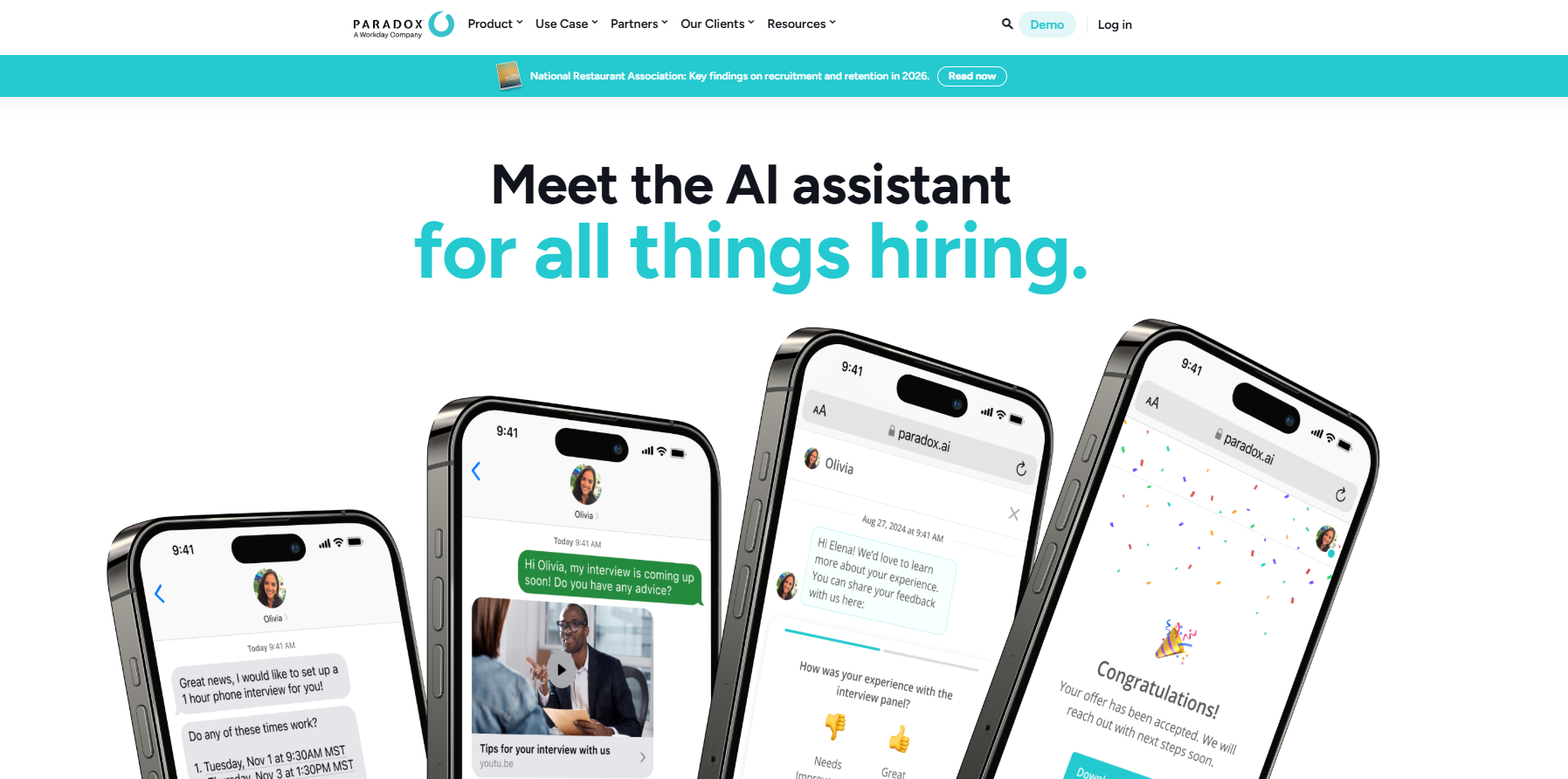
Paradox became known for its conversational AI assistant, Olivia. It guides candidates through job discovery, applications, screening, interview scheduling, reminders, and parts of onboarding.
Teams hiring for frontline, hourly, and high-volume positions find its conversational approach useful. But the platform may not fit every budget, hiring model, or communication strategy.
If you're exploring other platforms, you may want similar automation, stronger candidate communication, or a platform that works better with your current recruiting systems.
In this detailed comparison, we will review Paradox alternatives by category and help you choose a platform that matches your hiring volume.
TL;DR
Here are 15 Paradox alternatives, grouped by category to help you compare the leading options for each hiring need:
- Candidate texting and engagement: TextUs, Sense, Emissary
- Conversational recruitment automation: Humanly, XOR, Talkpush
- Video interviewing and assessment: HireVue, Spark Hire, Vidcruiter
- Frontline and hourly recruitment: Fountain, Workstream, Harri
- Enterprise talent acquisition: Phenom, iCIMS, SmartRecruiters
Why Businesses Look for Paradox Alternatives
Paradox is now part of Workday’s broader talent acquisition offering, alongside Workday Recruiting and HiredScore. It supports many parts of recruitment, from applicant questions to interview booking.
However, its enterprise setup, custom pricing, and implementation needs may be difficult to justify for smaller recruitment departments with focused actual hiring needs.
Paradox focuses on automating candidate screening, communication, and interview scheduling, which helps you spend less time on administrative tasks.
But if you depend on two-way texting, shared inboxes, and talent re-engagement, you may need stronger tools for recruiter-led candidate engagement.
The right alternative depends on the specific gap in your current process. Some platforms strengthen candidate communication, while others provide deeper interview tools or complete talent acquisition management.
15 Best Paradox Alternatives (By Category)
Different platforms address different parts of the recruitment process. Below are top alternatives for Paradox grouped by category to help you compare them more easily.
Candidate Texting and Engagement
You don't need to replace your entire recruiting system when communication is the main gap. These platforms work alongside your Applicant Tracking System (ATS) to improve outreach, follow-up, and campaign management.
1. TextUs
TextUs is a candidate texting platform that works alongside an existing ATS rather than replacing the full recruitment system.
Its main difference from Paradox is its focused approach to candidate communication. TextUs specializes in helping you reach candidates and measure SMS performance in one platform.
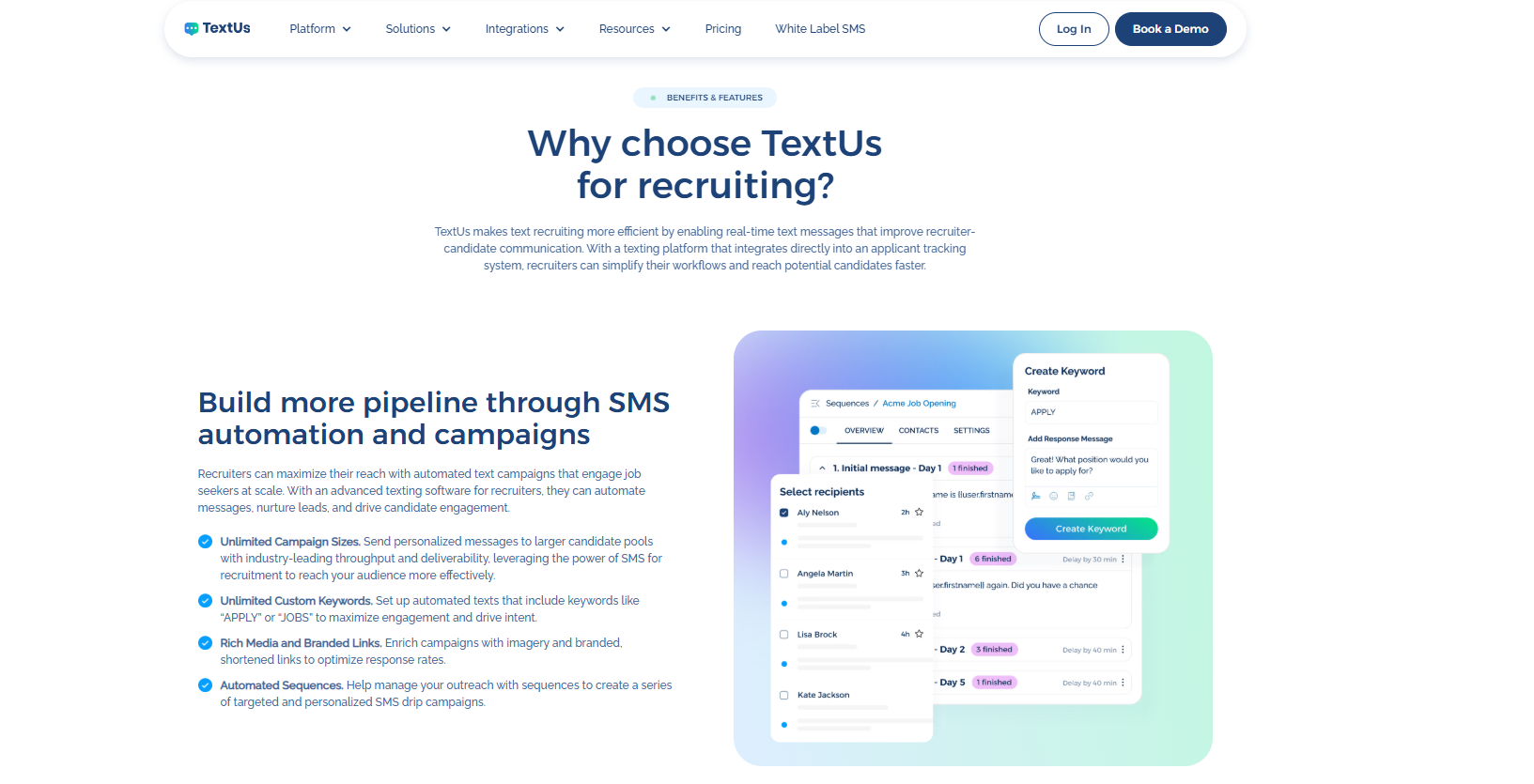
Its key features include personalized SMS marketing campaigns, automated sequences, custom keywords, rich MMS messages, and branded links.
You can contact large candidate pools about open roles, hiring events, or re-engagement campaigns, while sequences continue follow-up over time and pause when someone responds.
SMS keywords also trigger automated conversations and route interested top talent toward the appropriate next step.
Candidate replies appear in a shared inbox where you assign conversations, use personal or team templates, and maintain coverage when someone is unavailable.
TextUs is accessible through its web platform, mobile app, and Chrome extension. This lets you communicate while working inside supported ATS platforms and job boards.
Finally, TextUs analytics show delivery, reply, response time, and campaign performance, while AI Smart Delivery reviews message quality, spam triggers, and opt-out risks before a text is sent.
This combination makes TextUs a strong option if you already have recruiting technology in place but need deeper candidate outreach and SMS performance controls.
Book a demo with TextUs today and see how texting supports faster outreach and more active candidate pipelines!
2. Sense
Sense is a talent engagement platform with messaging tools for recruiting and staffing workflows. It extends communication beyond SMS through WhatsApp, automated workflows, and live chat.
Its SMS product supports one-to-one, two-way texting from a central workspace, along with reusable templates, a Chrome extension, and mobile apps for iOS and Android.
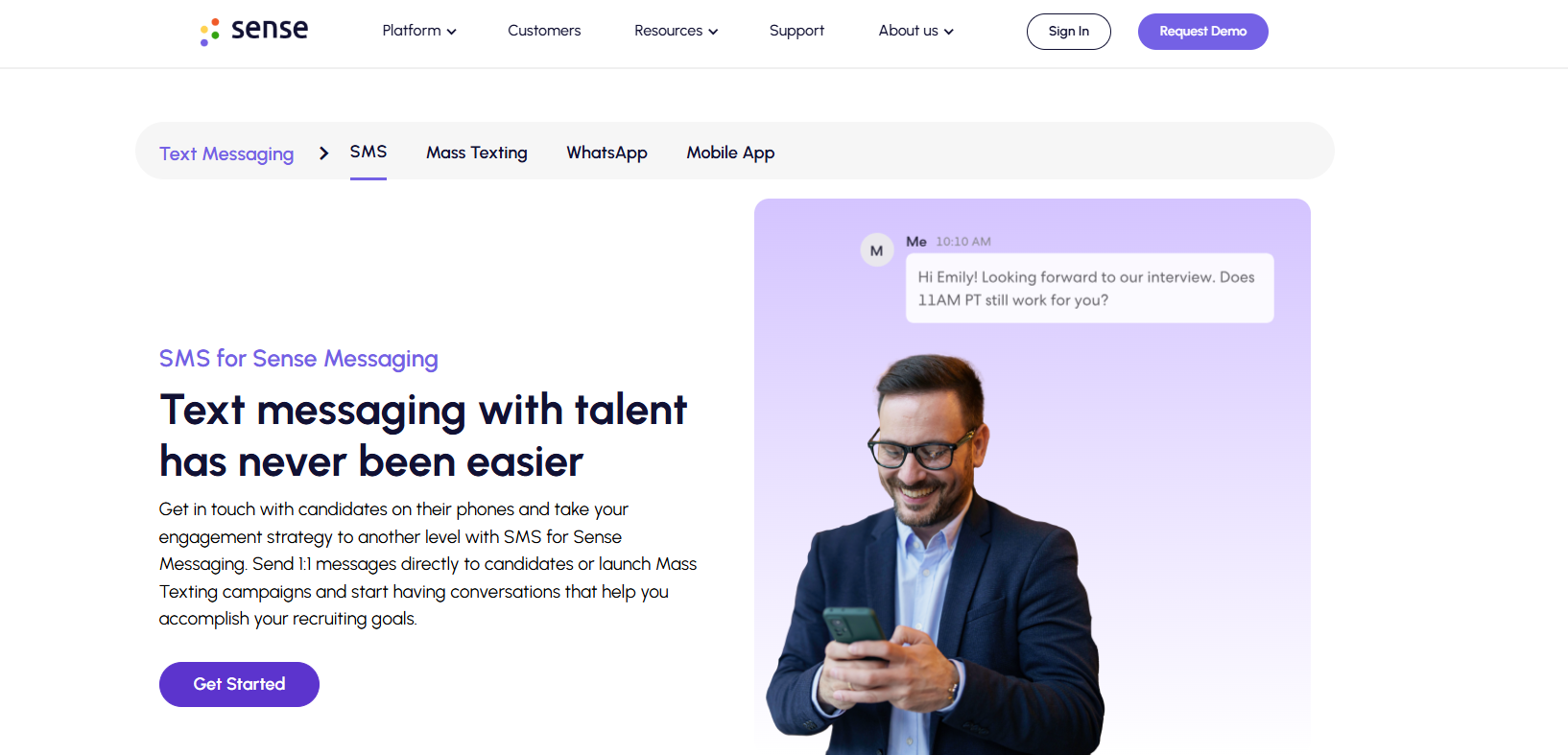
A shared inbox gives you access to active conversations. You can organize candidate responses, assign several phone numbers to recruiters who manage different hiring lines, and search conversations by name, number, or activity status.
Sense also includes mass texting for job announcements, event outreach, assignment updates, and re-engagement campaigns.
It lets you schedule broadcasts, add variables such as the recipient’s name or role, exclude people who received a recent message, and test different copy or calls to action.
Its bidirectional ATS connections bring current applicant information into the messaging workspace. Conversation records can then write back to the ATS, which keeps communication history connected with the correct applicant profile.
3. Emissary
Emissary is a text recruiting platform that works alongside applicant tracking, HR, and staffing systems. It allows you to send messages from supported platforms, while integrations can provide two-way data syncing and triggered texts.
Its one-to-one texting tools let you message applicants from an ATS or another webpage through a Chrome extension. Individual messages can be scheduled, and saved templates can be reused.
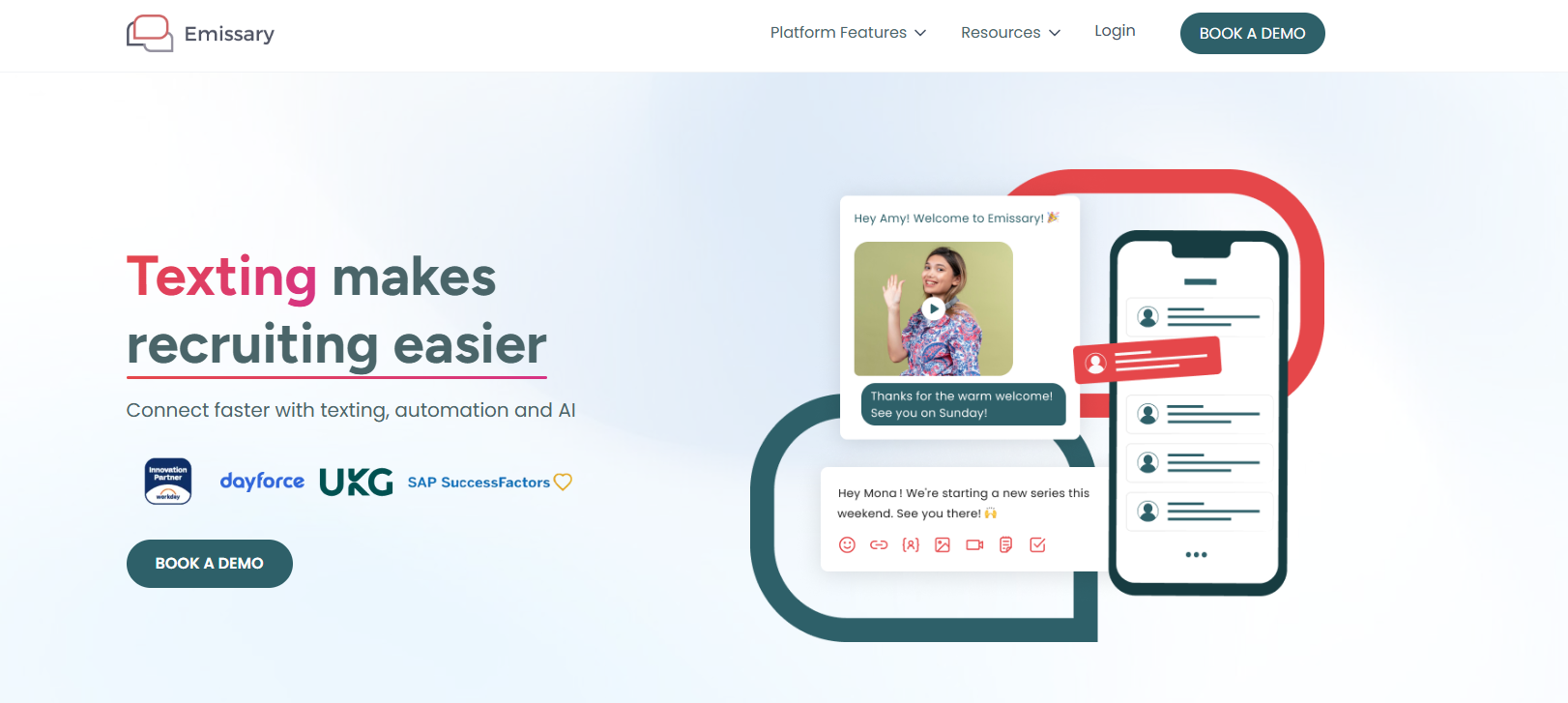
Emissary also supports group text campaigns for new applicants, former applicants, new hires, and employees. Templates and dynamic fields can personalize each message, while contact data can be imported from an ATS, HRIS, staffing platform, or spreadsheet.
The texting inbox keeps conversations from individual outreach, campaigns, and short codes. Its tools are built specifically for recruiting workflows, with options to flag, tag, search, and share message threads.
Additional engagement tools include recruiting chatbots. Text-to-Apply also uses keywords and short codes to connect job advertising, career fairs, social posts, and physical locations with mobile application flows.
Conversational Recruitment Automation Platforms
These platforms support more than candidate messaging by handling screening, interview booking, and other early hiring steps.
4. Humanly
Humanly is a conversational recruiting platform for hourly, frontline, and large-scale recruitment.
The platform is aimed at high-volume hiring teams that need to engage applicants, assess fit, book interviews, and manage recruitment workflows.
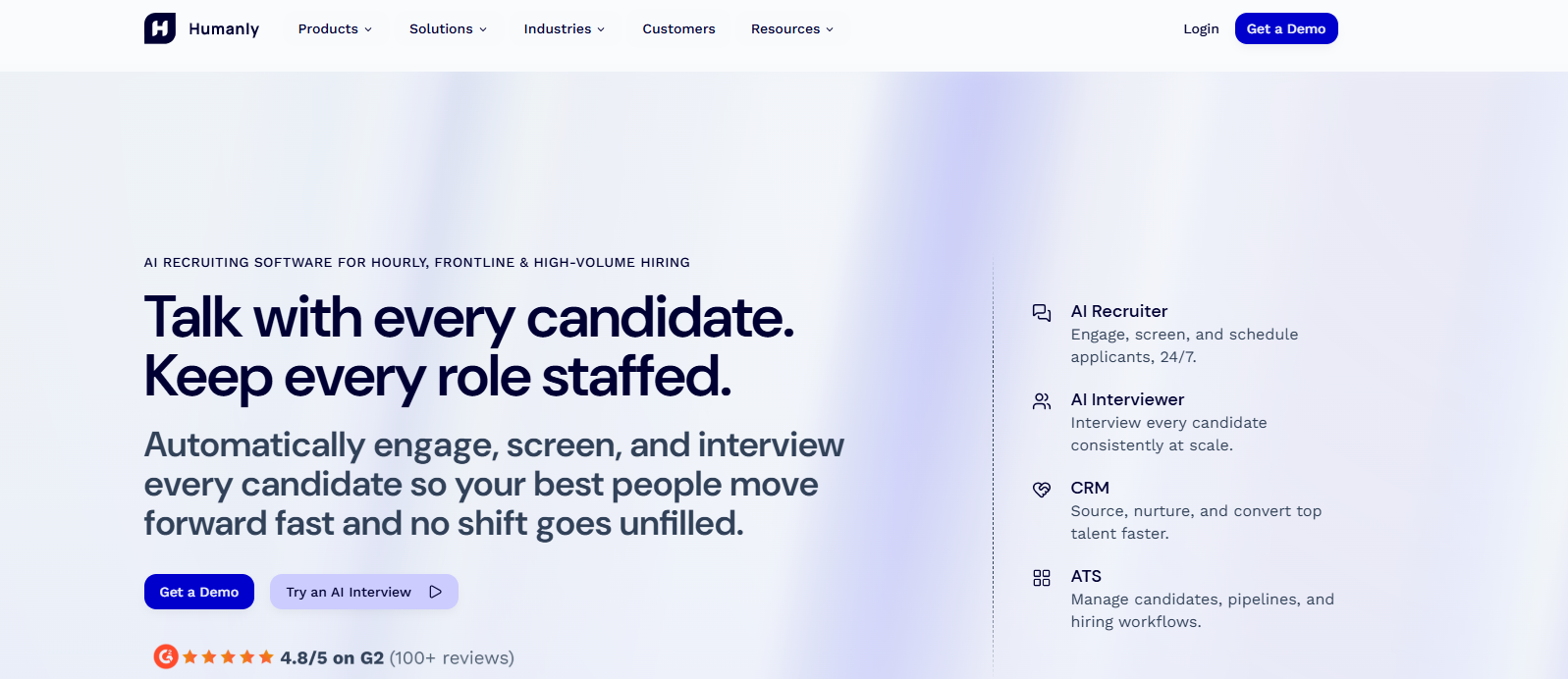
Its AI Recruiter communicates with applicants through SMS, email, chat, voice, and video. You can use these screening conversations to ask qualification questions, identify suitable candidates, and communicate the next steps at any time of day.
Humanly also provides an AI Interviewer that conducts structured interviews. Every applicant receives the same set of questions, while automated scoring creates standardized scorecards, summaries, and ranked recommendations for recruiter review.
Its scheduling automation connects with Google Calendar and Outlook to show available interview times, send reminders, manage follow-up, and update applicant records.
Qualified applicants receive an interview invitation as soon as they complete the required screening steps.
5. XOR
XOR is an AI recruiting platform that automates candidate application, screening, interview scheduling, and follow-up. Its chatbots engage applicants who arrive through career sites, recruitment ads, messaging campaigns, and other hiring channels.
The platform reviews candidate answers, identifies applicants who meet the selected criteria, and passes qualified people to the next stage.
XOR supports multi-channel screening through text messaging, web chat, email, WhatsApp, and video sequences. You may respond to applicants yourself or use chatbots to manage common questions, screening steps, and reminders.
It connects with Google Calendar and Outlook for interview booking. Qualified applicants can choose available times, while calendar invitations provide options to cancel or reschedule.
Its text recruiting tools also include segmented campaigns, drip messages, applicant re-engagement, and communication reporting. Candidate information can be imported through an Excel spreadsheet or synced from an ATS.
6. Talkpush
Talkpush is an AI-powered ATS and recruitment CRM that supports candidate attraction, screening, interviews, assessments, document collection, contracts, and onboarding.
Its chatbot manages conversational candidate engagement through career websites, SMS, email, Facebook Messenger, WhatsApp, and other messaging channels.
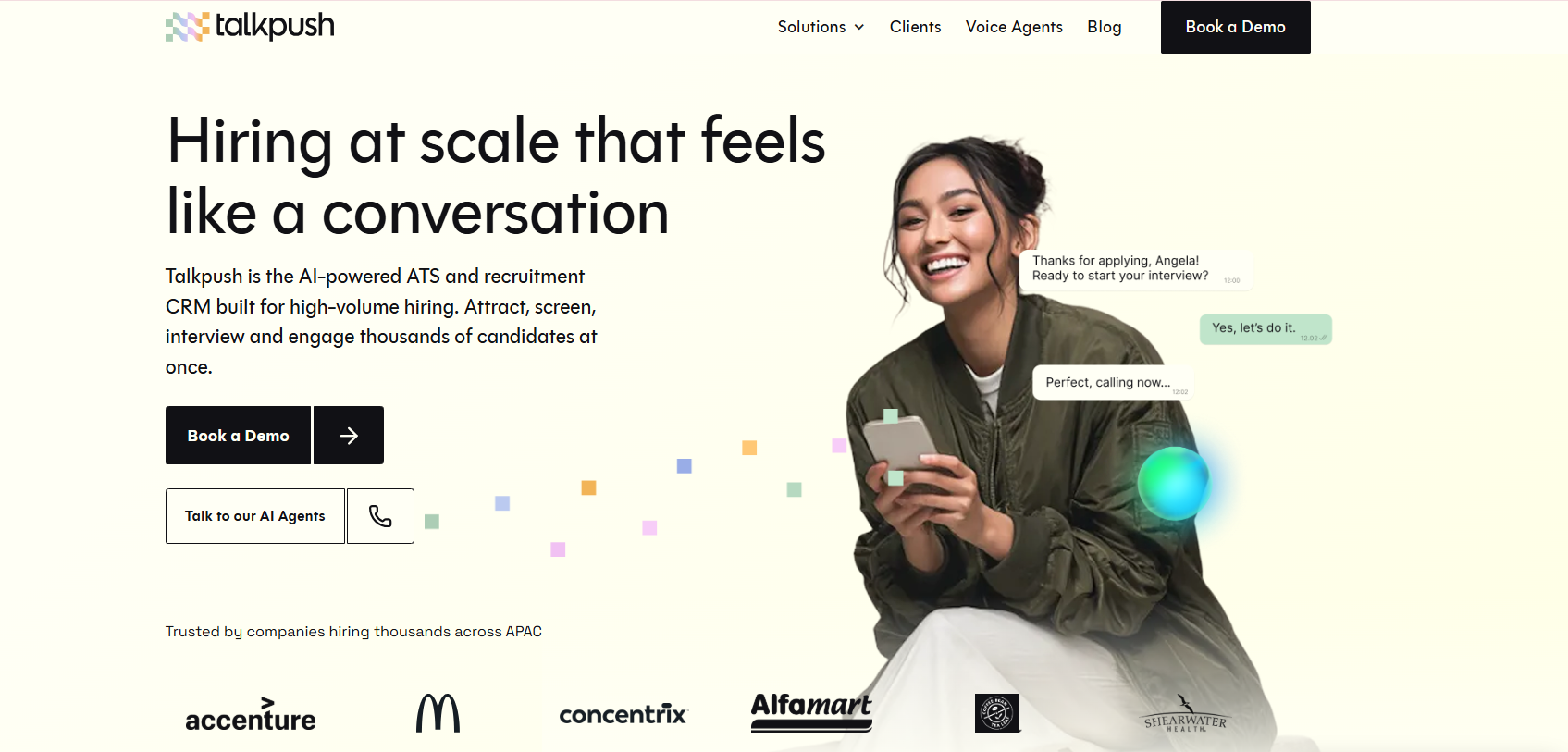
Candidates can ask about job requirements, work locations, compensation, required documents, and their application status, while the system records their responses in their profiles.
The platform also supports autonomous interviewing through Voice AI. Candidates can move from pre-screening into a real-time voice interview, while the system records the conversation and provides job-matching insights.
Talkpush connects with calendars to display available interview slots and automate reminders and follow-up messages. It also schedules communication through SMS, email, WhatsApp, and Messenger, with delivery based on your configured time zones.
Video Interviewing and Assessment Platforms
These tools help you evaluate applicants beyond resumes and basic screening questions.
7. HireVue
HireVue is a recruitment assessment and interview platform that supports on-demand recordings and live video interviews.
Candidates complete recorded questions on their own schedule or join a real-time session from a computer or mobile device.
The platform supports structured interviewing through job-specific interview guides, standard rating scales, and shared scorecards.
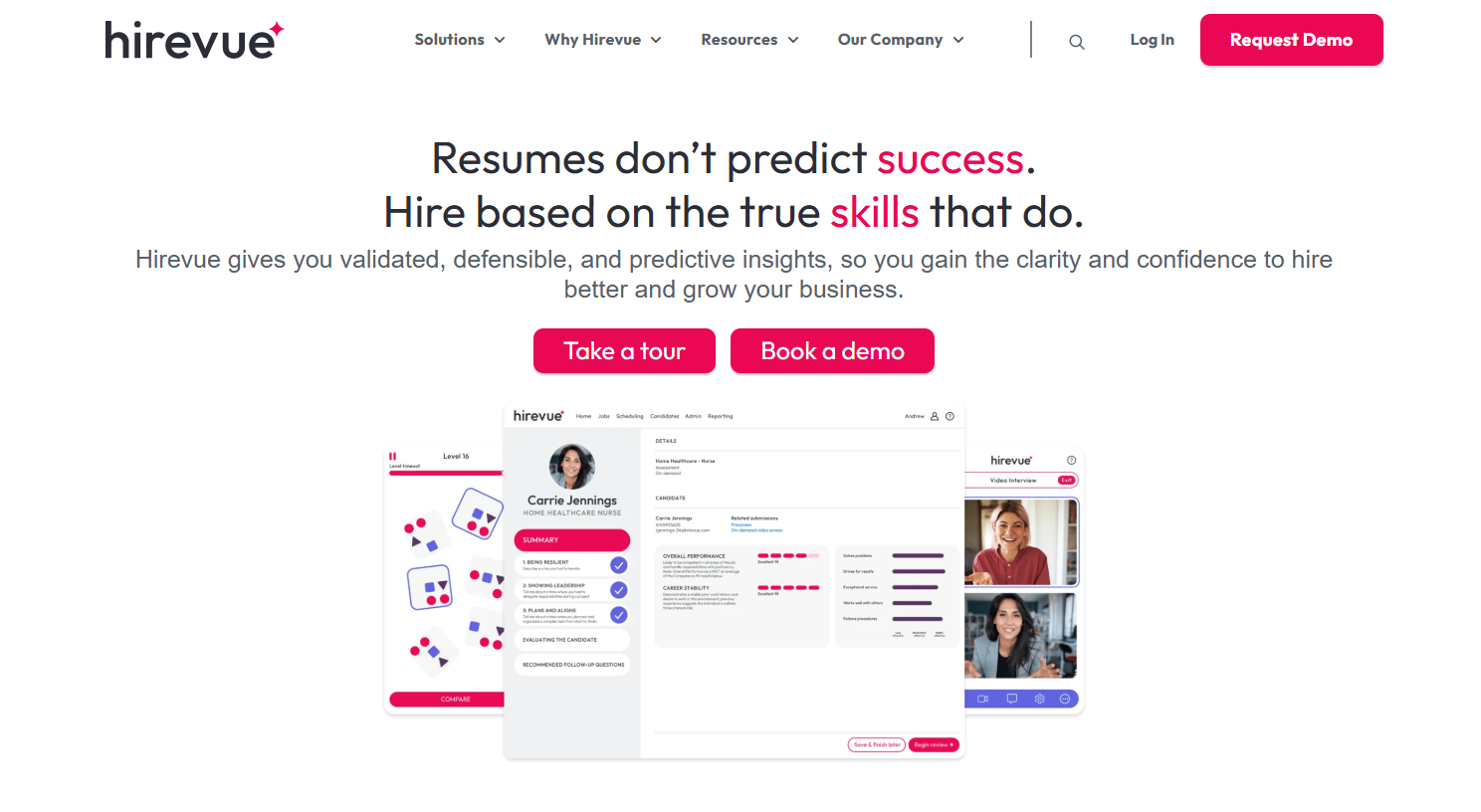
HireVue's Interview Builder includes more than 1,000 interview guides maintained by industrial-organizational psychologists. It applies the same questions and evaluation criteria across applicants.
It lets you combine interviews and assessments into a single candidate workflow. This approach supports skills-based hiring by adding job-related evidence beyond resumes.
HireVue can connect with applicant tracking systems and video meeting tools such as Microsoft Teams, Zoom, and Webex. It also offers interview scheduling, automated candidate routing, reminders, and shared recordings.
8. Spark Hire
Spark Hire is a recruitment platform that provides one-way recorded interviews, live interviews, behavioral assessments, and an ATS.
You can set preparation time, response length, and the number of recording attempts, while branded introduction and closing videos provide context about the company and role.
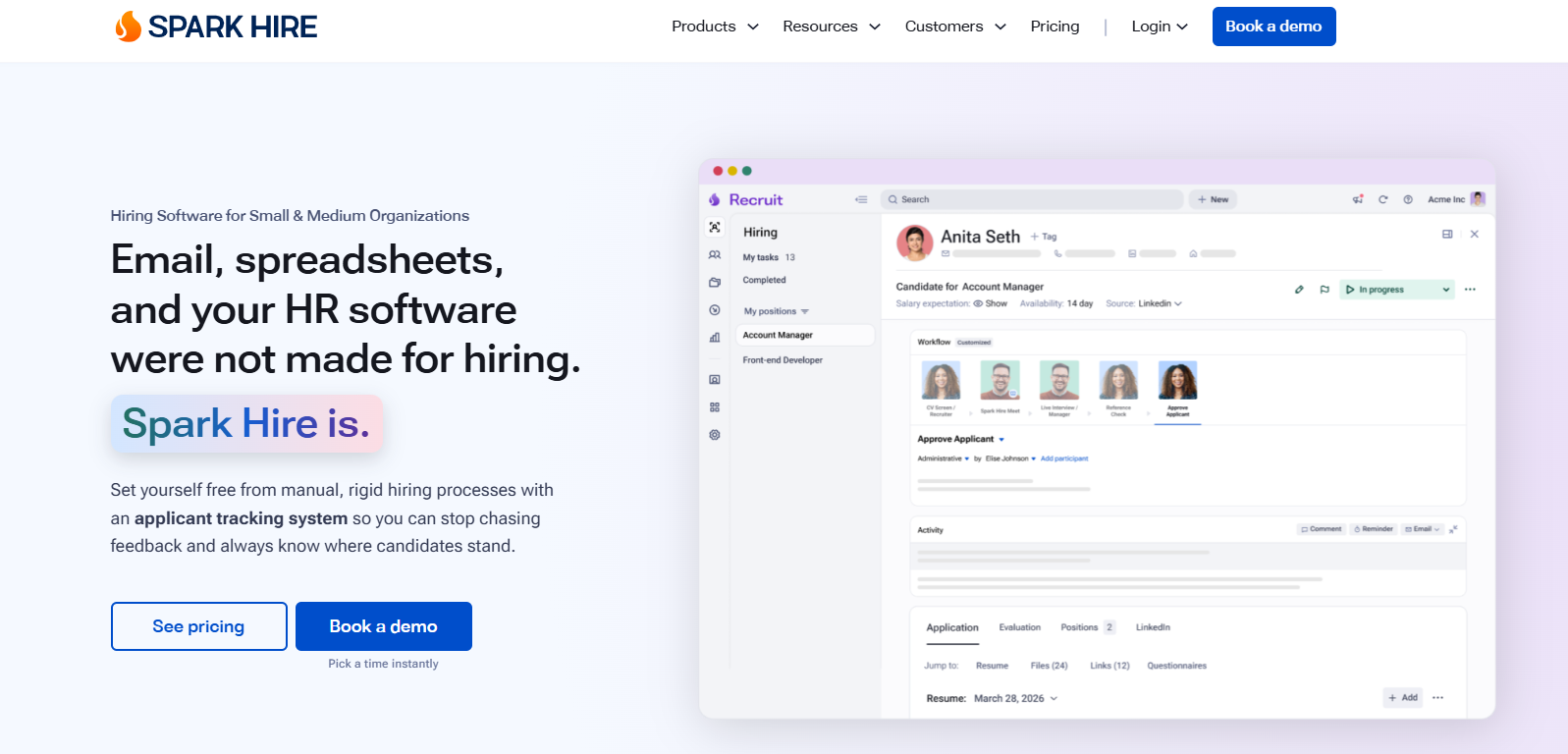
This format supports simple video screening without the calendar coordination required for early phone screens. Candidates receive invitations through a link, SMS, or bulk CSV upload, and the platform can send reminders or extend completion deadlines.
Spark Hire also lets you host real-time video sessions through a web browser. You may use custom question sets, invite other team members, and share completed interviews with hiring managers for comments and ratings.
Evaluation tools include customizable scorecards, recommendations, reviewer notes, and combined team ratings. Spark Hire AI can transcribe recordings in more than 50 languages, summarize responses, and score submissions against selected factors.
9. VidCruiter
VidCruiter is an interview management platform that supports pre-recorded, real-time, structured, panel, group, hybrid, and in-person interview formats.
For early video screening, recruiters can create preset text or recorded questions that candidates answer on their own schedule.
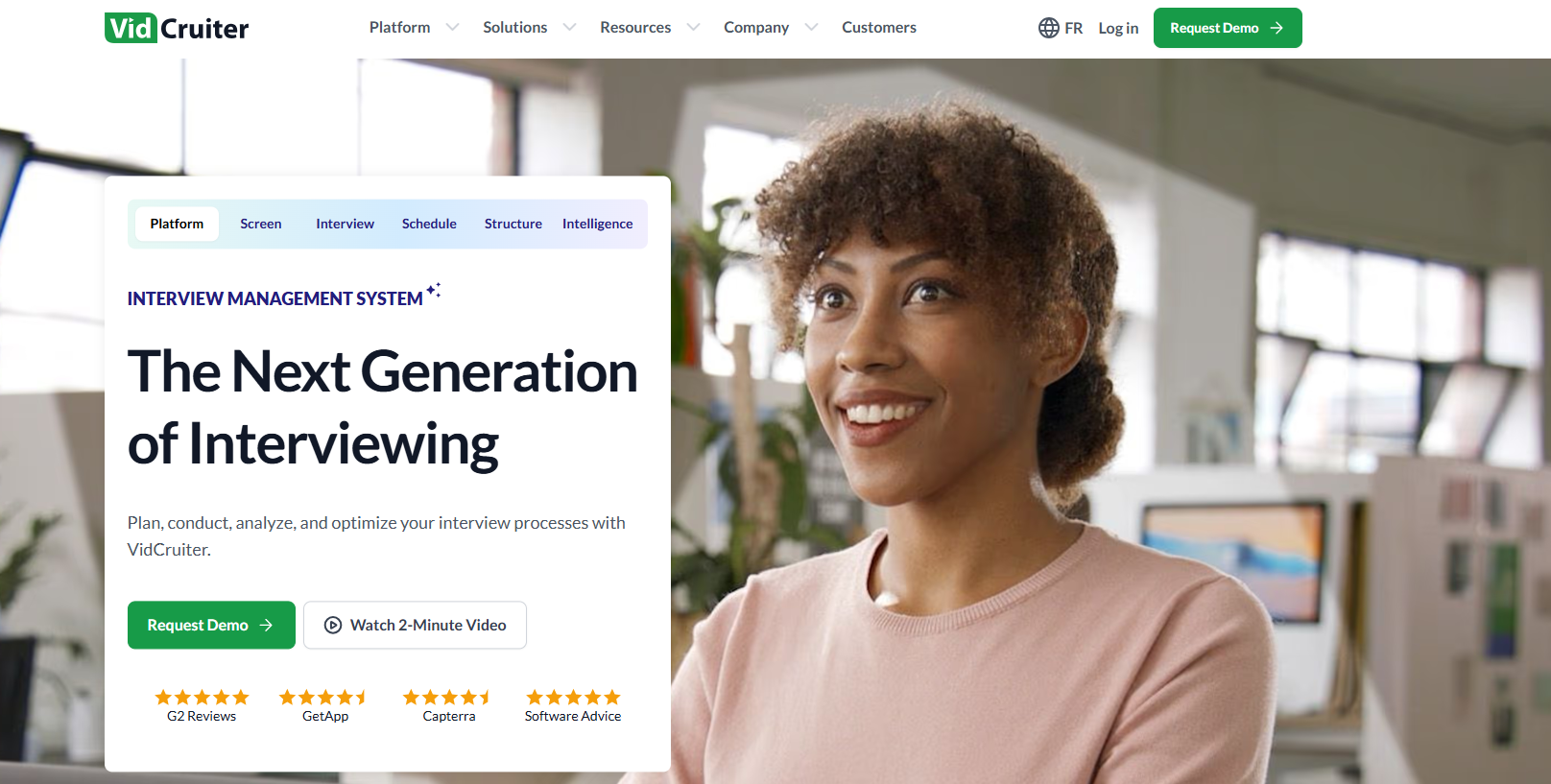
Each question can include preparation limits, response times, re-recording rules, and evaluation criteria, while applicants can complete the session from a supported device.
The platform supports one-to-one, panel, group, hybrid, and multiple mini interview formats, with scorecards that help reviewers apply the same evaluation process across applicants.
VidCruiter also includes AI-generated transcripts, notes, summaries, and scoring tied to predefined rubrics.
Its role-specific scoring tools let employers configure the evaluation criteria, while fraud detection and identity verification features support interview integrity during remote assessments.
Frontline and Hourly Recruitment Platforms
These platforms support companies that need to manage large applicant volumes across locations, shifts, and hourly roles.
10. Fountain
Fountain is a hiring platform for companies that recruit hourly and frontline workers across multiple roles and locations.
It combines applicant sourcing, screening, interview scheduling, candidate communication, onboarding, and workforce management within its broader Frontline OS.
Its application workflows support mobile applications, SMS and WhatsApp communication, qualification questions, status updates, and appointment reminders. You can configure different processes based on the role, location, or compliance requirements.
Fountain also uses AI agents for frontline hiring tasks. Anna conducts voice interviews and evaluates applicants against role criteria, while the Candidate AI Agent responds to questions through web chat, SMS, and WhatsApp.
Fountain can connect with more than 40 HR, scheduling, training, compliance, and background-check systems. This broader setup allows employers with high-volume frontline operations to connect recruiting with related workforce systems.
11. Workstream
Workstream provides hiring, HR, payroll, scheduling, and compliance tools for hourly and multi-location employers.
Its current platform focuses heavily on restaurant operations, though its recruitment tools can also support other companies with shift-based workforces.
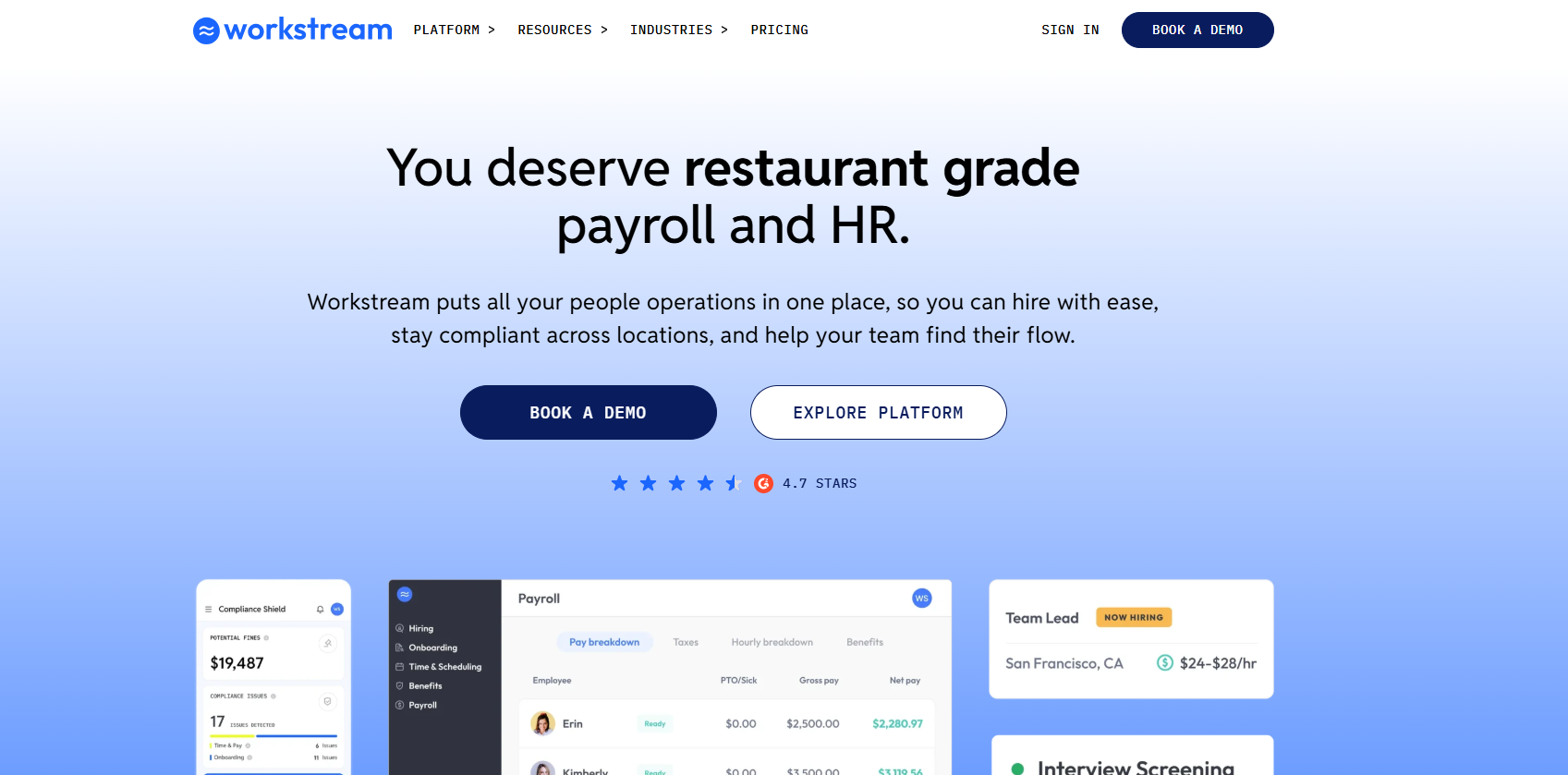
You can publish vacancies across thousands of employment sites, create a branded careers page, share openings on social media, and set up text-to-apply codes.
A Talent Network also stores past applicants and former workers so managers can organize them with tags and invite them to apply for new positions.
Workstream also uses automated messages and AI phone calls to communicate with applicants about interviews and next steps.
Multilingual tools can translate job postings, scheduling messages, and applicant communication, which help you recruit across locations with different language needs.
12. Harri
Harri is a human capital management platform for restaurants, hotels, and other hospitality employers.
It lets you create mobile application processes, manage applicants from a recruitment hub, and use a custom career portal to display open positions.
Harri also supports targeted campaigns, talent pools, candidate assessments, SMS communication, and integrations with external recruitment services.
Its onboarding system lets new employees review and sign company, state, and federal documents from a supported device. Employers can collect forms such as I-9s and W-4s, store onboarding records, and connect employee information with payroll or HR systems.
Harri covers not just scheduling. Its workforce management suite also includes demand forecasting, time and attendance, Core HR, employee communication, and labor compliance controls.
Enterprise Talent Acquisition Suites
These platforms support enterprise teams that need broader recruitment management across sourcing, applicant tracking, engagement, offers, and onboarding.
13. Phenom
Phenom is an enterprise talent experience platform that supports candidate, recruiter, hiring manager, employee, HR, and HR technology workflows within the same platform.
A conversational chatbot can answer common questions, recommend open roles, collect candidate information, conduct screening, and help arrange interviews.
Phenom Talent CRM lets recruiters build pipelines from applicants, past candidates, career site visitors, and talent community members.
Dynamic lists update candidate groups based on criteria, while campaigns and one-to-one messaging support continued outreach.
The enterprise tool uses fit scores and talent discovery tools to compare internal and external candidates with open positions. You may also use its advanced automation for screening, interview scheduling, candidate rediscovery, and workflow tasks.
14. iCIMS
iCIMS is an enterprise talent acquisition suite that covers applicant tracking, candidate engagement, employer branding, offer management, and onboarding.
Its Talent Cloud is designed for enterprise clients that need to manage recruitment across business units, locations, and hiring programs from a connected system.
The ATS manages job requisitions, applications, candidate stages, interview activity, offers, and hiring records. AI tools support resume screening and candidate matching, while configurable workflows let you adapt the process to different roles and departments.
iCIMS Engage adds candidate relationship management and recruitment marketing. It lets you build talent pools, re-engage past applicants, create email and SMS campaigns, and use engagement data.
The Digital Assistant acts as an AI assistant that can answer questions, screen applicants, recommend jobs, and help qualified candidates schedule interviews.
15. SmartRecruiters
SmartRecruiters is an enterprise talent acquisition platform that covers job advertising, candidate relationship management, applicant tracking, interview scheduling, and more.
Its SmartOS platform gives global teams a shared system for managing hiring across roles, regions, and business units.
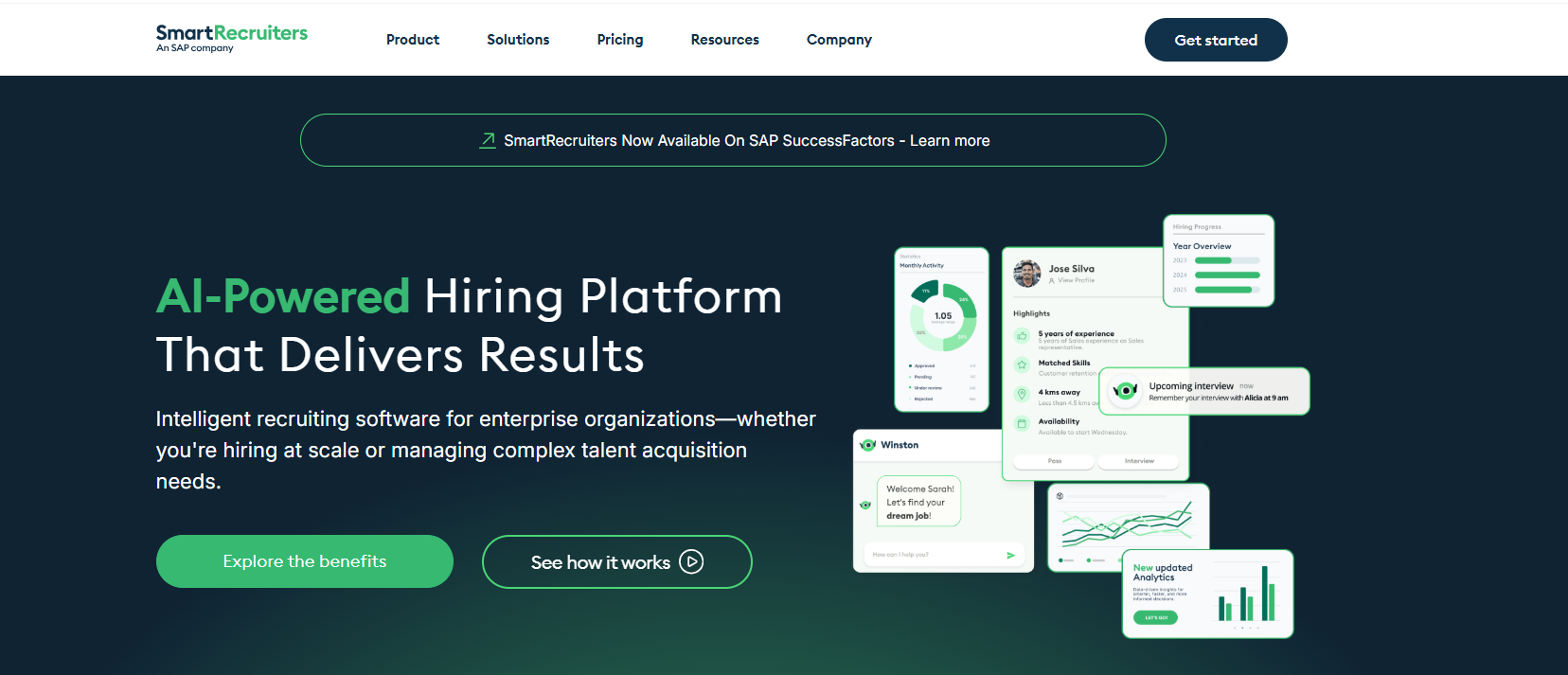
The platform lets you distribute vacancies across sourcing channels, manage candidate pipelines, track applicant stages, and collaborate with hiring managers.
SmartRecruiters also includes career site tools, text recruiting, candidate matching, dynamic scheduling, and configurable workflows for moving applicants from initial interest through an accepted offer.
Winston is the platform’s embedded AI recruiting companion. Its tools can recommend jobs, guide candidates through applications, screen applicants, shortlist profiles, and arrange interviews.
How to Choose the Best Paradox Alternative
The right option depends on which parts of your recruitment process need the most support. These are the main factors to compare before choosing a platform.
Decide Between a Focused Tool and a Full Suite
A full talent acquisition suite is ideal if you want to manage sourcing, applicant tracking, interviews, offers, and onboarding within a broader system.
But a dedicated tool is more valuable when your existing recruitment technology already handles most of the process, but one area still needs stronger support.
Candidate communication is one area where many platforms provide only basic functionality.
An ATS may store candidate records and send standard notifications. Yet, it lacks flexible texting campaigns, automated follow-ups, shared conversations, message templates, and detailed engagement reporting.
A text recruiting software like TextUs can fill that gap while continuing to work alongside the existing recruitment system.
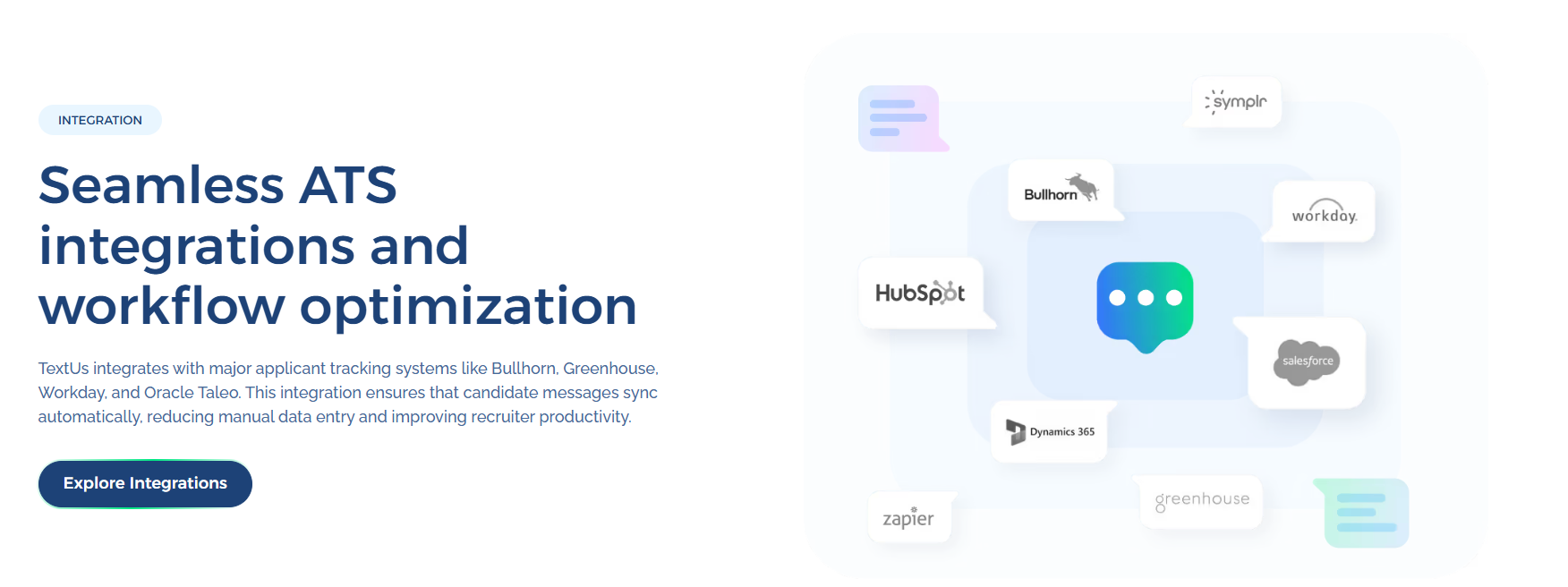
You gain a faster way to send job opportunities, screening questions, interview reminders, and application updates without moving the rest of the hiring process into separate tools.
Book a demo with TextUs today to see how business texting fits into your existing hiring process!
Define Your Hiring Volume
Hiring volume affects the level of automation, user access, reporting, and applicant management needed.
Smaller teams may need straightforward communication and scheduling tools, while mid-market teams require stronger workflow controls and ATS connections.
If you're filling high-volume roles, you need systems that can process many applicants for different job titles without creating delays.
You should also consider whether your hiring demand stays consistent or rises during seasonal campaigns, new location openings, or periods of rapid growth.
Map Your Candidate Journey
A complete candidate journey covers every step from discovering a vacancy to completing onboarding.
This includes the application, screening, recruiter communication, interview booking, assessment, offer, and pre-employment stages.
A journey map can show where candidates wait too long, repeat information, or leave the process.
Your completion rates at each stage can reveal which tools help move candidates forward without removing important human contact.
Review Your Existing Recruiting Technology
Your current technology may include an ATS, HRIS, CRM, calendars, assessment software, and communication tools.
Each system should have a defined role, along with a clear record of where candidate data sits and which platform controls each workflow.
The new product should sync records, update stages, support scheduling coordination, and store communication history.
Deeper integrations may also support document collection, file upload, interview updates, and reporting rather than transferring basic contact details alone.
Decide Which Channels Candidates Need
Candidates may communicate through email, web chat, voice, video, WhatsApp, or SMS.
The right mix depends on the roles you fill, the locations you serve, and how much information each interaction requires.
SMS marketing gives you a direct channel for job invitations, screening questions, interview reminders, status updates, and short follow-ups.
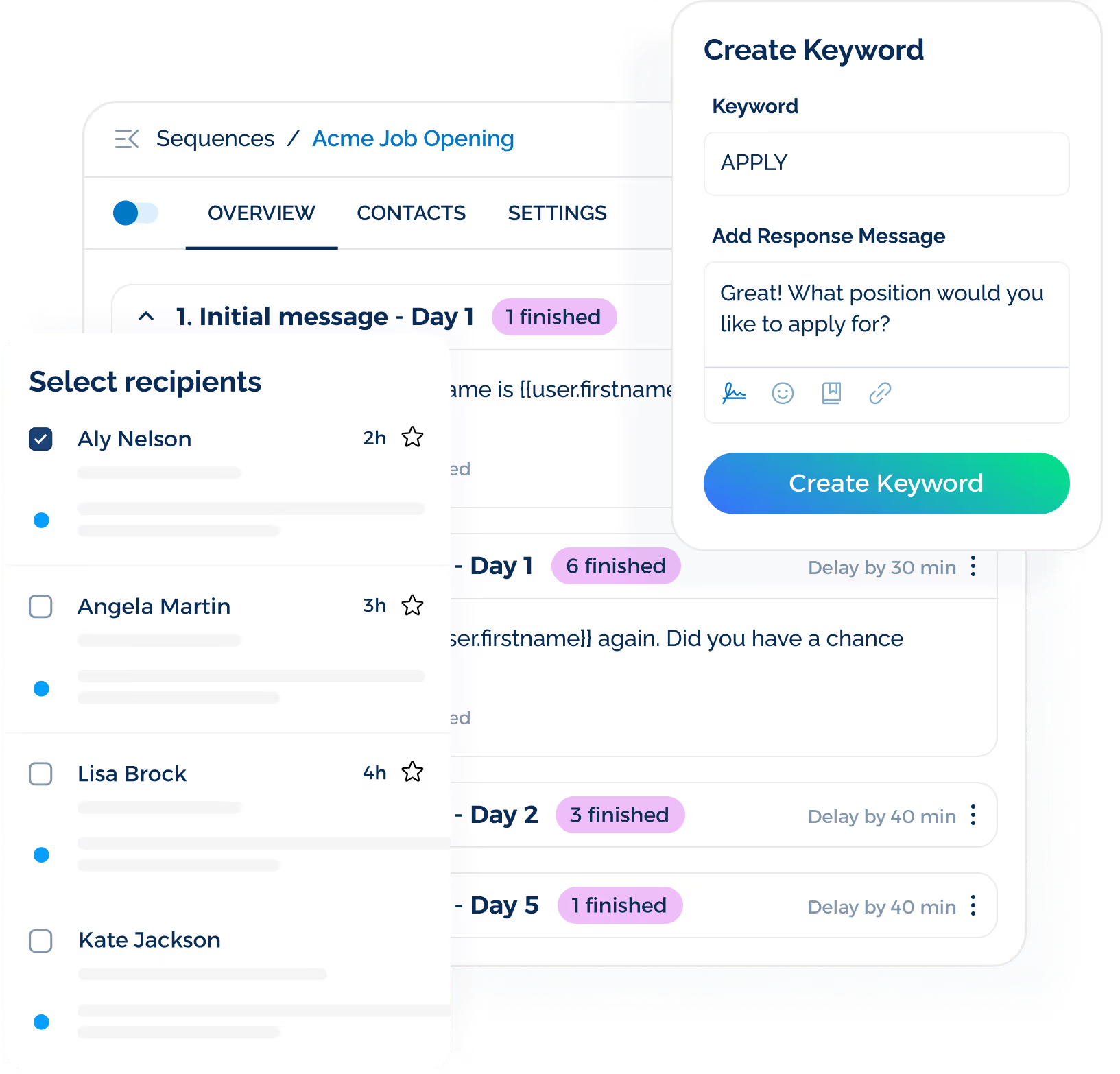
Candidates can reply without opening another app or joining a call, while you can continue the conversation when an automated response is not enough.
Email marketing remains useful for formal documents and longer instructions. Video and voice support interviews that require greater communication skills or interview depth.
Each channel should serve a clear purpose instead of forcing every interaction into the same format.
Compare Automation With Human Control
Automation handles common questions, reminders, basic qualification, and interview scheduling. This reduces repetitive tasks and protects recruiter time.
But human involvement still matters when a candidate raises a sensitive concern, requests an accommodation, or needs more context about the role or hiring process.
The platform should provide simple recruiter handoffs, conversation assignments, exception handling, and manual review.
A balanced system reduces repetitive work without preventing recruiters from stepping in when judgment or personal communication matters.
Test the Candidate Experience
The candidate experience should be reviewed from the perspective of someone applying for a job.
Important factors include the number of steps, mobile usability, response options, loading time, accessibility, and access to a recruiter.
The process should also work across several devices and applicant types, including experienced professionals and entry-level candidates.
A long feature list offers little value when the application is confusing or requires candidates to enter the same information more than once.
Run a Pilot Before Full Rollout
A pilot can begin with one department, location, recruiter group, or type of role before the platform expands across the company.
Measurable goals may include response time, candidate participation, interview attendance, recruiter workload, and hiring speed.
The pilot reveals workflow gaps, integration issues, and training needs. Reports and real-time dashboards help you compare the results with your current process before adding more users, locations, or applicant data.
Close Candidate Communication Gaps With TextUs
Even the strongest ATS platform will have limited impact when candidate communication remains delayed or difficult for you to manage.
TextUs adds ATS-connected communication without requiring another full talent acquisition suite. It lets you manage two-way candidate texting, SMS campaigns, automated sequences, templates, and shared conversations from one inbox.
ATS connections keep messages tied to candidate records. Its engagement indicators, delivery and response reporting, message quality guidance, and opt-out risk controls improve outreach.
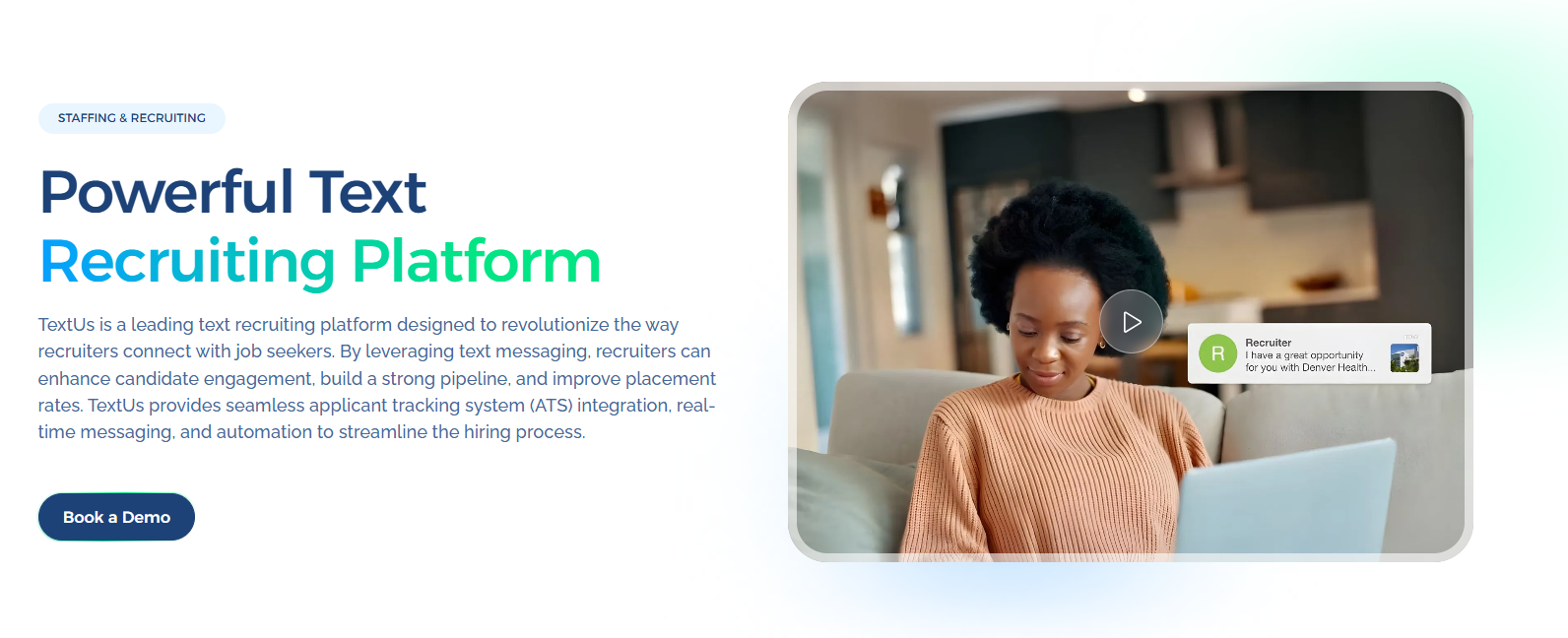
Book a demo with TextUs today to see how it can support interview communication, talent pool re-engagement, and timely recruiter follow-up!
Continue Reading



Frequently Asked Questions
Do you need to replace your ATS to stop using Paradox?
Not always. Some alternatives connect with your existing ATS, while companies using Workday's talent acquisition suite may need to review which Paradox functions are tied to their current setup.
What features to compare when choosing Paradox alternatives?
You can compare candidate communication, screening, scheduling, ATS integrations, analytics, recruiter controls, and interview execution.
The pricing model, implementation costs, and availability of a trial or free plan are also worth considering.
What is the difference between a texting platform and a recruiting chatbot?
The difference between Paradox and a texting platform is scope.
Paradox automates more of the application and scheduling process. A texting software focuses on recruiter-led outreach, follow-ups, re-engagement, and two-way candidate conversations.
Business Texting
Built for Results
Create and convert pipeline at scale through industry leading SMS software