
SMS Provider API: What You Need to Know Before Choosing
Learn how an SMS provider API works and explore the key features that will help you choose the best one for you. Discover how TextUs can help.

Written by
Adam Hamdan
Published
January 14, 2026

Texting plays a key role in how teams communicate for confirming appointments, following up with leads, or keeping clients in the loop.
But without the right setup, managing those SMS messages quickly turns into a manual, disconnected process.
Instead of switching between tools, a reliable SMS API provider helps you send texts from your CRM, track delivery results in real time, and log conversations in one platform.
In this article, you’ll learn how SMS API works and how to evaluate providers based on your business needs. Whether you're building a better process for your team or replacing a platform that no longer fits, this guide will help you find a more integrated way.
TL;DR
- An SMS provider API connects your software to mobile networks to help you send and receive messages automatically from CRMs, calendars, and internal systems.
- Key features to evaluate include ease of API integration, two-way messaging support, message personalization, delivery reporting, scalability, and security.
- Cost structure and planning play a major role, with usage‑based pricing, number fees, throughput limits, and add‑on features all affecting long‑term value beyond per‑message rates.
- Choosing the right provider means aligning with your team’s workflow, daily usability, and long-term scalability needs, not just feature count or base pricing.
- TextUs offers an enterprise-grade SMS provider API that supports seamless integrations, real-time tracking, reliable deliverability, and built-in compliance tools.
How an SMS API Connects Your Software
An SMS provider API bridges your software with mobile networks. It lets your systems send and receive text messages automatically. Here’s how the connection works:
- Your system sends a request that includes the message content, the recipient’s phone number, and any required settings (like sender ID or message type).
- The SMS provider receives the request through its API and prepares the message for delivery.
- The provider delivers the message through global coverage networks such as Verizon, AT&T, or T-Mobile, depending on the destination.
- The message arrives on the customer's phone just like any standard SMS.
- The provider sends a response back to your system with delivery information, including timestamps, delivery status, or reply data if the recipient responds.
With a reliable SMS provider API, you can trigger texts, track delivery, and manage replies from the tools your team already uses.
TextUs offers a reliable SMS provider API that can strengthen your customer relationships. Book a demo today!
Key Features to Evaluate in an SMS API Provider
Whether you're sending appointment reminders, updates, alerts, or conversations at scale, the right feature set makes all the difference. Below are the most important SMS marketing features to look for when evaluating any SMS provider.
Simple API Integration and Strong Developer Support
API integration matters for both developers and business teams that need reliable business messaging inside apps or internal tools.
Those rules show up in API documentation. The documentation tells your developers how to make an HTTP request, what data to send, how to handle responses, and how to respond when something fails.
TextUs provides a RESTful SMS gateway with comprehensive documentation that guides your developers through every step of setup and use.
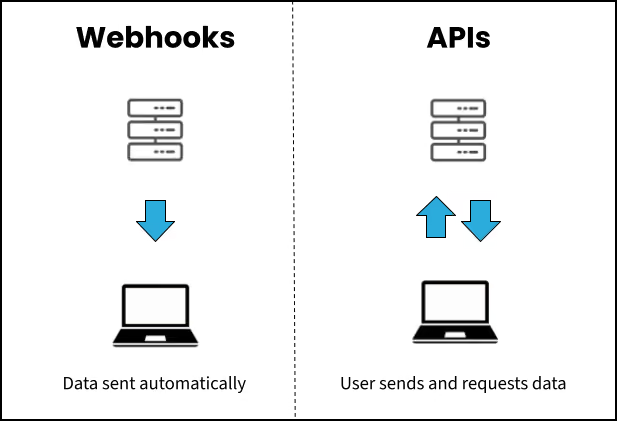
The API docs cover key topics including authentication, endpoints for sending SMS messages, managing contacts, triggering webhooks, and tracking message deliveries.
Two-Way Messaging and Reply Handling
One-way SMS marketing messages are useful for timely notifications. But if customers can't respond, your engagement drops fast.
The best SMS API depends on the reply capability that allows your audience to respond, ask questions, or take action immediately. This turns texting into a full conversation channel.
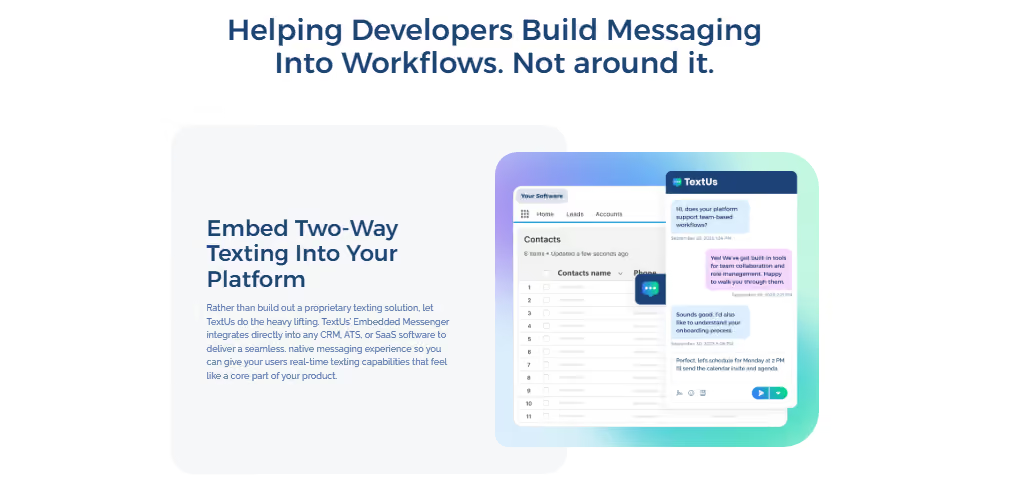
TextUs offers full support for two-way SMS marketing through its Embedded Messenger. It blends directly into any CRM, ATS, or SaaS platform so your users can engage in real conversations.
Message Personalization and Templates
A generic message may be ignored or deleted, but one that speaks to the recipient is more likely to get a response. That’s why message personalization is a key feature to look for in any SMS API provider.
When you send multiple messages using an API, you’re often working with large contact lists. But that doesn't mean every message has to be the same. Using personalization fields like first name, appointment time, or location, you can send the right message to the right person.
Templates are just as important. They save your team time by providing a repeatable format for promotional messages, follow-ups, or reminders.
Delivery Reporting and Message Tracking
You will need to confirm that it reached the intended person at the right time. Without delivery data, your team is left guessing. That leads to missed follow-ups, poor timing, and lower engagement.
A reliable SMS API provider should offer built-in delivery reporting and message tracking to give your team visibility into SMS performance.
The system has to show the status of each message in real time. This includes whether the SMS campaign was successfully delivered, if it failed, or if it is still waiting to be sent.
Over time, this tracking data becomes even more useful. It helps your team access detailed analytics, adjust timing, send account alerts, and improve overall campaign outcomes.
Scalability and Throughput Control
When your business starts to send bulk SMS, issues show up quickly if the system isn't designed to scale. You may face blocked messages, failed sends, or delays.
Throughput control is about pacing. It allows you to control how many messages are sent per second or per minute. This is important for several reasons.
First, mobile carriers sometimes limit how many texts can pass through in a given time frame.
Second, sudden spikes in volume can cause systems to overload or trigger spam filters. These sudden bursts also raise the risk of SMS pumping fraud, which can damage sender trust and inflate costs.
Message delivery should not stall during peak hours or slow down your system’s performance. If you are running automated notifications or drip SMS campaigns, the system needs to handle the pressure without forcing your team to step in manually.
Security and Compliance
A secure communications platform protects your messaging system from unauthorized access, misuse, or data leaks. This starts with encrypted connections, access controls, and API authentication.
Security protects your messaging system from unauthorized access, misuse, or data leaks. This starts with how your SMS marketing software connects to the SMS gateway API.
For use cases that involve login security or identity verification, SMS APIs can also support two-factor authentication by sending time-sensitive codes to users as an added layer of protection. This is valuable for systems where email or app-based prompts may be overlooked.
Along with technical security, you must follow the rules that govern business text messaging. In the United States, texting is regulated by laws such as the Telephone Consumer Protection Act (TCPA).
Your system also needs to manage SMS opt-in and opt-out workflows correctly. You should get permission before sending marketing campaigns and provide instructions on how to stop receiving SMS messages.
CRM and Tool Integration Options
SMS marketing works best when it fits into the systems your team already uses.
An SMS provider API should not live on its own. It should connect to your CRM, calendar, communication tools, or workflow software so your team can manage messages without switching between platforms.
When your SMS provider connects with your CRM, you can send alerts directly from contact records, log conversations automatically, and view text history as part of your customer interaction timeline.
Native integrations are plug-and-play connections with popular platforms. Seamless integrations are built through the API itself and give you full control over how texting fits into your systems. Both types are valuable depending on your business needs.
Nationwide SMS Support (If Needed)
If your business serves contacts throughout the United States, your SMS provider must offer reliable nationwide message delivery.
Carrier coverage across the U.S. means your texts must pass through mobile networks like Verizon, AT&T, and T-Mobile. These carriers have different routing rules, spam filters, and content checks.
A dependable SMS API handles these variations without added work from your team. It formats numbers correctly, routes messages through the best channels, and returns accurate delivery statuses for each send.
Correct number formatting is one of the most common reasons for delivery failures. U.S. numbers must follow a standard 10-digit format, often with a leading “+1” for API compatibility.
A strong provider validates phone numbers on send and helps your system catch format issues before they block delivery.
The best time to send messages also matters. Texts sent too early or too late often get ignored or marked as spam. Your SMS provider should let you schedule SMS notifications based on local hours to stay respectful and increase response rates for mobile users.
SMS API Provider Costs and Planning
Choosing a provider without understanding the SMS pricing structure can lead to overpaying or being limited by hidden fees.
The best model depends on your sending volume, use case, and how predictable your message traffic is from month to month. Common SMS marketing pricing options include usage-based and fixed subscription tiers.
- Pay-per-message pricing: You are billed based on the number of messages sent or received.
- Subscription pricing: A set number of messages per month, often bundled with access to other features like templates, delivery tracking, or integrations.
You should also factor in the hosting costs. Texting from long codes, toll-free numbers, or dedicated short codes often comes with separate fees.
Throughput tiers may also affect your plan. Some providers charge extra for higher message-per-second rates or priority delivery. This matters if you're running high-volume campaigns or need to send messages fast in a short time window.
In addition to core usage costs, you have to look closely at charges for features like API access, analytics tools, message logs, webhook use, or compliance tools. Many platforms list these as add-ons rather than built-in features.
How to Choose the Right SMS API Provider
The right platform helps your team move faster and protects your reputation with reliable delivery and compliance. But not every SMS service offers the control or support your team needs.
Here's how to make a smart, long-term decision that aligns with how your business works.
Define the Role Texting Plays in Your Workflow
Start with how your team uses texting inside your broader communication process. Whether your team is handling sales outreach, candidate follow-ups, appointment scheduling, or internal coordination, the provider needs to support that structure without requiring workarounds.
If texting is a core part of live conversations, then shared access and message continuity matter more than baseline SMS message capabilities.
Focus on Systems That Fit Into Your Process
Instead of focusing on what the API can do, you need to pay attention to how well it supports your internal workflows.
Messaging should flow through your existing tools. Teams should be able to work from CRMs, calendars, or dashboards without moving between disconnected systems.
When the software interface aligns with where your team already works, it reduces training needs, speeds up follow-up, and helps messages stay consistent across teams.
The easier it is to access and manage messages inside your current tools, the faster the platform delivers value.
Prioritize Daily Usability
Initial setup is only part of the equation. Once live, your team needs to monitor message activity, view delivery results, and follow up on replies. You have to look at how the platform handles daily interaction, not just whether it offers advanced features.
Usable systems support message visibility, consistent contact tracking, and simple access to interaction history. These practical elements are often missed in technical comparisons but have a direct impact on your team’s day-to-day messaging needs and customer engagement.
While some businesses rely on texting to maintain conversation flow, others may also use SMS together with voice calls when quick responses or escalations are needed.
Plan for Growth Without Rebuilding Systems
If your volume increases, your contact base grows, or multiple departments begin using the system, the provider must be able to handle those changes without needing custom development or new infrastructure.
That includes managing throughput without delays, keeping message flow steady, and providing team-wide visibility without manual coordination.
Compare Total Operational Value
Choosing based on the lowest rate per message often leads to higher costs in support time, maintenance, or tool duplication. The real value comes from how much effort the platform removes from your process.
You need to evaluate how much time is saved when replies are logged properly, when compliance is handled in the background, or when delivery reporting is already built in.
A provider that simplifies these areas frees your team to focus on high-impact work instead of fixing what the system leaves out.
Treat Compliance as a Built-In Requirement
Text message compliance should not depend on your team remembering every rule. The provider must handle opt-out suppression, message logging, and STOP keyword processing without relying on manual checks or external add-ons.
What matters here is not just feature availability, but trust in how the platform handles risk silently. This keeps your communication safe and your outreach legally sound without forcing you to monitor it line by line.
What Makes TextUs the Best SMS API Provider
TextUs delivers a business-grade platform that combines API flexibility with features built for teamwork, compliance, and growth.
Business-Grade API With Full Messaging Control
TextUs offers a documented REST API that developers can use to send and receive messages, manage contacts, and access messaging data.
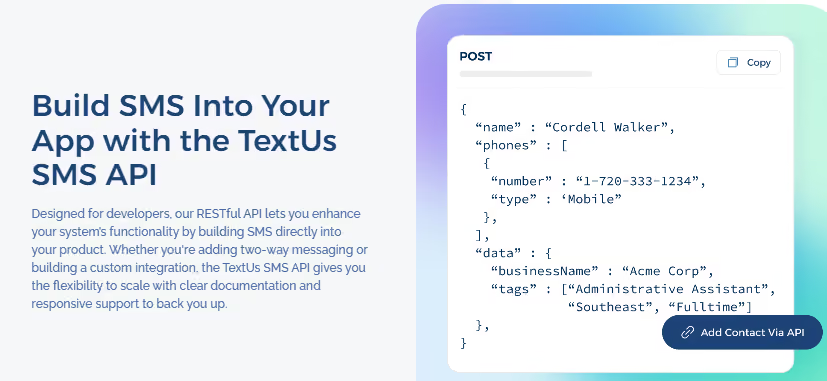
The API documentation shows full endpoint coverage for messages, contacts, conversations, opt‑outs, and other core account resources.
You can make authenticated API calls using standard HTTP requests with JSON‑based payloads. You must include your API token and appropriate headers to interact with the API.
Webhooks are supported so your system can receive real‑time event updates (such as delivered messages, received replies, and opt‑out events) rather than constantly polling.
This structure lets developers trigger workflows, automate message handling, and integrate messages directly into custom systems or dashboards.
Native Integrations With Your CRM and Workflow Tools
TextUs works with a broad set of CRM and business tools such as Salesforce, Microsoft Dynamics 365, Bullhorn, HubSpot, and more. Text conversations sync back into contact records so your data stays consistent across systems.

This capability makes TextUs a practical choice for teams that want texting linked to customer records, recruiting pipelines, or enterprise workflows. You can pull contact data from your CRM into messages, and replies or delivery activity can be logged back into those same records.
Messages are delivered with a recognizable sender identity, improving response rates and building trust with recipients, especially when communicating across diverse global carriers.
Built for Team Collaboration and Messaging Accuracy
TextUs is designed for collaborative use across teams. Beyond basic sending capabilities, it supports shared inboxes and workflows so messaging stays visible to relevant users in your organization.
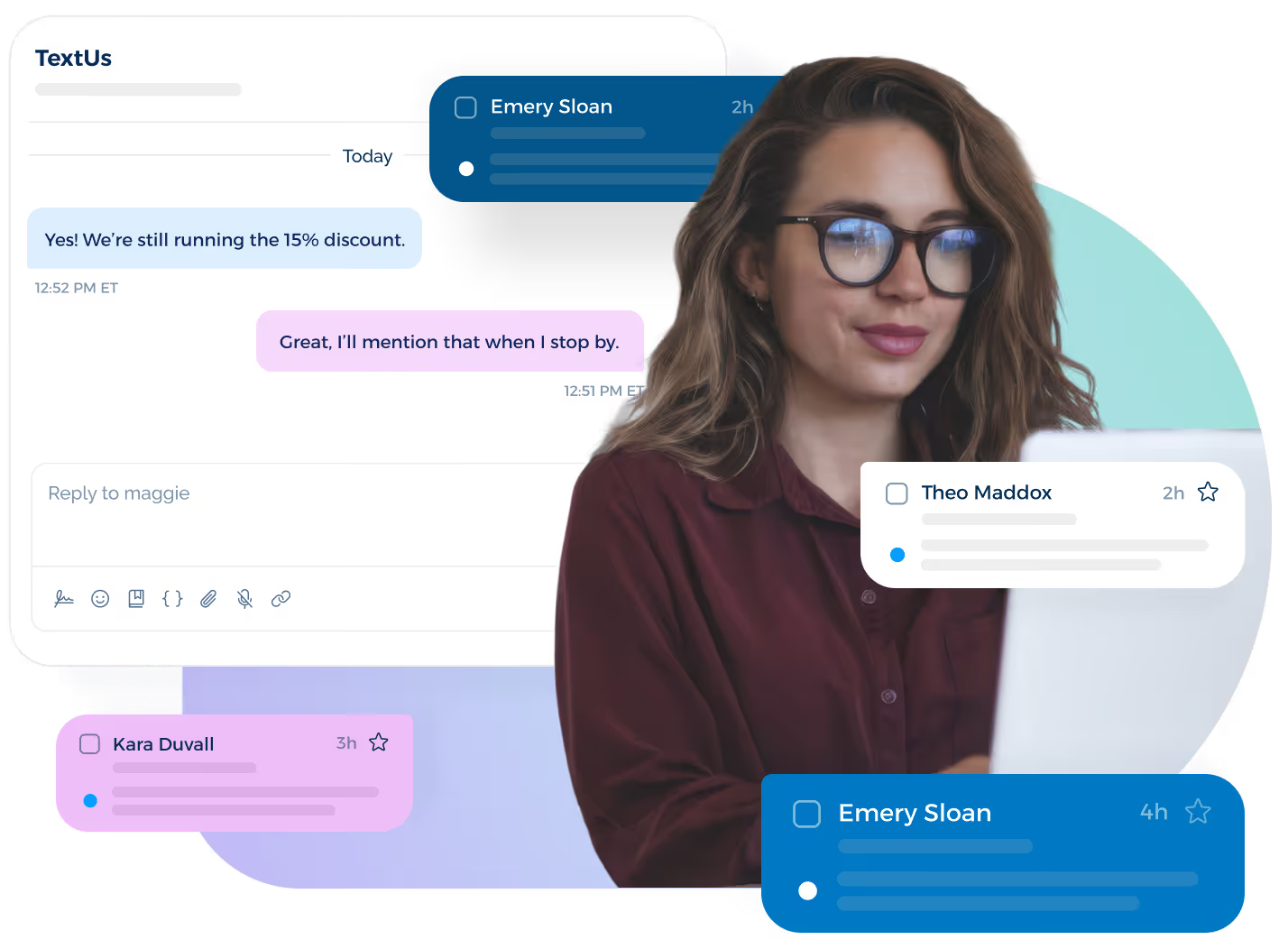
It also offers two‑way text messaging, campaign templates, and logged communication for visibility. You can log messages into CRM records to keep all activity tied to specific contacts and workflows rather than separate systems.
Compliance, Deliverability, and Business Support
TextUs supports compliance workflows such as automatic SMS opt‑out handling. When a contact texts an opt‑out keyword, TextUs records that opt‑out, so that number will no longer receive further messages from your organization.
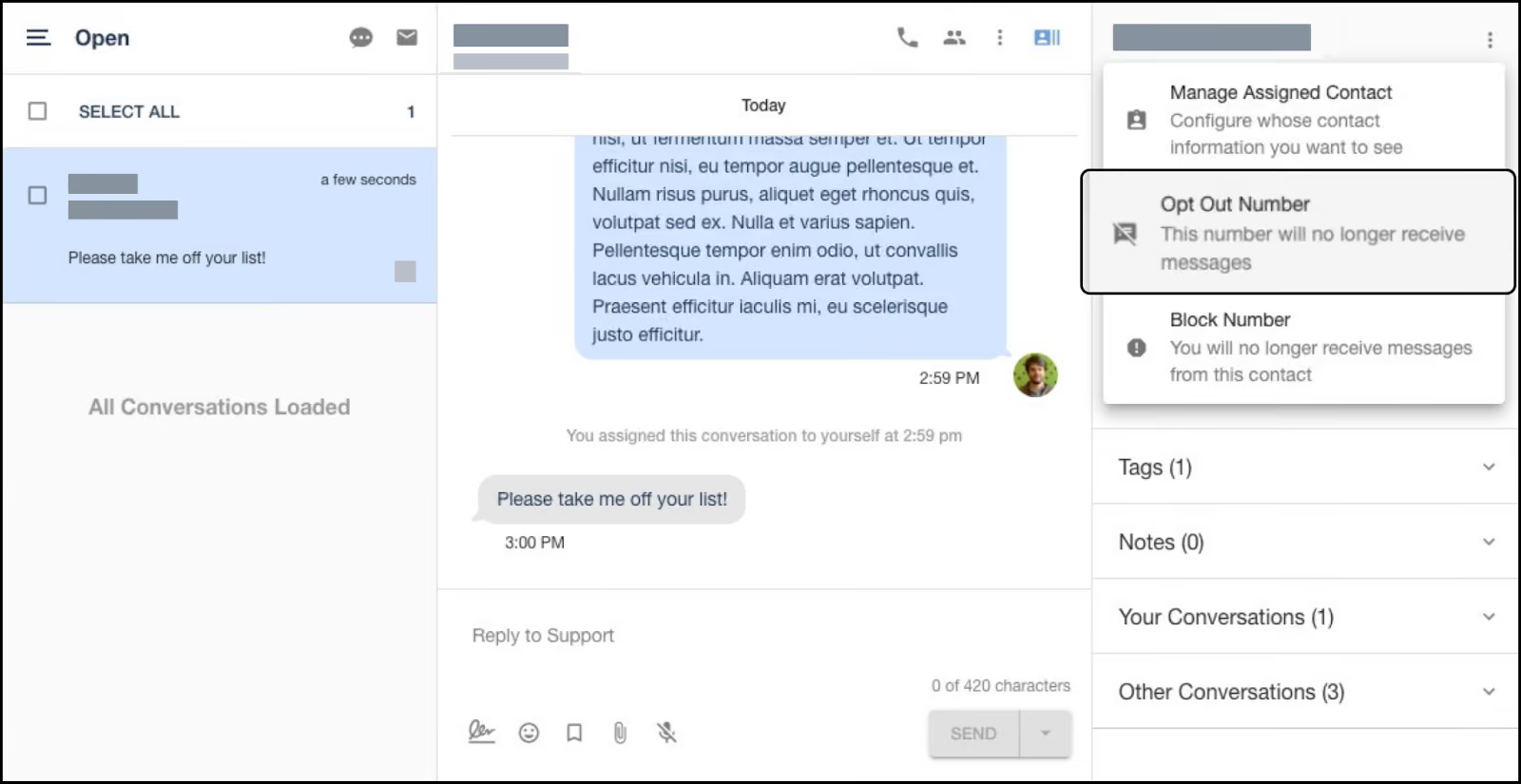
TextUs also provides customizable introduction and appended-message options to help make sure your outbound texts include identification and opt‑out language.
These settings let you tailor how your organization identifies itself in the first message and how opt‑out instructions are added.
For deliverability, TextUs supports 10DLC registration, which routes messages through business‑approved channels used by global carriers in the U.S. This improves trust, reduces spam filtering, and helps maintain consistent delivery performance.
Seamless Messaging Starts With a Smarter API—Try TextUs!
If texting plays a role in how your team connects with leads, clients, or staff, the platform behind it matters.
Instead of spending development resources building a custom texting tool, you can embed a powerful, ready-to-use messaging experience with TextUs.
It integrates into your CRM, ATS, or SaaS platform, delivering real-time SMS functionality that feels like a natural part of your product.
Everything works in the background, so your team can focus on conversations instead of chasing manual updates. It’s a system designed to move as fast as your team and keep everything organized as you grow.
If you're ready to make SMS part of your process, TextUs is ready to support it. Book a demo with TextUs today!
FAQs About SMS Provider API
Is there any free API to send SMS?
Some providers offer a free trial or limited test credits so you can try sending messages.
Platforms like Twilio, Vonage, MessageBird, and Sinch SMS API offer free trials to help keep customers informed before choosing a paid plan.
However, most trial accounts are generally intended for testing and may not include full delivery tracking, support from direct connections, or access to features like campaign management.
What is an SMS API?
An SMS API lets your software send and receive text messages. It connects your application to an SMS platform so you can send messages from your CRM, help desk, or website.
With a single API, you can manage outbound messages, receive replies, and monitor status updates. It supports campaign management by enabling businesses to automate communication and keep customers informed through real-time messaging.
Which SMS API is best?
That depends on what your team needs. If you’re looking for two-way texting, fast setup, and direct CRM sync, TextUs is a strong fit. It provides delivery tracking, auto opt-out handling, and seamless messaging built into your daily tools.
With direct connections that reduce delays and features that help lower your average response time, TextUs makes it easier to connect with contacts in a way that matches your team’s pace.
Is text blasting illegal?
While SMS remains one of the most effective outreach tools, it must be used responsibly.
Text blasting is legal only if you follow the rules. You need permission before sending messages. You also have to let people opt out and stop texting them if they ask.
These rules come from U.S. laws like the TCPA. An SMS provider handles opt-outs automatically so your messages stay compliant and reduce the risk of SMS fraud.
Continue Reading



Frequently Asked Questions
What is an SMS provider API and how does it work?
An SMS provider API is a programmable interface that allows developers to send and receive text messages through software integrations. It connects your applications, CRMs, or marketing tools to the carrier network so you can trigger SMS from within your own systems.
What should you look for when choosing an SMS API provider?
Key criteria include deliverability rates, API documentation quality, developer support, compliance features (10DLC, TCPA tools), webhook support for inbound messages, global carrier coverage, uptime SLAs, and pricing transparency.
When should a business use an SMS API instead of a managed platform?
Use an SMS API when you need to embed texting into a custom application, trigger messages from proprietary software, or build messaging workflows that don't fit within the constraints of an off-the-shelf platform. Teams without developer resources should use a managed platform instead.
Business Texting
Built for Results
Create and convert pipeline at scale through industry leading SMS software