
15 Best High-Volume Recruiting Software Tools in 2026
High-volume recruiting software can cut hiring delays. Compare 15 tools and find out why TextUs is our top pick for candidate texting.

Written by
Adam Hamdan
Published
November 18, 2026

Hiring teams need to screen applicants, coordinate interviews, and communicate with candidates while keeping track of every hiring stage.
As recruitment volume increases, managing these tasks through separate systems takes more time and effort.
High-volume recruiting software brings together applicant tracking, candidate sourcing, automated screening, and communication tools. You can manage large applicant pools and build a consistent candidate pipeline.
In this article, we'll explore high-volume recruiting software platforms categorized by use case. You'll learn about their key features and how to choose the right platform that fits your day-to-day workflows.
TL;DR
Here are 15 high-volume recruiting software platforms worth considering in 2026:
- Candidate communication and engagement: TextUs, Sense, Paradox
- Applicant tracking and hiring management: Lever, iCIMS, Greenhouse
- High-volume staffing and frontline hiring: Bullhorn, Avionté, Fountain
- Candidate sourcing and talent pool management: Gem, hireEZ, Phenom
- Candidate screening and assessment: HireVue, Harver, TestGorilla
How Recruiting Software Improves Your Bulk Hiring Process
High-volume recruiting involves managing large applicant pools, multiple open roles, and tight hiring deadlines.
A 2026 study by iCIMS and Lighthouse Research found that 42% of high-volume employers reported hiring demand that exceeded their forecasts.
These fluctuations highlight the need for recruiting software that can handle changing hiring demands.
As applications increase, you need a way to organize candidate information, track recruitment progress, and coordinate hiring activities without losing track of qualified applicants.
Here are six ways recruiting software supports your hiring activities:
- Attract and source large candidate pools: Reach potential applicants through job boards, career sites, referrals, and recruitment campaigns.
- Screen and qualify applicants at scale: Review applications, assess qualifications, and identify suitable candidates based on job requirements.
- Reach candidates and manage responses: Send job updates, automate follow-ups, and manage applicant conversations through email or SMS.
- Schedule interviews and reduce no-shows: Coordinate interview availability, send reminders, and confirm candidate attendance.
- Manage offers, documents, and onboarding: Track offer approvals, collect required documents, and coordinate onboarding requirements for new hires.
- Re-engage previous candidates and fill new openings: Reconnect with past applicants and existing talent pools when new positions become available.
The right platform depends on your hiring needs, whether that's sourcing potential talent, improving communication, or managing large applicant volumes.
15 Best High-Volume Recruiting Software Tools (By Use Case)
High-volume recruiting software platforms offer different features depending on your needs and priorities. Here are 15 platforms categorized by use case to help you compare options.
Candidate Communication and Engagement
These platforms focus on reaching large candidate pools, automating recruitment messages, managing responses, and maintaining communication throughout the recruiting process.
1. TextUs
Interview no-shows are a common challenge in high-volume recruiting, especially when candidates accept another offer before their scheduled interview.
Timely text confirmations, reminders, and follow-ups allow you to stay in contact with candidates. TextUs is an SMS marketing platform built for staffing and talent acquisition teams.
If you're filling dozens of positions, TextUs offers unlimited campaign sizes to reach candidates quickly with personalized job opportunities.
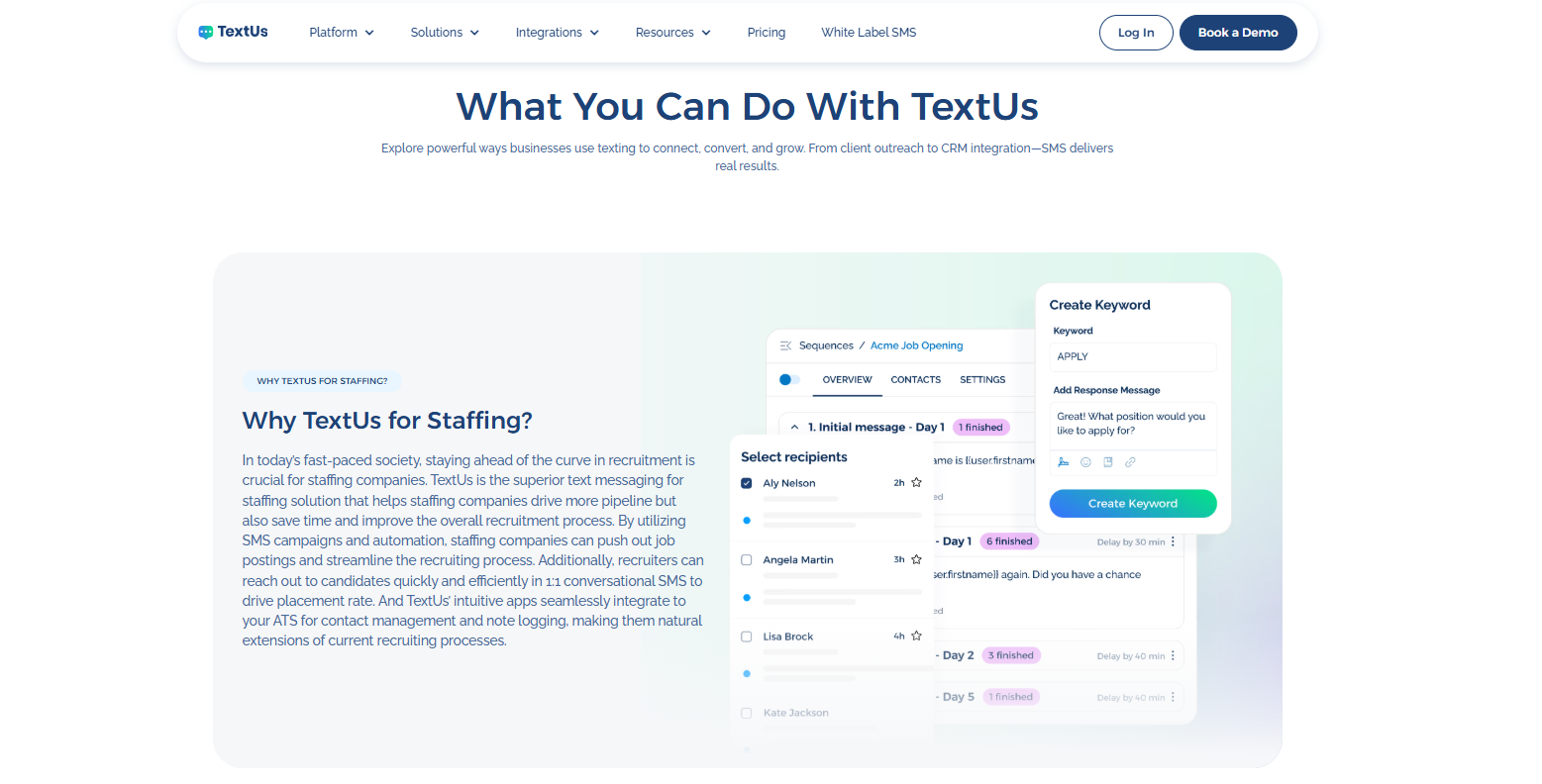
This bulk SMS software combines two-way conversations, smart automation, and ATS integrations in one platform.
Text messages target specific candidate groups and include names, job details, images, PDFs, and branded links. Scheduled and recurring campaigns also support job alerts, hiring events, and previous candidate re-engagement.
TextUs Sequences automate follow-ups, interview reminders, and other recruitment messages at scheduled intervals. The key advantage is its response-aware automation, which can stop a sequence once a candidate replies.
For large hiring campaigns, Smart Delivery helps recruiters review message quality, revise flagged wording, and monitor opt-out activity.
The platform also includes Contact Intelligence, which uses artificial intelligence to classify contacts as Cold, Warm, or Hot based on engagement. SMS keywords and QR codes provide additional ways to collect responses and connect applicants with job information.
Finally, TextUs lets you manage communication through the web app, Chrome extension, or mobile app, with access to conversation histories and incoming responses.
Book a demo with TextUs today to see how its texting features support faster hiring and placement goals!
2. Sense
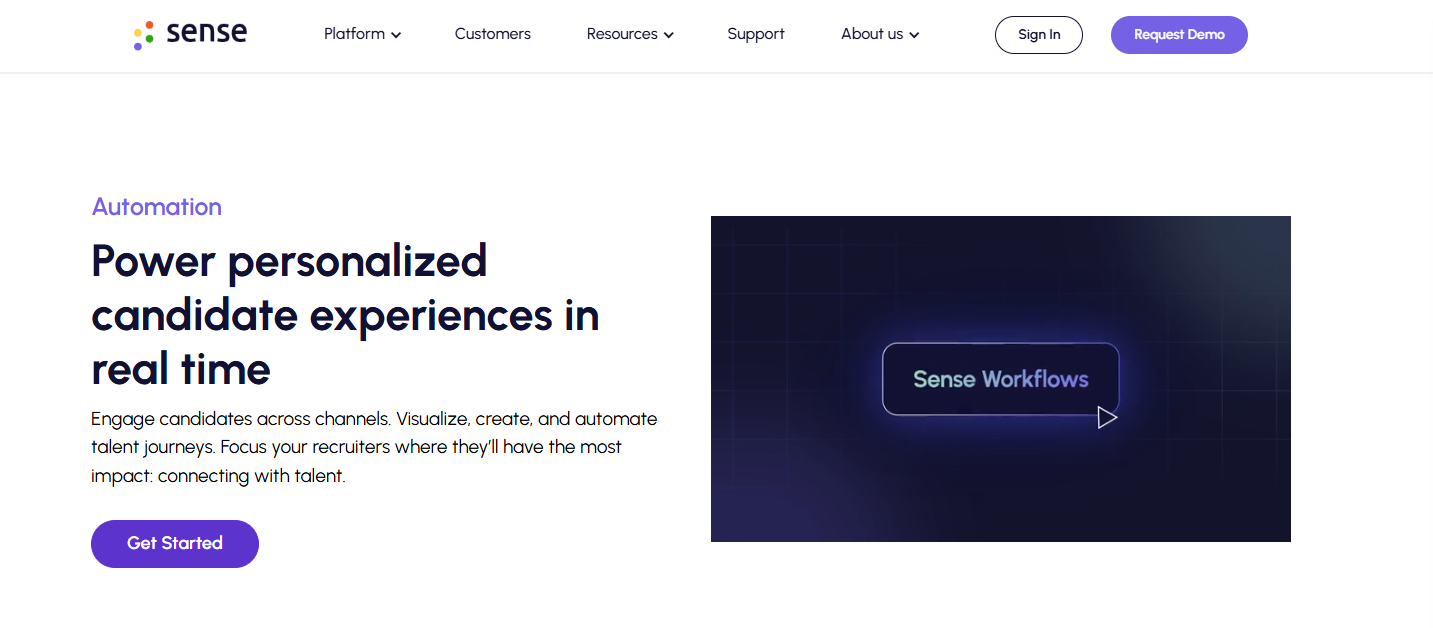
Sense is a candidate engagement platform that combines SMS, WhatsApp, AI chatbots, and recruitment automation. It supports direct conversations with applicants and bulk messaging campaigns for large candidate groups.
Its messaging tools allow you to send scheduled text campaigns with personalized details such as candidate names and job titles. A shared inbox keeps incoming replies accessible to recruiters, with filters for conversation status, names, phone numbers, and tags.
Sense also offers automated communication workflows based on candidate information and activity. These workflows support job alerts, application updates, follow-ups, and re-engagement campaigns for previous applicants.
The Sense AI Chatbot answers common questions about job opportunities, benefits, and company information. Its Instant Apply feature collects application details and creates candidate profiles in your ATS.
Sense connects with applicant tracking systems (ATS) through two-way data synchronization. Candidate details remain accessible for personalized communication, while message histories are recorded in the ATS.
3. Paradox
Paradox (now part of Workday) provides a conversational recruitment assistant called Olivia. This AI recruiter communicates with applicants through chat and text and guides them through hiring stages.
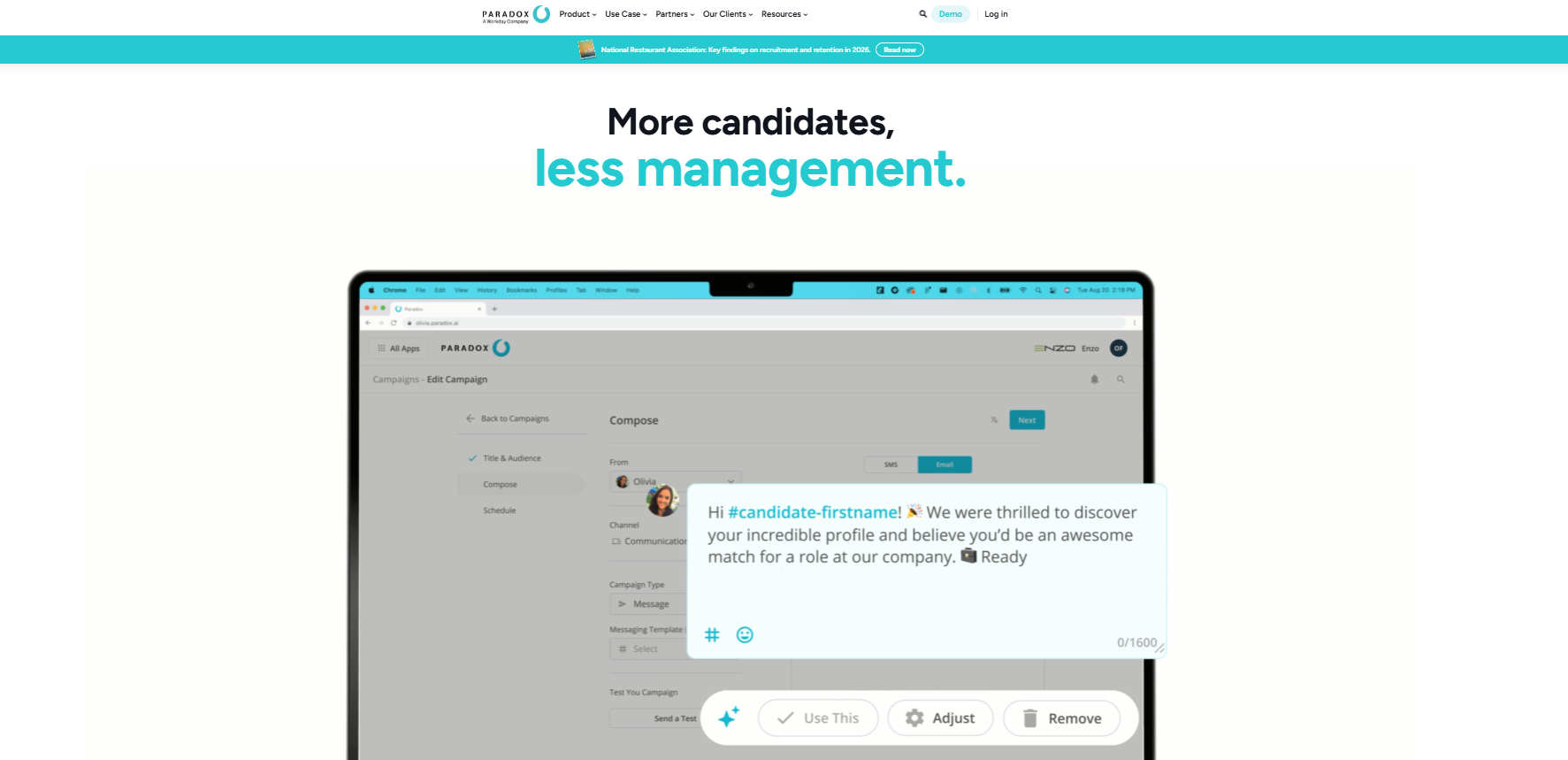
Applicants can start conversations through career sites, job advertisements, QR codes, or text-to-apply keywords. Olivia supports conversational AI screening by collecting application details and asking qualification questions based on job requirements.
For recruitment campaigns, Paradox offers a Conversational CRM that supports SMS and email communication. You can segment candidate pools, send personalized messages, and reconnect with previous applicants.
Interview coordination is another part of its communication features. Olivia connects with recruiter and hiring manager calendars to send available interview times, confirmations, and reminders.
Paradox includes Conversational Events for job fairs, virtual recruitment events, and campus hiring. It manages candidate registration through text, chat, or QR codes, followed by screening and interview coordination.
Applicant Tracking and Hiring Management
These tools organize large application volumes, manage recruitment pipelines, and coordinate hiring activities between recruiters and hiring managers.
4. Lever
Lever combines applicant tracking and candidate relationship management in a recruitment platform. It organizes job postings, candidate profiles, applications, and hiring pipelines.
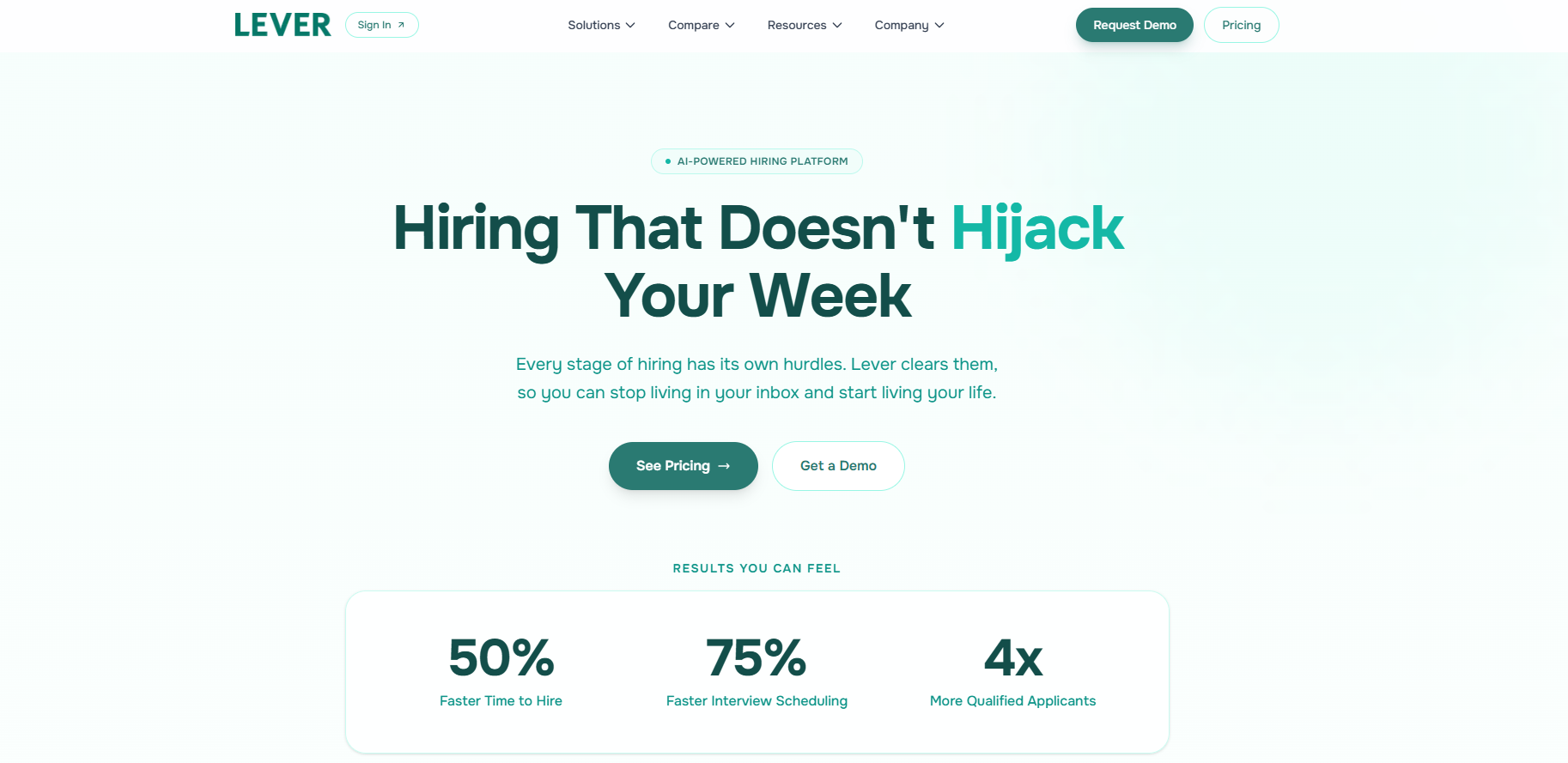
Job postings can be distributed to more than 200 job boards from the platform. Its configurable workflows move candidates through recruitment stages, with automated tasks for interview scheduling, candidate follow-ups, and status updates.
For applicant evaluation, Lever provides AI-powered candidate recommendations and shortlists based on job requirements. Structured interview scorecards allow recruiters and hiring managers to record feedback and compare applicants against consistent evaluation criteria.
Interview management includes self-service scheduling, while offer management supports customizable approval chains and offer letter templates. These features allow you to coordinate interview activities, collect approvals, and track candidates through the offer stage.
5. iCIMS
iCIMS is an enterprise ATS that manages job requisitions, candidate applications, and recruitment workflows.
It includes configurable hiring stages, job templates, and approval processes for organizations that recruit across multiple departments and locations.
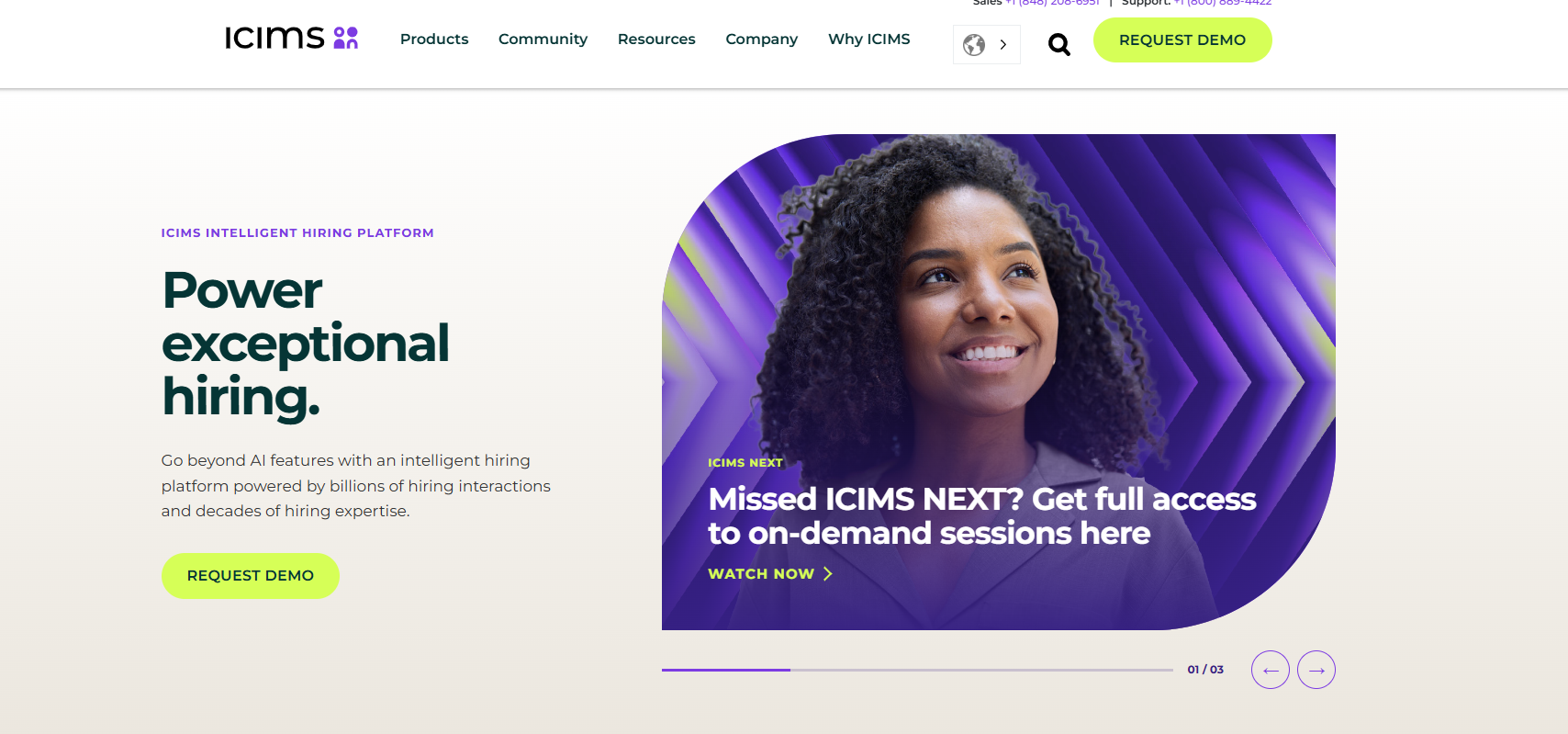
The platform provides AI-powered candidate matching to compare applicants against job requirements. Candidate recommendations and automated ranking allow you to prioritize applications for review instead of relying on manual screening for every resume.
Its recruitment management tools include interview scheduling templates, candidate self-scheduling, and SMS interview invitations. You may also use predefined approval chains for job requisitions, candidate submissions, and employment offers.
iCIMS High Volume Hiring adds a mobile hiring workspace for recruiters and hiring managers. It also provides conversational application experiences through SMS, web chat, and WhatsApp.
6. Greenhouse
Greenhouse is an ATS that organizes candidate applications, job requisitions, and hiring activities through customizable workflows.
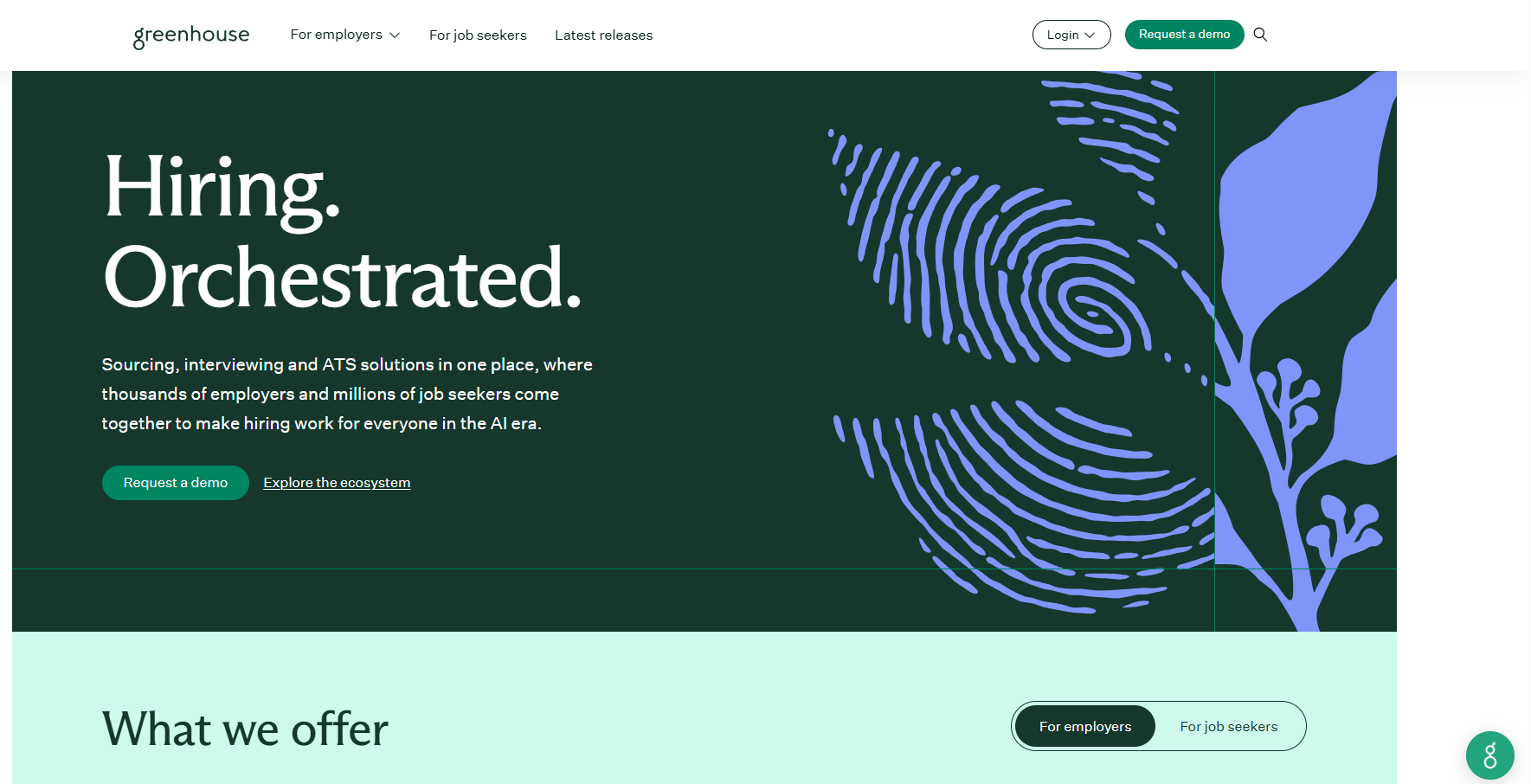
Its structured hiring features include job kickoff forms, interview plans, and candidate scorecards. Scorecards support evaluations against job-related criteria rather than broad impressions of cultural fit.
Greenhouse also offers automated task reminders, configurable permissions, and communication through @mentions. These features allow you to coordinate candidate evaluations, monitor outstanding tasks, and manage approvals.
For workforce planning, Greenhouse Offer Forecast uses machine learning to assess whether vacancies are on track against offer acceptance and start-date targets. It also supports integrations with more than 500 recruitment technology partners.
High-Volume Staffing and Frontline Hiring
These platforms support staffing agencies and employers that need to fill large numbers of temporary, contract, hourly, or frontline positions.
7. Bullhorn
Bullhorn is an applicant tracking and CRM platform designed for staffing firms that manage candidate placements, client relationships, and workforce assignments.
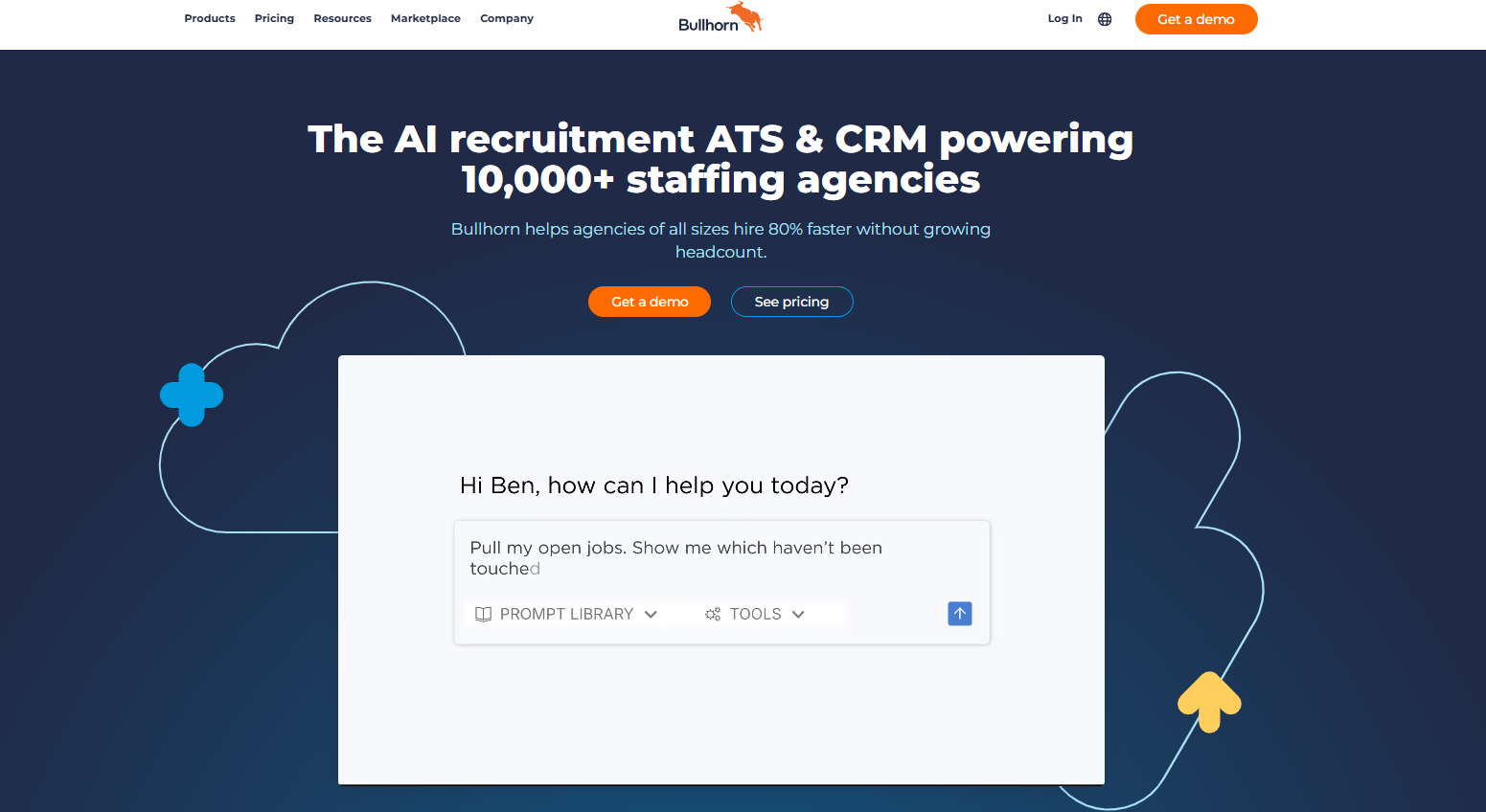
If you recruit for multiple clients, Bullhorn tracks applicants from initial sourcing through submissions, interviews, offers, and placements. Resume parsing and database search features allow you to find candidates based on skills, location, experience, and other job requirements.
Bullhorn also includes AI Search & Match, which generates candidate searches from job descriptions and identifies matching profiles. Its Amplify AI features summarize candidate information, draft job posts, and provide suggestions based on existing recruitment records.
Recruitment automation supports email and text communication based on candidate activity. Messages can be triggered when someone applies, changes recruitment status, receives an interview invitation, or completes a placement.
8. Avionté
Avionté is a staffing software platform that combines applicant tracking, CRM, workforce management, payroll, and billing. It supports recruitment agencies that handle temporary assignments, contract placements, and recurring workforce requirements.
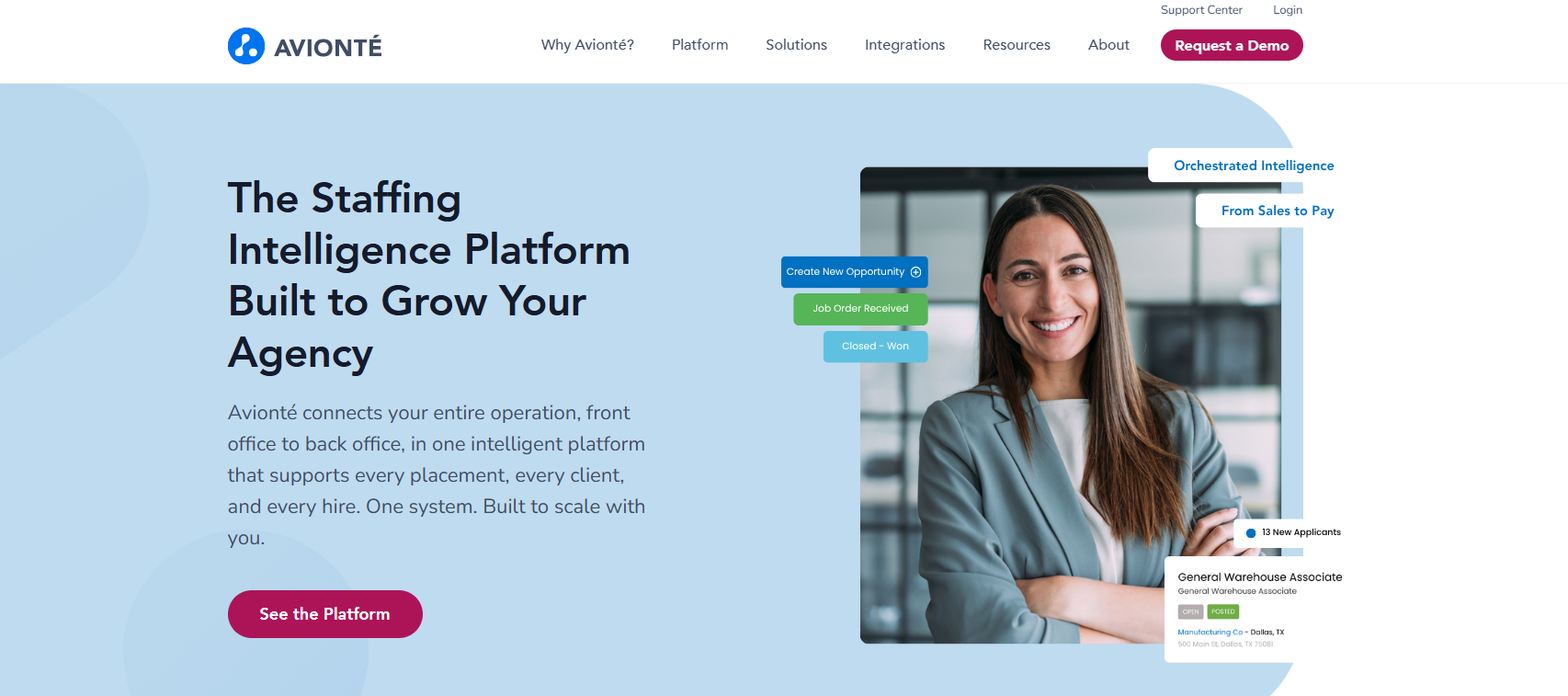
Job orders in Avionté contain details such as pay rates, shifts, and position requirements. You can search existing candidate records, review qualifications, and track submissions and placements.
The platform includes Avionté PIXEL, an AI Interview Agent that conducts initial candidate interviews through a chatbot. It asks questions based on job requirements, evaluates responses, and presents qualification summaries for recruiter review.
Avionté Mobile provides a branded job board where candidates can search positions and submit applications. Once selected, workers can complete onboarding forms, provide identification, sign documents, and access assignment details through their mobile devices.
9. Fountain
Fountain provides high-volume hiring software for employers that recruit hourly workers and fill frontline roles. Its ATS supports mobile applications, automated screening, interview scheduling, and hiring workflows for businesses with multiple locations.
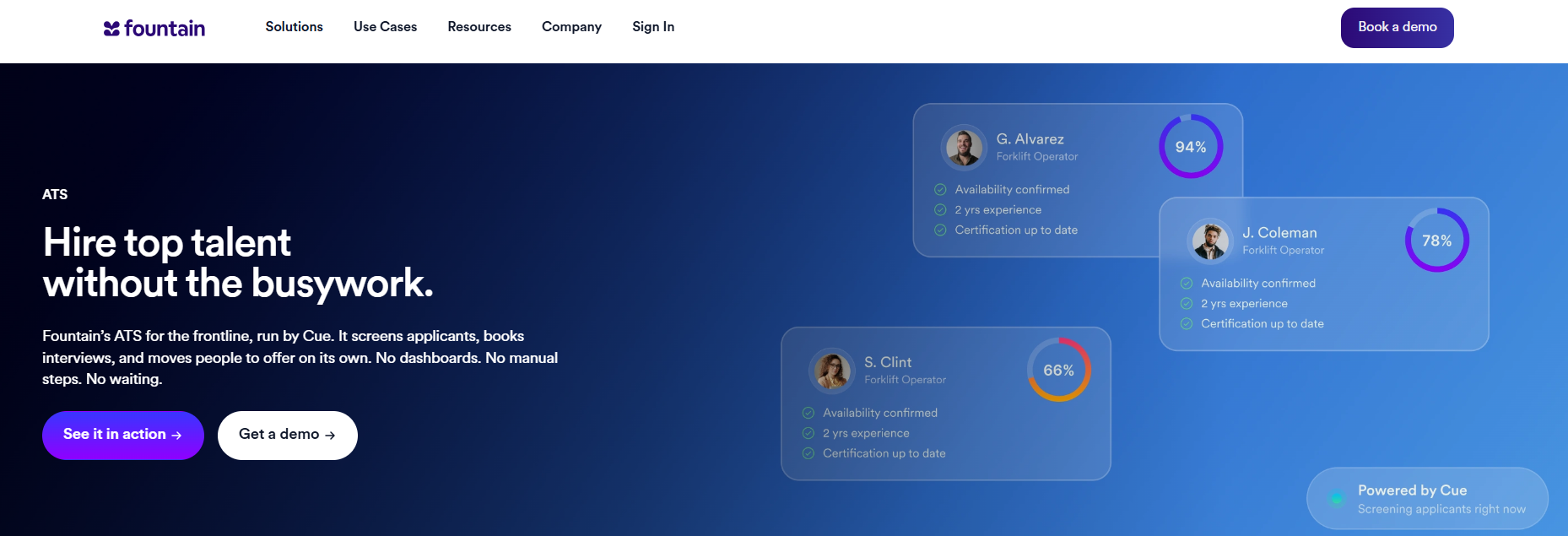
For bulk hiring, Fountain allows you to configure application and screening workflows based on position, location, and hiring requirements.
Candidates complete applications, qualification questions, and interview scheduling through one flow, while dashboards show recruitment activity across locations.
Fountain's Cue AI system handles initial screening based on job requirements and arranges interviews through connected calendars. It also sends reminders, manages follow-ups, and updates candidate records.
The platform supports text-to-apply through SMS and WhatsApp, along with automated status notifications and interview communication. Candidates select available interview times or request schedule changes.
Candidate Sourcing and Talent Pool Management
These systems focus on finding qualified candidates, organizing talent databases, and reconnecting with previous applicants for new job opportunities.
10. Gem
Gem is a recruitment platform that combines candidate sourcing, applicant tracking, and a talent CRM. Its AI Sourcing Agent searches more than 800 million candidate profiles based on job requirements written in plain language.
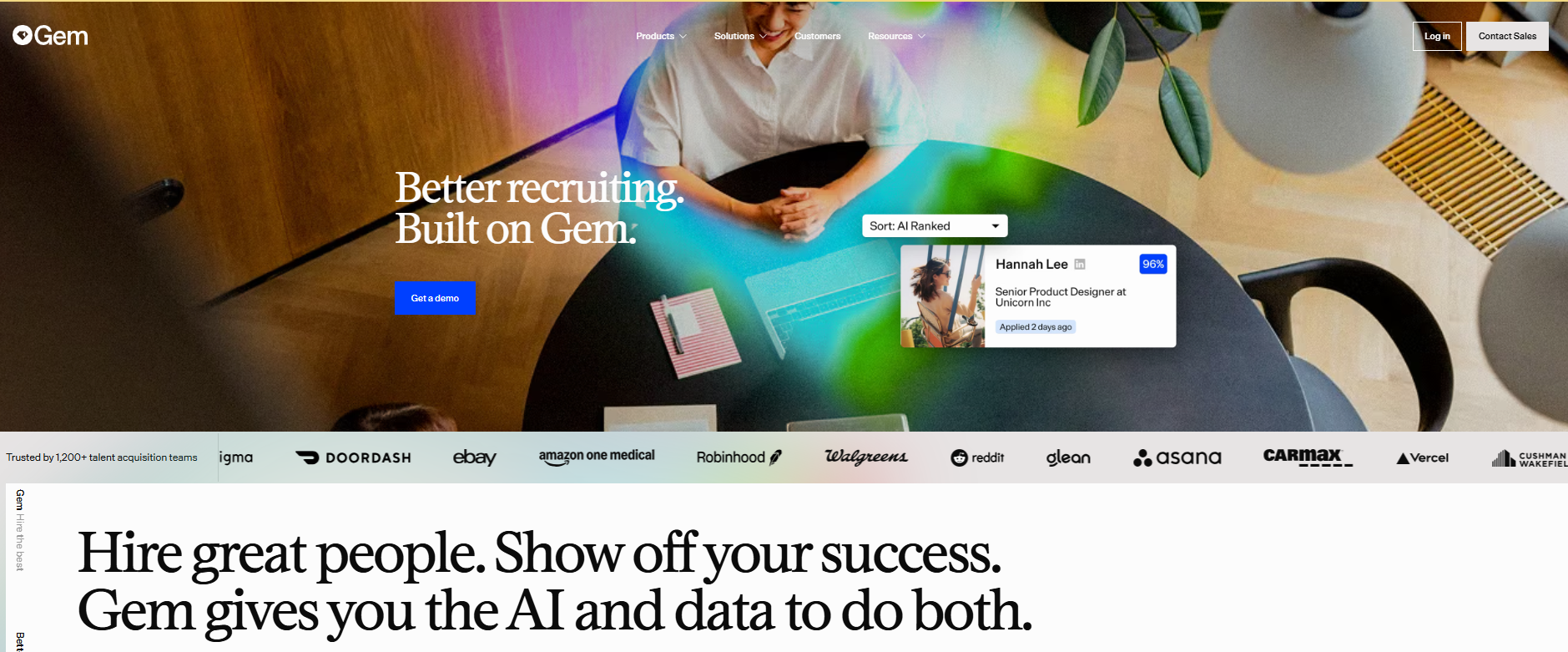
Gem's AI Talent Rediscovery searches previous applicants, sourced prospects, and CRM contacts for new job matches. The system considers past applications, interview feedback, and previous interactions to identify candidates who meet current requirements.
Gem supports dynamic candidate lists and automated profile enrichment. Candidate information is updated as job titles, employers, and contact details change. Talent communities and nurture campaigns also allow you to maintain relationships with prospects for future vacancies.
The platform includes personalized communication sequences through email, SMS, and InMail. Its two-way ATS integrations synchronize candidate records, notes, and recruitment stages.
11. hireEZ
hireEZ is an AI recruitment platform that supports candidate sourcing, talent rediscovery, and pipeline management. Its EZ Agent searches more than 45 sourcing platforms and existing ATS records.
The Rediscovery feature searches previous applicants within your ATS and refreshes candidate records through data enrichment and duplicate detection. This allows you to revisit past applicants whose experience or qualifications match new vacancies.
hireEZ also provides Talent Pools to organize historical applicants and sourced prospects. It uses AI to identify previous applicants who have a higher likelihood of responding to new opportunities.
The platform supports personalized email, text, and InMail campaigns with automated follow-up sequences. Its sourcing analytics track search activity, candidate pipeline progress, outreach responses, and talent market information.
12. Phenom
Phenom provides candidate sourcing and relationship management through its Talent CRM and AI Discovery tools. It maintains records of previous applicants, sourced prospects, career site visitors, and recruitment event attendees for future hiring opportunities.
Its AI Discovery feature searches existing candidate databases and external talent sources. Phenom uses Fit Scores to rank candidates according to their skills, experience, job titles, and location.
The Talent CRM also includes Dynamic Lists that group candidates based on qualifications, location, job titles, and hiring status. These segments update as candidate information changes, so you can maintain talent pools for recurring positions or future recruitment campaigns.
Its reporting tools track campaign performance, candidate sources, and conversions from initial contact through hiring. It also connects with existing ATS to synchronize candidate information and support talent pool management alongside recruitment workflows.
Candidate Screening and Assessment
These tools focus on evaluating large applicant pools through skills assessments, structured interviews, and automated screening processes.
13. HireVue
HireVue is a candidate screening and assessment platform that combines video interviews, skills evaluations, and recruitment automation.
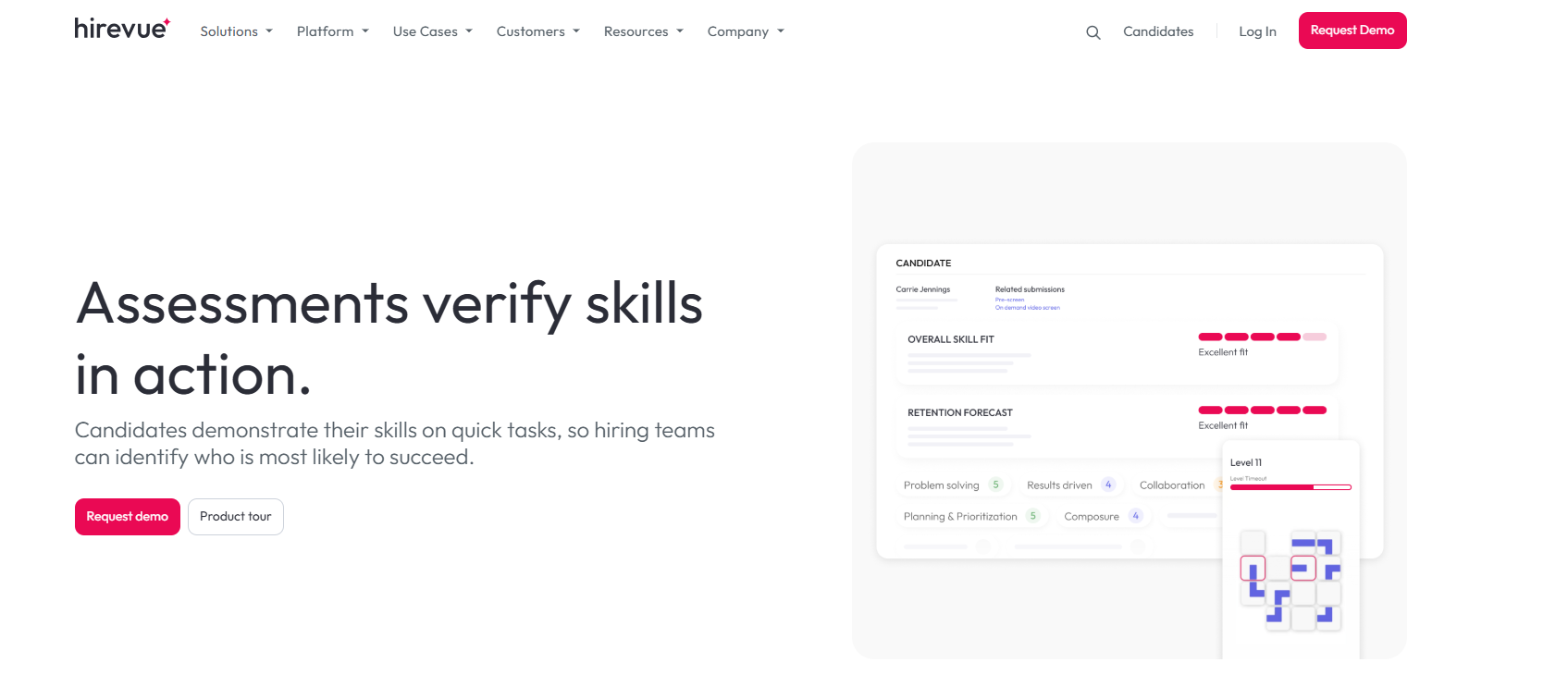
Its async interviews allow applicants to record responses to structured questions at their convenience, while recruiters review recordings and assessments without scheduling live calls.
The platform also offers HireVue AI Interviewer, a voice-based assistant that conducts dynamic interviews focused on job-related skills. It asks follow-up questions and evaluates responses against structured scoring rubrics, with results presented for recruiter review.
HireVue provides game-based evaluations, job-related skills tests, and technical assessments. It also includes structured interview guides, candidate scorecards, and shared video recordings.
The platform provides candidate scores, interview summaries, and assessment results to support hiring evaluations. These insights serve as additional evidence during selection, while you retain responsibility for the final hiring decision.
14. Harver
Harver is a pre-employment assessment platform that evaluates candidates through behavioral, cognitive, and job-specific tests. Its assessment library covers work abilities, personality traits, language proficiency, and practical skills for roles with large applicant volumes.
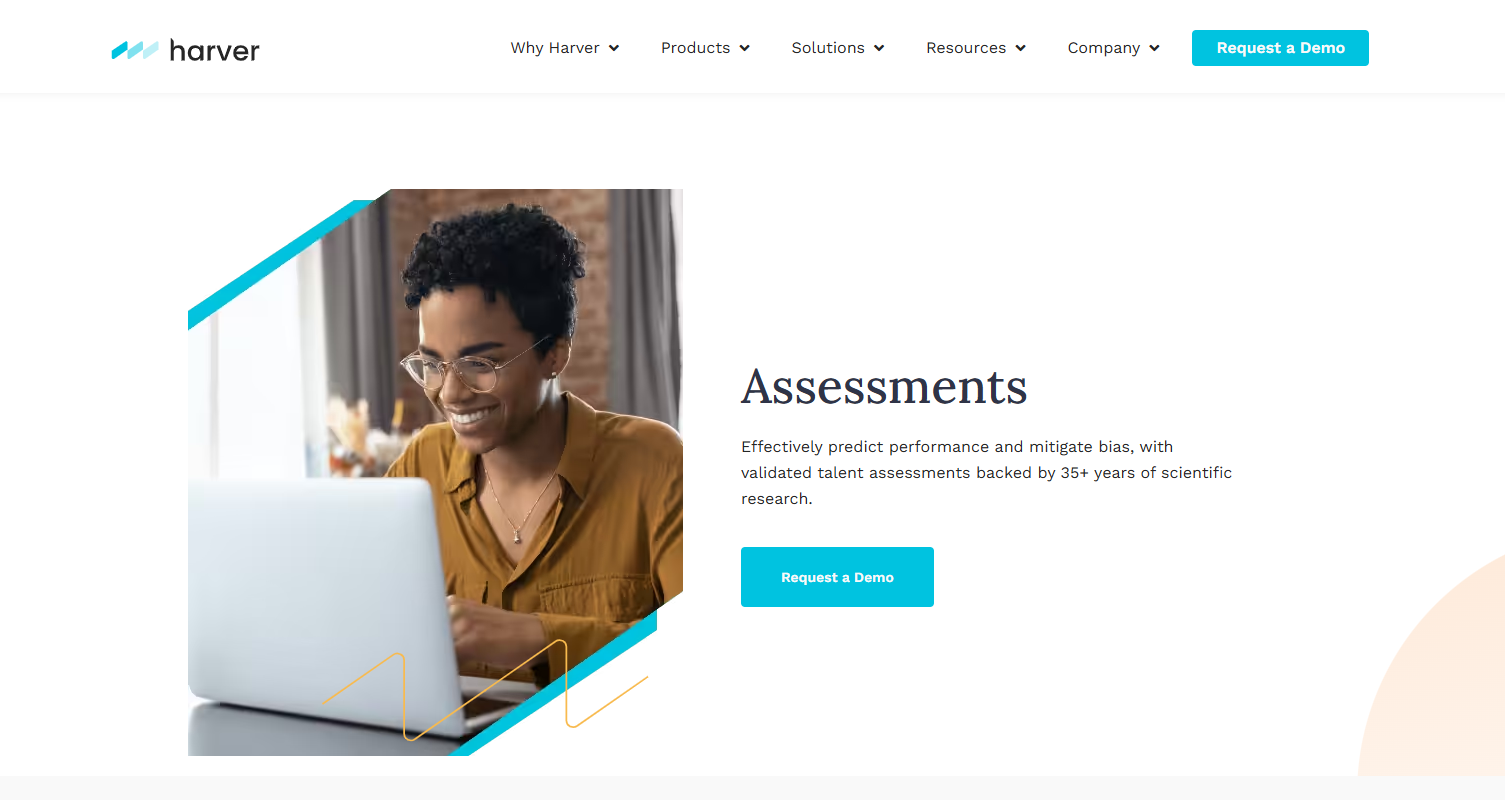
The platform includes situational judgment tests that present realistic workplace scenarios. Candidates select responses to situations they could encounter on the job, while realistic job previews provide information about daily responsibilities and work environments.
Harver's matching technology compares assessment results against predefined criteria for each position. Recruiters can use ready-made job profiles or request customized matching models based on the skills, behaviors, and abilities required for specific roles.
For high-volume screening, Harver automates candidate qualification and progression based on assessment results. Applicants who meet the requirements can proceed to virtual interviews, while interview scheduling tools coordinate the next recruitment stage.
Harver also provides assessment reports and recruitment analytics to review candidate quality and hiring performance. Its dashboards show candidate progression and assessment outcomes, while mobile-friendly evaluations allow applicants to complete screening activities.
15. TestGorilla
TestGorilla is a skills assessment platform that evaluates applicants through cognitive ability tests, technical assessments, personality measures, and job-specific questions.
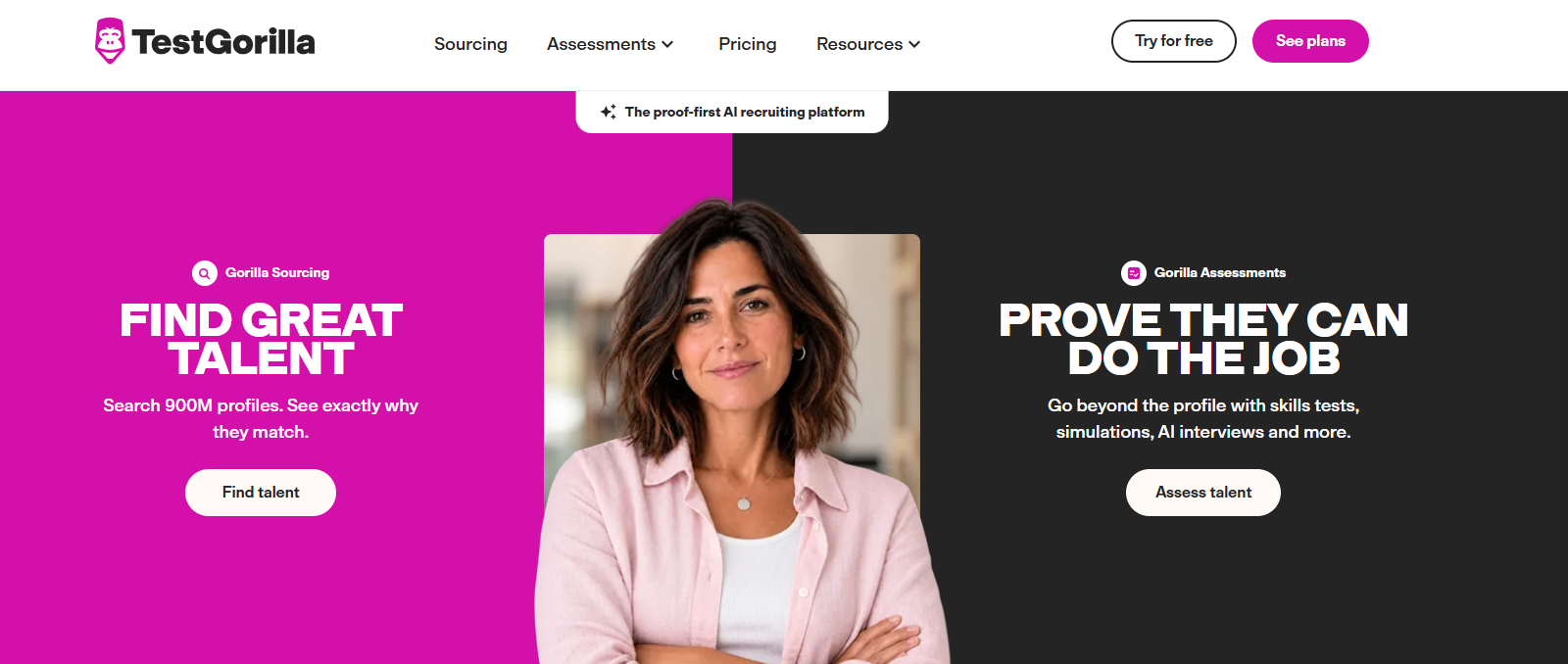
Its assessment builder lets recruiters combine multiple skills tests, custom questions, and video responses based on job requirements. Candidates receive assessment invitations through email or public links, while the system collects and scores their responses.
TestGorilla also offers AI video interviews that evaluate applicants through structured questions and follow-ups. Responses are scored against defined rubrics, with options to review transcripts, examine scoring explanations, and adjust results when necessary.
Candidate reports display test scores, assessment performance, and comparative rankings. It lets you filter applicants based on their results and identify top candidates for further evaluation.
For assessment integrity, TestGorilla includes question randomization, copy-paste restrictions, and monitoring features that flag unusual test activity.
How to Choose the Right High-Volume Hiring Software
The right software depends on your hiring volume, existing systems, and the recruitment tasks that require the most attention. Here are six steps to help narrow down your options:
Step #1: Assess Your Recruitment Volume and Hiring Needs
Monthly application volume, active vacancies, placements, and recruiter headcount will determine the software capabilities you need.
Factors such as seasonal demand, recurring vacancies, and short-term projects also affect how much recruitment activity the platform must support.
If you manage several client accounts, your evaluation should account for multi-client pipelines, department-specific workflows, and the volume of applications received during peak hiring periods.
Step #2: Identify Areas to Improve Your Process
A review of daily recruitment activities will show where your recruiters spend the most hours, whether that's screening applicants, contacting candidates, or scheduling interviews.
Recruitment metrics such as response rates, hiring timelines, and candidate drop-offs also reveal areas that need attention.
Your biggest challenges may involve slow application reviews, unanswered messages, or candidates who withdraw before interviews. Software that addresses these specific issues deserves priority over features that your recruiters have little reason to use.
Step #3: Choose the Right Type of Recruiting Software
An ATS or CRM typically manages candidate records, job requisitions, and recruitment workflows.
However, finding qualified applicants is only part of the job. Candidates also need timely responses, interview updates, and regular follow-ups to stay interested in your opportunities.
SMS recruiting lets you reach large candidate groups with job updates, interview reminders, and follow-ups while maintaining personal conversations when applicants reply.
Text recruiting software like TextUs offers personalized SMS campaigns, automated sequences, message templates, and shared inboxes for recruitment communication.
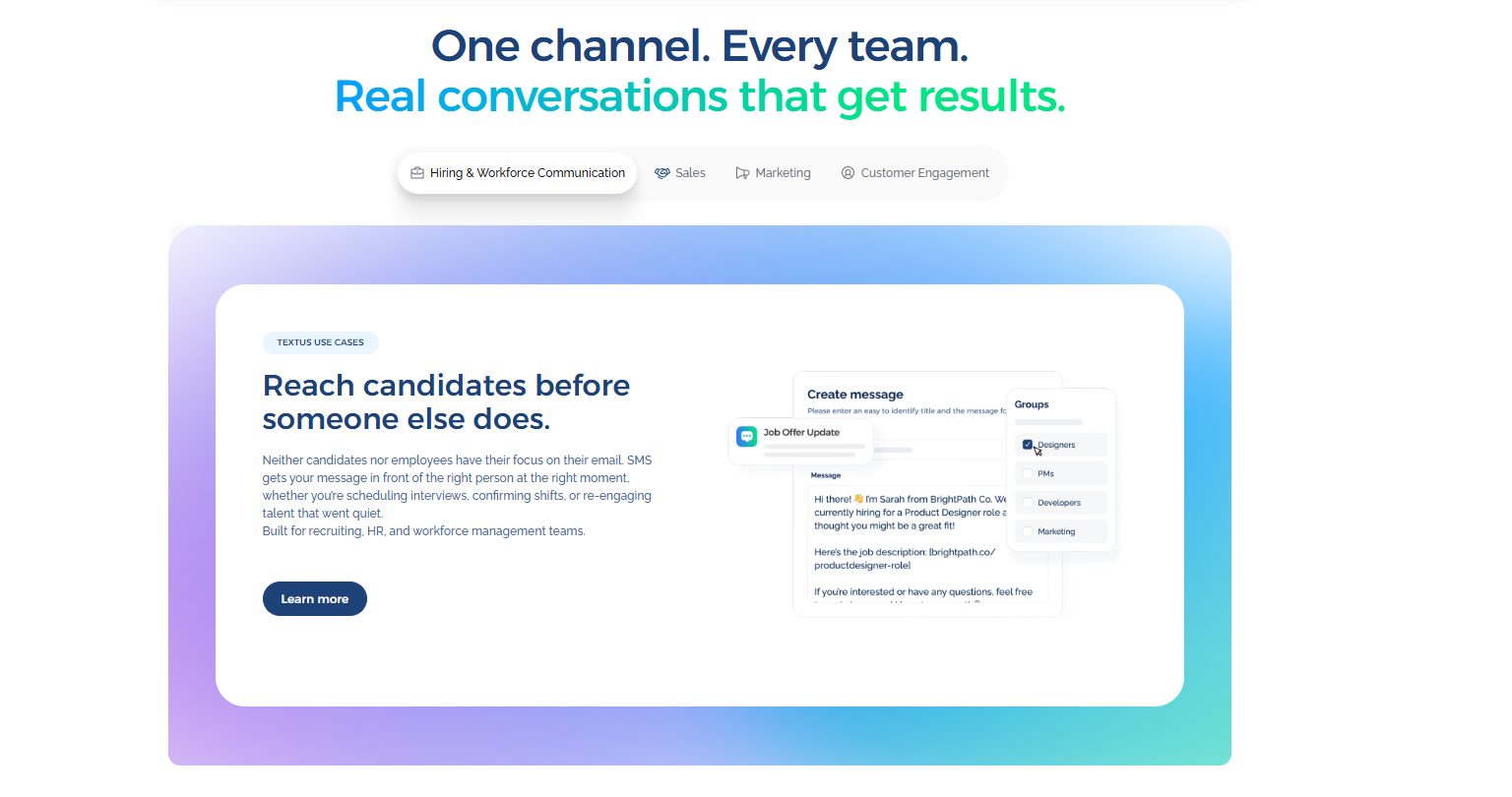
Its conversation assignment features also allow recruiters to organize incoming replies and continue discussions with interested applicants.
The platform integrates with supported ATS, so your existing hiring software remains part of the process. These features reduce recruiter workload from repetitive follow-ups and allow you to reach candidates faster.
If candidate communication is a priority for your next campaign, book a demo with TextUs today to see how its texting features fit your recruitment process!
Step #4: Evaluate Software Features and System Integrations
Recruiting software should support the tasks you handle every day, from candidate sourcing and applicant tracking to interview scheduling and reporting.
Features such as bulk actions, automated workflows, mobile access, and customizable dashboards are worth comparing against your current workflow.
Software integrations are just as important, especially if you already use an ATS, CRM, or HR system. Connected platforms allow candidate records, application statuses, and communication histories to sync between systems without duplicate data entry.
For platforms with AI agents or automated screening tools, the evaluation should include how recommendations are generated and when recruiters review the results. These capabilities should support your hiring decisions rather than replace human judgment.
Step #5: Compare Software Pricing and Additional Costs
Software pricing varies depending on the number of users, active job postings, applicant volume, and features included. Some platforms charge a monthly subscription, while others offer custom pricing based on your recruitment needs.
The subscription fee is not the only expense to consider. Additional charges may apply for implementation, ATS integrations, SMS usage, AI features, training, and customer support, depending on the vendor.
Expected hiring volume also affects the total cost, especially during periods with more applicants and open positions. A comparison with your current cost per hire can show whether the software expense makes sense for your recruitment budget.
Step #6: Test Software With Real Recruitment Scenarios
A software demo may show you the available features, but a trial with actual recruitment tasks provides a better picture of how the platform performs.
The trial should cover common activities such as reviewing applications, updating candidate statuses, scheduling interviews, and sending follow-ups. ATS integrations need testing to confirm that candidate records and recruitment updates sync without errors.
Recruitment metrics such as interview attendance, time to hire, and time spent on routine tasks provide a basis for comparison.
Feedback from recruiters and applicants can also show whether the platform supports a positive candidate experience without adding unnecessary work.
Reach More Candidates and Fill More Positions With TextUs
Hundreds of applicants mean little if qualified candidates stop responding before an interview.
During high-volume recruitment, missed messages and slow follow-ups increase your time to fill and put potential placements at risk.
TextUs keeps candidate communication active through personalized SMS campaigns, automated follow-ups, and two-way texting.
You can target applicants based on their qualifications, location, and availability to support your efforts to improve candidate quality within your active pipeline. Shared inboxes and ATS integrations also keep conversations organized as your applicant volume grows.
With TextUs, your team spends less time on repetitive follow-ups and more time connecting with interested applicants.
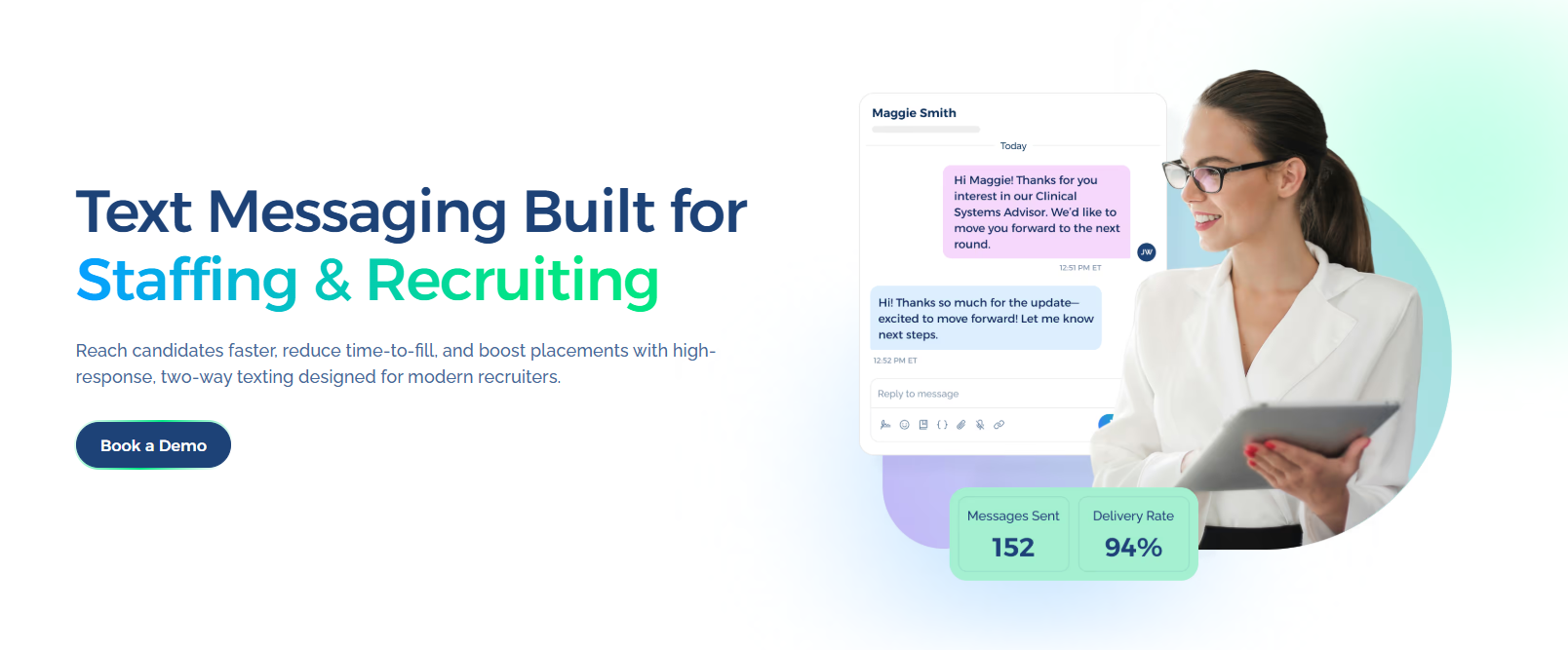
Book a demo with TextUs today to see how its texting features support your high-volume hiring goals!
FAQs About High-Volume Recruiting Software
What programs do recruiters use?
Recruiters use ATS such as Bullhorn, Zoho Recruit, and Access Vincere Evo, alongside sourcing, assessment, and communication platforms. Some also use AI software for candidate matching, automated screening, and recruitment workflows.
What is the 7-second rule for a CV?
The 7-second rule refers to a 2018 Ladders study that found recruiters spent an average of 7.4 seconds on their initial resume review. It's not a fixed rule, as actual screening time varies depending on the role, qualifications, and complexity of the application.
What is a high-volume application?
A high-volume application is a job application received during a recruitment campaign that attracts many applicants or aims to fill multiple vacancies.
This is common in retail, hospitality, warehousing, and seasonal recruitment, where employers need to process large applicant pools within short hiring periods.
Is Zoho Recruit an ATS system?
Yes, Zoho Recruit is an ATS designed for staffing agencies and corporate recruitment teams.
It provides tools for job posting, resume parsing, candidate tracking, interview scheduling, and offer management, along with automation and reporting features to support recruitment activities.
Continue Reading



Frequently Asked Questions
Business Texting
Built for Results
Create and convert pipeline at scale through industry leading SMS software