
SMS vs Email for Hiring: Which Is Best for Candidate Outreach?
Explore the differences of SMS vs email for hiring and find out which suits your needs better. Discover how TextUs can help you hire the best talent fast.

Written by
Adam Hamdan
Published
September 25, 2026

Hiring moves faster when candidates can see your message and respond before the opportunity goes cold. SMS and email serve different purposes throughout the candidate journey.
SMS plays a bigger role in quick conversations, interview coordination, appointment reminders, screening questions, and follow-ups.
Email is better suited to job details, documents, offers, benefits, and onboarding materials candidates may revisit.
In this article, we'll compare SMS vs email for hiring communication and when to use each channel in the hiring process. We'll also cover compliance requirements involved and how to build a coordinated strategy to improve your recruiting workflow.
TL;DR
- SMS stands out for visibility, fast replies, personalization, and ongoing candidate conversations, while email remains better suited to detailed information and attachments.
- SMS is strongest for active candidate outreach, follow-ups, screening, scheduling, reminders, urgent updates, re-engagement, and high-volume hiring, while email fits passive outreach, complex details, offers, rejections, onboarding materials, and executive communication.
- SMS marketing has stricter consent and opt-out requirements under the TCPA, while commercial email follows CAN-SPAM rules for sender details, unsubscribe options, and opt-out processing.
- A strong SMS and email hiring strategy respects candidate preferences, automates routine touchpoints, prioritizes urgent outreach, coordinates channel handoffs, sets escalation rules, and keeps conversations in a shared workflow.
- TextUs helps you turn SMS into a faster recruiting channel with two-way texting, smart automation, shared conversations, and deep ATS and CRM integrations.
How SMS and Email Compare for Candidate Communication
SMS and email each play a different role in candidate communication. Here are the key differences to consider before choosing a channel for each hiring stage.
Open Rates and Message Visibility
Email is an ideal format for candidates to search, save, and revisit recruiting updates.
However, recruiting messages compete for attention inside a crowded inbox filled with alerts and newsletters.
You could also face email deliverability issues or get caught by spam filtering. Other inbox content can make important updates easier to miss.
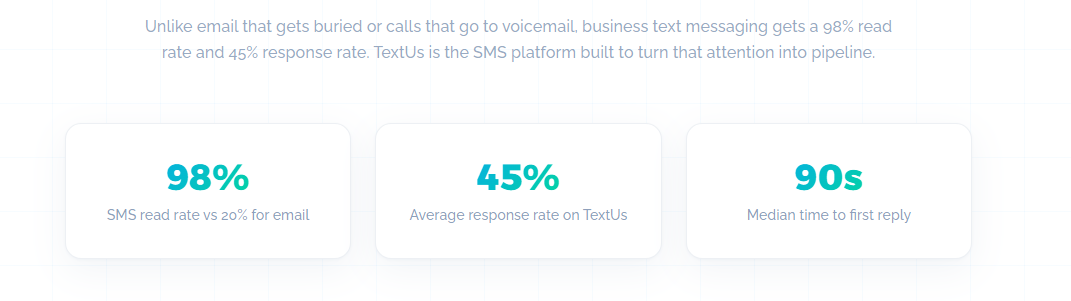
SMS open rates can reach 98%, compared with around 20% for email marketing. This shows why texting creates immediate visibility when a hiring conversation needs attention.
Text recruiting also has the biggest advantage in visibility. Text messages reach candidates on the mobile devices they check throughout the day and doesn't require an internet connection.
Response Rates
Email gives candidates more room to write thoughtful answers when you ask for background, experience, or other detailed information.
But visibility is only the first step. An opened email doesn't guarantee a candidate response.
According to an SMS engagement report by TextUs, 34.7% of recipients responded to one-to-one texts, compared to cold email outreach that averaged around 5%.
Texting creates real conversations because candidates can reply and continue the exchange without a formal email thread. This makes SMS valuable when you need clarification, availability, or another short answer.
Email still fits conversations where candidates need to think through a detailed answer or provide context.
Texting has more value when you need quick clarification or other short exchanges that move the hiring process forward.
Message Deliverability and Reach
Email and SMS each face different delivery challenges. Recruiting emails may bounce, get filtered, or lose visibility because of deliverability issues.
SMS requires proper sender registration, message quality controls, and carrier compliance.
But its main advantage is that you can manage candidate outreach through approved business numbers instead of relying on individual recruiter numbers.
For recruiting, 10DLC creates a more trusted foundation for candidate outreach. TextUs makes 10DLC registration easier by guiding you through the registration process.
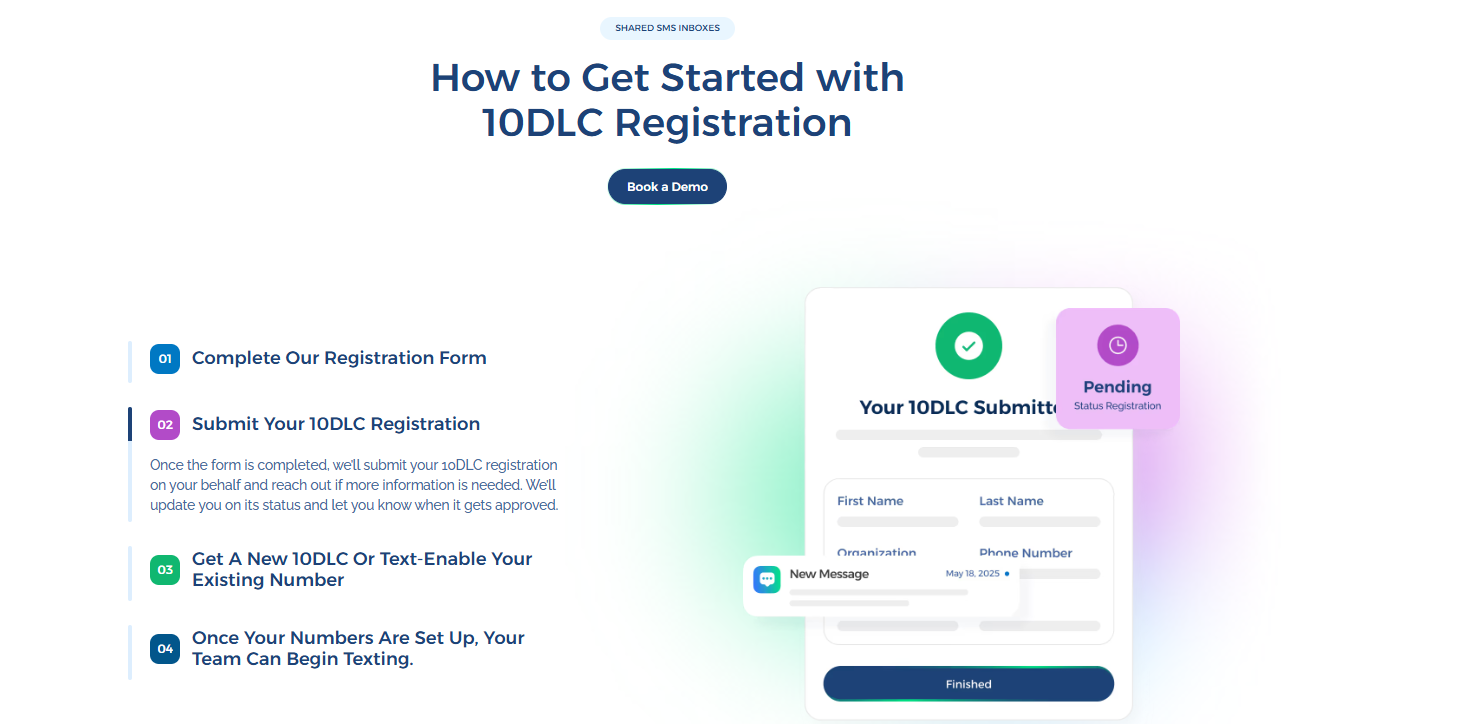
It also helps you manage consent, monitor message quality, and reduce carrier filtering risks. You can focus on candidate conversations without getting buried in messaging requirements.
Book a demo with TextUs today!
Personalization and Message Relevance
Personalization is more than adding a candidate's first name. Effective outreach reflects the role, hiring stage, previous conversation, location, availability, or next step.
Candidates shouldn't feel like generic SMS subscribers receiving the same outreach. A concise recruiting text needs to refer to a past interview, application, or specific opening.
Email still fits when the candidate needs a full breakdown of the job opportunity. SMS feels more personal when the next step only requires a short exchange.
Conversation History and Record Keeping
Recruiter turnover, handoffs, vacations, and shared candidate ownership leave gaps when nobody has access to the full interaction history.
Text recruiting software keeps candidate conversations attached to the recruiting process. Staff can review previous exchanges before contacting the same candidates again.
Email offers familiar threading, but shared SMS history prevents candidate relationships from disappearing with an individual employee.
Automation and Follow-Up
Automation has value when it removes repetitive coordination without making every candidate interaction feel scripted.
Both email and SMS can trigger reminders and sequences. But texting is suitable for short actions such as confirming an interview, checking availability, or asking whether a candidate still wants to proceed.
A well-timed follow-up can also stop once the candidate replies, allowing a person to take over the conversation. That handoff keeps automation focused on routine work while preserving human interaction.
Links, Attachments, and Documents
SMS can direct candidates to applications, scheduling tools, maps, job listings, and other online resources.
Short clickable URLs also work around SMS character limits without packing excessive information into the text itself.
Email is more practical for resumes, portfolios, calendar invitations, benefits guides, employment forms, and other business documents candidates may need to download or revisit.
When to Use SMS and Email Throughout the Hiring Process
Some candidates prefer email for certain updates, while others want texting for faster coordination. Here are the hiring stages where each channel fits best.
Initial Candidate Outreach
Active applicants already have a relationship with your company. A short text can move them toward screening, availability, or the next step through direct communication.
Passive candidates may need more context at first, which makes email useful for the introduction before texting takes over once interest is established.
Application Follow-Ups
A follow-up text works well when you need to ask whether a candidate still wants to continue after leaving an application incomplete.
Email fits cases where documents, missing fields, or several requirements need explanation. SMS can then remind candidates about any high-priority deadline.
Candidate Screening Questions
SMS messages work well for short screening questions about availability, location, certifications, shift preferences, or basic eligibility.
Complex screening belongs in a structured assessment, application form, or conversation where the candidate has room to explain an answer.
Interview Scheduling
SMS reduces long scheduling exchanges by letting candidates confirm a time, choose a slot, ask a question, or request a change with less back-and-forth.
Email still has value for calendar invitations and complete interview details, while texting delivers the faster response speed needed to finalize the schedule.
Interview Reminders and No-Show Prevention
Short interview reminders confirm attendance and uncover scheduling conflicts before they turn into missed interviews.
Email may carry preparation materials and meeting details, while SMS reinforces the date, time, and action closest to the interview.
Last-Minute Interview Changes
SMS is a better fit for time-sensitive messages because the candidate may need to act at once. This could include delays, cancellations, new video links, parking updates, or interviewer changes.
Email can follow with extra context when the update involves more than a quick change.
Candidate Status Updates
A text message reduces uncertainty when interview feedback is delayed, another round is pending, or the hiring timeline changes.
Email becomes more appropriate when the update includes several next steps, supporting information, or requests for additional materials.
Job Offers
A congratulatory text can tell a candidate an offer is coming, confirm receipt, or open a conversation about the next step.
For compensation, benefits, terms, and offer documents, email wins because the format fits formal business communication better.
Candidate Rejections
Email is enough for an early-stage candidate who had limited interaction with your company.
Later-stage candidates deserve a more personal touch, which may include a conversation or a thoughtful text that reflects the time they invested.
Preboarding and Onboarding Communication
SMS fits urgent messages about start dates, document deadlines, orientation times, background checks, and first-day reminders.
Email remains valuable for policies, benefit materials, forms, and other detailed content that new hires may need to keep.
Candidate Re-engagement
SMS recruiting can reopen conversations when a suitable role becomes available.
A short text also grabs attention after earlier email outreach went unanswered. Email still fits when the opportunity needs more context, role details, or hiring information.
High-Volume and Hourly Hiring
Targeted SMS marketing campaigns are ideal when a role closely matches a candidate's location, experience, or stated interests and you want a fast expression of interest.
Email campaigns remain useful for broader job digests or updates that include several openings and more context.
Professional and Executive Hiring
Staffing, healthcare, hospitality, retail, manufacturing, and logistics companies often coordinate with many candidates across different schedules and hiring stages.
SMS text messaging simplifies confirmations, availability checks, reminders, and short updates, while email still carries longer hiring information.
Compliance Requirements: SMS vs Email Marketing
SMS and email follow different rules, especially around consent, opt-outs, and message purpose. You need to understand these differences before building automated recruiting outreach.
SMS Marketing Compliance
The Telephone Consumer Protection Act (TCPA) governs certain automated calls and texts sent to a recipient's phone. Covered robotexts generally require prior express consent, unless an exemption applies.
Telemarketing robotexts have stricter requirements and generally need prior express written consent under FCC rules. This distinction becomes important when recruiting outreach also contains promotional marketing texts.
Candidates may revoke consent through reasonable methods, including common responses such as STOP or UNSUBSCRIBE. Strong SMS opt-out handling helps prevent covered texts from continuing after consent is withdrawn.
10DLC also requires businesses using ten-digit numbers for A2P messaging to register applicable campaigns. This carrier framework supports accountable business messaging but doesn't replace TCPA obligations.
Email Marketing Compliance
The CAN-SPAM Act applies when an email primarily promotes a commercial product or service. A standard recruiting email doesn't automatically fall within that definition.
Covered marketing emails need accurate sender details, honest subject lines, and a valid postal address. They must also provide an understandable method for recipients to unsubscribe.
Unlike certain covered robotexts, CAN-SPAM generally doesn't require advance consent before commercial email. However, valid opt-out requests must be honored within ten business days.
Even email subscribers retain the right to stop covered marketing email. The unsubscribe process must remain available for at least 30 days after sending.
How to Build an SMS and Email Hiring Strategy
A strong hiring strategy uses SMS and email for different purposes instead of treating them as interchangeable. These are the ways to combine both channels without creating unnecessary overlap.
Ask Candidates How They Prefer to Communicate
Candidate preferences should influence how you communicate after the first interaction.
Some jobseekers may want text updates but prefer email for formal information. Others may favor phone calls for sensitive discussions or complex questions.
Recording these preferences helps staff maintain professional communication throughout the recruitment process.
Use Automation Around Repetitive Touchpoints
Automation fits predictable tasks such as reminders, confirmations, availability checks, and scheduled status updates. You can send messages at planned points without recreating routine outreach for every candidate.
Human involvement still belongs in negotiations, complex questions, and sensitive decisions. Automation should handle repetitive coordination while recruiting teams focus on conversations that require judgment.
TextUs lets you schedule campaigns or build SMS sequences that guide candidates through several hiring steps. It also adds safeguards around automated outreach through Smart Delivery and its Message Quality Indicator.
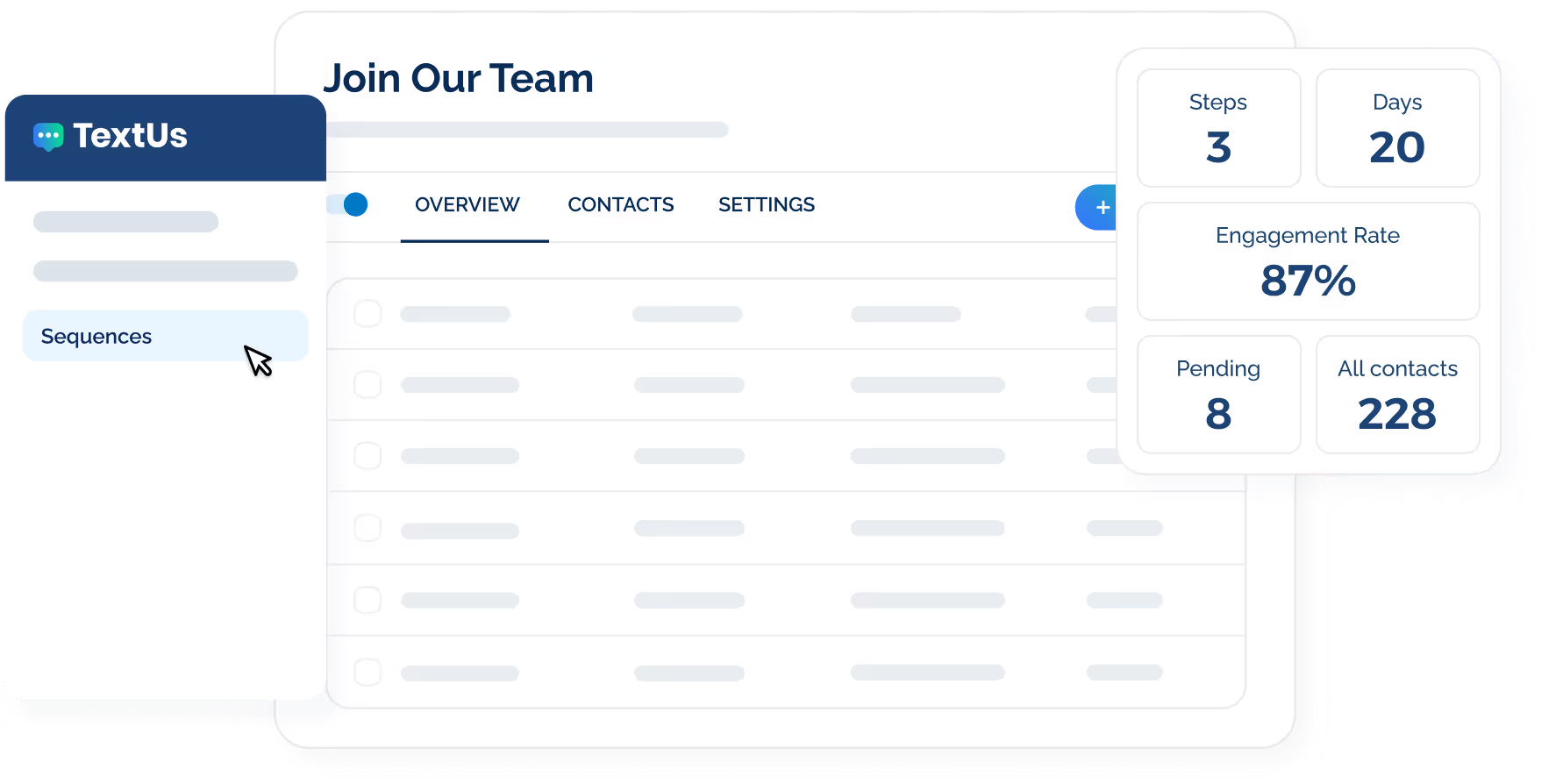
These tools flag risky content, suggest rewrites, and monitor opt-out thresholds before SMS campaigns create carrier issues.
Book a demo with TextUs today and see how it can reduce repetitive recruiting follow-ups!
Consider the Urgency of the Message
The right tool depends on how soon you need action.
SMS has an advantage when time-sensitive information requires attention before the next hiring step. Schedule changes, availability requests, and approaching deadlines benefit from the immediate visibility of texting.
Email can be used when candidates have time to review the information before responding.
Create a Smooth Handoff Between Channels
Some conversations may start with a text and move to email as more information becomes necessary. A recruiter could confirm interest through SMS, then email the job description or interview materials.
The transition should preserve context instead of forcing candidates to repeat previous conversations. Each channel then contributes something different to the hiring experience.
Set Rules for Timing and Escalation
Your hiring process should define when unanswered outreach moves from email to SMS or another contact method. Time-sensitive communications justify a faster channel before a deadline passes.
These rules also prevent excessive follow-ups and keep staff from contacting candidates without a consistent plan.
Keep Candidate Communication in a Shared Workflow
Candidate conversations become harder to manage when they sit across personal inboxes, mobile phones, and separate recruiting systems.
Shared records keep previous conversations, ownership, and next steps available to everyone involved.
Text automation software also keeps candidate SMS separate from personal recruiter numbers. This makes handoffs easier when another staff member takes over the relationship.
Bring Faster Candidate Communication Into Your Hiring Process With TextUs
Email still has a place in hiring. But SMS continues to be the go-to option for quick candidate interactions.
When speed, visibility, and fast replies matter, SMS is the best communication channel for reaching candidates without competing with email clutter or a spam folder.
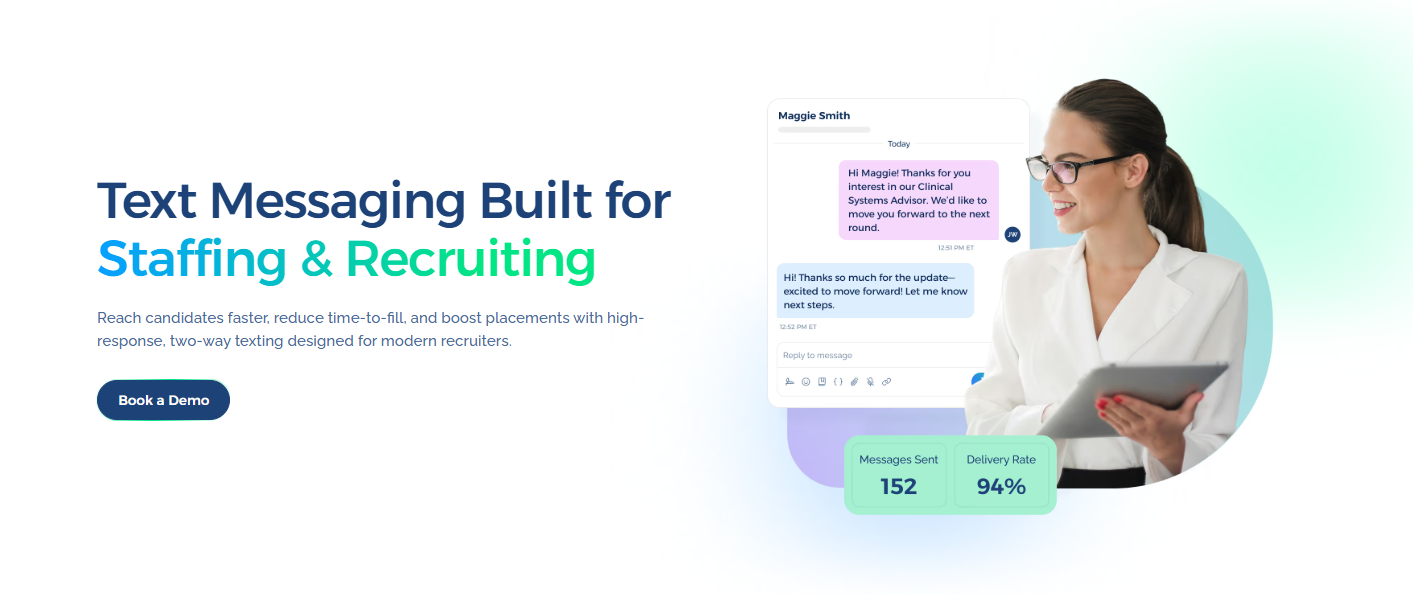
TextUs helps you send text messages through dedicated business texting numbers, manage two-way conversations, schedule outreach, and automate routine follow-ups.
It connects directly with leading ATS and CRM platforms, while intelligent automation handles scheduled outreach, follow-ups, and recurring candidate touchpoints.
Shared inboxes and message history keep vital information available when another recruiter needs to continue the conversation. Detailed analytics help you understand engagement, response activity, and team performance across the recruiting process.
Book a demo with TextUs today and see how texting can help move candidate conversations forward faster!
FAQs About SMS vs Email for Hiring
Is SMS better than email?
SMS has an edge for interview coordination, reminders, short questions, and fast candidate replies.
Email is better suited to offers, documents, detailed instructions, and information candidates may need later.
What is SMS during the hiring process?
SMS in hiring means using business text messaging for candidate outreach, screening, scheduling, reminders, updates, and re-engagement. It creates a direct path for conversations that don't require lengthy explanations.
What are red flags for recruiters?
Common red flags include inconsistent work history, vague answers, poor communication, dishonesty, and unprofessional behavior during interviews.
You should also look for patterns, since a single concern doesn't always reflect a candidate’s overall fit.
Is SMS becoming obsolete?
No. SMS remains part of today's mobile messaging ecosystem, even as Rich Communication Services (RCS) adds richer features to business messaging.
RCS Universal Profile 4.0 includes defined fallback behavior to SMS in supported situations. Google Messages can also resend messages as SMS or MMS when RCS is unavailable.
Continue Reading



Frequently Asked Questions
Business Texting
Built for Results
Create and convert pipeline at scale through industry leading SMS software