
18 Best Candidate Engagement Software Platforms in 2026
Compare 18 candidate engagement software platforms and learn why TextUs is the top pick for personalized SMS outreach and automated follow-ups.

Written by
Adam Hamdan
Published
November 17, 2026

Candidates interact with your organization through career sites, job alerts, and hiring updates. Each interaction influences how they view your company and whether they want to pursue an opportunity.
Candidate engagement software allows you to manage these interactions, from initial contact to the final hiring decision.
With tools for communication, talent nurturing, interview coordination, and feedback collection, recruiting teams maintain candidate relationships and stay informed about their progress.
In this article, we'll compare candidate engagement software platforms by use case, explore their features, and discuss what to consider when choosing a solution.
TL;DR
Here are 18 candidate engagement software options to explore based on your recruitment needs:
- Candidate messaging and engagement: TextUs, Emissary, Sense
- Candidate relationship management and talent nurturing: Gem, Beamery, Avature
- AI candidate screening and chatbot engagement: Paradox, Humanly, XOR
- Interview scheduling and candidate coordination: GoodTime, ModernLoop, Cronofy
- Recruitment marketing and talent community engagement: Phenom, iCIMS, Symphony Talent
- Candidate feedback and experience measurement: Survale, Starred, Trustcruit
Why Invest in Candidate Engagement Software?
Survale's 2025 Candidate Experience Benchmark Research found that 31% of North American candidates reported not hearing back from employers for one to two months or more after applying.
This communication gap shows how easily applicants can lose interest when they're left waiting for updates.
Candidate engagement software addresses these challenges through personalized communication, automated follow-ups, and better visibility into candidate activity.
Here are the key benefits of using candidate engagement tools in recruitment:
- Improve candidate response rates: Personalized messages and timely follow-ups give candidates more opportunities to respond to job openings and recruitment updates.
- Reduce candidate drop-off: Regular communication maintains candidate interest between applications, interviews, and hiring decisions.
- Prevent interview no-shows: Automated confirmations, reminders, and rescheduling options reduce the chances of candidates missing scheduled interviews.
- Save recruiter time: Automated messages and follow-up sequences reduce repetitive communication, leaving more time for interviews and candidate relationships.
- Reconnect with previous applicants: Candidate records and targeted campaigns make it possible to revisit past applicants and introduce new job opportunities
- Improve the candidate experience: Two-way messaging allows candidates to ask questions, receive updates, and understand what comes next in recruitment.
- Make better hiring decisions: Engagement reports show candidate responses, campaign performance, and communication trends that need attention.
The best platform allows you to maintain relationships and create an experience that encourages strong hires to stay interested.
18 Best Candidate Engagement Software Platforms (By Use Case)
Candidate engagement platforms support different recruitment activities. Here are 18 software options organized by their main recruitment functions.
Candidate Messaging and Engagement
Candidate engagement platforms let you communicate with applicants through SMS for job opportunities and next steps.
1. TextUs
Candidate communication can get overwhelming when you have multiple roles to fill, interviews to coordinate, and applicants waiting for updates.
The right candidate engagement platform takes some of that pressure off. TextUs brings automated SMS outreach and recruiting integrations so you have less to manage between systems.
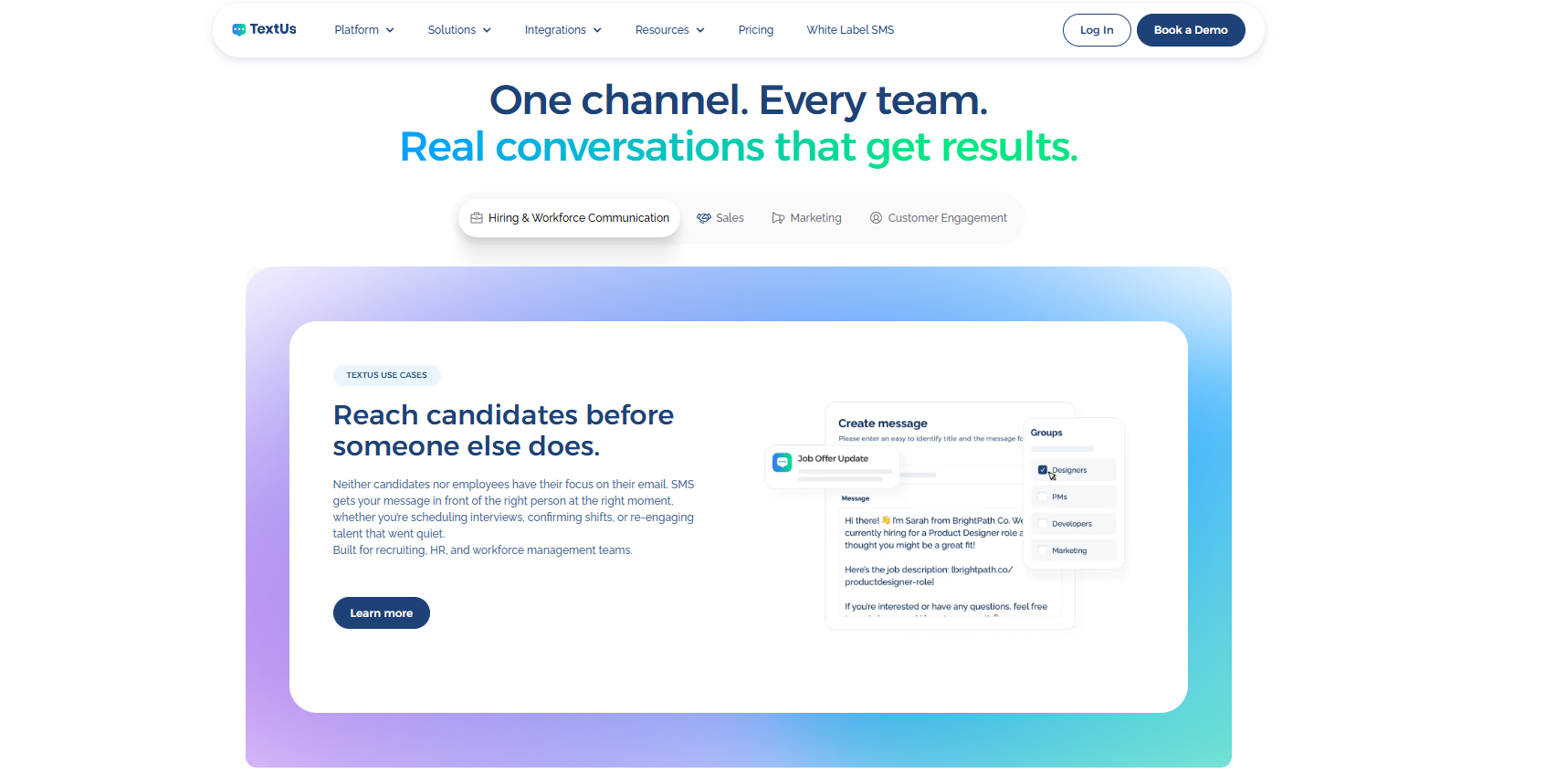
TextUs connects with your applicant tracking system (ATS), including Bullhorn, Greenhouse, Workday, and JobDiva. The shared inbox also keeps conversations accessible to everyone involved in recruitment.
For bulk text messaging, TextUs lets you send personalized SMS and MMS messages to candidate groups. You can share job openings, interview details, and follow-ups using templates, merge fields, and tracked links.
TextUs Sequences takes care of follow-ups that would otherwise need your attention. You can schedule job alerts, interview reminders, and messages to reconnect with passive talent.
Once someone replies, the sequence stops so you can continue the conversation yourself. SMS keywords and QR codes let interested applicants start conversations with your team.
TextUs also tracks delivery rates, candidate replies, link clicks, and campaign performance. You gain deeper insights on which messages get attention and which approaches need adjustments.
Smart Delivery flags potentially risky message content before sending, while AI rewrite suggestions help recruiters revise it. Opt-out monitoring can also pause high-risk campaigns.
Don't let unanswered messages stand between you and your next hire. Book a demo with TextUs to see how you can reach more candidates and manage recruitment conversations!
2. Emissary
Emissary is a text recruiting platform that supports one-to-one messaging, group campaigns, and automated candidate communication.
Its text campaigns allow you to contact groups of previous applicants, new hires, and other recruitment contacts. Campaigns include communication templates, personalized fields, and message scheduling for high-volume hiring requirements.
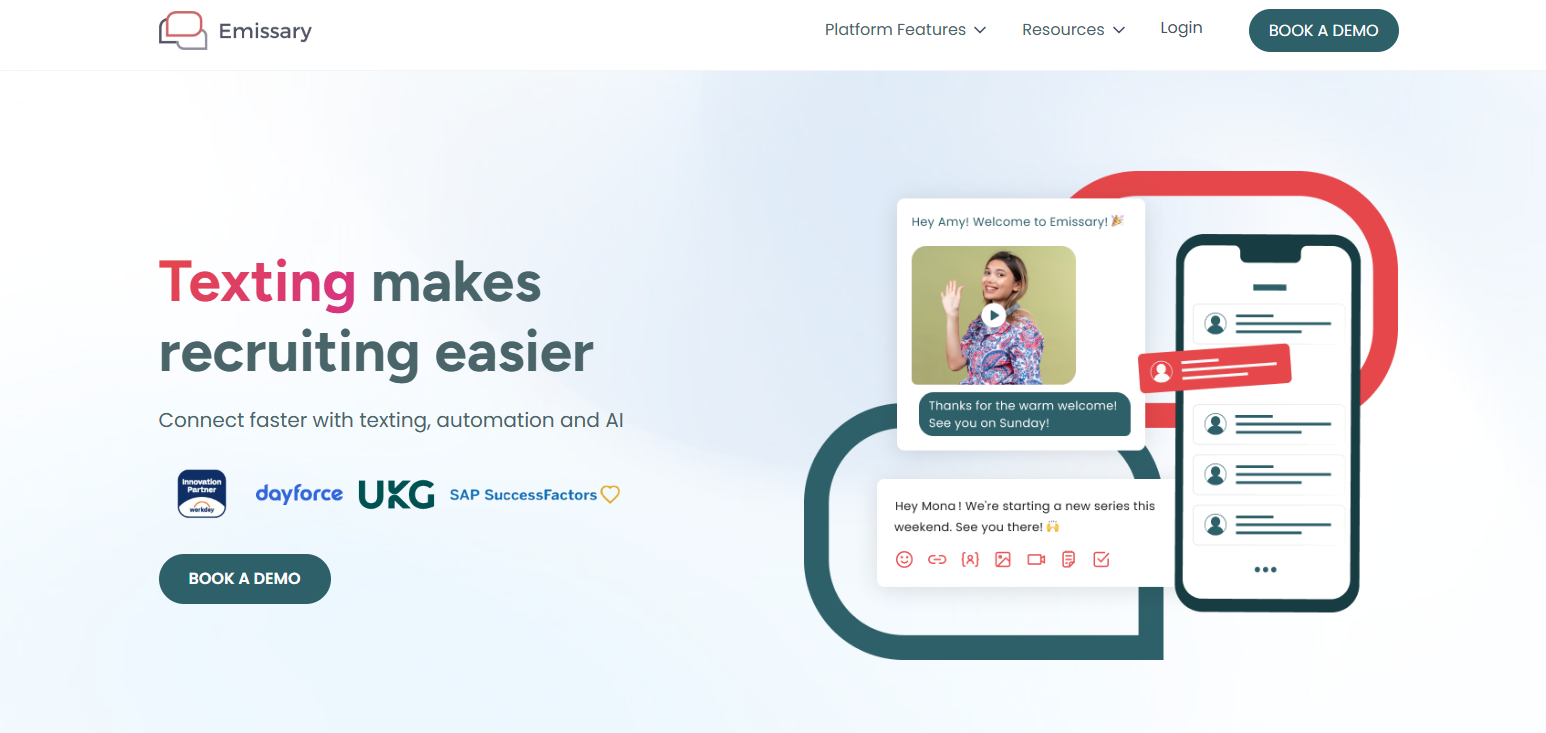
Its texting inbox organizes conversations from individual messages, campaigns, and short codes. You can flag, tag, search, and share conversations with other recruiters to manage candidate replies.
The platform supports text-to-apply campaigns. Candidates can express interest through SMS, while recruiting chatbots collect screening information, answer questions, and coordinate interview scheduling.
Emissary integrates with existing recruitment software through supported connections and a Chrome extension. Its integrations synchronize text conversations with candidate records, while stored message histories and unsubscribe controls support communication management.
3. Sense
Sense is a talent engagement platform that supports two-way SMS, WhatsApp messaging, and automated candidate communication.
Its shared inbox allows you to view conversations, manage responses, and assign different phone numbers to separate recruitment activities. Search filters let you organize conversations by name, phone number, tags, and activity status.
Sense offers mass texting campaigns for new applicants, previous contacts, and passive candidates in your recruitment database. You can import contacts from an ATS or spreadsheet, test different message versions, and exclude candidates who have received recent messages.
The platform supports automated communication throughout the entire recruitment lifecycle. Its workflows send personalized follow-ups based on candidate information and recruitment activity.
Mobile apps for iOS and Android let you respond to candidates away from your desk. Its two-way ATS integrations synchronize candidate information and conversation history.
Candidate Relationship Management and Talent Nurturing
Candidate relationship management software organizes candidate profiles, communication history, and job preferences for future outreach.
4. Gem
Gem is a recruiting CRM that manages candidate profiles, outreach history, and talent pipelines. Its AI Talent Rediscovery searches the existing candidate database.
The platform supports natural-language candidate search. You can also create talent communities for recurring positions and applicants who may be suitable for future opportunities.
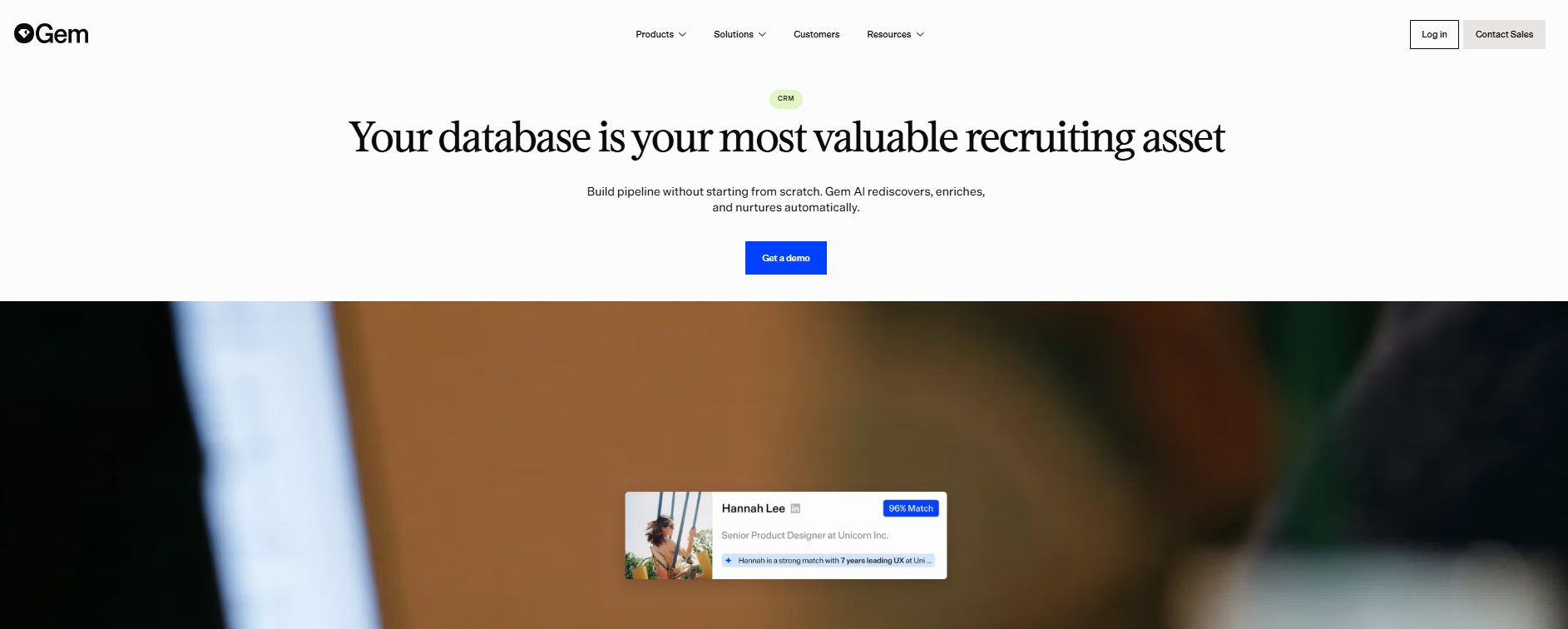
Gem offers personalized outreach sequences and automated nurture campaigns. Its AI features draft messages based on previous interviews, career changes, and other details recorded in candidate profiles.
Nurture sequences can be scheduled for specific dates or future intervals, such as six months after the previous conversation. The system also pauses email sequences when a candidate responds, preventing unnecessary follow-ups.
Gem integrates with Greenhouse, Workday, Lever, and other recruitment systems through two-way data synchronization. Its activity feed displays emails, LinkedIn InMail messages, texts, interviews, and recruiter notes, while profile enrichment updates candidate career information.
5. Beamery
Beamery is a talent CRM that maintains candidate information and supports long-term recruitment relationships.
The platform provides talent pool management features that organize candidates based on qualifications, experience, and other criteria. You can revisit previous applicants and shortlisted prospects when new job requisitions become available.
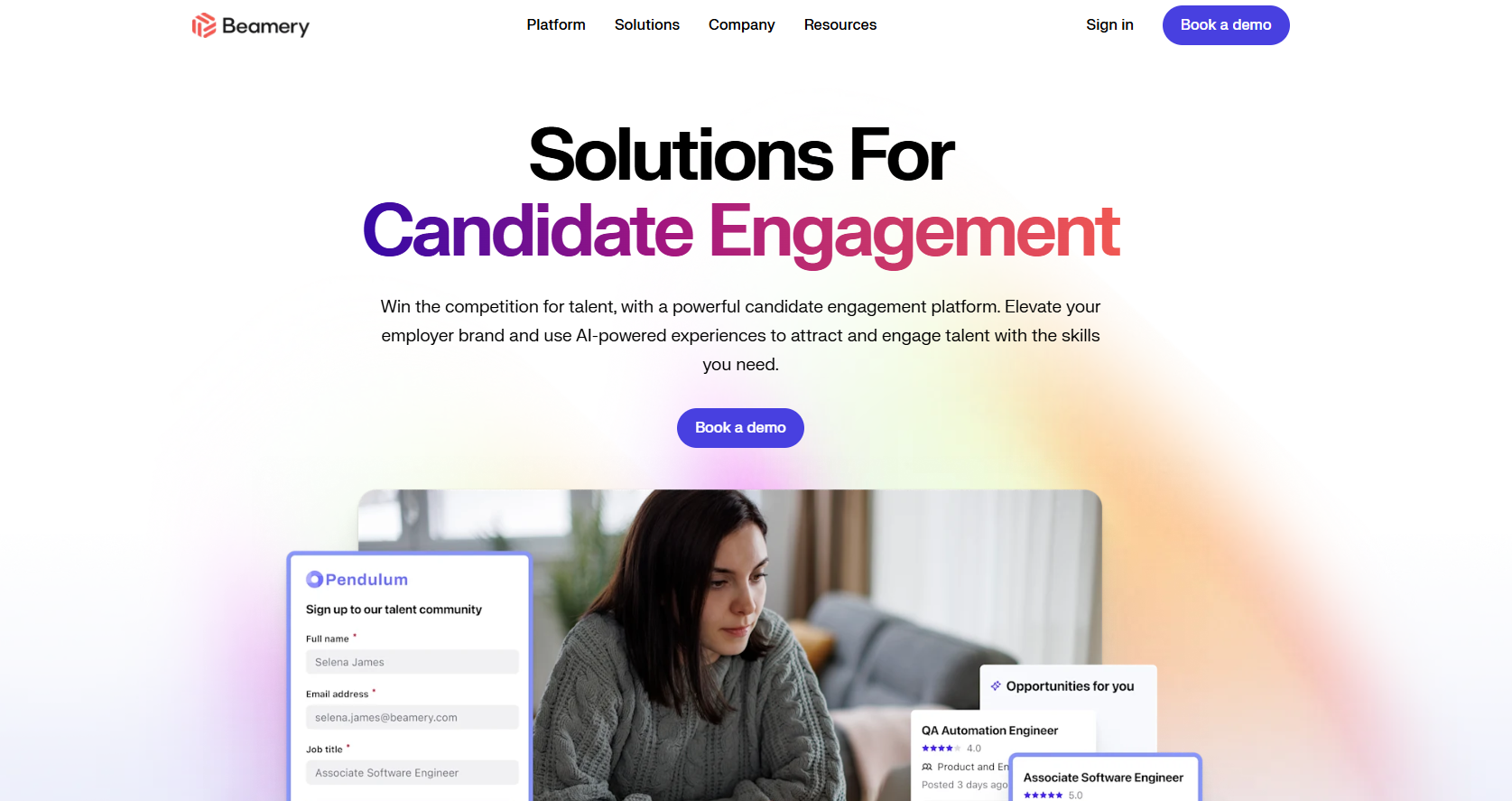
Beamery includes talent marketing software for automated nurture campaigns. You can segment audiences by skills, experience, and engagement history, then schedule messages or create multi-step campaigns.
Its email tools support personalized content blocks, branded templates, and automated campaign triggers. For direct communication with candidates about recruitment opportunities, teams can use both.SMS and WhatsApp.
Candidate profiles contain information collected from applicants, public profiles, and connected HR systems. Beamery also supports candidate preference updates, consent campaigns, configurable workflows, and user access controls.
6. Avature
Avature is a CRM platform that supports talent sourcing, recruitment marketing, and long-term candidate engagement.
The platform lets you create branded career pages, landing pages, and talent communities to attract potential applicants. It also supports personalized campaigns through email, SMS, WhatsApp, and WeChat, with automated messages triggered by candidate behavior.
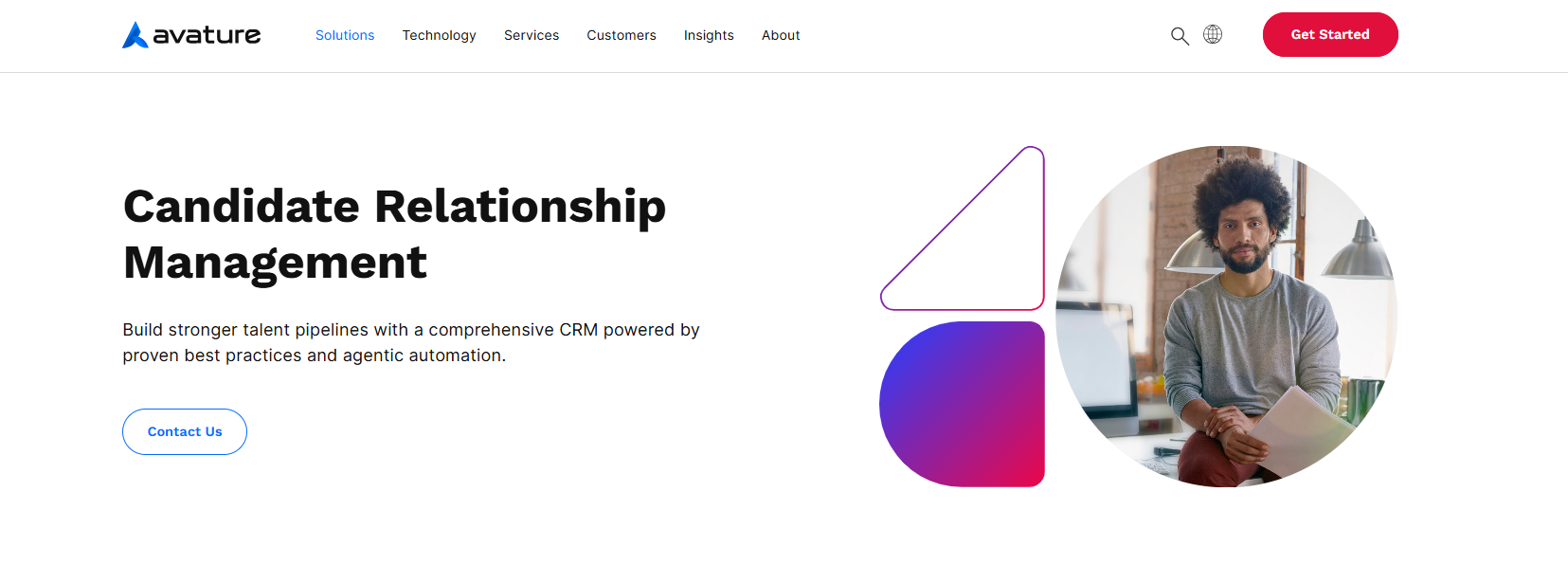
Avature includes sourcing tools that identify prospects through external job boards and existing recruitment records.
Its LinkedIn CRM Connect integration synchronizes information between LinkedIn Recruiter and Avature, while AI-powered matching identifies candidates for available positions.
It records candidate interaction history so you can review previous conversations before contacting someone again. Its CRM dashboards also track candidate engagement, talent availability, sourcing performance, and recruitment pipeline activity.
The Recruitment Marketer Agent supports audience segmentation and personalized campaign content, while Recruiter Agents summarize candidate records and identify prospects within existing talent pools.
AI Candidate Screening and Chatbot Engagement
AI candidate screening and chatbot software supports initial applicant conversations, qualification checks, and recruitment inquiries.
7. Paradox
Paradox is a conversational recruiting platform built around its AI assistant, Olivia. It handles candidate inquiries, initial screening, and interview coordination throughout the hiring process.
Candidates can start conversations through career sites, QR codes, or text-to-apply keywords. Olivia collects applicant information and asks screening questions based on the requirements set for each position.
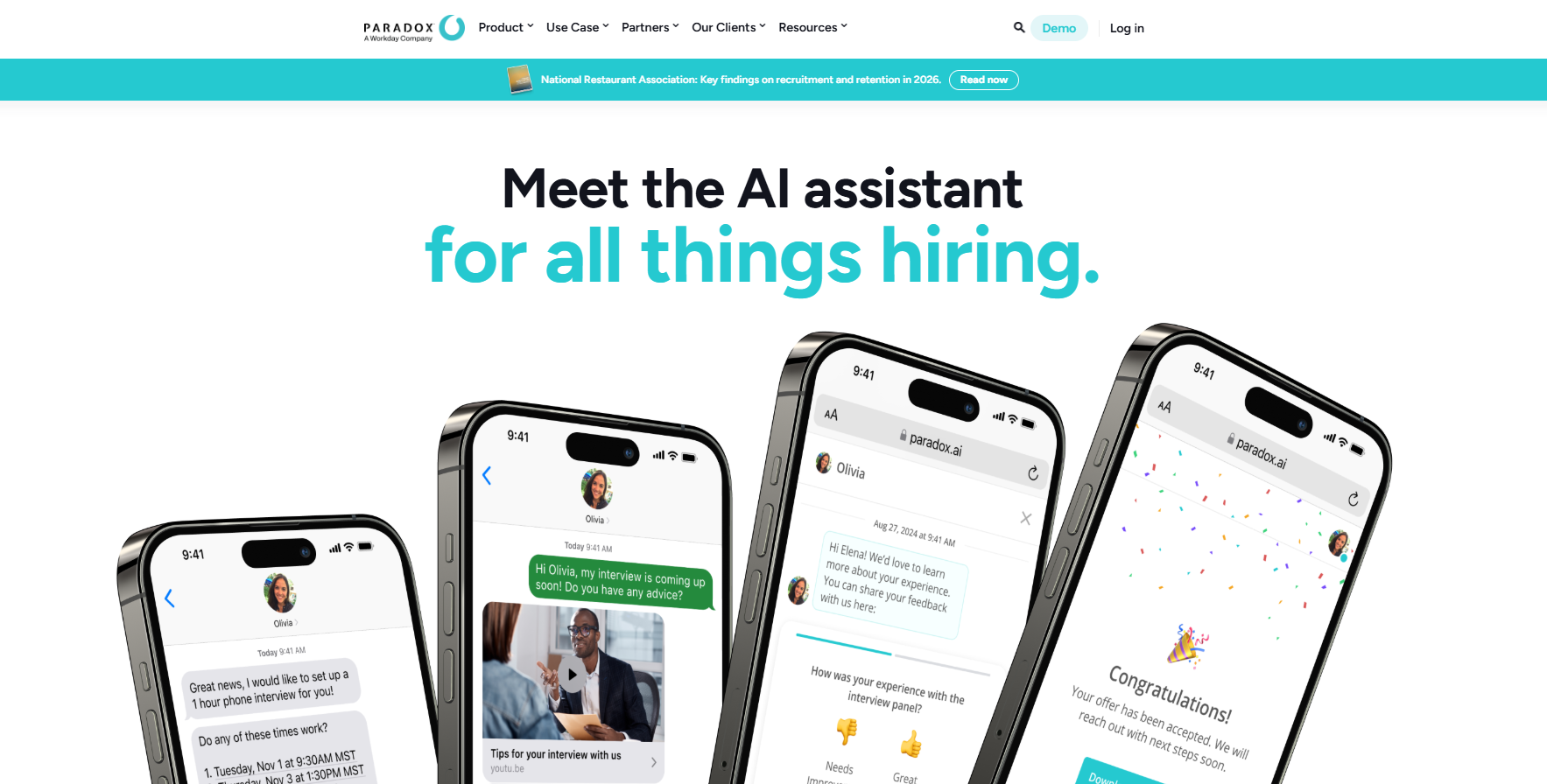
The chatbot evaluates responses against those requirements to identify a qualified candidate. It can then schedule an interview, recommend other available positions, or notify applicants who do not meet the criteria.
Paradox also offers a Candidate Experience Agent that answers recruitment questions, provides status updates, and supports interview rescheduling. You configure its responses and workflows, including when conversations require a person to step in.
The platform connects with existing recruitment systems through supported integrations, APIs, and webhooks. Candidate information and application progress stay synchronized with the employer's existing recruitment software.
8. Humanly
Humanly is an AI recruiting platform that supports candidate engagement, screening, and interview coordination. Its AI Recruiter communicates with applicants through chat, SMS, and voice to answer questions and collect initial qualifications.
You may configure screening questions and knockout criteria based on specific position requirements. The chatbot evaluates responses against these conditions and advances candidates who meet the selected qualifications.
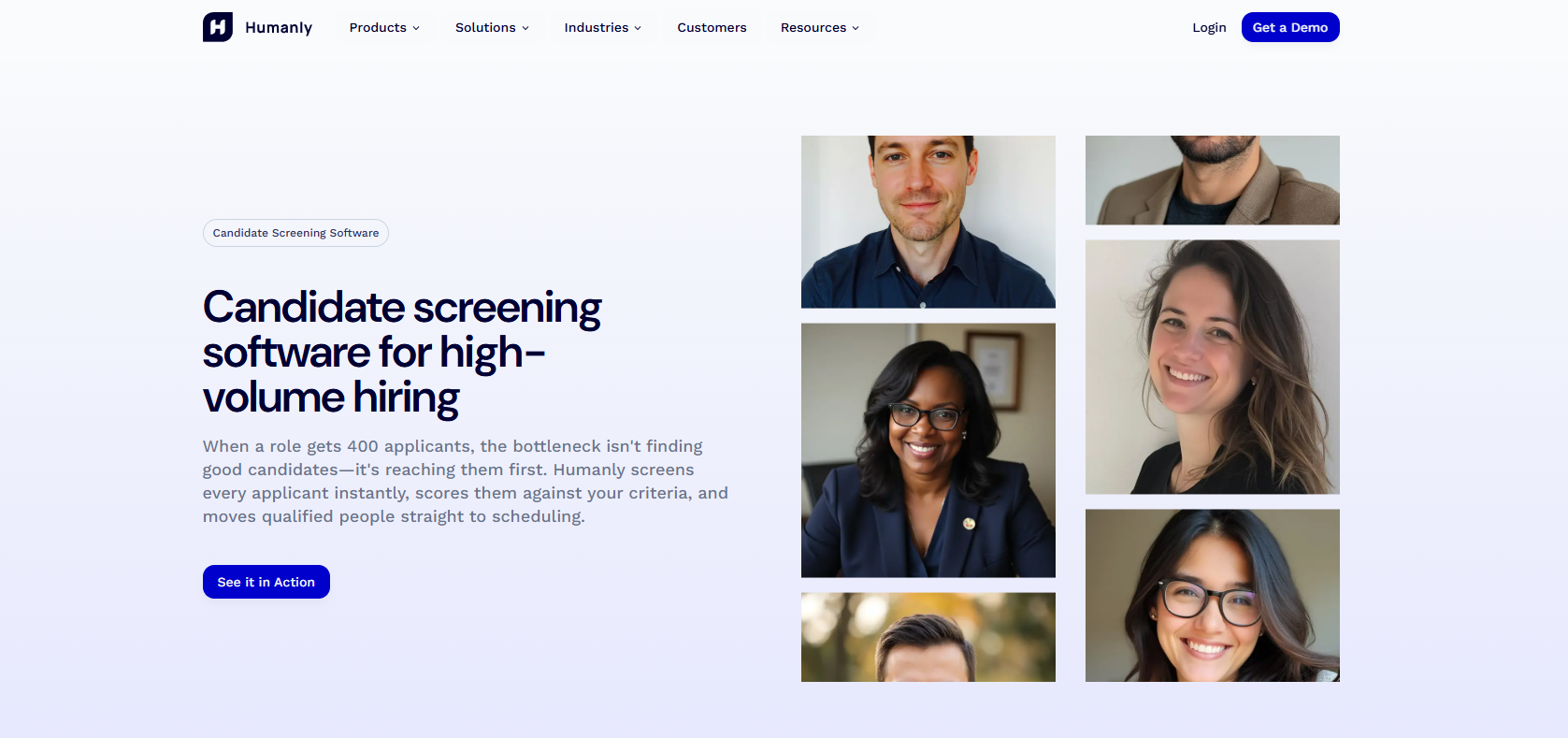
Humanly also provides an AI Interviewer that conducts structured interviews through chat, voice, or video. It captures candidate responses, applies scoring models, and generates interview scorecards for hiring teams to review.
The platform connects with recruiter calendars to schedule interviews after candidates complete screening. Its automation handles repetitive tasks such as interview booking, follow-ups, and candidate reminders.
You can review screening results and take over conversations when human interaction is required. Humanly also integrates with existing recruitment systems or provides its own ATS and CRM for candidate records and workflow management.
9. XOR
XOR is an AI recruiting platform that uses chatbots to automate candidate screening and initial recruitment conversations. Its conversational tools collect applicant information, assess qualifications, and coordinate interview bookings.
It helps you create screening questions for each position and assign scores to the required answers. XOR evaluates candidate responses against these criteria to determine which applicants qualify for the next recruitment stage.
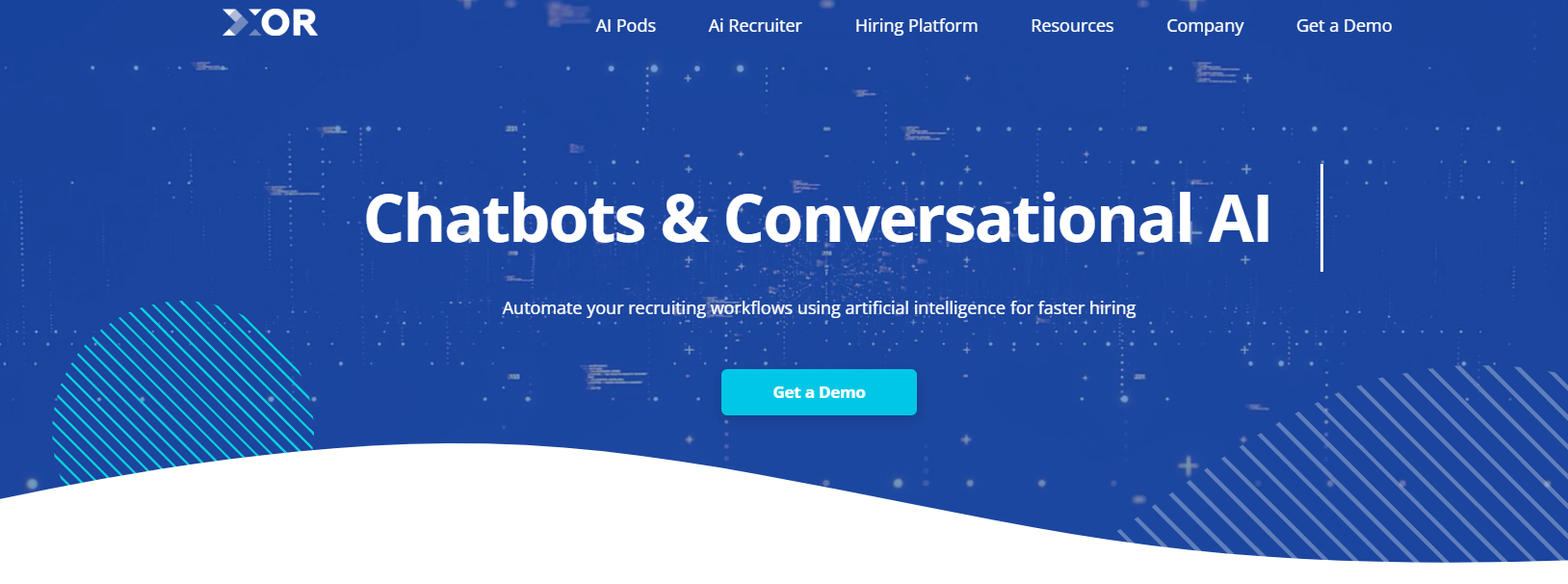
The chatbots support inbound applications from career sites and job postings, as well as outbound recruitment campaigns. Candidates complete screening through conversational workflows delivered via text messaging, email, or WhatsApp.
Applicants who meet the screening requirements can select interview times based on recruiter availability. XOR connects with Google Calendar and Outlook and sends automated reminders through text or email before scheduled interviews.
The platform also tracks candidate conversations, screening responses, and recruitment activity. It reviews screening reports, manages replies, and adjusts qualification questions for different positions.
Interview Scheduling and Candidate Coordination
Interview scheduling software coordinates candidate availability, interview bookings, and communication between recruiters and interviewers.
10. GoodTime
GoodTime is an interview scheduling platform that supports individual interviews, panel sessions, and multi-day interview schedules.
The platform uses its AI agent, Cori, to schedule interviews and resolve calendar conflicts. When you assemble interview panels, it considers interviewer skills, availability, workload, and training status, and supports replacements when interviewers cancel.
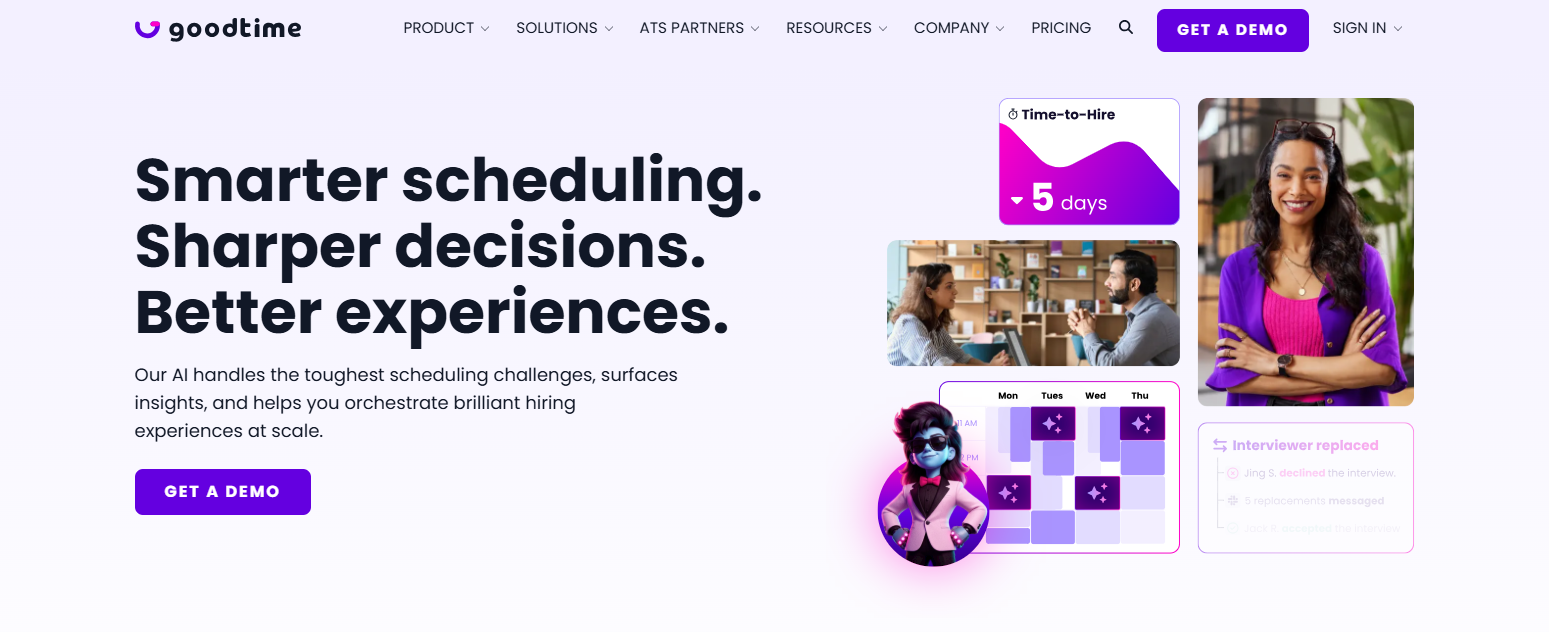
Candidates can select or change interview times through branded scheduling pages. You also have access to a candidate portal with interview details, interviewer profiles, and preparation resources to keep candidates informed before their scheduled sessions.
GoodTime supports interview communication through SMS, WhatsApp, and email. You can send personalized invitations, reminders, and scheduling requests, while candidates can confirm or reschedule interviews through supported channels.
The platform integrates with recruitment systems. Its reporting tools provide valuable insights into your scheduling activity, interviewer workloads, and areas where interview coordination takes more time.
11. ModernLoop
ModernLoop is an interview scheduling platform that allows you to manage candidate interviews and coordinate interviewer availability.
Its Zero Click Scheduling feature automates scheduling requests and candidate communication when applicants advance to new recruitment stages.
The software integrates with Google Calendar and Microsoft Outlook to check availability and prevent double bookings. You can maintain interviewer profiles with working hours, time zones, departments, and training levels to support interview assignments.
You can create interview panels, assign interviewers, and schedule shadow sessions for interviewer training. Its scheduling queues organize incoming requests and reduce manual tasks associated with interview coordination.
ModernLoop supports candidate self-scheduling through booking links and a dedicated candidate portal. It sends Slack notifications to interviewers and supports rescheduling when availability changes.
12. Cronofy
Cronofy is an interview scheduling platform that connects recruiter and interviewer calendars to coordinate bookings.
The platform supports individual, group, and panel interviews with real-time calendar availability checks. You may schedule on behalf of hiring managers, assign interviewers from selected pools, and coordinate participants in different time zones.
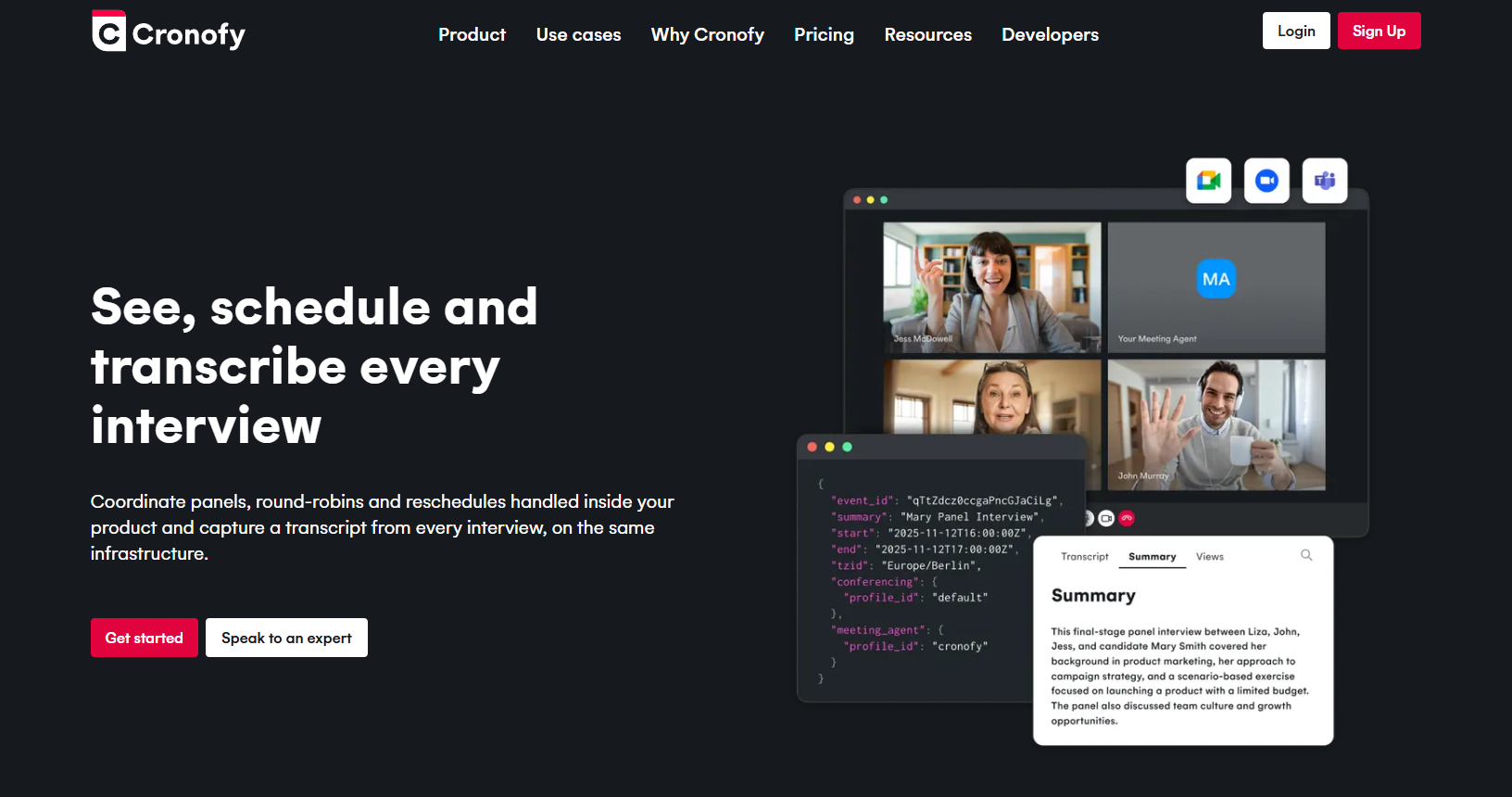
Cronofy provides reusable scheduling templates for interview types, participant requirements, and booking preferences. You can also arrange multiple interview sessions through a single scheduling link instead of asking candidates to book each session separately.
It updates connected calendars when interviews are booked, canceled, or rescheduled. You can configure working hours, notice periods, and availability rules to reduce back-and-forth.
Cronofy integrates with Google Calendar, Microsoft 365, Exchange, and supported recruitment systems. Its embedded scheduling capabilities also allow you to manage interview bookings within compatible recruiting software.
Recruitment Marketing and Talent Community Engagement
Recruitment marketing software allows you to promote job opportunities, introduce your organization to job seekers, and maintain relationships with interested prospects.
13. Phenom
Phenom is a recruitment marketing platform that combines career sites, candidate relationship management, and automated campaigns.
Its career site software includes talent community forms that capture information from visitors who have not applied for a position. These contacts enter your talent CRM, where you can organize potential candidates by skills, job titles, and hiring status.
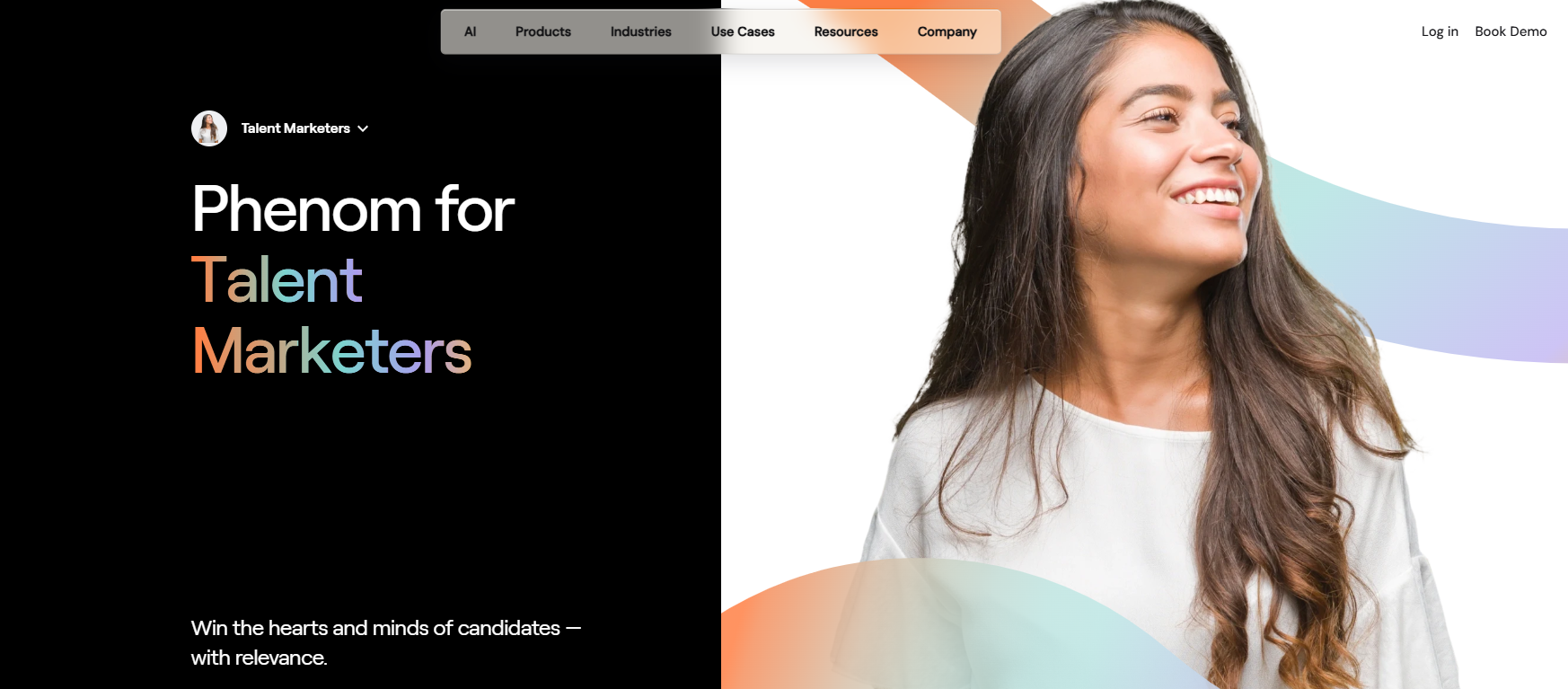
Phenom Campaigns supports personalized emails, automated drip campaigns, and SMS communication. You can use these features to share new job openings, recruitment events, and company updates with selected candidate groups.
The platform also connects recruitment event registrations and career site leads with your talent pipelines. Its CRM includes dynamic candidate lists that update as profile information changes, allowing you to adjust campaign audiences based on current candidate records.
Phenom provides campaign analytics that track email opens, clicks, and application conversions. It reviews which recruitment channels and campaign content attract interest and encourage candidates to apply.
14. iCIMS
iCIMS provides recruitment marketing capabilities through its Engage and Employer Branding products. You maintain talent communities, build candidate nurture campaigns, and create career sites that introduce job seekers to your organization.
Its career site software supports branded landing pages, employee-generated videos, and AI-powered job recommendations. Visitors also have the option to join talent communities and receive alerts about positions that match their career interests.
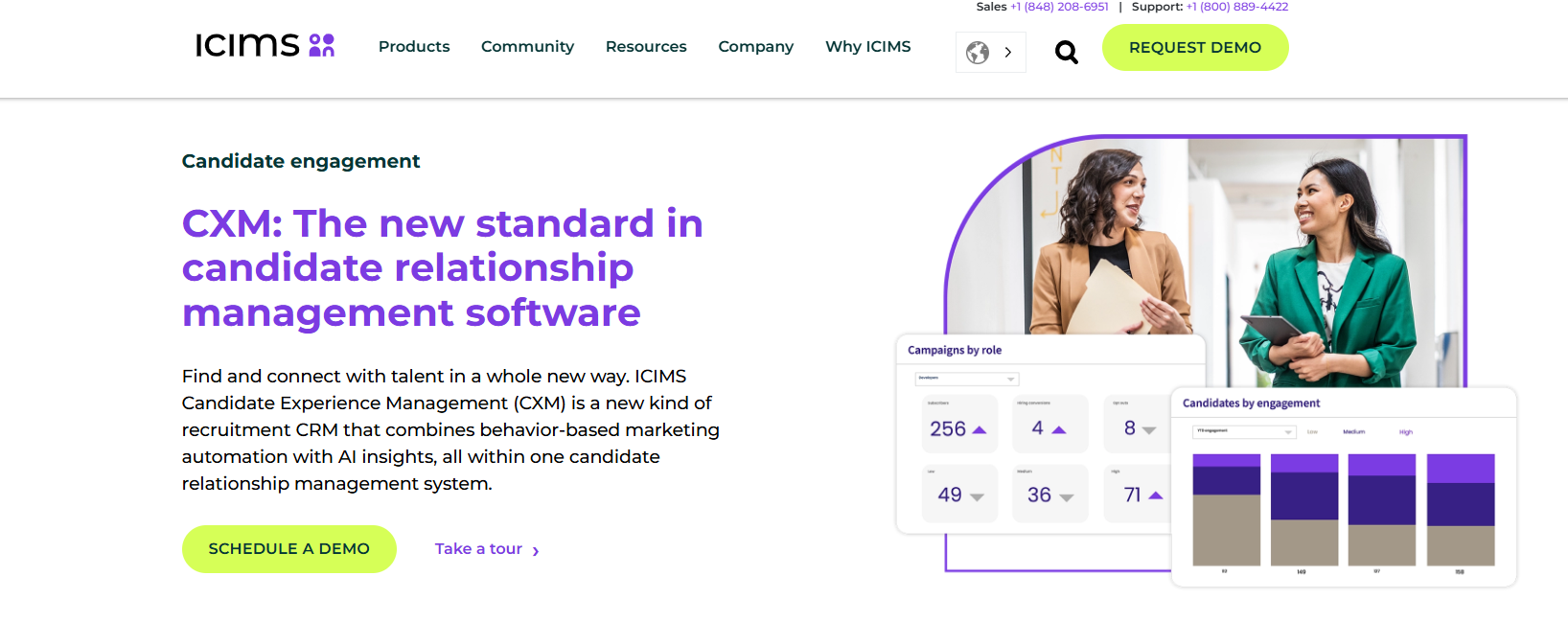
iCIMS Engage organizes prospects based on candidate profiles and engagement activity. Its email and SMS campaigns support consistent communication with people interested in future employment opportunities.
Recruitment campaigns use candidate behavior to determine subsequent messages and follow-ups. Talent rediscovery features also allow you to reconnect with previous applicants whose qualifications match current openings.
iCIMS provides reporting tools for campaign engagement, recruitment sources, and candidate activity. These reports allow you to compare recruitment channels and evaluate how your campaigns contribute to applications.
15. Symphony Talent
Symphony Talent provides recruitment marketing software through its SFX CRM, career sites, and programmatic advertising tools.
SFX CRM organizes candidate groups based on skills, work experience, location, and career interests. From these groups, you can create targeted campaigns with automated job alerts, follow-ups, and recruitment updates.
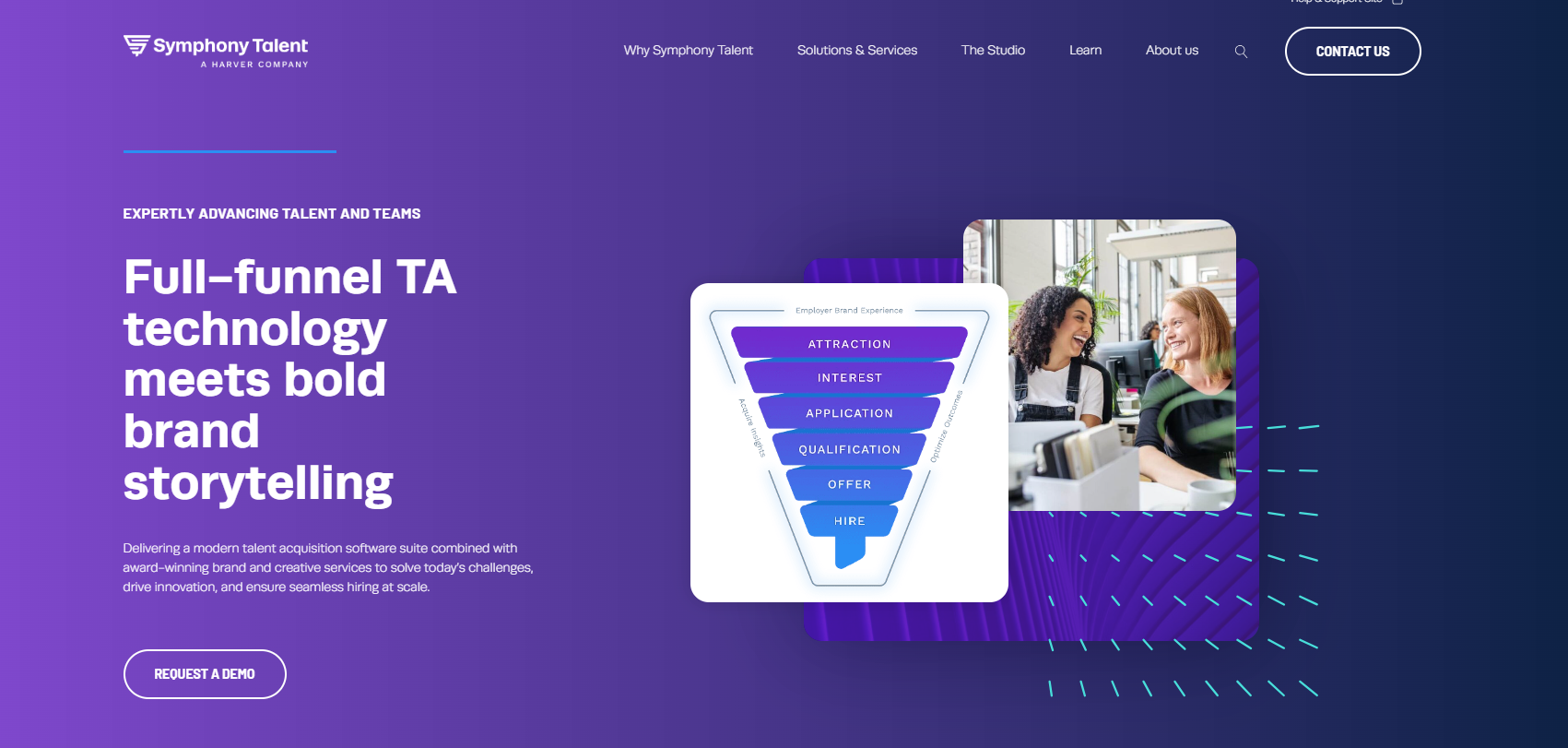
The platform also includes a GenAI Email Builder powered by Tala, its AI assistant. It generates email drafts based on your organization's brand guidelines, existing content, and approved messaging requirements.
Symphony Talent supports job distribution through programmatic recruitment advertising. Its advertising tools recommend recruitment channels and adjust campaign budgets based on the goals you select.
Reporting dashboards display recruitment campaign performance, candidate pipeline activity, and advertising results. It compares recruitment sources, reviews candidate engagement, and assesses how different campaigns contribute to applications.
Candidate Feedback and Experience Measurement
Candidate feedback software allows you to understand how applicants experience different stages of recruitment and identify areas that need improvement.
16. Survale
Survale is a candidate experience feedback platform designed for talent acquisition teams. It connects with your ATS to send surveys after applications, interviews, offers, and hiring decisions.
Its surveys reach candidates through SMS or email and include your organization's branding. Each response is linked to recruitment data such as job title, recruiter, hiring manager, location, and application source.
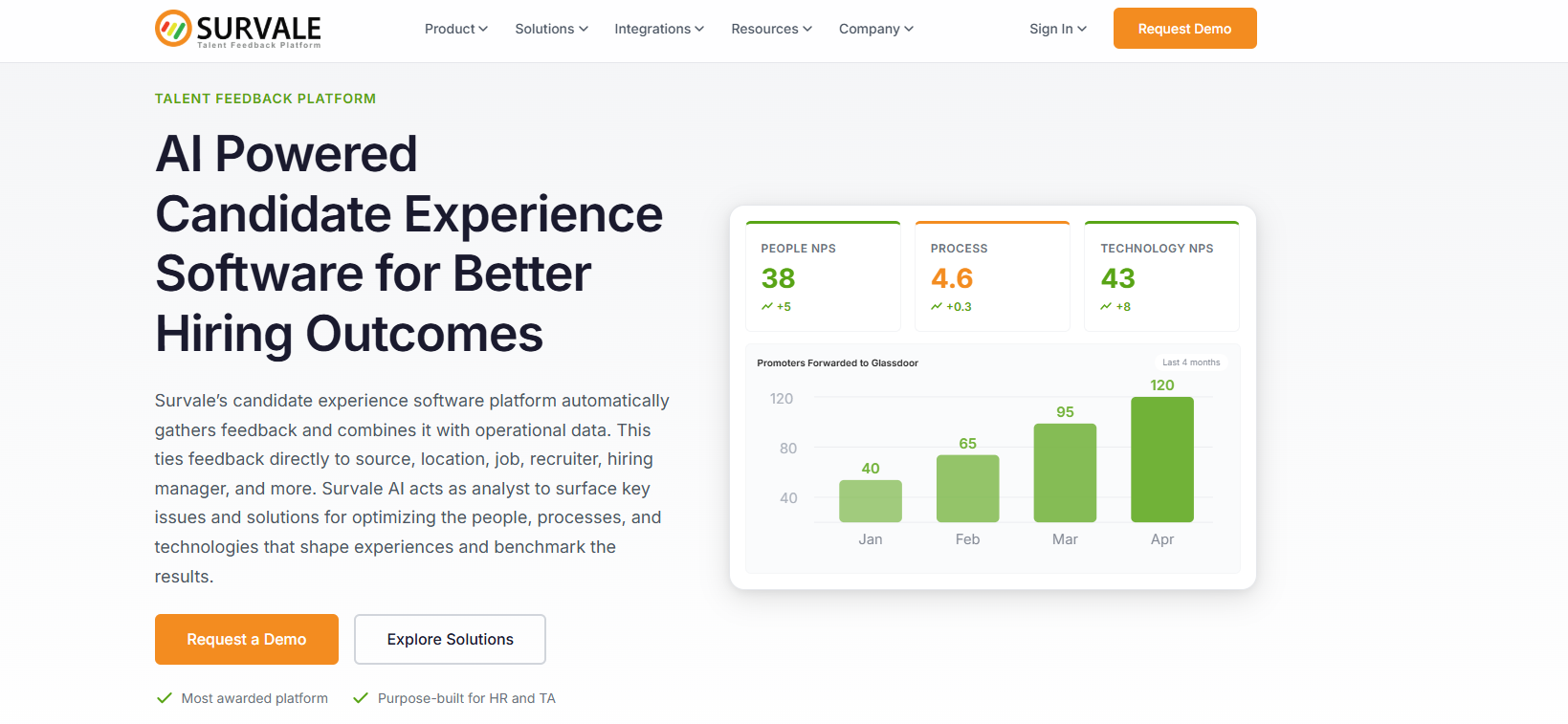
Survale provides dashboards that let you filter feedback by recruitment stage, department, or individual recruiter. These reports identify where candidates report problems and what may contribute to drop-off during the recruitment process.
The platform also uses AI to analyze written feedback and identify common concerns. Its reporting features compare your results with industry benchmarks and track changes in candidate satisfaction over time.
SurvalePromote directs satisfied candidates to employer review sites such as Glassdoor. Separate reporting tools help you compare recruiter performance and feedback between locations.
17. Starred
Starred is a candidate experience measurement platform that collects feedback throughout the hiring funnel. Its surveys cover career site visits, applications, phone screenings, assessments, interviews, hiring decisions, and onboarding.
The software provides customizable surveys with branded designs, questions, and ready-made templates. You can measure candidate satisfaction through ratings, written responses, and Candidate Net Promoter Score (cNPS).
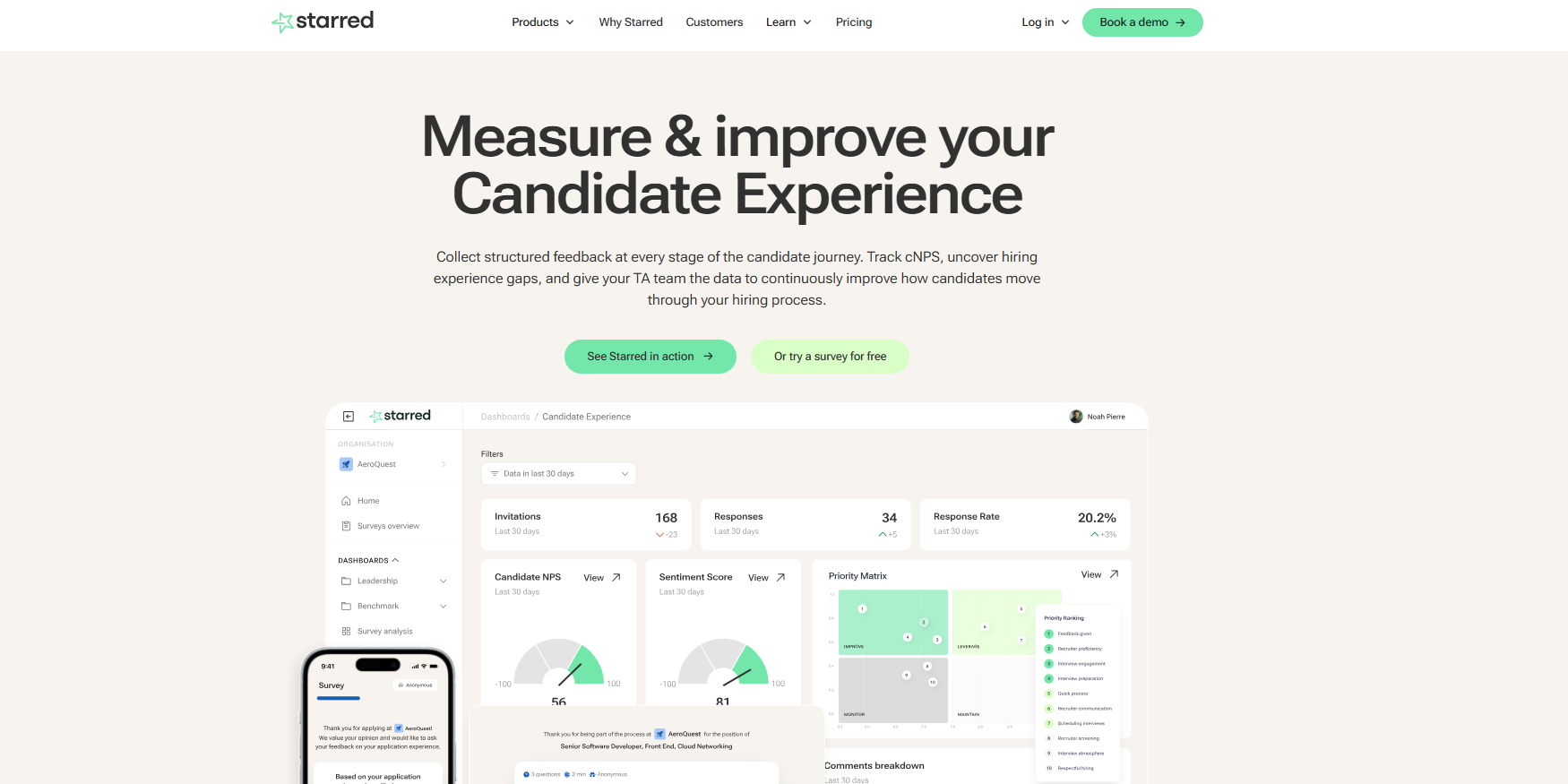
Starred Connect integrates with recruitment systems such as Greenhouse, Lever, Workday, and SmartRecruiters. Surveys are sent based on candidate status changes, with options to configure delivery timing, conditions, and recipient groups.
Its AI-powered reporting groups written responses by theme and identifies positive or negative sentiment. The Priority Matrix ranks issues based on their impact, so you can decide which parts of the hiring experience require attention.
Starred also provides benchmarking tools that compare candidate satisfaction scores by industry, region, and company size.
18. Trustcruit
Trustcruit is a candidate feedback platform that measures satisfaction at different recruitment stages. It provides surveys for applications, interviews, rejections, onboarding, and recruiter or hiring manager feedback.
The software connects with your ATS to send survey invitations when candidates reach specific stages. Its survey library includes Candidate Net Promoter Score questions, with options to customize questions, email content, and branding.
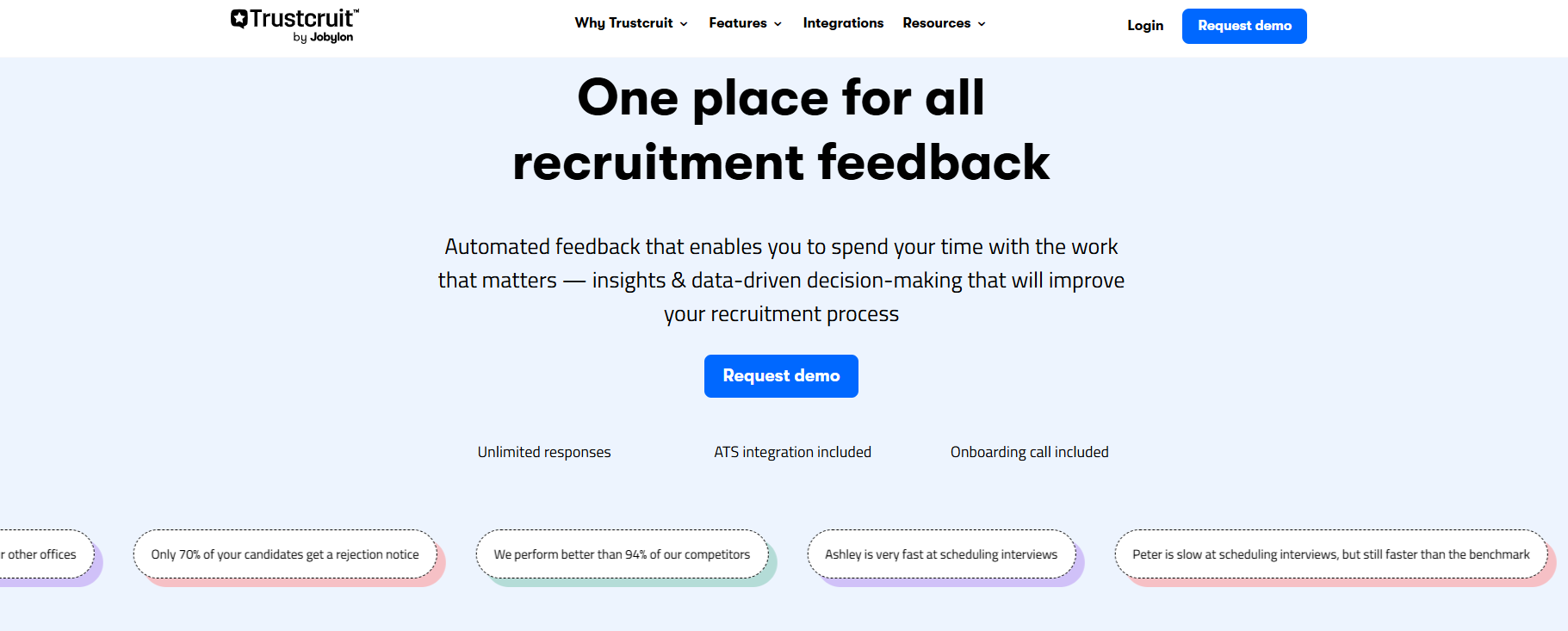
Trustcruit provides dashboards that organize feedback by recruiter, department, location, and recruitment stage.
Its advanced analytics features include performance comparisons, AI-assisted feedback analysis, and benchmarking against its candidate experience database.
The platform also supports scheduled email reports and notifications when candidates submit negative feedback. You can follow up on reported concerns or direct satisfied respondents to share their experiences through online reviews.
How to Choose the Best Candidate Engagement Software
The right software depends on your hiring needs, recruitment volume, and how you communicate with candidates. Here are the main factors to consider when comparing candidate engagement tools:
Identify Your Candidate Engagement Challenges
Candidate communication problems often show up through unanswered messages, low response rates, and missed interviews. These issues put you at risk of losing top talent and increasing your time to hire.
A review of your recent recruitment activities can reveal where candidates lose interest or stop responding. Your priority is software that addresses these specific challenges rather than a long list of features you may never use.
Match the Platform to Your Recruitment Needs
Your recruitment process and hiring volume determine which type of software suits your operations.
Staffing agencies may prioritize candidate texting, while corporate HR teams require broader talent management capabilities.
Smaller recruitment businesses may only need messaging and follow-up tools instead of a complete recruiting suite. The right choice depends on your team size, recruitment volume, and the activities you need to manage.
Compare Candidate Communication Channels
Candidates have different communication preferences, so your software needs to support the channels they use.
Text marketing can promote job opportunities, while two-way SMS suits quick updates and interview reminders. Email provides more space for detailed instructions or a job description.
Two-way communication also allows candidates to ask questions and respond without contacting several people. Your chosen platform needs to support personalized messages and follow-ups through the channels your applicants prefer.
Review ATS and CRM Compatibility
Your engagement software needs to connect with your existing ATS and CRM to maintain accurate candidate records.
If your current recruitment automation software handles resume parsing and incoming candidates, those details need to remain accessible when you contact applicants.
Integration capabilities also determine whether message histories, candidate details, and recruitment updates stay synchronized. Additional fees, setup requirements, and data synchronization limits are worth reviewing before you commit.
Evaluate Automation and Recruiter Control
Automation reduces repetitive communication throughout the recruiting process, from initial contact to interview reminders.
Features such as campaign scheduling, follow-up sequences, and candidate segmentation can simplify hiring without removing personal conversations.
Your recruiters still need control over message timing, recipient lists, and automated responses. A platform that pauses sequences when candidates reply prevents unnecessary messages and allows your team to take over the conversation.
Check Security, Consent, and Compliance Features
Candidate records contain personal information, which makes data protection and access controls an important part of software selection.
Consent tracking, opt-out options, and message suppression features also support responsible candidate communication.
Regional SMS requirements and privacy regulations may affect how you contact applicants. Your software provider needs to explain its security measures, compliance controls, and any responsibilities that remain with your organization.
Compare Software Pricing and Total Costs
The monthly subscription is only one part of what you will pay for candidate engagement software. Per-user fees, SMS charges, implementation costs, and paid add-ons can increase your total expenses.
Recruitment volume and expected message usage influence which pricing model fits your budget. A comparison of the total costs and included key features will show what each platform offers for your investment.
Keep Candidates Interested and Conversations Active With TextUs
Candidates have options, and long gaps between updates give them more reasons to look elsewhere. The risk of losing candidates grows when follow-ups get overlooked, questions go unanswered, or conversations go quiet.
With TextUs, keeping candidates engaged goes beyond occasional check-ins. Personalized campaigns, two-way messaging, and automated sequences allow you to reach applicants at different hiring stages.
Its shared inbox, ATS integrations, and Smart Delivery features also support candidate communication. Your recruiters focus on building relationships and connecting with people who are ready for the next step.
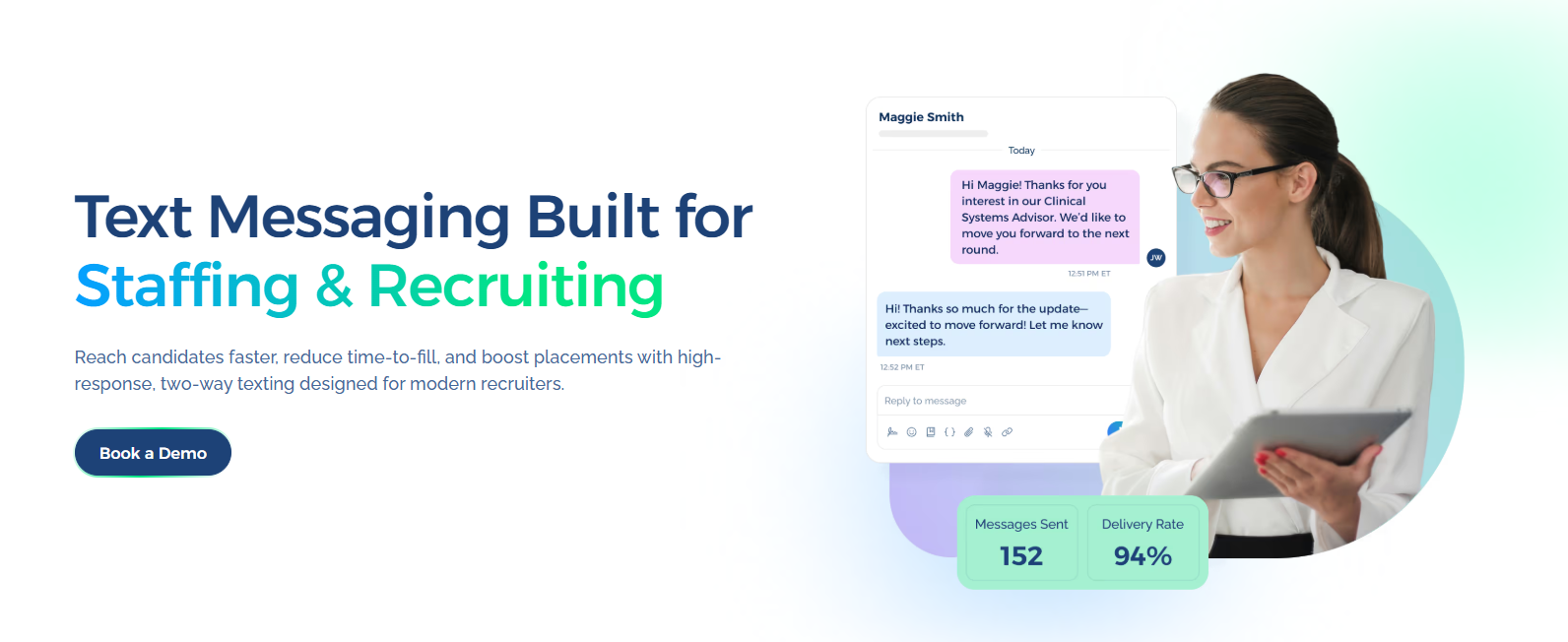
Don't let a missed conversation become a missed hire. Book a demo with TextUs today and see how it turns initial interest into successful placements!
FAQs About Candidate Engagement Software
What is the best employee engagement software?
Culture Amp, Lattice, and Workday Peakon Employee Voice are employee engagement platforms that offer surveys, feedback analysis, and reporting.
These tools focus on employee satisfaction and workplace experience, while candidate engagement software supports communication with job applicants.
What are the top 5 ATS systems?
Five popular ATS platforms are Greenhouse, Lever, iCIMS, Workday Recruiting, and SmartRecruiters.
Their features differ in resume screening, interview management, recruitment automation, and integrations, so the right choice depends on your hiring requirements.
What is an ATS vs CRM?
An ATS manages job applications, candidate evaluations, and hiring decisions, while a recruitment CRM focuses on building relationships with prospective and previous candidates.
Both systems manage candidate data, but CRMs place greater emphasis on talent nurturing and ongoing communication.
Does Workday use ATS?
Yes, Workday offers an applicant tracking solution called Workday Recruiting. It supports recruiting workflows, including job applications, candidate screening, interview coordination, and offer management.
Continue Reading



Frequently Asked Questions
Business Texting
Built for Results
Create and convert pipeline at scale through industry leading SMS software