
How to Increase Response Rates: 12 Top Strategies
Learn how to increase response rates and explore 12 top strategies to do it. Discover how TextUs can help you improve your response rates.

Written by
Adam Hamdan
Published
April 7, 2026

You can send hundreds of messages or run surveys. But without responses from customers, there's no real engagement.
Low response rates do not always signal a lack of interest. More often, they reveal gaps in how messages are delivered, structured, or timed.
Every message competes for attention. People decide within seconds whether to engage, ignore, or respond later. That decision is shaped by relevance and how easy it is to take action.
In this article, you'll learn the challenges in improving response rates and how you can optimize your messaging to drive more replies.
TL;DR
- Low engagement comes from poor message structure, lack of relevance, wrong timing or channel, and survey fatigue that reduces motivation to respond.
- You can increase your response rates by combining SMS visibility, planned follow-ups, proper timing, channel alignment, personalization, clear calls to action, prioritizing data quality, using direct links, adding personal touches, matching audience language, improving message visuals, and continuous campaign testing.
- TextUs turns messaging into a high-response system with real-time SMS, automated follow-ups, and keyword-driven workflow.
Why Most Businesses Struggle to Improve Response Rates?
Many businesses invest time in outreach but still see low engagement. Messages get ignored, surveys remain incomplete, and response rates stay low.
One of the main reasons is message structure. When someone has to spend too much time reading or figuring out what to do next, they're less likely to respond.
Attention spans are limited, especially on mobile devices. At the same time, people are exposed to a high volume of messages and surveys in daily life.
This leads to survey fatigue, where respondents lose interest, become less motivated, and stop engaging.
People respond when they see a reason to. If a message or survey invitation doesn’t explain why it matters, it's easy to ignore.
Timing and channel choice are also key factors in ensuring your surveys yield meaningful insights. A good message can still fail if it arrives at the wrong time or through a channel the recipient does not check.
Finally, trust and relevance bring everything together. Survey respondents respond more when a message feels personal and connects to their situation.
12 Ways to Increase Response Rates and Maximize Engagement
Sending more messages is not enough. Success comes from using strategies that align with how people read, engage, and respond.
Here are 12 proven ways to help you generate more responses and improve customer interaction.
1. Use SMS for Immediate Visibility
Messages that are easy to access and require little effort to read tend to get more responses. This is why SMS marketing consistently delivers higher response rates than other marketing channels.
SMS removes many of the common barriers found in email, such as low email deliverability and spammed inboxes. Not everyone checks email consistently, but text messages are far more likely to be seen shortly after delivery.
SMS also performs well across different business scenarios. Sales teams can re-engage cold leads and move conversations forward faster. Customer experience (CX) teams can provide real-time updates that improve customer experience and support a broader survey initiative.
Sending surveys through SMS can also improve the experience. It's easier for respondents to access them on mobile devices and complete the survey.
TextUs is an SMS marketing platform designed to drive customer engagement and boost conversion rates.
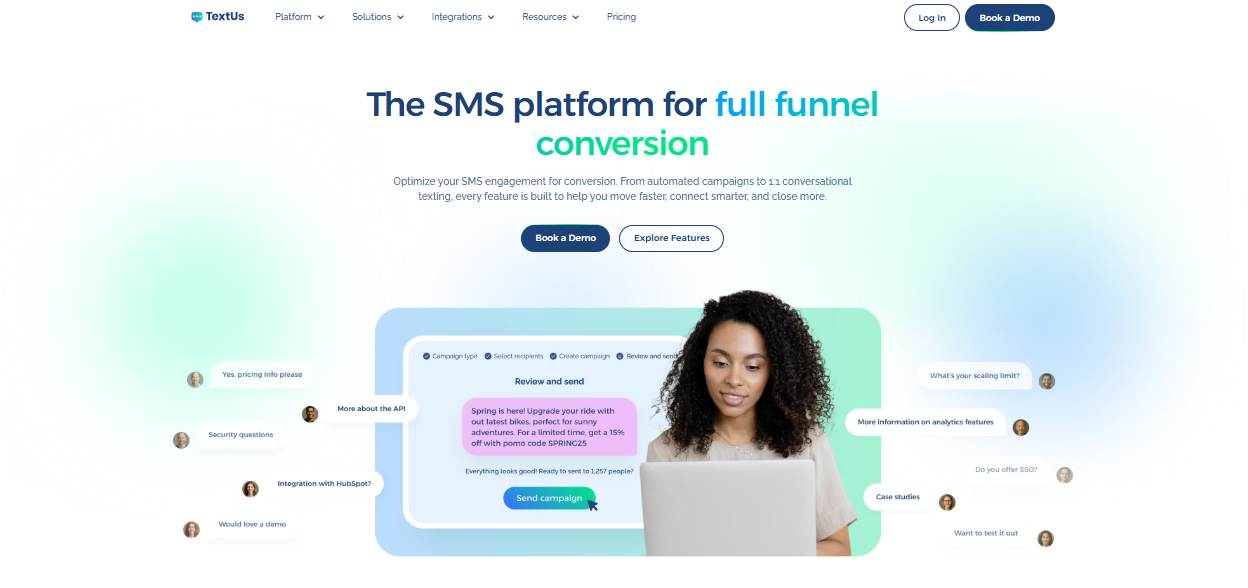
Using SMS keywords, you can capture intent and start conversations instantly. These can be used for lead capture, event registrations, text-to-vote campaigns, job applications, and product interest surveys.
If your goal is to increase response rates and create faster engagement, SMS should be a key part of your marketing strategy.
Book a demo with TextUs and see how SMS can improve your communication results!
2. Follow Up With a Plan
A strong follow-up approach should feel natural rather than sounding repetitive.
For example, you can restate the purpose, highlight the time commitment, or explain how the feedback contributes to valuable insights.
Spacing matters just as much as the message itself. Survey questions sent too close together can feel excessive, while long gaps can cause people to forget.
A timed sequence keeps your outreach visible without creating fatigue. SMS drip campaigns are useful here because they allow you to stay consistent while giving recipients space to respond.
Using texting software like TextUs helps turn follow-ups into guided conversations. Instead of sending identical messages to everyone, replies can trigger different paths.
From simple polls to lead qualification and ongoing follow-ups, contacts can move into the next step based on their response. Keyword-based replies make it possible to gather information, support survey communications, and continue the conversation.
3. Send Messages at the Right Time
A message sent at the wrong moment can be overlooked, regardless of how well it is written. During busy periods, messages compete with other priorities and are easy to overlook.
Messages sent closer to the actual interaction can positively influence response rates and improve your survey results.
Another approach is to identify patterns in reply behavior. Look at when responses typically come in and choose the best time to send your messages to match those windows.
4. Match Your Channel to Your Audience
Even a strong message can lead to lower response rates if it is sent through a channel your audience does not use or trust.
Different audiences have different communication habits. Some rely on email marketing, while others respond faster through mobile marketing communication.
A strong match between your communication tool and target audience encourages stronger participant engagement and supports better survey research outcomes.
SMS also allows you to deliver survey incentives within the message. A short text with rewards can encourage participation and acknowledge the effort that the respondents invest.
5. Personalize Every Message
Personalization increases the chances of getting a response because it signals relevance right away.
Context strengthens that connection. Referencing a recent interaction, a specific action, or a known challenge shows that the message was not sent to everyone.
SMS marketing software makes it easier to manage personalization. SMS segmentation allows you to group contacts based on where they are in their journey.
New leads, active contacts, and inactive users should each receive a different message. This keeps communication aligned with their situation and improves engagement.
Questions that reflect the participant’s experience and follow a logical flow also keep people engaged and reduce drop-off.
A simple, time-efficient format makes it easier for participants to complete the process, leading to more completed surveys.
6. Use a Specific Call to Action
Even if someone reads your message, they may not respond if they are unsure what to do next.
Instead of asking for several things at once, guide the recipient toward a single action such as replying, confirming, or selecting an option.
Short, clear instructions work better than vague language. For example, asking “Can you confirm your availability for tomorrow at 2 PM?” is more effective than “Let me know what works for you.”
Framing also affects how people respond. Questions tend to perform better because they invite a quick reply.
One of the most effective formats is a simple yes-or-no question. It requires little effort to answer and removes the need for long replies.
7. Prioritize Data Quality Over Response Volume
A higher number of responses does not always mean better outcomes if the answers lack depth or accuracy.
The best strategy is to focus on how responses are collected, not just how many you receive. When the experience is intentional, participants are more likely to provide thoughtful answers.
Another approach is to refine who you follow up with. Instead of continuing outreach to everyone, focus on participants who show genuine engagement.
8. Add Direct Links Within Your Messages
When a message requires searching or navigating elsewhere, engagement drops. A link placed directly in the message allows the reader to act immediately.
A link should feel like a natural next step within the message, not something added at the end without context. When paired with a simple instruction, the customer understands what action to take.
When you're texting, your campaigns can include SMS URLs that include a direct link to applications, booking pages, event registrations, or product details. This allows you to keep messages brief while still encouraging participation.
9. Address Customers Using Their First Name
Using a customer’s first name signals that the message is meant for them, not part of a mass send. This tiny detail can influence how the message is received and increase the chances of a response.
A well-designed survey should reflect the customer's first name at the beginning. It immediately captures attention and adds a human touch.
For example, starting with “Hi John,” or “Maria, quick question for you” sets a conversational tone right away and makes the message feel like it came from a real person.
The name should also connect to the purpose of the message. For example, “Hi Alex, following up on your application” or “Chris, are you available this afternoon?” keeps the message direct.
10. Use Language That Matches Your Audience
Language that matches your audience supports stronger survey participation.
A message sent to a candidate may sound more conversational, while a message to a client in finance may need a more professional tone.
Familiar terms and simple phrasing make the message easier to process. Industry jargon or overly complex language can slow down understanding and affect your survey responses.
Text abbreviations like “FYI,” “ASAP,” or “LMK” can make messages feel more natural and conversational, especially for audiences that are used to texting.
However, overuse or unclear slang can confuse the reader or come across as unprofessional in certain industries. The choice depends on who you are communicating with and the context of the message.
11. Pay Attention to Message Visuals
Even when the survey content is strong, poor formatting can reduce engagement and lead to missed responses.
Spacing, line breaks, and structure play a critical role in guiding the reader’s attention and make the message more readable.
Start with a short subject line, leave space between ideas, and avoid long survey texts. Keeping your survey short, such as two or three short lines, is more likely to be mobile-friendly.
In texting, visuals can go beyond plain text. MMS messaging allows you to include images, PDFs, and GIFs in your message.
But visuals should support the message rather than replacing it. A short line of text should explain what the recipient is about to see before they open the attachment.
12. Test and Improve Your Messaging
Testing is an essential part of performance-driven marketing. It allows you to base decisions on actual results and strengthen your overall survey process.
Try improving your survey design, rewording the message, or adjusting the survey length. Compare how each version performs based on replies, clicks, or engagement.
Message sequencing can also be tested. Try changing the order in which information is delivered.
In one version, lead with the main ask. In another, start with context before asking for a response.
Feedback from real interactions also provides direction for your future surveys. Pay attention to how people respond, what questions they ask, and where conversations slow down.
Using a performance SMS platform makes this easier because every interaction is measurable. You can see reply timing, response patterns, and engagement across different message types.
Get More Replies and Improve Your Response Rates With TextUs
Every interaction is shaped by human behavior, from how quickly someone scans a message to how they decide whether it is worth responding to.
When your communication aligns with those natural patterns, responses become more consistent and more meaningful.
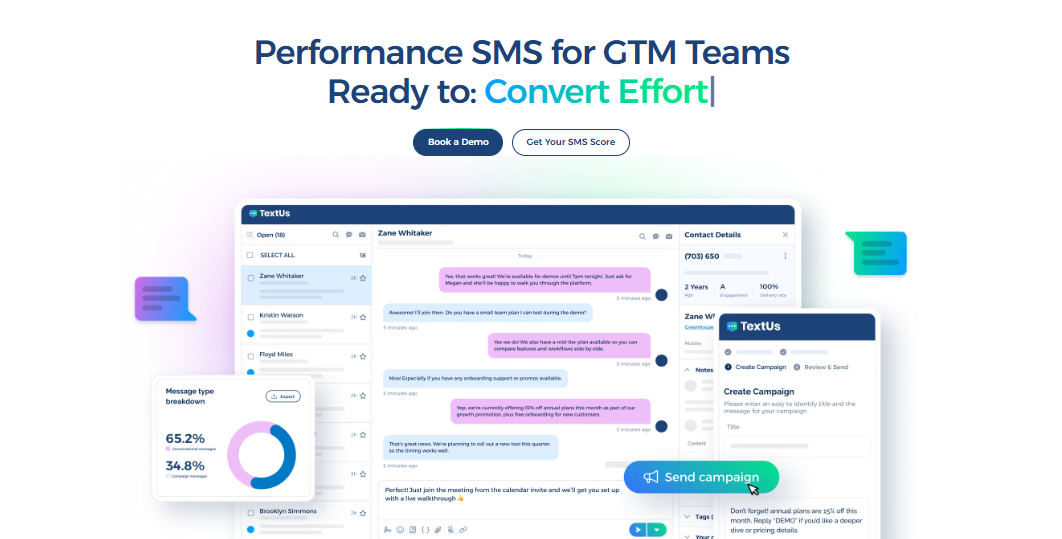
TextUs improves the entire survey experience through fast, two-way texting. You can trigger messages based on actions, automate follow-ups, and route responses into the right workflows.
It lets you capture intent, deliver relevant information, and guide contacts to the next step automatically.
Book a demo with TextUs today and see how SMS marketing can help you increase survey response rates!
Continue Reading



Frequently Asked Questions
What is a good response rate?
A good response rate varies based on the channel and type of outreach. For online and web surveys, SurveyMonkey research shows that the range falls between 10% and 30%.
SMS produces higher engagement due to faster visibility, while email response rates are often lower because of inbox competition. But the most important benchmark is your own campaign performance over time and how consistently it improves.
How can I increase response rates quickly?
Faster improvements come from simplifying your message and reducing effort for the recipient. A short survey with a single question tends to get more replies.
Response rates are inversely correlated with the time and effort required to respond. More steps or added complexity make people less likely to reply.
How many follow-ups should I send?
Responses rarely come from the first message alone. A sequence of 2 to 4 follow-ups spaced over time is a common approach.
Each follow-up should add context or adjust the message slightly to keep it relevant and noticeable.
Business Texting
Built for Results
Create and convert pipeline at scale through industry leading SMS software