
10 Best Bulk SMS Software Solutions in 2026
10 Best Bulk SMS Software Solutions in 2026: 1. TextUs 2. Twilio 3. Infobip 4. Sinch 5. Vonage 6. Bird 7. Telnyx 8. Bandwidth 9. Plivo 10. ClickSend.

Written by
Adam Hamdan
Published
March 27, 2026

As message volume increases, staying organized and responsive becomes more challenging.
The impact shows up in daily operations, where messages are harder to track, and responses are not handled as quickly as they should be.
Teams end up spending more time keeping up with conversations instead of focusing on meaningful engagement.
The right bulk SMS platform makes it easier to handle high message volume while keeping outreach consistent and easier to manage.
In this article, we'll break down the best bulk SMS software options, what features to look for, and how to choose a platform that fits your business needs.
TL;DR
Here are the ten best SMS marketing software solutions designed to handle high-volume messaging in 2026:
- TextUs
- Twilio
- Infobip
- Sinch
- Vonage
- Bird
- Telnyx
- Bandwidth
- Plivo
- ClickSend
Why Should You Use Bulk SMS Software?
One of the biggest challenges in bulk text messaging is managing conversations. Without a proper system, responses get lost, and follow-ups are missed.
Manual sending also affects consistency. Updates, promotions, or reminders are sent at different times, which makes it harder to keep communication predictable.
Over time, this leads to gaps in outreach and missed opportunities to respond.
Messages can also get filtered, blocked, or ignored when sent without proper structure or compliance controls.
Bulk SMS software takes the pressure off managing high message volume. Conversations stay easy to track, outreach runs automatically, and you have a better view of campaign performance.
10 Best Bulk SMS Software Platforms in 2026
There is no single solution that fits every business. Some platforms are built for developers who want full control, while others are designed for teams that need simple tools to launch campaigns quickly.
To help you make the right decision, here are the top SMS marketing platforms to consider:
1. TextUs
Most bulk SMS marketing platforms stop at sending messages. TextUs turns every campaign into a chance to start real conversations and drive action.
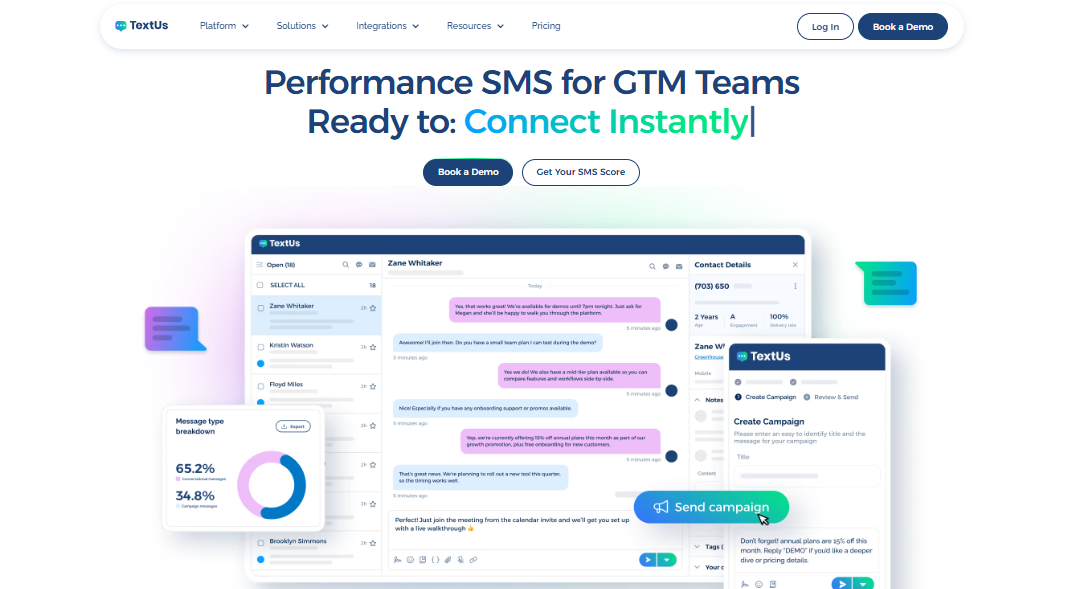
Campaigns inside TextUs are designed to get results, not just deliver messages. You can send bulk text messages, personalize each message using dynamic fields, and run A/B tests to find what drives more replies.
Short clickable URLs with click tracking show how recipients engage, while reporting tools highlight which campaigns perform best. This gives you a view of what drives response and what needs adjustment.
What sets TextUs apart is what happens after you hit send. Replies come straight into a shared inbox where you can respond, assign conversations, and keep everything organized.
Responsive templates and internal notes make it easy to stay consistent, even with high message volume. Instead of one-off campaigns, you are building ongoing conversations that keep people engaged.
Automation also keeps your marketing messages active. Drip campaigns, scheduling, and keyword triggers guide contacts through follow-ups and next steps based on their actions.
With integrations for platforms like Salesforce and HubSpot, all your messaging stays connected to your existing data and workflows.
Finally, Smart Delivery adds an extra layer of control before messages are even sent. It flags risky content, monitors opt-outs, and keeps your contact lists clean so messages have a better chance of reaching the inbox.
Book a demo with TextUs today and turn your bulk SMS into a system that drives responses and builds relationships!
2. Twilio
Twilio is a customer engagement platform built around its Programmable Messaging API. Messages are sent through code instead of a standard campaign interface.
Bulk SMS with Twilio is handled through one API request, which can send SMS messages to large contact lists. It allows sending announcements, reminders, or promotions to many recipients at once.
Twilio provides different number types such as local numbers, toll-free numbers, and short codes, which are used for alerts, notifications, and promotional messages.
It includes delivery tracking and routing through carrier networks, so message status can be monitored after sending.
Beyond bulk text messages, Twilio supports two-way messaging, MMS, and WhatsApp messaging. Message logs and reporting tools are available to review delivery status and identify issues during campaigns.
This SMS marketing service runs on a pay-as-you-go model, where costs depend on usage and message volume.
However, Twilio does not provide a built-in campaign builder or visual workflow tool. Bulk SMS campaigns should be created through API integration, which requires technical knowledge and ongoing maintenance.
3. Infobip
Infobip is an omnichannel platform that provides bulk SMS through its SMS API and Broadcast tools.
The Broadcast feature inside the platform interface lets you upload contact lists, create a message, and launch one-time campaigns without building everything through code.
Message control features include scheduling, sender ID configuration, and message preview. The preview tool shows how the message appears on a mobile device, including character count and how many message parts are required.
Advanced options such as transliteration and validity period are also available through the API, which affect how messages are processed and delivered.
Automation and message handling are supported through API functions and platform workflows. SMS can be sent to multiple recipients, while inbound replies can be received and routed back into your system using push or pull methods.
Global messaging is backed by Infobip’s telecom network, which includes hundreds of direct operator connections.
Messages can be delivered to mobile devices in many countries, supporting use cases such as authentication codes, reminders, notifications, and marketing campaigns.
4. Sinch
Sinch is a cloud communications company that offers bulk SMS through its SMS API and Conversation API.
Batch messaging is supported, so a single API call can deliver messages to a list of phone numbers instead of sending each one separately. Bulk messaging is used for alerts, authentication codes, reminders, and campaigns that need to reach many users at once.
This SMS marketing software includes a batch and scheduling system that controls how messages are sent. A single request can handle up to 1,000 recipients, and delivery time can be set in advance using scheduling parameters.
Each batch is assigned an ID, which allows tracking and management of message groups after sending. Real-time status updates are available so that you can check progress and delivery results through the same system.
Message handling covers both outbound and inbound communication. SMS can be sent and received through one connection, and replies can be routed back into your system.
Messages are routed through direct carrier paths, with uptime backed by service-level agreements and built-in compliance features. The platform also includes AI-based fraud protection that monitors traffic and blocks suspicious activity during message delivery.
5. Vonage
Vonage is a cloud-based communications provider that supports bulk SMS through its SMS API.
The API allows sending high volumes of SMS through one system, with support for both outbound and inbound messaging. Each message includes parameters such as sender ID, recipient number, and message content, all handled through a structured request format.
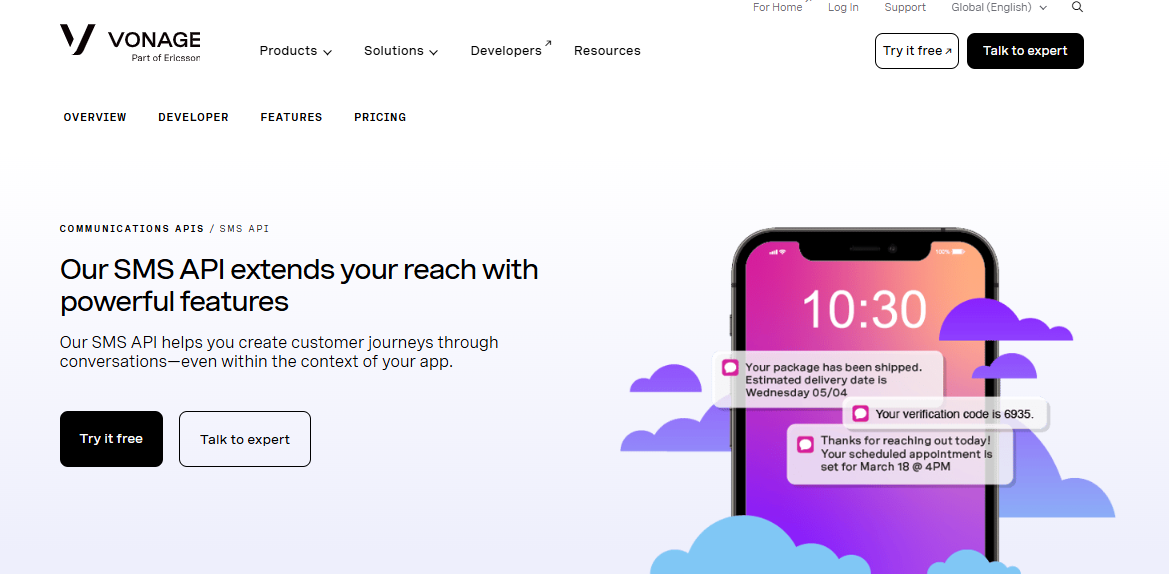
Features like Adaptive Routing reroute messages automatically if a delivery path fails. It also includes Traffic Control that can manage high volumes by controlling how messages are released to carriers.
Long messages are automatically split and reassembled through concatenation, while encoding settings handle Unicode characters when needed. Delivery receipts provide status updates such as delivered, failed, or buffered.
SMS, MMS, WhatsApp, and other channels can be managed through one integration, with shared callbacks that return delivery data such as timestamps, status, and pricing.
Features like SMS opt-out management and compliance tools are included to manage user preferences and messaging rules in different regions.
6. Bird
Bird (formerly MessageBird) is an AI-powered customer relationship management (CRM) and omnichannel communication tool that provides bulk SMS through its dashboard and API.
Group messaging sends the same message to a saved contact list with light personalization. At the same time, bulk messaging uses a file upload system where each row can contain different message content, sender ID, and recipient.
Mass text messages are created by uploading a spreadsheet file, such as CSV or Excel. The file includes fields like recipient number, message content, sender name, and optional delivery time.
After upload, the platform maps each column and sends all messages in one action. This method allows sending large batches without storing contacts inside the platform.
Bird also includes a Campaign Builder inside the dashboard, where SMS campaigns can be created using templates, personalization fields, and scheduled delivery.
The system supports scheduling messages for later delivery and previewing content before sending. It also allows sending through other methods, such as email-to-SMS or API integration, depending on how your system is set up.
7. Telnyx
Telnyx is a communications platform that handles bulk SMS through its Messaging API, where high-volume messages are sent using application-to-person (A2P) workflows.
Message flow is managed through built-in queuing and throughput controls. If message volume exceeds limits, messages are queued and released according to carrier rules.
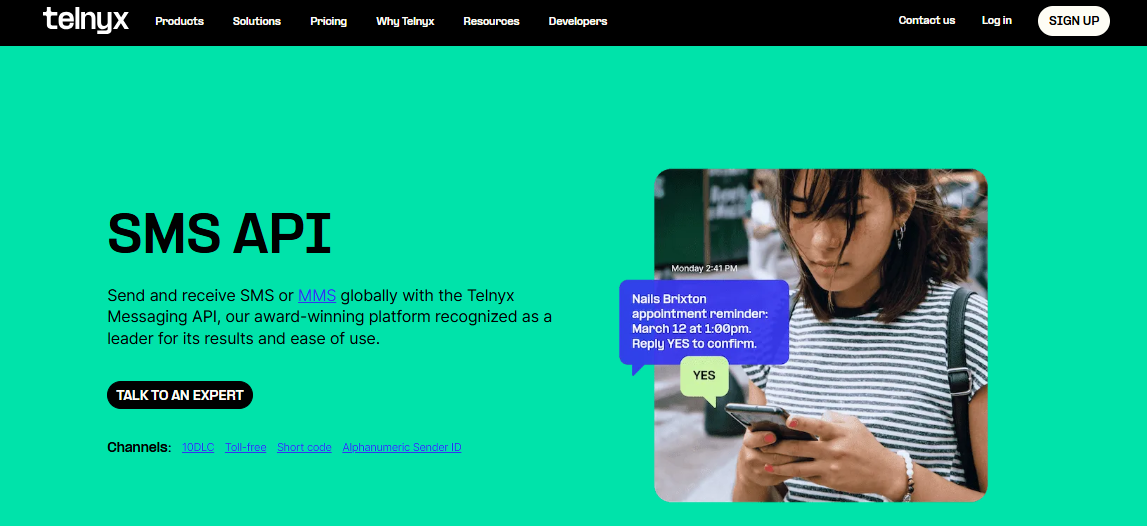
Telnyx also includes built-in handling for opt-outs and compliance. If a recipient replies with a stop keyword such as “STOP,” the system automatically removes that number from future messaging.
Delivery reports provide detailed status updates, along with debugging tools that show message performance and errors after sending. Webhooks can be configured to receive inbound messages and delivery updates in real time.
Additional setup features include messaging profiles, number management, and hosted SMS. Messaging profiles allow grouping numbers and settings based on use cases, while hosted SMS lets you send and receive messages using existing phone numbers.
8. Bandwidth
Bandwidth is a communications platform that operates on its own network infrastructure and provides messaging, voice, and telecom services through APIs.
Message delivery includes tracking through status updates and webhooks. Once the system accepts a message, callbacks report whether it was sent, delivered, or failed.
Message data such as segment count, direction, and carrier details can also be queried through the API. Bandwidth does not store message content after sending, which is part of its privacy approach, but metadata remains available for tracking and reporting.
Media files can be attached for MMS, with file uploads supported through the same system. Bulk messaging can also include mixed content, such as text and media in one request.
This SMS service operates on its own network infrastructure, which is positioned as a Tier 1 network. Messaging features include short codes, toll-free numbers, 10DLC messaging, and global SMS coverage.
Additional tools, such as traffic monitoring, alerts, and campaign registration support, are included to manage message flow and ensure compliance. Mass messaging is handled through API setup rather than a visual campaign interface, so technical configuration is required.
9. Plivo
Plivo is a cloud communications platform that provides SMS and voice messaging through APIs. It’s built to integrate messaging into your own system, where applications send and receive messages via HTTP requests.
Instead of sending messages one by one, destination numbers can be grouped in a single request, which is how batch messaging is processed. This setup is used to send alerts, notifications, authentication codes, and marketing messages triggered by your system.
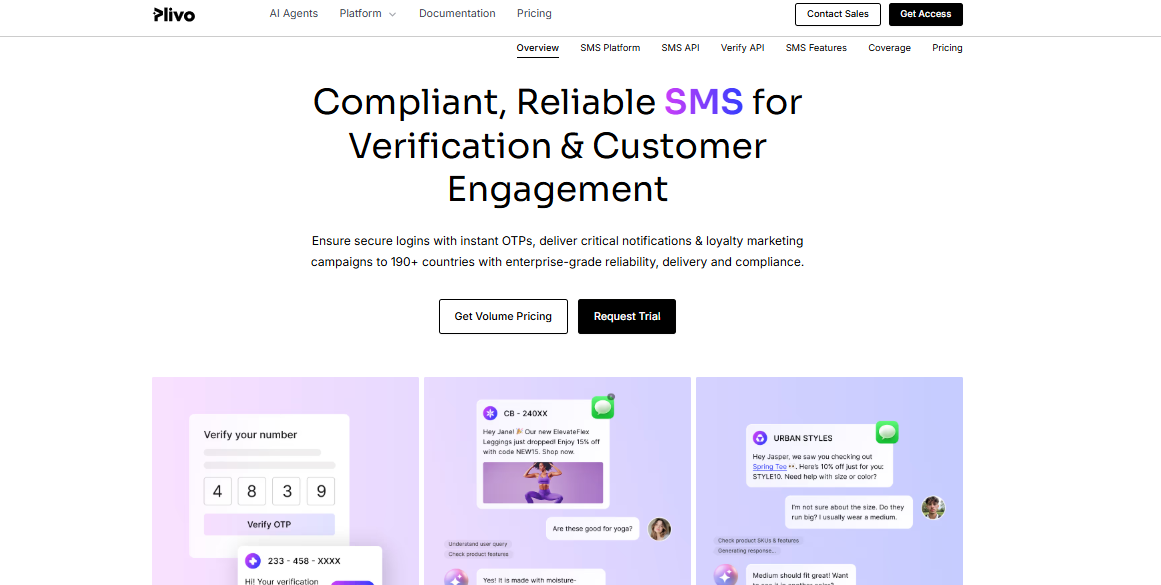
Plivo also handles message status and responses through built-in tracking and callbacks. Delivery reports show updates such as queued, sent, delivered, or failed. Incoming replies are captured through webhooks and can be routed into your system for processing.
Message formatting is based on encoding rules. Standard GSM messages allow up to 160 characters, while Unicode messages support fewer characters per segment.
If a message exceeds these limits, it is split into multiple parts and then reassembled on the recipient’s device. Each segment is billed separately, which affects the total message cost for longer texts.
10. ClickSend
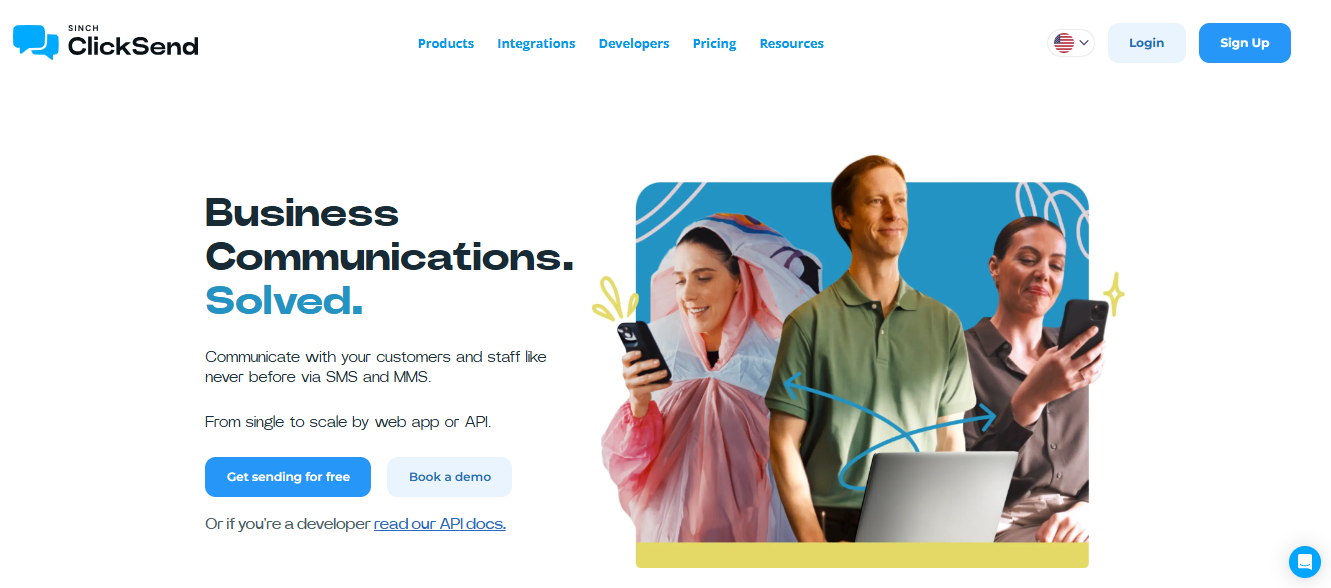
ClickSend is a cloud-based communication platform that offers both a web dashboard and API access, so you can either send campaigns manually or connect messaging into your existing tools.
Bulk SMS campaigns can be created through the online dashboard without coding. You can upload contact lists, send SMS broadcasts, and schedule campaigns for later delivery.
There's also support for sending messages through email-to-SMS, which allows messages to be triggered from email platforms.
For more advanced use cases, the SMS Gateway API lets you connect bulk messaging into your own systems and automate message sending through workflows.
The API supports sending to individual numbers or contact lists, with options for sender ID such as shared numbers, dedicated numbers, or alphanumeric names. URL shortening and tracking can also be applied to messages for monitoring engagement.
The platform also includes automation and integration options. SMS workflows can be set up for recurring messages, and integrations are available with hundreds of business tools.
Bulk messaging can be sent through API calls, dashboard campaigns, or connected apps like Google Sheets. There are limits to consider, such as country-specific restrictions and message rules, which can affect how campaigns are configured and delivered.
Key Features to Look for in Bulk SMS Marketing Software
Not all platforms offer the same capabilities. The difference comes down to how well the features support your day-to-day mass texting needs.
Here are the main features to look for when choosing a bulk SMS platform:
Contact Management and Segmentation
Contact management and SMS segmentation organize your audience and store key contact details for better targeting. More precise grouping allows you to send relevant messages that connect with the target audience.
Bulk Messaging and Campaign Scheduling
Mass marketing and scheduling capabilities let you send messages to large contact lists and control delivery timing. This helps you stay consistent with outreach like promotions or appointment reminders.
Automation and Workflow Triggers
Automation and workflow triggers send messages based on actions, timelines, or predefined conditions. Ongoing messaging continues without manual input, which saves time while keeping communication active.
Personalization Capabilities
Personalized messaging includes dynamic details in each message, such as names or custom fields. More relevant messages lead to higher response rates and stronger engagement.
Two-Way Messaging
Two-way conversations allow recipients to reply and continue the conversation. Real-time interaction creates stronger engagement and opens the door for faster responses.
SMS API and Integrations
SMS APIs and integrations connect your messaging system with your existing tools and platforms. Connected systems keep your data aligned and make messaging easier to manage within your workflow.
Reporting and Analytics Dashboard
Reporting tools provide insight into delivery rates, responses, and campaign performance. These insights help you understand what is working and make adjustments that can drive customer engagement over time.
Compliance and Opt-In Management
Compliance and opt-in management track consent and handle opt-outs automatically.
Features like unlimited keywords allow users to subscribe or unsubscribe easily. It gives you more control over how people enter, interact with, and move through your SMS campaigns.
Delivery Speed and Reliability
Delivery systems control how quickly and consistently your messages reach recipients. Reliable delivery keeps your communication consistent and avoids missed or failed messages.
Multi-User Access and Team Collaboration
Multi-user access allows teams to work within the same platform. Features like shared inboxes and message assignment make collaboration easier, especially for teams handling high message volume.
How to Choose the Best Bulk SMS Software for Your Business
The real value comes from how well the platform fits your workflow. Here’s how to choose an SMS software that helps you get the most out of your text message marketing campaigns.
Identify Your Business Goals
The way you plan to connect with your audience should shape the features you prioritize.
If your goal is outreach, look for SMS platforms that support large bulk campaigns. If engagement is your priority, choose tools that allow personalized text messages and real-time replies.
It also helps to think about your internal workflow. If you have multiple team members managing conversations, you need a system that keeps everything structured.
Speed also matters, so a platform that lets you launch SMS marketing campaigns in just a few clicks can make a big difference.
Evaluate Ease of Use
Some SMS apps require technical setup, where you need to write code. The simpler the process, the easier it is to stay consistent with your text campaigns.
An intuitive user interface makes it easier to create messages, manage contacts, and track replies without slowing down your workflow.
Other platforms include ready-to-use SMS templates and built-in marketing tools, which make it easier to stay consistent without starting from scratch every time.
Check Integration Requirements
Your SMS platform should connect directly with the systems you already use.
Look for platforms that offer seamless integration with your CRMs, email marketing tools, and other communication systems.
When everything works together, you can manage outreach, follow-ups, and responses instead of juggling multiple systems.
Some text message marketing platforms also connect messaging with other channels like phone calls or chat apps. It helps create a more connected communication flow.
SMS APIs and integrations make it possible to trigger messages, sync data, and manage campaigns without manual updates.
Compare Pricing Models
SMS marketing pricing can look simple at first, but small details can change your total cost.
Most mass texting services use a pay-as-you-go model, where you pay per message sent. For example, Twilio charges per message segment, with pricing based on destination and message type.
Some providers also offer flexible pricing plans with volume discounts. As message volume increases, the cost per message can decrease, which is common in mass texting setups.
Other platforms, like Infobip and Sinch, offer usage-based pricing along with custom pricing for enterprise needs, especially when sending high message volumes.
It's also important to look beyond message cost. Features such as MMS messaging, inbound messages, or access to advanced features can add to your total spend.
Some platforms include benefits like free inbound texts, while others charge for both sending and receiving messages.
Review Compliance Support
SMS compliance is a requirement that protects your messaging and your brand. Every platform you consider should include tools that manage consent, opt-outs, and message rules.
Text marketing is regulated under laws like the Telephone Consumer Protection Act (TCPA) and industry guidelines. It requires permission before sending messages and provides easy ways for recipients to unsubscribe.
Start by checking how the platform handles SMS opt-ins and opt-outs. You should be able to collect consent, store records, and automatically remove contacts who reply with keywords like STOP.
These features are required to stay compliant with SMS marketing rules and avoid penalties that can reach hundreds or thousands per message.
SMS platforms should allow you to manage sending within approved business hours, prevent restricted content, and maintain transparency in every message.
Industry guidelines and carrier rules enforce these standards, and failing to follow them can lead to messages being blocked or flagged.
Consider Scalability for Growth
What works for small campaigns today should still perform when message volume increases and your use cases expand.
A scalable platform should handle growth without slowing down delivery or requiring a full system change later.
The best SMS platforms use infrastructure like message queuing, routing, and load balancing to manage higher volumes while keeping delivery stable.
SMS marketing features like automation capabilities and two-way texting allow you to move from simple outreach to more advanced engagement.
From promotions to support messages, the system should handle diverse business needs while keeping communication organized. Built-in customer support and reliable performance also become more important as your messaging volume increases.
Send Bulk Texts Effortlessly With TextUs
When replies start getting missed, and conversations become harder to track, it's no longer just a tool issue. It becomes an operational problem that affects how your business communicates and converts.
TextUs is the best bulk SMS software that goes beyond basic messaging. It combines bulk texting, real-time conversations, automation, and integrations into one platform.
Instead of juggling multiple tools or missing important replies, you get a system where every message, response, and follow-up is tracked and easy to manage.
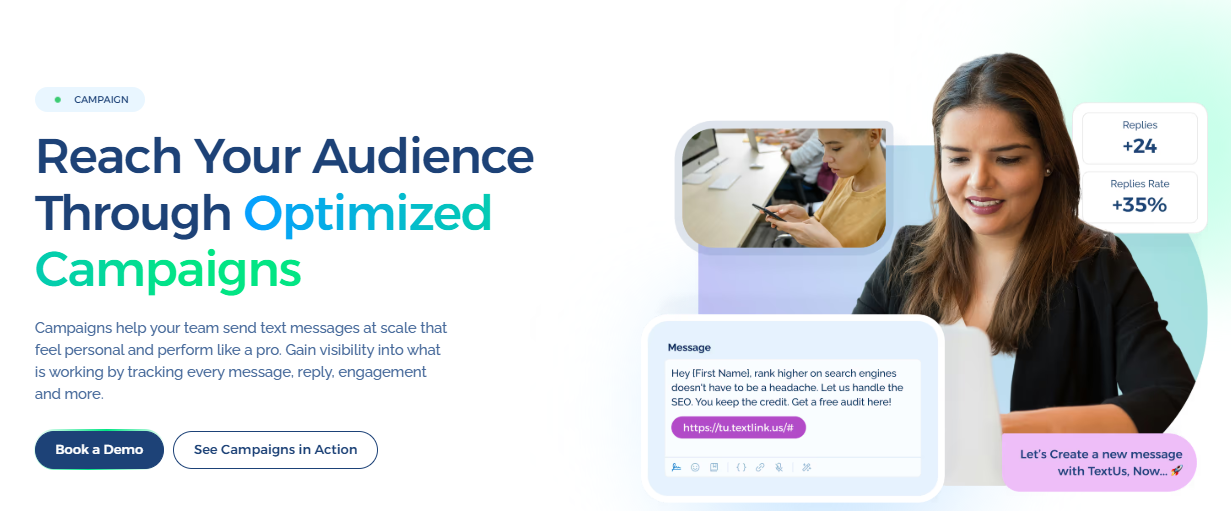
Ready to upgrade from one-by-one texting to a more reliable system? Book a demo with TextUs today and see how it can turn bulk SMS into a results-driven communication channel!
Continue Reading



Frequently Asked Questions
Can bulk SMS marketing platforms send messages internationally?
Yes, most platforms support international messaging, with coverage depending on carrier connections and regional regulations.
Some countries require sender ID registration or compliance setup before messages can be delivered to a recipient’s cell phone.
How many messages can I send at once?
The number of messages you can send depends on the platform’s limits and setup. Some systems automate SMS, while others use queuing to handle large volumes. This works for both small businesses sending a few hundred messages and larger companies sending thousands.
What happens if a message fails to deliver?
If a message fails, the platform will return a status update explaining the reason, such as an invalid number, carrier rejection, or network issues. Some systems also retry delivery automatically.
Business Texting
Built for Results
Create and convert pipeline at scale through industry leading SMS software