
15 B2B Customer Retention Strategies to Reduce Churn
Explore 15 B2B customer retention strategies that will help you reduce churn. Discover how TextUs can help you retain customers with SMS.

Written by
Adam Hamdan
Published
May 8, 2026

Many B2B companies work hard to win new customers. But keeping them engaged after the sale takes another kind of effort.
If you have strategic retention strategies in place, you can address that gap with a better post-sale plan.
With the right onboarding, product adoption, customer success, account reviews, and follow-ups, you can keep customers engaged and make each touchpoint easier to manage.
In this article, we will look at B2B customer retention strategies to help you keep more accounts active. You will also see how an SMS marketing platform can support stronger follow-ups, faster replies, and better customer touchpoints.
TL;DR
These are the 15 best B2B customer retention strategies:
- Build a strong onboarding flow from signup to first value
- Set customer goals early in the relationship
- Shorten the time to value with simple first steps
- Segment customers based on needs, behavior, and risk
- Use customer health scores to spot churn signals
- Create a proactive customer success program
- Keep communication planned, useful, and consistent
- Collect customer feedback before churn risk grows
- Close the feedback loop after customer input
- Personalize each customer experience with account data
- Strengthen support with fast answers and self-service content
- Build relationships with multiple stakeholders
- Prove ROI before renewal talks begin
- Reward loyal customers with meaningful perks
- Create a renewal playbook before contract end
TextUs strengthens B2B customer retention with two-way texting, SMS drip campaigns, shared inboxes, CRM and ATS integrations, analytics dashboards, and compliance tools.
What Causes Customers to Churn?
Customers churn when the value they expected does not match the value they get. Here are the main reasons customers leave:
Poor Onboarding
Poor onboarding creates risk early because customers need guidance after they sign. When the first stage is unclear, customers may miss setup steps or lose interest before they see value.
Weak Product Adoption
Weak product adoption happens when the product does not become part of the customer’s normal workflow. Paid seats may sit unused, and active users may only rely on a few basic features.
No Proven ROI
Customers may leave when they cannot link your product or service to a business result. They need proof of savings, revenue growth, faster tasks, fewer errors, or better customer outcomes.
Bad Customer Support Experiences
Bad support can damage trust, especially when customers rely on your company for daily work. Slow replies, vague updates, and repeated questions can make a simple issue harder than it should be.
Misaligned Expectations From Sales
Churn can start during the sales process if the customer expects more than your company can deliver. Promises about features, setup speed, service levels, or results need to match the actual offer.
Stakeholder Turnover
Stakeholder turnover creates risk when your main contact leaves, changes roles, or loses influence. A new decision maker may not know the account history or why the company chose your product.
Budget Cuts or Contract Review
Budget cuts can place any vendor under review, even when the product has been useful. Contracts with low usage, weak reporting, or unclear results are easier for leaders to cut.
Better Competitor Offers
Competitor risk grows when the current account relationship already has gaps. Customers may consider another vendor if it offers lower pricing, stronger features, better service, or easier setup.
15 B2B Customer Retention Strategies to Retain Customers
Strong retention starts with a better post-sale plan rather than just a last-minute renewal push. Here are proven customer retention strategies to keep customers after they purchase.
1. Build a Strong Customer Onboarding Process
A strong onboarding process should start with a welcome flow after signup or contract close. It supports the full customer journey and sets the tone for client retention from the start.
The welcome flow can explain what happens next, who will guide the account, what the customer needs to prepare, and how the setup will begin.
The onboarding plan should also match the customer’s goals. You can set milestones for setup, adoption, and first value, and assign one main owner. Then, use checklists, training, kickoff calls, and follow-up messages to keep new customers on track.
TextUs can bring SMS marketing into onboarding through campaigns that reach new customers or users from tools such as a CRM, HRIS, or LMS. It can support sales and marketing teams as they guide multiple stakeholders after a contract closes.
You can include PDFs or images, such as welcome guides, setup checklists, or quick-start visuals, so customers can see what to do next from their phones.
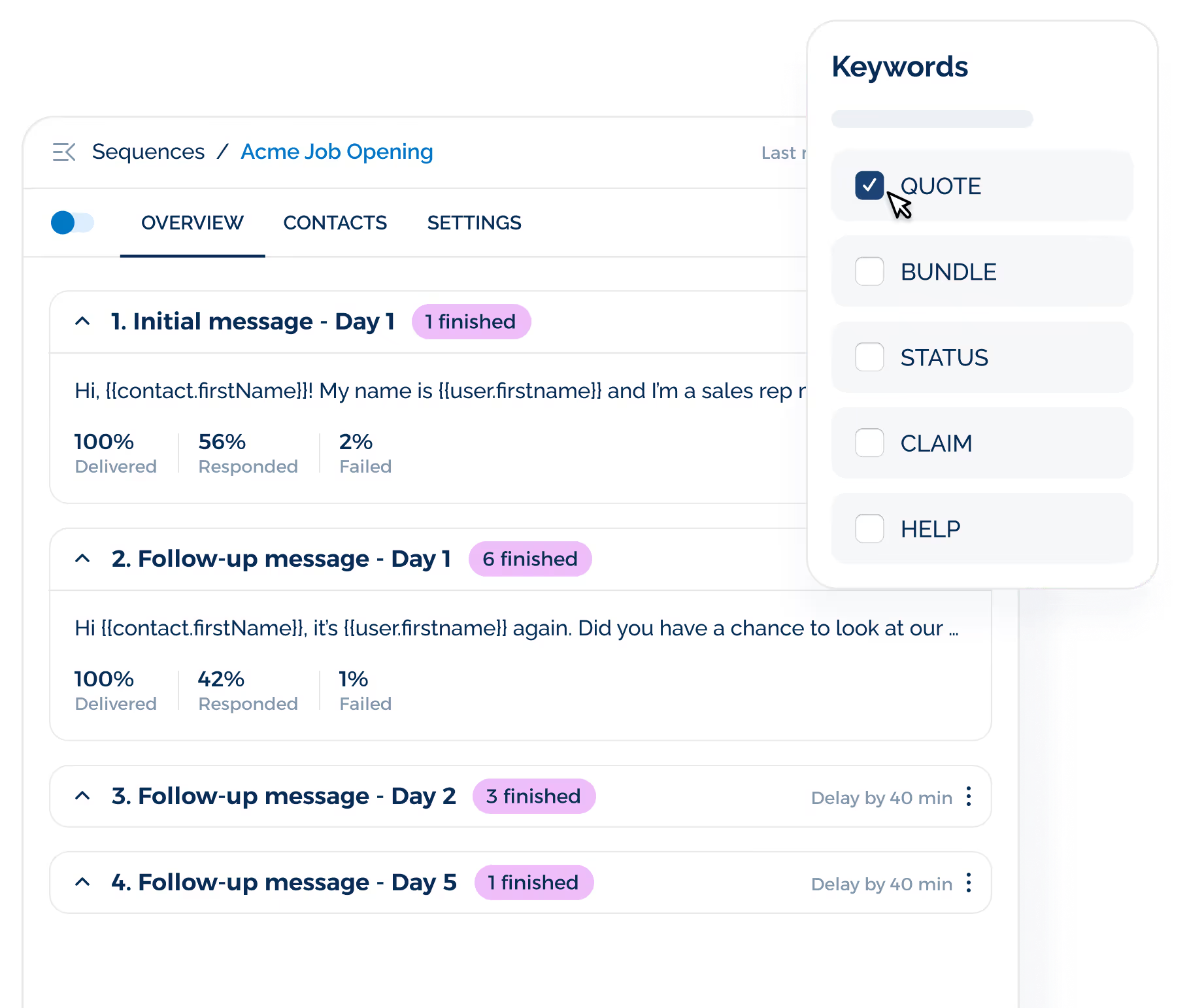
SMS keywords can also make onboarding more interactive. A customer who texts START, GUIDE, or HELP can receive an instant response with the resource or next step they need.
Book a demo with TextUs to see how SMS can fit into your customer onboarding workflow!
2. Set Customer Goals Early
You need to ask what the customer wants to improve, which users need support, what results they expect, and what timeline they have in mind.
Early goals make account reviews easier later. You can compare progress against the customer’s original needs and spot gaps before renewal talks begin.
Goals also help customer success staff focus on the parts of the product that mean the most to the account. A customer with growth goals may need different guidance than a customer focused on saving time or improving service quality.
When goals are set early, you can create personalized experiences that fit the customer’s needs. This can enhance client satisfaction over time.
3. Improve Time to Value
Time to value is the point when a customer first sees a useful result from your product or service.
A slow start can make customers question the cost before they build strong habits. Long setup times, unclear next steps, or too much training at once can lower interest early.
You can improve time to value with simple first steps, guided setup, and use-case-based training. The faster they reach that point, the sooner they understand why the purchase was worth it.
4. Segment Customers for Better Retention
Segmentation helps you understand which accounts need more training, more check-ins, or more product education.
A new customer with low usage needs a different plan than a long-term customer near renewal.
When you use texting software like TextUs, it can support better SMS segmentation. You can group customers based on customer behavior, interest, account stage, location, purchase history, or engagement, so each text message fits the audience.

Good segments can also show which accounts are at risk of account churn and which ones are likely to become loyal accounts. This helps you protect the strongest customer relationships while still paying attention to accounts that need more care.
5. Use Customer Health Scores
A score can be based on product use, support history, survey answers, renewal stage, payment status, and customer engagement.
Low health scores can point to problems before a customer cancels. For example, fewer logins, unused seats, missed training, or open support tickets can show that the account needs attention.
Health scores can also show where unhappy customers need more technical support, ongoing support, or regular check-ins. They can also help you spot negative feedback before it turns into lost revenue.
For customer retention, health scores give customer success staff a better way to act before renewal pressure starts. They turn account data into a signal that shows where churn risk may be growing.
6. Create a Proactive Customer Success Program
You don't have to wait for customers to complain. The sales team should check account activity, listen for risk signs, and contact customers before small concerns turn into churn risk.
You can schedule check-ins around each lifecycle stage, such as onboarding, adoption, growth, renewal, and expansion. This keeps customers engaged after the sale and gives you a chance to answer questions before usage drops.
A short training session, feature walkthrough, or account review can also help customers get more value from the product before frustration builds.
It's also ideal to share success plans and progress reports so customers know where they stand. These reports can show completed goals, usage trends, open tasks, and next steps for the account.
SMS marketing can support proactive customer success when customers opt in. You can send reminders for check-ins, training sessions, progress reviews, or renewal meetings to ensure key account tasks stay on track.
A proactive program can also support customer retention efforts because clients receive guidance before problems grow. Over time, it can strengthen account retention and create lasting relationships.
7. Keep Communication Consistent
Proactive communication keeps customers informed after the sale. You need to plan what customers receive during onboarding, adoption, product updates, renewal planning, and support follow-ups.
Each channel should have a purpose. Email can cover longer updates and education, while SMS can support short reminders, meeting prompts, training alerts, and quick follow-ups.

The message rhythm should match the customer’s stage. New customers may need setup guidance, while long-term customers may need usage reports, product tips, renewal prep, or new feature notes.
B2B mobile marketing is valuable when a message needs a fast response or a simple action. You can send a text for meeting confirmations, missed call follow-ups, short feedback requests, or reminders tied to account deadlines.
Ongoing communication also prevents long gaps in the client relationship. Customers should not only hear from your business when there is a problem, an invoice, or a contract renewal.
8. Collect Customer Feedback
Feedback shows what customers like, dislike, need, and expect from your company. It can also reveal churn risk before the customer says they want to leave.
You can collect and leverage customer feedback through surveys, customer interviews, support notes, product reviews, and account check-ins. Each source can show patterns in customer needs, product gaps, service issues, or renewal concerns.
SMS can also support your brand reputation after a positive customer experience. After a good support call or account review, you may send a personalized text asking satisfied customers to leave a review or share feedback.
9. Close the Feedback Loop
After a survey, support call, or account review, you can share what was reviewed and what action came next.
Some requests may be under review, planned for later, or not a fit for the product or service. Honest updates show customers that their input was heard, even when the answer is not what they hoped for.
Feedback themes can also point to bigger gaps in onboarding, support, product, or pricing. If many customers raise the same concern, it may signal a pattern that needs attention.
Closing the loop also supports retention efforts because customers see that their voice has weight. It can give your business a competitive advantage when customers feel heard after they share concerns.
10. Personalize the Customer Experience
Start with each customer’s needs based on account stage, product use, past questions, and business goals.
A new customer may need setup reminders, while a long-term customer may need product tips, account review notes, or renewal prep.
You can use customer data to adjust training, follow-ups, reports, and account recommendations. For example, admins may need setup guidance, daily users may need feature tips, and leaders may need progress summaries.
But make sure to avoid sending the same message to every customer. Generic messages can make customers feel like one account in a long list.
TextUs offers message templates that include personalization variables, shortened links, and attachments.

You can use contact details to make a text sound more natural, such as adding the customer’s name, links, account context, or next step.
11. Strengthen Customer Support
Strong support can turn a hard moment into exceptional customer service that keeps trust intact.
You have to review support records, open tickets, repeat issues, and common questions. These details can show where customers struggle and where churn risk may begin.
Also, start training support staff to review the account context before each reply. A customer should not have to explain the same issue every time they ask for an update.
Support should also include follow-up after a problem is solved. A quick message after resolution can confirm the issue is fixed and show the customer that their concern was handled.
Self-service content also supports stronger retention. Knowledge base articles, short videos, setup guides, and FAQs give customers self-service tools when staff is not available.
12. Build Multi-Stakeholder Relationships
One contact should not carry the whole customer relationship. If that person leaves, changes roles, or loses budget control, the account can become harder to retain.
You need to build relationships with users, managers, admins, finance contacts, and leaders. Each group may care about different results, such as ease of use, cost, reporting, or business impact.
For enterprise clients, multi-stakeholder work is even more important because one account may include several departments and decision-makers. Dedicated account managers can guide these contacts with role-based updates and tailored solutions.
Multi-stakeholder relationships also make renewals smoother. More people understand the product's value, so the renewal does not depend on a single internal champion.
Account reviews are a good place to invite more stakeholders into the conversation. They can see progress, ask questions, and learn how the product supports their goals.
13. Prove ROI Before Renewal
If leaders only see the contract cost, they may question why the account should continue.
ROI proof can show ongoing value before renewal pressure begins. It also supports quarterly business reviews because each review can connect product use to real progress.
You may use account data to show results from the full contract period. Reports can include product use, completed goals, saved time, revenue impact, service gains, or fewer manual tasks.
Tie each result back to the customer's business goals. A renewal case becomes stronger when customers can see how the product helped them reach the outcomes they asked for.
Do not wait until the final renewal call to share progress. Regular account reviews, performance summaries, and simple ROI notes can make value easier to see over time.
14. Reward Loyal Customers
Loyalty programs can include early access to new features, special training, loyalty pricing, event invites, or customer advisory groups. These programs give you a simple way to reward repeat customers who stay engaged over time.
Recognition can also strengthen the relationship beyond the contract. You can invite long-term customers to join case studies, share testimonials, or take part in customer spotlight content.
Text marketing can also help keep loyal customers engaged after key moments in the relationship.
You can use mobile apps and messaging channels to share reward alerts, event reminders, loyalty perks, training invites, or early access updates with customers who opt in.
The reward should match the customer relationship and account value. Some customers may prefer public recognition, while others may value training, account support, or product access more.
Loyalty rewards should not feel like a last-minute save offer. They should show appreciation for continued trust, product use, and long-term partnership.
15. Create a Renewal Playbook
A renewal playbook gives your staff a set process for handling accounts before the contract ends. It should cover renewal dates, account health, product use, stakeholder notes, support history, and value proof.
Renewal planning has to begin months before the contract ends. Early review gives staff enough time to spot risk, answer concerns, and prepare a stronger case for renewal.
A playbook should also list the steps for each account stage. For example, staff may review usage data, schedule an account check-in, gather ROI notes, prepare pricing details, and confirm who needs to approve the renewal.
Keep the playbook simple so staff can follow it with ease. The goal is to make renewal planning more repeatable, less rushed, and more focused on customer value.
Metrics You Should Track for B2B Customer Retention
Each metric can show a different part of account health, renewal risk, product use, and long-term value. Here are the numbers that show how well you keep customers after the sale.
Customer Retention Rate
Customer retention rate shows how many customers stay with your business during a set time period. A high rate means more customers continue their relationship with you instead of leaving after one contract or purchase.
Churn Rate
Churn rate shows how many customers stop buying, cancel, or fail to renew. A high churn rate can point to weak onboarding, low product use, poor support, or a lack of value.
Net Revenue Retention
Net revenue retention shows how much revenue stays from existing customers after upgrades, downgrades, renewals, and cancellations. It shows if current accounts are growing, shrinking, or staying the same over time.
Gross Revenue Retention
Gross revenue retention shows how much recurring revenue stays before adding expansion revenue. It helps customer success teams see if your base revenue is strong without upgrades hiding customer loss.
Customer Lifetime Value
Customer lifetime value shows how much revenue one customer may bring during the full relationship. A higher value means customers stay longer, renew more, or buy more from your business.
Product Adoption Rate
Product adoption rate shows how much customers use your product after they buy. It can include logins, active users, seat use, feature use, or completed actions.
Customer Health Score
Customer health score combines account signs into one score. It may include product use, support tickets, survey answers, payment status, renewal stage, and customer contact history.
Net Promoter Score
Net Promoter Score shows how likely customers are to recommend your business to others. A high score can show a loyal customer base, while a low score can show poor service, weak value, or unmet needs.
Customer Satisfaction Score
Customer satisfaction score shows how happy customers are after a support case, training, purchase, or account call. It is useful because it captures how customers react after a recent experience.
Time to Value
Time to value shows how long it takes for customers to get a useful result after purchase. A shorter time to value can build trust early because customers see value sooner.
How TextUs Supports Your Customer Retention Strategy
TextUs is the best SMS marketing platform for B2B retention, as it keeps customer touchpoints personal and easy to respond to. Here’s how TextUs keeps customer conversations active after the sale.
Faster Customer Replies
B2B customers do not always want another long email thread. TextUs lets you send and receive texts from a business text number.
Customers can reply to reminders, account updates, support follow-ups, or meeting notes in a faster format. Two-way texting is useful after onboarding calls, support cases, renewal meetings, or account reviews.
A prompt reply can confirm a meeting, ask for support, or move an account task forward. Faster replies can help support stronger communication because customers have a simple way to stay engaged.
Repeatable Customer Touchpoints
TextUs makes repeat customer touchpoints easier to run through SMS drip campaigns.
It lets you build a series of texts that guide contacts through each step, from first opt-in to follow-up, training, account review, or renewal prep.
Follow-ups can be triggered based on customer actions, replies, or set stages. This includes onboarding reminders, product education, post-support follow-ups, renewal prompts, and account check-in notes.
AI insights can also make customer conversations faster and more personal. Staff spend less time rewriting routine texts and more time solving concerns and building stronger account relationships.
Fewer Missed Account Messages
TextUs includes shared inbox tools for business texting. If a customer replies about a renewal, support issue, or training need, the right staff member can step in with context.
Shared inboxes can also improve account management because staff can see active conversations. Better account coverage can support repeat business when customers know their replies are seen and handled.
Smoother Workflows Through Integrations
TextUs connects with CRM, ATS, HRIS, and other systems such as Salesforce, HubSpot, and Microsoft Dynamics. It lets you sync contacts, log conversations, and place texting inside existing workflows.
Connected data helps staff see past conversations, contact records, and account activity in the tools they already use. That makes follow-up more useful for existing clients because each message can reflect the account history.
Better Retention Message Insights
Better message data can guide your customer marketing strategies for retention, expansion, and business growth.
TextUs provides analytics dashboards that show which messages convert, how fast staff respond, and where conversations stall. These insights can help you review which customer touchpoints get replies and which ones need adjustment.
Analytics can guide renewal outreach, training reminders, feedback requests, and customer reward messages. You can see which messages lead to replies, then improve future follow-ups based on real response data.
Safer Business Texting
Business SMS needs consent, proper account setup, and respect for customer preferences.
TextUs includes SMS compliance tools such as phone number registration, opt-out language, office hours, and privacy settings.
Smart Delivery monitors opt-out thresholds in real time and can pause high-risk campaigns before carrier blocking happens. That gives your staff a safer way to manage outreach when message volume or opt-out activity starts to rise.
TextUs also uses Message Quality Indicator (MQI) with red, yellow, and green scoring to flag risky SMS content before send time. Staff can adjust spam rules and rewrite messages with AI so texts meet compliance needs before they reach customers.
Turn Customer Replies Into Retention Wins With TextUs
B2B customer retention strategies work best when customers hear from you after the sale, not only when renewal season begins.
TextUs gives you a faster way to keep account updates, training reminders, support follow-ups, and renewal conversations moving through SMS.
With TextUs, you can use two-way texting, campaigns, automations, integrations, analytics, and compliance tools to keep customer touchpoints personal and easy to manage.
Your staff can follow up after onboarding, send account review reminders, share renewal prompts, and support sales efforts from one SMS platform.

Book a demo with TextUs today and see how SMS can strengthen your retention strategy while supporting customer acquisition!
Continue Reading



Frequently Asked Questions
Why is customer retention important?
Customer retention helps you keep current customers engaged after the sale. It can also lower pressure on new customer acquisition because retained accounts protect revenue you already earned.
Strategic retention can also lead to new business through referrals, reviews, and case studies. When customers keep seeing value, they have more reason to renew, expand, and recommend your business.
What is a good B2B customer retention rate?
A good B2B customer retention rate depends on your industry, pricing model, contract length, and customer type. A SaaS business, service provider, agency, and enterprise vendor may all have different retention goals.
The best benchmark is your own past performance plus data from similar companies in your market. If retention rises over time and churn drops, your customer retention strategy is moving in a stronger direction.
How do you lower B2B customer churn?
You can lower B2B customer churn by finding the main reasons customers leave. Common causes include poor onboarding, low product use, weak support, no ROI proof, and missed renewal planning.
A churn plan should focus on early onboarding, customer goals, health scores, account reviews, product training, and renewal prep. It can also help turn passive customers into active users before they decide to cancel.
Business Texting
Built for Results
Create and convert pipeline at scale through industry leading SMS software