
10 Best Branded SMS Software Options in 2026
10 Best Branded SMS Software Options: 1. TextUs 2. Twilio 3. Bandwidth 4. Telnyx 5. Sinch 6. Messangi 7. SMSGlobal 8. Infobip 9. Kudosity 10. Vonage.

Written by
Adam Hamdan
Published
October 20, 2026

If you offer texting through your product, the experience should reflect your brand instead of the provider behind it.
Generic details, third-party interfaces, and unbranded links make your text message marketing campaigns look disconnected from the rest of your software.
Branded SMS software gives you more control over how your business appears when you send messages. You can customize sender info, links, colors, and the messaging interface itself.
In this guide, we will compare the top ten branded SMS software options based on branding options, messaging features, integrations, and deployment models.
By the end, you'll understand how the right platform can make SMS a native part of your product rather than a separate add-on.
TL;DR
Here are the ten best SMS platforms for branded text messaging:
- TextUs
- Twilio
- Bandwidth
- Telnyx
- Sinch
- Messangi
- SMSGlobal
- Infobip
- Kudosity
- Vonage
Why Use Branded SMS Software?
According to a Pew Research Center study, 61% of U.S. adults receive scam texts at least once a week.
These messages attempt to obtain personal information. Customers may hesitate when a text comes from an unknown sender or includes a generic-looking link.
Branded software creates a more recognizable experience when you send SMS messages to customers. A consistent sender gives them an identity they can associate with your business over time.
Your company name, branded links, and consistent writing style also reinforce that identity. This makes it easier to deliver relevant messages connected to the business your customers already know.
The same consistency can extend to the messaging experience itself. Your logo, colors, domain, and interface can reflect your brand instead of exposing a separate third-party provider.
10 Best Branded SMS Software Options
Branded SMS software varies in how much control it gives you over the messaging experience, infrastructure, and customer-facing brand.
Below are the top SMS marketing platforms to compare if you want to add branded texting to your software or offer it under your name.
1. TextUs
TextUs stands out as the best branded SMS software if you want messaging inside an existing product.
The platform lets you present texting under your own brand, while Embedded Messenger places conversations inside your CRM, ATS, HRIS, or SaaS product.
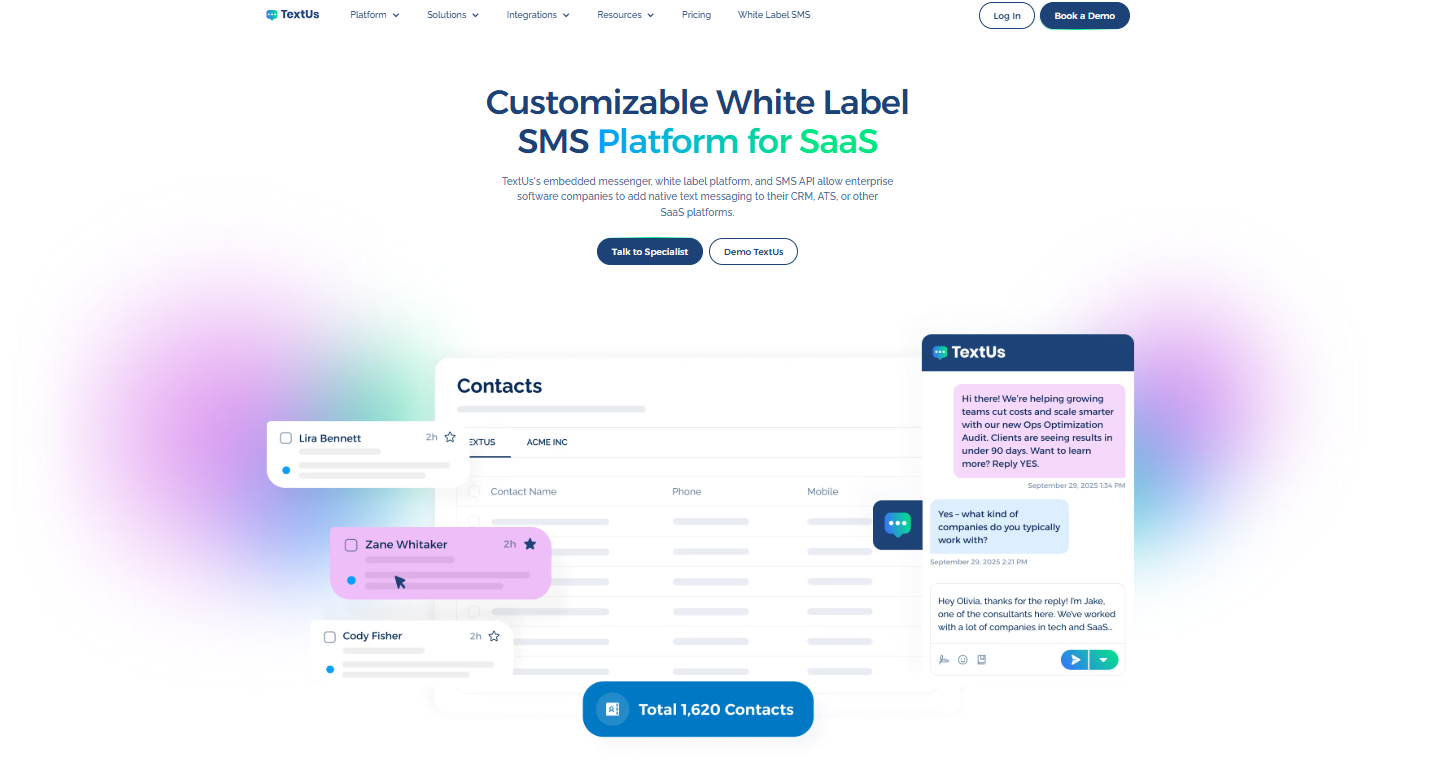
Single sign-on (SSO) and contact-level message logging also keep the experience connected to the system your users already use.
TextUs combines shared inboxes, text templates, automated drip campaigns, MMS, A/B testing, branded links, and click tracking in one product.
You can also personalize SMS campaigns and launch them without building a separate interface from scratch.
It also includes Message Quality Indicator, Smart AI Rewrite, and Contact Intelligence to support message quality and engagement. These controls add another layer beyond the campaign features found in many SMS marketing platforms.
TextUs with Smart Delivery handles:
- Carrier relationships
- 10DLC registration
- Routing
- Throughput
- Compliance infrastructure
- Tier-three support
- Opt-out monitoring
- Message pacing
- Contact validation
- Content checks
- Carrier safeguards
TextUs supports usage-based billing and lets you set the price charged to your end customers. Its white-label agreements don't require revenue sharing, so you keep the margin you set.
Book a demo with TextUs today to see how its white-label and embedded options can support your product strategy!
2. Twilio
Twilio is a communications platform that provides APIs for SMS, Rich Communication Services (RCS), Multimedia Messaging Service (MMS), WhatsApp, voice, and other communication channels.
Programmable Messaging tools let you add texting to your applications while Twilio manages the underlying messaging infrastructure.
Twilio Messaging Services support several sender types, including long codes, short codes, toll-free senders, alphanumeric sender IDs, RCS senders, and WhatsApp senders.
Its Sticky Sender feature can keep the same sending number assigned to a recipient throughout future conversations, which supports a more consistent sender identity.
Twilio also supports company-branded shortened links through its Link Shortening feature. You can connect a domain or subdomain that you own, shorten URLs in outgoing texts, and collect click-event data through callbacks.
It can receive messages through webhooks or route replies into Twilio Conversations. Messaging Services also include configurable opt-in, opt-out, and help keywords.
3. Bandwidth
Bandwidth is a cloud communications platform that provides messaging APIs over its owned and operated Tier 1 network.
Its branded messaging capabilities are most visible through RCS for Business. It supports verified brand presentation, customizable visual themes, brand names, rich media, interactive buttons, suggested replies, and read receipts.
You can also create an RCS agent with a display name and public brand profile that appears on supported mobile devices.
Bandwidth supports 10DLC, toll-free messaging, short codes, alphanumeric sender IDs, and global two-way messaging in more than 120 countries. Its API also provides delivery information and inbound messaging capabilities.
This SMS marketing service has also expanded its registration tools for software providers and resellers. Its 10DLC Registration Center lets you share registered brands among multiple accounts and manage campaigns among subaccounts.
4. Telnyx
Telnyx is a communications and artificial intelligence platform that provides programmable SMS, MMS, RCS, voice, and networking services through APIs.
You can purchase phone numbers, port existing ones, or use Hosted SMS without changing your current voice provider.
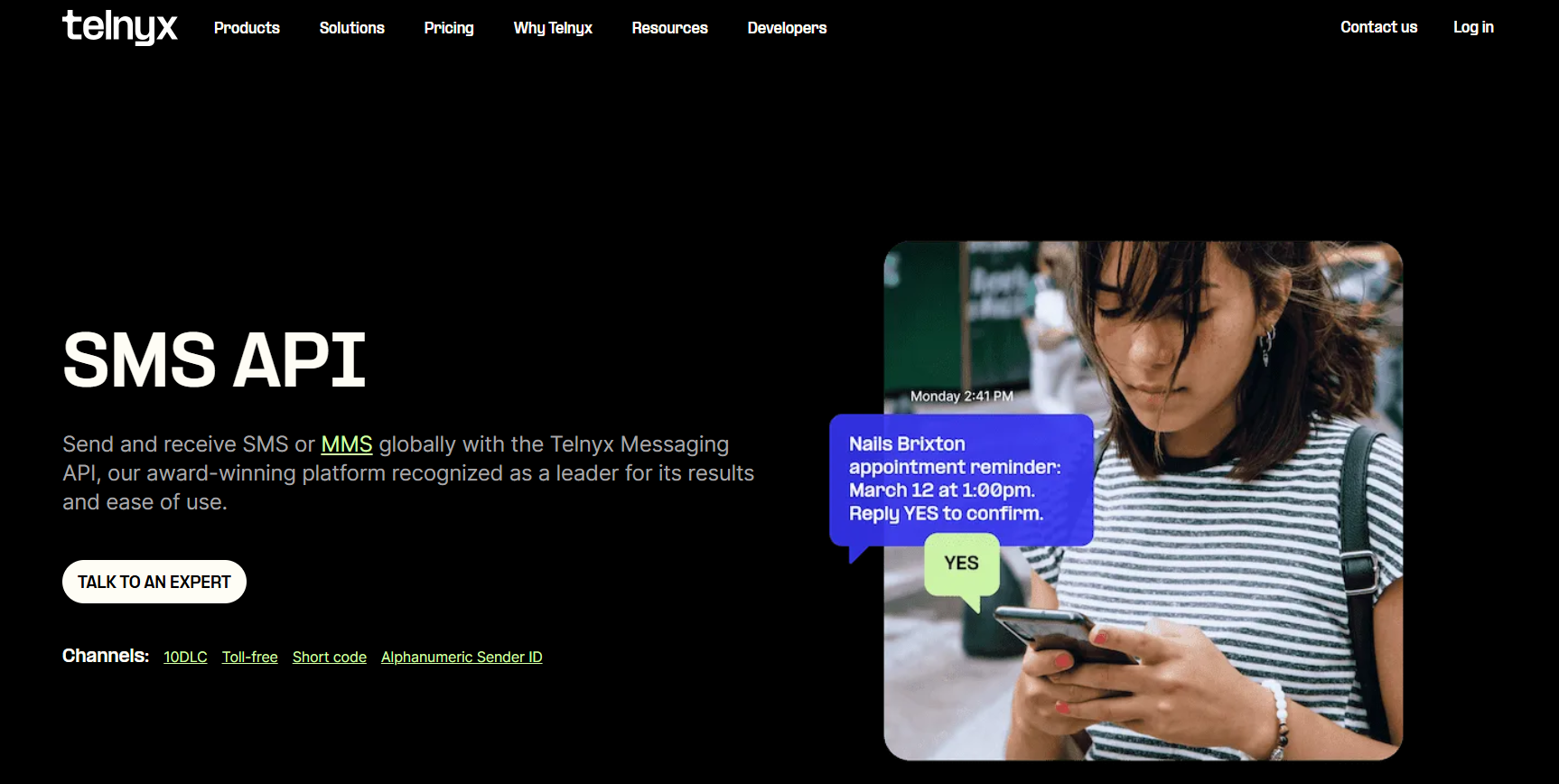
Telnyx supports RCS Business Messaging. Companies register an RCS brand and agent with a customer-facing display name, logo, hero image, brand color, website, and contact information.
It also has a specific setup process for SaaS companies and other ISVs that provide messaging to separate business customers. Each end customer requires its own 10DLC brand and corresponding campaign registrations.
Registration and messaging management are available through both APIs and the Telnyx Mission Control Portal. Its 10DLC tools cover brand and campaign registration, number assignment, built-in throughput controls, and automated opt-out handling.
5. Sinch
Sinch Engage is a multichannel business messaging platform for SMS, MMS, RCS, and WhatsApp, and it also offers technology partnerships and a white-label reseller model.
Its white-label reseller SMS program lets you offer messaging as part of your own solution while Sinch operates the platform behind it. Reseller accounts use an account, project, and subproject structure.
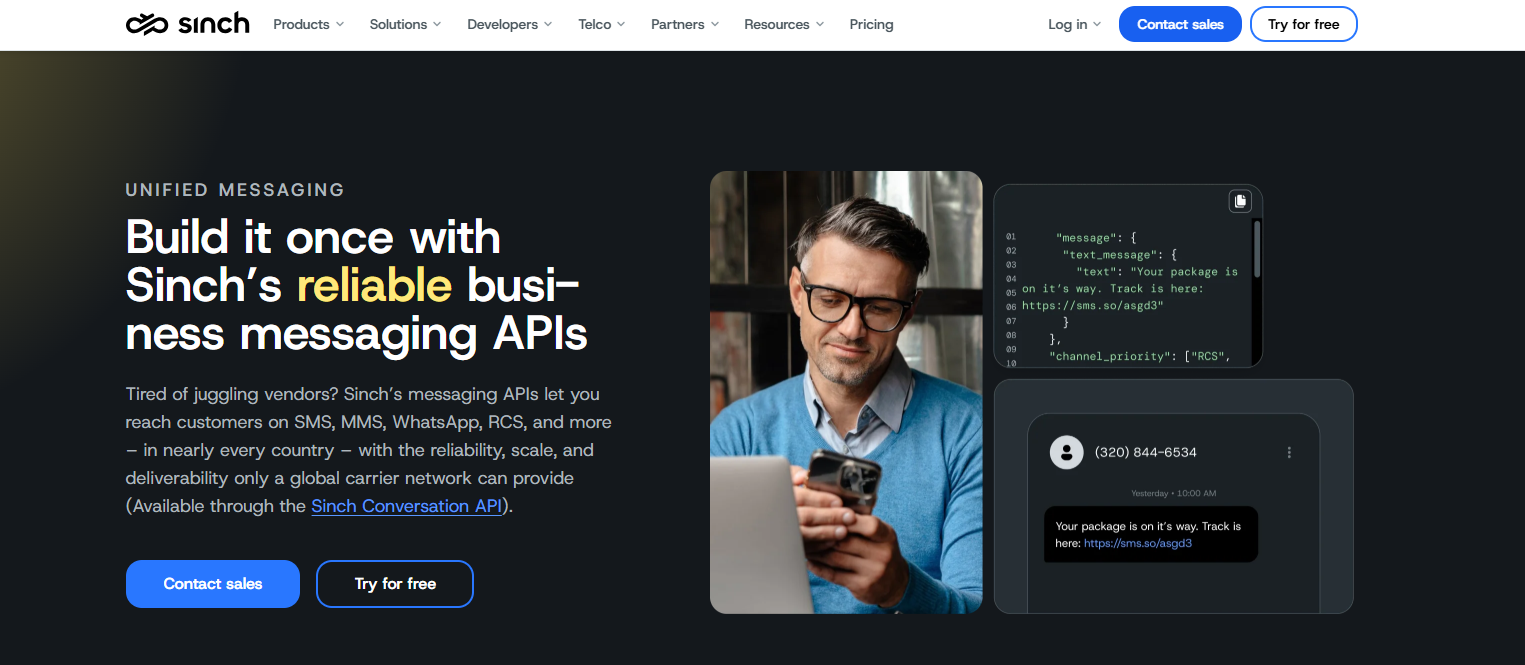
Each end customer gets a separate subproject for its numbers, apps, and traffic, while usage rolls into the parent account for billing.
Sinch also provides more visible brand controls through RCS Business Messaging. It displays the company name, logo, brand colors, rich media, buttons, and read receipts on compatible devices.
This SMS service and its Messages API cover:
- Mass texting
- Scheduled marketing messages
- Automated reminders
- Templates
- Tracked links
- Delivery receipts
- Shared team inbox
- SMS and MMS sending
- Scheduling
- Delivery reports
- Inbound replies
6. Messangi
Messangi is a multichannel communications platform-as-a-service (CPaaS) that provides white-label CPaaS and messaging APIs for telecom operators, software providers, and other partners.
The interface, domain, and support documentation can be rebranded, while Messangi manages the backend infrastructure. Each workspace can also use a custom-branded web address tied to the partner’s domain.
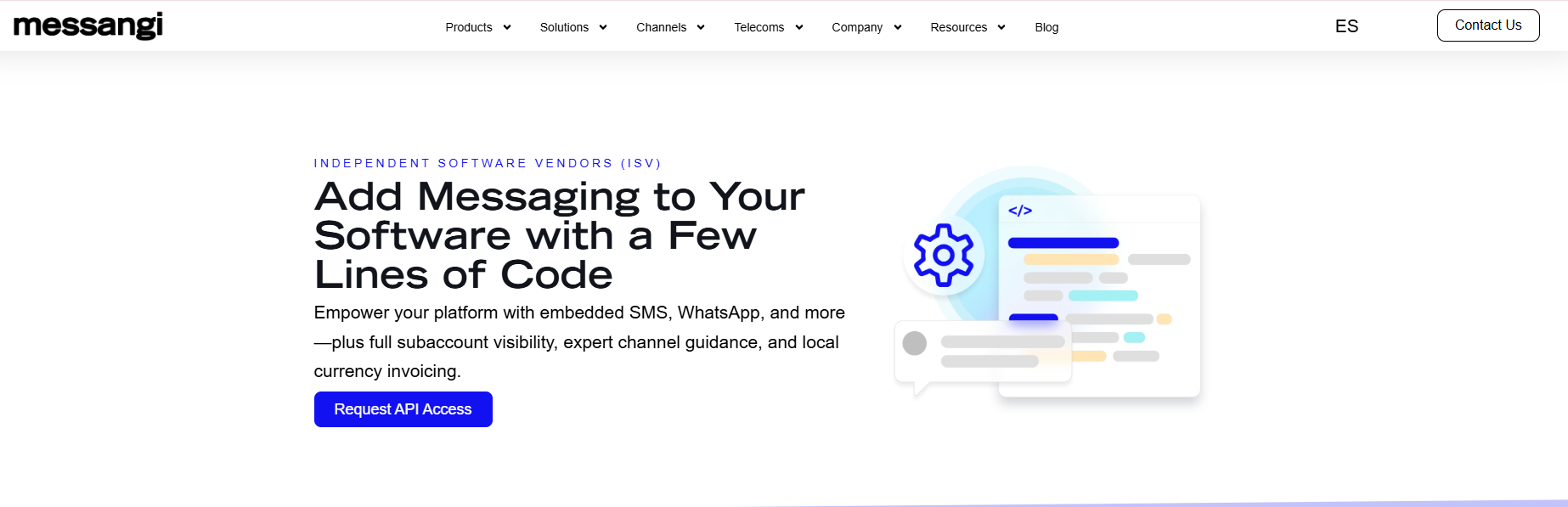
Messangi also uses a multi-tenant structure for companies serving several business customers. You can separate enterprise accounts, apply role-based permissions, maintain independent reporting, and configure billing or rates for each tenant.
If you want messaging inside an existing software product, Messangi provides APIs that let you integrate messaging via SMS and other supported channels.
It also covers broadcasts, automations, contact management, user management, and API connections from a shared workspace.
7. SMSGlobal
SMSGlobal is a business messaging provider with a web-based messaging product called MXT, APIs, and a white-label reseller program.
The white-label setup also supports subaccounts for businesses that manage multiple customers. Each subaccount has separate login credentials and access to MXT features.
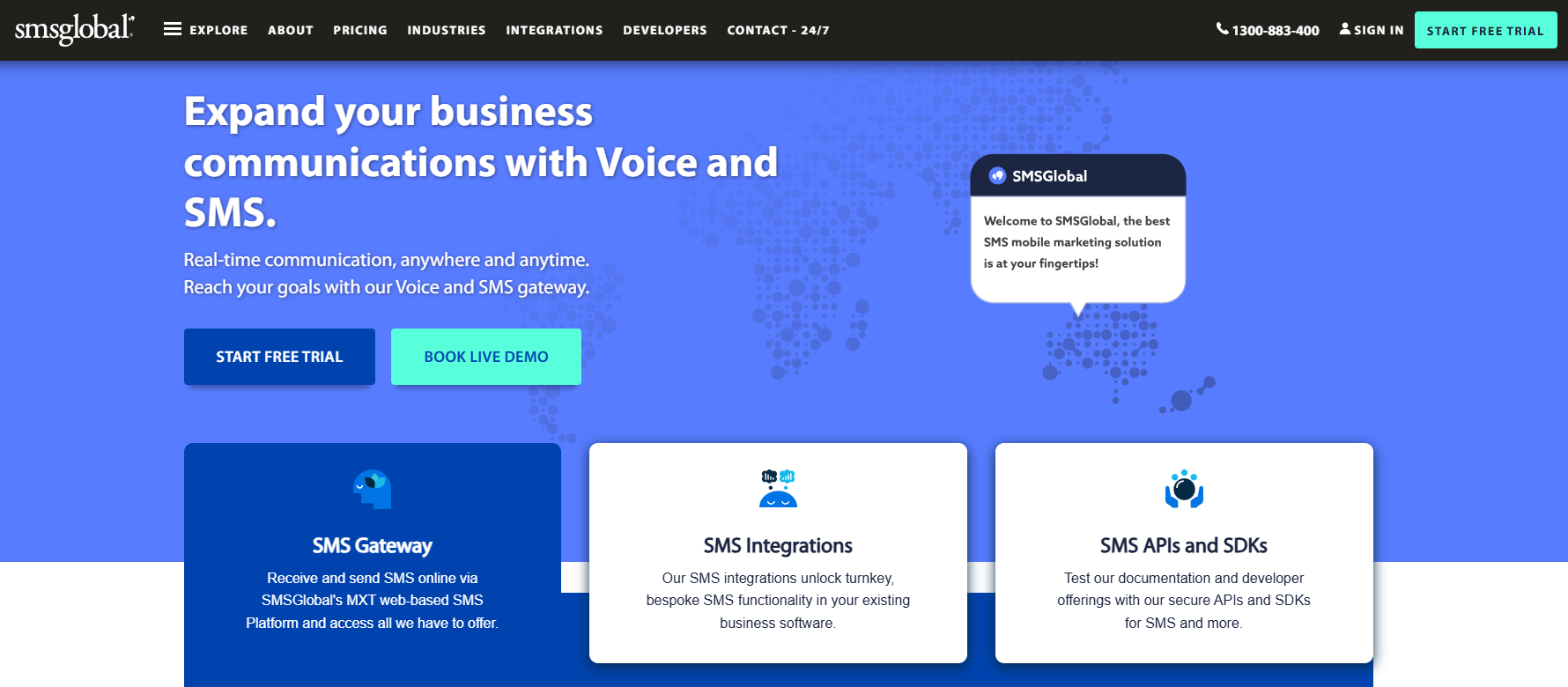
Parent accounts can assign credits, set permissions, review billing history, and track activity for each customer account. Custom branding is also available for these subaccounts.
SMSGlobal gives you control over what customers pay for messaging. You can set custom pricing and margins based on your own commercial model.
It also provides REST, HTTP, SOAP, and SMPP APIs that connect messaging with websites, CRMs, ERP systems, and existing applications.
8. Infobip
Infobip is a global cloud communications platform that provides CPaaS tools for SMS, MMS, RCS, WhatsApp, voice, email, and other channels.
You can connect these capabilities to your own products through Infobip APIs. Its Partner Connect program supports reseller relationships where the partner manages the customer relationship and commercial agreement.
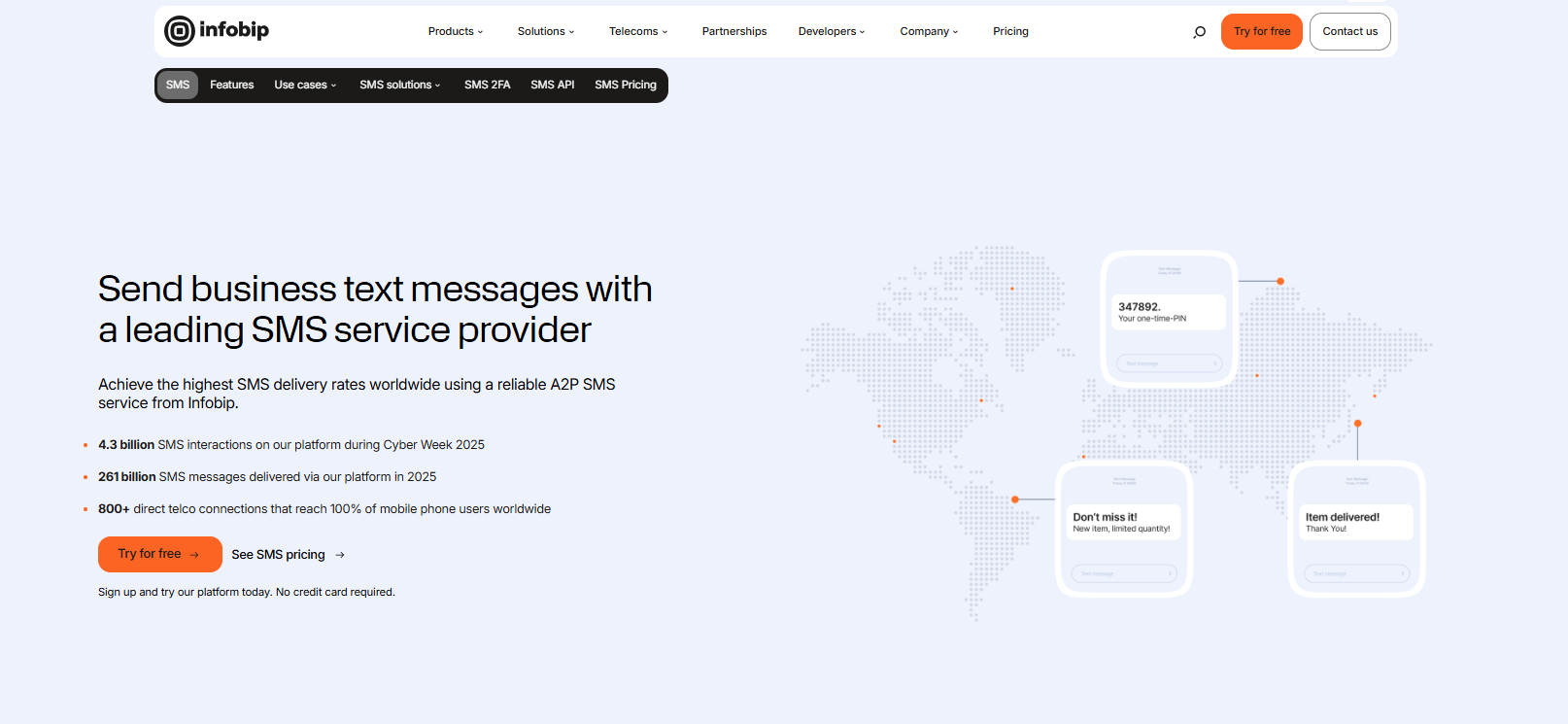
Infobip supports branded domains for shortened links, sender registration, URL tracking, delivery reporting, and inbound messaging. It covers regional requirements such as 10DLC, sending windows, and opt-in or opt-out management.
The platform provides more visible brand presentation through RCS Business Messaging. You can register verified senders and deliver marketing campaigns with interactive branded elements.
Its Messages API supports outgoing SMS messages, incoming messages, delivery reports, scheduling, failover between channels, and campaign reference IDs for reporting.
9. Kudosity
Kudosity is a business messaging platform that offers SMS, MMS, RCS, APIs, automation, and a white-label SMS product.
The reseller model puts more emphasis on commercial control than many API-first platforms. You can set margins on SMS, virtual mobile numbers, and keywords, then choose how clients are charged.
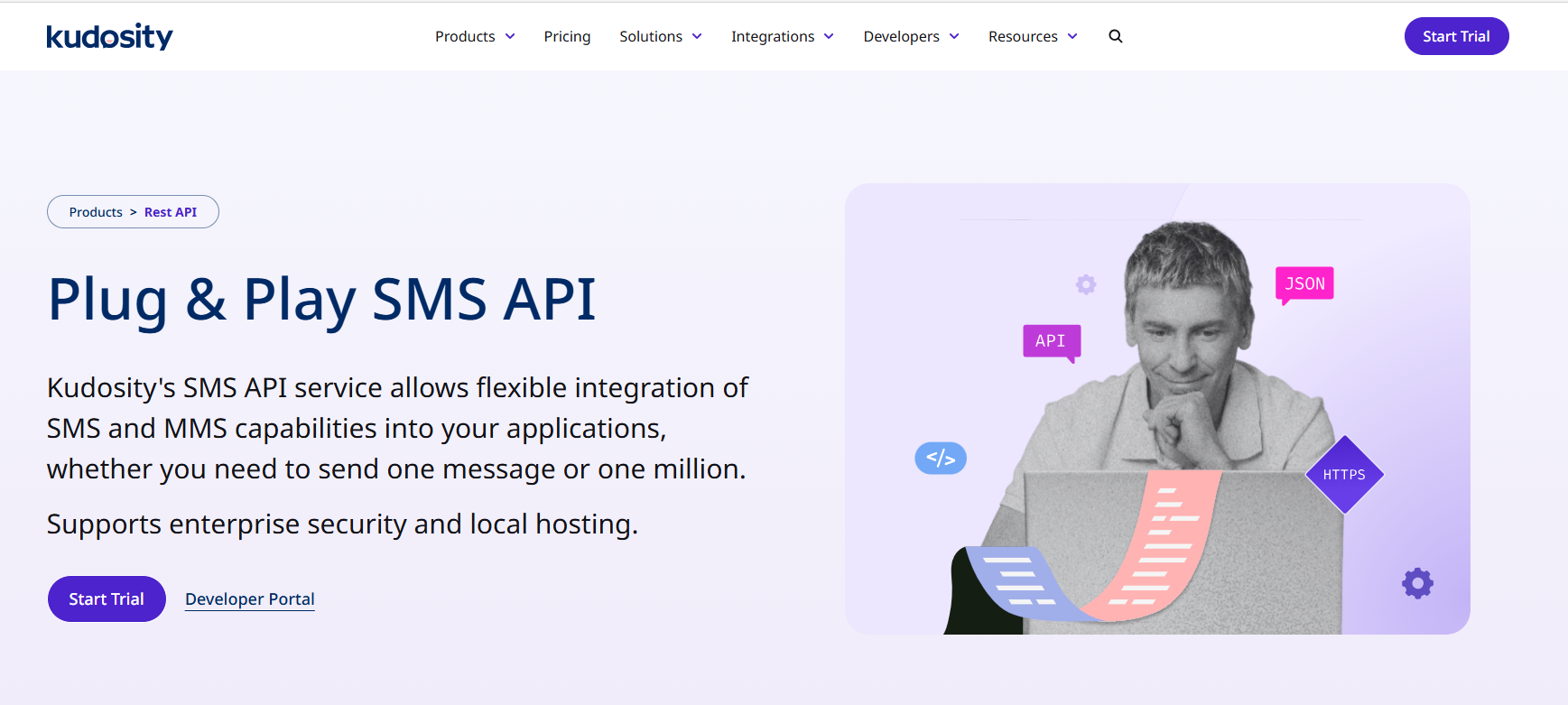
Automated card processing and invoicing are also available, which let the branded messaging product operate as a paid service under the partner’s business.
Client administration happens through parent and subaccounts. A master administrator can access client accounts for support or training, configure trial credits and limits, and manage the settings available to different customers.
Its REST API and other connectivity options let you connect those functions with your existing technology. It also gives you control over SMS pricing through adjustable margins and customer rates.
10. Vonage
Vonage is a cloud-based communications provider that provides programmable messaging, voice, video, and verification APIs.
One feature tied directly to branded texting is Vonage Branded Text. It can upgrade eligible SMS traffic to RCS without requiring you to replace your existing SMS integration.
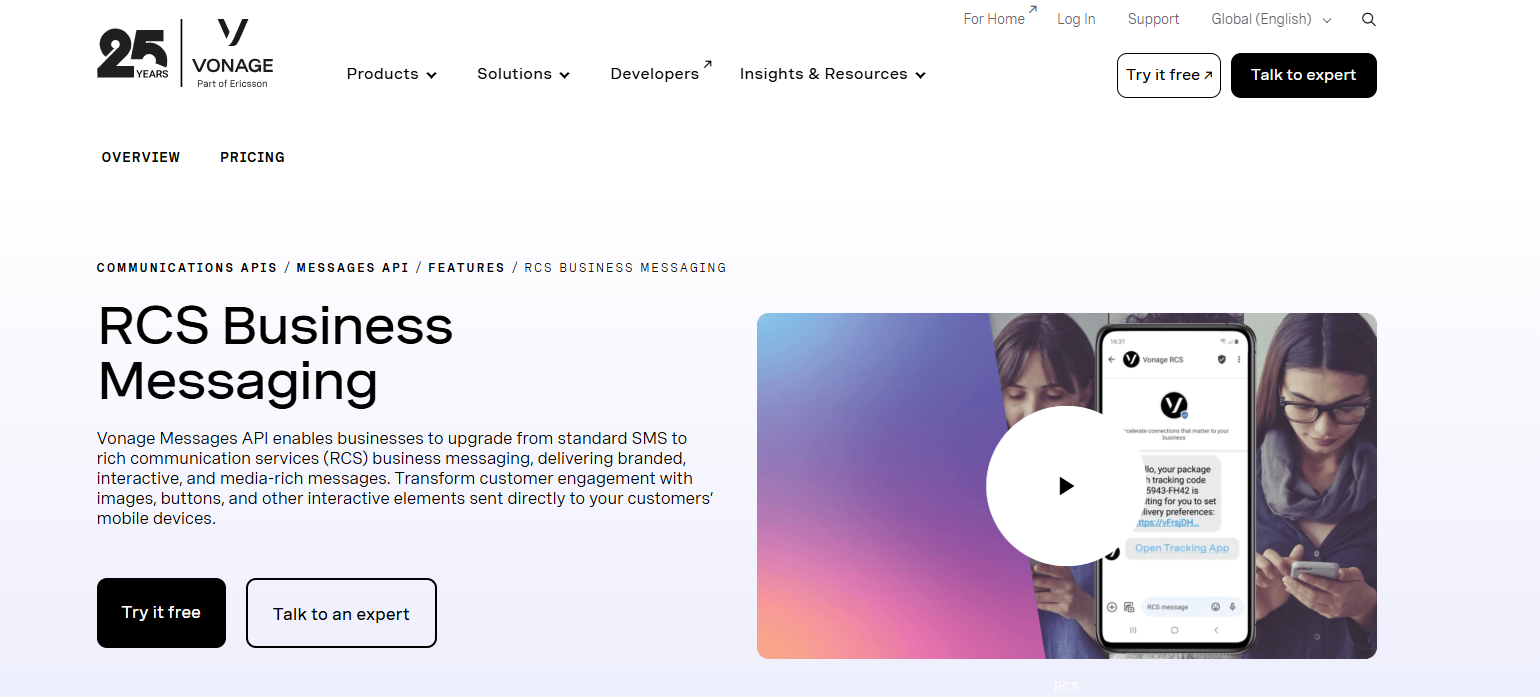
If you need more control over the RCS identity, you can create a brand and agent through Vonage's Channel Manager API. The agent profile can include a display name, tagline, brand color, logo, banner image, website, and customer contact details.
Vonage also lets you access RCS through the Messages API or Vonage Conversational Connect, depending on how you want to build the messaging experience.
The platform also provides separate 10DLC APIs to register brands, create campaigns, link numbers, and manage reseller information.
Must-Have Features of Branded SMS Software
The right feature set depends on whether you want branded texting for your own company or plan to offer it to customers.
Here are the main capabilities to compare when evaluating a branded SMS platform.
Custom Branding and White-Label Controls
White-label support varies between vendors. Some platforms only replace basic visual elements, while others remove the original provider from the interface, domain, notifications, and customer experience.
The best SMS app should let you control the customer-facing elements of the product, including your logo, brand colors, custom domain, product name, and client communications.
If you serve several customers or brands, check whether you can apply branding at the account level.
Two-Way Text Messaging
Conversational texting lets you communicate with individual customers and keep replies, conversation history, and contact details in one thread.
For team use, look for shared numbers, assignments, routing rules, and conversation ownership. These controls matter when several users handle two-way conversations through the same business text number.
Branded Bulk SMS Campaigns
If you need to send bulk text messages, look for audience lists, campaign scheduling, MMS, merge fields, and A/B testing.
Your bulk SMS software also needs controls for bulk campaigns, including sending limits and throughput. These become more important as message volume grows among customers, departments, or campaigns.
SMS Automation
Automation lets you build SMS workflows around specific times, actions, or customer events. You may use it for confirmations, follow-ups, onboarding sequences, appointment reminders, and recurring messages.
Trigger-based messages can respond to actions such as a form submission, appointment booking, status update, or missed task. SMS drip campaigns let you spread communication over several steps instead of sending everything at once.
Automated messages can also acknowledge a response before a team member takes over.
Keywords and Opt-In Tools
SMS keywords give your customers a direct way to subscribe, request information, or enter a specific messaging flow. A contact can text a chosen word and receive a response tied to that action.
QR codes and web forms provide additional opt-in paths. Your SMS app should record how and when each contact subscribed so you have a traceable consent record.
Consent records are especially important when you send promotional messages to subscribers.
Contact Management and Segmentation
Your messaging system should organize contact details, tags, custom fields, account information, and conversation history.
Advanced segmentation lets you create more specific groups based on lifecycle stage, location, activity, account type, or other criteria.
Accurate customer data also provides better context when deciding who receives each message.
Message Personalization
Branding goes beyond colors and logos. Your message content also needs to reflect the recipient’s relationship with your company.
Personalized text messages may include names, appointment details, locations, account information, recruiter names, or CRM fields.
Dynamic content lets you adjust parts of a message based on the information stored for each contact.
Shared Inbox and User Management
A shared inbox allows you to review incoming and outgoing conversations. Multiple members can see conversation history, claim threads, assign replies, and check who handled each interaction.
Permission controls let you decide who can send campaigns, access contacts, manage settings, export information, or view reports.
Role-based access also matters when several departments or client teams use the same system.
SMS API, Webhooks, and Embedded Messaging
Your deployment options determine how messaging fits into your existing product. An SMS gateway API may handle sending and receiving while your product manages the interface and workflows.
Webhooks can return delivery events and status changes to your system. They also let your application receive inbound messages from customers.
Contact sync, account provisioning, authentication, and single sign-on also matter when messaging becomes part of a larger software product.
CRM and Business Software Integrations
The best SMS marketing software connects with the systems where you already manage customers, candidates, appointments, or accounts.
Common connections include CRMs, ATS, HR systems, support software, automation tools, ecommerce platforms, and other business apps.
Bidirectional data sync is important because updates may need to move both ways. A text reply may need to appear in your CRM, while a CRM status change may trigger a new message.
Analytics and Reporting
Reporting tools should cover:
- Delivery rates
- Failures
- Replies
- Opt-outs
- Link clicks
- User activity
- Account usage
A web dashboard can give you one place to review these results for users or customer accounts.
Campaign reports help you track campaign performance among audiences, send times, and message variations. These results can also inform your broader SMS strategy.
Compliance and Consent Management
The Telephone Consumer Protection Act (TCPA) and FCC rules set consent requirements for certain automated calls and promotional text messages.
The platform should provide tools for consent records, opt-in management, STOP and HELP handling, suppression lists, quiet hours, and sender registration.
Some service providers also include SMS compliance tools for account policies, registration status, and audit history.
These features support your compliance process, but you remain responsible for meeting applicable laws and carrier requirements tied to business texting.
Launch a Branded SMS Experience Your Customers Recognize With TextUs
The messaging experience should strengthen your product. With TextUs, you can support customer conversations and SMS marketing campaigns under a brand your users already recognize.
If you want branded messaging to become part of your product, TextUs combines the interface, infrastructure, automation, and support in one offering.
TextUs gives you more flexibility than standalone bulk SMS marketing tools. You can choose a full white-label platform, Embedded Messenger, or REST API based on how much control you want over the experience.
You also don't need to write code for an entire messaging product. TextUs handles carrier infrastructure, 10DLC registration, deliverability controls, and ongoing support.
Book a demo with TextUs today to see how branded SMS can become part of your customer communication strategy in just a few clicks!
FAQs About Branded SMS Software
What is the best SMS marketing software?
TextUs is a strong option if you need core SMS features for everyday business communication.
It includes two-way texting, shared inboxes, campaigns, MMS, templates, scheduling, A/B testing, automated sequences, keywords, and contact management.
Is branded SMS the same as white-label SMS?
No. Branded SMS makes your texts recognizable through elements such as sender identity, branded links, and consistent messaging.
White-label SMS goes further by presenting the software itself under your brand. This may include your logo, colors, domain, interface, and customer-facing experience.
What is the difference between branded SMS and RCS?
Branded SMS combines standard SMS reach with recognizable sender details, branded links, and consistent message content. It also doesn't require an active data connection.
RCS adds verified profiles, logos, images, buttons, suggested replies, and read receipts. But these features depend on compatible devices, carrier support, and mobile data or Wi-Fi.
If you want to prioritize broad reach and fewer device dependencies, branded SMS provides a more consistent foundation.
Does branded SMS software support two-way texting?
Many branded SMS platforms support replies, shared inboxes, routing, and conversation history. This gives customers another direct communication option alongside phone calls.
Two-way texting can also boost sales through quick follow-ups, service questions, and timely responses.
Continue Reading



Frequently Asked Questions
Business Texting
Built for Results
Create and convert pipeline at scale through industry leading SMS software