
Healthcare Staffing Trends: What to Expect in 2027 and Beyond
Learn about 12 healthcare staffing trends shaping 2026 and how TextUs helps recruiting teams keep candidate communication fast and organized.

Written by
Adam Hamdan
Published
November 6, 2026

Healthcare staffing is settling into a new phase after years of pandemic-driven volatility.
Travel demand has leveled off, while hiring needs continue to differ by role, location, and specialty. Locum tenens, allied health, advanced practice roles, and flexible staffing models also remain important parts of workforce planning.
Because of this, more organizations are rethinking how they combine internal teams, temporary coverage, and specialized clinical talent to meet changing care needs.
The challenge for healthcare staffing services is less about reacting to one big shortage and more about understanding where hiring needs are shifting.
In this article, we take a closer look at the healthcare staffing market, the workforce trends affecting recruitment, and how you can build a more prepared hiring strategy.
TL;DR
- Healthcare staffing in 2026 remains strained by uneven talent shortages, changing workforce expectations, and rising care needs, pushing employers toward more flexible and cost-conscious hiring strategies.
- Healthcare staffing is shaped by changing candidate expectations, uneven shortages, AI-assisted recruiting, flexible staffing models, wider float-pool use, and shorter travel contracts.
- Pay transparency, retention priorities, vendor consolidation, locum tenens, specialty talent needs, and predictive workforce planning will also influence healthcare staffing.
- Prepare for healthcare staffing trends by reviewing high-risk roles and markets, planning different hiring scenarios, setting recruitment triggers, strengthening recruiting resources, and checking your strategy regularly.
- TextUs helps you reach candidates faster, automate routine outreach, route responses with keyword-based flows, and keep staffing communication organized.
The State of Healthcare Staffing in 2026
According to the 2026 NSI National Health Care Retention & RN Staffing Report, 33.1% of hospitals reported an average registered nurse (RN) vacancy rate of 10% or higher.
This shows how workforce gaps continue to affect hiring capacity, scheduling, and access to qualified talent for healthcare organizations.
The healthcare staffing market in 2026 reflects ongoing workforce challenges and changing hiring needs.
Many specialties still face limited talent supply, while employers place greater focus on controlling labor costs and building stable permanent staff pipelines.
Workforce gaps remain a major concern as healthcare workers leave roles, retire, or move toward positions with better schedules and career options.
An aging population and rising demand for medical services are also making it harder for employers to maintain enough qualified staff to protect patient care.
Healthcare staffing is no longer defined by shortages alone. Changes in workforce expectations, technology, labor costs, flexible staffing models, and specialty demand are all influencing how healthcare facilities recruit and plan.
12 Healthcare Staffing Market Trends to Watch in 2027
Healthcare staffing continues to change as workforce needs, technology, costs, and candidate expectations evolve. Here are 12 healthcare staffing trends worth watching.
1. Shifts in Candidate Expectations
Beyond competitive pay rates, many healthcare professionals now value schedule flexibility, faster communication, career options, and better work-life balance.
As a recruiter, that means every interaction counts. Slow replies, vague job details, or long gaps between interviews and updates can push a candidate toward another opportunity.
SMS recruiting helps you keep conversations moving with faster job outreach, interview scheduling, status updates, and follow-ups.
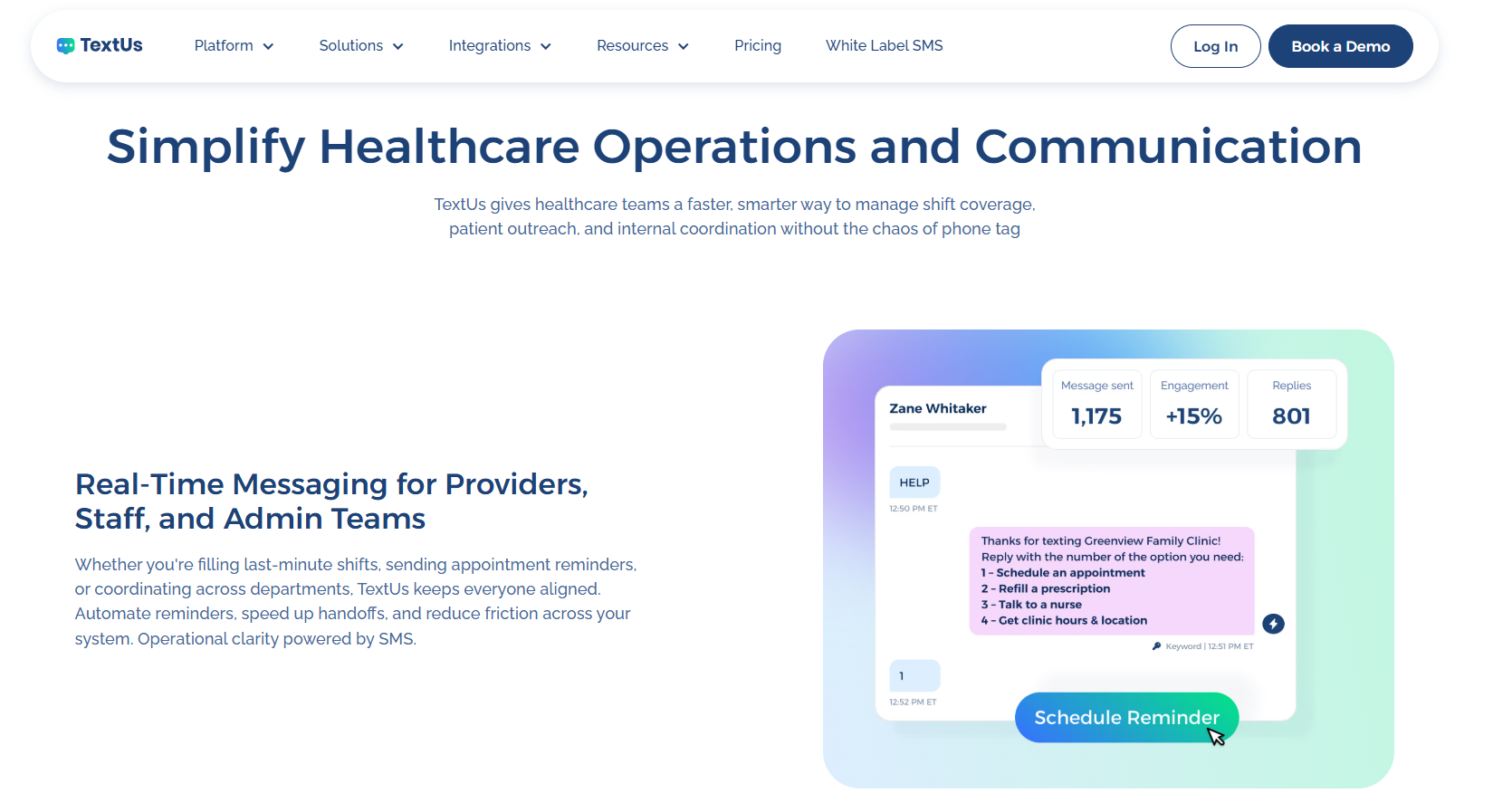
Text recruiting software like TextUs supports personalized two-way messaging and automated follow-ups, so you can stay responsive without relying on calls and email alone.
A better candidate experience starts with timely, specific communication. When you make it easy for candidates to get answers, you have a better chance of keeping them engaged through the recruitment process.
Book a demo with TextUs today to see how texting can help you reach healthcare candidates faster and create a more responsive recruiting experience!
2. Persistence of Uneven Workforce Shortages
Workforce gaps vary widely by specialty and location. Some markets have a larger local talent supply, while staffing shortages remain difficult for employers filling specialized clinical roles.
Geography plays a major part in that difference. Rural areas and underserved areas often compete with larger markets for qualified professionals while offering a smaller local candidate pool.
You need regional data to understand where sourcing will require greater effort. Local competition, specialty availability, relocation interest, and licensing requirements provide a more useful view than national averages alone.
That information also helps you set realistic expectations with clients before a search starts, especially when local supply is limited.
3. Rise of AI-Assisted Candidate Matching
AI in recruitment is part of the broader digital transformation that changes how you sort talent and identify potential fits.
AI-driven recruitment tools compare credentials, licenses, specialty experience, location, and shift preferences against open roles in far less time than you could review each profile by hand.
The value comes from spending less time searching through large databases and more time speaking with candidates who already meet the requirements.
Once AI narrows the pool, SMS segmentation makes outreach more targeted. TextUs lets you organize matched candidates by factors such as specialty, location, availability, or assignment preference before sharing opportunities.
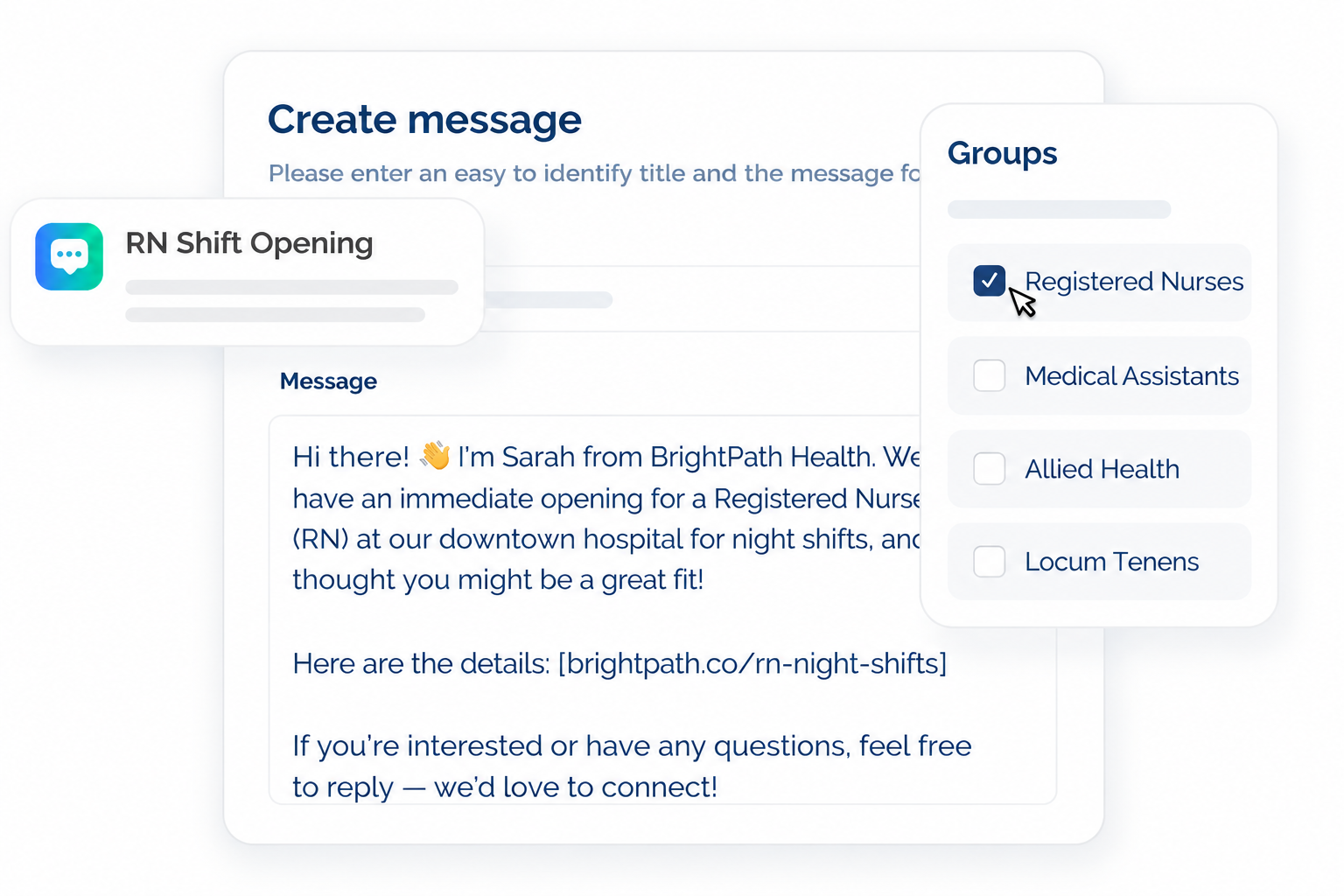
Text marketing then connects that matching process with recruiter action. AI handles initial sorting, while you decide who fits the role and how to move the conversation forward.
4. Expansion of Healthcare Workforce Demand
The healthcare sector continues to expand as population aging and greater access to care increase the need for healthcare services.
This growing demand is leading hospitals, outpatient centers, home health providers, and long-term care organizations to hire more people.
Chronic diseases also require ongoing treatment, monitoring, and specialty services. As the number of patients receiving ongoing care increases, employers need enough clinical and support talent to maintain capacity.
Changes in patient volumes provide another signal. Higher admissions or service use often affect staffing levels before permanent hiring catches up.
5. Broader Use of Internal Float Pools
Health systems are expanding internal float pools to cover routine vacancies, schedule changes, and short-term census fluctuations with existing talent.
Clinicians within these pools may move between units or locations based on immediate coverage needs. This flexibility supports faster coverage by enabling facilities to move available clinicians where demand is highest.
That changes when outside staffing partners enter the picture. External agencies see fewer routine requests while retaining an important role in specialty searches, difficult locations, and coverage needs an internal pool cannot absorb.
Float pools also support better workforce management by giving leaders more control over coverage and labor costs. They can help reduce costs tied to overtime or last-minute agency use while still protecting access to skilled staff.
6. Shift Toward Shorter Travel Contracts
In travel nursing, shorter assignments are becoming another option alongside the traditional 13-week contract when coverage needs are temporary.
Four- and eight-week assignments offer more flexibility when census changes, leave coverage, or seasonal needs make longer commitments less practical.
Shorter assignments change how you source and present opportunities. Candidates need to understand the contract length, schedule, start date, and extension potential upfront so they can decide whether the role fits their plans.
This also puts more emphasis on contract staffing and temporary staff who can step into roles with shorter notice. In some cases, per diem talent may also fill brief coverage gaps that don't require a full travel assignment.
7. Growth of Pay Transparency Requirements
Pay transparency rules are changing how healthcare services write and publish job openings.
According to California’s Department of Industrial Relations, employers with 15 or more employees must include the pay scale in job postings.
Colorado’s Department of Labor and Employment also requires covered postings to disclose compensation, benefits, and application details.
Therefore, compensation details need to be accurate before a role goes live. You also need to understand which state rules apply when you recruit for remote positions, multi-state assignments, or clients with locations in several jurisdictions.
Greater transparency can also change candidate conversations. Applicants see compensation earlier, which gives them more information to compare roles before they respond or enter screening.
8. Greater Focus on Staff Retention
Many healthcare workers reconsider roles because of workload, scheduling, assignment experience, or well-being. Replacing experienced clinicians takes time and money.
Candidate nurturing needs to continue throughout the placement. Regular check-ins help you uncover concerns around workload, scheduling, manager support, or well-being before those issues lead someone to leave early.
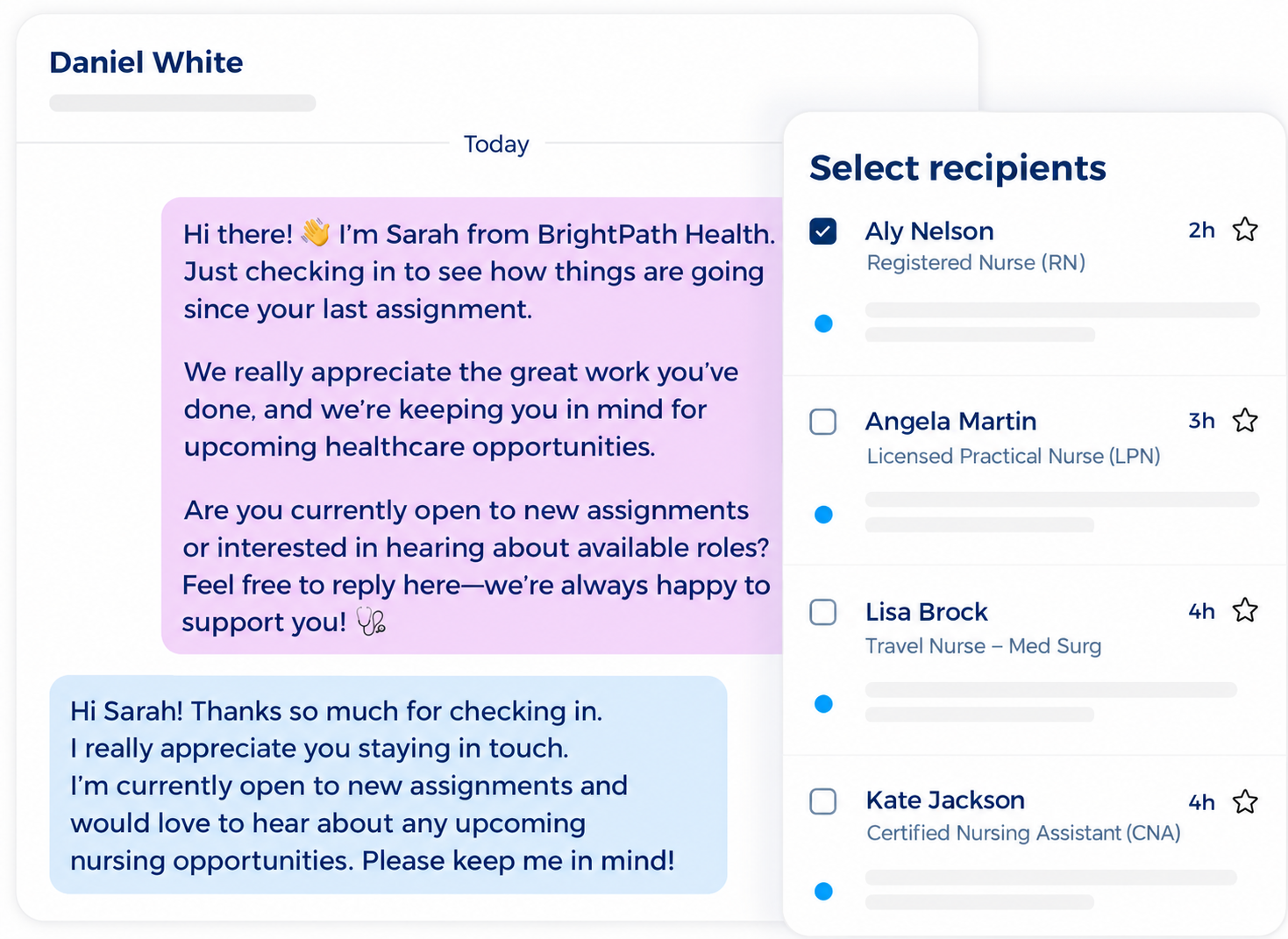
Texting fits naturally into that retention strategy. TextUs supports assignment check-ins, renewal conversations, satisfaction surveys, and re-engagement messages.
A steady nurturing process also strengthens redeployment. When you know who is satisfied and who is open to another role, you have a better chance of retaining experienced talent for future openings.
9. Consolidation of VMS and MSP Partnerships
Healthcare employers are tightening how they manage outside staffing vendors through vendor management systems (VMS) and managed service provider (MSP) programs.
Some prefer a smaller group of partners that meet defined standards for fill rates, submission quality, pricing, credential accuracy, and regulatory compliance.
As a result, access to requisitions may depend on agency performance as much as talent availability.
VMS and MSP programs also provide greater visibility into supplier results and labor spend. Clients can compare vendors through common metrics rather than managing each relationship through a separate process.
10. Continued Demand for Locum Tenens
Physician shortages continue in many specialties and locations. The increasing reliance on temporary staffing is keeping locum tenens important.
Locum tenens physicians help cover vacancies, leaves, seasonal needs, and service gaps while clients search for long-term hires.
These assignments require a different approach from standard permanent hiring. Availability, state licensing, specialty experience, credentialing timelines, and assignment length all affect whether a candidate fits the role.
Clients also rely on locum coverage when they need to maintain access to healthcare providers without leaving positions open for long periods. This is important for specialties where permanent recruitment takes longer or local talent supply is limited.
11. Rising Need for Allied and Advanced Practice Talent
Healthcare hiring now covers a wider range of clinical professions, not just traditional nursing positions.
Allied healthcare staffing includes therapists, imaging specialists, laboratory professionals, respiratory therapists, and medical assistants.
Advanced practice clinicians also support a larger share of care delivery. Nurse practitioners and physician assistants work in primary care, specialty services, outpatient settings, and locations where physician availability is limited.
Each profession comes with different licensing, certification, scope-of-practice, and experience requirements. Your sourcing strategy needs to reflect those differences rather than treating clinical talent as a single candidate group.
12. Wider Use of Predictive Staffing Analytics
Workforce analytics shift staffing decisions from individual requisitions toward longer-term planning.
Predictive analytics reveal patterns in vacancies, turnover, scheduling, workforce availability, and labor statistics that are difficult to see from isolated job orders.
It also adds a forward-looking view. Data may show which specialties, locations, units, or shifts are likely to require additional recruiting attention before vacancies reach an urgent stage.
Instead of waiting for every request to arrive, you can adjust sourcing priorities, review candidate availability, and prepare recruitment resources around likely workforce needs.
How to Prepare for Future Healthcare Staffing Trends
Future workforce changes will affect how you recruit, place, and retain healthcare talent. Here are several ways to prepare your staffing strategy for what comes next.
Assess Vulnerable Roles and Markets
For healthcare systems, some roles, specialties, and locations carry more recruiting risk than others.
Vacancy age, fill rates, turnover, licensing needs, and candidate availability can show where your approach is most exposed.
Patterns from several searches can reveal deeper workforce issues. A specialty that stays open longer or a region with fewer candidates may also affect quality care.
This type of review supports proactive workforce planning. It also shows where stronger sourcing coverage or added staffing solutions may be needed.
Strengthen Your Recruiting Resources
Sourcing channels, candidate databases, recruiter expertise, and communication tools all affect how well you respond when hiring needs shift.
SMS for staffing agencies helps handle repeatable communication without relying on more calls or individual emails.
TextUs offers templates, campaigns, and automated sequences for job outreach, screening questions, interview reminders, and other repeatable recruiter tasks.
You also spend less time repeating the same outreach or chasing responses through separate channels. TextUs lets you standardize common recruiting text messages while adjusting communication for different roles, specialties, or candidate groups.
Stronger communication resources can lead to faster candidate contact and more recruiter time for screening and placement decisions.
Book a demo with TextUs today to see how business texting helps you stay organized and spend more time on candidate screening and hiring decisions!
Prepare for Different Hiring Scenarios
Different market conditions can change hiring needs with little notice. Your planning should account for periods of increased demand, seasonal shifts, service expansion, and sudden vacancies that require a faster recruiting response.
Several scenarios can be mapped out before the next forecast period begins. One plan may cover steady hiring, while another addresses roles that move into high demand or locations where candidate supply becomes limited.
This preparation gives you a defined response when conditions change. You know which sourcing channels, candidate pools, and internal resources to activate instead of rebuilding the approach each time priorities shift.
Set Your Recruitment Triggers
Specific trigger points can help you decide when recruiting activity needs to change.
Vacancy age, fill rate, candidate response, turnover, and unfilled shifts can signal when a role needs a different sourcing or communication approach.
Your ATS or internal process defines those thresholds, while texting supports the next step.
For example, once a priority role stays open past a set period, you can send a campaign to candidates who match the specialty, location, experience, or availability needed for the role.
TextUs also supports personalized journeys through keyword-based flows.
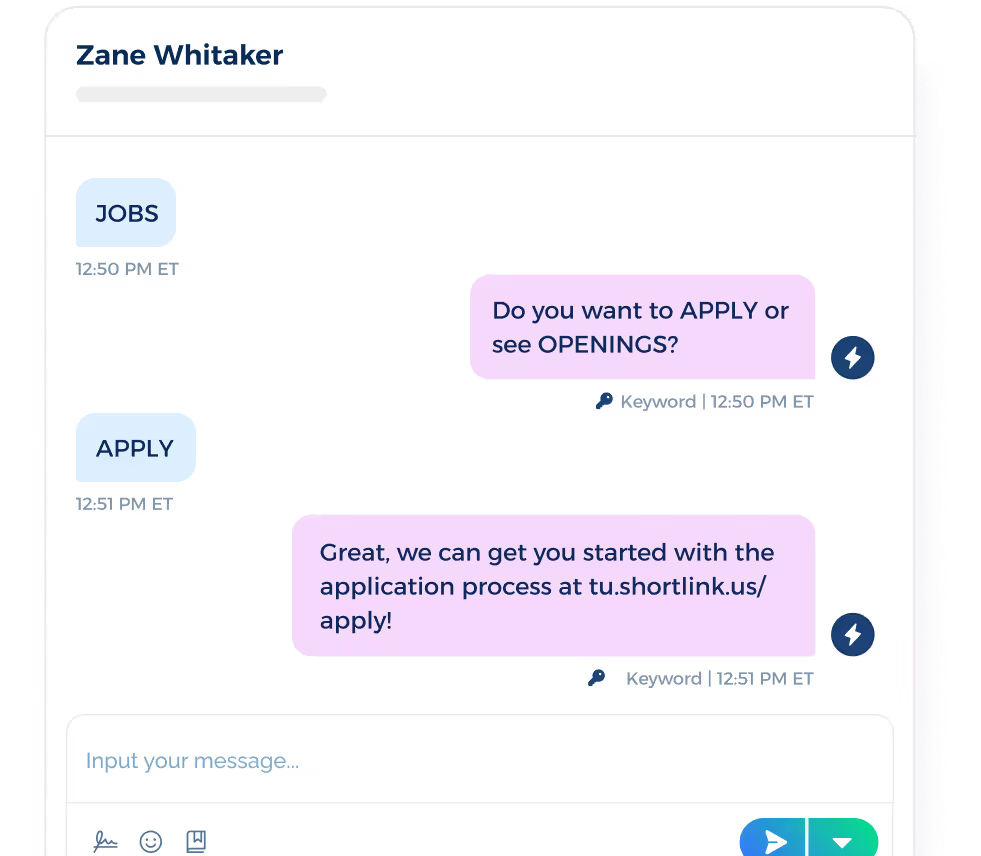
Each SMS keyword can include up to 20 dynamic response triggers. Candidate replies can guide different paths based on interest or intent.
Book a demo with TextUs today to see how dynamic keyword flows can help you route candidate responses into the right recruiting path!
Review Your Strategy Regularly
Metrics such as fill rate, time to hire, response rate, placement volume, and retention can show whether your current approach still matches the market.
A scheduled review also helps you separate short-term changes from broader key trends. Changes in market growth, specialty needs, or client hiring plans require you to adjust sourcing priorities, recruiter focus, or communication methods.
Regular performance reviews help you decide which recruiting practices to expand, which ones need refinement, and where your resources will have the most impact.
Turn Texting Into a Healthcare Recruiting Advantage With TextUs
Healthcare recruiting involves constant communication from initial outreach through placement.
SMS is an innovative solution for recruiting, especially when candidates need fast updates around jobs, interviews, credentials, shifts, or assignments.
TextUs provides a business texting channel built around recruiter workflows. You can launch campaigns for high-priority openings and automated sequences for screening, reminders, and candidate re-engagement.
Shared inboxes also help staffing teams coordinate conversations when several recruiters manage the same talent pool. Recruiters can see message history, assign ownership, and reduce duplicate outreach when multiple roles need coverage.
The platform also fits broader workforce management needs through integrations with systems such as Bullhorn, Greenhouse, Workday, JobDiva, and LaborEdge.
TextUs reporting also shows delivery, reply, and click activity, so you can see which outreach earns engagement. Those insights allow you to refine recruiting communication for different specialties, locations, and staffing needs.
Book a demo with TextUs today to explore how SMS can support urgent healthcare recruiting and day-to-day candidate communication!
FAQs About Healthcare Staffing Trends
What are the top 3 trends in the healthcare industry?
Three major healthcare trends in 2026 are persistent workforce challenges, greater adoption of cutting-edge technology, and continued investment in healthcare infrastructure.
The U.S. Bureau of Labor Statistics projects healthcare and social assistance employment to grow 8.4% from 2024 to 2034, faster than any other major sector.
What are the current trends in staffing?
Current staffing trends include flexible workforce models, AI-assisted recruiting, greater use of workforce analytics, and wider adoption of VMS and MSP programs.
Providers such as AMN Healthcare, Cross Country Healthcare, and Aya Healthcare are examples of companies offering technology-supported workforce management, analytics, and staffing services.
What are the current trends in the healthcare workforce?
Healthcare workforce trends include flexible labor models, greater focus on retention, wider use of workforce analytics, and continued need for allied and advanced practice talent.
Healthcare staffing also differs from many other industries because clinical roles require specific licenses, certifications, credentials, and specialty experience.
Is there a staffing crisis in healthcare?
Healthcare continues to face serious staffing challenges, but the severity varies by profession and location.
The National Center for Health Workforce Analysis (NCHWA) projects a shortage of 141,160 physicians by 2038, with 30 of the 35 physician specialties it models expected to face shortages.
Health Resources and Services Administration (HRSA) also projects nonmetro areas to face a 58% physician shortage by 2038, compared with 5% in metro areas.
Continue Reading



Frequently Asked Questions
Business Texting
Built for Results
Create and convert pipeline at scale through industry leading SMS software