
SMS for Staffing Agencies: A Guide to Faster Hiring
Learn how SMS for staffing agencies supports faster hiring and candidate communication and how TextUs helps teams manage outreach, replies, and compliance

Written by
Adam Hamdan
Published
August 31, 2026

The recruitment process depends on several moving parts, from candidate responses to client requests and shift coverage. When one part slows down, the rest of the process follows.
Phone calls and email still have value, but delayed responses can push back screenings, interviews, placements, and urgent shift coverage.
Business texting creates a faster communication channel for candidate outreach, recruiting workflows, worker coordination, and client updates.
In this guide, we will explain how SMS for staffing agencies helps improve recruiting, its use across the hiring process, and the steps behind an effective texting strategy.
TL;DR
- Texting helps staffing firms reach candidates faster, shorten time to fill, organize high-volume hiring, personalize follow-up, re-engage talent, and reduce manual work.
- SMS supports the full staffing lifecycle, from sourcing and application confirmations to follow-ups, candidate re-engagement, pre-screening, interview coordination, status updates, offers, onboarding, first-day instructions, shift coverage, schedule changes, assignment reminders, payroll notices, assignment completion, redeployment, referrals, and review requests.
- A strong SMS strategy sets goals, maps workflows, defines audiences, organizes contact data, manages consent, selects a registered number, connects with an ATS or CRM, automates follow-ups, routes replies, sets human handoffs, creates a pilot test, and includes staff training.
- TextUs combines two-way texting, shared inboxes, automation, ATS integrations, and delivery safeguards to speed up recruiting and move more applicants toward placement.
How Texting Improves Recruiting and Workforce Coordination
Text marketing creates a faster connection between applicants and recruiting staff across each stage of the hiring process.
Faster Candidate Outreach
Prompt candidate outreach helps recruiting staff contact new candidates while their interest remains active.
The TextUs 2026 SMS Engagement + Benchmark Report found that recruiting and staffing organizations achieved an average one-to-one SMS response rate of 34.7%.
This reflects the value of texting for faster applicant contact, shorter hiring delays, and more responsive recruiting workflows.
A short introduction about the role, location, pay range, and next step makes open positions easier to review from a mobile device.
Shorter Time to Fill
A timely reply moves applicants from initial interest to screening without several missed calls. That speed makes it easier to fill urgent roles while the applicant is still available and interested.
Texting also simplifies interview scheduling because applicants can confirm a proposed time or request another option in the same thread.
Better Support for High-Volume Hiring
High-volume staffing operations involve many active roles, locations, shifts, and applicant groups. Manual calls become hard to track when multiple recruiters contact the same database at once.
A shared inbox keeps incoming questions visible to authorized staff instead of leaving them inside separate devices.
Features such as conversation assignment also direct each reply to the coordinator responsible for that role, branch, or account.
More Personalized Communication
Candidate communication should feel personal without forcing staff to write every text from scratch.
Message templates provide a consistent starting point, while names, role details, locations, and next steps keep each text specific to the recipient.
The full conversation history also allows staff to review previous questions, preferences, and updates before they answer new candidate replies.
Better Talent Pool Re-Engagement
An existing talent pool may contain qualified people who finished a previous placement, paused their search, or were not selected for an earlier role.
Texting offers a practical way to reconnect based on location, work preferences, and verified skills. Targeted outreach keeps each opportunity relevant instead of sending every vacancy to the entire database.
Less Administrative Work
Scheduled text messages reduce repeat tasks such as application confirmations, document reminders, interview notices, and first-day instructions.
A defined process also helps each applicant receive the expected information at the correct stage. An audit trail shows what was sent, when it was delivered, and how the recipient answered.
How Staffing Firms Use SMS Across the Hiring Process
SMS keeps communication moving across each stage of the recruitment process. Here are the main ways staffing agencies use texting to keep applicants informed and hiring tasks on track.
Candidate Sourcing and Talent Attraction
Text-to-apply campaigns allow prospects to express interest through a short code, QR code, career page, or job advertisement.
You can connect these entry points with location, role, and shift information so each response enters the proper recruiting path.
A written opt-in should explain who will send the messages and what type of communication the person should expect.
New Application Confirmations
An application confirmation tells the applicant that their information reached the recruiting staff. The message should name the company, mention the applied role, and explain what happens next.
An SMS staffing workflow may send this confirmation as soon as an application enters the applicant tracking platform.
Fast acknowledgment reassures applicants and reduces repeat calls about whether the submission went through.
Candidate Follow-Up
A short follow-up can request missing details such as shift preference, work location, experience, or earliest available date.
The message should focus on one action so the recipient knows what information to send back.
You should text candidates with context instead of sending vague questions from an unknown number. Specific details about the opportunity make the request easier to recognize and answer.
Past Candidate Re-Engagement
Previous applicants and former contractors may already have the background needed for a new opening. A targeted message can reconnect with people whose location, experience, and prior interests match the role.
The full history of earlier conversations and placements gives you useful context before contact begins. This record prevents repeated screening questions and makes the new message more personal.
Candidate Pre-Screening
Longer assessments and sensitive discussions belong in a call, secure form, or formal interview.
Text screening works for short questions about work authorization, location, shift preference, certifications, and earliest available date.
Questions should remain simple enough for a person to answer from a mobile device. More candidates respond when the message asks for one or two specific details instead of a long list.
Interview Scheduling
Texting shortens the back-and-forth that comes with finding a suitable interview time. You may offer a few options or send a link that displays available appointment slots.
The scheduling message should include the role, interview format, time zone, and expected duration. A direct route to the right recruiter also gives the applicant somewhere to send questions before confirming.
Interview Reminders and Confirmations
Reminder messages should repeat the date, time, location, format, and preparation requirements. Virtual interviews also need the meeting link and any instructions for joining the call.
Simple interview confirmations let applicants reply with a word or number to confirm attendance. The response also tells your recruiting staff who may need another reminder or a rescheduling option.
Interview Rescheduling and Cancellation
Schedule conflicts don't always mean that an applicant has lost interest.
A text that offers another appointment or a cancellation option saves an interview that might otherwise become a missed meeting.
The conversation should remain respectful. Fast rescheduling also keeps the vacancy moving while preserving the relationship with the applicant.
Candidate Status Updates
Applicants lose interest when several days pass without an update. A brief text can explain that the application remains under review, client feedback is pending, or the position has been placed on hold.
Status messages should provide useful information without promising a decision date that the company cannot meet. Consistent contact shows respect for the applicant’s time and reduces repeat questions.
Offer Follow-Up and Acceptance
A text can alert the selected applicant that an offer is ready in their email or secure candidate portal. The message should identify the role, note any response deadline, and provide a contact for questions.
Formal pay, benefit, and contract details should remain in the official offer document. Texting serves as the prompt that directs the applicant to review and accept through the approved channel.
Onboarding and Document Reminders
Onboarding texts remind new hires about background checks, tax forms, identity verification, training, and portal tasks.
Sensitive records should go through a secure portal rather than ordinary text messages. The message should direct the recipient to the approved portal and provide assistance when access problems occur.
Start-Date and First-Day Instructions
First-day texts should include the date, reporting time, address, site contact, dress requirements, and entrance instructions.
Parking, transportation, identification, and equipment details should also appear when they affect arrival.
A reminder sent during the week before the start date gives the worker time to ask questions or report a conflict. Another short notice before the shift confirms that the instructions have not changed.
Open-Shift Alerts
Open-shift messages should go only to qualified people whose location, role, and work preferences match the request.
High-volume alerts require careful audience selection so people do not receive unsuitable opportunities. This approach protects engagement and produces better response rates than repeated blasts to the entire database.
Shift Confirmations
A shift confirmation records who accepted the assignment and which shift the person agreed to work. The message should repeat the hours, site, contact person, arrival instructions, and cancellation process.
This written record lets coordinators manage coverage without relying on memory, spreadsheets, or disconnected message threads.
Urgent and Same-Day Shift Coverage
Same-day requests need a short message that places the most important facts first. The role, location, shift time, pay, and response deadline should be visible without opening another page.
An alert for a critical vacancy may be sent to several qualified people, but the first reply should not count as a confirmed placement until staff verifies the selection.
Schedule Changes and Callout Communication
Texting provides a fast path for sharing delayed starts, shortened shifts, location changes, or site closures. Workers should also have a defined way to report an absence or late arrival.
A shared process keeps coverage requests visible when an individual recruiter is unavailable. The record also prevents several staff members from contacting the same replacement worker at once.
Assignment Reminders
Assignment reminders help workers arrive with the correct information and equipment.
The message may include the client address, supervisor, reporting point, dress code, safety requirements, and shift hours.
These notices are useful for temporary placements where people may work at several sites within a short period. Specific instructions make the first shift easier for both the worker and the client.
Timecard and Payroll Reminders
Payroll texts remind workers about timecard deadlines, missing hours, approval requirements, and holiday schedules. The notice has to direct people to the official payroll portal or approved contact.
Staff should avoid requesting bank details or sensitive identity information by text. A secure process protects employees while helping payroll staff resolve incomplete records before processing begins.
Assignment Completion
An end-of-assignment text should confirm the final work date and explain any remaining steps.
Timecard submission, equipment return, exit documents, and final payment information all require reminders.
The closing message may also ask whether the worker wants to hear about future opportunities. This question keeps the relationship active without assuming continued contact.
Candidate Redeployment
Redeployment outreach needs to begin before a current placement ends whenever another suitable role is available.
The message can mention the new location, schedule, expected duration, and next action.
You can review performance, preferences, and recent feedback before suggesting the next position. This preparation keeps the offer relevant and reduces gaps between assignments.
Referral and Review Requests
Referral texts should explain the type of worker or experience the company needs. A short clickable URL may direct the recipient to a referral form that records contact details and consent.
Review requests need to follow a positive interaction, completed placement, or resolved concern.
Business texting tools like TextUs keep these requests separate from messages sent through personal phones, so the company retains access even when a recruiter leaves.
How to Build an SMS Strategy for Your Staffing Agency
A strong texting strategy connects each communication with a defined goal, audience, and stage of the recruiting workflow.
Below are the key steps for building a structured plan that staff can follow and improve over time.
Step #1: Define Your Staffing SMS Goals
Every texting program needs a specific outcome tied to recruiting, placement, or workforce coordination.
This may include faster applicant contact, better shift availability, more booked interviews, fewer no-shows, or shorter placement times.
Each goal should include a starting point and a target so progress has a useful reference. The selected goals should also reflect the role types, hiring volume, and workforce needs within your industry.
Step #2: Map Your Communication Workflow
A workflow map shows where texts should enter the applicant and placement process.
Each stage should name the sender, trigger, expected response, and next action for different message types.
The map can expose slow handoffs, repeated follow-ups, and updates that depend on staff memory. These gaps reveal common mistakes that templates, scheduled texts, or automation may prevent.
Step #3: Identify Your Audiences
Different workforce groups need different information, timing, and follow-up rules.
Healthcare staffing, light industrial, food service, and manufacturing recruitment each require distinct screening questions, shift details, and credential reminders.
Past applicants, active contractors, former placements, client contacts, and internal personnel should also remain in separate audience groups. This separation prevents unrelated contacts from receiving messages that do not fit their needs.
Step #4: Organize and Segment Candidate Data
Contact records should include details that affect who receives each text.
Useful fields may cover role type, location, shift preference, experience, certification status, pay expectations, recent activity, and placement history.
SMS segmentation makes outreach more focused and limits contact with people who do not match the opportunity.
Data reviews should also remove duplicate records, outdated numbers, and contacts who should no longer receive updates.
Step #5: Establish Consent and Record Keeping
The stored information should include the wording shown at signup, the contact number, the date, the source, and the type of communication covered.
Before sending promotional messages, the staffing agency should confirm that the opt-in covers this message type.
Written rules should explain how staff handles consent changes, unsubscribe requests, and SMS opt-out responses such as reply STOP.
Accurate records make SMS compliance work easier when a contact questions why a message was sent or asks to change their preferences.
Staff should also have a defined process for updating the contact record and preventing future texts that fall outside the person’s consent.
Step #6: Select Your Staffing Texting Number
Your chosen business number should match how recipients know the organization and the expected texting volume.
Options may include a registered local number, a verified toll-free number, an existing text-enabled company line, or a dedicated short code.
A local 10-digit number is ideal for recruiting outreach because it supports familiar, two-way conversations throughout the candidate journey.
Applicants may use the same thread to answer screening questions, confirm interviews, request another time, complete onboarding steps, and ask about upcoming work.
Business texts sent from local numbers must follow 10DLC registration requirements. Skipping registration or submitting inaccurate campaign details creates delivery problems and other compliance issues.
TextUs guides you through the 10DLC registration process, including company details, messaging use cases, consent methods, and sample texts.
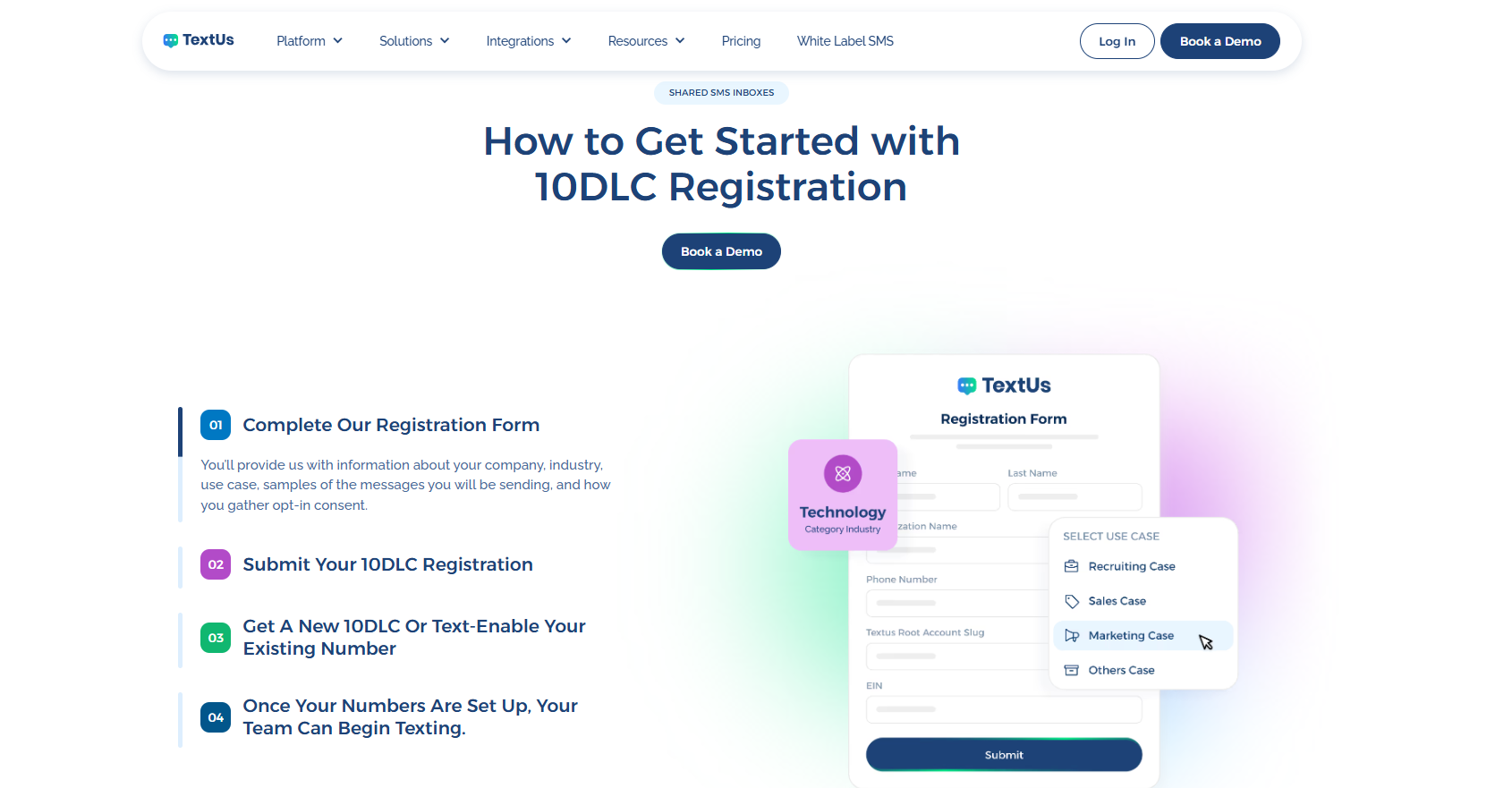
This makes it easier to register a recruiting program that reflects the messages applicants and workers will receive. It also keeps communication tied to a recognizable local number.
Step #7: Connect SMS With Your ATS or CRM
An SMS integration keeps contact records, placement stages, notes, and texting activity connected.
Staff gain more context before they answer, while communication remains attached to the correct applicant or account record.
Triggers may also start follow-ups when an application arrives, an interview is booked, a document remains incomplete, or a placement stage changes.
Connected records reduce duplicate contact and keep ownership visible across departments.
Step #8: Set Up Automated Text Workflows
Repeat communication becomes harder to track as application volume, active placements, and shift requests increase.
A structured workflow defines the event that starts each message, who receives it, when it arrives, and what action the recipient should take.
Text recruiting software like TextUs handles predictable tasks such as application confirmations, interview reminders, document requests, and assignment check-ins.
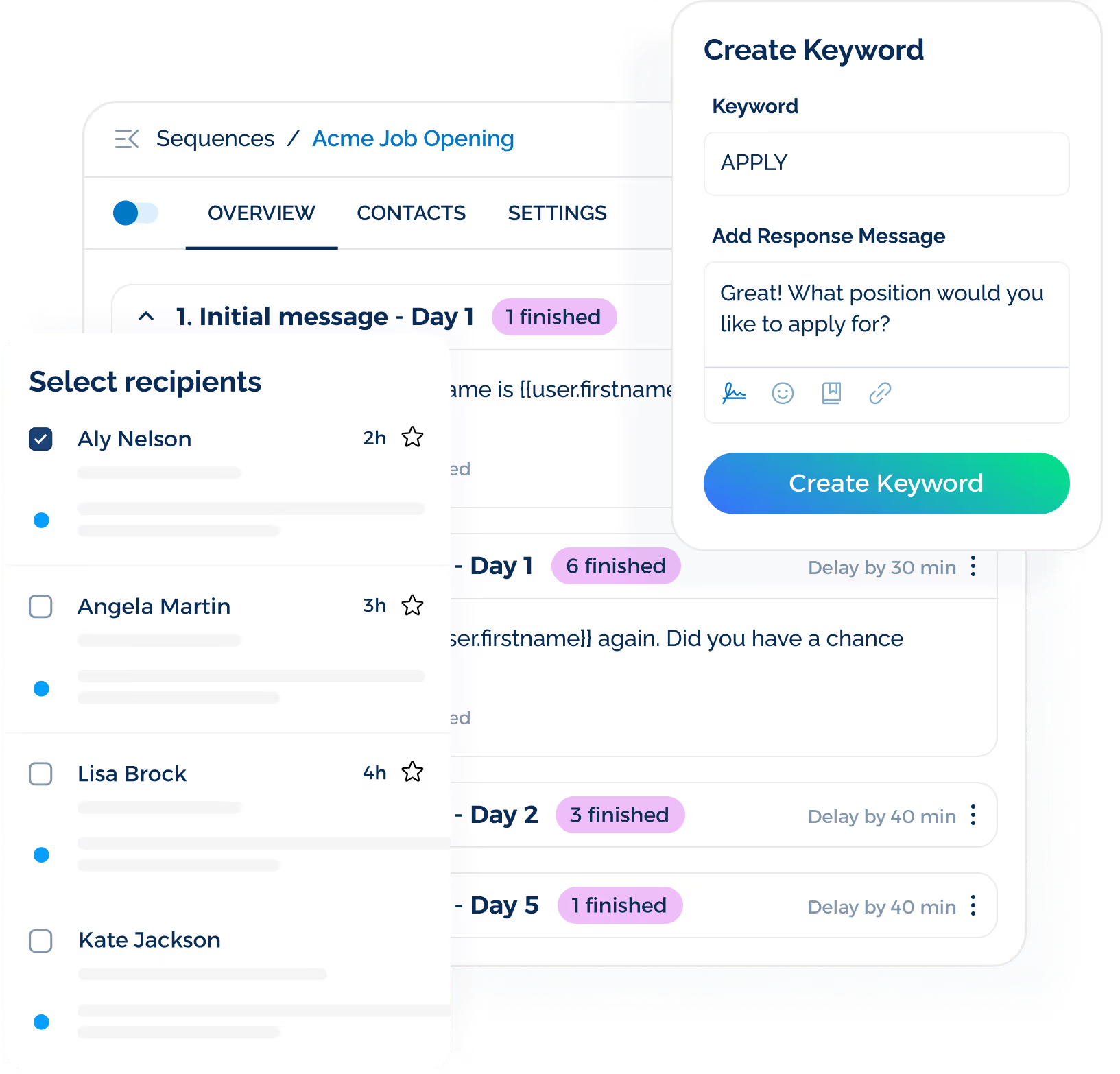
Each workflow should stop when a person replies, completes the task, moves to another stage, accepts a placement, or withdraws consent.
TextUs provides custom SMS sequences, drip campaigns, scheduled texts, recurring messages, automatic responses, and keyword QR codes.
These tools support follow-up across recruiting and workforce workflows while integrations keep messaging activity connected with existing records and reports.
Book a demo with TextUs today!
Step #9: Create Reply-Routing Rules
Incoming texts should reach the staff member responsible for the applicant, role, branch, or placement.
Routing rules may use ownership fields, contact groups, keywords, or conversation topics to direct each response.
Backup coverage should also exist when the assigned staff member is unavailable. This structure prevents unanswered questions and reduces duplicate replies from several people.
Step #10: Define Human Handoff Rules
Pay discussions, complaints, accommodation requests, safety concerns, sensitive records, and complex scheduling problems need direct staff attention.
Handoff rules should name the person or department responsible for each concern and set an expected response window.
Internal notes should also provide enough context so the recipient does not need to repeat the issue.
Step #11: Launch a Pilot Campaign
A small pilot lets you test one use case before expanding it throughout the organization.
A single branch, role category, applicant segment, or interview-reminder flow provides enough information to find weak points without affecting every contact.
Pilot results should cover delivery, responses, booked actions, staff workload, unsubscribe activity, and unresolved questions.
Feedback from recipients and users may also reveal wording or routing problems that reporting alone does not show.
Step #12: Train Recruiters and Staffing Coordinators
Your team needs to understand tone, ownership, response expectations, consent rules, escalation paths, and record requirements before launch.
Training should also explain which conversations belong in text and which require a call, email, secure portal, or formal document.
You can practice scenarios to help staff respond to schedule changes, missing documents, sensitive questions, and upset contacts.
Build a Faster Path From Outreach to Placement With TextUs
The fastest placement starts with a text that reaches the right person before the opportunity goes cold.
TextUs keeps candidate conversations active, organized, and connected from first contact through onboarding, shift updates, and future opportunities.
You get shared inboxes, assigned conversations, reusable templates, scheduled texts, automated sequences, and ATS integrations in one platform.
Smart Delivery also reviews message quality, flags risky content, and tracks opt-out activity before campaigns create delivery problems.
TextUs brings structure to high-volume recruiting without removing the personal touch.
Book a demo today and see how faster replies and less manual follow-up lead to more completed placements!
Continue Reading



Frequently Asked Questions
What is SMS during the hiring process?
SMS is text-based communication used for application updates, screening, interview reminders, onboarding, and shift notices. A central system keeps each conversation connected to the correct hiring stage.
What is a good message to send to a recruitment agency?
A useful message includes your name, preferred role, location, availability, and relevant experience. Agencies need these details to determine whether an opening matches your background.
How to get contracts for your staffing agency?
Contracts come from direct outreach, referrals, networking, and proof that the agency can solve recurring hiring needs.
The main key takeaways are to focus on a defined market, show past results, and tailor each pitch to the employer’s workforce challenges.
Business Texting
Built for Results
Create and convert pipeline at scale through industry leading SMS software