
Marketing for Advertising Agency Growth: A Guide
Explore our guide and learn how to develop a marketing strategy for advertising agency growth. Discover how TextUs can help you with SMS marketing.

Written by
Adam Hamdan
Published
October 15, 2026

Winning clients as an agency takes more than delivering great campaigns for your customers. You also need a strong presence to attract businesses seeking support.
Without a structured approach, it becomes difficult to maintain visibility or attract the right opportunities.
Effective marketing for advertising agency growth depends on strong positioning, relevant channels, and messaging that shows your expertise.
In this article, we'll explain how to build an effective marketing approach for your agency. You'll learn to create a system that gives you a competitive edge and future-proofs your agency's growth.
TL;DR
- Modern and traditional agencies struggle with campaign performance and engagement, which shows why a strong marketing strategy is necessary for consistent client results.
- A successful agency strategy combines multiple marketing tactics such as SMS, SEO, email, social media, paid ads, blog content, referrals, webinars, and partnerships.
- You will grow faster when you define your agency's goals, target the right industries, build strong messaging, choose the best marketing channel, and create a client acquisition funnel.
- TextUs is a business texting platform that helps you attract new leads, nurture prospects, and convert interest into long-term clients.
How Marketing Strategy Impacts Modern Agency Growth
Many advertising agencies tend to use email, meetings, and social media to manage campaigns and client updates. Even with these platforms in place, problems still appear during project execution.
Using the right tools and keeping your creative teams aligned during campaign and media execution can reduce many of these issues.
According to Gartner, 87% of marketers report issues with campaign performance in the past 12 months. Campaign planning, audience engagement, and message delivery all influence these outcomes.
Performance challenges also affect how long campaigns stay active and where continuous improvement becomes necessary.
As per Marketing Dive, 45% of marketing professionals report the need to end a campaign early due to poor performance.
When a marketing effort fails to connect with the audience, you may need to stop the initiative and adjust the strategy. Poor engagement, weak messaging, or slow feedback from audiences can cause these problems.
Proactive interaction between you and your audiences can improve campaign performance. If you use multiple communication channels, you maintain better engagement with both clients and customers.
10 Best Marketing Channels for Advertising Agency
A strong marketing strategy for ad agency owners uses several marketing channels. Each method attracts business owners who need marketing services.
Below are the most useful marketing channels for client acquisition:
1. SMS Marketing
Mobile phones remain the main device people check during the day. Text messages appear instantly on the phone screen, which makes them hard to miss.
Engagement rates make SMS marketing stand out from many other marketing channels. People read text messages within minutes after receiving them.
SMS marketing also supports your broader marketing work. You can combine SMS with email marketing, paid advertising, and landing pages to support campaigns and generate new leads.
This channel mix also gives marketing agencies another way to expand beyond traditional media channels like print ads or direct mail. SMS can support existing campaigns without replacing them.
For example, a customer may sign up through a paid ad campaign and receive a text reminder. Follow-up messages keep the audience engaged and extend the value of your ad spend.
TextUs is an SMS platform that lets you send and manage text messages with prospects and clients.
You can send follow-ups, campaign messages, and quick updates through text so conversations stay active and potential clients stay engaged.
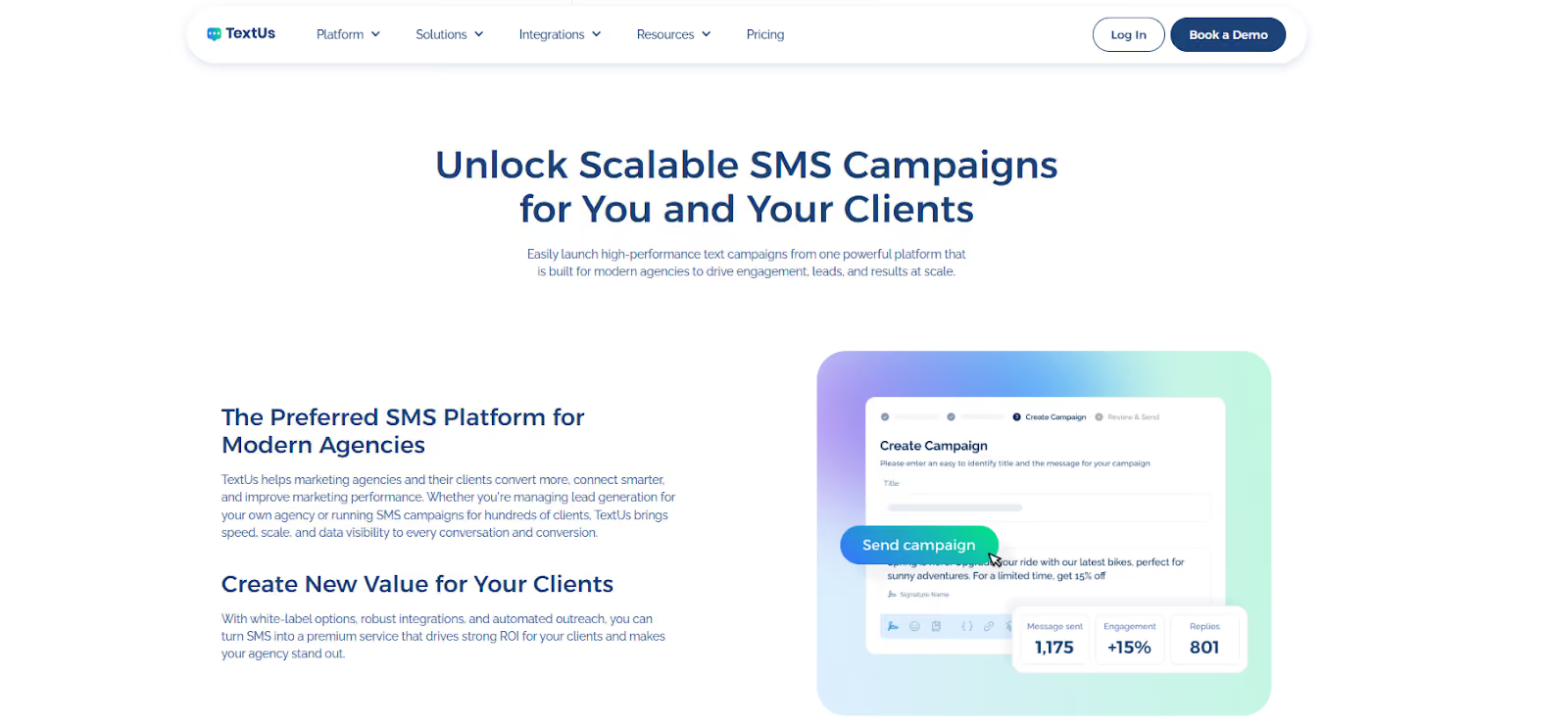
TextUs also helps you create additional value for your clients. With white-label tools, integrations, and automated messaging, you can offer SMS as a premium service within your agency.
Whether you are managing lead generation for your own creative agency or sending messages for multiple clients, TextUs helps you scale communication and strengthen marketing performance.
2. Search Engine Optimization (SEO)
Many companies start their research on Google when they need an agency. If you appear in those search results, you attract visitors who already want marketing support.
SEO helps your agency website appear for search terms related to your services. These searches can include phrases such as “digital marketing agency services” or “marketing strategy for an advertising agency.”
A strong SEO strategy focuses on content creation that answers business questions. Blog articles, marketing guides, and client case studies support brand building while showing your knowledge.
These pages bring organic traffic to your website and build trust with ideal clients who want proof of marketing results.
SEO also supports your other marketing channels. Businesses may find your agency through a blog post, read a case study, and then contact you for a consultation.
3. Email Marketing
Businesses join email lists to receive marketing advice, industry updates, or agency insights. Regular emails keep your agency visible while businesses research marketing partners.
You can use email marketing to share useful content that shows your agency's expertise. Marketing tips, campaign examples, and short guides teach businesses how marketing strategies work.
Email campaigns also support lead nurturing. A company may download a guide or sign up for a webinar on your website. After that, you can send follow-up emails with more insights, case studies, or service information.
You can further strengthen email marketing by combining it with SMS messaging. Email delivers detailed information such as guides, reports, or campaign updates, whereas SMS messages can send quick reminders, follow-ups, or short promotional alerts.
4. LinkedIn Marketing
Company leaders, founders, and marketing managers spend time on LinkedIn looking for industry insights and service providers.
A strong presence on the platform places your agency in front of businesses that may need marketing support.
Your agency can share short insights about brand strategy, campaign results, and industry trends. Posts that explain real marketing lessons attract attention from companies interested in improving their marketing performance.
Client success stories also perform well on LinkedIn. Sharing campaign outcomes, marketing ideas, and lessons from client projects shows your creative excellence and the type of work your agency delivers.
LinkedIn also supports cold outreach and direct conversations with the right clients. You can connect with business owners and marketing leaders in the industries you serve.
5. Paid Advertising
Paid campaigns support your overall marketing strategy by placing your services in front of companies already looking for agency support.
Other brands searching for terms related to marketing strategy, advertising services, or lead generation may see your agency ads in search results. These searches usually come from businesses already interested in hiring an agency.
Social media ads also help your agency reach decision-makers in the media space. LinkedIn, Facebook, and Instagram allow you to target business owners, founders, and marketing managers.
Your media buying approach also affects where your ads appear, how much you spend, and how often prospects see your agency.
Reviewing campaign results over time lets you shift advertising budget toward channels that produce stronger engagement.
6. Content Marketing
Strong content also supports bigger campaigns by educating prospects before they reach your sales process.
Blog articles are ideal for explaining marketing ideas and strategies. You can write guides about campaign planning, advertising tactics, and lead-generation methods.
Case studies are another strong type of content. Business owners want proof that an agency can deliver results before they invest in marketing services.
Content marketing also supports brand growth and search visibility. Articles that answer common marketing questions appear in search results and bring businesses to your website.
7. Social Media Marketing
Companies follow agencies on social media to watch campaign examples, learn marketing tips, and stay updated on industry changes. Regular social media management keeps your agency visible to potential clients.
Short educational posts like quick tips, small lessons, or examples from recent campaigns attract attention from businesses.
Visual content also helps agencies stand out on social media. Graphic designs, ad examples, and short videos show the type of work your agency produces.
Social platforms also allow simple interaction with businesses. Comments, messages, and reactions create conversations that may lead to consultation requests and new marketing projects.
8. Referral Marketing
Referrals become even more valuable in competitive markets. Prospects trust recommendations more than ads when several agencies offer similar services.
Current clients serve as one of the strongest referral sources. A business that receives strong campaign results may recommend your agency to other companies in their network.
A good relationship also increases trust between your agency and existing clients. That trust often leads to introductions within their professional networks.
You can also create a referral program to encourage recommendations. Offering a reward or incentive motivates clients and partners to introduce new businesses to your agency.
9. Webinars and Educational Events
Webinars and online events give you a chance to teach businesses new ideas about marketing and strategy.
You can present topics such as marketing planning, advertising campaign structure, lead generation ideas, or customer engagement methods.
These events also attract potential clients who already show interest in marketing services. A company that signs up for a webinar usually wants advice or solutions for its marketing efforts.
After the event, you’ll continue the conversation through follow-up messages, consultation offers, or additional resources.
Educational events also create useful content for your agency marketing. Recorded sessions can produce several pieces of marketing material that continue to attract businesses to your agency.
10. Strategic Partnerships
Partnerships let you become a strategic partner to other businesses that serve the same clients you want to reach.
Common partners for advertising agencies include web development companies, CRM providers, software platforms, and business consultants.
Partnership marketing can also include joint events, webinars, or shared educational content.
For example, your agency and a software company may host a session that teaches businesses how to run marketing campaigns using their platform.
Over time, strong partnerships become a growth engine that brings a steady flow of new business opportunities. Companies trust recommendations from professionals they already work with.
How to Build an Effective Marketing Strategy for Your Agency
A strong marketing strategy for advertising agency growth requires a structured plan. Here are the key steps you can follow to create a successful marketing plan.
Step #1: Define Your Business Goals
Your strategy should support business success, such as increasing new client inquiries, expanding services, or entering new industries.
A clear vision for your agency's direction helps guide every marketing decision and shape your business model.
Once you define your real growth priorities, it’s easier to stay focused on your marketing efforts. Planning helps you build an effective marketing plan that supports long-term results.
For example, if you're looking for more leads, you may focus on SEO and content marketing.
If you're seeking faster lead generation, you can invest more in paid advertising and direct outreach that supports your sales funnel.
Communication also supports growth at this stage. Email remains useful for sending detailed information, while text messaging allows quick replies to inquiries or short updates.
Step #2: Identify Your Target Market
Most agencies that attempt to market services to every type of company usually struggle to stand out. Choosing a focused audience helps you build a competitive advantage.
Many agencies perform better after choosing a specific segment. Some focus on SaaS companies, while others focus on e-commerce brands, healthcare providers, or local businesses.
A deep understanding of how your target audience communicates also supports a stronger data-driven strategy. A detailed market analysis into customer behavior, preferences, and needs shows which industries have stronger demand, competition, and growth potential.
When your agency understands communication preferences, your campaigns reach audiences in ways that match how they interact with brands. This helps attract your best clients.
Step #3: Develop Your Agency Brand Messaging
Established messaging communicates your expertise and the value of your marketing solutions. It also defines your agency's value proposition.
Your messaging should also set expectations for the customer experience. Prospects need to understand how you communicate, collaborate, and support clients.
Businesses want to know how your agency improves lead generation, campaign performance, or customer engagement.
Real campaign examples and client stories make your message stronger because they show your advertising agency work in real situations.
Step #4: Select Marketing Channels
The right channels allow you to reach businesses during different stages of the buying process. Channel selection also plays a critical role in growing your visibility.
Strong channel strategies help your agency increase market share while supporting bigger marketing and advertising campaigns for clients.
Businesses expect quick responses after requesting information or consultations. Texting software like TextUs allows you to reply through a short message that reaches a prospect immediately.
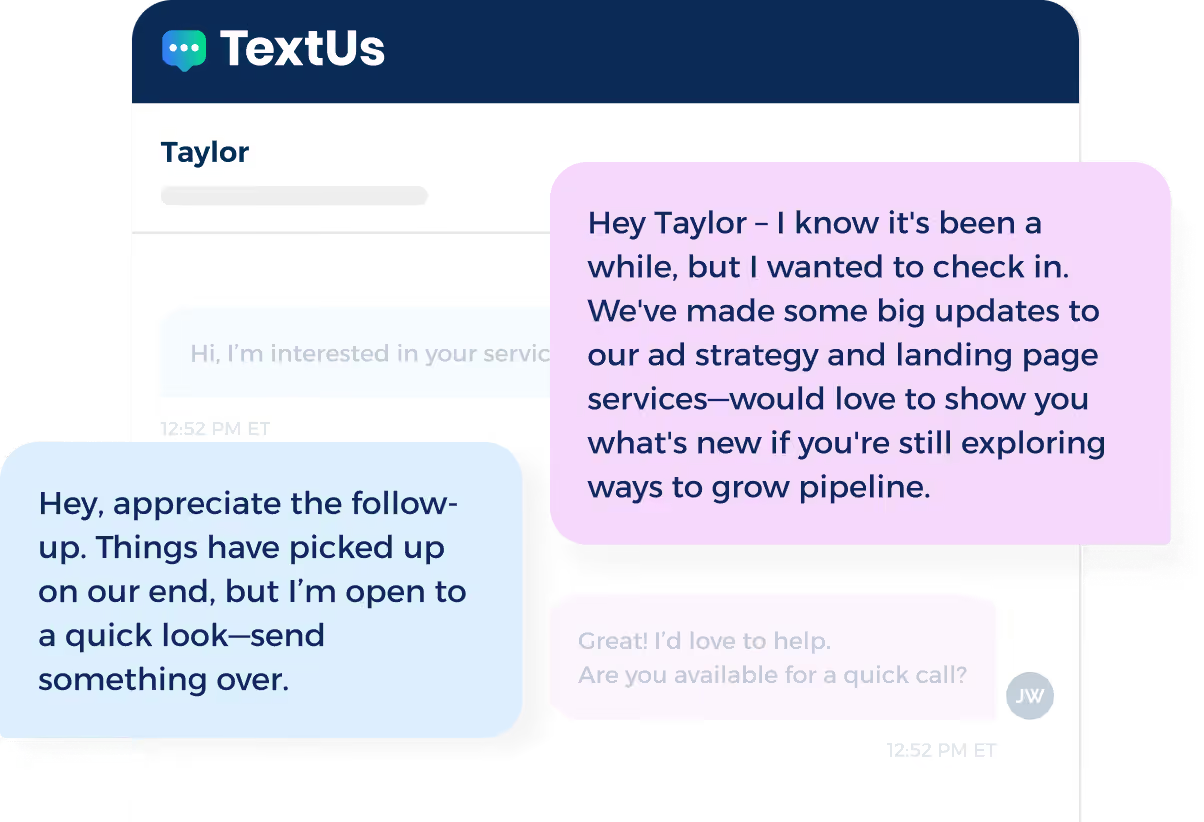
The platform lets you respond to inquiries, confirm meetings, and manage conversations with prospects and clients from one dashboard. You can run SMS campaigns for your clients and present texting as part of your agency services.
You may also review SMS performance metrics such as delivery, response, and opt-out rates to evaluate campaign results.
Book a demo with TextUs today to see how texting can support your agency's growth and client communication!
Step #5: Build a Client Acquisition Funnel
A client acquisition funnel guides businesses from first awareness to becoming a client. A structured funnel supports a long-term business strategy for attracting and converting prospects.
Here are several stages that move a prospect toward a consultation or proposal discussion:
- Awareness stage – Businesses first learn about your agency through SEO content, social media posts, webinars, or Google Ads
- Interest stage – Prospects explore your services, read case studies, or download marketing guides to learn more about your approach
- Evaluation stage – Businesses compare the best agencies, review campaign examples, and request consultations or proposals
- Decision stage – A prospect chooses your agency after reviewing services, pricing, and past results
Communication during the later stages of the funnel plays a major role in converting prospects into clients. Businesses that request consultations or proposals expect immediate responses.
Text messaging keeps conversations active without requiring long email threads.
A quick text after a consultation request or demo inquiry keeps the conversation moving and reduces missed opportunities.
Turn More Prospects Into Clients With TextUs
Businesses evaluating their right partner pay attention to responsiveness, accessibility, and how easy it is to stay in touch throughout the decision process.
SMS marketing adds another communication option to your agency workflow.
Instead of relying only on email or scheduled calls, you can send SMS messages to confirm consultations, answer quick questions, or keep prospects informed about next steps.
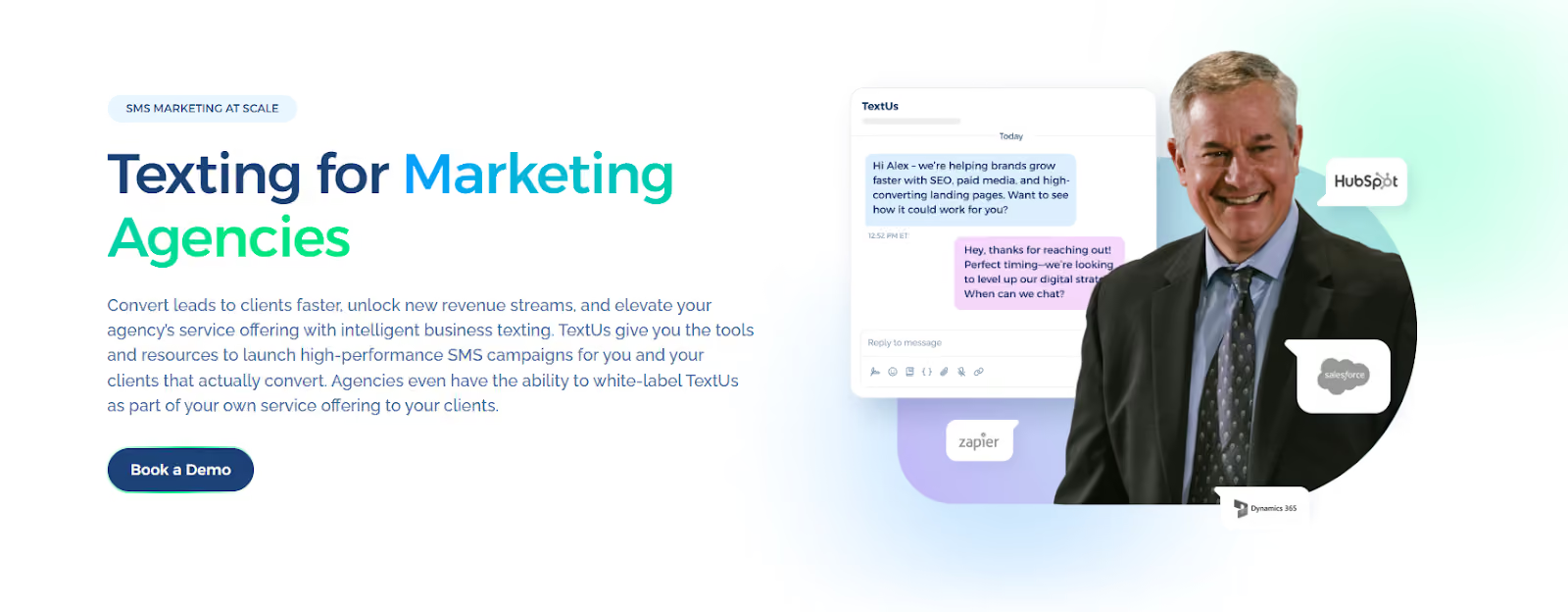
TextUs is a business texting platform built for agencies that want consistent messaging with prospects and clients. You can launch targeted marketing campaigns for your clients and even offer business texting as part of your agency services through white-label options.
Book a demo with TextUs to see how business texting supports your marketing goals!
FAQs About Marketing for an Advertising Agency
What is the 3-3-3 rule in marketing?
The 3-3-3 rule helps simplify strategy development by narrowing your focus to three audiences, messages, and marketing channels.
This approach keeps campaigns focused instead of spreading resources between too many platforms.
What is the 70/20/10 rule in marketing?
The 70/20/10 rule divides marketing resources between proven tactics, newer opportunities, and experimental ideas.
You might allocate most spending to proven campaigns, then reserve smaller portions for testing and additional services.
What are the five main marketing strategies?
Five common strategies include content marketing, paid advertising, social media, email marketing, and direct customer communication.
Your market research and sales forecasting can guide which methods deserve more attention based on demand and revenue potential.
Continue Reading



Frequently Asked Questions
Business Texting
Built for Results
Create and convert pipeline at scale through industry leading SMS software