
How to Build a Profitable SMS Reseller Program
Discover how SMS reselling works, the benefits of joining an SMS reseller program, and the costs that can affect your reseller margins.

Written by
Adam Hamdan
Published
October 26, 2026

Business text messaging doesn't need to become another product you spend months building, maintaining, and supporting from the ground up.
An SMS reseller program lets you offer texting services while an established provider handles the technical foundation behind them.
You keep control of the customer experience, service packages, and sales strategy while the provider supports message delivery, carrier relationships, compliance, and platform operations.
In this guide, you'll learn how SMS reselling works, the benefits of joining reseller programs, and the costs that can affect your reseller margins.
You’ll also learn how to launch an SMS reseller program and how the best texting software supports long-term growth.
TL;DR
- SMS reseller programs offer higher margin potential, white-label branding, lower startup costs, recurring revenue, easier scaling, and provider-backed technical support.
- SMS reseller margins depend on messaging rates, platform fees, prepaid usage, number and registration costs, and the support resources required to serve customers.
- Starting an SMS reseller program involves defining your market, choosing services and a reseller model, selecting the right provider, setting pricing and branding, connecting systems, meeting compliance requirements, onboarding customers, and tracking performance as you grow.
- TextUs lets you launch and grow a reseller offer with white-label messaging, APIs, built-in compliance, carrier support, integrations, and partner pricing without taking on the full technical workload.
How Does an SMS Reseller Program Work?
An SMS reseller program lets you sell messaging services while the provider manages the SMS infrastructure, carrier connections, and message delivery.
Your company focuses on the customer relationship, service packaging, pricing, and account management instead of building carrier connections and messaging technology.
Meanwhile, end customers use the messaging service under the arrangement you create. Depending on the program, they may access a branded portal or access features inside an existing software.
What Makes SMS Reselling a Scalable Revenue Model
An SMS reseller program reduces many of the technical and operational hurdles involved in launching messaging services. Here are some of the main advantages this model offers.
Higher Profit Potential
You'll get access to wholesale rates or discounted message pricing, then set a higher retail price for customers. The difference between those costs creates room for higher margins, especially as message volume grows.
Sell Under Your Own Brand
White-label programs let you present the service as part of your company rather than sending customers to another provider.
Depending on the setup, your logo, own domain, and customer-facing control panel may all carry your branding.
Lower Costs to Get Started
You avoid the cost and complexity of building gateway infrastructure or negotiating direct carrier relationships. The provider supplies the technology, which removes a major barrier to entering the messaging market.
More Predictable Recurring Revenue
Messaging fits naturally into monthly software plans, service retainers, or bundled communication packages that may also include voice services.
Recurring plans create a steadier revenue model than one-time service sales.
Room to Grow Without Rebuilding
A reseller platform makes it possible to add accounts as demand increases. Features such as sub-account creation, provisioning, and centralized account management support growth without requiring a new system each time you add customers.
Technical Support From the Provider
You don't have to manage every platform issue internally. Many programs provide backend maintenance, technical escalation, and partner support.
Costs That Can Affect SMS Reseller Margins
Several expenses influence how much profit you keep as an SMS reseller. Here are the main costs to review before you set your packages and pricing.
Wholesale Messaging Rates
Your provider may charge wholesale rates based on message volume, destination, or number type. Better volume discounts may support higher margins as usage grows.
Platform and Account Fees
Some programs charge platform fees, per-user costs, or fees for each customer account. Others may require monthly minimums, so compare these charges against expected customer usage.
SMS Usage and Credits
Certain providers use prepaid credits, which means you may need to purchase SMS credits before customers send messages. Your cost per message affects how much room you have between provider costs and your retail price.
Number and Registration Costs
Business text numbers, toll-free verification, 10DLC registration, and carrier-related fees may add to your operating costs. These charges vary by provider and messaging setup.
Customer Support Costs
Customer onboarding, account questions, troubleshooting, and technical escalations all require time or staff resources. You have to factor these expenses into what customers pay for your service.
How to Start an SMS Reseller Program in 10 Steps
A strong launch requires more than signing up with a provider. Here are the main steps to turn an SMS reseller program into a service you can sell and support.
Step #1: Define Your Target Market
Your target market shapes the way you package, price, and position the service. A focused customer base also makes sales outreach more relevant.
Your audience may include SaaS companies, agencies, recruiters, telecom providers, or small businesses. Each group has different messaging needs, budgets, and expectations.
Step #2: Decide Which SMS Services to Offer
Your service mix should match the problems your own customers want to solve.
Common messaging capabilities include one-to-one texting, appointment reminders, automated follow-ups, and mass text messaging.
Different industries will value different SMS use cases. Recruiters may prioritize candidate texting and interview reminders, while sales teams may benefit more from lead follow-ups and appointment confirmations.
Your first package doesn't need every feature available from the provider. Advanced options as demand grows give you a better sense of which features customers value enough to pay for.
Step #3: Pick Your Reseller Model
Your reseller model determines how customers access the service and how much control you keep over branding, product experience, and technical setup.
A white-label program arrangement is suitable if you want customers to use a standalone messaging product under your brand.
This setup may include a branded dashboard, account controls, and customer-facing tools managed through the provider.
An embedded messaging model places SMS inside software you already offer. Customers stay within your product while they send and receive messages, which creates a more unified experience.
An API model offers the most development control. Your team builds messaging into your existing workflows, interface, or applications while the provider handles the messaging technology.
The right choice depends on your product, technical resources, and customer expectations. Consider which model fits your current service structure without adding more complexity than your team needs.
Step #4: Choose the Right SMS Provider
The provider you choose affects service quality, customer experience, and how much technical work stays with your company.
Price matters, but platform capabilities, support, compliance, and scalability deserve equal weight.
Start by comparing the key features of each SMS platform, including account controls, automation, analytics, integrations, message routing, and compliance support. The provider also needs to support the reseller model you selected in the previous step.
With TextUs, you have several ways to resell SMS without taking on the full cost and complexity of developing and maintaining your own messaging technology.
You can choose a full white-label SMS platform, embedded messenger, or API based on how you want customers to access messaging.
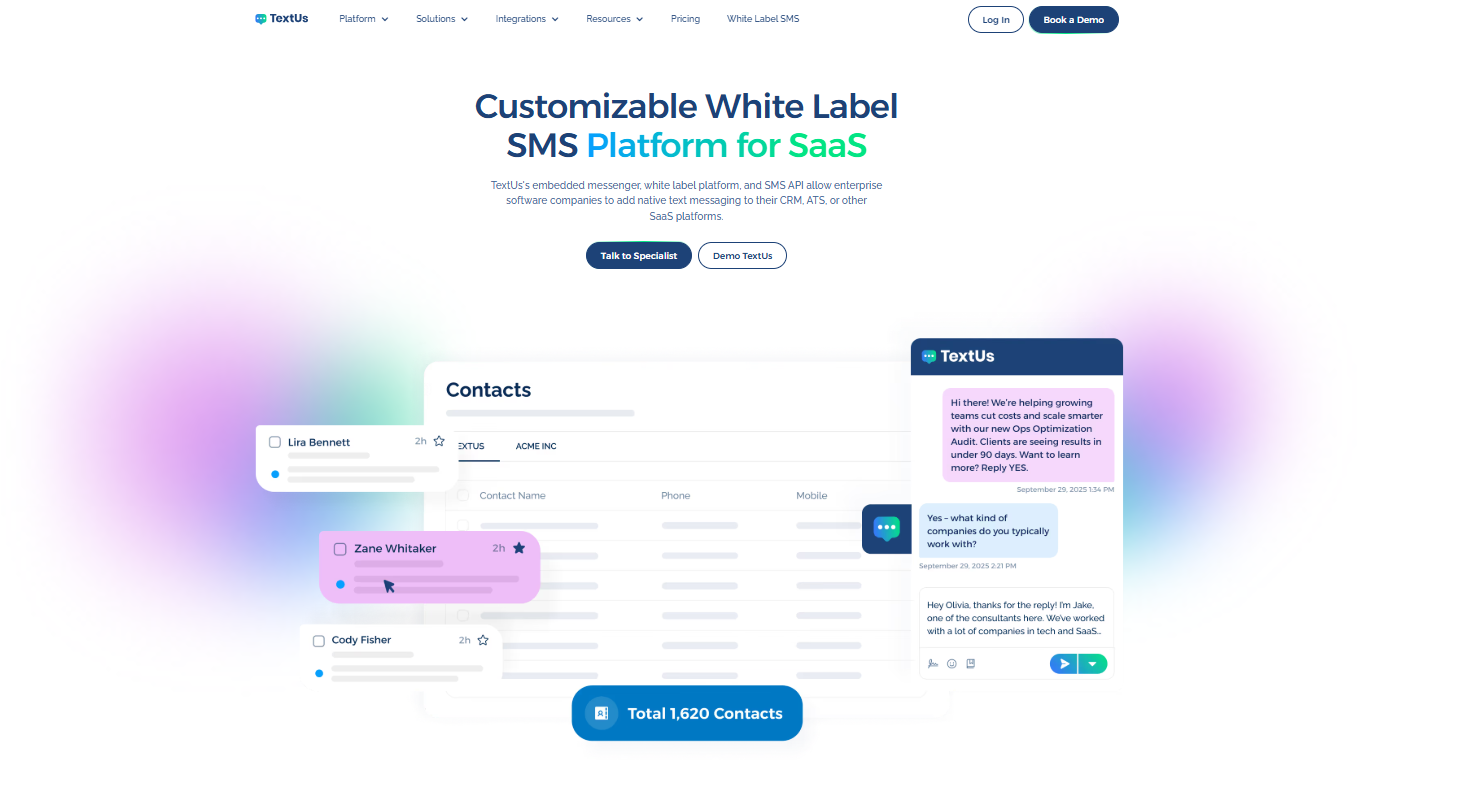
You also get access to SMS marketing campaigns, shared inboxes, automated sequences, templates, analytics, and CRM and ATS integrations.
TextUs supports carrier operations, 10DLC registration, platform maintenance, and tier-three technical support.
This setup lets you spend more time on packaging your offer, winning customers, and building relationships while TextUs manages much of the technical side.
Book a demo with TextUs today to explore the reseller model that fits your own business!
Step #5: Build Your Branded Experience
A strong reseller setup should feel like a natural extension of your existing offer. The customer experience needs to reflect your company from the first login through everyday account use.
A white-label reseller panel can include your logo, colors, login page, and other customer-facing elements. It may also offer customization options that make the interface more consistent with the rest of your product.
Brand consistency matters outside the dashboard too. Emails, account notifications, help resources, and support touchpoints should all reinforce the same branded service.
A final review from the customer’s point of view can reveal provider references, mismatched branding, confusing navigation, or anything else that makes the experience feel disconnected.
Step #6: Set Your Pricing Structure
A solid pricing model needs to cover provider costs while leaving enough margin for support, onboarding, and account management.
Your pricing should reflect message volume, included features, account size, and the level of service you provide.
Some customers may need basic messaging, while high-volume senders may require larger allowances and different rates.
Several tiers can make the offer easier to compare. Your own pricing tiers might separate entry-level accounts, growing businesses, and larger customers based on usage and feature access.
Account safeguards also deserve attention. Features such as low balance alerts can prevent service interruptions when customers approach their usage limits.
Step #7: Connect the Platform to Your Existing Systems
A reseller offer becomes more valuable when messaging fits into the tools your customers already use.
CRM integration keeps conversations, contacts, and activity connected instead of splitting information across separate systems.
The right setup connects SMS with your CRM, ATS, sales, or workflow platforms. Your customers then have a more consistent way to manage communication alongside the records and processes they already rely on.
API access and webhooks also matter if you need more control over how messaging fits into your product. These options let you integrate SMS into existing workflows without forcing customers to switch between multiple platforms.
Step #8: Set Up Messaging Compliance and Registration
SMS compliance needs to be part of your setup before customers start sending messages.
Consent records, opt-in methods, STOP and HELP responses, privacy policies, and approved use cases all need to be documented before launch.
TextUs removes much of the setup burden with carrier relationships, 10DLC registration, and compliance infrastructure already in place. You can launch in weeks rather than requiring you to build carrier and registration processes yourself.
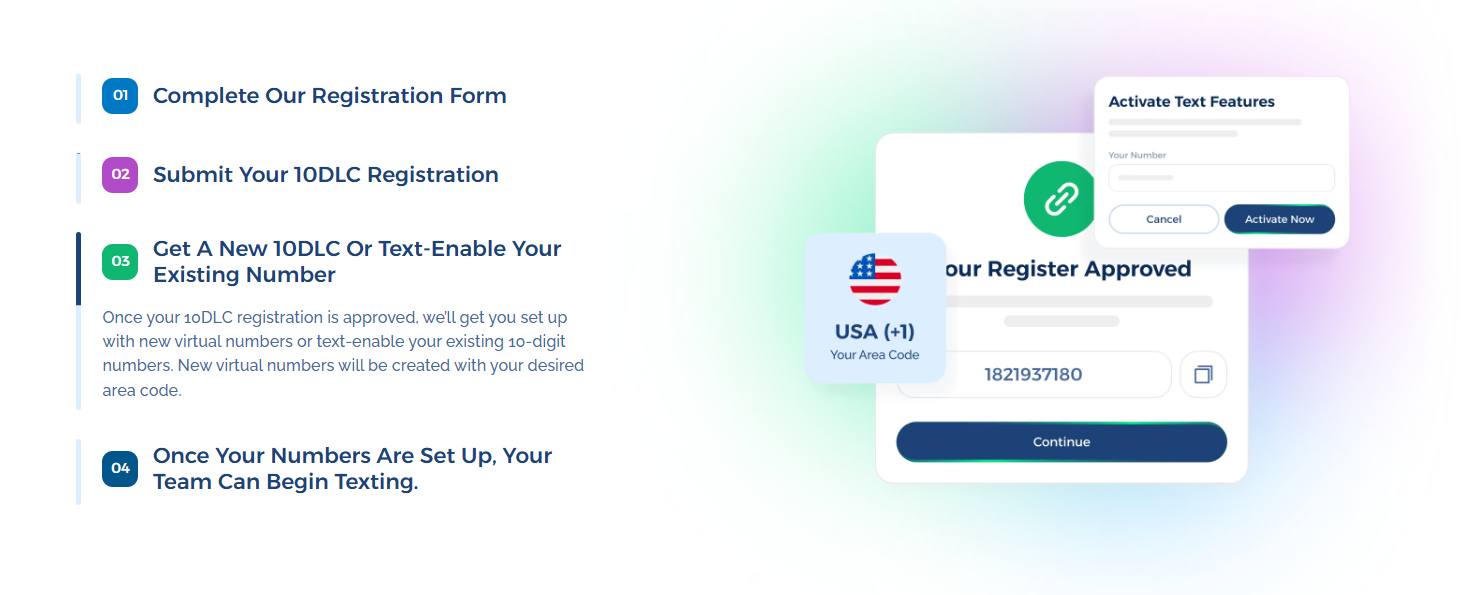
It also manages opt-out monitoring, content checks, and regulatory updates on your behalf. This reduces the amount of compliance work your team needs to track.
Equally important, responsibilities should be defined between you and your clients.
Everyone should understand who manages consent, approved messaging practices, account access, and compliance questions once the service goes live.
Step #9: Create Your Customer Onboarding Process
A structured onboarding process sets customers up to use the service with fewer setup questions. The process should cover account creation, number provisioning, user access, contact imports, and initial configuration.
Sub-account management keeps each customer account organized. It should have the right users, permissions, numbers, and messaging settings before access is handed over.
Training can focus on the features customers will use first, such as inbox management, campaigns, templates, and reporting.
Your support team should have a defined process for onboarding questions and technical escalations. Customers then know where to go when they need assistance after launch.
Step #10: Measure and Expand Your Reseller Program
Performance data shows where your reseller offer is gaining traction and where adjustments may improve results.
You need to track account growth, message volume, retention, revenue per customer, support requests, and feature adoption.
Usage patterns also reveal which services customers value most.
Higher demand for campaigns, automation, or account controls point to new packages or opportunities to resell SMS services to a broader audience.
Growth doesn't have to mean adding every feature at once. Your SMS business may expand through new customer segments, larger accounts, additional integrations, or upgraded service packages.
Why Choose TextUs as Your Bulk SMS Reseller Panel
TextUs gives you more than a way to resell messaging. You get an established business texting foundation without taking on the full telecom, compliance, and maintenance workload.
A shorter path to market also reduces the gap between planning and revenue. Carrier relationships, registration processes, and compliance infrastructure don't need to be built one by one.
Partner-based wholesale pricing also keeps costs tied more closely to growth. You have more room to shape packages, protect margins, and expand the service as adoption increases.

If you want to launch a reseller offer without building the telecom stack yourself, book a demo with TextUs today!
FAQs About SMS Reseller Program
What is the difference between an SMS reseller and an SMS provider?
An SMS provider operates the messaging infrastructure and carrier or operator connections. A reseller packages that technology for customers and manages the commercial relationship.
Do I need to build my own SMS gateway to become a reseller?
No. SMS reseller programs are designed to let you use an established provider’s messaging infrastructure instead of building carrier routing and delivery systems yourself.
TextUs also includes platform capabilities such as SMS campaigns, shared inboxes, marketing automation, and contact management, while it handles carrier infrastructure and compliance.
Can I set my own prices as an SMS reseller?
It depends on the reseller agreement, but many white-label marketing tools allow you to control customer pricing. You can create packages based on message usage, features, and the level of service included.
TextUs lets you set prices and retain the margin you establish. There's no revenue-share requirement, so you keep control of the commercial model for your customers.
Continue Reading


Frequently Asked Questions
Business Texting
Built for Results
Create and convert pipeline at scale through industry leading SMS software