
SMS Reliability: How to Improve Message Delivery and Trust
Explore our detailed guide to SMS reliability and learn what affects it, why it matters, how to measure it, and how to improve it.

Written by
Adam Hamdan
Published
June 9, 2026

With broad access, fast visibility, and unmatched reliability, SMS remains one of the most effective channels for quick communication.
It works on almost every mobile phone, does not require a specific messaging app, and can reach people through carrier networks even when they are not using email or social media.
But SMS reliability is strongest when the sending setup is built the right way.
Sender registration, proper consent, clean contact lists, trusted links, message pacing, and delivery tracking all affect whether texts reach recipients on time.
In this article, we will break down what SMS reliability means, why messages fail, key metrics to measure delivery performance, and what you can do to improve results.
TL;DR
- Reliability starts with a broad reach because SMS can contact almost anyone with a mobile number without requiring app access.
- Text messages can fail for several reasons, including invalid phone numbers, poor routing, spam-like content, opt-outs, carrier throttling, unregistered sender numbers, and limited delivery visibility.
- SMS reliability should be measured through delivery rate, failure rate, delivery speed, platform uptime, queue time, carrier error codes, opt-outs, complaints, and response or conversion rates.
- TextUs helps you communicate with more control through 10DLC registration support, built-in link shortening, drip campaigns, shared inboxes, and analytic tools.
How Reliable Is SMS?
SMS can reach almost anyone with a mobile number, giving it universal reach for fast communication.
Pew Research Center reports that 98% of U.S. adults own a cellphone, and 91% own a smartphone.
This reliability comes from the way people use texting. SMS reaches the mobile device people already check throughout the day, without requiring an app, social media account, email inbox, or internet connectivity.
SMS also has a strong engagement advantage. Text messages have a 98% open rate, which is far higher than many traditional communication channels.
For reminders, sales follow-ups, recruiting updates, alerts, and customer conversations, SMS continues to be a strong channel for short, action-focused messages.
It also works as a reliable fallback when app notifications, emails, or social messages are missed.
Common Reasons Text Messages Fail to Deliver
SMS reliability depends on more than the send button. Here are the most common message deliverability issues you will encounter.
Invalid or Inactive Phone Numbers
A contact may enter the wrong number, use an old number, or provide a phone number that no longer accepts texts.
Some numbers may also belong to landlines, disconnected accounts, or devices that cannot receive standard SMS.
Bad contact data can lower SMS reliability because your messages never reach the intended person. It can also make campaign reports harder to read because failed sends may come from list quality problems, not platform issues.
SMS Gateway Has Poor Routing
An SMS gateway with poor routing can cause messages to arrive late, fail, or deliver at uneven rates between carriers and regions.
The gateway is an essential tool that acts as the connection between your SMS platform and mobile carrier networks. Therefore, route quality has a direct impact on SMS reliability.
Strong routing is important for time-sensitive messages, critical alerts, security alerts, and emergency notifications that need fast delivery.
You can reduce routing issues by choosing an SMS provider like TextUs with trusted carrier connections, detailed delivery reporting, and failover routing capabilities.
It supports business messaging workflows that depend on speed, consistency, and visibility. It allows you to follow up with leads, customers, and contacts without relying on scattered one-off texts.
Message Looks Like Spam
Even a legitimate business text can get blocked if it uses language, links, or formatting that resembles unwanted messages.
Spam-like SMS content often includes aggressive wording, unclear sender details, public URL shorteners, or too many promotional claims. Carriers may also flag messages that use all caps, repeated punctuation, or vague calls to action.
Recipient Opted Out
Most SMS marketing software blocks future messages to contacts who reply with terms like STOP, UNSUBSCRIBE, CANCEL, or END.
SMS opt-outs protect customers from unwanted messages and protect your sender reputation. If you keep trying to text people after they opt out, messages can fail, complaints can increase, and carriers may treat future campaigns as higher risk.
Carrier Throttles Traffic
Carrier throttling happens when a mobile carrier slows down or limits how many SMS messages pass through a sender number within a certain period.
This can happen when your team sends more messages than the number, registration, or campaign use case can support.
Throttling can cause delivery delays, failed messages, or partial campaign delivery. For time-sensitive texts, such as appointment reminders, security codes, or urgent alerts, even a short delay can affect SMS reliability and customer experience.
Sender Number Is Not Registered
A2P means “application-to-person,” and 10DLC means “10-digit long code.” It refers to business text messages sent from a software platform through a standard 10-digit phone number.
For U.S. business texting, many messages sent from local 10-digit numbers need A2P 10DLC registration.
This registration connects your business, sender number, and message use case. Carriers can better understand who is sending the text and why. Without it, they may treat your messages as unknown traffic.
Platform Lacks Delivery Visibility
A texting platform that lacks delivery visibility makes it hard to understand why messages fail. You may see that a message was sent, but that does not always mean it reached the recipient’s phone.
Without detailed reporting, delivery problems can stay hidden until customers miss critical updates, alerts, codes, or follow-ups.
A reliable performance SMS platform should give you delivery reports for each campaign and conversation.
These reports can help spot patterns, such as bad contact data, carrier filtering, registration issues, or high failure rates on certain sender numbers.
Key Metrics to Measure for SMS Reliability
SMS reliability should be measured through delivery, speed, platform performance, and engagement data. These are the key SMS reliability metrics to track:
- SMS delivery rate: The percentage of sent messages that reach recipient devices
- SMS failure rate: The percentage of messages that do not reach recipients
- Delivery speed: How fast messages arrive after they are sent
- Platform uptime: How often the SMS platform is available and processing messages
- Queue time: How long messages wait before reaching carrier networks
- Carrier error codes: Failure details such as invalid number, unreachable handset, blocked message, or carrier issue.
- Opt-out rate: The percentage of recipients who unsubscribe after receiving messages
- Complaint rate: The rate of recipients who report messages as spam or unwanted
- Response or conversion rate: How many delivered messages lead to replies, bookings, payments, applications, or other actions
For most businesses, open rate, delivery rate, delivery speed, opt-outs, and response rate are the best starting points. These metrics show whether messages are reaching people and whether the content is creating useful action.
How to Improve SMS Reliability for Business Communication
The setup behind each message matters, from consent and sender registration to message content, contact list quality, and delivery tracking.
Here are the main ways you can improve SMS reliability and reduce failed, delayed, or filtered messages.
Register Business Messaging Properly
A strong SMS reliability strategy starts with proper business messaging registration.
A registered business text number does not guarantee that every message will be delivered. Strong delivery still depends on consent quality, message content, contact list health, send volume, and platform performance.
Still, proper registration through a platform gives your SMS program a stronger foundation before messages reach carrier networks.
TextUs helps you launch 10DLC communications that are built around your audience and messaging goals.
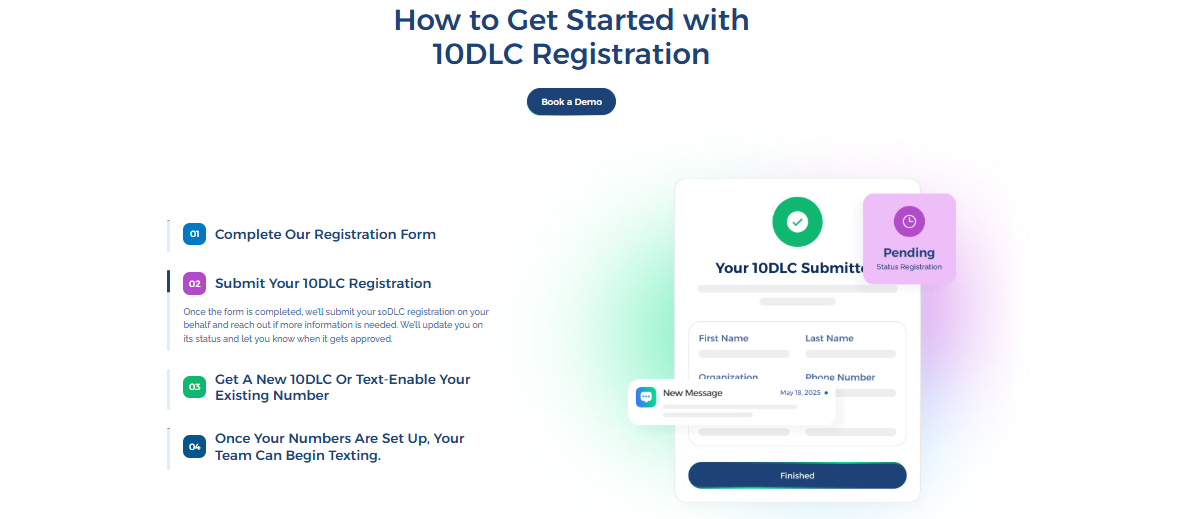
Once your 10DLC registration is approved, it can get your team set up with new virtual numbers or text-enable your existing 10-digit numbers.
New virtual numbers can also be created with your desired area code, so your outreach feels more familiar to the people receiving your texts.
Book a demo with TextUs today to manage reliable SMS communication from one compliant platform!
Collect Proper SMS Consent
A reliable SMS list should include people who agreed to receive texts from your team.
Consent should match the type of messages being sent, such as reminders, alerts, sales follow-ups, recruiting updates, or marketing campaigns.
Proof of opt-in should stay in your records. Useful consent details include the phone number, opt-in source, timestamp, and consent language.
Use a Recognizable Sender Identity
A sender identity can enhance customer engagement and create trusted branded experiences. Your brand name near the start of the text gives recipients quick context about who is contacting them.
A recognizable sender identity can also lower opt-outs and improve customer satisfaction. This is useful for automated texts, campaign sends, and follow-up messages from shared inboxes.
Avoid Public URL Shorteners
Public URL shorteners can make SMS messages look less trustworthy because they hide the final destination link. Branded links or trusted domains are better than public URL shorteners.
TextUs includes built-in link shorteners so that you can add shorter links inside conversational messages, text templates, keyword replies, and other texting workflows.
Since the link workflow stays inside the business texting platform, your team can create cleaner messages, reduce link-related friction, and keep SMS campaigns easier to manage.
Clean Contact Lists Regularly
Old or inaccurate contact lists can lower SMS delivery rates. Invalid numbers, duplicate contacts, unsubscribed numbers, repeated failures, and outdated records should not remain in active campaigns.
List cleaning improves reliability because you send to people who can receive messages and still have permission to hear from you. It also keeps campaign reports more accurate.
Segment SMS Campaigns
SMS segmentation can lead to fewer opt-outs, better replies, and stronger campaign results.
Contacts can be grouped based on customer preferences, where they are in the customer journey, or how they engaged before.
You can also segment by appointment status, lead stage, location, job type, service interest, or past engagement to optimize campaigns.
Control Send Volume
Campaign volume should match the sender type, approved throughput, and message purpose.
Drip campaigns can support better SMS reliability because they spread messages over time.
Instead of sending one large blast to every contact, it allows you to create a sequence that sends follow-ups in smaller groups based on timing, behavior, or campaign stage.
Smaller batches reduce delivery delays and give you time to catch problems before the full campaign is affected. This is useful for new sender numbers, high-volume sends, and time-sensitive campaigns.
Monitor Delivery Reports
Delivery reports should be reviewed after every campaign, automation, or large send.
TextUs brings visibility into every conversation, campaign, and result without requiring extra reporting work. You can track message performance, monitor engagement, and review outcomes from a single dashboard, so decisions are based on actual SMS data.
Performance-driven marketing makes SMS reliability easier to improve over time. If delivery rates drop, opt-outs rise, or replies slow down, the data can point to what needs attention before the next send.
Improve SMS Reliability With TextUs
If SMS is part of your sales, recruiting, support, or marketing workflow, reliability should be built into every send.
When customers need an update or leads are ready to respond, you can leverage SMS to improve follow-up speed and send richer updates with rich media through MMS.
TextUs turns SMS into a reliable communication channel for fast follow-up, customer updates, recruiting messages, reminders, and campaign outreach.
With 10DLC registration support, drip sequences, built-in link shortening, delivery visibility, and other advanced features, TextUs makes business texting easier to manage from send to response.
Book a demo with TextUs today to see how a compliant SMS platform can improve your business outcomes and campaign performance!
Continue Reading



Frequently Asked Questions
How reliable is SMS?
SMS remains essential for businesses that need fast communication. It's generally reliable for reminders, alerts, verification codes, and quick updates.
Most mobile phones can receive SMS without requiring an app, internet connection, or special user setup.
Is SMS more reliable than iMessage?
For business communication, SMS is the more reliable choice because it can reach almost any mobile number. It does not depend on the recipient using a specific device, app, or messaging account.
iMessage only works between Apple devices and depends on data or internet access, while SMS can reach both Apple and Android users through mobile carrier networks.
Which is safer, SMS or WhatsApp?
WhatsApp is generally safer for private conversations because it uses end-to-end encryption for messages. That means only the sender and recipient can read the message content.
SMS marketing platforms add controls that basic texting does not have. You can use opt-out tools, contact records, delivery tracking, user permissions, shared inboxes, and compliance features to manage messages with more control.
Business Texting
Built for Results
Create and convert pipeline at scale through industry leading SMS software