
15 Candidate Experience Best Practices for Modern Hiring
Candidate experience best practices address slow updates and candidate drop-off. See how TextUs keeps hiring communication personal and organized.

Written by
Adam Hamdan
Published
November 16, 2026

Every interaction is an opportunity to show candidates that you value their time.
From the first job posting to the final hiring decision, your approach to communication, transparency, and fair treatment shapes their overall impression.
When candidates feel respected and receive consistent communication, they develop greater trust in your company.
In this article, we'll walk through candidate experience best practices to strengthen communication and improve recruitment. You'll also discover how to build a better strategy for your recruitment needs.
TL;DR
- A positive hiring experience increases offer acceptance, reduces candidate drop-off, strengthens employer reputation, and builds lasting candidate relationships.
- This guide covers 15 candidate experience best practices, from job descriptions and mobile applications to interview scheduling, candidate feedback, and recruitment automation.
- To build an effective strategy, you need to review your hiring process, identify common issues, establish communication standards, choose recruitment tools, and track campaign performance.
- TextUs improves candidate engagement through two-way SMS, personalized messages, automated follow-ups, interview reminders, and ATS integrations.
How Candidate Experience Shapes Hiring Decisions
A positive candidate experience influences how job seekers view your company, interact with recruiters, and make employment decisions.
The 2025 Candidate Experience Report by CareerPlug found that 66% of job applicants said a positive hiring experience influenced their decision to accept a job offer.
Beyond job offers, a positive experience also brings several benefits to your recruitment efforts:
- Higher offer acceptance rates: Greater candidate confidence through prompt updates, respectful interactions, and accurate job information
- Lower candidate drop-off: Shorter applications, reasonable hiring timelines, and consistent follow-ups
- Better employer reputation: Positive candidate reviews, personal recommendations, and a stronger employer brand
- Improved recruitment efficiency: Fewer repeated follow-ups, faster interview coordination, and better communication
- Stronger candidate relationships: Continued interest in future opportunities, even among unsuccessful applicants
- Better new-hire retention: Realistic job expectations, smooth onboarding, and greater employee satisfaction
Consistent communication, respectful interactions, and a well-organized hiring process build trust and encourage top candidates to stay engaged with your company.
15 Candidate Experience Best Practices to Improve Recruitment
A better candidate experience starts with how you communicate, set expectations, and treat applicants throughout the hiring process. Below are 15 recruitment practices to build trust and improve interactions.
1. Improve Candidate Communication
Poor communication is one of the biggest frustrations for applicants during their job search.
Missed calls, unanswered emails, and long gaps between updates leave candidates unsure about their application status. This causes them to pursue opportunities with other employers.
Email remains important for detailed job information and formal documents, while phone calls suit interviews and sensitive conversations.
However, text messaging strengthens candidate engagement by reaching qualified candidates directly for quick updates and responses.
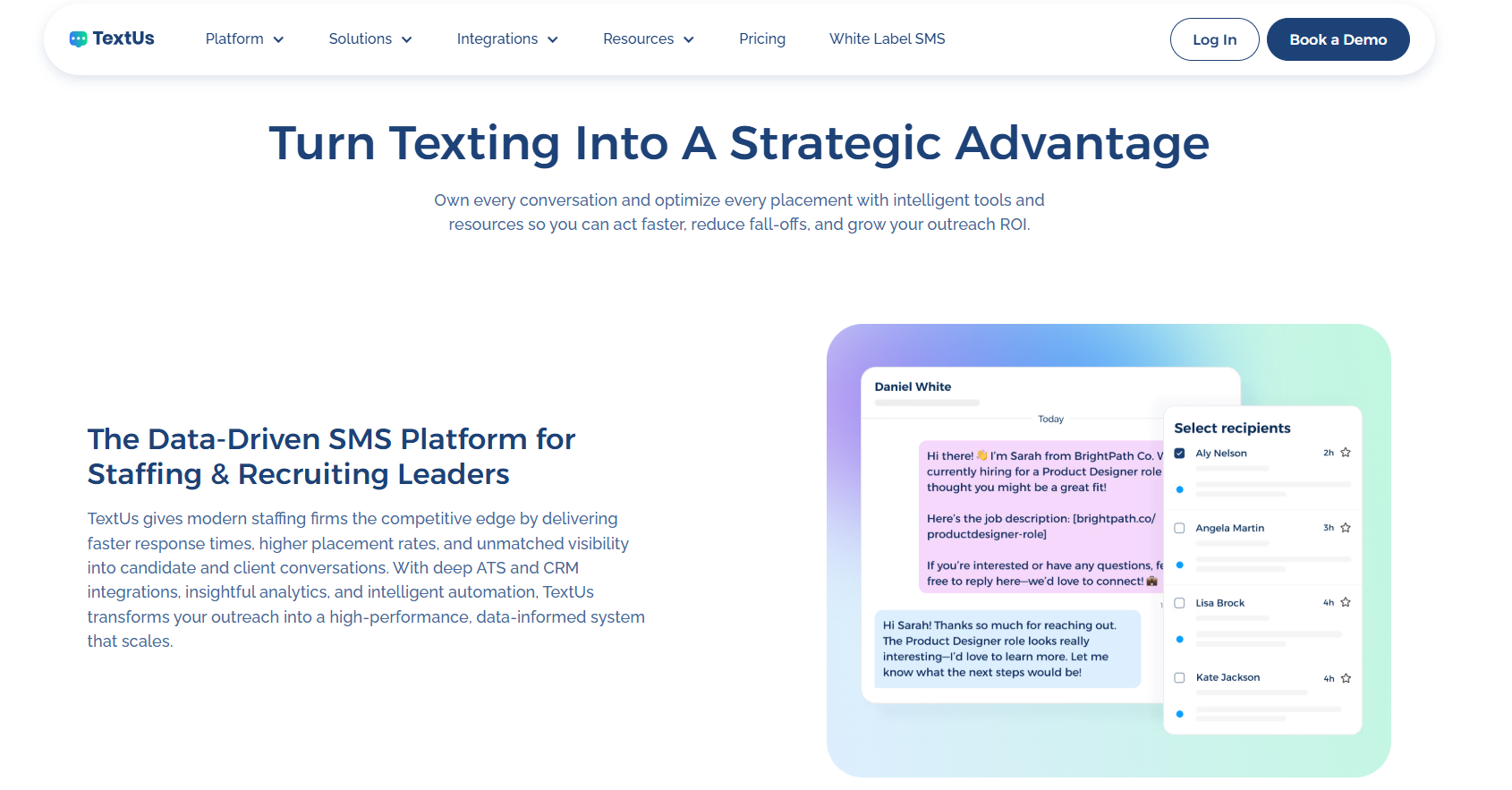
With SMS recruiting, you can send application confirmations, interview invitations, reminders, and hiring updates straight to candidates' phones.
TextUs supports personalized SMS templates, scheduled messages, and automated follow-up sequences. Its shared inbox also allows you to assign conversations, review message history, and keep candidates informed.
Book a demo with TextUs today to see how two-way SMS and automated communication strengthen candidate relationships and support faster hiring!
2. Write Accurate and Detailed Job Descriptions
Vague responsibilities, missing salary information, or unclear qualifications lead to unrealistic expectations.
Applicants need enough information to decide whether the role matches their skills and career goals. Include the main responsibilities, required experience, salary range, benefits, work schedule, and location.
You have to specify whether the position is remote, hybrid, or on-site, along with any shift requirements. Transparency about compensation and working conditions also reduces surprises during interviews.
It's also important to use plain language and separate essential qualifications from preferred skills. This encourages qualified candidates to apply even if they don't meet every preferred requirement.
3. Build a Candidate-Friendly Careers Page
A careers page offers an early look at your company before candidates apply. Outdated information or broken application links may discourage them from exploring available opportunities.
The page should highlight your company culture, employee testimonials, benefits, and career development opportunities. Include photos, employee stories, and an overview of the recruiting process so they understand what to expect before submitting an application.
An updated careers page also builds credibility, strengthens your company's reputation, and creates a positive impression.
Accurate job listings, current company information, and realistic descriptions of the work environment show candidates what your organization offers beyond compensation.
4. Simplify the Job Application Process
Repeated resume fields, unnecessary account creation, and multiple document uploads make applicants spend more time than expected. Some may abandon the application before reaching the final step.
The application form should focus on required information, such as contact details, work experience, qualifications, and availability. Additional documents or screening questions can come later in the hiring process.
Applicants should also be able to upload resumes, complete forms, and submit applications from their phones. An applicant tracking system (ATS) with mobile-friendly forms and resume parsing reduces repeated data entry.
Also, monitor application completion rates to identify where applicants abandon the process. High drop-off at certain fields or steps may indicate confusing instructions or technical issues that need attention.
5. Offer Mobile-Friendly Application Options
Modern candidates find job opportunities through social media, job boards, and career websites on their phones. Mobile-first applications should have short forms, readable text, and simple resume uploads.
Text-to-apply allows applicants to express interest through SMS instead of searching for an application page or creating an account.
With SMS keywords, you can invite candidates to text a specific word to your business text number.
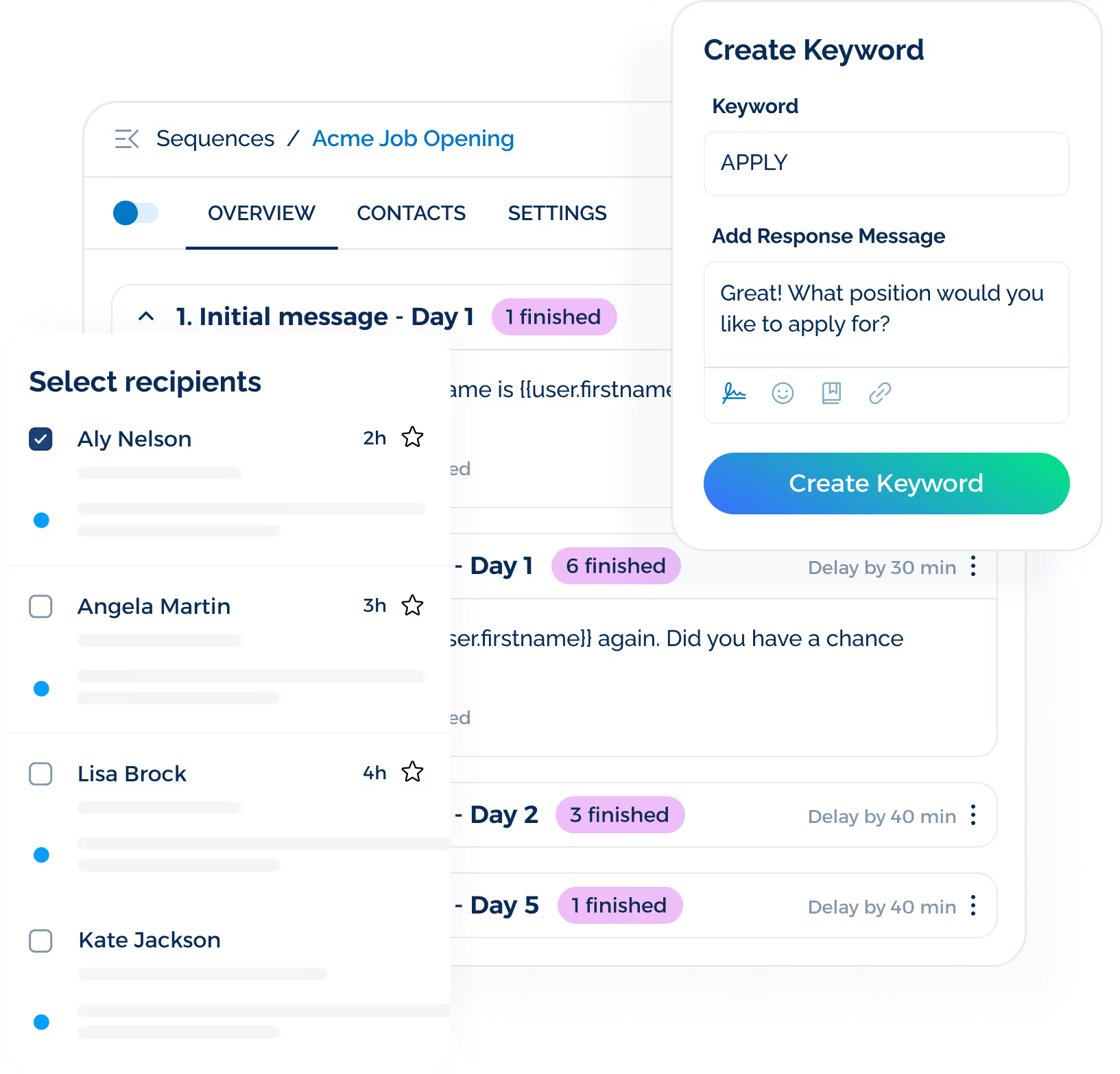
QR codes on job advertisements, posters, and other recruitment marketing materials at hiring events also connect applicants to an application link.
Keep the initial interaction focused on basic qualifications, availability, and contact information. Identification documents, banking information, and employment records should be collected through secure application systems.
6. Acknowledge Every Job Application
When candidates submit a resume and receive no confirmation, they may question whether the position is still open or if their application is under review.
Even a short acknowledgment reassures them that their submission was received. An application confirmation should mention the job title, confirm receipt, and explain what happens next.
For high-volume recruitment, SMS and email allow your talent acquisition team to acknowledge applications in a timely manner.
Text messages are suitable for short confirmations and immediate next steps, while email is better for detailed instructions or attachments.
7. Set Expectations for the Hiring Process
Unclear timelines and unexpected recruitment stages leave many candidates frustrated about what comes next.
You have to explain the interview structure, including how many rounds to expect, who they will meet, and when decisions are expected. This ensures candidates have enough time to prepare.
Also, coordinate with the hiring team to establish realistic timelines for each stage and manage candidate expectations.
Avoid promising specific decision dates unless interview schedules, evaluations, and internal approvals have been confirmed.
If the schedule changes, inform candidates about the revised timeline instead of leaving them without updates.
8. Personalize Candidate Interactions
Before contacting an applicant, review the candidate's background, qualifications, previous conversations, and job preferences.
Personalization also extends to how you communicate with candidates. TextUs lets you text candidates with reusable SMS templates and use merge fields to insert contact details.
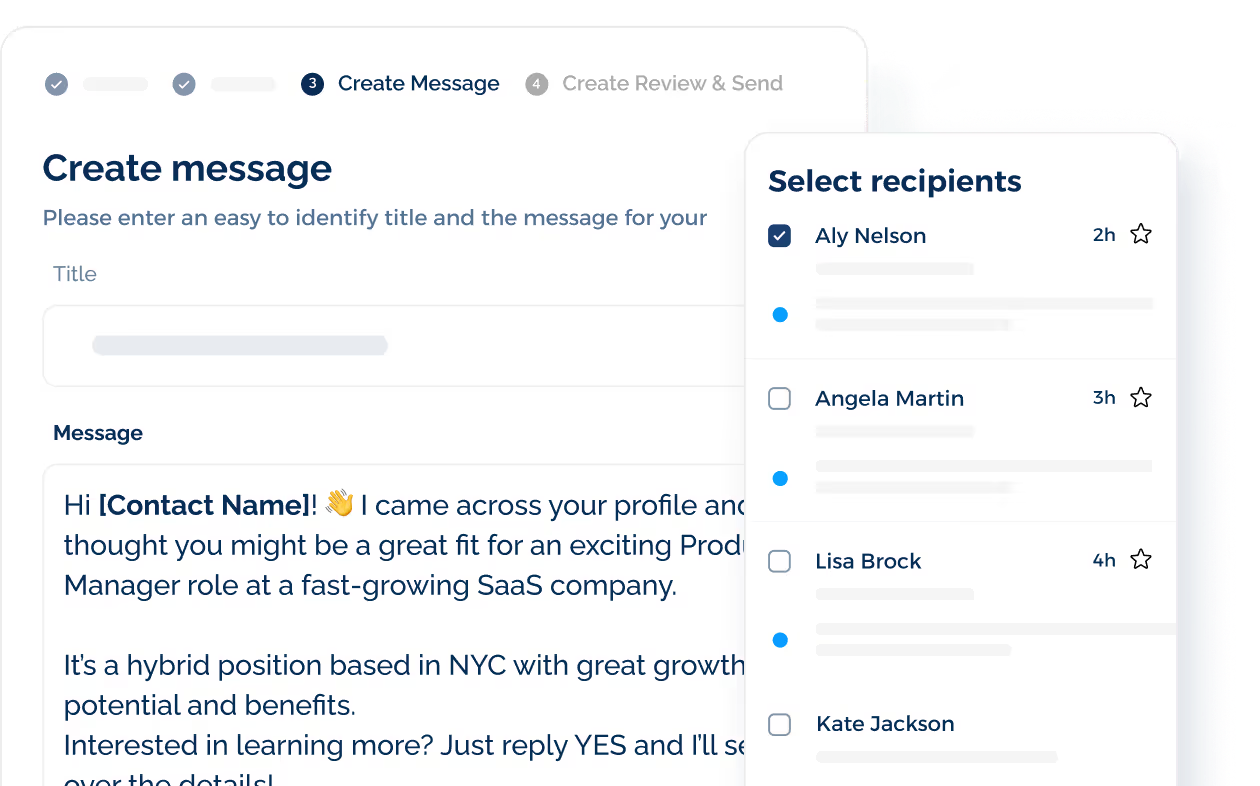
Instead of writing individual interview invitations or follow-ups from scratch, you personalize messages for multiple recipients while maintaining consistent communication.
If someone previously asked about compensation or work schedules, address those concerns in your next conversation. These small details influence how candidates perceive your company and leave a lasting positive impression.
9. Make It Simple for Candidates to Ask Questions
Frustration builds and may lead to a negative candidate experience when it's hard to reach your recruiters.
Provide a direct contact method so applicants know where to send questions throughout the recruitment process. Include recruiter contact details in interview invitations, application confirmations, and status updates.
Two-way texting offers a convenient way to ask questions without scheduling a phone call or waiting for an email response. Candidates reply to an existing conversation, while the hiring team addresses questions or provides additional details.
For more complex discussions, such as compensation negotiations or sensitive employment concerns, phone calls and secure communication channels remain appropriate.
10. Create a More Convenient Screening Process
Lengthy assessments, repeated screening questions, and unnecessary assignments may discourage applicants from continuing the hiring process.
Keep initial screening focused on key qualifications, such as relevant experience, required certifications, availability, and location.
Also, assess candidates based on job-related criteria rather than asking questions unrelated to the position. Avoid requesting information they have already provided in their resumes or applications.
For skills assessments, choose tasks that reflect actual job responsibilities and provide a fair opportunity to demonstrate a candidate's potential. Inform applicants about the assessment format, expected completion time, deadline, and evaluation criteria before they begin.
11. Send Interview Reminders and Offer Rescheduling Options
Candidates may forget appointment details or encounter unexpected conflicts. Without a reminder or an option to request changes, these situations result in missed interviews and wasted recruiter time.
You can send an interview reminder before the scheduled appointment to confirm attendance and provide key instructions.
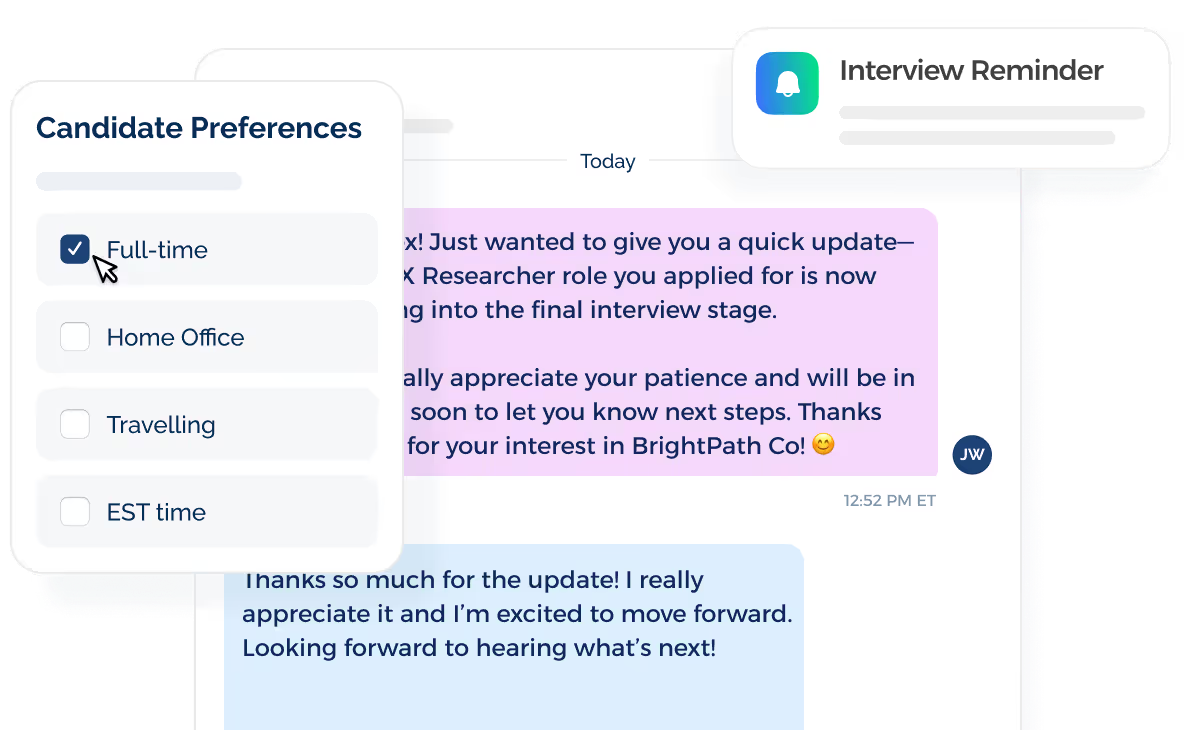
TextUs allows you to schedule personalized text reminders to collect attendance confirmations. Candidates reply to confirm their availability or request a different time.
When a candidate requests to reschedule, offer alternative dates and communicate the updated appointment details once confirmed. Make sure the interviewer receives the changes as well.
12. Provide Interview Preparation Resources
Candidates need more than a scheduled appointment to demonstrate their qualifications. Without proper preparation materials, they may struggle to understand what the interview will require.
Feel free to share resources that explain the position in greater detail, such as team responsibilities, current projects, or examples of the work involved. This allows applicants to connect their previous experience with the role and prepare meaningful questions.
For positions that require technical demonstrations, portfolios, or work samples, provide instructions about what candidates need to prepare. Explain the assessment format and evaluation criteria so applicants understand how their skills will be reviewed.
13. Prepare Interviewers and Standardize the Interview Process
Without a consistent approach, candidates may receive different treatment despite applying for the same position.
Before each interview, you need to review the job requirements and identify the skills, experience, and qualifications that need evaluation. Prepare a standard set of job-related questions and use structured interviews that cover the same core topics for every applicant.
Interviewers should also review resumes in advance and understand their responsibilities during the conversation. If multiple people are involved, assign specific areas for each interviewer to cover to prevent repetitive questions.
After the interview, use consistent evaluation criteria and scorecards. Focus on demonstrated skills and job requirements rather than personal impressions to identify the right candidates.
14. Offer Constructive Feedback After Interviews
Every interview requires time and preparation, and even unsuccessful candidates deserve to have their efforts acknowledged.
For HR professionals, a respectful response can encourage unsuccessful candidates to speak positively about their experience, regardless of the outcome.
You may focus on specific skills, qualifications, and responses discussed during the interview. Highlight areas where rejected candidates performed well and explain which requirements they did not fully meet.
Keep your comments consistent with the interview evaluation and communicate them within the expected timeframe. You can also use candidate surveys to understand how applicants received their feedback.
15. Use Automation Without Losing Human Interaction
Application confirmations, interview reminders, and follow-up messages are common recruitment tasks that benefit from automation.
Automating these tasks improves recruiter productivity, leaving more time to answer questions and build candidate relationships.
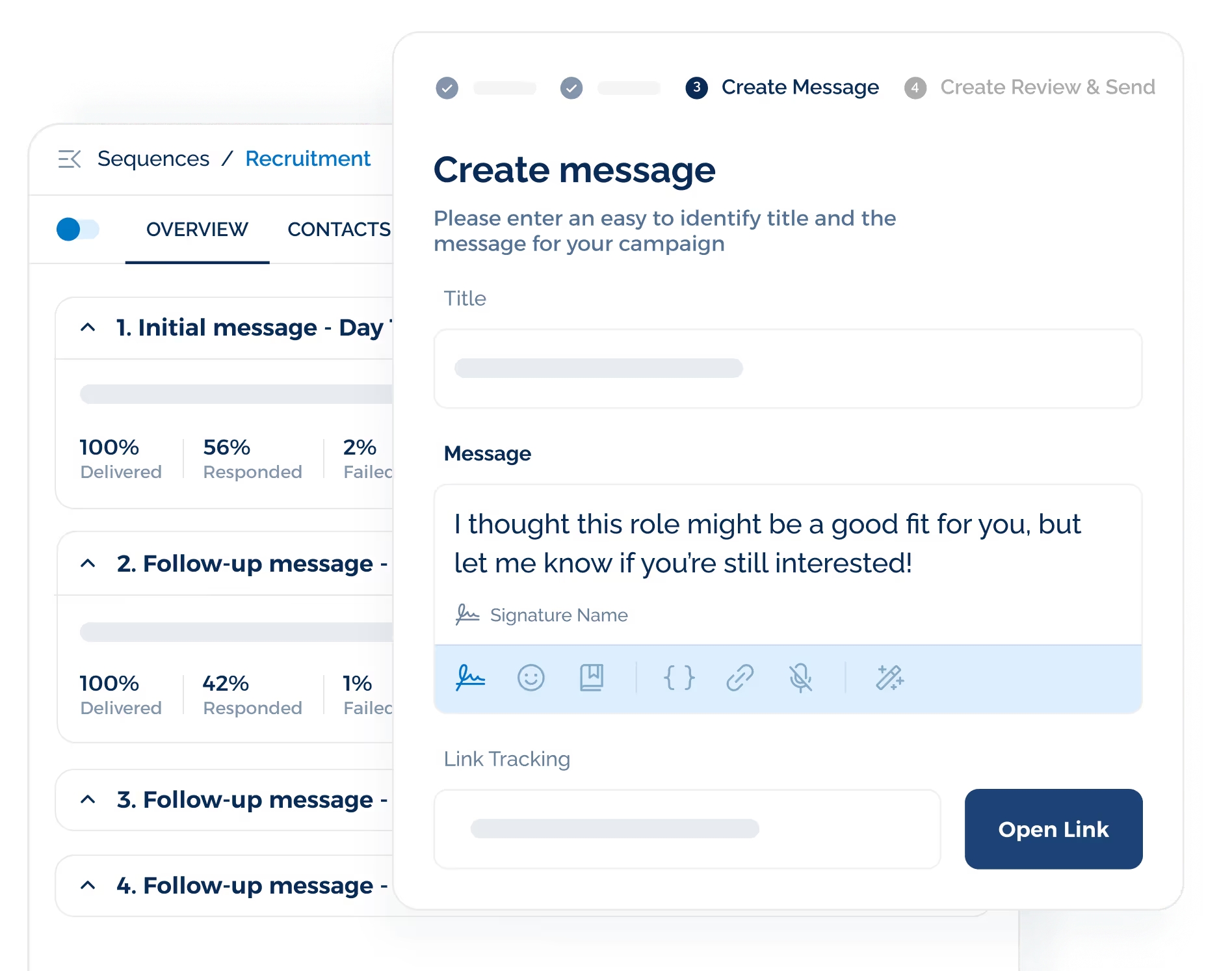
TextUs lets you create automated sequences that send recruiting text messages at scheduled intervals. It can also be set to stop when a candidate replies to prevent unnecessary follow-ups.
You can then continue the conversation through a shared inbox, review previous messages, and provide responses based on the candidate's needs.
How to Build a Better Candidate Experience Strategy
A better candidate experience requires a plan that addresses how applicants interact with your agency throughout the hiring journey.
Here are five steps to identify areas for improvement and create a more consistent experience for every candidate.
Review Your Current Hiring Process
Start by examining the entire recruitment journey, from job discovery and application submission to interviews, hiring decisions, and onboarding.
Document each stage, including what candidates need to complete, how long it takes, and who handles the next step.
Also, look for unnecessary requirements, repeated requests for information, and stages where applicants spend too much time without updates.
This review provides a starting point for improvements and shows which stages require the most attention.
Identify Common Candidate Experience Problems
You need to understand what applicants find frustrating or inconvenient. Review abandoned applications, missed interviews, candidate withdrawals, and recurring complaints to identify common problems.
Use candidate experience surveys to collect feedback from both successful candidates and applicants who were not selected. Ask about application difficulty, recruiter responsiveness, interview experiences, and overall satisfaction.
These responses provide valuable insights into problems that recruitment data alone may not reveal. Prioritize issues based on how frequently they occur, how many applicants they affect, and their impact on the hiring process.
Establish Candidate Communication Standards
Recruitment teams need defined expectations for how and when applicants receive updates. Assign responsibility for application confirmations, interview invitations, status changes, and final hiring decisions.
You can set reasonable response windows for candidate questions and establish procedures for overdue follow-ups. Your recruiters also need to know when to use email, phone calls, or SMS based on the information being shared.
If an applicant's status changes or a hiring decision takes longer than expected, the assigned recruiter should know when to contact them and what information to provide.
Choose Recruitment Technology That Supports Your Process
An ATS tracks applicant progress, while scheduling software coordinates interviews and calendar availability.
Recruitment CRM platforms also allow you to maintain relationships with past applicants and build talent pipelines for future openings.
However, these recruitment automation software tools mainly support internal operations, so add technology to keep candidates engaged as well.
Text recruiting software supports candidate communication, while text marketing provides a direct channel for application updates, interview coordination, and candidate follow-ups.
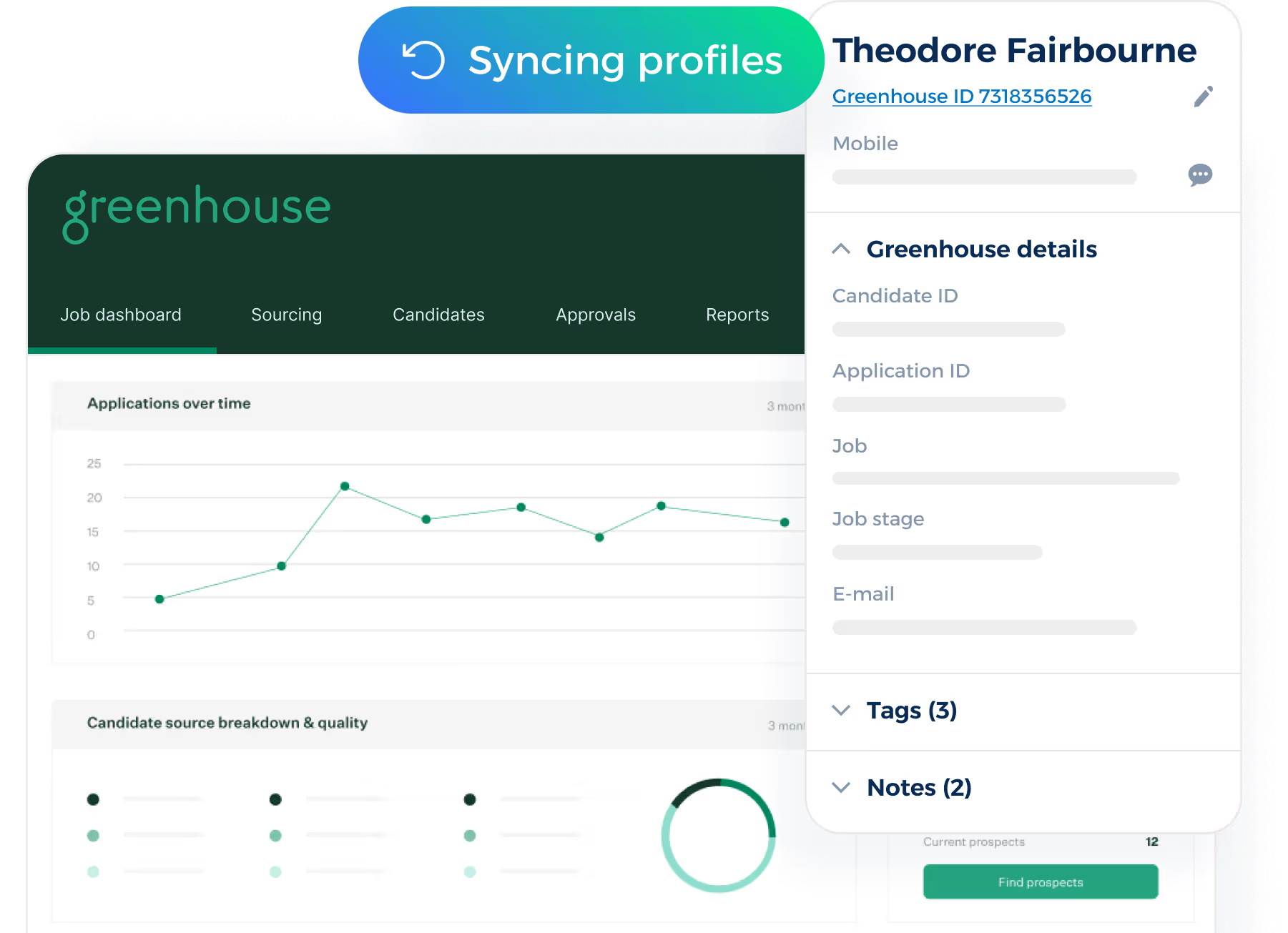
TextUs integrates with supported ATS platforms to sync candidate profiles and details. SMS conversations are logged back to the corresponding candidate records in supported integrations.
When choosing recruitment technology, consider system compatibility, ease of use, and the features you need. The right combination of tools supports an organized hiring process while maintaining personal communication with candidates.
Monitor Results and Refine Your Strategy
You need to set measurable goals to evaluate whether your changes improve the candidate experience. Track candidate satisfaction scores, application completion rates, recruiter response times, interview attendance, offer acceptance rates, and the interview-to-offer ratio.
Compare performance before and after each improvement. You should also monitor time to hire and cost per hire to understand how changes affect recruitment performance and expenses.
Then, share the results with recruiters, hiring managers, and leadership teams to determine what needs further attention. Review performance at regular intervals and adjust your approach based on candidate feedback and actual recruitment results.
Create a Positive Candidate Experience With TextUs
When your recruiters spend too much time on administrative tasks and follow-ups, they have less time for meaningful conversations with top talent.
Your hiring strategy needs a communication approach that supports personal interactions.
TextUs connects you with candidates through two-way SMS, personalized templates, and automated messaging sequences.
Its shared inboxes and ATS integrations allow you to access conversation histories, coordinate recruiter responses, and maintain communication throughout the candidate journey.
Small improvements in how you communicate can make all the difference in a candidate's decision to join your company.
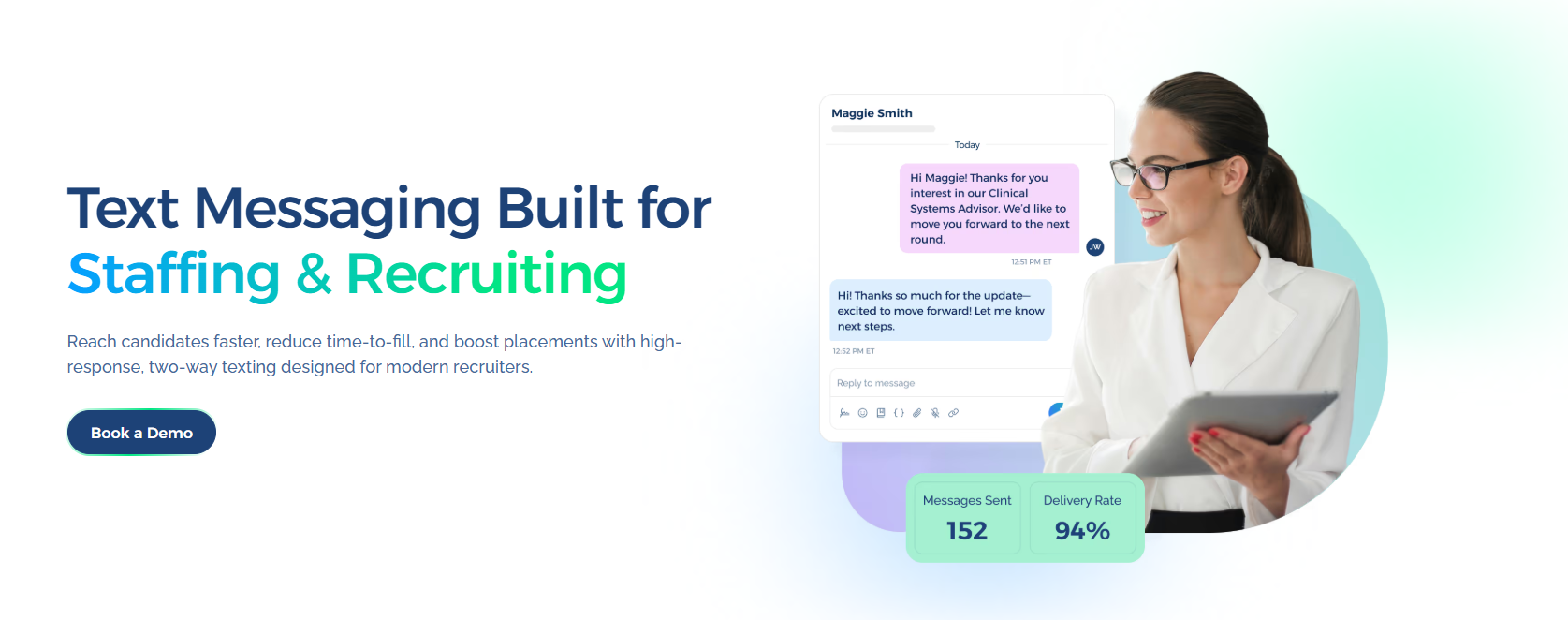
Book a demo with TextUs today to see how business texting can support a better candidate experience from first contact to hire!
FAQs About Candidate Experience Best Practices
What aspects of your training and/or work experience make you an ideal candidate for this job?
Candidates should connect their skills, professional experience, and accomplishments to the position's requirements.
As a recruiter, you also need to communicate role expectations so candidates understand which qualifications and experiences to emphasize during interviews.
What is the biggest red flag to hear when being interviewed?
A major red flag is an interviewer who avoids questions about job responsibilities, compensation, or workplace expectations.
In a competitive market, a lack of transparency can lead to negative interview feedback and discourage future applicants from considering a company.
What is the 7-second rule in a resume?
The 7-second rule refers to research suggesting recruiters spend about seven seconds on an initial resume review.
For most candidates, a readable format, relevant skills, and well-organized work experience make qualifications easier to identify.
What are the three C's of recruitment?
The three C's of recruitment commonly refer to competence, character, and cultural fit.
These factors allow you to assess candidates' job-related skills, professional behavior, and company value alignment for better hiring outcomes.
Continue Reading



Frequently Asked Questions
Business Texting
Built for Results
Create and convert pipeline at scale through industry leading SMS software