
Healthcare Staffing Agency SMS Guide for Faster Recruiting
Explore our healthcare staffing agency SMS guide and learn where it fits throughout the staffing process and how to build a texting strategy.

Written by
Adam Hamdan
Published
November 3, 2026

Healthcare staffing moves on tight timelines. A delayed reply can mean a missed placement, an uncovered shift, or a qualified clinician accepting another offer before your recruiter reconnects.
SMS for staffing agencies supports faster outreach for interviews, credential reminders, shift alerts, onboarding updates, and assignment communication while keeping contact direct and easy to act on.
In this article, you’ll learn how SMS supports healthcare agencies, where it fits throughout the staffing process, and how to build a texting strategy for a stronger approach to candidate communication.
TL;DR
- SMS supports healthcare staffing agencies by reaching busy clinicians faster for recruiting, credentialing, shift coordination, and assignment updates.
- SMS supports the full healthcare staffing lifecycle, from text-to-apply, application confirmations, screening, role matching, interviews, status updates, credentialing, and onboarding to open-shift coverage, schedule changes, first-day reminders, timecards, re-engagement, and referrals.
- A strong healthcare staffing SMS strategy combines candidate segmentation, stage-based messaging, ATS or CRM integration, automation, conversation ownership, human escalation rules, consent and opt-out controls, and workflow-specific performance tracking.
- TextUs supports clinical recruiting and workforce communication with business texting, automation, shared inboxes, conversation ownership, ATS integrations, and SMS consent controls.
How SMS Marketing Supports Healthcare Agencies
Nurses, clinicians, and other healthcare professionals spend most of a shift away from a desk. SMS communication fills that gap when email or phone calls are not the most practical option.
Staffing pressure also leaves little room for slow follow-up. According to the 2026 NSI National Health Care Retention & RN Staffing Report, 33.1% of hospitals reported RN vacancy rates of 10% or higher.
When your agency supports facilities with ongoing shortages, you need to reach qualified professionals before another opportunity takes their attention.
Text messaging fits into several parts of that process, such as sharing job opportunities, confirming interviews, sending interview reminders, or following up on credential requirements.
It also supports assignment confirmations, schedule changes, onboarding updates, and outreach before a current placement ends.
The value comes from reducing the time between outreach and action. You spend less time chasing responses, repeating reminders, or waiting for candidates to check email.
Candidates also receive updates in a format that fits more naturally into busy clinical schedules. This supports faster recruiting, credentialing, shift coordination, and placement activity.
15 Ways to Use SMS for Your Healthcare Staffing Agency
SMS supports many touchpoints throughout healthcare staffing. Here are 15 ways to use texting throughout your recruitment process:
1. Support Text-to-Apply Recruiting
Text-to-apply shortens the path between seeing an opening and starting an application.
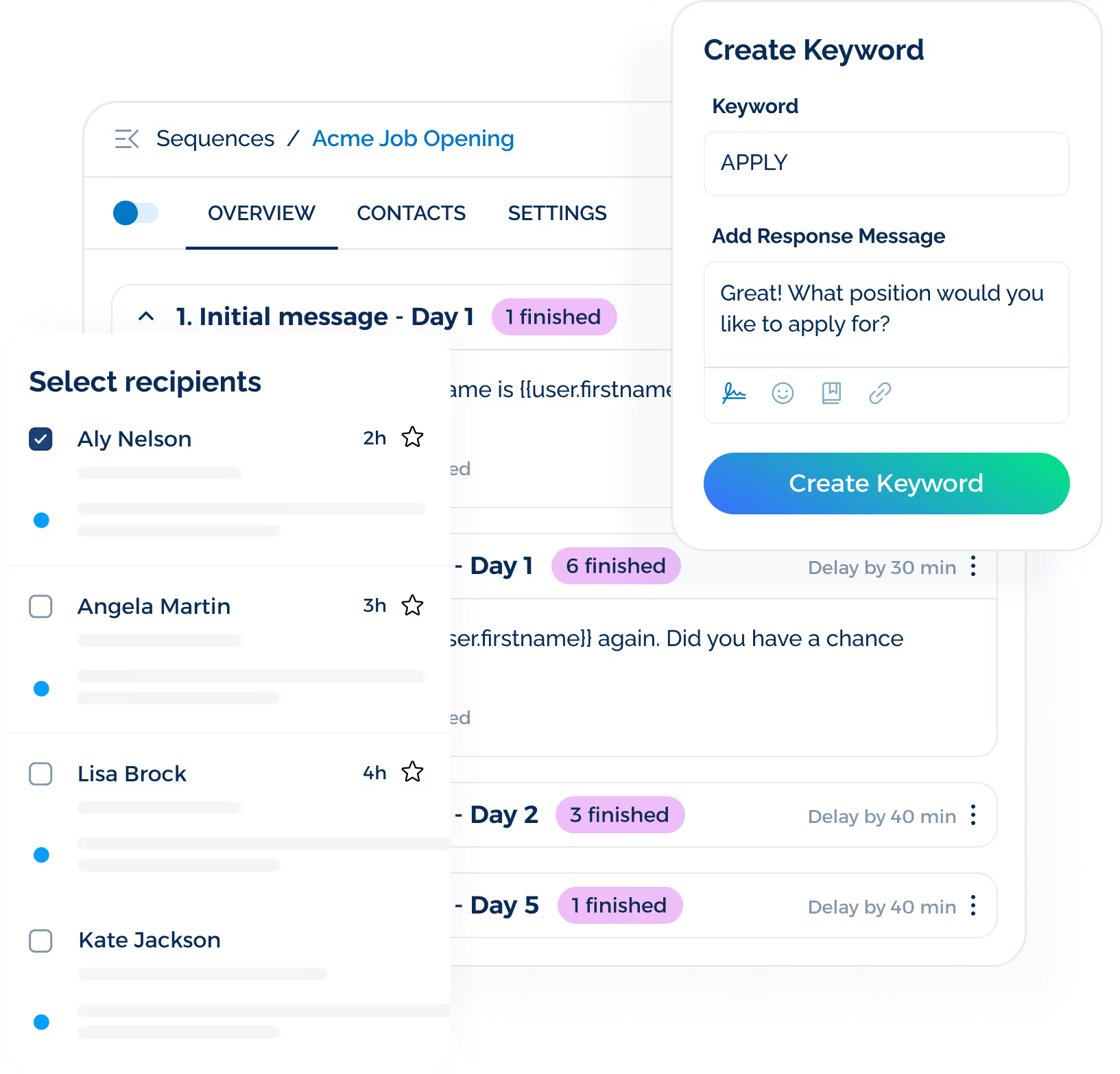
A person may spot your job ad, flyer, QR code, or social post and text a keyword such as “RN,” “TRAVEL,” or “PRN” to one of your designated phone numbers.
From there, the conversation can direct the candidate to an application form, trigger a short screening question, or route the response to a recruiter. Different keywords also help you separate interest by specialty, location, or campaign.
2. Confirm New Candidate Applications
A quick confirmation tells candidates their application reached your agency. The text may include the role, recruiter name, expected review window, and the next step in the process.
For healthcare roles with high applicant volume, these confirmations reduce the need for candidates to call or email just to check their status.
You also have an early chance to set expectations and tell candidates when they should expect a response from the hiring team.
3. Ask Initial Screening Questions
Early screening doesn't always require a full recruiter call. A few straightforward questions by text help confirm whether a candidate matches the basic requirements for a role.
For travel, per diem, contract, or direct hire positions, you may ask about license type, specialty, years of experience, preferred location, shift availability, and potential start date. Those answers help you identify obvious mismatches before spending time on a longer conversation.
More detailed qualification checks still belong in your ATS, formal screening process, or recruiter discussion. Texting fits best when the question is short, and the next step is easy for the candidate to understand.
4. Share Relevant Healthcare Roles
Not every opening belongs in front of every candidate. For example, a pediatric nurse, respiratory therapist, and radiology technician each need different opportunities.
Candidate data such as specialty, license, location, availability, shift preference, and past assignments help you narrow each audience before outreach starts.
Segmentation keeps job alerts tied to roles the recipient is more likely to consider. This approach becomes important when you recruit for several facilities or healthcare providers at once.
5. Coordinate Interviews
Interview coordination involves more than sending a calendar link. Candidates need to confirm a time, ask about the format, request another slot, or check who they will meet before the interview takes place.
Texting works for interview scheduling because you can send a few available times and confirm the selected option without a long email thread.
Once the meeting is booked, an interview reminder can reinforce the date, time, format, and any preparation details the candidate needs.
This is valuable for healthcare professionals with rotating or unpredictable shifts. If availability changes, a short text exchange can resolve the issue before the interview is missed or delayed.
6. Send Candidate Status Updates
Silence between hiring stages leaves candidates unsure about whether a role is still active.
Healthcare placements involve credential reviews, facility approvals, references, background checks, or other steps that extend the process.
A status text can tell candidates where things stand, even when there is no final decision yet. You might confirm that documents are under review, a facility response is pending, or another update is expected later in the week.
Consistent updates also reflect professionalism throughout the candidate experience. They know what to expect, while you face fewer check-in SMS messages asking for the same status.
7. Follow Up on Credential Requirements
Credentialing delays can hold up a placement even after the candidate has accepted the role.
Nurses, therapists, technicians, and other allied health professionals may still need to submit licenses, certifications, background checks, immunization records, or facility-specific documents before the start date.
A quick text keeps the missing requirement visible. The message can name the outstanding item, include the deadline, and point the candidate toward the right portal or internal resources for submission.
The actual documents should stay in your approved credentialing system rather than a standard text thread. SMS works best as the prompt that moves the candidate back to the correct workflow.
8. Keep Onboarding Tasks on Track
A signed offer doesn't mean onboarding is complete. New employees still need to finish tax forms, orientation modules, policy acknowledgments, facility paperwork, or other requirements before their first assignment.
Text reminders keep those smaller tasks from getting lost between acceptance and the start date. You can send a deadline, a link to the correct portal, or a note about the next required step.
This approach also supports smoother staffing operations when several candidates are preparing for assignments at the same time.
9. Send Open-Shift Alerts
Text alerts let you reach qualified candidates with the key details upfront, such as role, location, shift time, pay range, and start date.
Audience filters make these alerts more relevant. Criteria such as specialty, availability, license, location, and employment status narrow outreach to people who are more likely to qualify for the opening.
A simple reply option also supports conversational SMS marketing when candidates want to ask about the assignment before accepting it. That exchange keeps shift communication direct without turning every opening into a long back-and-forth process.
10. Cover Last-Minute Staffing Needs
Last-minute callouts, sudden absences, and unexpected demand may leave a facility needing coverage within hours.
Bulk text messaging lets you reach a large group of qualified healthcare professionals at once. This cuts down the time you spend contacting candidates individually.
With bulk SMS software like TextUs, you can segment recipients by specialty, location, credentials, shift preference, or recent availability. Then, personalize recruiting text messages with details such as the candidate name, role, facility, shift time, and response deadline.
More candidates receive the opportunity sooner, and you start collecting responses from several qualified people at the same time.
11. Confirm Shift Details and Changes
Start times, reporting locations, unit assignments, parking instructions, or facility contacts all need an update before the shift begins.
A prompt text allows you to confirm the latest information and ask the healthcare professional to acknowledge the change. This is helpful when several clients have different site rules or last-minute staffing needs.
Important updates still need to match your internal records so recruiters, coordinators, and candidates all work from the same information. That lowers the risk of someone arriving with outdated instructions.
12. Send First-Day and Assignment Reminders
The first day of an assignment comes with details that candidates may overlook after several emails and onboarding steps.
You can send reminders that include the arrival time, facility address, parking instructions, dress requirements, supervisor name, and reporting department.
For longer assignments, later reminders can cover upcoming schedule dates, required check-ins, or other time-sensitive details. These text messages reduce avoidable confusion before a shift begins and help candidates arrive prepared.
13. Remind Healthcare Workers About Timecards
Late timecards delay payroll, create extra follow-up, and slow billing for completed shifts. A scheduled text near the submission deadline keeps the task visible before the cutoff passes.
The SMS consent may include the due date, submission link, approval steps, and the contact for payroll assistance. If several facilities follow different processes, the message can point each worker to the correct instructions for that assignment.
This keeps a routine administrative task from turning into a larger payroll issue at the end of the week.
14. Re-engage Clinicians Before an Assignment Ends
The final weeks of an assignment are a good time to ask what the clinician wants next. Some may prefer an extension, while others may want a different location, shift, specialty, or contract length.
A text can open that conversation before the assignment officially closes. You may ask about upcoming availability, travel preferences, or interest in another role that supports the clinician’s career growth.
Early outreach also keeps strong candidates connected to your agency between placements. Instead of restarting the relationship months later, you already know when they expect to become available.
15. Ask for Referrals and Reconnect With Past Candidates
Past candidates already know your company, which makes them a valuable audience for future outreach.
A clinician who completed an assignment may be open to returning, while someone who declined a previous role may now have different availability.
Referral texts also create another source of qualified leads. You can ask former candidates to share an opening with colleagues or invite them to refer someone who matches a current need.
How to Build a Healthcare Staffing SMS Strategy
An effective strategy needs defined audiences, workflows, ownership, and measurement before texting becomes part of daily recruiting. Here are the key areas to plan so each message supports a specific staffing goal.
Segment Candidates Before Sending Messages
Healthcare staffing databases include professionals with different specialties, licenses, locations, schedules, and assignment preferences.
SMS segmentation keeps each campaign tied to candidates who match the opportunity instead of sending the same message to everyone in your database.
Ideal segments may include specialty, license type, credential status, preferred location, shift preference, availability, assignment type, and previous placement history.
Map SMS Messages to Each Staffing Stage
Texting should support specific moments in the staffing journey. Your recruiting workflow should define where a text adds value and what comes after it. For example:
- Application: “Hi Maya, we received your application for the ICU RN role in Tampa. Are you available for a quick screening tomorrow?”
- Credentialing: “Hi James, your BLS certification is still needed for the assignment. Please upload it through the credential portal by Friday.”
- Onboarding: “Your orientation is scheduled for Monday at 8 AM. Please complete the remaining forms before your start date.”
- Assignment: “Reminder: Your shift starts tomorrow at 7 AM at Memorial Hospital. Reply YES to confirm.”
Your text recruiting software should also reflect candidate progress, so you don't send messages tied to an outdated stage. This keeps each interaction relevant and reduces duplicate outreach.
Connect SMS Activity With Your Systems
Candidate records, job applications, placement details, recruiter ownership, and prior conversations should stay easy to reference from your ATS or CRM.
An integration also reduces manual updates after each exchange. When the platform handles message logging, you have a more complete view of what was discussed, promised, or confirmed before the next outreach.
Connected records also help during handoffs. If another recruiter takes over the account, they can review the conversation history, understand the latest status, and continue from the right point.
Automate Repetitive Staffing Messages
Some staffing touchpoints follow the same pattern every time. Application confirmations, interview reminders, credential deadlines, and onboarding tasks are strong candidates for SMS automation.
Triggers may send a message after a candidate reaches a certain stage, misses a deadline, or approaches an important date. Templates keep the core language consistent, while personalization fields add details such as name, role, location, recruiter, or start date.
Each automated sequence also needs a stopping point. Messages should pause once the candidate responds, completes the required task, changes stages, or opts out.
Create Rules for Ownership and Reply Routing
Conversation ownership assigns responsibility to a specific recruiter or team member, which keeps replies from sitting unanswered or bouncing between people.
Routing rules may follow branch, specialty, facility account, recruiter assignment, or candidate stage. A shared inbox also keeps the conversation visible when another authorized team member needs to step in.
With TextUs, incoming conversations can be assigned to the right teammate once that handoff is needed. Ownership reduces double-texting, crossed wires, and missed follow-ups because everyone knows who is responsible for the next response.
Define When a Human Needs to Take Over
Automation can handle routine reminders and status updates, but certain replies need recruiter judgment.
Pay questions, credential disputes, complaints, accommodation requests, safety concerns, or complex assignment issues require a more personal response.
Your escalation rules should define which topics leave the automated workflow. In some cases, the recruiter may continue by text. Other situations may call for a phone conversation so the candidate can talk through the issue in more detail.
Set Consent and Opt-Out Rules
Your staffing process needs a consistent way to capture texting consent before recruiter outreach begins. That permission may come from an application form, career page, text-to-apply keyword, recruiting event, or another approved source.
Consent status should remain attached to the candidate record. This allows you to know whether texting is allowed before you start a campaign, sequence, or one-to-one conversation.
The same principle applies when someone opts out. That preference should update the texting system and stop future outreach tied to the same consent record.
For larger staffing teams, shared suppression rules help prevent accidental follow-up from another recruiter, branch, or campaign after a candidate has already asked to stop receiving texts.
Measure Results by Workflow
The right metric depends on what each workflow is designed to accomplish.
For application follow-up, you can measure response time or completed screenings.
Interview workflows may track booking and attendance rates, while credential reminders can track completion before deadlines.
Open-shift campaigns focus on qualified responses, time to fill, and placements generated from the outreach.
Instead of judging every campaign by the same metric, you can identify which texts move candidates forward and where the process still needs adjustment.
SMS Compliance and Privacy for Healthcare Staffing
Healthcare staffing texts need more than good message copy. Your program also needs rules for consent, opt-outs, business number registration, recordkeeping, and sensitive information.
CTIA guidance states that businesses should obtain permission before texting candidates and provide a simple way for recipients to opt out.
Your records may include the candidate’s mobile number, the date and source of consent, and the types of messages they agreed to receive.
Message purpose also affects the rules that apply. Recruiting updates have to be treated differently from texts sent for promotional purposes, so your consent language needs to match the type of outreach you plan to send.
Instructions such as reply STOP, QUIT, END, CANCEL, UNSUBSCRIBE, and OPT OUT are common ways to revoke consent by reply text.
Business texting from local numbers also requires 10DLC registration. The Campaign Registry connects verified businesses with approved SMS use cases, which adds more transparency around who is sending the message and why.
Keep Healthcare Candidate Communication Connected With TextUs
Healthcare staffing agencies manage communication at every stage, from recruiting and credentialing to assignment updates and shift coverage.
TextUs brings two-way conversations into your staffing workflow. You can communicate with candidates from a dedicated system instead of personal devices or message threads.
SMS compliance controls are built into the platform. TextUs includes opt-in and opt-out consent management, complete message history logging, audit trails, role-based access, and administrative oversight.
These controls support your compliance program while you handle candidate outreach, credential reminders, onboarding communication, and active assignment updates.
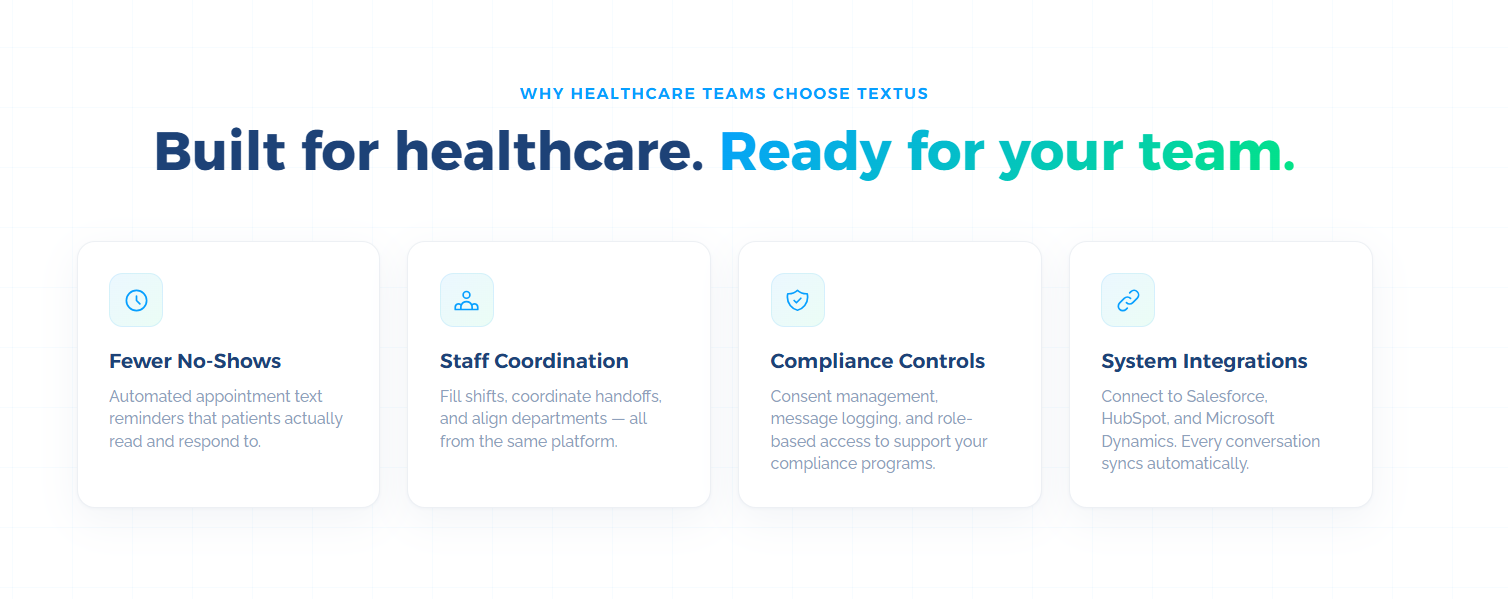
Campaigns, automation, shared inboxes, conversation ownership, and ATS integrations also support higher-volume healthcare staffing outreach.
Candidate context stays connected throughout your pipeline, which supports more consistent follow-up between your recruiters and staffing teams.
Book a demo with TextUs today to see how secure business texting can support your healthcare staffing success!
FAQs About Healthcare Staffing Agency SMS
Is healthcare staffing hire legit?
Healthcare staffing is a legitimate industry that connects hospitals, clinics, long-term care facilities, and other healthcare organizations with qualified professionals.
But if you hear from an unfamiliar healthcare recruiter, make sure to verify the agency, recruiter contact information, facility details, and role before sharing sensitive documents.
What is SMS in healthcare?
SMS stands for Short Message Service. In healthcare staffing, agencies use SMS to contact clinicians about interviews, credential requirements, open shifts, assignment starts, schedule updates, and upcoming placements.
What is a healthcare staffing agency?
A healthcare staffing agency is a recruiting service that connects healthcare organizations with qualified professionals.
These agencies may place nurses, physicians, nursing assistants, therapists, technicians, and other clinical workers in temporary, travel, per diem, contract, or permanent roles.
What are examples of SMS healthcare programs?
Examples include text-to-apply campaigns, application confirmations, interview reminders, credential alerts, open-shift notifications, onboarding updates, and assignment check-ins.
Messaging disclosures may also explain when message and data rates apply. The rest of sensitive candidate information should stay in the appropriate approved system.
Continue Reading



Frequently Asked Questions
Business Texting
Built for Results
Create and convert pipeline at scale through industry leading SMS software