
How to Resell Business Texting With Your Own Branding
Learn how to resell business texting with your own branding in ten steps. Discover how TextUs can provide the infrastructure for your branded messaging.

Written by
Adam Hamdan
Published
October 20, 2026

As growing demands for faster communication continue, modern businesses are looking for ways to add texting without building a full messaging product.
SMS reselling lets you offer texting under your own brand, add it inside an existing platform, or connect it to the tools your customers use while a messaging provider handles the technology.
In this guide, you’ll learn the advantages of choosing to resell business texting over building from scratch and how to successfully launch your reseller program.
TL;DR
- Business texting reselling lets you sell messaging under your brand while an SMS provider handles the core technology, carrier connections, compliance, and platform maintenance.
- SMS reselling can add recurring revenue, expand your offer, keep customers under your brand, speed up launch, and reduce telecom upkeep.
- Starting a business texting reseller means defining your audience and use case, then choosing a reseller model, provider, pricing, branding, integrations, compliance setup, and launch plan before you scale.
- TextUs lets you resell branded business texting with white-label, embedded, and API options, plus automation, shared inboxes, integrations, analytics, and built-in compliance support.
How Do You Offer Business Texting as a Reseller?
Business texting reselling works through a partnership between you and a short message service (SMS) provider.
You sell the service to your customers, while the provider supplies the technology needed to send, receive, route, and manage SMS marketing messages.
Your role depends on the reseller model you choose. You may control the branding, pricing, packaging, customer relationship, and first-line support.
The provider then manages areas such as carrier connections, number provisioning, compliance tools, deliverability, and platform maintenance.
The Advantages of Reselling Business Texting
Business texting is becoming a standard part of how companies reach customers, candidates, and employees. Here are a few reasons reselling is better than building the technology from the ground up.
Create a New Recurring Revenue Stream
Texting doesn't have to sit outside your current offer. You can package it as a paid add-on, premium feature, standalone subscription, or usage-based service.
As customers rely on text messaging more often, that usage can support recurring revenue beyond the first sale. It also creates more opportunities to grow the value of each account over time.
Expand What You Already Sell
You don't need to reinvent your product to add new SMS capabilities.
An ATS may add candidate texting, while a CRM may include prospect outreach. Workforce software also supports employee updates on multiple channels.
The SMS service becomes another part of what customers already buy from you, rather than a separate business you need to build and manage.
Own the Customer Relationship
White-label reselling keeps your company in front of the customer instead of passing them to another provider.
You decide how you package, position, and present the service. You can also set your own pricing while keeping customer communication under your brand.
That control creates more room for building relationships long after the initial sale.
Get to Market Without Building SMS Infrastructure
Having your own platform sounds appealing until you account for everything behind the messaging experience.
Carrier connections, routing, number provisioning, compliance controls, deliverability systems, monitoring, and engineering resources all come with the build. Reselling removes many of those technical headaches.
Avoid Ongoing Telecom Maintenance
The technical workload doesn't end once the product launches.
Carrier requirements change, and registrations need attention. Filtering rules, integrations, product updates, and delivery rates also still need to be managed.
A reseller model shifts much of that work to the provider, so you can stay focused on your clients, product growth, and reaching more clients.
How to Get Started With Business Texting Reselling
A strong reseller offer starts with more than choosing a texting provider and adding a price tag. Here's how you can shape the service and build a setup that supports long-term growth.
Step #1: Identify Your Target Customers
Whether you serve a small business or a large organization, look for communication gaps where texting could fit into the work they already manage.
A staffing platform may focus on candidate outreach, while scheduling software may support appointment reminders. Sales platforms may use bulk SMS for follow-ups with leads.
A defined audience also makes it easier to decide which features, integrations, and messaging use cases belong in your offer.
Step #2: Define Your SMS Marketing Use Case
A specific SMS use case sets the direction for the service before you make decisions about features or setup.
Your focus should be on who needs the communication, what action you want from them, and where texting fits into that interaction.
Your customers may use text message marketing for:
- Lead follow-up
- Appointment confirmations
- Candidate outreach
- Promotional text messages
- Order updates
- Re-engagement
Each use case comes with different expectations around timing, message frequency, and whether recipients need to respond.
Step #3: Pick Your SMS Reseller Model
The right choice depends on how much you want to build yourself and how closely texting should connect with your current product.
TextUs offers a full white-label model, which gives you a branded platform with your logo, colors, and domain to boost engagement.
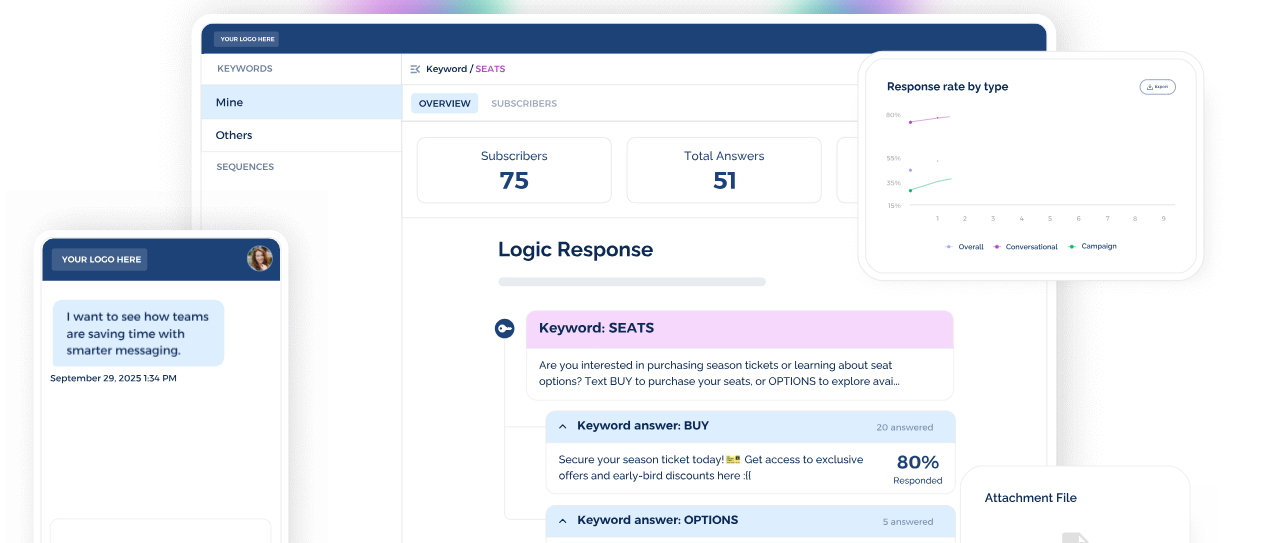
Its Embedded Messenger places texting inside your existing software, while the API lets your development team shape the messaging experience.
Each model uses TextUs messaging infrastructure underneath. This helps you choose the setup that matches your product without building the full texting system from scratch.
If you want to compare which model fits your business, book a demo with TextUs today!
Step #4: Choose a Business Texting Reseller Provider
The provider behind your service affects what you are able to offer customers after launch. Costs may reflect access, message volume, users, features, or a mix of these factors.
A demo is a good chance to look past basic sending and see how the platform supports real customer needs.
TextUs combines individual conversations with drip campaigns, shared inboxes, assignments, templates, campaign scheduling, MMS, and A/B testing. Customers have more ways to communicate than by sending basic text messages from a standalone tool.
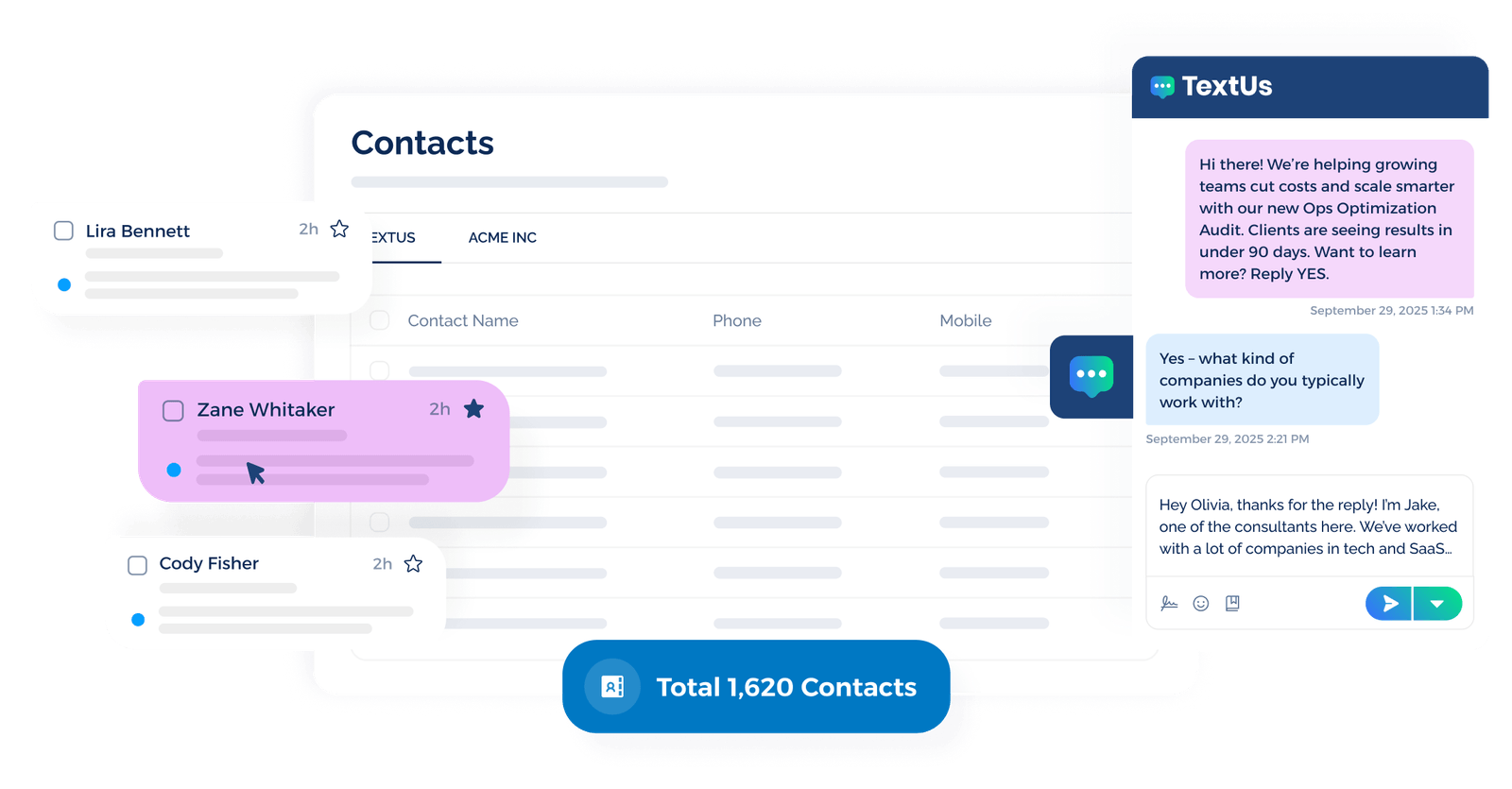
SMS automation also includes keyword-based opt-ins, auto-replies, and drip SMS campaigns for follow-up sequences. AI rewrite and Message Quality Indicator add support for message quality and risk checks.
Contact profiles, segmentation, CRM syncing, and reporting bring more of the customer communication process into one product. TextUs also tracks delivery, responses, engagement, and campaign-level results.
If you want to attract clients and resell more than basic messaging, explore TextUs white-label SMS solutions today!
Step #5: Decide How You Will Price Business Texting
Your pricing should stay simple enough for customers to understand while leaving room for account growth. Costs may reflect access, message volume, users, features, or a mix of these factors.
Common pricing models include:
- Monthly subscription: A fixed recurring fee for platform access
- Usage-based pricing: Charges change based on message volume or customer activity
- Per-user pricing: Costs depend on how many employees use the service
- Message allowances: Each plan includes a set message volume before extra charges apply
- Tiered packages: Higher plans may include automation, reporting, integrations, or campaign tools
- Base fee plus usage: A fixed platform fee is combined with charges tied to activity
- Bundled pricing: Texting is packaged with other software or communication services
TextUs gives you control over what your end customers pay. You set the price and margin based on your market and packages, while it charges for platform access. There's no revenue-share requirement, so the margin you set stays with you.
Step #6: Set Up Your Branding and Customer Experience
Your branding should make the texting service feel like a natural extension of what you already offer.
Elements such as your logo, colors, domain, product name, and interface can keep the experience consistent for every customer touchpoint.
With TextUs customizable branding elements, you can offer two-way texting under your own name without taking on the full development work.
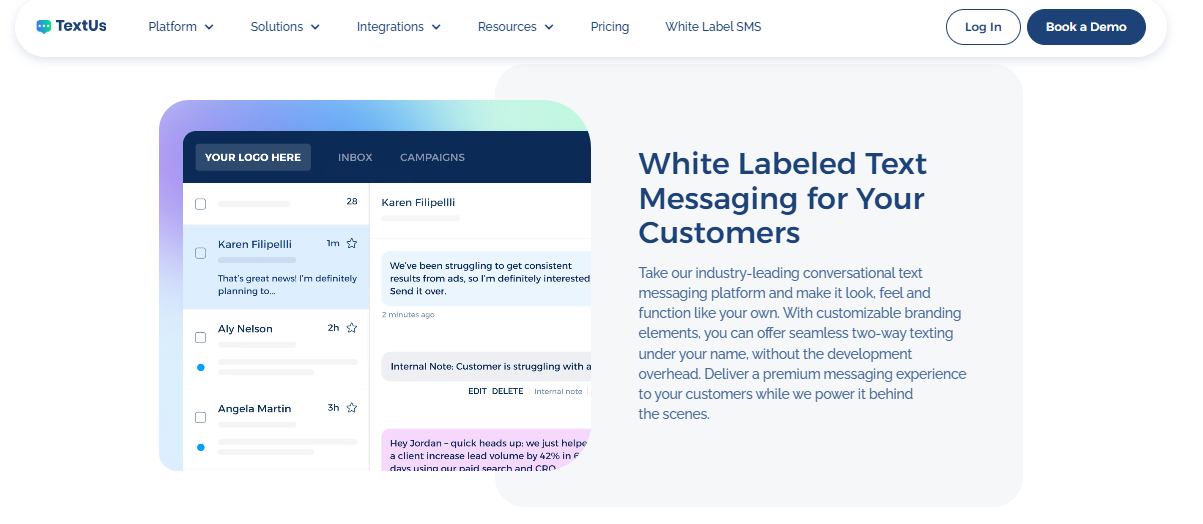
That stronger brand connection can support adoption and retention over time. Customers are more likely to see texting as part of the value they already receive from you, rather than an unrelated add-on.
Step #7: Connect Texting to Your Existing Software
CRM, ATS, HR, workforce, scheduling, and customer databases are common places where messaging may need to connect.
A CRM connection keeps prospect conversations tied to contact records, while an ATS connection can place candidate communication beside recruiting activity.
Scheduling tools also support event reminders without forcing users to switch between separate platforms.
These connections can also support automated workflows based on activity inside another system. A status change, new record, or scheduled event triggers the next communication.
TextUs connects with platforms such as Salesforce, HubSpot, Bullhorn, Greenhouse, Workday, and Zapier. API and webhook options also let you integrate texting into more specific product workflows.
Step #8: Prepare for SMS Compliance and Registration
SMS compliance needs to be part of the setup before customers begin sending marketing messages.
10DLC registration requires information about the company, texting use case, opt-in method, and sample SMS messages. Customer onboarding should also cover best practices for consent and opt-outs.
Extra care applies when customers operate in regulated industries. TextUs is designed for non-PHI communication, such as scheduling notices, general updates, and administrative follow-ups.
If your customers handle protected health information (PHI), you need to determine which types of information are appropriate to send by SMS.
TextUs takes on much of the carrier and registration work that could otherwise fall to you.
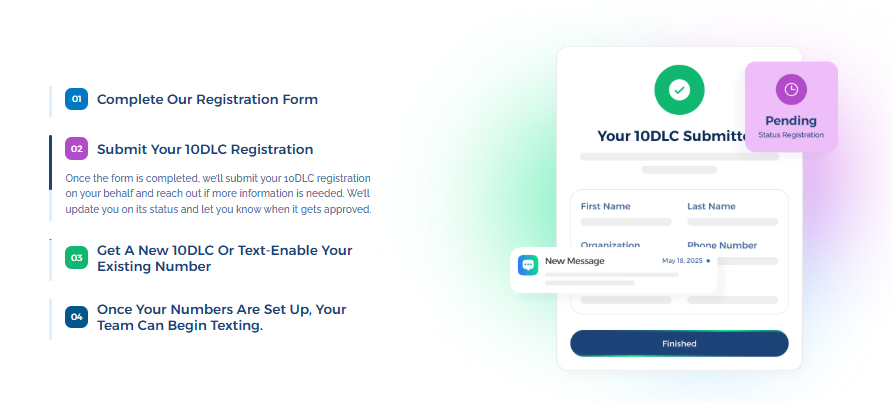
Its white-label offering includes 10DLC support, carrier management, routing, message pacing, content checks, contact validation, and opt-out monitoring.
This keeps you focused on your customers without taking on every telecom requirement yourself.
Step #9: Launch With a Small Customer Group First
A limited rollout lets you see how the service performs before you introduce and deliver it to a wider customer base.
Your first group should include customers with texting use cases and enough activity to provide meaningful feedback.
Early usage can reveal which features customers adopt first, where questions come up, and how well texting fits their current routines.
Feedback around user preferences can also show which tools, access points, or workflows deserve more attention. These data insights shape your training materials, onboarding, and ongoing support.
Step #10: Track Adoption and Scale Your Reseller Program
Growth should come after you understand how customers use the service. Account activity, message volume, feature adoption, support requests, and retention offer a useful starting point.
Account patterns also show where the strongest demand exists. Trend analysis may reveal which features customers rely on most and where adoption starts to drop.
Campaign performance, conversion tracking, usage growth, and customer retention help you see which accounts may be ready for larger packages or added features.
A stronger view of adoption also supports better expansion decisions. You can focus on accounts with proven usage, improve response rates, and connect growth to measurable ROI.
Offer Branded Messaging Without Building the Infrastructure With TextUs
If you want to resell business texting without spending months building the product yourself, TextUs already has the core technology in place.
Your customers can access one-to-one messaging, mass text messaging, automation, analytics, and compliance controls through a product that carries your own brand.
Its Chrome extension also supports messaging directly from a CRM or ATS. It adds easier access and more functionality without forcing users to leave the systems they already use.
TextUs handles the infrastructure behind the service, including carrier operations, compliance support, deliverability, and platform maintenance.
Your team spends more time on customers, pricing, and growth while TextUs powers the messaging experience in the background.
Book a demo today and talk to a TextUs white-label expert to see how you can launch a branded texting product!
FAQs About Reselling Business Texting
What is the difference between white-label SMS and an SMS reseller program?
White-label SMS lets you offer a messaging platform under your own branding, while an SMS reseller program refers to the broader commercial arrangement for selling another provider’s technology.
The main benefit of white labeling is greater control over how customers experience the service.
Who handles 10DLC when I resell business texting?
Responsibility for 10DLC depends on the reseller provider and partnership agreement.
SMS marketing platforms like TextUs manage registration and carrier coordination, while you collect the required customer information and make sure messaging use cases meet applicable requirements.
How should I price resold business texting?
Your pricing should reflect what customers receive, how much they use the service, and the margin you want to maintain.
Common models include monthly subscriptions, usage-based pricing, per-user plans, tiered packages, or a base fee with additional usage charges.
You can keep the offer simple, then leave room to add higher-value features or larger usage limits as accounts grow.
Continue Reading



Frequently Asked Questions
Business Texting
Built for Results
Create and convert pipeline at scale through industry leading SMS software