
How to Recruit Healthcare Professionals: 12 Hiring Strategies
Learn how to recruit healthcare professionals and explore our 12 hiring strategies to do so. Discover how TextUs can help with candidate communication.

Written by
Adam Hamdan
Published
October 30, 2026

Healthcare roles are challenging to fill when every opening depends on the right credentials, experience, specialty, and availability.
Knowing how to recruit healthcare professionals means competing for skilled people.
However, candidates now look beyond salary when comparing opportunities. Schedule flexibility, workplace culture, and professional growth opportunities all influence where they choose to work.
Your recruitment efforts should address those priorities while keeping outreach, interviews, and follow-up moving.
In this article, you will learn healthcare recruitment strategies for stronger hiring outcomes and a more stable workforce.
TL;DR
- Healthcare recruitment is challenging because specialized requirements, talent shortages, and slow hiring cycles can strain staffing, operations, and patient care.
- You can recruit healthcare professionals through faster communication, workforce planning, precise candidate profiles, stronger employer branding, better job posts and benefits, school partnerships, multi-channel sourcing, referrals, simpler applications, quicker interviews, and past-candidate re-engagement.
- TextUs brings texting into healthcare hiring with targeted outreach, recruiter coordination, ATS-connected conversations, automated follow-ups, and performance tracking.
Why Healthcare Staffing Creates Unique Recruitment Challenges
The healthcare industry faces hiring pressures that differ from those in many other sectors.
Employers need people with the right education, licenses, certifications, clinical experience, and specialty knowledge. This narrows the number of quality candidates available for each opening.
Many healthcare roles also take longer to fill because employers compete for professionals with specialized skills. Nurses, physicians, therapists, technicians, and other clinical workers have several employment options.
These hard-to-fill positions increase the need to reach candidates before other employers secure their attention.
Vacancies inside healthcare facilities also increase workloads for existing staff, create scheduling gaps, and place additional pressure on patient care. Slow hiring cycles affect both workforce capacity and daily operations.
Strong recruitment and retention planning addresses both sides of the staffing challenge.
The goal is to bring in new hires who fit the position, understand workplace expectations, and have reasons to stay in different healthcare settings.
How to Recruit Healthcare Professionals: 12 Effective Strategies
A strong approach to recruiting healthcare professionals starts with a realistic view of staffing needs, candidate expectations, and the competition for specialized talent.
Below are 12 effective recruitment strategies you can use for clinical and non-clinical positions.
1. Reach Candidates Faster With Direct Communication
Slow follow-up can weaken your recruitment process, especially when qualified candidates are speaking with several employers at once.
Many healthcare workers also spend much of the day with patients, so phone calls aren't always practical.
Text messaging fits naturally into healthcare recruiting as it supports brief, direct conversations without replacing email or phone.
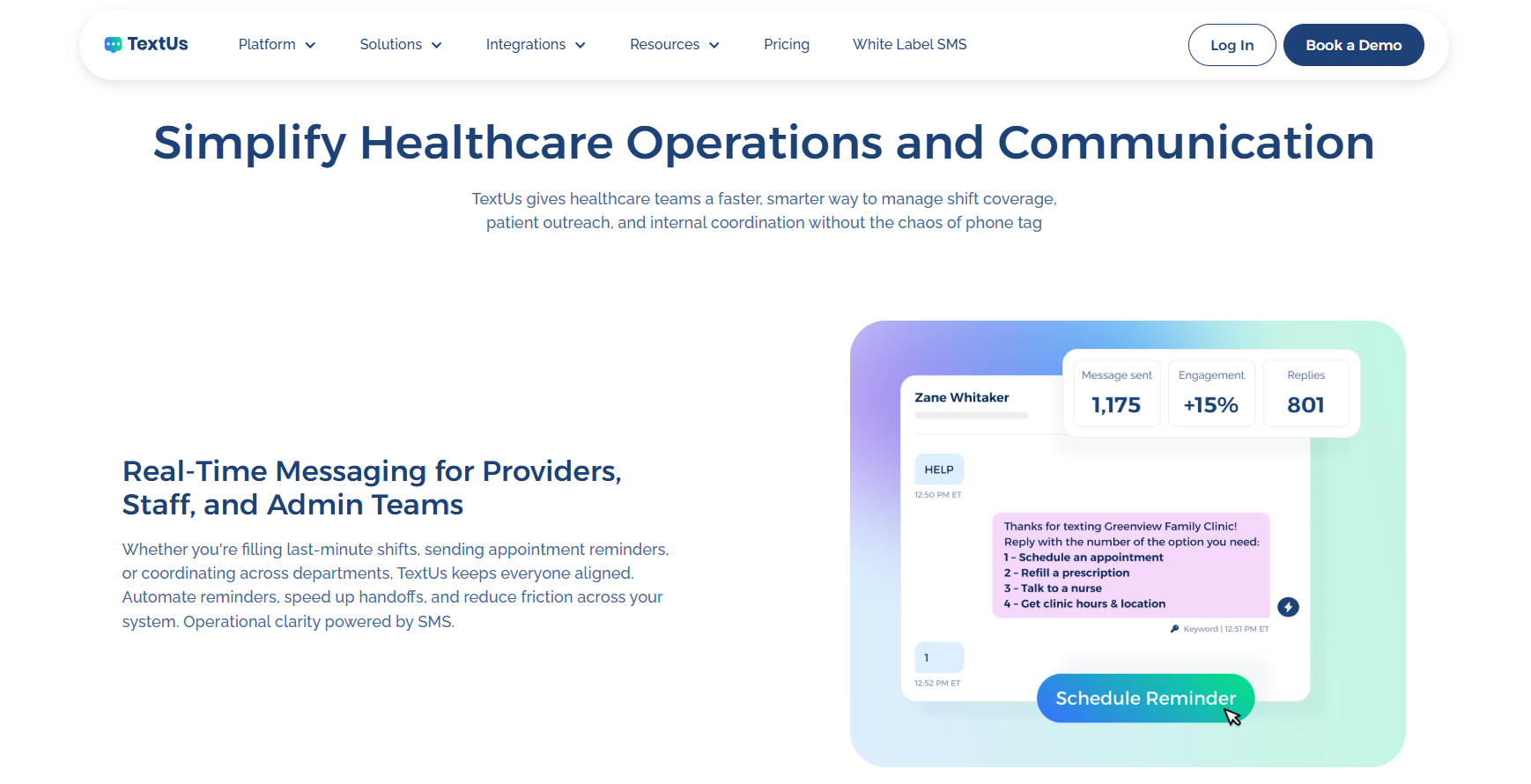
You may use SMS recruiting for outreach, screening questions, interview scheduling, reminders, credential requests, status updates, and offer follow-ups.
Text recruiting software also keeps conversations visible to the hiring team. You'll be able to review message history, understand the latest candidate status, and reduce duplicate outreach from multiple team members.
TextUs supports two-way texting, campaign scheduling, templates, shared inboxes, assignments, drip campaigns, and integrations with ATS systems.
Book a demo with TextUs today to see how it reduces communication gaps before strong candidates lose interest!
2. Plan for Future Healthcare Hiring Needs
A stable workforce strategy starts before vacancies become urgent. Future staffing plans need to account for turnover, retirements, service expansion, patient demand, and expected skill gaps.
Different parts of the healthcare workforce also require different lead times. Specialized clinicians may take months to source, interview, credential, and onboard.
Historical workforce insights provide useful signals for future demand. Turnover patterns, vacancy rates, hiring volume, career development surveys, and time-to-fill data show which departments or locations may face greater staffing pressure.
Large health systems can also benefit from planning for facilities instead of treating every vacancy as a separate search. Earlier preparation creates more time to build candidate relationships and develop stronger pipelines before demand becomes urgent.
3. Define the Right Candidate for Each Role
Required licenses, certifications, specialty experience, clinical background, location, and shift availability all shape who belongs in the search.
Accurate job descriptions make those expectations easier to understand. It also prevents unnecessary screening barriers for qualified applicants who meet the core requirements.
Different medical professionals may also need different combinations of training, specialty experience, and availability. Candidate profiles should reflect the actual demands of each position.
4. Strengthen Your Employer Brand
A strong employer brand shows candidates what working for your organization looks like. Pay alone rarely explains why someone should choose one employer over another.
Your company culture, leadership approach, scheduling expectations, and employee experience all influence how candidates view available roles.
The careers page also plays an important role in this first impression. It needs current openings, workplace information, benefits, and details about what employees experience after joining.
Consistency in job ads, recruiter outreach, interviews, and employee reviews builds trust in your healthcare organization.
5. Write Better Healthcare Job Postings
Job postings help talent decide whether a role matches their experience, schedule, and career goals. Candidate-focused job posts can help your organization stand out.
Each listing should explain responsibilities, required credentials, location, shift expectations, and the application process.
Pay ranges also help candidates compare competitive compensation among similar roles. Relevant details about flexible scheduling and work-life balance may also increase interest in competitive roles.
Current open positions should also stay accurate on job boards and career pages. Outdated listings may create confusion and weaken candidate trust.
6. Offer Benefits That Attract Healthcare Talent
Competitive compensation matters, but attractive benefits can sway candidates choosing between similar roles.
Education-focused perks such as tuition reimbursement and certification support make long-term career growth feel more realistic. Paid leave, wellness programs, and mental health support also show that employee well-being is part of the package.
Together, these benefits can attract employees who want immediate value and reasons to stay beyond the first year.
7. Build Relationships With Healthcare Schools
Partnerships with educational institutions connect you with future talent before those candidates enter a crowded job market.
Clinical placements, internships, and other training programs introduce students to your organization before graduation. Partnerships with nursing schools can also support recurring demand for nurses and related clinical roles.
Career fairs, classroom visits, and mentorship programs create earlier contact with recent graduates who may soon enter the workforce. Over time, these collaborations can strengthen candidate pipelines for roles that often take longer to fill.
8. Source Candidates Through Multiple Channels
Healthcare job boards, professional associations, social networks, alumni groups, and industry events each reach different audiences. This broader approach can uncover passive candidates outside your usual applicant pool.
Text messaging adds another direct way to reach people who may miss calls or overlook recruiting emails.
With TextUs, you can send timely recruiting messages and let candidates respond directly by text.
Candidates may confirm interest, answer screening questions, schedule interviews, or request another time without a long back-and-forth. You can also send interview reminders or follow-up messages after career fairs and referrals.
This faster response loop keeps conversations active with top talent engaged while the role is still open.
9. Use Employee Referrals to Expand Reach
Your current employees already know people from former jobs, training programs, and professional networks. Those personal connections extend your reach beyond traditional sourcing channels.
Structured referral programs make that process easier to repeat. Eligibility rules, simple submissions, and defined incentives encourage employees to participate.
SMS turns your broader talent pool into an active recruiting resource. You can text referred candidates, introduce the role, and ask about interest without waiting for a callback.
Texting also supports quick follow-ups after an introduction. You can share job details, confirm availability, schedule interviews, and answer questions through a simple reply.
10. Simplify the Application Process
A long application can lose interested candidates before they ever reach your recruiter. You only have to ask for the information needed to start the hiring process.
Mobile-friendly forms are essential because many healthcare professionals apply between shifts or away from a computer. Shorter forms also reduce unnecessary steps before screening begins.
Basic details such as contact information, credentials, location, and availability can come first. Longer documents and additional records follow once interest is confirmed.
Text-to-apply options, SMS keywords, and QR codes can shorten the path even further. Candidates can express interest from a job ad, event, or printed sign within seconds.
11. Speed Up Interview Process and Hiring Decisions
Better coordination keeps recruiters, hiring managers, and candidates aligned from the start.
You can set interview stages in advance, assign decision-makers, and reserve time on hiring managers’ calendars. Candidates should also know what comes next and when to expect an update.
SMS keeps those conversations active between formal touchpoints. You may revive passive candidates, confirm interviews, share reminders, or follow up after a final conversation.
TextUs supports conversational texting throughout the hiring journey. It lets you coordinate schedules, answer quick questions, and stay connected while decisions are still underway.
Each interaction keeps the process active and helps you turn candidate interest into a successful hire.
12. Re-Engage Previous Candidates
Past applicants may already know your organization, which shortens the time needed to rebuild interest. Previous finalists, former contractors, and past applicants can all support future candidate pipelines.
A new role fits someone better than the opportunity they considered before. Changes in location, schedule, pay, or responsibilities also help renew interest.
You may also revisit earlier conversations when new open positions match a candidate’s experience. Regular re-engagement keeps promising contacts from disappearing after one hiring cycle.
How TextUs Improves Healthcare Hiring Communication
TextUs helps healthcare employers manage candidate outreach, follow-ups, and recruiter communication with less back-and-forth through texting.
This HIPAA-compliant texting platform provides consent controls, message logging, role-based access, and administrative oversight for approved healthcare workflows.
Here are several ways the platform strengthens outreach without replacing the healthcare systems you already use.
Segment Talent for More Relevant Outreach
Broad messages often miss the mark when job seekers have different specialties, locations, schedules, and experience levels. TextUs lets you organize contacts around the candidate data already stored in your recruiting systems.
With SMS segmentation, you can build groups by role, specialty, location, availability, or hiring stage before sending outreach. More focused segments keep your recruitment efforts relevant to the people receiving each message.
Reach Professionals Through Two-Way SMS
Phone and email still have a place in recruiting, but neither channel needs to handle every conversation. SMS adds a faster option for reaching potential candidates between calls, interviews, and other touchpoints.
You can use two-way texting for job outreach, screening questions, interview confirmations, reminders, and follow-ups. Candidates reply within the same conversation without navigating long email threads.
Keep Recruiters and Coordinators Connected
Candidate communication becomes harder to manage when several recruiters work on the same roles. TextUs keeps conversations visible through shared inboxes, assignments, and conversation ownership.
Templates support repeat messages without starting from scratch each time. Scheduled messages, campaigns, and automated sequences also reduce manual follow-up for larger candidate groups.
Connect Conversations With Recruiting Systems
TextUs integrates with staffing platforms such as Bullhorn, Greenhouse, Workday, LaborEdge, and JobDiva. API and integration options also support broader technology workflows.
These connections keep texting closer to the systems recruiters already use for candidate records and hiring activity. You spend less time moving between disconnected communication tools.
Track Candidate Communication
You need visibility into how candidates respond after outreach begins. TextUs tracks message delivery, replies, opt-outs, campaign results, and user activity.
Those insights can show which messages generate engagement and where follow-up starts to slow. Better visibility also supports more informed communication decisions throughout the healthcare field.
Support Business Texting Compliance
Business text messaging needs explicit consent practices and reliable SMS opt-out handling. TextUs supports consent management, 10DLC registration, suppression, and standard STOP and HELP workflows.
Stored conversation records also provide a clearer history of candidate interactions. That record supports consistent recruiting practices within your team and protects the integrity of your outreach.
Keep Candidate Interest High From Outreach to Placement With TextUs
The strongest strategies for healthcare focus on keeping people informed, interested, and ready to move forward throughout the hiring journey.
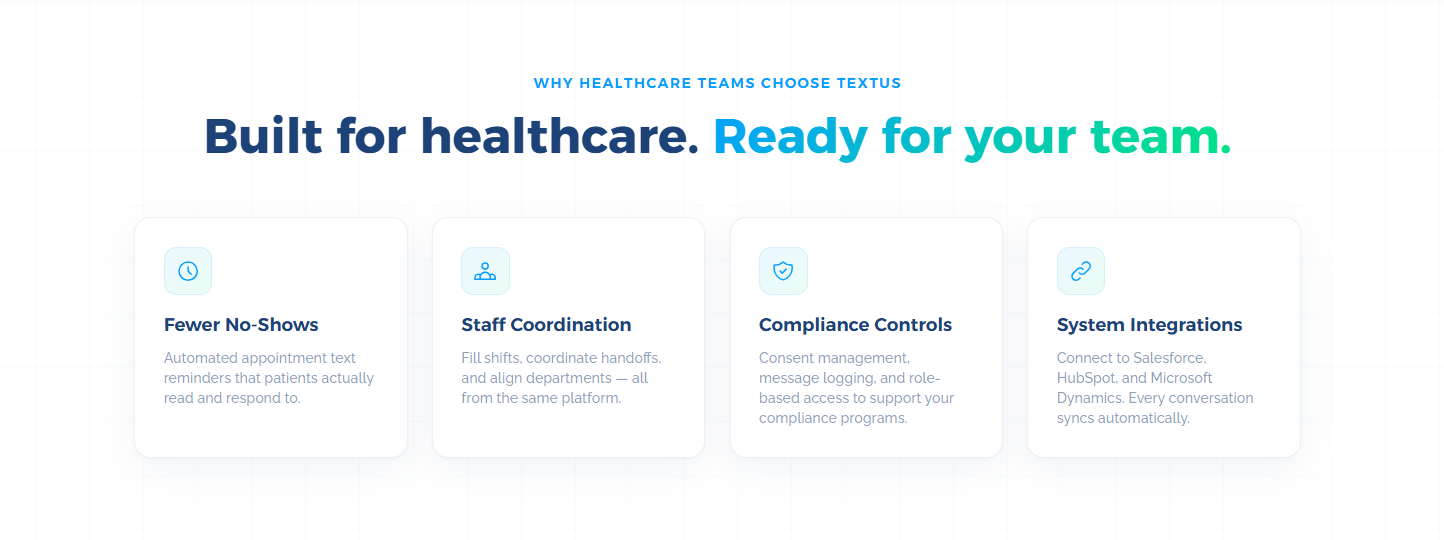
TextUs helps you create a more responsive candidate experience from first contact through placement. This platform supports two-way SMS, campaigns, templates, scheduled messages, shared inboxes, and ATS integrations.
Whether you hire for primary care or other clinical roles, faster communication keeps each conversation moving. It keeps candidates informed and creates opportunities to share your organization’s culture, role expectations, and career advancement paths.
Personalized outreach strengthens the candidate experience and contributes to higher job satisfaction after the hire.
Book a demo with TextUs today to see how SMS fits into your healthcare recruiting workflow!
FAQs About How to Recruit Healthcare Professionals
What are the five Cs of recruitment?
One healthcare framework uses Candidate, Culture, Communication, Cost, and Compliance.
Together, these areas cover candidate needs, workplace expectations, communication, recruiting costs, and healthcare-specific compliance requirements.
What is the 80/20 rule in recruiting?
The 80/20 rule applies the Pareto principle to recruiting. It suggests that a smaller share of your sourcing efforts may produce most hiring results.
For example, referrals or a few strong channels may account for a large share of successful hires. It is a useful review framework, not a proven law of healthcare recruitment.
What is the 70/30 rule in hiring?
A common interpretation of the 70/30 rule recommends hiring someone who meets about 70% of role requirements.
The remaining 30% should involve skills that can develop through professional development and ongoing support after hiring.
What are the four Ps of recruitment?
One healthcare recruiting approach adapts the traditional marketing mix into Product, Price, Place, and Promotion.
Product covers the role, while Price includes compensation and benefits. Place includes the workplace and organizational culture, while Promotion covers how you present the opportunity.
Continue Reading



Frequently Asked Questions
Business Texting
Built for Results
Create and convert pipeline at scale through industry leading SMS software